Guides
Coffee Cupping: What Smoking Costs You
Smoking narrows the sensory window long before a taster notices. What it changes in the mouth and nose, and how to keep cupping scores honest.
Guides5 min readUpdated April 24, 2026

Guides
Smoking narrows the sensory window long before a taster notices. What it changes in the mouth and nose, and how to keep cupping scores honest.
For a coffee taster, perception is the whole job. Cupping is not about deciding whether a coffee is pleasant; it is about reading its structure, aroma, sweetness, acidity, texture and finish, accurately enough to compare one cup with another. Smoking interferes with that work more than most tasters admit, and it does so slowly, which is exactly why it goes unnoticed.
The issue is not only health, though health matters. It is sensory performance. Tobacco smoke irritates the mouth and nasal passages, reduces saliva flow and dulls retronasal aroma. Delicate notes become easier to miss, roast character starts to dominate, and the palate works through a narrower window.
Smoking interferes through several paths at once. Heat and smoke irritate the surfaces of the mouth and nose. Chemical residues stay on the tissue. Saliva flow changes, which matters more than it sounds, because saliva dissolves flavor compounds and carries them across the taste receptors. Smell suffers too, especially retronasal smell, the route that does most of the work once coffee is in your mouth.
That combination costs a lot, because tasting depends on fine differences. A taster must tell bright from sour, floral from perfumed, cocoa sweetness from roastiness, heavy body from astringency. When smoking narrows those differences, cupping stops being a measurement and becomes a guess.
| Sensory area | What smoking can do | Effect on cupping |
|---|---|---|
| Taste receptors | Reduce sensitivity to subtle sweetness and acidity | Balanced coffees read flatter than they are |
| Retronasal aroma | Blur the aromatic detail picked up after slurping | Floral, fruit and spice notes slip away |
| Saliva and mouthfeel | Dry the mouth and change how flavor travels | Texture and finish become less precise |
| Sensory threshold | Push the palate toward louder signals | Roasty or smoky notes seem more acceptable than they should |
In practice, smokers describe a narrower, less vivid range of taste. Sweetness feels softer. High notes such as citrus, florals and tea like aromas are harder to pin down. Acidity becomes hard to read accurately, which is a real problem given how far apart lively acidity and unpleasant sourness sit on a scoresheet.
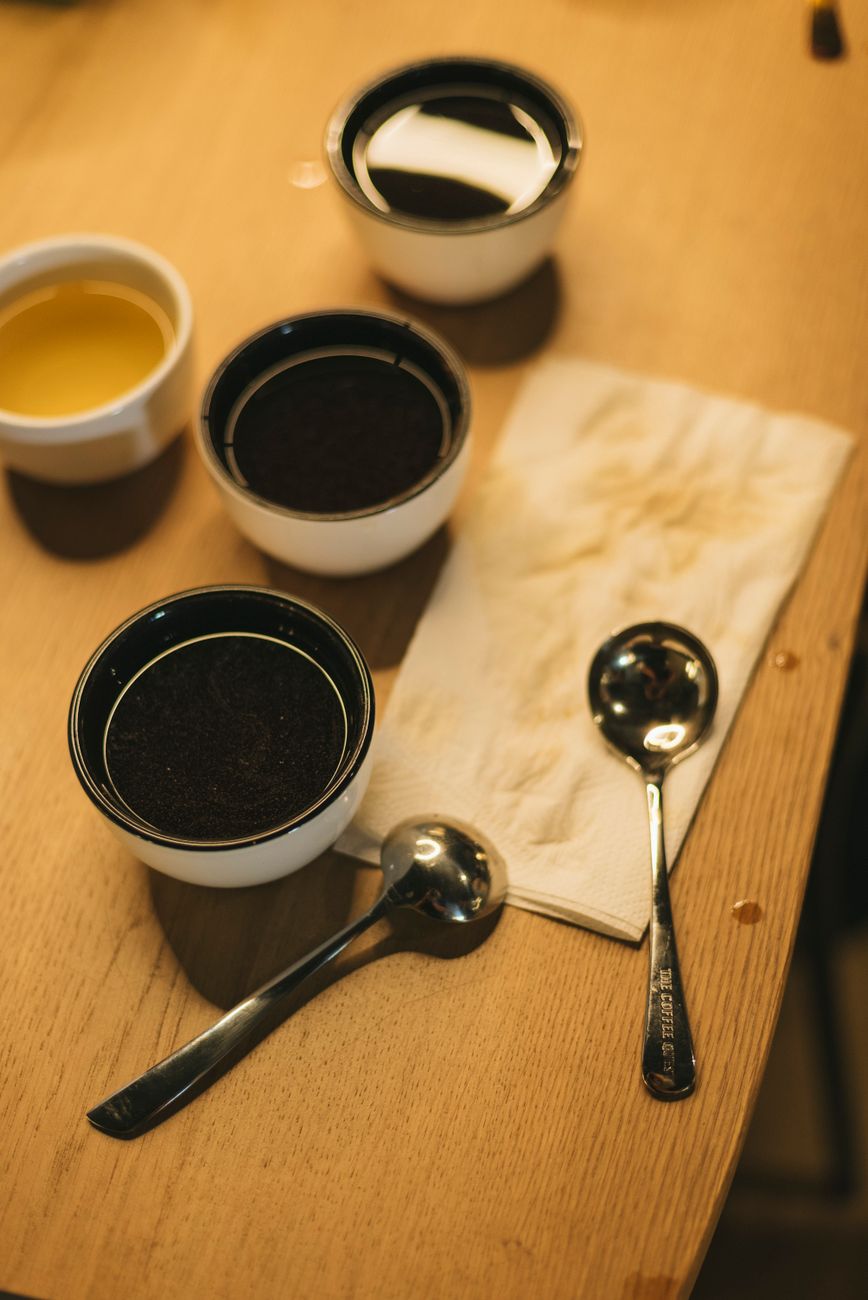
Cupping asks for resolution, and smoke is what removes it first.
There is a second, subtler effect: preference drift. With a dulled palate, darker and more heavily roasted coffees still push through, so a taster slowly adapts to treat them as normal. That does not mean a smoker cannot appreciate fine coffee. It means the baseline has quietly moved toward louder flavors.
This is why smoking distorts judgment without producing obvious errors. The outcome is rarely a wildly wrong score. It is a loss of detail, and detail is what the job depends on.
The cultural pairing is real. For a lot of people they belong to the same pause: morning wake up, a work break, a social moment, an after meal ritual. Nicotine and caffeine also fit together through routine and expectation, which explains why the combination feels satisfying even when one half is spoiling the pleasure of the other.

Smoke leaves residues on the surfaces a taster depends on.
Ritual, however, is not sensory benefit. A cigarette may make coffee feel familiar; it does not make a taster more accurate. More often it narrows the palate at exactly the moment cupping asks for patience, sensitivity and clean perception.
The real fix is obvious and not always available: smoke less or stop. Many tasters notice taste and smell returning as smoke exposure falls. In the meantime, there are practical ways to limit the damage during cupping.
| Adjustment | Why it helps | Best use |
|---|---|---|
| Avoid smoking before cupping | Reduces immediate dulling | Especially before calibration sessions |
| Drink enough water | Counters dryness and supports flavor perception | Before and during tasting |
| Taste side by side | Comparison makes differences easier to spot | Training and recalibration |
| Write careful notes | Builds discipline when perception feels uncertain | Tracking patterns over time |
| Cup with calibrated tasters | Shows where your palate is missing detail | Formal cupping and quality control |
Separate smoking from tasting by time and place as well. Do not smoke in the cupping room, and give your palate a clean run at the table. If you are training seriously, schedule sessions around your lowest smoke exposure instead of trying to force accuracy through a dulled palate.
The sensory research is consistent on the broad point: smoking weakens taste and smell, and those losses show up in how food and drink are perceived. Coffee is unusually sensitive to this because good cups are built on subtlety rather than force. The more delicate the aromatic detail, the earlier it disappears.
There is also room for optimism. Recovery is possible, though the timeline varies. Improvement often follows reduced exposure, especially when sleep, hydration and general health improve at the same time. That matters professionally, because cupping is a trainable skill, and training works best when the senses are not being dulled every day.
Yes, but the work is harder. Structure, process and comparative tasting can still be learned. Fine aromatic detail is where the loss shows first, and it stays out of reach until smoke exposure drops.
Usually both. Coffee flavor leans heavily on aroma, particularly retronasal aroma, so even a modest decline in smell changes the whole experience of a cup.
Yes. It is the single easiest change to make. The closer smoking sits to the session, the more likely it is to dull perception in the moment.
Often, at least partly. Recovery differs from person to person, but many people find sweetness, aroma definition and overall clarity improve once smoke exposure falls.
This article is general education. It does not replace medical advice, smoking cessation support or professional sensory training. If you want the most accurate palate available to you, the oldest rule still applies: cleaner air leads to cleaner tasting.