Guides
Coffee in Orbit: How Crews Drink It
Coffee in space is logistics, chemistry and morale in equal measure. What crews drink, what changed in 2015, and why the ritual matters more than the caffeine.
Guides7 min readUpdated October 15, 2026
Guides
Coffee in space is logistics, chemistry and morale in equal measure. What crews drink, what changed in 2015, and why the ritual matters more than the caffeine.
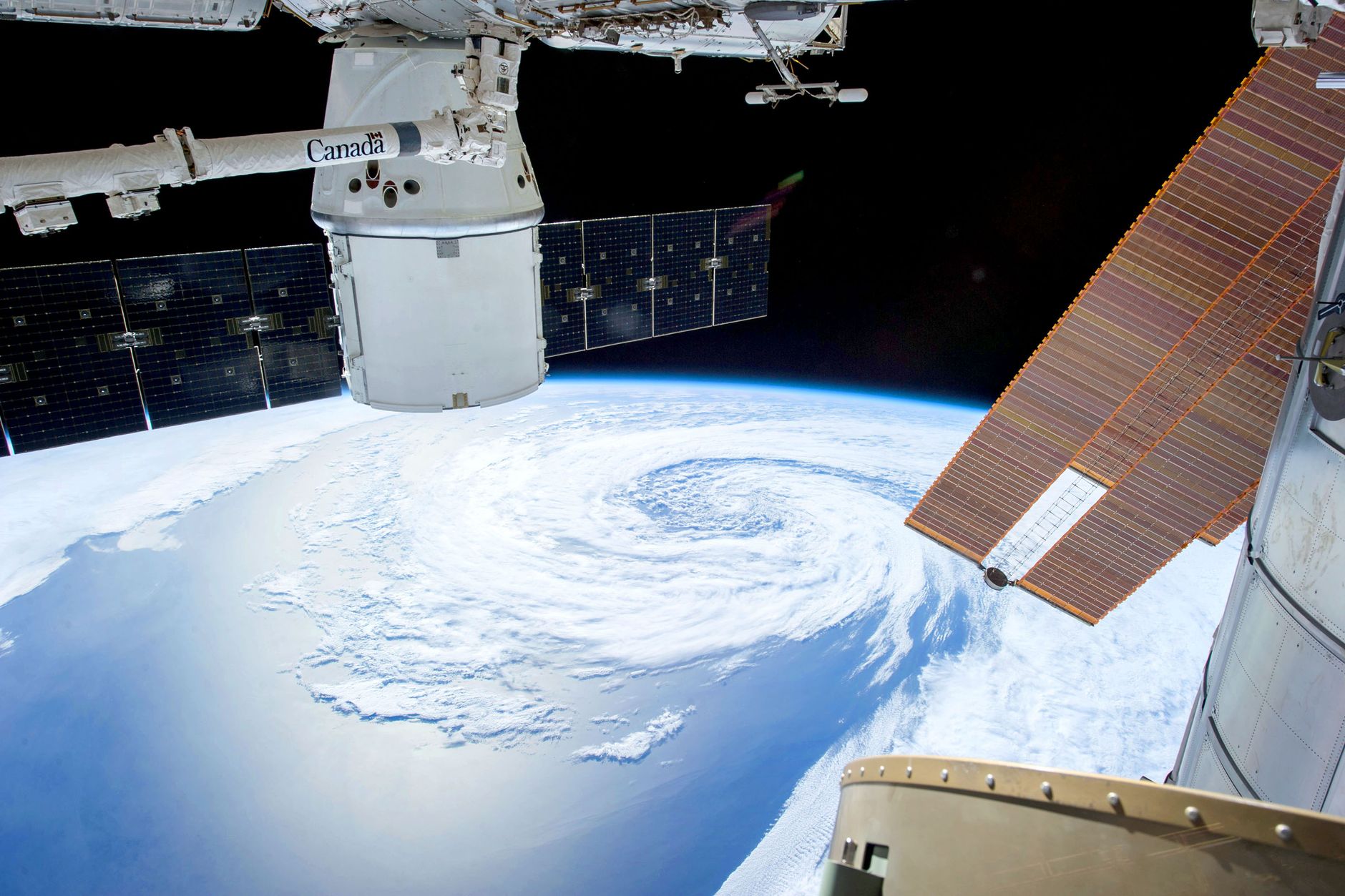
Coffee on the International Space Station is not a lifestyle choice. It is a supply problem, a chemistry problem and, for the crews who live there for months at a time, one of the few daily rituals that still feels like home. A cup is 400 kilometers below them, and everything about it, weight, packaging, aroma and temperature, has to be engineered before it can be drunk.
Here is how coffee actually reaches orbit, what crews say about it, and how an Italian espresso machine changed the drink aboard the station in 2015.
Food in orbit is designed for weight, shelf life and safety rather than pleasure. That is the setting in which a familiar drink starts to carry more meaning than it does on Earth. Coffee brings a recognizable smell to a module that otherwise smells of metal, plastic and recycled air, and it arrives with a routine attached: the same gesture, at the same hour, in the same place every day.
That routine is the point. Crews on long missions work inside a rigid schedule of experiments, maintenance and exercise, in an environment where ordinary domestic cues have been stripped away. A drink that marks the start of a working day, or the pause after one, does something a nutrient list cannot. Cosmonauts describe it less as a craving for caffeine and more as a way of staying connected to the life they left behind.
Every kilogram launched to the station costs fuel, and crew supplies compete for that budget with hardware, water and experiments. Coffee therefore arrives in fixed amounts, and the ration crews describe is small, roughly one coffee pack per person per day, often less when a mission runs long or a resupply is delayed.
Oleg Kononenko, whose total time in orbit is the highest recorded, has remarked that practically every cosmonaut is a coffee addict, a line that reads as a joke and lands as an accurate description of what a limited ration does to people who like coffee. When supply is scarce, the drink is not merely appreciated. It is rationed, negotiated and looked forward to.
Other crews have described the same pattern from different angles: sharing a coffee with colleagues as a moment of closeness during a demanding schedule, and the daily cup becoming something to plan the working day around. The scarcity is exactly what gives the ritual its value.
Coffee has been part of human spaceflight since the beginning, but never in the form most of us would recognize. Early missions carried instant coffee, rehydrated with water from a dispenser and sipped through a sealed pouch. Reusable shuttle era supplies relied on freeze dried formats that could be mixed with hot water from the galley. The station kept that approach and improved it.
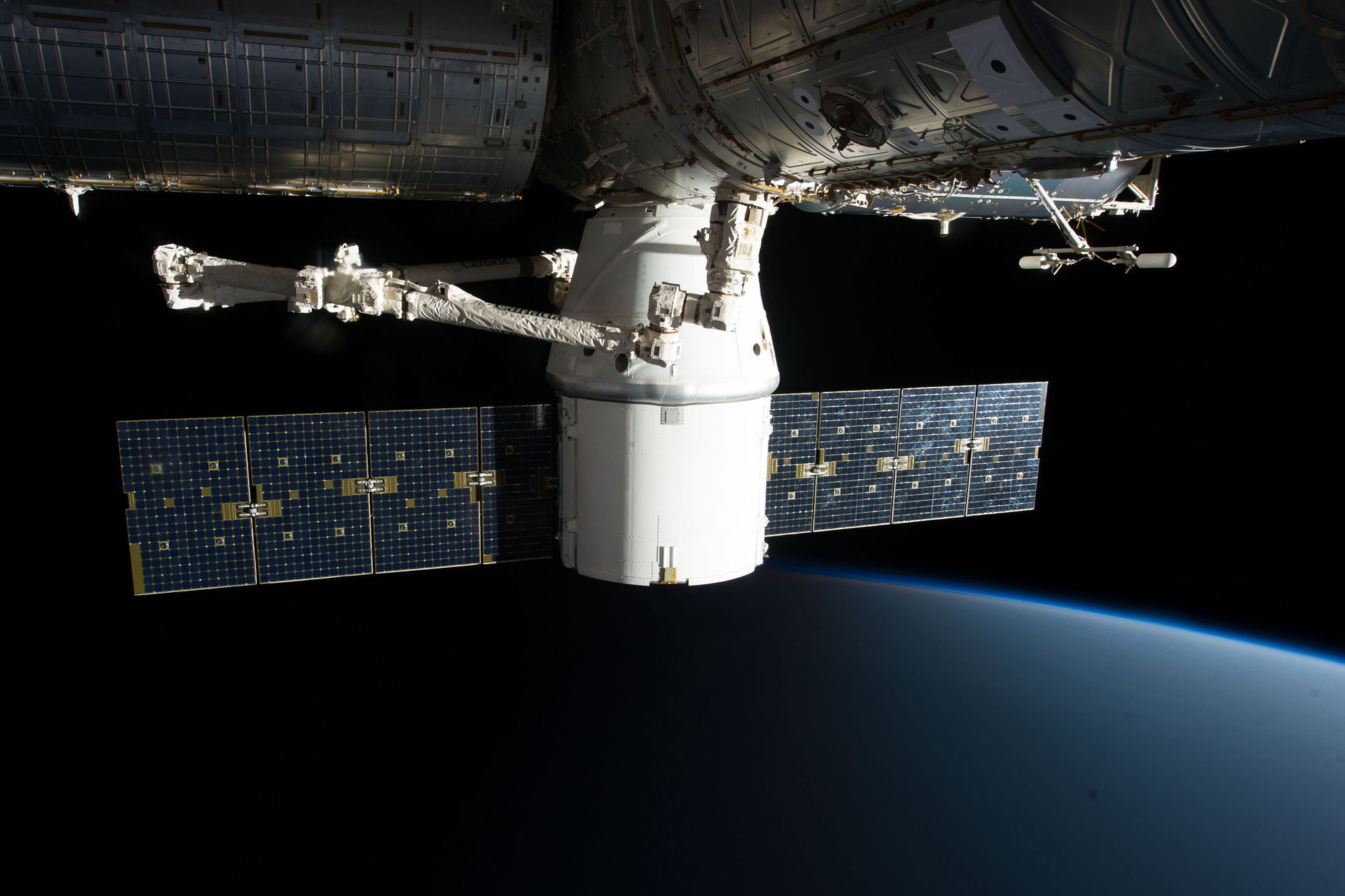
A galley in orbit has to do everything a kitchen does, minus gravity.
| Era | Format | What the crew actually did |
|---|---|---|
| Early crewed flights | Instant coffee in sealed packaging | Rehydrated with water, drunk through a straw or pouch |
| Shuttle era | Freeze dried coffee | Mixed with hot water from the galley |
| ISS, routine supply | Freeze dried sachets and rationed packs | Rehydrated in a pouch, in a limited daily quantity |
| ISS, 2015 onward | Capsule espresso on the ISSpresso | Pulled under pressure and sipped from a sealed pouch |
The story is less about coffee technology advancing for its own sake and more about the station maturing into a place people live rather than merely visit.
Freeze drying is the reason coffee can spend months in orbit and still taste of something. The process freezes the brewed coffee, then removes the ice by sublimation under vacuum, leaving the dry structure of the liquid behind without the heat that would drive the aromas off. Figures quoted for aroma retention sit around 95 percent, which is why freeze dried coffee in space does not taste like the supermarket instant most people picture.
The result is a light, shelf stable powder that survives launch vibration and months of storage, and mixes into a passable cup with hot water from the galley. It is not the same as a fresh brew, and the crews know it. It is, however, a reliable cup in a place where reliability is the whole requirement.
In 2015, a machine called the ISSpresso reached the station. It was developed by the Italian engineering firm Argotec with Lavazza and the Italian Space Agency, and it produced the first genuine espresso drunk in orbit: ESA astronaut Samantha Cristoforetti pulled a shot that May.
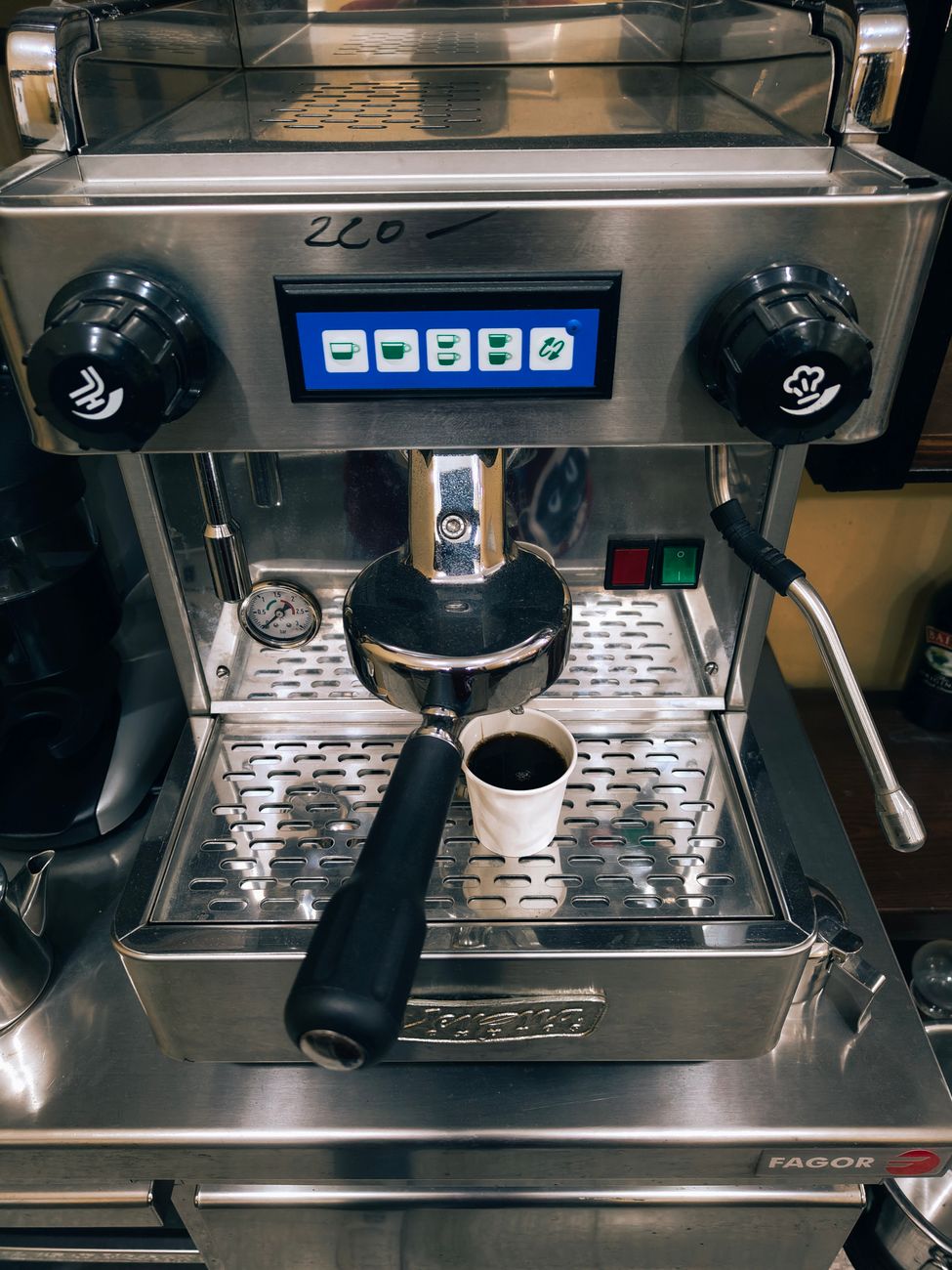
The ISSpresso shares its extraction principle with a cafe machine and little else.
The engineering is the interesting part. On Earth, espresso works because gravity lets water fall through a packed bed of coffee and the liquid collect in a cup. Remove gravity and both halves of that arrangement fail. Water will not fall through the puck, and once extracted the espresso will not stay in a cup but float out of it as a drifting sphere of hot liquid.
The solution was to replace gravity with pressure and seals. Water is pushed through the capsule by a pressurized system, the espresso travels through sealed lines into a pouch rather than a cup, and the crew drinks from that pouch through a straw. An espresso machine in orbit is therefore closer to a small hydraulic rig than to the machine on a café counter, built to contain hot liquid exactly where it is meant to be rather than rely on it staying put.
Getting coffee into orbit is a procurement question before it is a coffee question. Roscosmos has long supplied its crews with rations that include coffee, while NASA, ESA and JAXA run their own supply chains for their astronauts, and the station's galley stock is effectively a shared pantry that has to be negotiated. Every item has to pass weight, volume, packaging and safety checks.
That review shapes the drink. Loose grounds and brewed coffee are impractical: they create floating particles, need filtration and add water weight. Lidded pouches, sealed lines and single use capsules solve several problems at once, which is why nearly every serious attempt at better coffee in space has ended with the same answer: contain it, pressurize it, seal it, and hand the crew a straw.
Ask a crew what they miss and coffee tends to appear in the first few answers, alongside food with texture and a sense of smell that is not filtered air. In microgravity, body fluids shift upward, nasal passages feel more congested, and flavor perception flattens. Crews routinely ask for stronger tastes, which is one reason hot sauce has a permanent place in the galley.
Coffee works on two fronts at once. Caffeine does what it always does: it improves alertness and reaction time during long, precise work. The smell and the routine do something else, marking the day into recognizable blocks and creating a reason to gather in the same module. On a station where isolation builds slowly rather than suddenly, both effects matter.
Longer missions raise harder questions. A resupply flight to the Moon or Mars cannot be scheduled the way one to the station can, so the coffee has to stay drinkable for years rather than months, and the packaging has to work in vehicles with far less room for a galley. Three lines of work follow from that.
None of this is about luxury. It is about the practical difference between a crew that functions and a crew that functions well over a mission measured in years, and coffee turns out to sit on that line more firmly than its weight would suggest.
Mostly as freeze dried coffee mixed with hot water in a sealed pouch, drunk through a straw so the liquid cannot float away. Since 2015, the crew of the station has also been able to pull genuine espresso on the ISSpresso.
Rations are tightly controlled because of weight and volume limits on resupply, and crews describe roughly one coffee pack per person per day. That is far below typical Earth levels and is one of the privations most often mentioned.
It is an espresso machine built for microgravity, developed by Argotec with Lavazza and the Italian Space Agency and installed on the station in 2015. It replaces gravity with pressure and sealed lines, pushing water through a capsule and delivering the espresso into a pouch instead of a cup.
Because the ritual survives when almost nothing else does. Coffee provides a familiar smell, a fixed point in a rigid schedule and a reason to sit together, which matters on long missions where isolation builds up quietly.
Considerably. Early flights carried instant coffee, later missions used better freeze dried formats that hold aroma more effectively, and 2015 brought real espresso. Ongoing work points toward longer shelf life and more variety for missions beyond low Earth orbit.