Guides
Caffeine Before Lifting: What Works
Caffeine is one of the few supplements that reliably helps strength training. How much to take, when, and how to avoid paying for it in lost sleep.
Guides6 min readUpdated April 24, 2026
Guides
Caffeine is one of the few supplements that reliably helps strength training. How much to take, when, and how to avoid paying for it in lost sleep.
Caffeine is one of the few performance aids that is both ordinary and genuinely useful. It is cheap, familiar, easy to find, and supported by more evidence than most of what is sold around training. That explains why it turns up everywhere from supplement tubs to the plain cup of coffee before the gym.
Useful is not the same as magic. Caffeine can sharpen alertness, lower how hard effort feels and help athletes use more of the strength they already have. It cannot replace sleep, good programming, food or recovery. When it works, it works because it supports good training, not because it rescues bad habits.
Caffeine blocks adenosine, one of the signals that builds tiredness and slows the mind. With that signal dampened, alertness rises and effort feels more manageable. In the gym that shows up as better focus on technique, more willingness to push through hard sets, and a better chance of finishing the session as planned when fatigue would otherwise pull it apart.
There is also evidence that caffeine can support force production in certain situations. It will not turn a poor program into a good one, but it may help an athlete use more of the strength already there, especially on days that demand concentration and intent rather than casual effort.
| Training factor | Possible benefit | Why it matters |
|---|---|---|
| Alertness | Sharper mental state before heavy work | Technique and focus depend on it |
| Perceived effort | Hard sets feel slightly more manageable | Helps athletes stay in difficult work |
| Power output | May improve explosiveness and intent | Relevant for lifting, sprinting and bar speed work |
| Session quality | Preserves output as fatigue builds | Supports more total useful work |
The evidence is broad, and the message is consistent: caffeine can improve performance in strength and high intensity settings, but the size of the effect varies from person to person. Some athletes see a clear difference in heavy sets, bar speed or training drive. Others barely notice anything. The response is real, just not uniform, which is why careful summaries read as measured rather than triumphant.
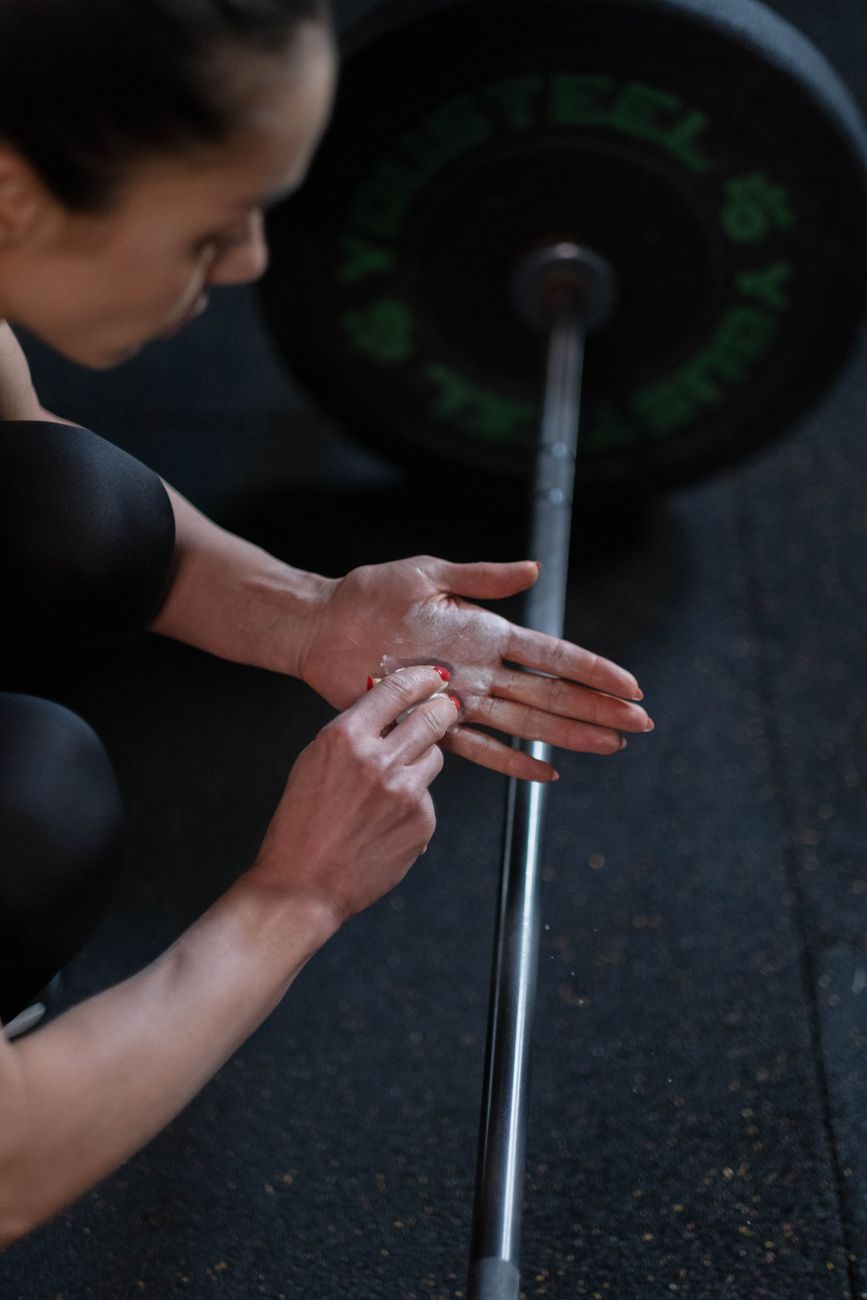
Caffeine supports intent. It does not replace a programme.
The honest conclusion is that caffeine has a stronger case for usefulness than most flashy supplements, as long as the dose and the timing are handled with some discipline.
Research often centers on roughly 2 to 6 mg of caffeine per kilogram of body weight, but that range is a map, not an instruction. Many athletes perform well at the lower end, especially if they are sensitive to stimulants or do not use caffeine heavily every day.
Timing matters as much as dose. A common approach is to take caffeine 30 to 60 minutes before training, which gives it time to become active without leaving you guessing in the middle of the session about whether it has kicked in. Delivery forms differ in speed, but the principle holds: early enough to support the work, not so late that it follows you into the evening and damages sleep.
| Approach | Typical range | Best use |
|---|---|---|
| Low dose | About 1.5 to 2 mg/kg | A sensible starting point for sensitive athletes |
| Moderate dose | About 3 to 4 mg/kg | Usually enough for a noticeable effect |
| Higher dose | About 5 to 6 mg/kg | Sometimes effective, but more likely to bring side effects |
| Timing | 30 to 60 minutes before training | A reliable general window for most forms of intake |
The right dose is the smallest one that reliably helps. More is not automatically better, and the athletes who get the most from caffeine are usually the ones who treat it as a tool rather than a habit.
Caffeine does not care much how it arrives, but athletes should. Coffee brings the stimulant effect with a ritual many people enjoy, though the exact caffeine content varies with bean, dose and brew method. Capsules offer precision. Gels and gums are built for speed. Workout formulas mix convenience with a long ingredient list you may not fully want.
| Form | Main advantage | Main limit |
|---|---|---|
| Coffee | Familiar, enjoyable, widely available | Caffeine content varies |
| Espresso | Small volume, easy before training | Still variable unless you measure it |
| Capsules or tablets | Precise, repeatable dosing | Loses the pleasure of the coffee ritual |
| Workout formulas | Convenient, often combined with other ingredients | Easy to overdo, harder to personalize |
The best option is the one that gives a consistent result without turning your pre session routine into a chemistry experiment.
Caffeine is often discussed as if it only moved bar weight. Its practical value is wider than that. It can improve concentration, reduce mental drag, and make hard training feel more manageable on days when motivation is low, which matters, because session quality is shaped by the state of mind you bring to the work, not only by muscle output.
Pre-training coffee is the simplest delivery method most athletes have.
It may also help across sessions that mix strength with accessory work, conditioning or sport specific effort. For many athletes, caffeine is less about one heroic top set and more about holding quality together from the first set to the last.
The tradeoff is straightforward. The same stimulation that sharpens one athlete's focus leaves another anxious, shaky and poorly recovered. Higher doses can bring restlessness, a raised heart rate, stomach discomfort and damaged sleep. For anyone training for strength, sleep is the part that matters most: if caffeine improves today's session and ruins tonight's recovery, the net result may be worse than no caffeine at all.
Some athletes also adapt over time. That does not make caffeine useless, but it does mean the answer is rarely to take more forever.
Use caffeine as part of a plan rather than a desperate fix. Save it for sessions that matter, for training that demands intensity and focus, or for days when fatigue would otherwise harm the quality of the work. Do not lean on it to cover poor sleep, poor food or chaotic scheduling week after week.
| Strategy | Why it helps | When to use it |
|---|---|---|
| Reserve it for key sessions | Keeps the effect meaningful | Heavy, high focus, performance oriented days |
| Keep the dose moderate | Reduces side effects and protects sleep | Most training days |
| Avoid late intake | Protects recovery | Especially for evening lifters |
| Pair it with food and fluids | Keeps the session steady rather than overstimulated | Before and during training blocks |
Caffeine is best treated like any good tool: reliable, valuable, worth respecting, and never a replacement for the foundations underneath it.
Often, though the size of the effect varies. Many athletes report better focus, lower perceived effort and better output in demanding sessions.
Many people do well between 2 and 4 mg per kilogram of body weight. Starting lower and working up is usually smarter than opening with a large dose.
Coffee is often enough. Supplements mainly help when you want more precise dosing or simpler timing.
The evidence does not suggest benefits are limited to one sex, but individual response still varies widely.
Taking too much, too late, or too often. The most effective dose is rarely the most dramatic one.
This article is general education and does not replace medical advice. If caffeine regularly causes anxiety, palpitations, stomach upset or serious sleep disruption, adjust the dose or speak to a clinician rather than assuming more stimulation is the answer.