Guides
Brewing Coffee Without Gravity
In microgravity there is no buoyancy, no falling liquid and no cup to hold it. A technical look at extraction, pressure and aroma when gravity is switched off.
Guides8 min readUpdated October 15, 2026
Guides
In microgravity there is no buoyancy, no falling liquid and no cup to hold it. A technical look at extraction, pressure and aroma when gravity is switched off.
Every brewing method on Earth gives part of the work to gravity. Water falls through the coffee bed, the bed drains, the liquid collects in a vessel, bubbles rise and escape, heat moves because warm water is lighter than cold. Take gravity out of the equation and none of those things happen on their own. That is the engineering problem behind coffee in orbit, and it turns out to be more interesting than the coffee itself.
This is what microgravity actually changes: how liquid moves, how it separates from the grounds, how heat travels, and what a cup would have to be.
Start with the most obvious failure. A cup is a container that relies on gravity to keep its contents at the bottom. In orbit, the station falls around the Earth at the same rate as everything inside it, so the remaining acceleration is on the order of a millionth of normal gravity. Nothing is pulled downward, which means nothing stays where you put it.
Pour coffee into an open vessel in that environment and it will not settle. Surface tension pulls the liquid into a shape that minimizes its surface area, so it tends to form a drifting sphere, or it climbs the inside wall of the vessel instead of pooling at the base. A hot sphere of coffee floating through a module full of equipment is not a drink problem; it is a hazard.
That is why crew drinks arrive in sealed pouches with a valve and a straw. Containment is not about tidiness in orbit. It is the first constraint that every design afterwards has to respect.
Gravity does more in a brew than hold the liquid still. It drives buoyancy, and buoyancy is what separates things by density. Warm water rises above cold. Steam leaves the surface. Grounds settle to the bottom of a press. Gas bubbles climb until they break free.
None of that happens in microgravity. Bubbles stay exactly where they form, so a boiling liquid builds a layer of vapor on the heated surface rather than releasing steam upward, and heat then moves mainly by conduction rather than the convection that normally stirs a pot. Grounds do not settle out, so any separation has to be created by the hardware. Vapor does not leave the liquid on its own schedule, which changes how temperature is controlled and how pressure builds.
For brewing, the result is that extraction becomes a diffusion problem. On Earth, buoyancy and convection keep fresh water moving past the coffee particles. In orbit, that movement has to be created on purpose, with a pump, a pressure difference or mechanical stirring.
With gravity reduced to a rounding error, surface tension and capillary forces become the main mechanics at small scales. Liquid climbs into narrow spaces, wets porous materials aggressively and holds to surfaces in a way that feels strange to anyone used to a kitchen.
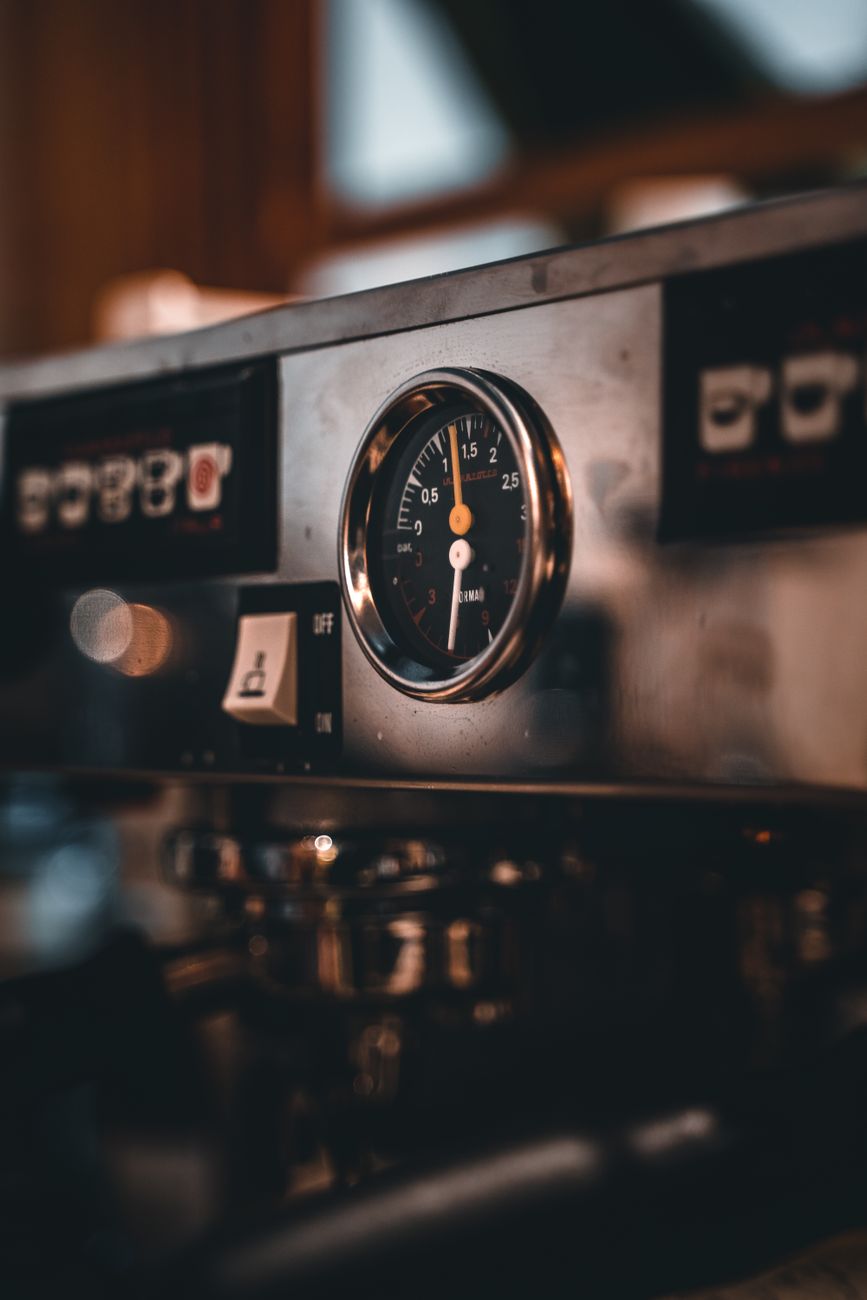
In orbit, pressure replaces the job gravity does on Earth.
This cuts both ways for coffee. Capillary wicking is what makes a paper filter wet out instantly and completely, which is useful. It also means the fluid path has to be closed at both ends, because any open end becomes a place where liquid can escape along a surface rather than drip off it. Water does not drip in orbit. It creeps.
It helps to name the tasks a normal brew gets for free, because that is the job an orbital brewer has to do by other means.
| Job | On Earth, gravity does this | In orbit, this has to replace it |
|---|---|---|
| Moving liquid through the coffee | Water falls through the bed under its own weight | A pressure difference across the bed, driven by a pump |
| Separating liquid from grounds | Grounds settle and the filter bed drains | Filtration under pressure; grounds cannot be left to settle |
| Keeping the drink contained | Liquid stays in the cup | Sealed pouches and valves, or a carefully designed capillary shape |
| Clearing vapor and mixing heat | Bubbles rise, convection stirs the liquid | Controlled heating, and accepting conduction as the main heat path |
Read that table as a design brief and the espresso machine in orbit stops looking like a novelty. It is the machine that satisfies all four rows at once.
Espresso is the natural candidate for microgravity, and not because of taste. Espresso already drives water through a coffee bed with a pump rather than with gravity, at roughly 9 bar, about nine times sea level atmospheric pressure. It is the one mainstream brewing method that never needed gravity to make the liquid move.
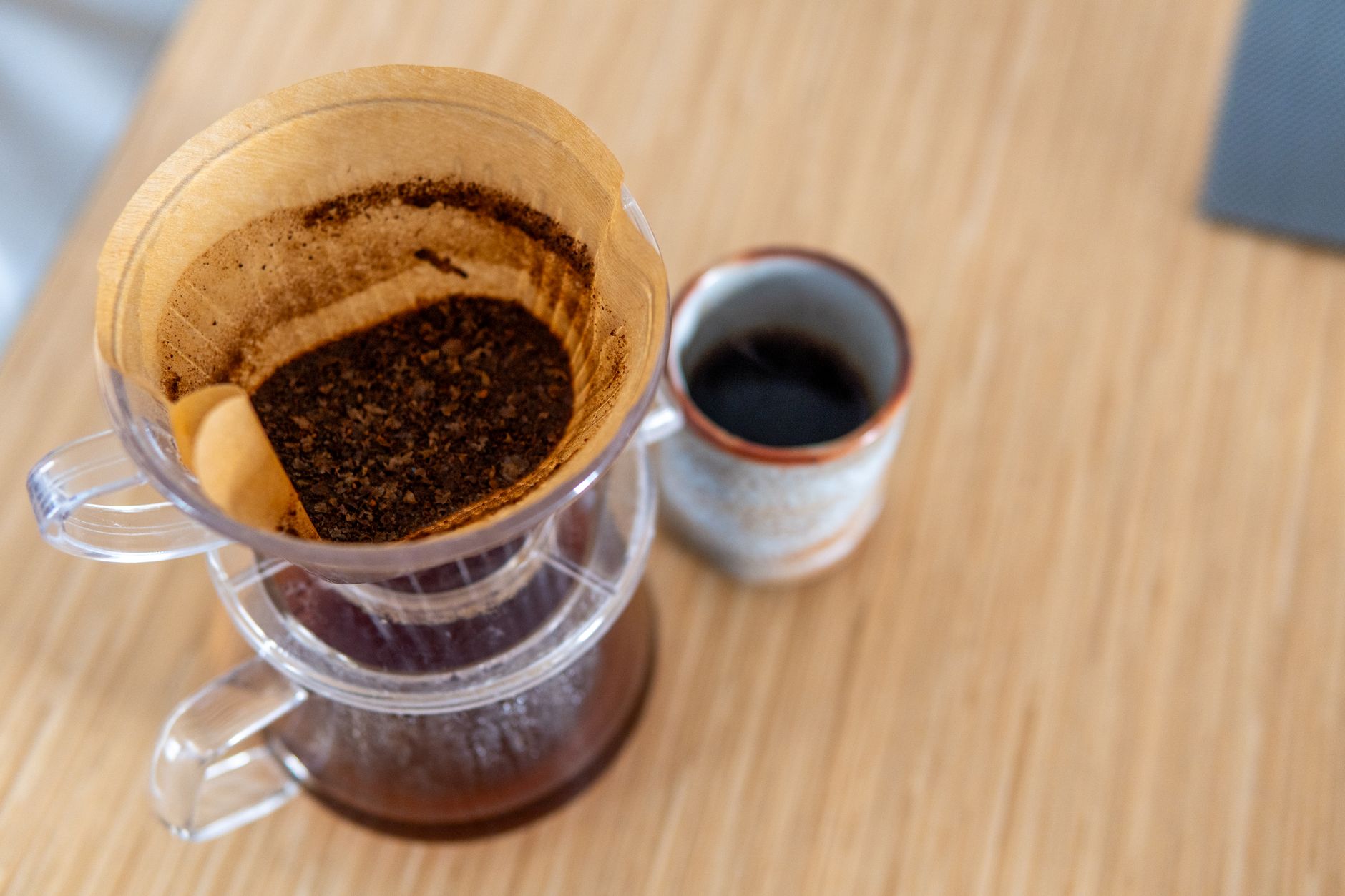
Capillary action is what wets a filter instantly, and what makes an open vessel possible.
What it did need gravity for was everything around the extraction: the water reservoir, the drip tray, the cup, the steam that rises off the puck, and the waste water that has somewhere to go. An orbital version has to replace the whole open loop with a closed one. Water arrives from the station's drinking supply in a pressurized bag, travels through sealed lines, passes through a single serve capsule, and exits directly into a sealed pouch. At no point is hot liquid in contact with open air.
That last rule is the important one. In orbit, containment is not a feature added at the end. It is the main design driver, and it shapes the choice of every component, including how the machine is cleaned and how it fails if something breaks.
The ISSpresso, developed by the Italian engineering firm Argotec with Lavazza and the Italian Space Agency and installed on the station in 2015, is the clearest public example of that job being done. It takes the form of a rack mounted unit that draws water from the station's supply, pressurizes it, pushes it through a capsule, and delivers the espresso into a pouch through a sealed line rather than into a cup.
Most of the engineering is not about coffee at all. It is about fluid containment, temperature control and safety in a sealed environment where a burst high pressure line full of hot liquid could reach equipment and people that cannot simply step aside. The machine has to run within the station's power and space limits, connect to an existing water supply, and be serviceable when the nearest workshop is 400 kilometers below.
The result is a device that shares its extraction principle with a café machine and almost nothing else. Interchangeable capsules were not chosen for convenience but because they seal the dose, contain the grounds and remove the need for a grinder, a knock box and a bin.
Two more effects follow from the physics. The first is temperature: without convection, a pouch of hot coffee cools differently than a cup does, because heat spreads by conduction through the liquid rather than being stirred through it. Temperature is controllable, but it behaves less obviously than it does on Earth.
The second is aroma, and it is where the engineering meets perception. In microgravity, body fluids shift toward the head and nasal passages feel congested, which flattens perceived flavor. Smells also behave differently in a sealed module: aroma compounds released from a pouch do not drift and spread the way they do in a kitchen, and the drinker is not leaning over an open cup catching aromas from the surface. Freeze dried coffee can keep most of its aromatic compounds, with figures around 95 percent of volatiles often quoted for the process, but the sensory path from liquid to nose is shorter and duller in orbit.
That is a large part of why crews reach for stronger flavors, and why a proper open cup is worth pursuing for reasons that have nothing to do with caffeine.
Yes, and it has been shown on the station. Astronaut Don Pettit showed a zero gravity coffee cup in 2008 that uses the shape of a wedge shaped channel rather than containment: surface tension draws the liquid along the inner corner to the rim, so the drinker sips from the edge of an open vessel without a straw. The design was later studied formally aboard the station as a capillary drink experiment.
The cup is a neat illustration of the underlying rule. Remove gravity and you have two options. You can isolate the liquid completely, which is what a sealed pouch does. Or you can work with surface tension instead of fighting it, which is what the capillary cup does, and which is also how a paper filter wets out.
What the open cup also restores is smell. Being able to hold a drink to your face and breathe in the aromas is a large part of what makes coffee worth drinking, and it is exactly what a pouch with a straw removes. For drinking, the physics is now solved. For brewing, the pressure driven machines solve extraction while the pouch solves containment. Neither part is trivial, and both were needed before a real espresso could exist in orbit.
Because nothing holds the liquid in place. With gravity effectively absent, coffee does not settle at the bottom of a vessel. It forms a drifting sphere or climbs the inside wall, and a floating mass of hot liquid inside a module is a safety problem rather than a drink.
The extraction principle transfers well, because espresso already uses a pump instead of gravity to move water through the coffee. The rest of the machine does not: the reservoir, drip tray and cup all have to be replaced with sealed lines and a pouch, which is what the ISSpresso on the station does.
They stay where they form. Without buoyancy, vapor does not rise and release, so boiling behavior changes and bubbles can build up on a heated surface. Heat then spreads mainly by conduction rather than convection, which makes temperature control different from anything on Earth.
Perception changes more than the coffee does. Fluid shifts toward the head make nasal passages feel congested, which dulls aroma, and a sealed pouch removes the surface you would normally smell. Crews make up for it by asking for stronger flavors.
Yes, with the right shape. A wedge shaped capillary cup, first shown in orbit in 2008, uses surface tension to draw liquid to the rim so it can be sipped without a straw, and it restores the smell of the drink, which a pouch cannot.