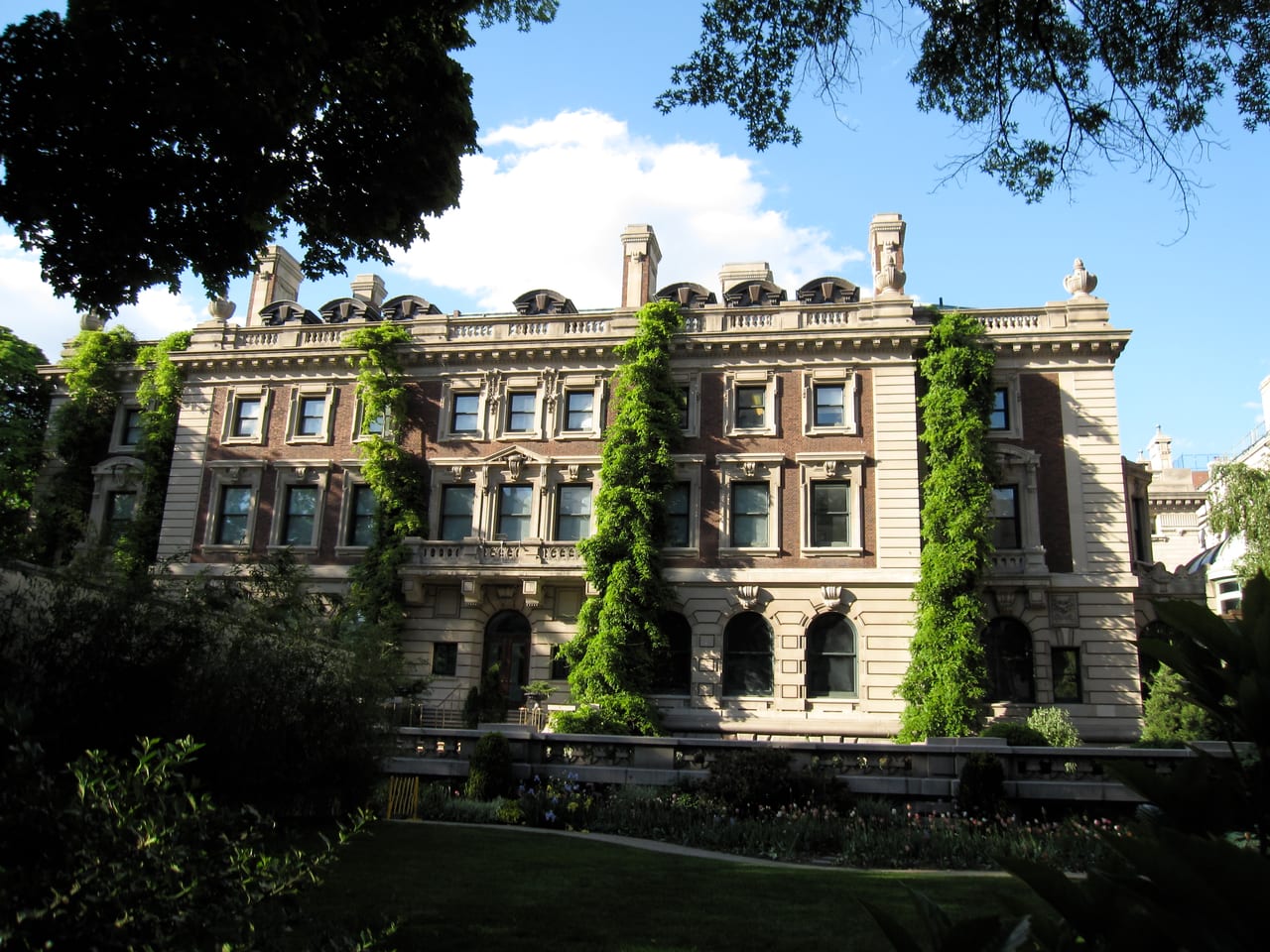
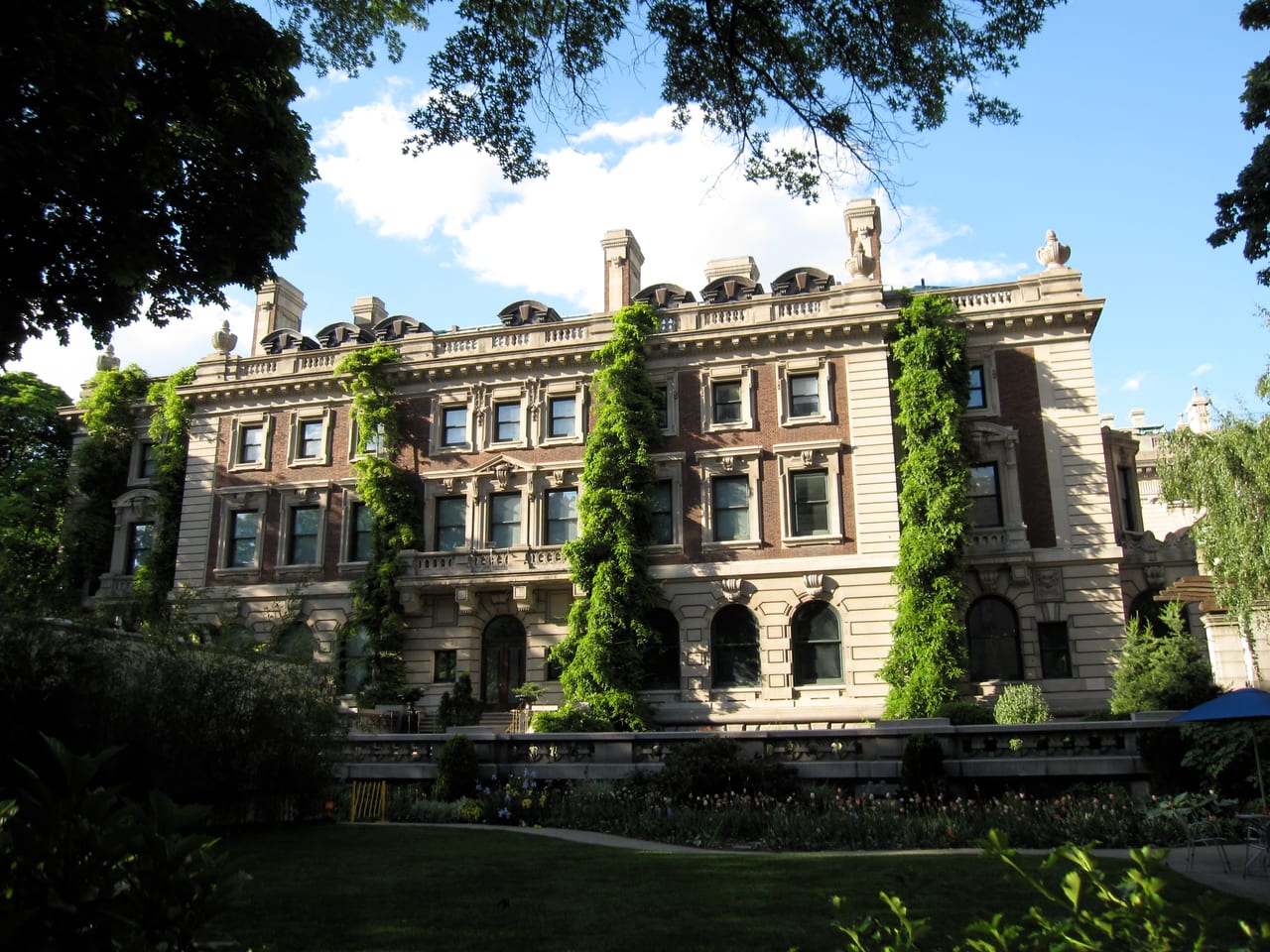
Photograph 1 of 2 of Andrew Carnegie Mansion
Museum · New York
Built in 1902 for Andrew Carnegie, the mansion combined a steel frame, five electric elevators, and room-by-room air cooling—technological bravado behind a Georgian Revival façade.
Photograph 1 of 2 of Andrew Carnegie Mansion
Andrew Carnegie purchased the site in 1898 and selected Babb, Cook & Willard through an architectural competition. Completed in 1902, the three-and-a-half-story mansion housed Carnegie, his wife Louise, and their daughter Margaret, who divided their time between New York and Skibo Castle. Louise and Andrew Carnegie remained there until their deaths in 1946 and 1919 respectively. Its brick-and-limestone exterior blends Georgian Revival symmetry with Beaux-Arts touches: rusticated stone at ground level, quoins, balconies, arched dormers, urns, and a Louis Comfort Tiffany glass canopy. A conservatory and former art-gallery wing project from the eastern side, while gardens designed by Guy Lowell and Richard Schermerhorn Jr. extend south and west. The interiors include a Scottish-oak grand staircase, oak-paneled halls, plasterwork ceilings, a picture gallery, library, family rooms, and service basements. Margaret’s adjoining townhouse was linked to the mansion in the 1920s. After a Columbia University School of Social Work tenancy from 1949 to 1971, the Carnegie Corporation gave the property to the Smithsonian in 1972. Cooper-Hewitt opened here in 1976; later renovations adapted the interiors for exhibitions and research. The property is both a New York City Landmark and a National Historic Landmark, and helped give Carnegie Hill its name.
Approach from Fifth Avenue to appreciate the mansion’s unusually visible four-sided composition, then inspect the rusticated base, stone window surrounds, balconies, cornice, dormers, and glass canopy. Within the building, look for the main hall’s oakwork and coffered ceiling, stained-glass tympanum, grand staircase, conservatory, and surviving domestic details incorporated into museum spaces. The Arthur Ross Terrace and Garden retains its rock garden and pathways; its seating area and elevated walkway provide different views of the house. The garden can be entered without museum admission, while the connected townhouses contain library and reading-room spaces.
Live availability and prices from Stay22's partners, refreshed periodically and subject to change. Booking through these links may earn us a commission at no extra cost to you. See our privacy policy.
More in New York
Find great cafés, places to stay and other interesting places to visit in New York.
