Viewpoint · Stockholm
Katarinahissen
DirectionsThe original Katarina Elevator carried Sweden’s first moving illuminated sign in 1909: the Stomatol sign, relocated to a nearby building in 1933.
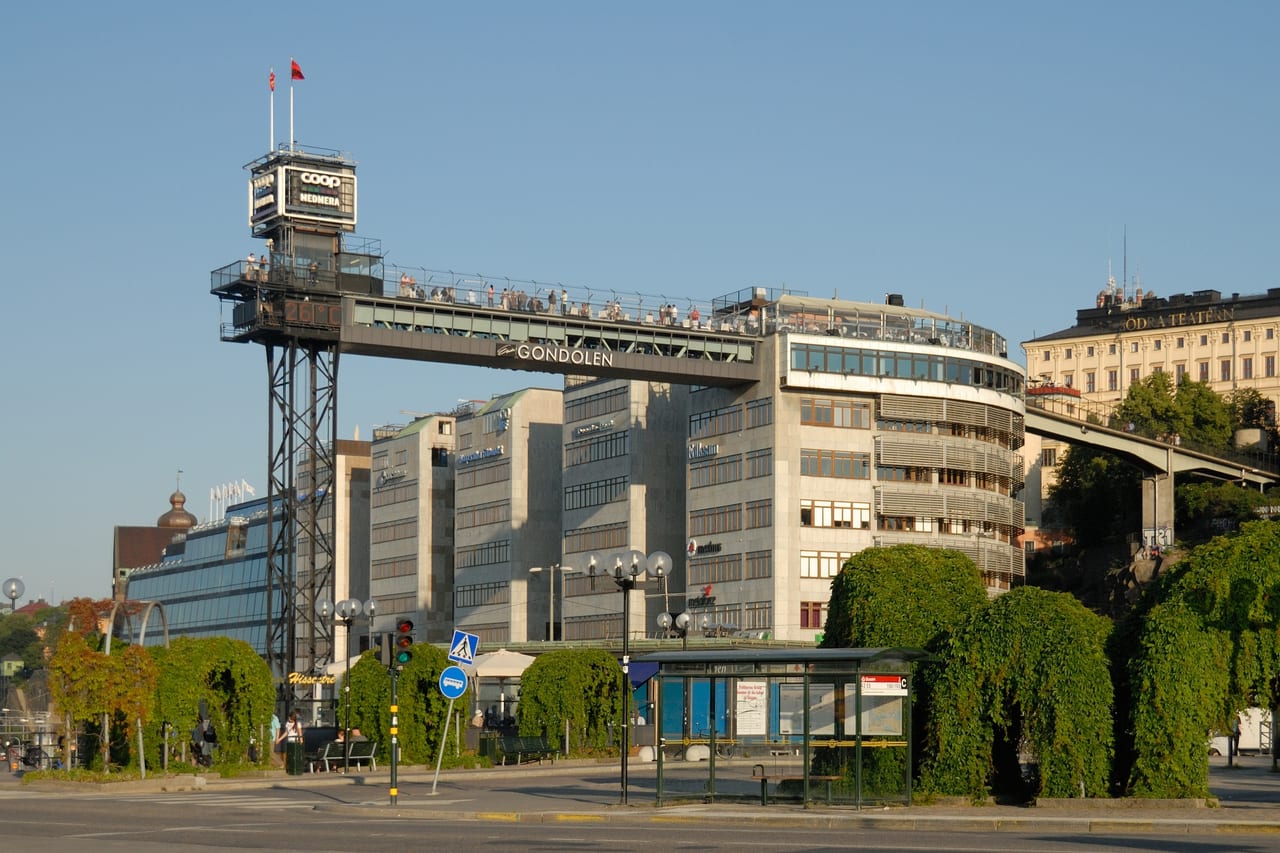
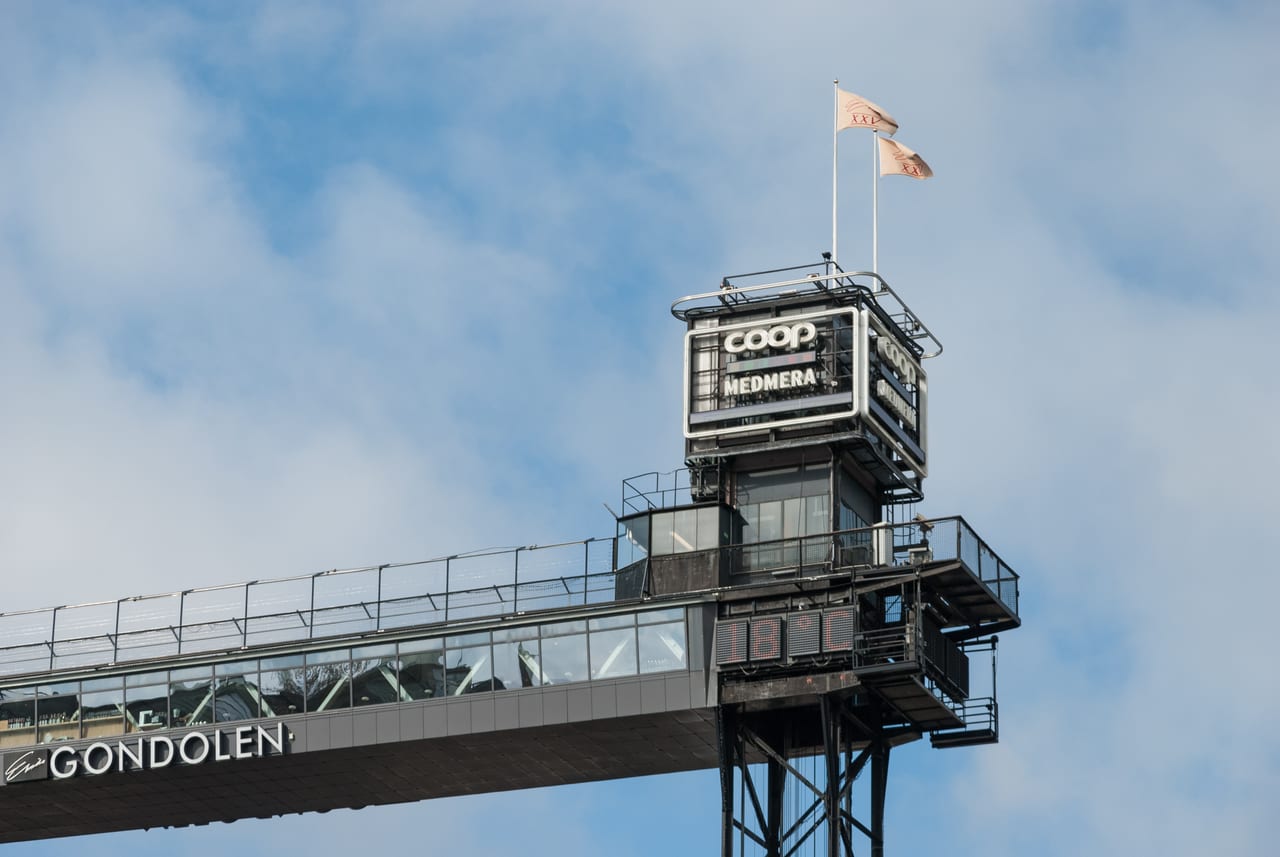
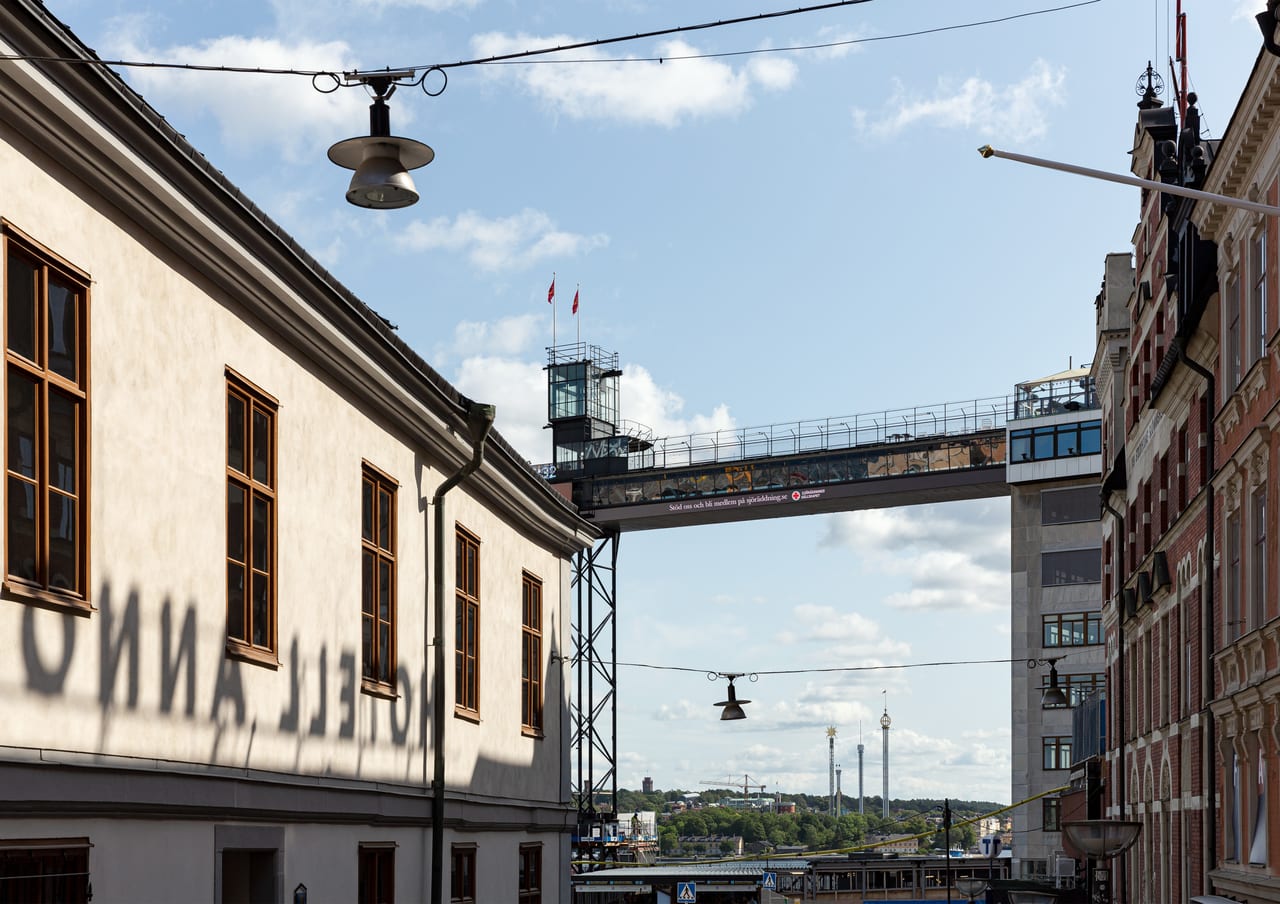
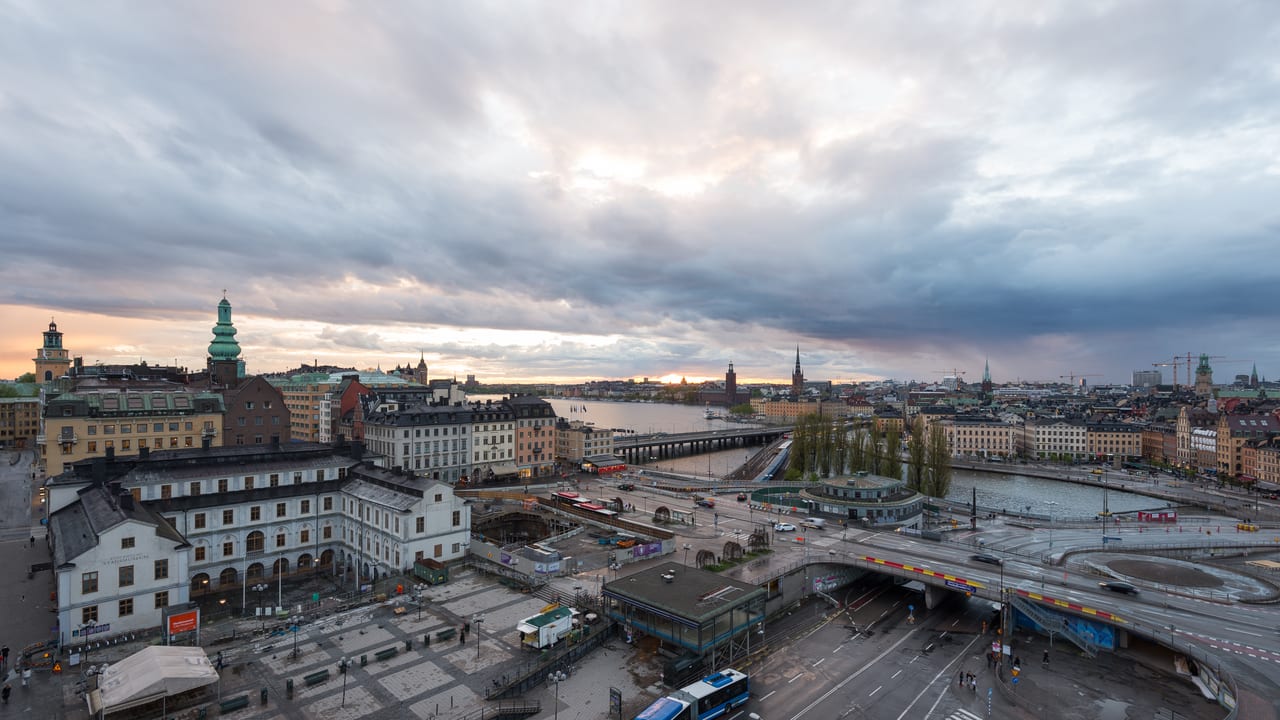
Photograph 1 of 4 of Katarinahissen
In 1881, engineer Knut Lindmark received permission to build an elevator and footbridge linking Stadsgården with Mosebacke torg, easing movement across Södermalm’s steep terrain. The first Elevator opened on 19 March 1883, charging five öre upwards and three downwards; Lecoq & Comp built the structure, while Weeks & Halsey supplied its machinery. Steam power gave way to an electric motor in 1915. The original lift closed in May 1933 and was dismantled during the creation of Slussen. Its replacement, completed in 1936 as part of the KF building, is a functionalist steel truss designed by Eskil Sundahl and Olof Thunström, with Hjalmar Granholm as structural engineer and Zetterberg as builder. ASEA Hissar supplied two manually operated cabins. A flower kiosk and staff facilities stood at its foot, while Katarina gångbro carried pedestrians over Katarinavägen. After falling into disrepair, the lift remained closed from 2010 until a new installation opened in October 2023. It has one larger cabin, a deeper shaft and a station at the quay; after a brief weather-related closure, it reopened in April 2024.
At a glance
- Built
- 1936
- Architect
- Eskil Sundahl
Ways to explore Katarinahissen
Walk across Katarina gångbro and examine the contrast between the steel elevator shaft and the concrete-and-steel pedestrian bridge. Look for the display at the top, where time and temperature alternate, and note the two pedestrian bridges linking the elevator with Mosebacke torg and the KF building. From Gondolen, look across Slussen towards Gamla stan and Saltsjön, then continue down to the quay-level station.
Places to stay near Katarinahissen

Live availability and prices from Stay22's partners, refreshed periodically and subject to change. Booking through these links may earn us a commission at no extra cost to you. See our privacy policy.
Cafés near Katarinahissen
Cafés near Katarinahissen loads as you scroll.
Attractions nearby
Attractions near Katarinahissen loads as you scroll.
Cities nearby
Cities nearby loads as you scroll.
More in Stockholm
See more of Stockholm.
Find great cafés, places to stay and other interesting places to visit in Stockholm.