Museum · Barcelona
Museu Etnològic de Barcelona
DirectionsIts Japanese holdings, assembled with sculptor and ethnologist Eudald Serra, form one of the most valuable collections of traditional popular objects and mingei art outside Japan.
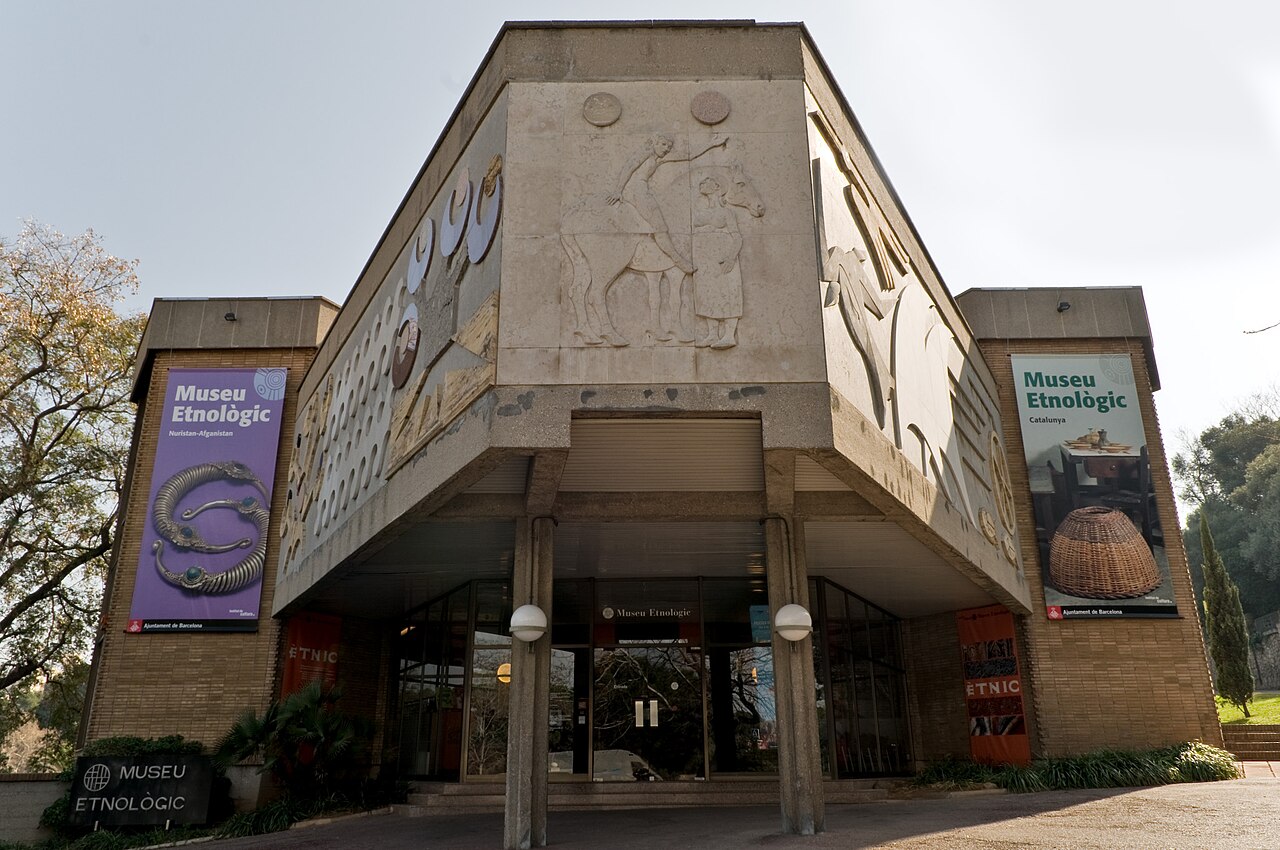
The museum’s roots reach back to the 1910s, when intellectuals and academics argued for institutions interpreting the cultural, social and economic life of traditional societies. Its present identity grew from two predecessors: the Museu d’Indústries i Arts Populars, opened at the Poble Espanyol in 1942, and the Museu Etnològic i Colonial, founded in 1949. Their collections repeatedly divided and reunited before the institutions merged as the Museu Etnològic i de Cultures del Món in 2018. Its collections grew through field campaigns led by Ramon Violant, Joan Amades, August Panyella and others across Catalonia, the Iberian Peninsula, Africa, Asia and the Americas. Today, more than 70,000 objects document domestic life, work, ritual and social change. After a major remodelling and new museography in 2015, everyday objects became the organising thread. The 2018 merger shifted the institution towards social anthropology, cultural comparison and critical examination of colonial legacies, including exhibitions on Equatorial Guinea and Ifni.
At a glance
- Built
- 1949
- Heritage
- bien de interés cultural
Ways to explore Museu Etnològic de Barcelona
Begin at the Montjuïc site, where the renovated interior uses brighter, broader spaces and non-linear routes between displays; the hexagonal modules are particularly worth noticing. Read the collections through ordinary life: clothing, food, tools, festivals, religious objects and transhumance provide a strong entry point. At Montcada, examine the Palau Nadal and Palau del Marquès de Llo, then seek exhibitions that question colonial viewpoints rather than treating objects solely as art.
Places to stay near Museu Etnològic de Barcelona

Live availability and prices from Stay22's partners, refreshed periodically and subject to change. Booking through these links may earn us a commission at no extra cost to you. See our privacy policy.
Cafés near Museu Etnològic de Barcelona
Cafés near Museu Etnològic de Barcelona loads as you scroll.
Attractions nearby
Attractions near Museu Etnològic de Barcelona loads as you scroll.
Cities nearby
Cities nearby loads as you scroll.
More in Barcelona
See more of Barcelona.
Find great cafés, places to stay and other interesting places to visit in Barcelona.