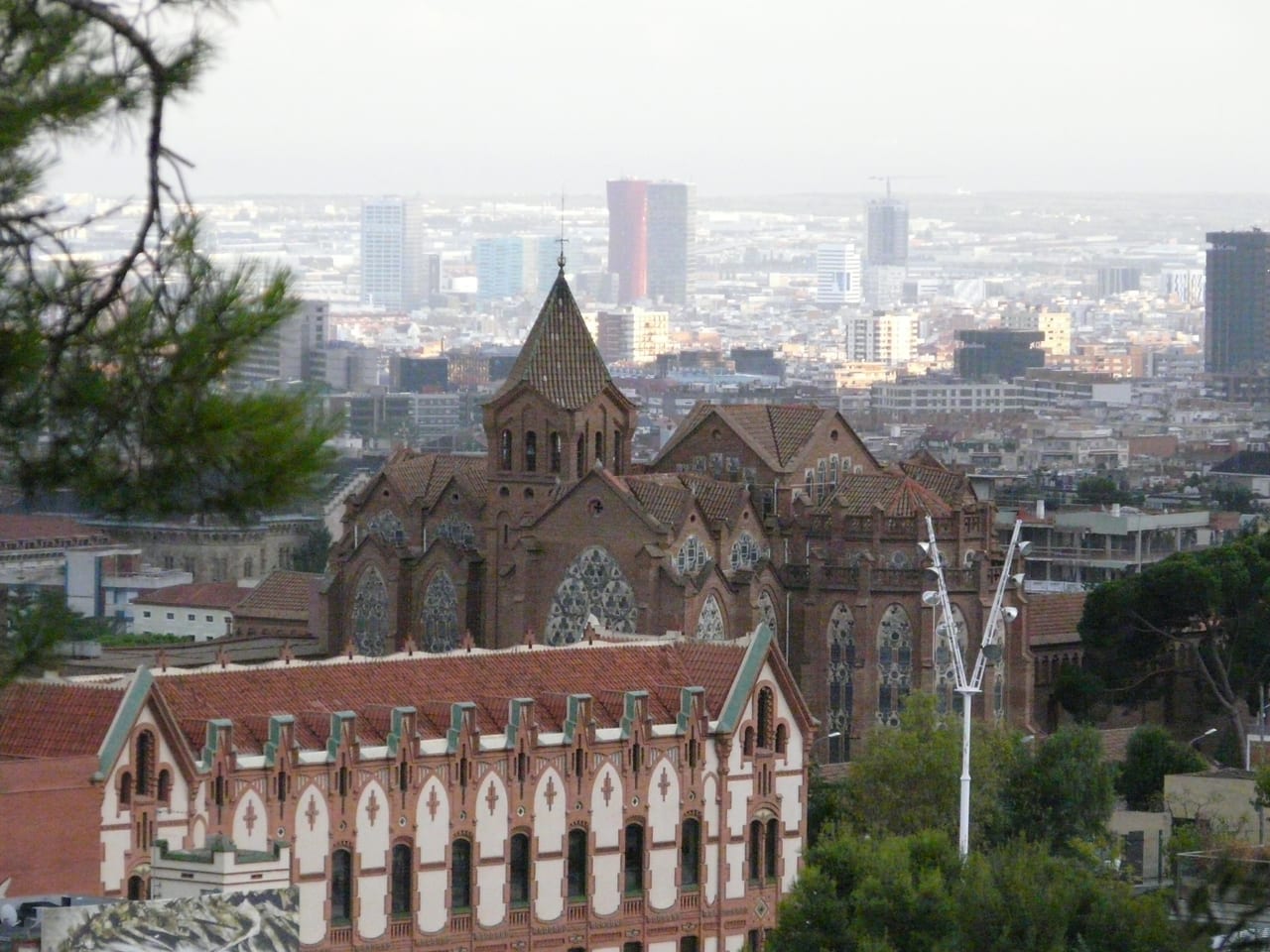
Photograph 1 of 9 of Monestir de Santa Maria de Valldonzella
Church · Barcelona
In 1410, King Martin the Humane fell ill and died within Valldonzella, one episode in a history repeatedly shaped by royal patronage and forced relocations.
Photograph 1 of 9 of Monestir de Santa Maria de Valldonzella
Valldonzella began at the Romanesque chapel of Santa Margarida, beside a farmhouse in a wooded Collserola valley. A small female community was present by 1175; in 1226, Berenguer II of Palou transferred the site to Santes Creus, and the Cistercian monastery opened in 1237 with eleven nuns under its first abbess, Berenguera de Cervera. Noble unrest drove repeated searches for safety, leading James the Conqueror to grant permission for a new foundation in Barcelona in 1263. The community moved six years later, and the church followed after Bishop Arnau de Gurb appealed for alms. The monastery grew to 35 nuns in 1308 and about 50 early in the fourteenth century, many from Barcelona’s nobility. War brought further upheaval: the monastery was destroyed during the 1652 siege, damaged by the French in 1814, and burned during the Tragic Week in 1909. The community reached its present site in 1913. Bernardí Martorell i Puig designed the new complex, built with Josep Bayó, in Catalan modernism. Its church, inaugurated in 1919 and consecrated in 1922, combines a Gothic-inspired interior with early twentieth-century eclecticism: a single nave, ribbed quadripartite vaults, pointed arches, artificial stone, brick, stained glass, and a heptagonal sanctuary with an ambulatory. The square cloister exceeds 30 metres per side; reused capitals and Valencian tiles survive in the chapter room. The monastery is a Cultural Asset of Local Interest.
If access is available, examine the church’s 45-metre nave and the transition between its medieval-looking ribbed vaults and modernist materials. Look closely at the stained-glass windows, the heptagonal sanctuary and the ambulatory’s brick and artificial-stone detailing. In the cloister, compare the exposed-brick arcades with their artificial-stone bases, capitals and arches. The fifteenth-century choir stalls, acquired from Sant Cugat in 1911, remain notably well preserved. The resident community also undertakes bookbinding and offers hospitality.
Live availability and prices from Stay22's partners, refreshed periodically and subject to change. Booking through these links may earn us a commission at no extra cost to you. See our privacy policy.
More in Barcelona
Find great cafés, places to stay and other interesting places to visit in Barcelona.
