Heritage landscape · Barcelona
Cementiri de Sant Andreu de Palomar
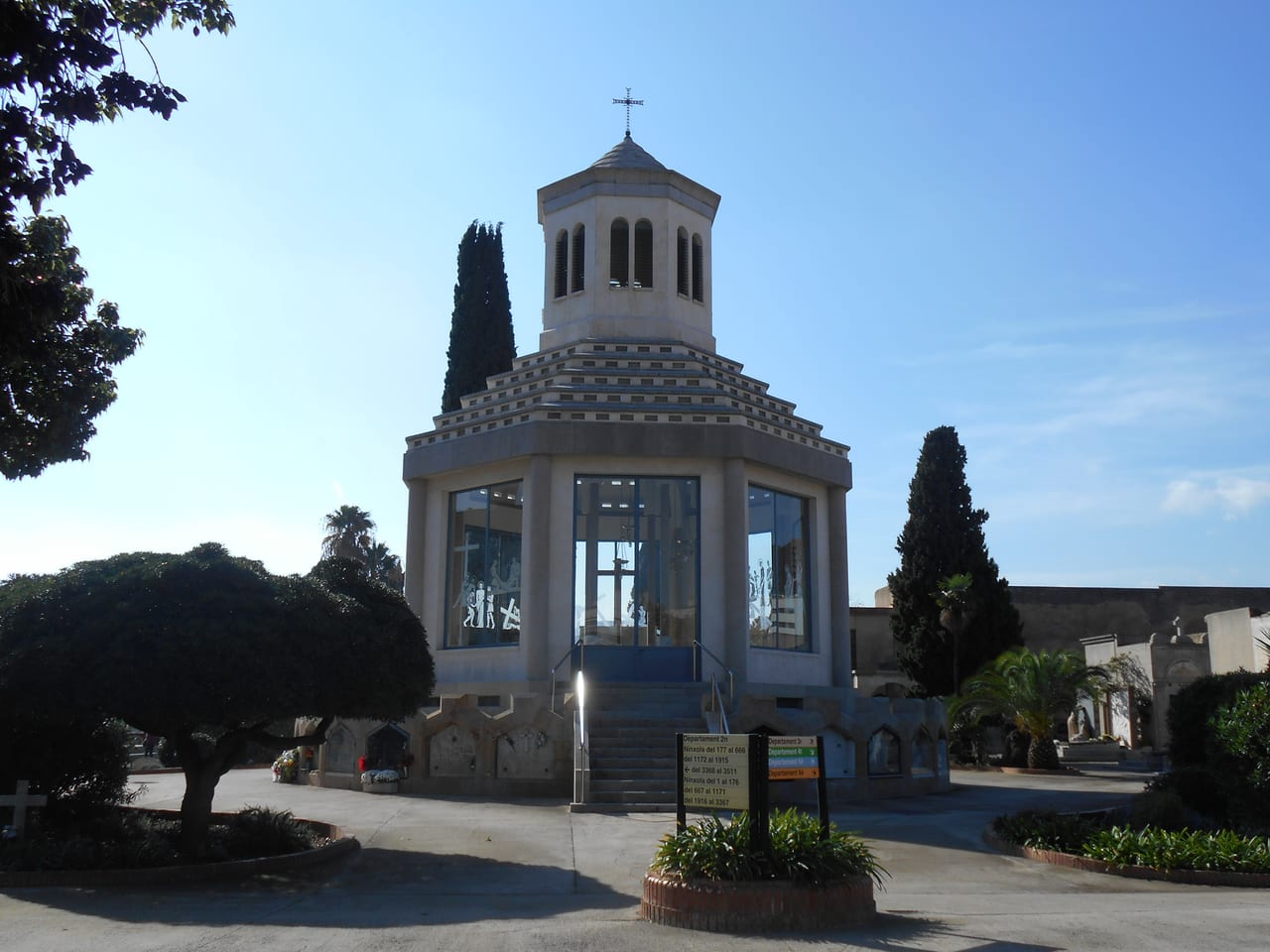
DirectionsIts present chapel, designed by Ramon Tèrmens Mauri and completed in 1958, introduces an organicist note into a cemetery otherwise marked by neoclassical architecture.
Photograph 1 of 4 of Cementiri de Sant Andreu de Palomar
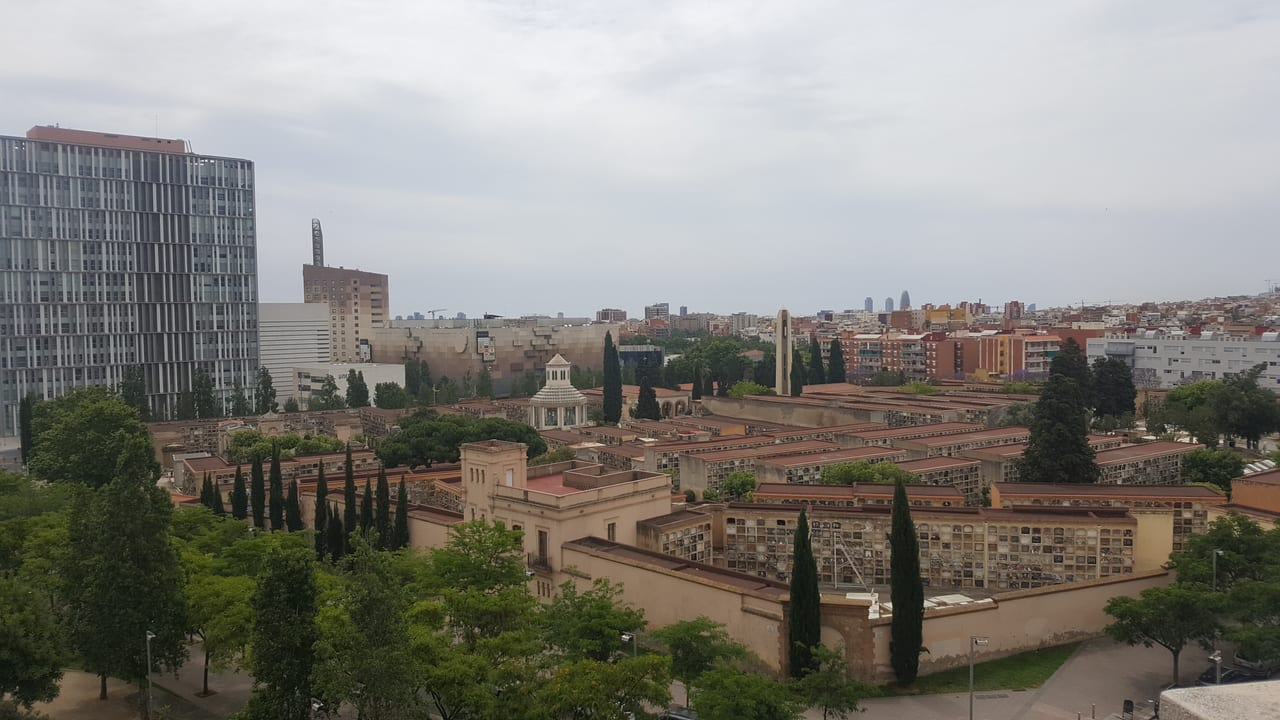
Opened in 1834, the cemetery was created for Sant Andreu de Palomar after a royal order prohibited burials in parish cemeteries. It became the second necropolis on the Pla de Barcelona, after Poblenou, and occupied land near the village belonging to the Can Calç farmhouse. Its fabric developed in stages. The 1899 expansion included 500 new niches and a project by Pere Falqués; a new chapel followed in 1913, and the final enlargement, designed by Agustí Domingo Verdaguer, took place in 1919. Domingo Verdaguer also designed the façade facing Carrer dels Garrofers, inaugurated in 1927. The grounds include a Hebrew enclosure and the city’s military cemetery. The Panteó del Soldat, attributed to Frederic Marès and Juan Gordillo and dating from 1941–1955, commemorates soldiers without the means to pay for burial. In 2019, its niches were daubed with brown paint; the Spanish Army reported the incident, and it holds an annual November tribute to the fallen. The cemetery has urban protection and is catalogued as a site with elements of interest, category C.
At a glance
- Style
- Neoclassical architecture
- Heritage
- With urban protection
Ways to explore Cementiri de Sant Andreu de Palomar
Look for the Hebrew enclosure, where burials lie directly in the ground in accordance with Jewish tradition. Another distinctive stop is the tomb of Francesc Pla, the young seminarian remembered locally as the “little saint of Sant Andreu”; tradition links his death to the prohibition against celebrating Mass after his mother practised spiritism. These two areas provide the cemetery’s most personal and unusual points of focus.
Places to stay near Cementiri de Sant Andreu de Palomar

Live availability and prices from Stay22's partners, refreshed periodically and subject to change. Booking through these links may earn us a commission at no extra cost to you. See our privacy policy.
Cafés near Cementiri de Sant Andreu de Palomar
Cafés near Cementiri de Sant Andreu de Palomar loads as you scroll.
Attractions nearby
Attractions near Cementiri de Sant Andreu de Palomar loads as you scroll.
Cities nearby
Cities nearby loads as you scroll.
More in Barcelona
See more of Barcelona.
Find great cafés, places to stay and other interesting places to visit in Barcelona.