Museum · Barcelona
Casa Bloc
DirectionsThe Spanish Civil War turned Casa Bloc from a pioneering workers’ housing scheme into accommodation for Nationalist families, widows, orphans and, later, national police.
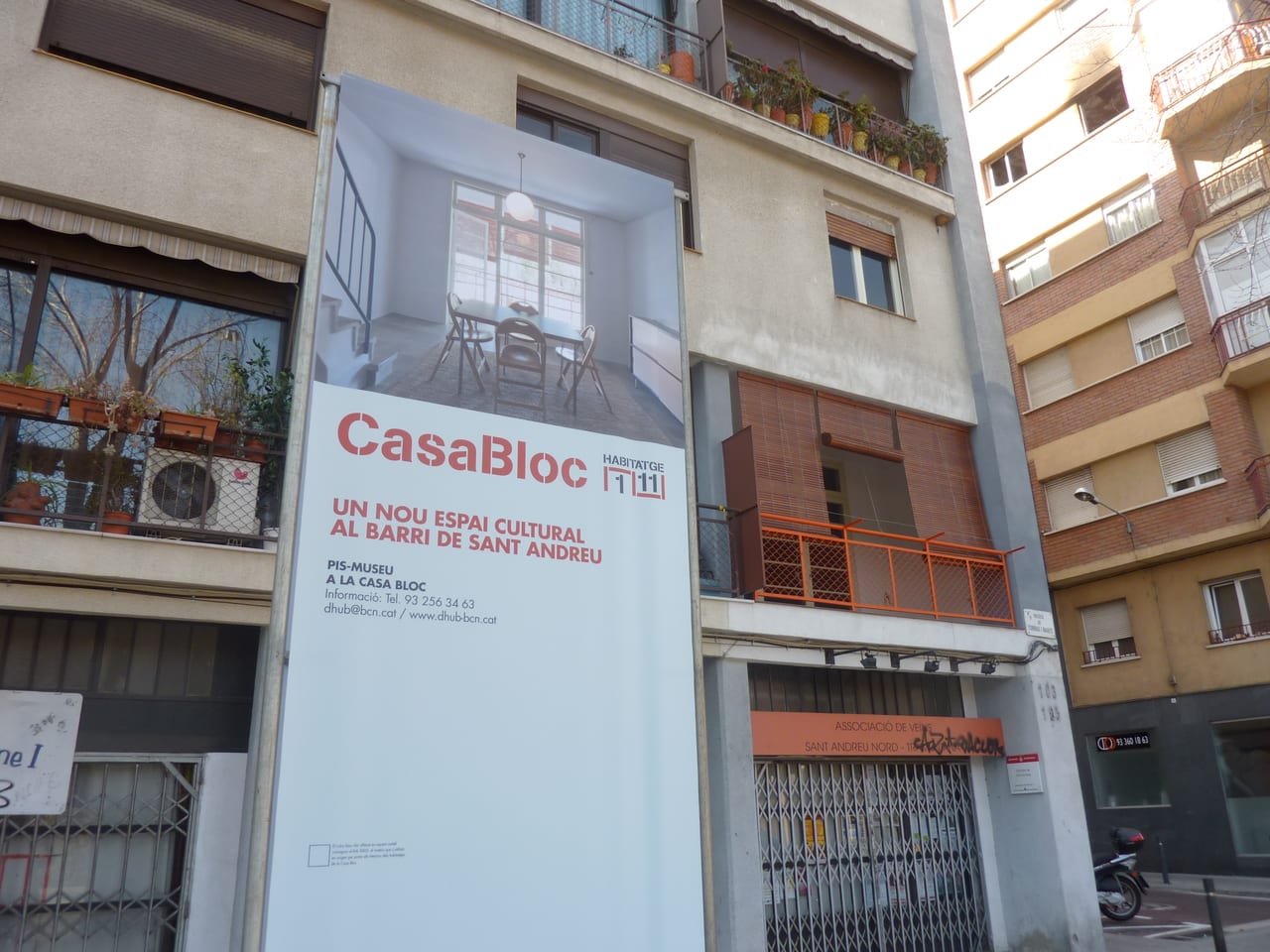
Casa Bloc grew from the Generalitat de Catalunya’s 1932–1933 experiment with small workers’ houses, whose construction costs were tracked through precise controls on labour and materials. Supported by Casa Obrera, the project sought to replace poor housing with affordable, functional accommodation while encouraging coexistence and a collective urban identity. Francesc Macià attended the laying of the first stone in 1933. Built between 1932 and 1936, the rationalist complex embodied European avant-garde ideas through its economical planning and new approach to workers’ domestic life. The war interrupted that programme. Communal ground-floor spaces, parts of the planned vertical access and corridors were altered, weakening the architects’ intended social and cultural purpose. The concept was not fully recognised again until after the restoration of democracy. In 1992, the Generalitat declared Casa Bloc a protected monument; a restoration completed in 2012 established its museum role and renewed attention to Catalan rationalism.
At a glance
- Built
- 1932
- Architect
- Josep Lluís Sert
- Style
- rationalism
- Heritage
- bien de interés cultural
Ways to explore Casa Bloc
Visit Apartment 1/11 on a guided tour, reserving in advance. The clear division between daytime and sleeping areas places the entrance, laundry with shower, kitchen, bathroom, dining room and terrace on the lower level, with two bedrooms above. The exterior rooms provide natural light, while openings on both sides of the block allow cross-ventilation. Original cement tiles, folding dining-room doors and carefully matched 1930s fittings complete the restored interior.
Places to stay near Casa Bloc

Live availability and prices from Stay22's partners, refreshed periodically and subject to change. Booking through these links may earn us a commission at no extra cost to you. See our privacy policy.
Cafés near Casa Bloc
Cafés near Casa Bloc loads as you scroll.
Attractions nearby
Attractions near Casa Bloc loads as you scroll.
Cities nearby
Cities nearby loads as you scroll.
More in Barcelona
See more of Barcelona.
Find great cafés, places to stay and other interesting places to visit in Barcelona.