Monument · Rome
Trajan's Column
DirectionsIts 200-metre spiral relief recounts the Dacian Wars through roughly 2,500 figures, creating one of antiquity’s most sustained and intricate historical narratives.
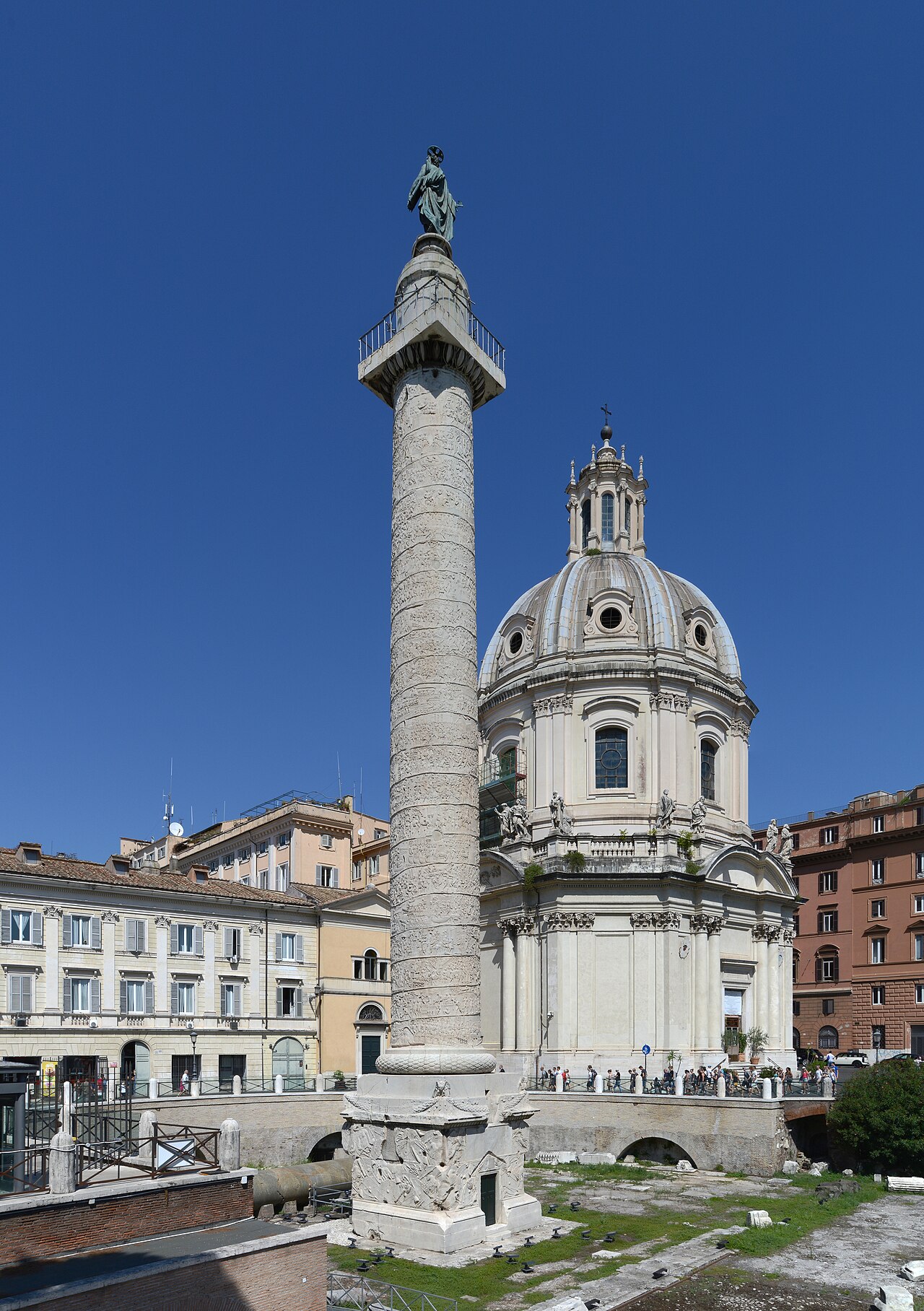
Inaugurated on 12 May 113, Trajan’s Column commemorated the emperor’s conquest of Dacia in the wars of 101–106. Designed by Apollodorus of Damascus, it stood in a narrow court of Trajan’s Forum, behind the Basilica Ulpia and between two libraries, where surrounding galleries helped viewers follow its sculpture. The hollow column is 100 Roman feet high and formed from 18 enormous blocks of Carrara marble, each weighing about 40 tonnes. Its Tuscan order was adapted with fluting, an egg-patterned capital and a crowning base. The pedestal carried weapon piles, eagles and an inscription recording both the Senate’s offering and the former height of the ground between the Capitoline and Quirinal hills. A chamber held the ashes of Trajan and Plotina, while the original summit statue portrayed Trajan himself. The column survived the ruin of the surrounding complex. Public ownership and protection were affirmed in 1162; in 1587 Domenico Fontana replaced the ancient summit statue with bronze Saint Peter. Napoleon’s forces considered removing it in 1798, but transport costs and papal administration prevented the scheme. Artistically, its low-relief historical narration marked a decisive, highly original development in Roman art.
At a glance
- Built
- 113
- Architect
- Apollodorus of Damascus
Ways to explore Trajan's Column
Start with the pedestal: examine the carved weapon piles, the four eagle-and-laurel groups and the inscription above the entrance. Follow the spiral upward, watching for Trajan’s recurring appearances, military speeches, sacrifices, marches, camp construction and scenes of submission. Look closely at the varied treatment of trees, rocks, bridges, fortifications and armour. The interior stair has 185 steps and was lit by 43 openings cut into the relief; the ancient polychromy and miniature bronze weapons are now lost.
Places to stay near Trajan's Column

Live availability and prices from Stay22's partners, refreshed periodically and subject to change. Booking through these links may earn us a commission at no extra cost to you. See our privacy policy.
Cafés near Trajan's Column
Cafés near Trajan's Column loads as you scroll.
Attractions nearby
Attractions near Trajan's Column loads as you scroll.
Cities nearby
Cities nearby loads as you scroll.
More in Rome
See more of Rome.
Find great cafés, places to stay and other interesting places to visit in Rome.