Ancient site · Rome
Temple of Saturn
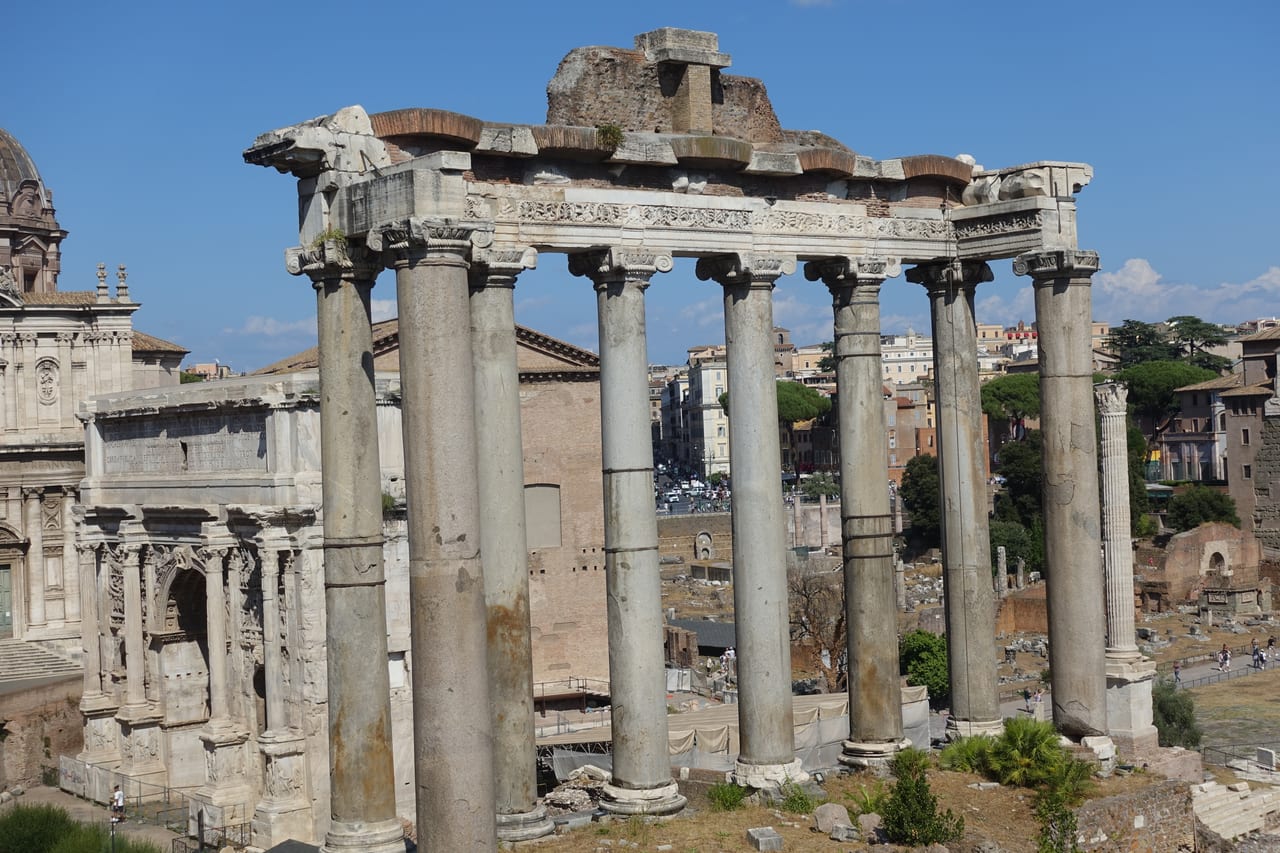
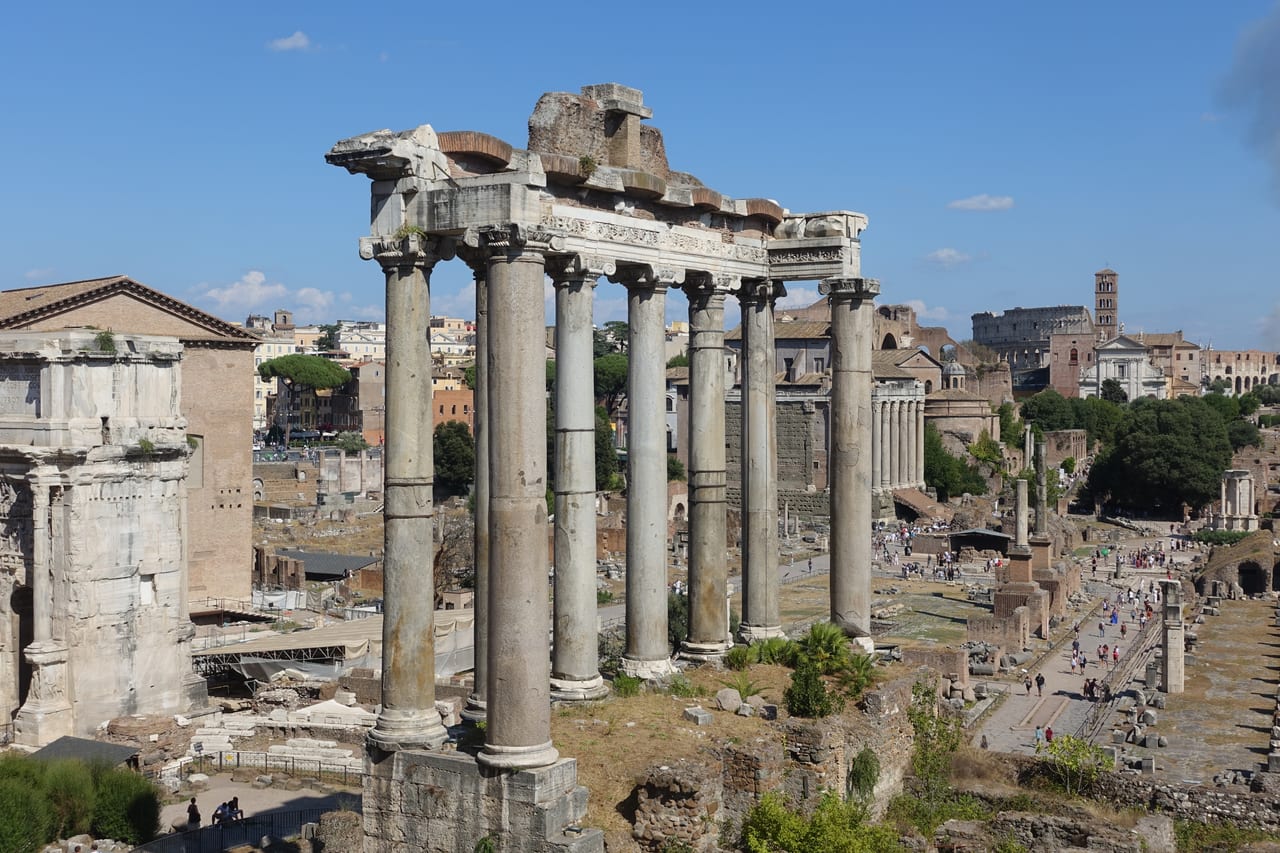
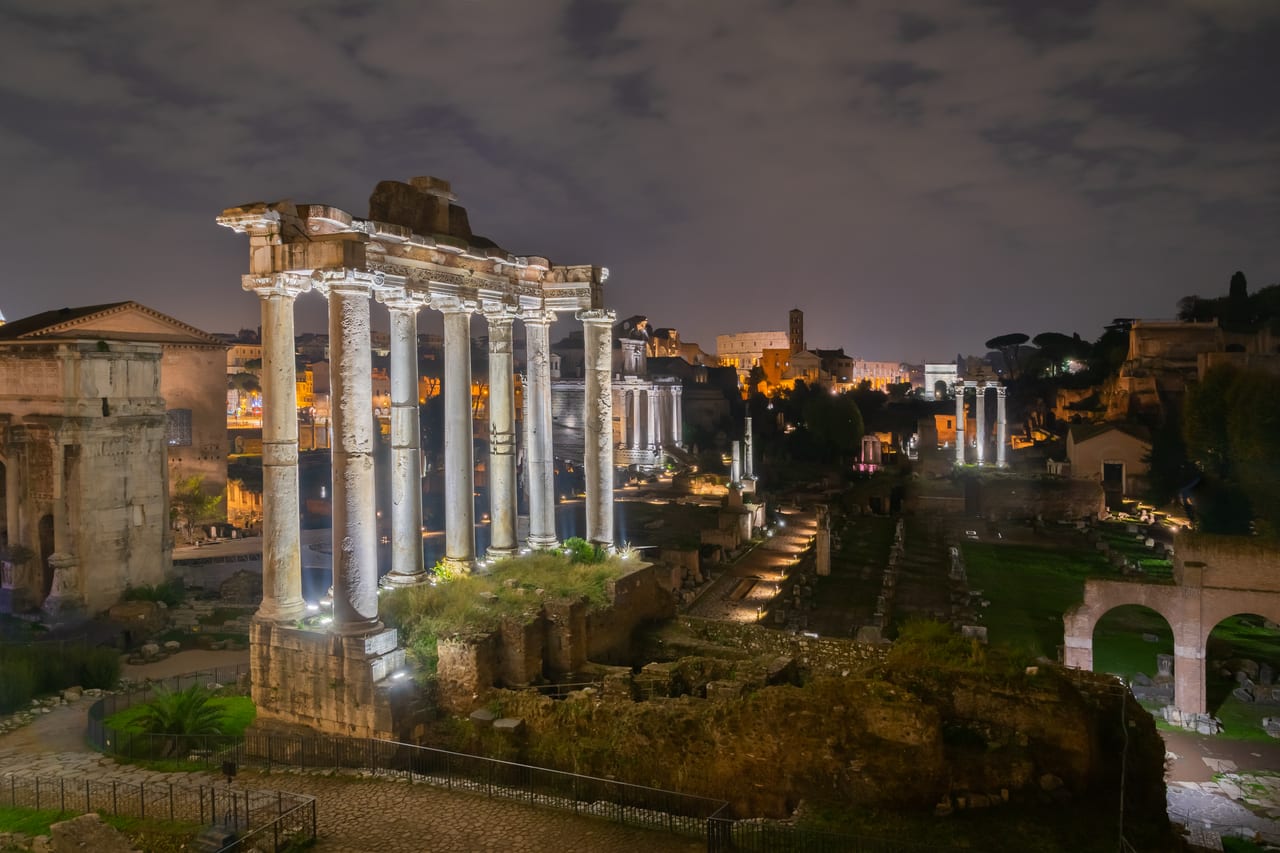
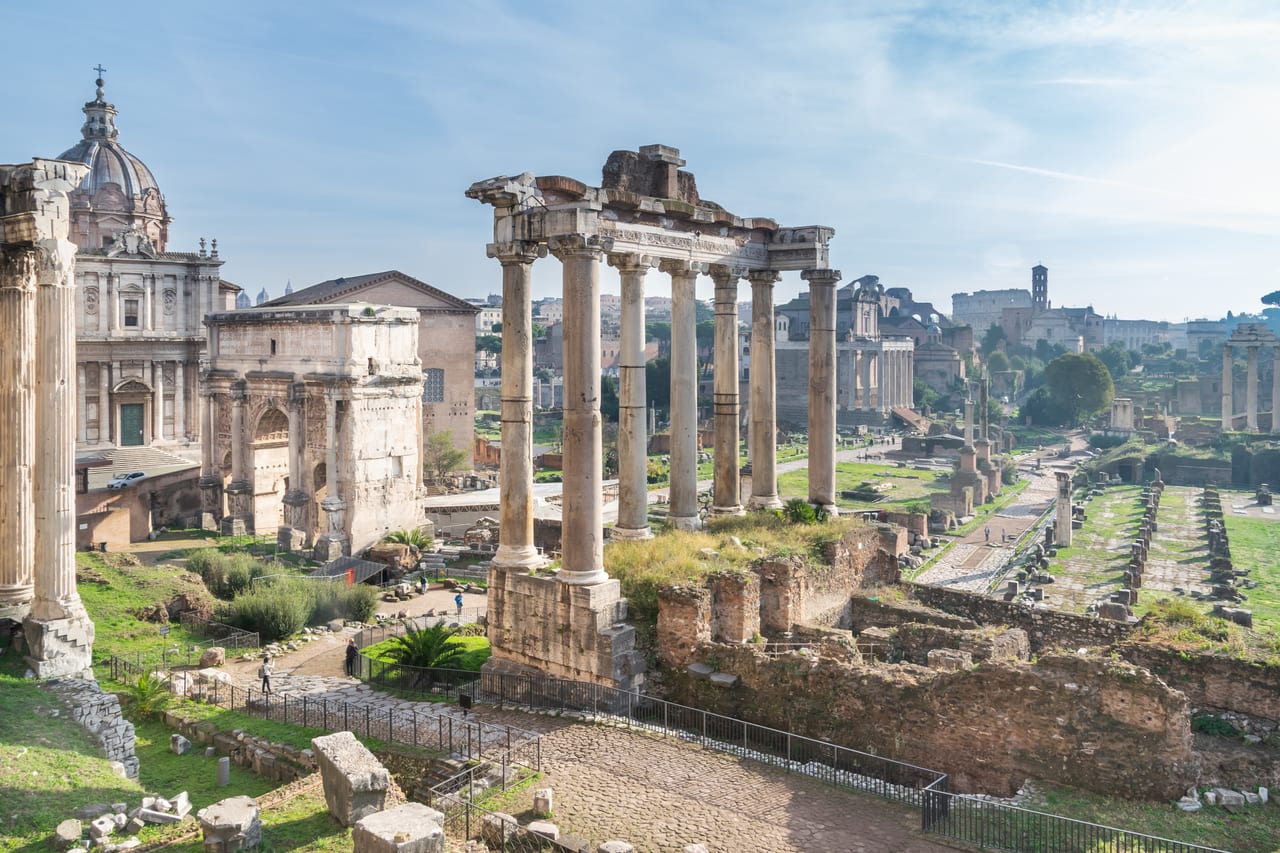
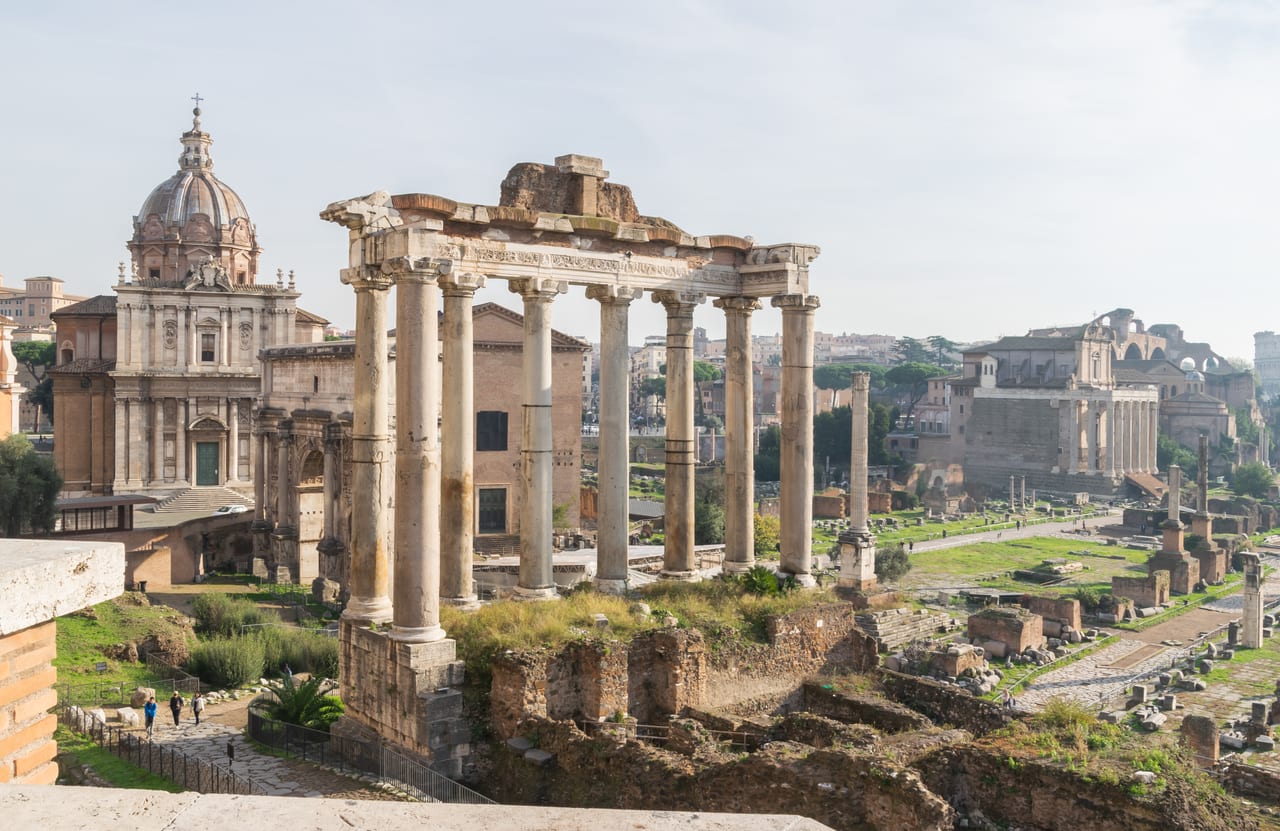
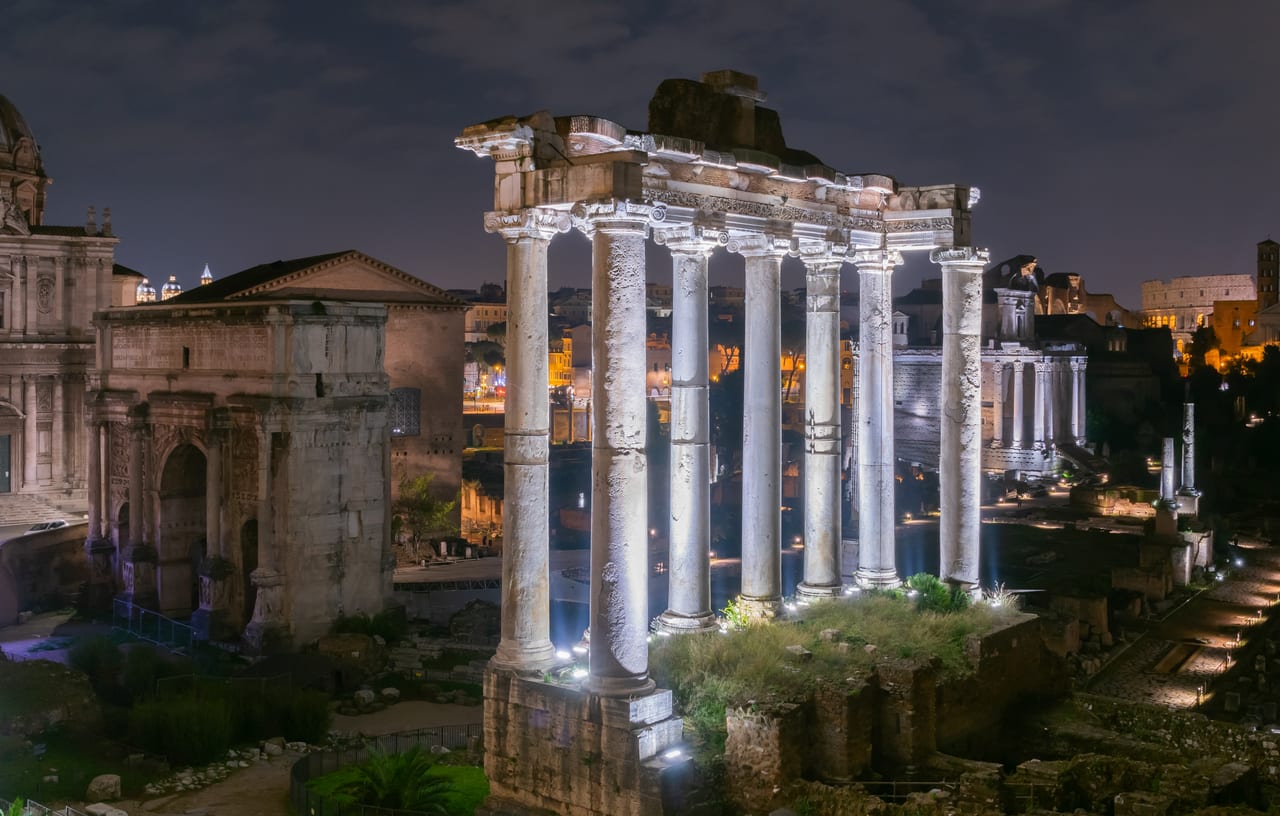
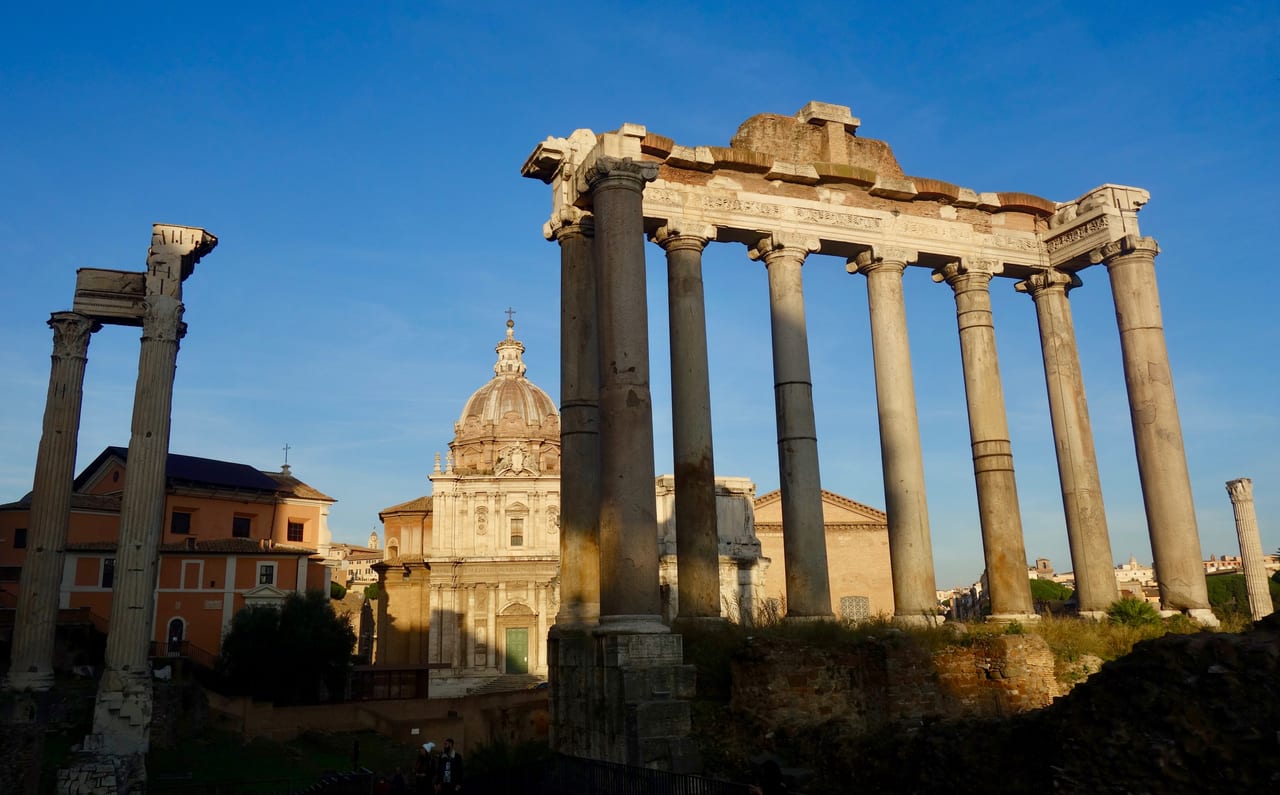
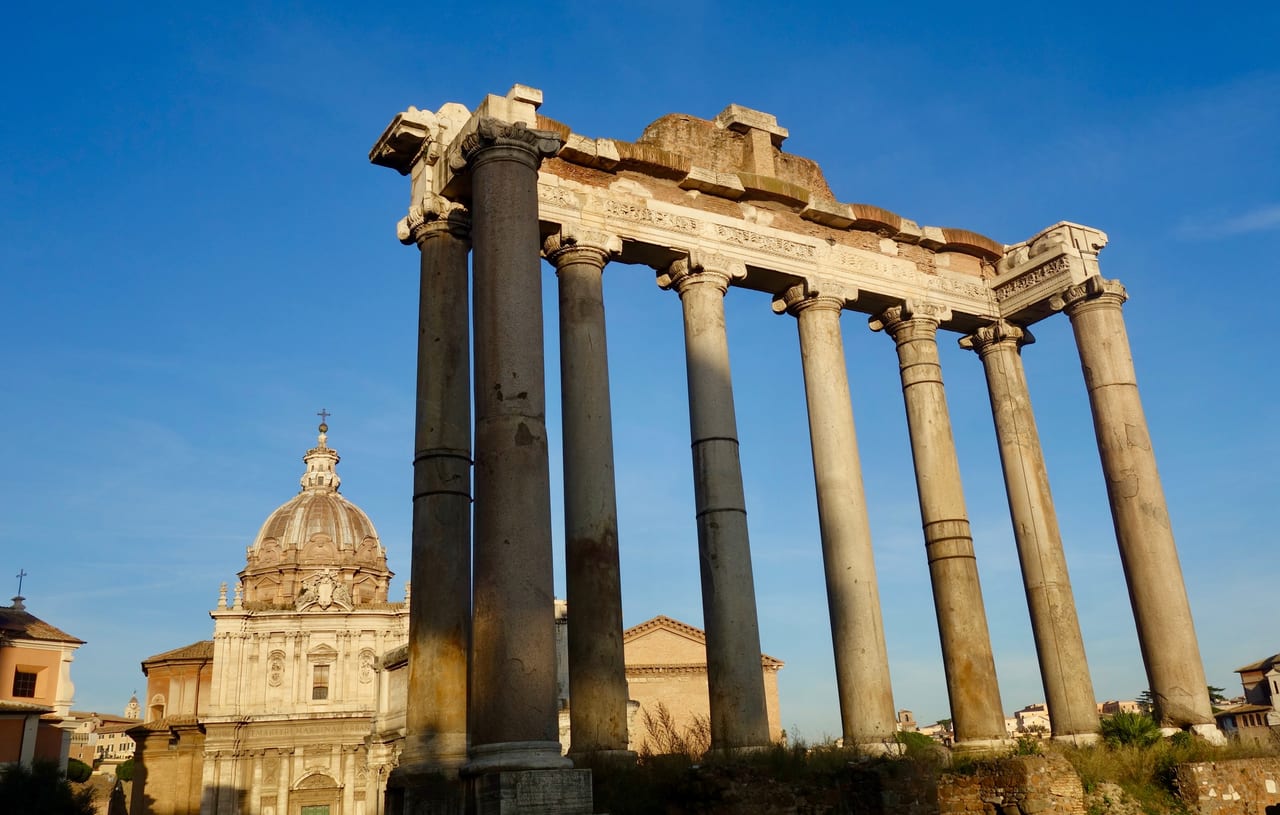
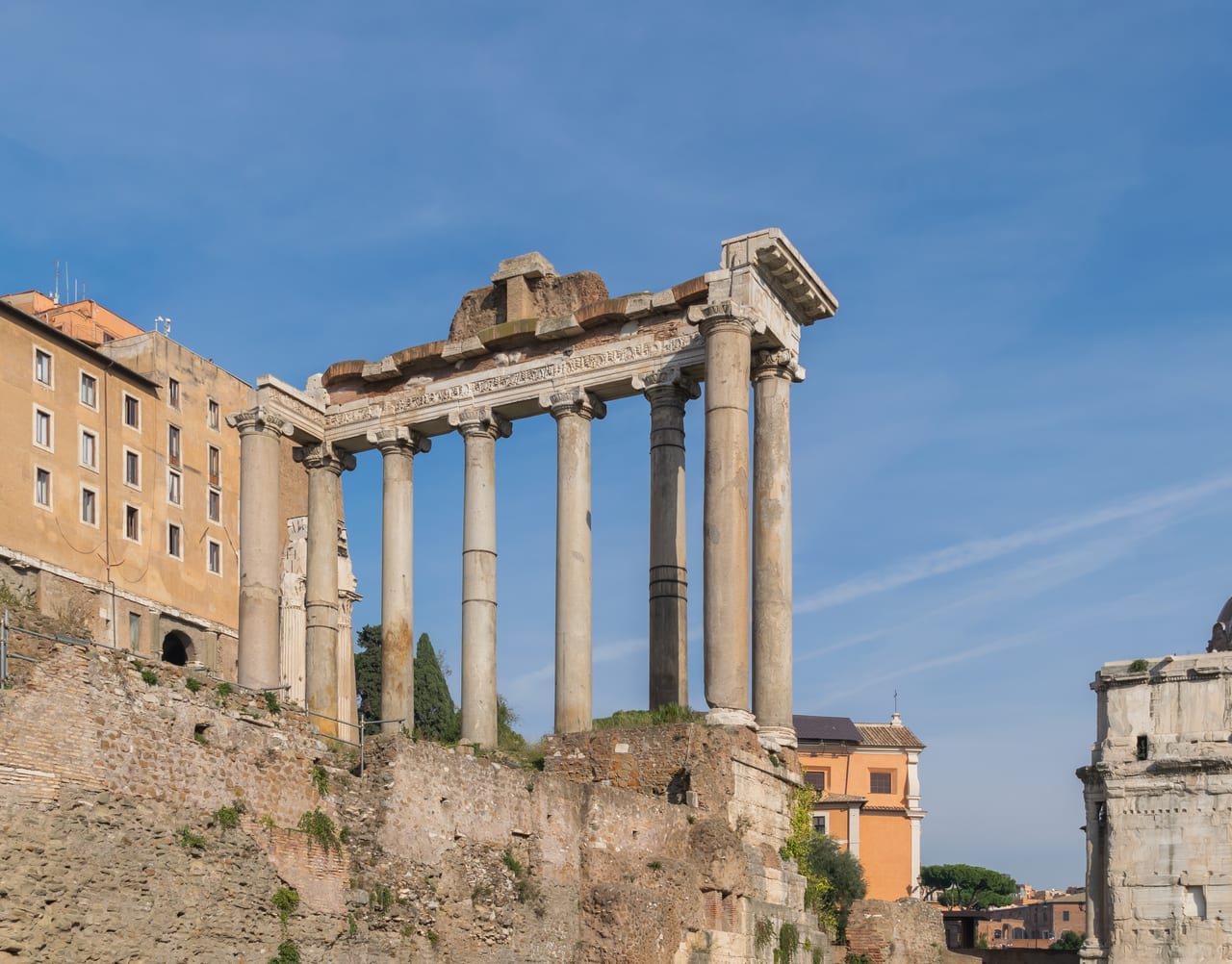
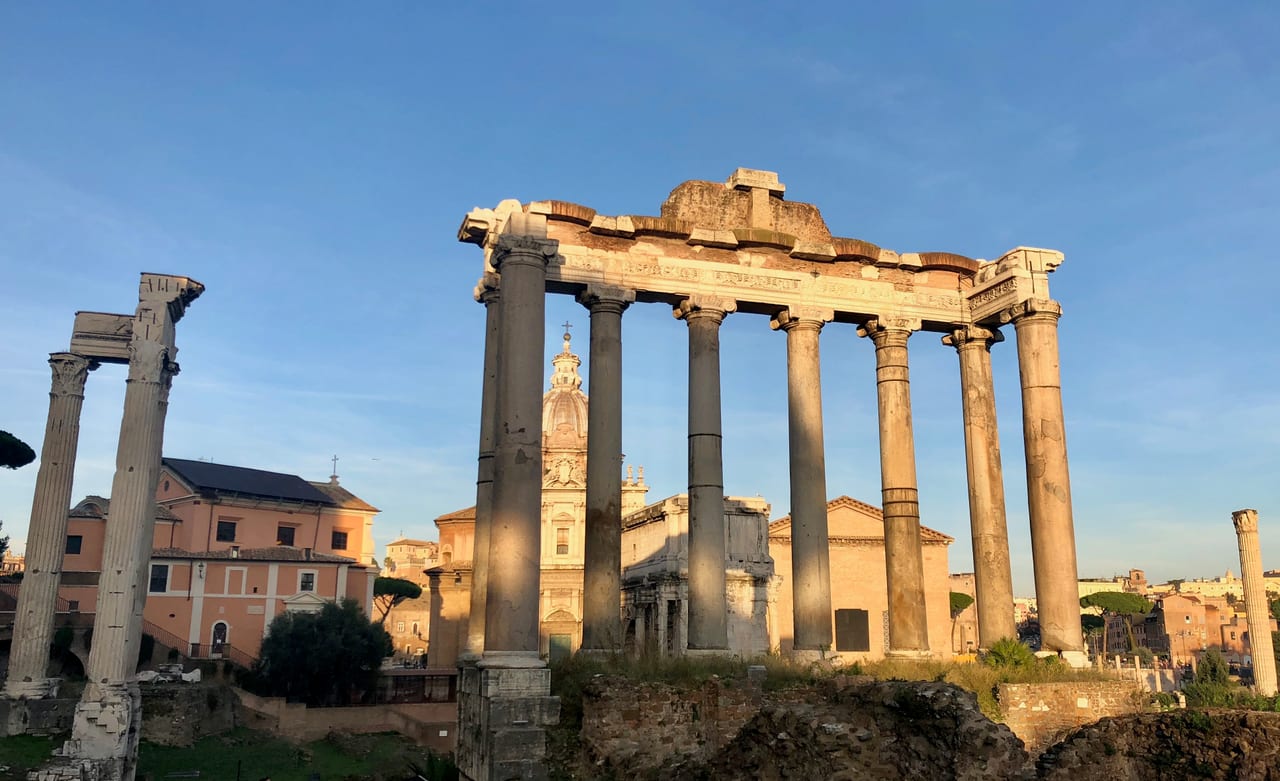
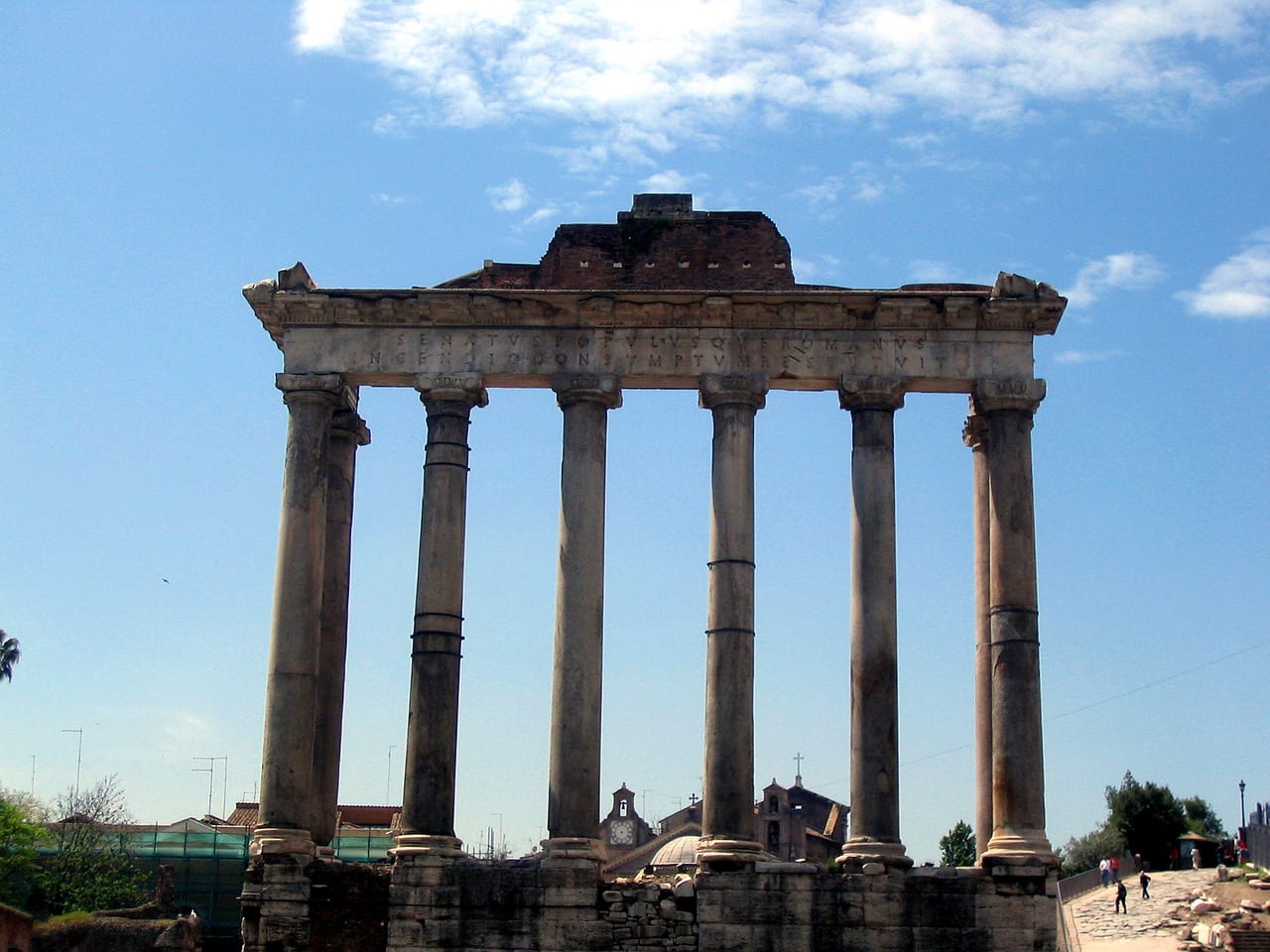
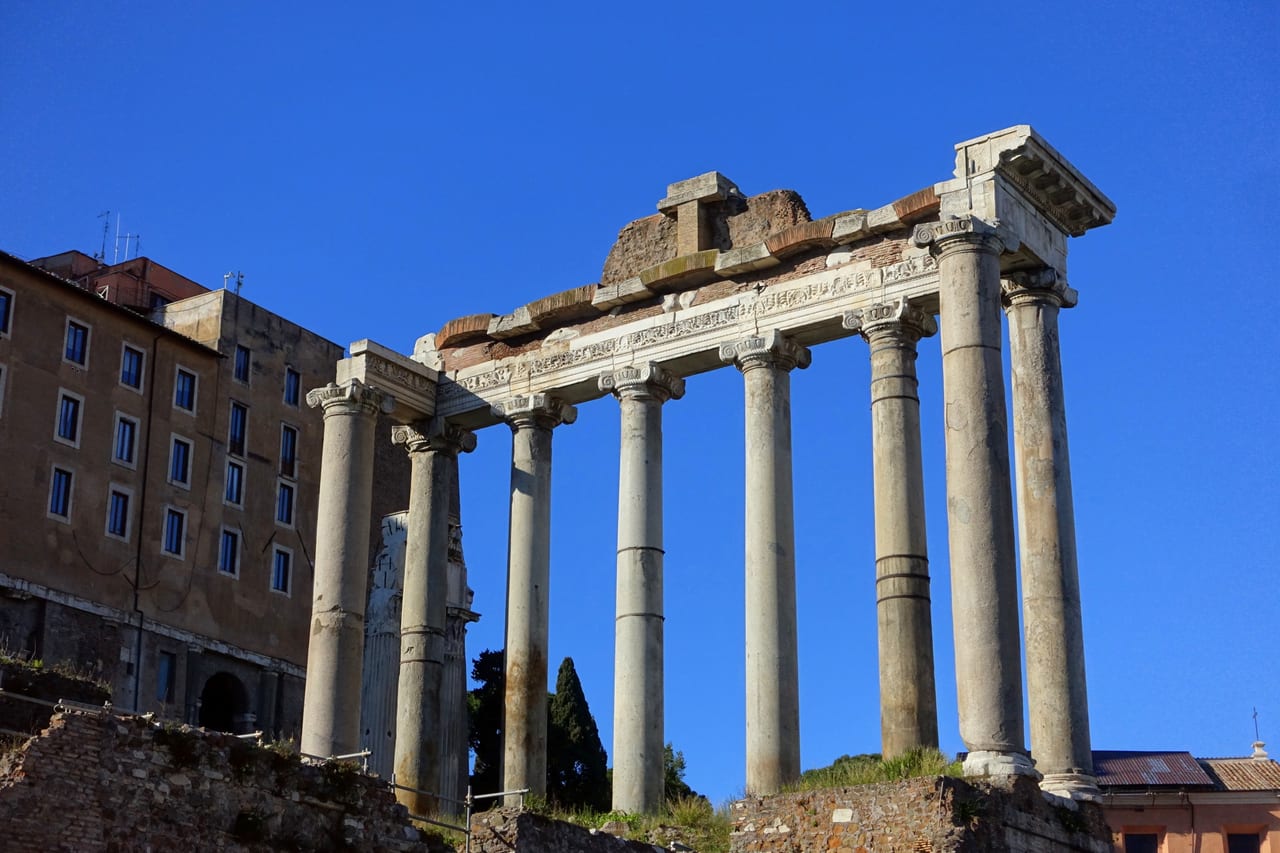
DirectionsThe Temple of Saturn once held Rome’s state treasury; today, its surviving porch and eight columns form one of the Roman Forum’s most recognizable ancient architectural views.
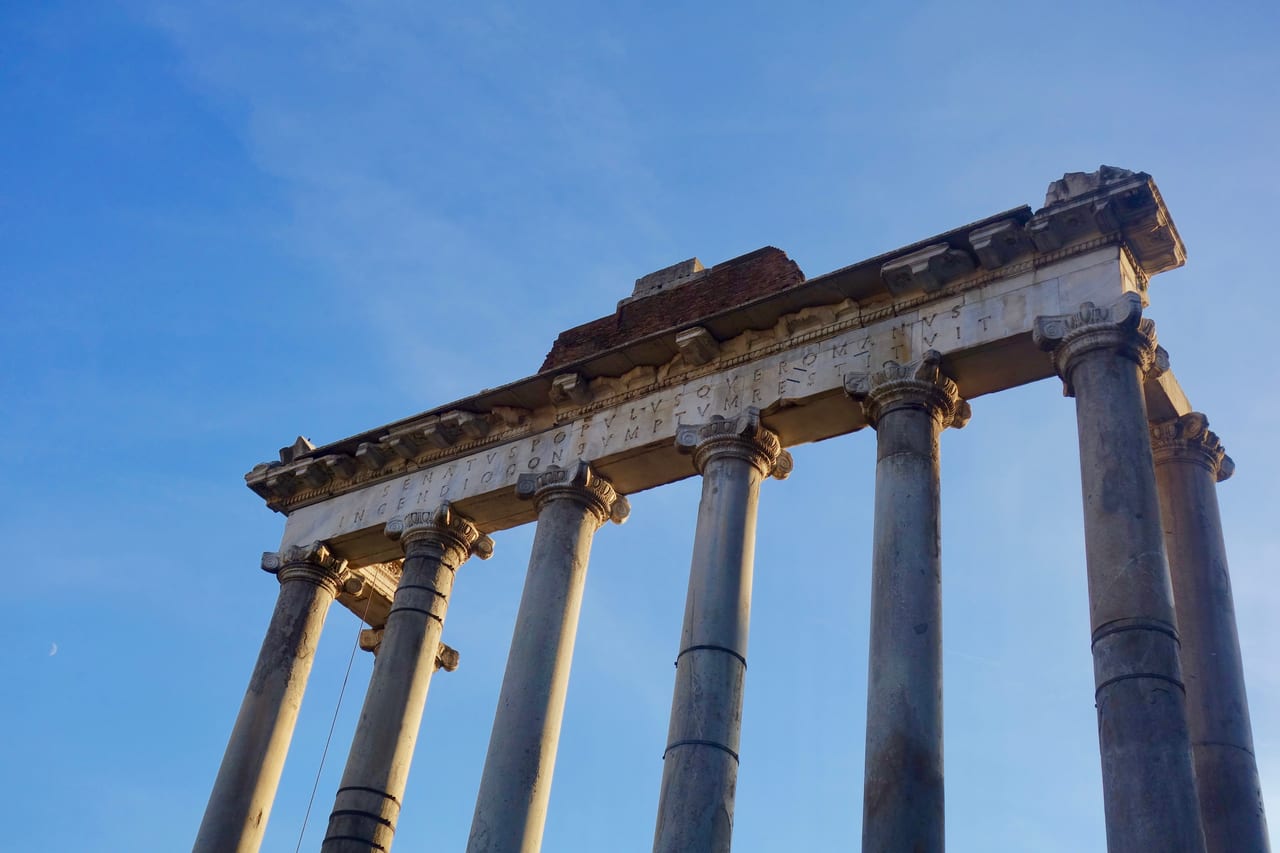
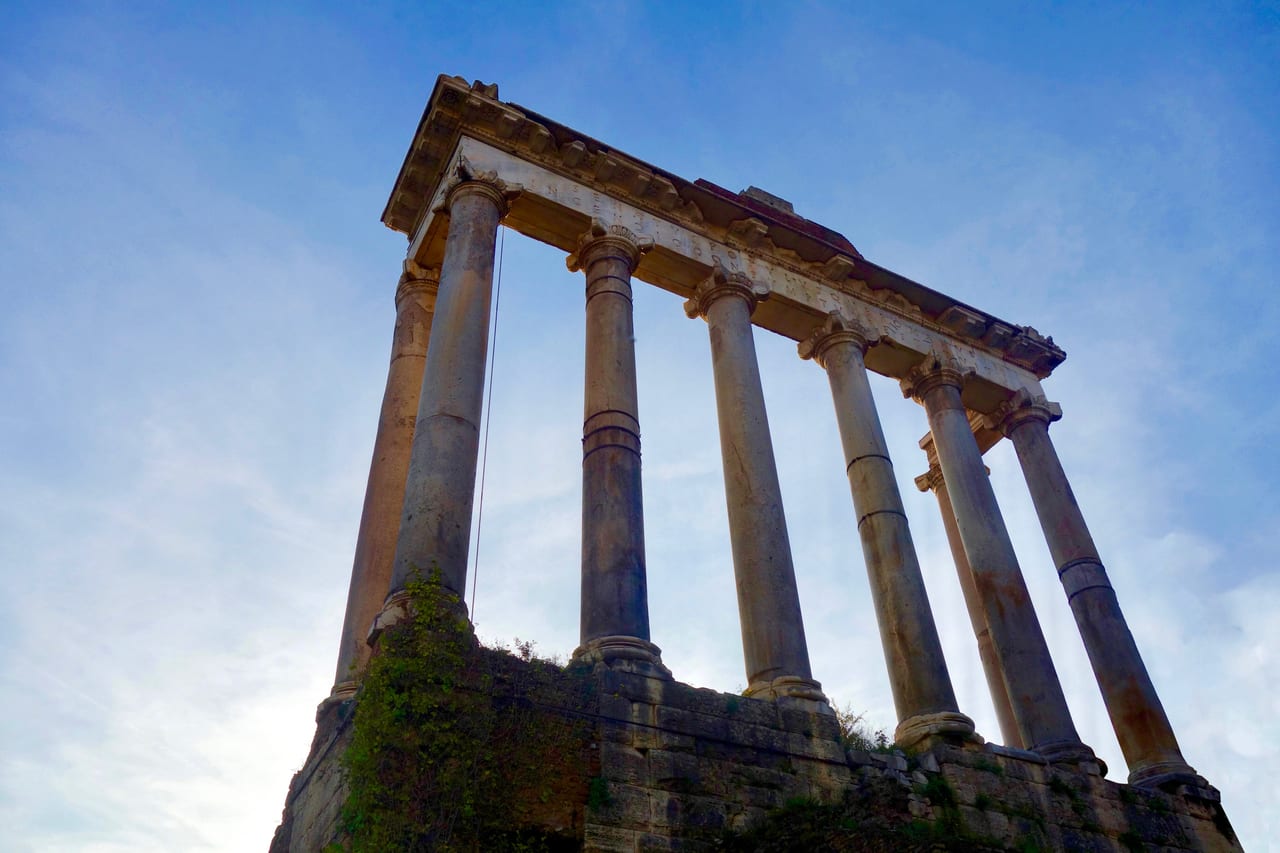
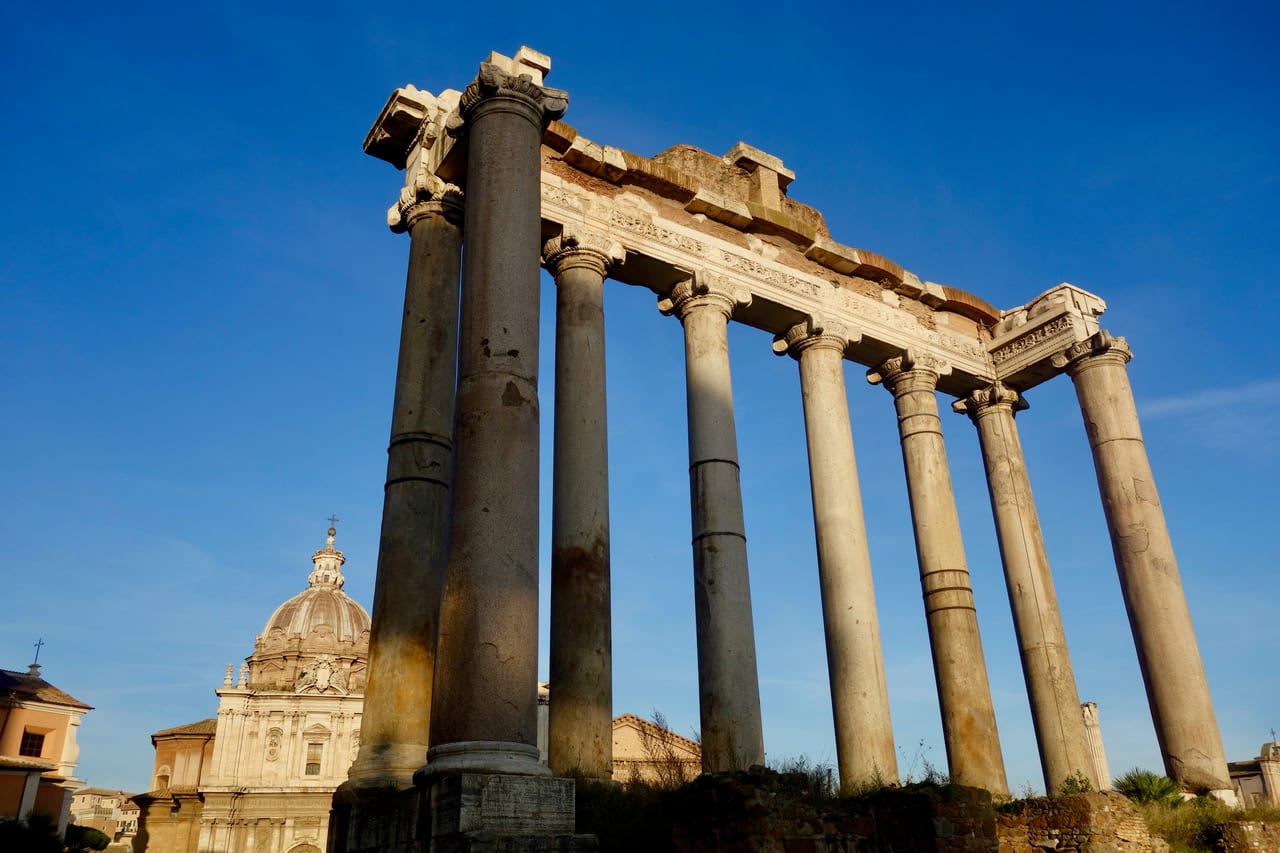
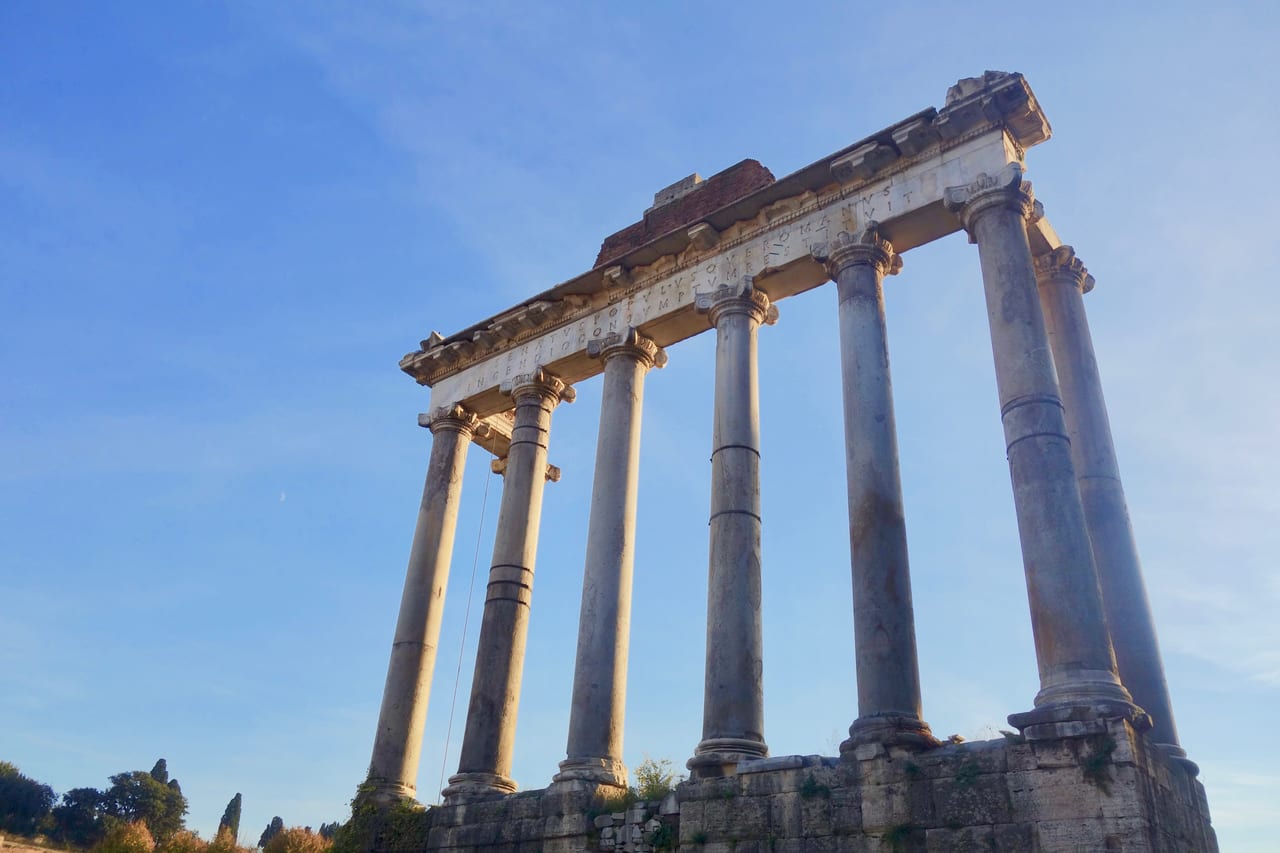
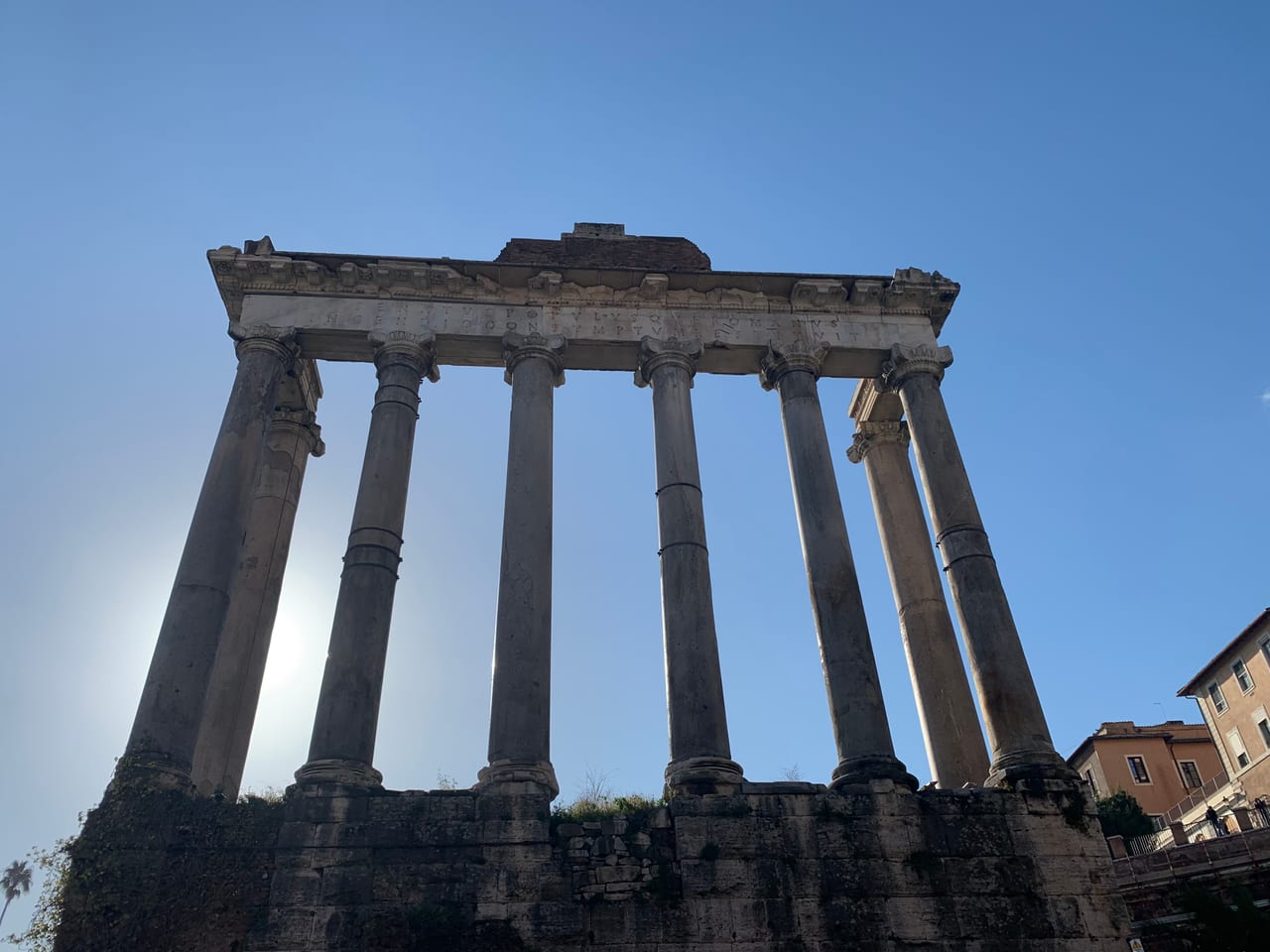
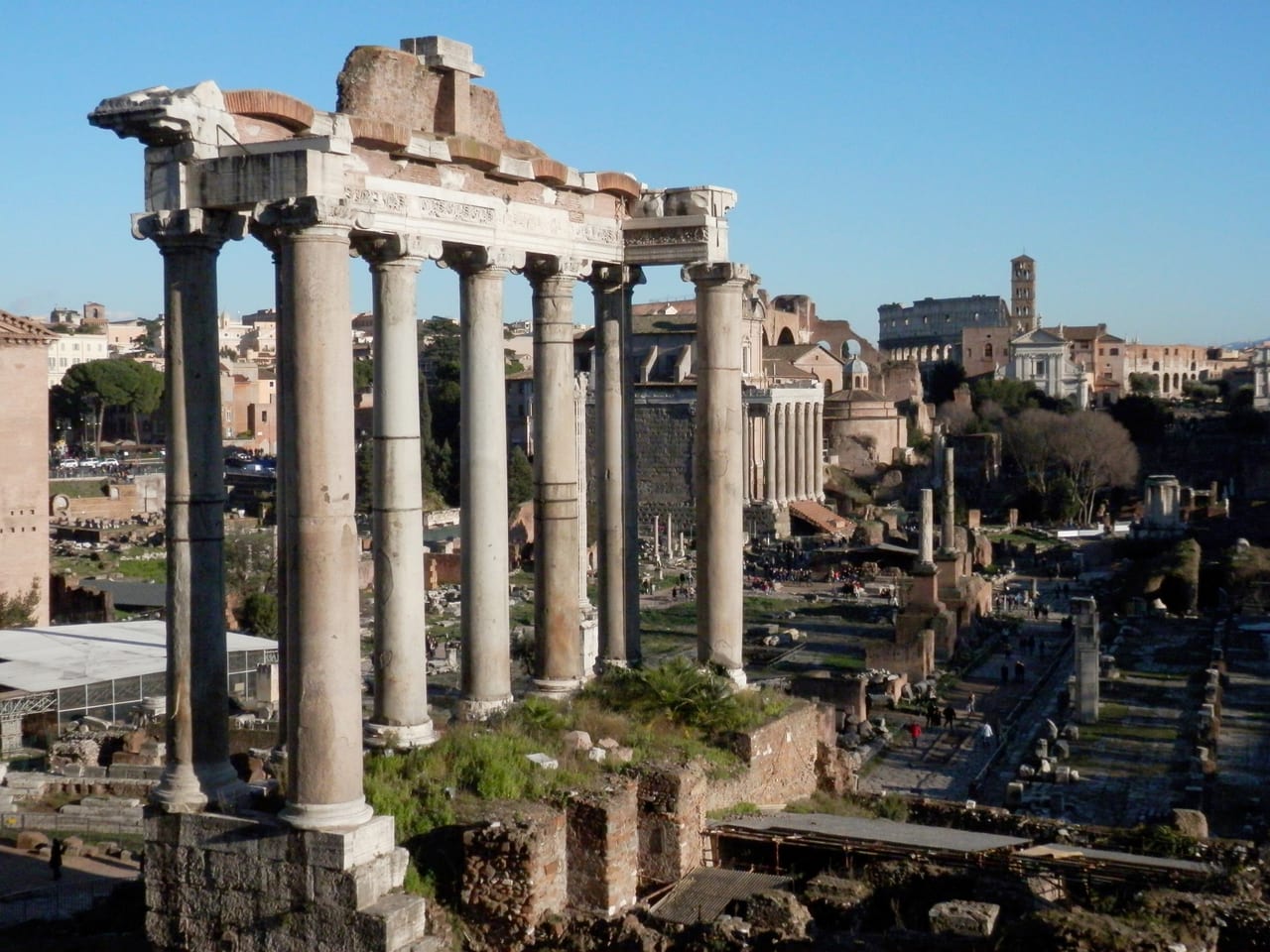
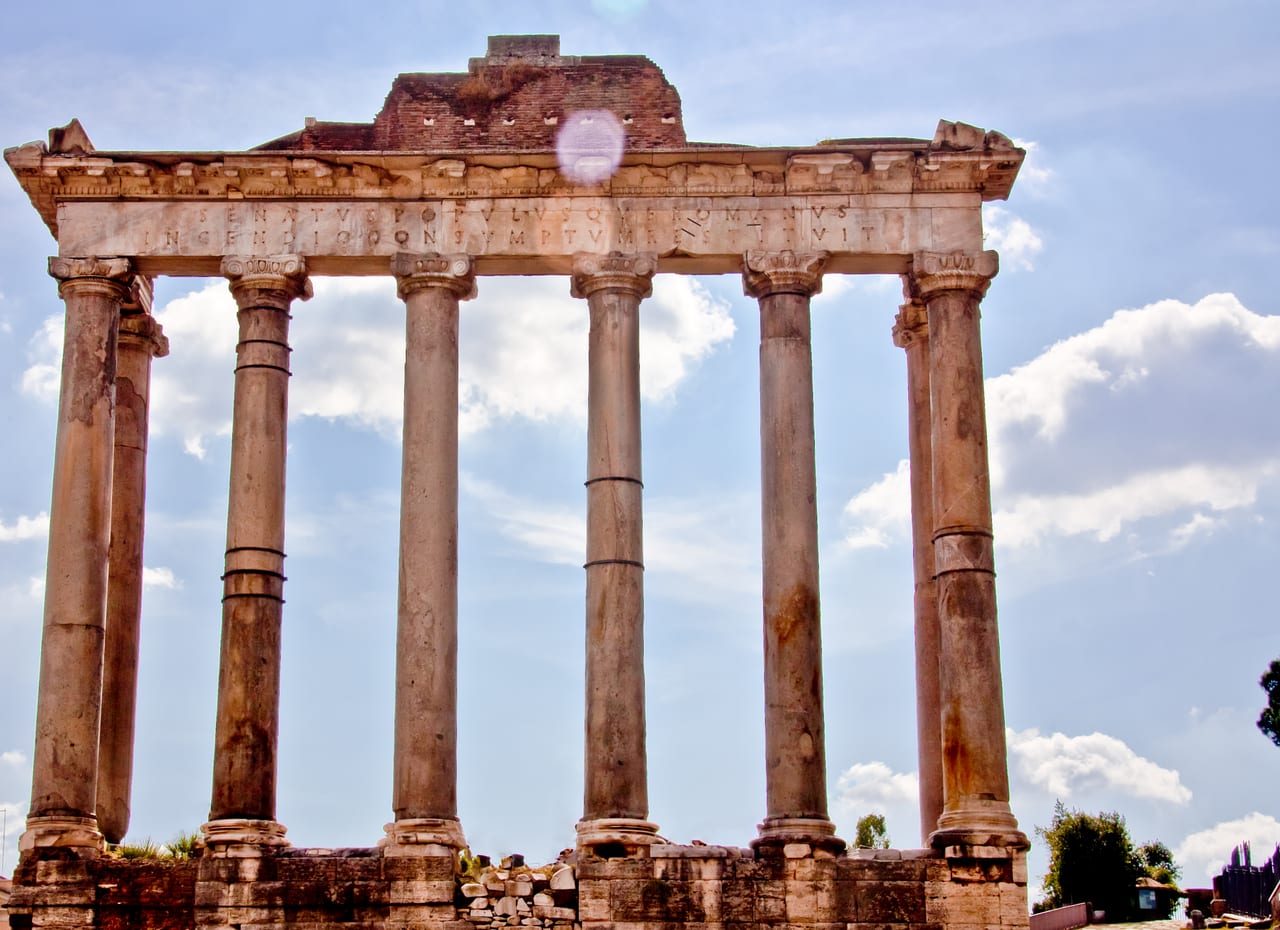
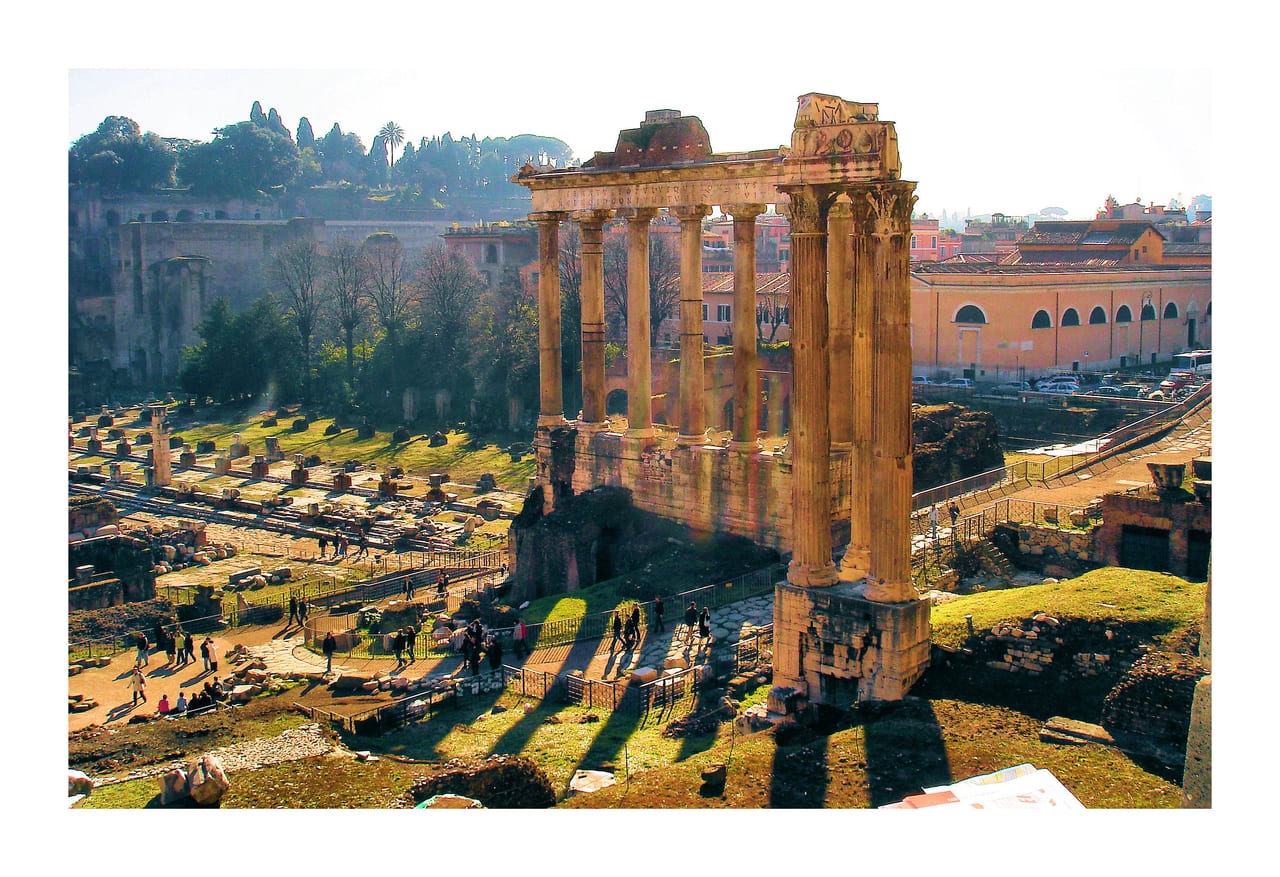
Photograph 1 of 40 of Temple of Saturn
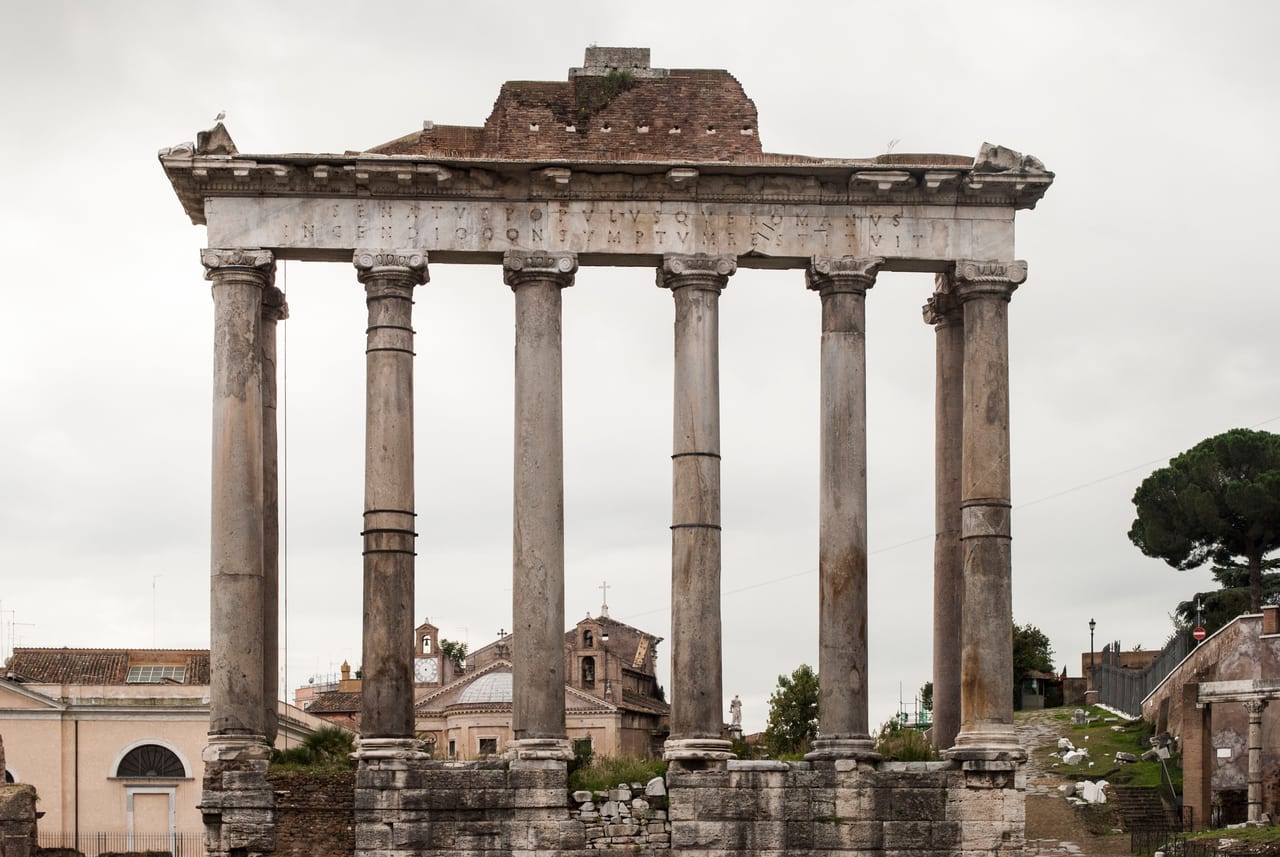
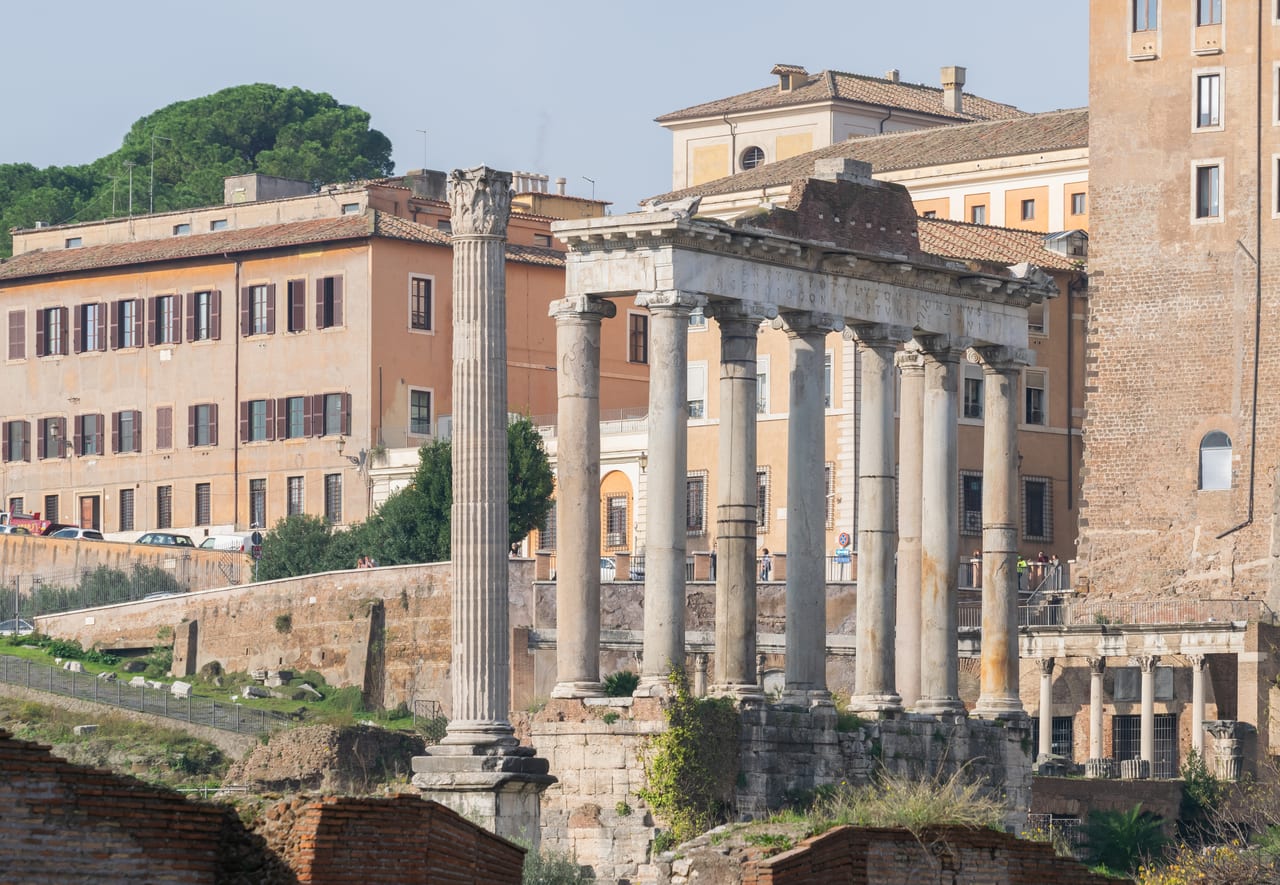
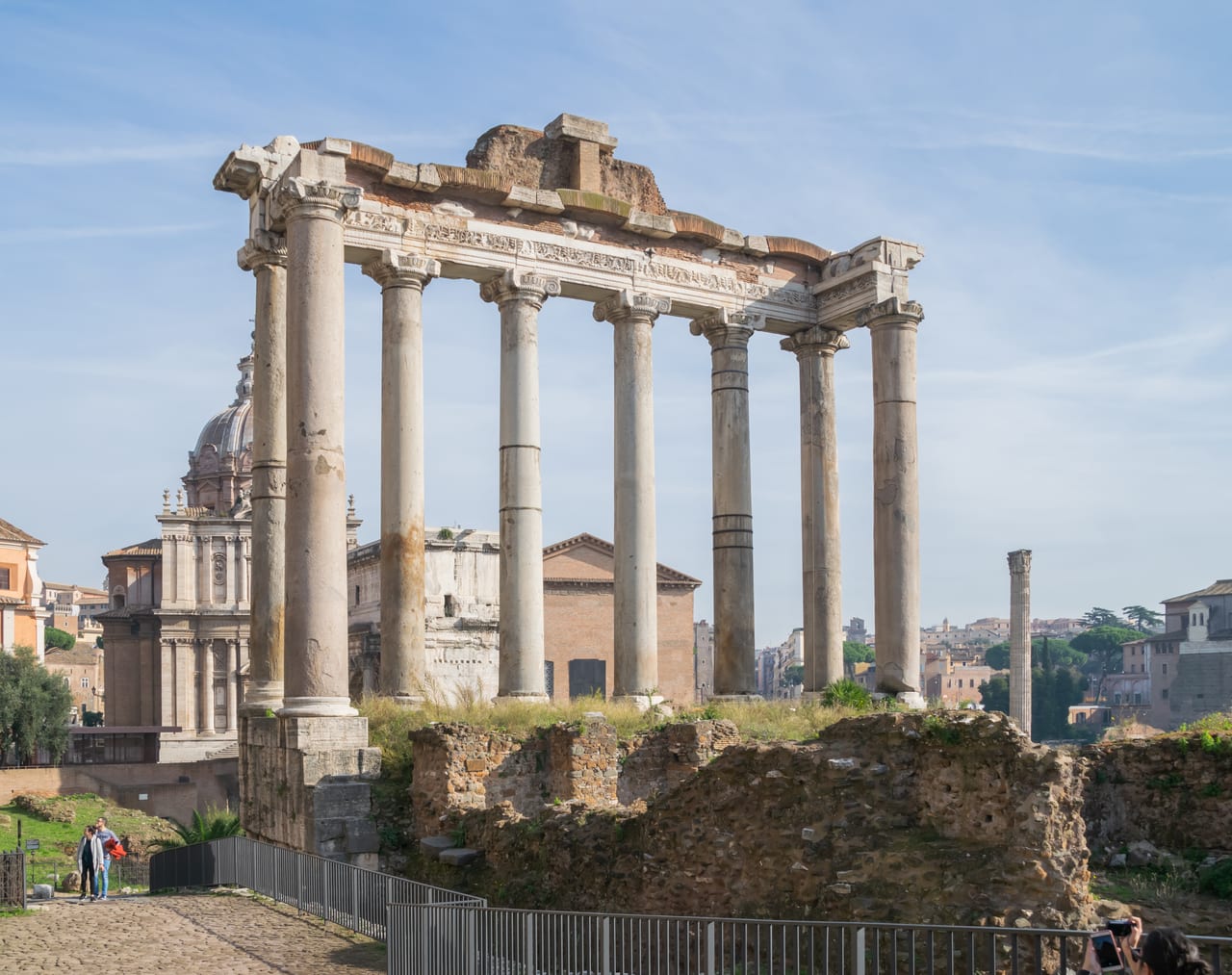
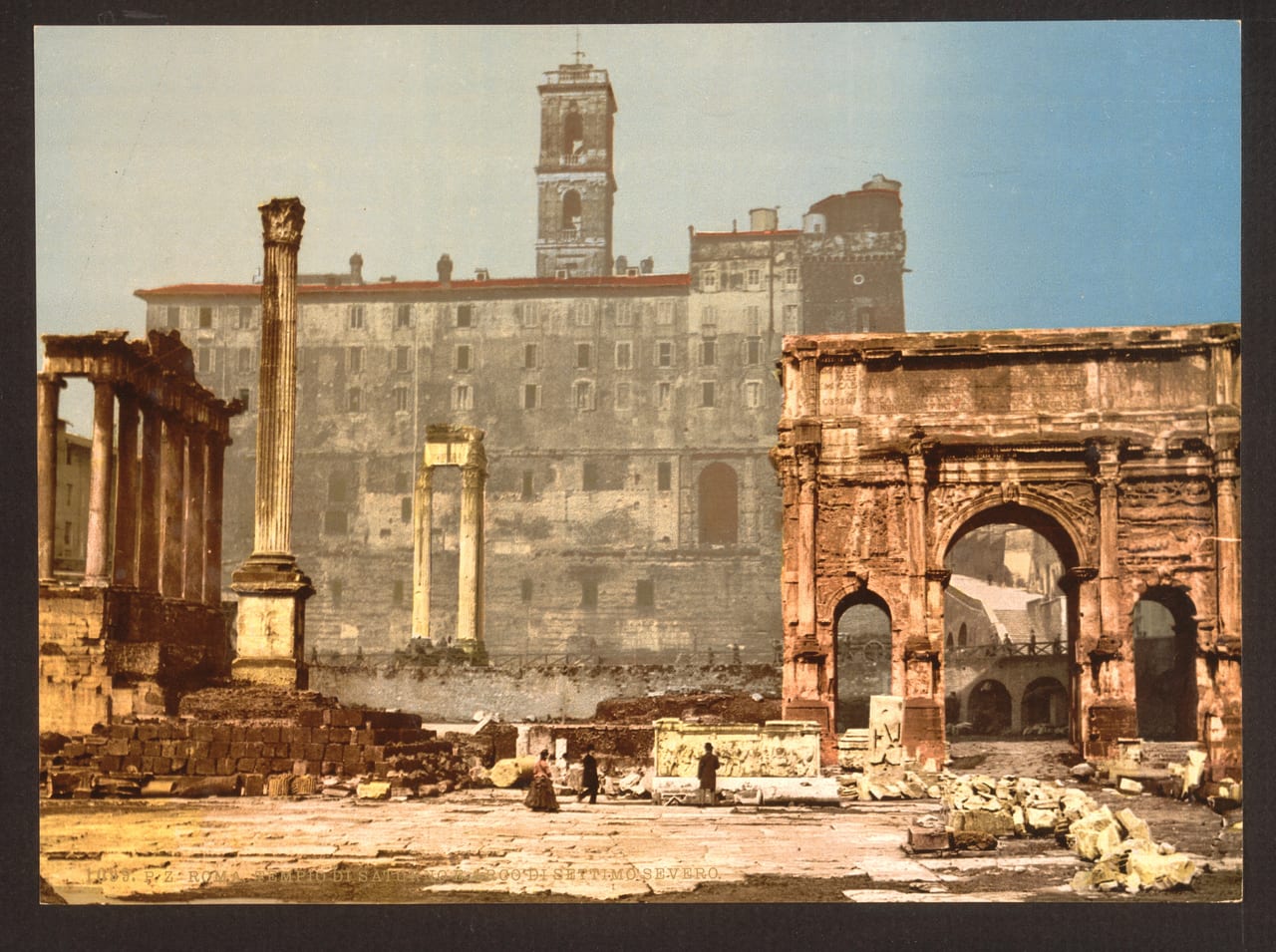
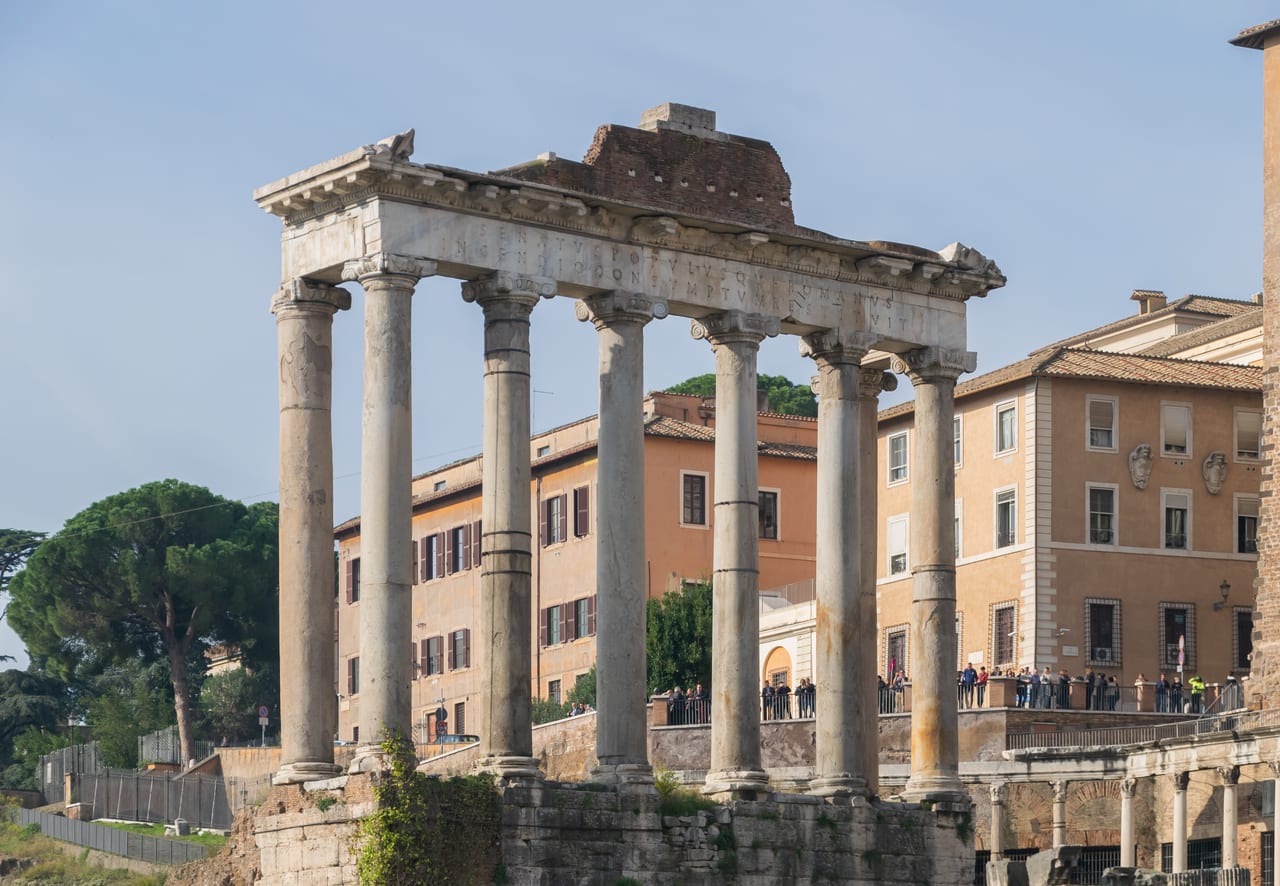
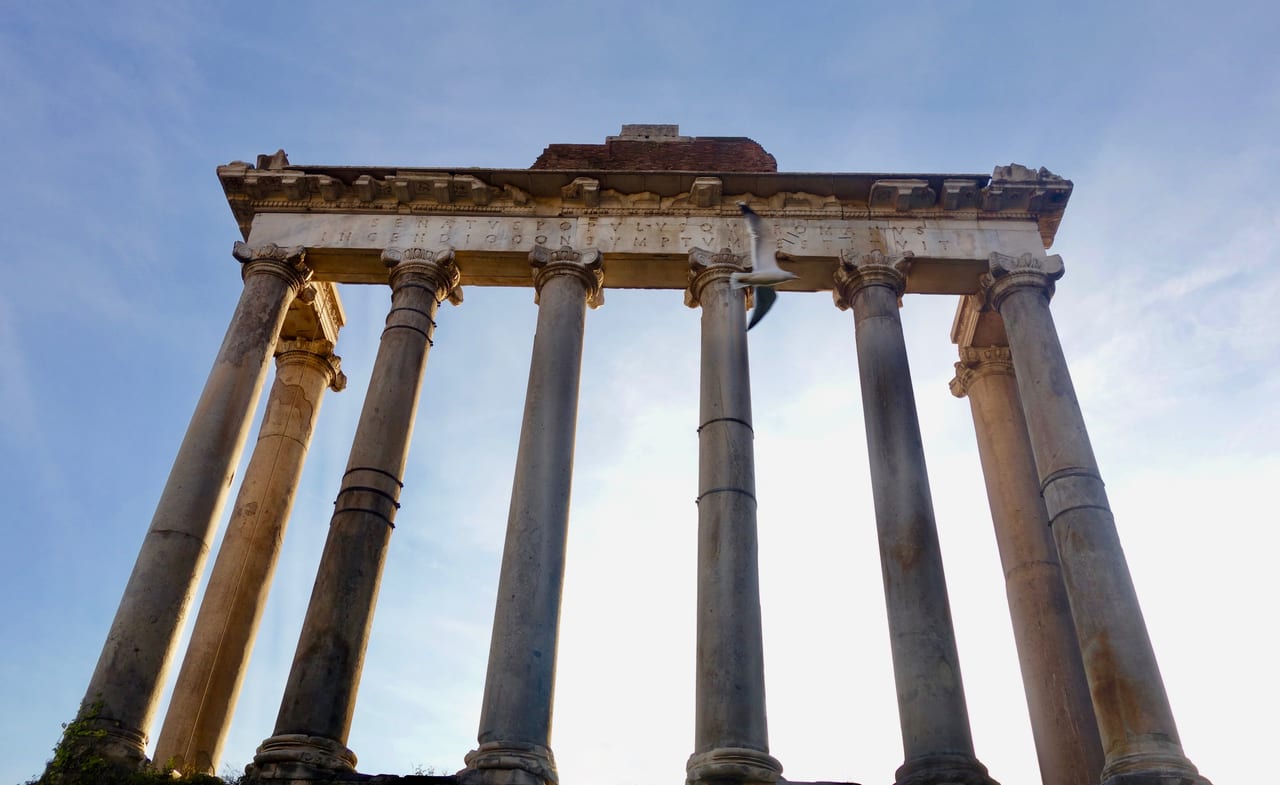
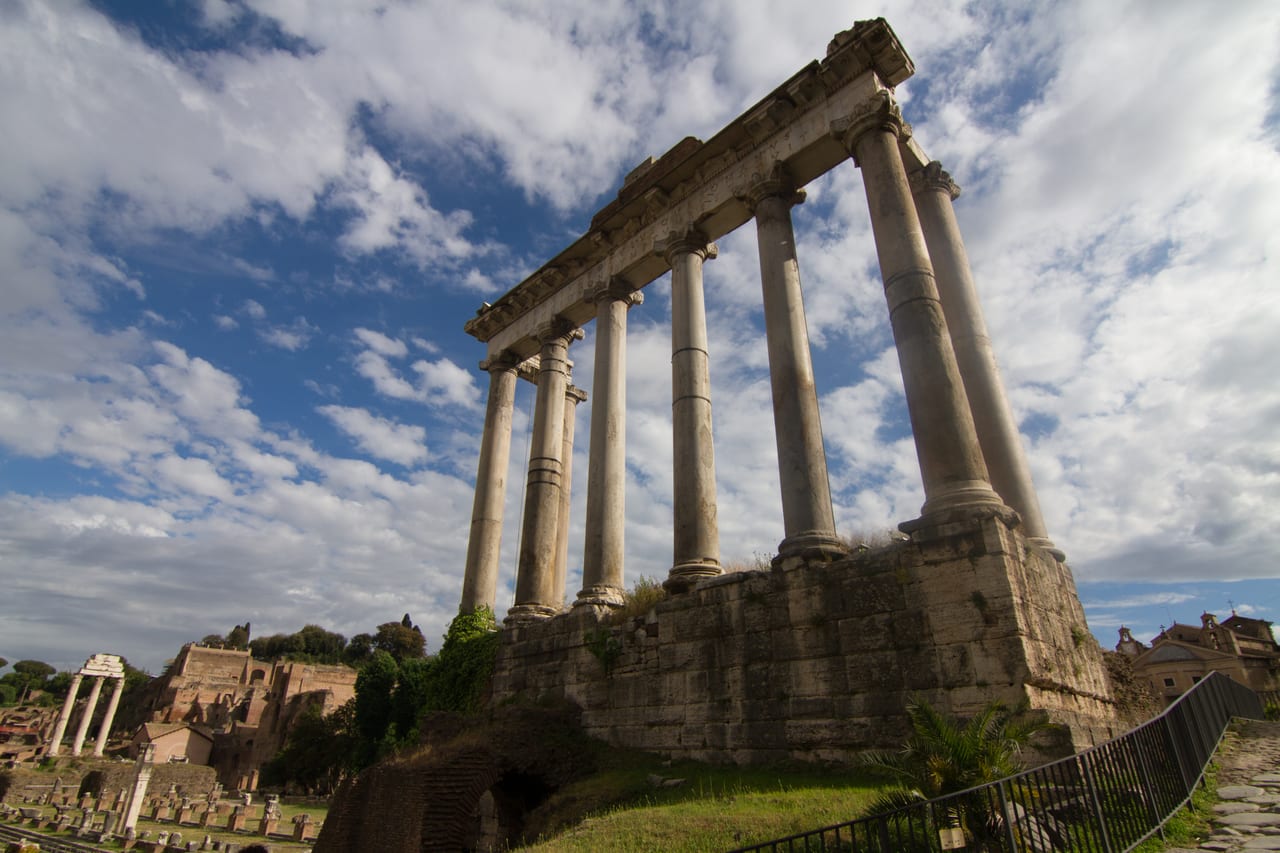
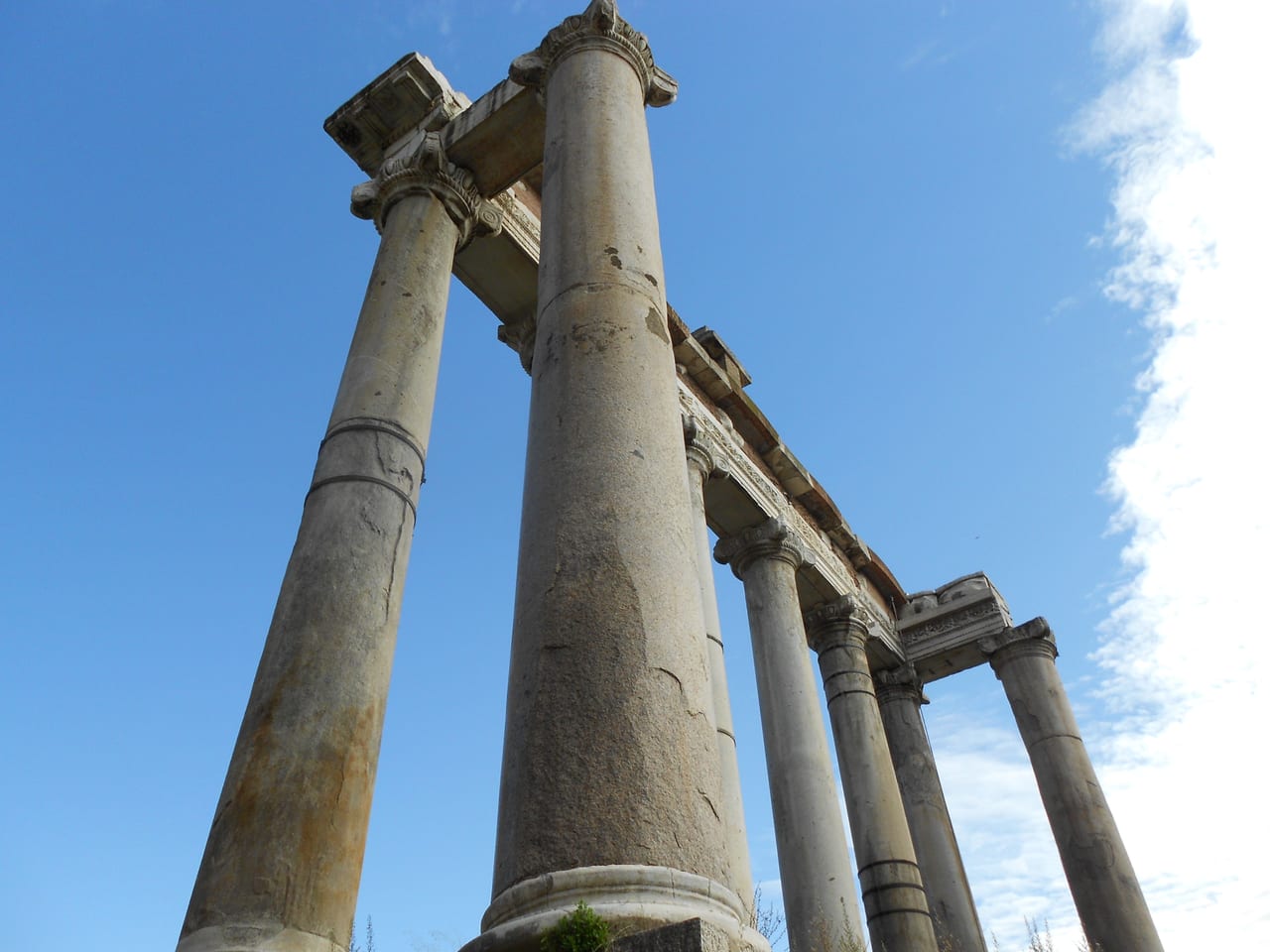
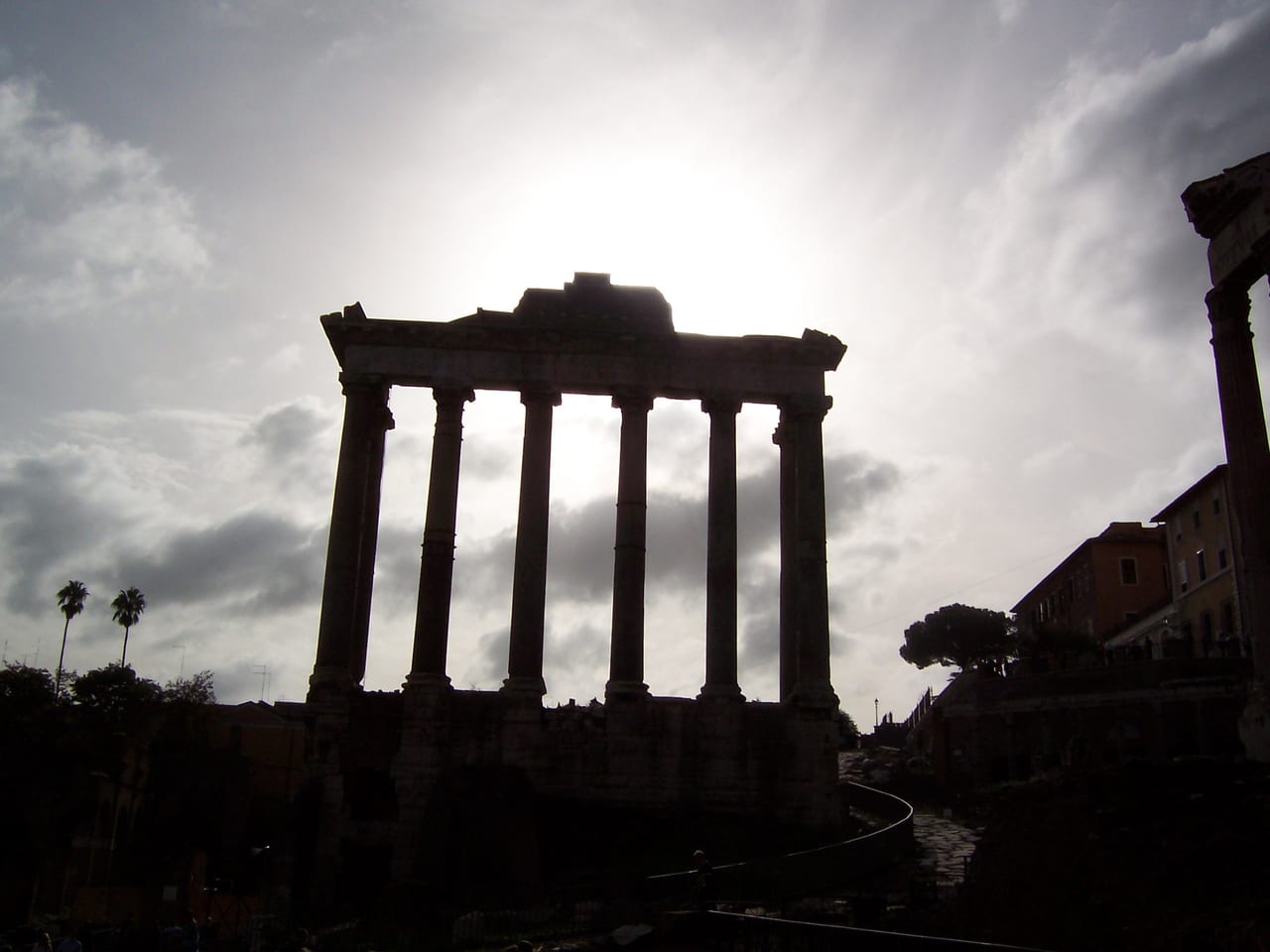
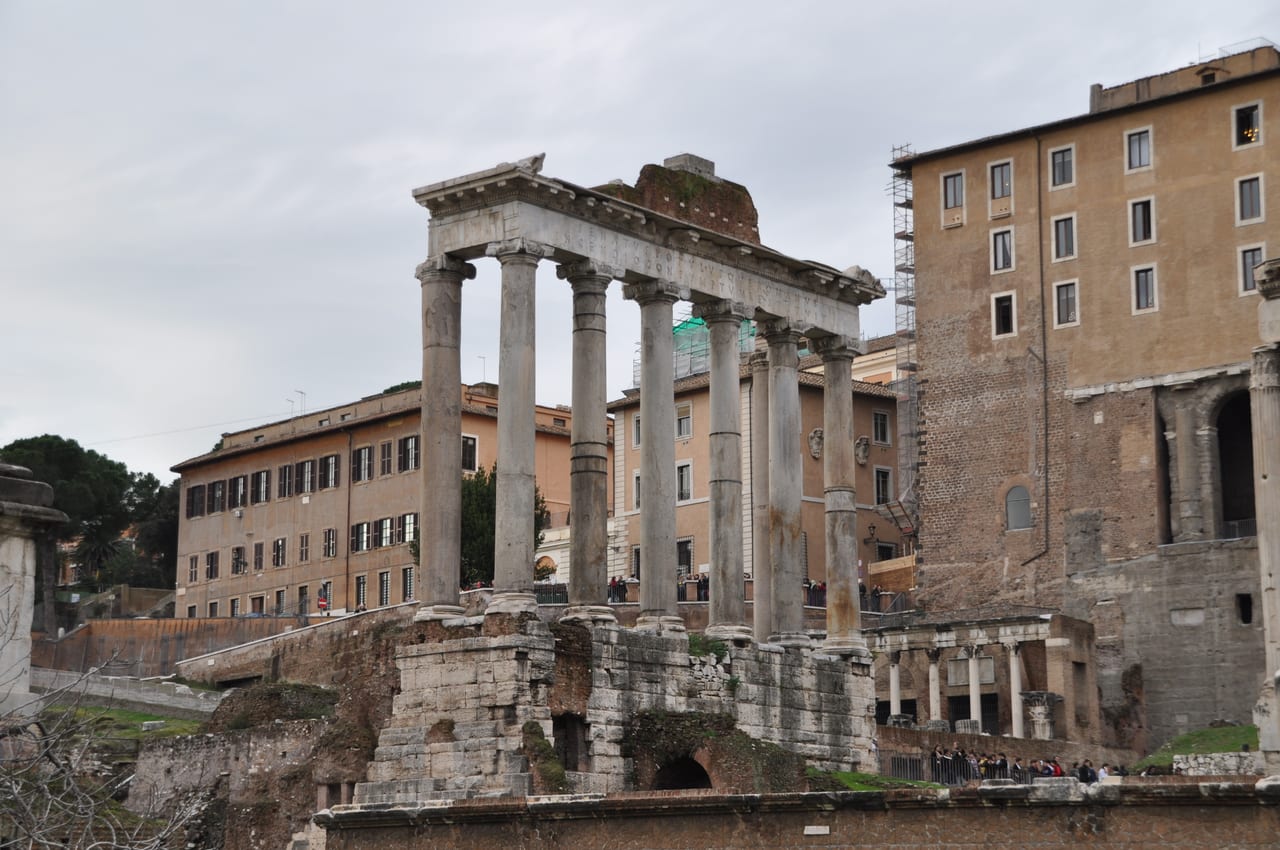
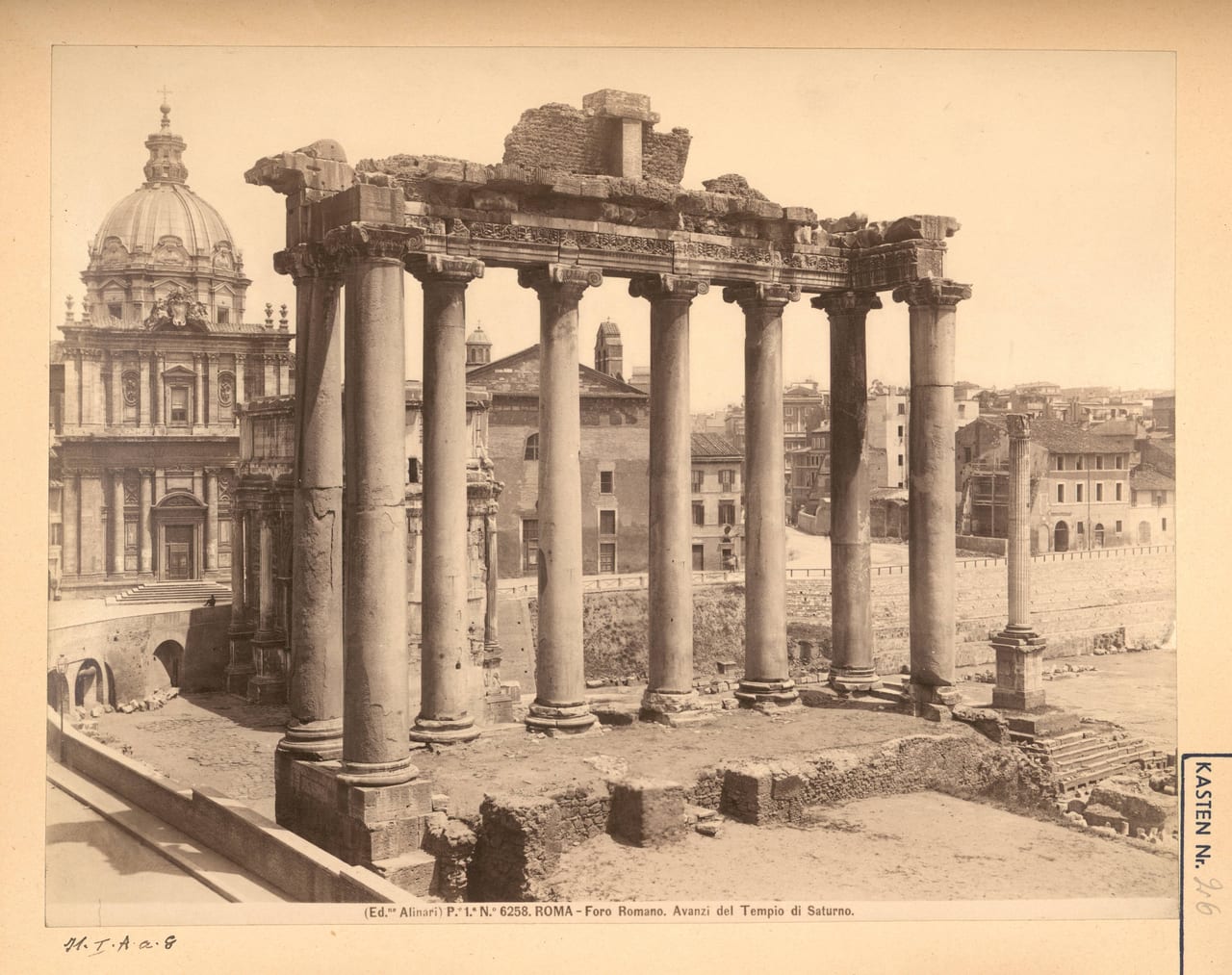
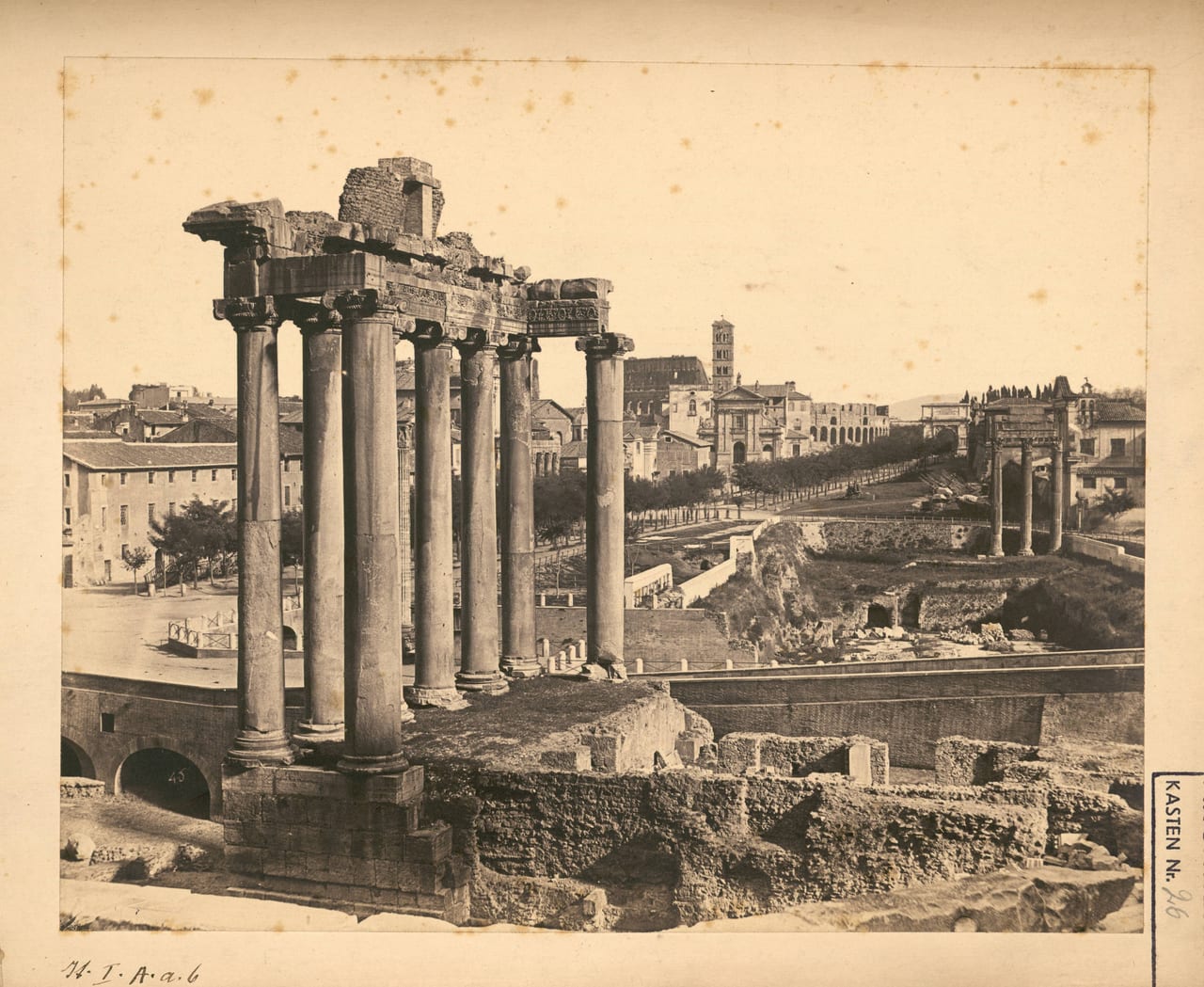
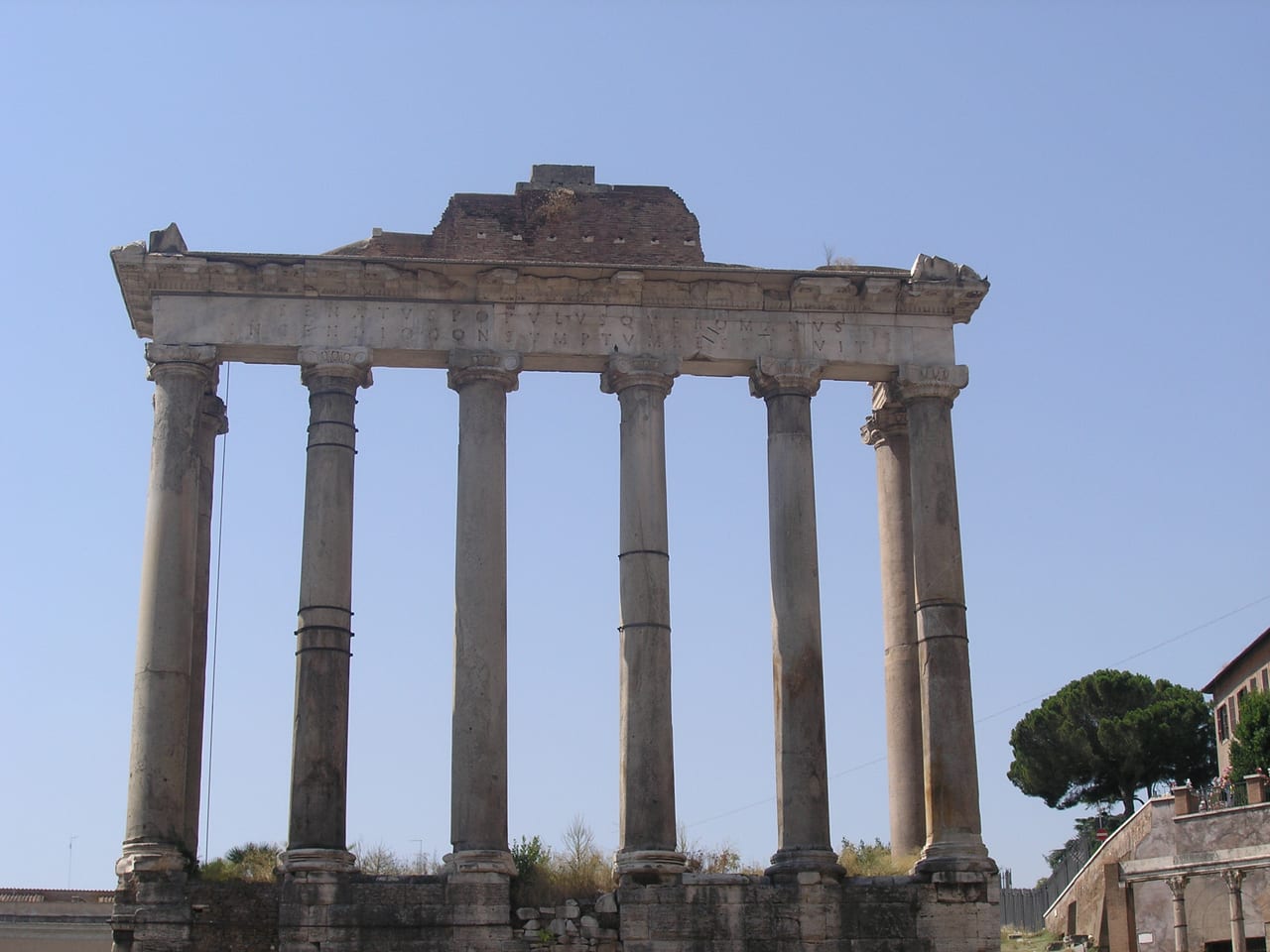
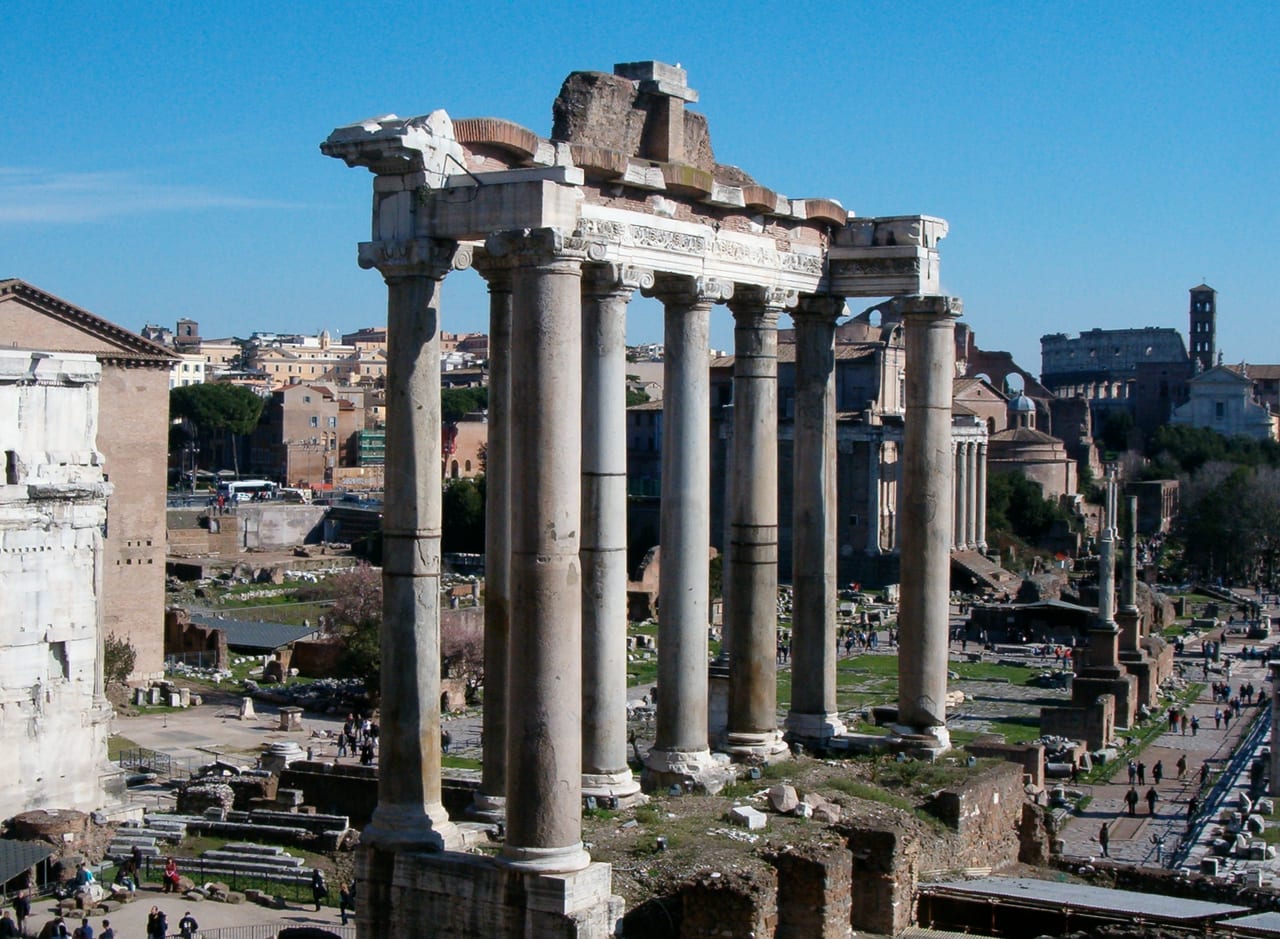
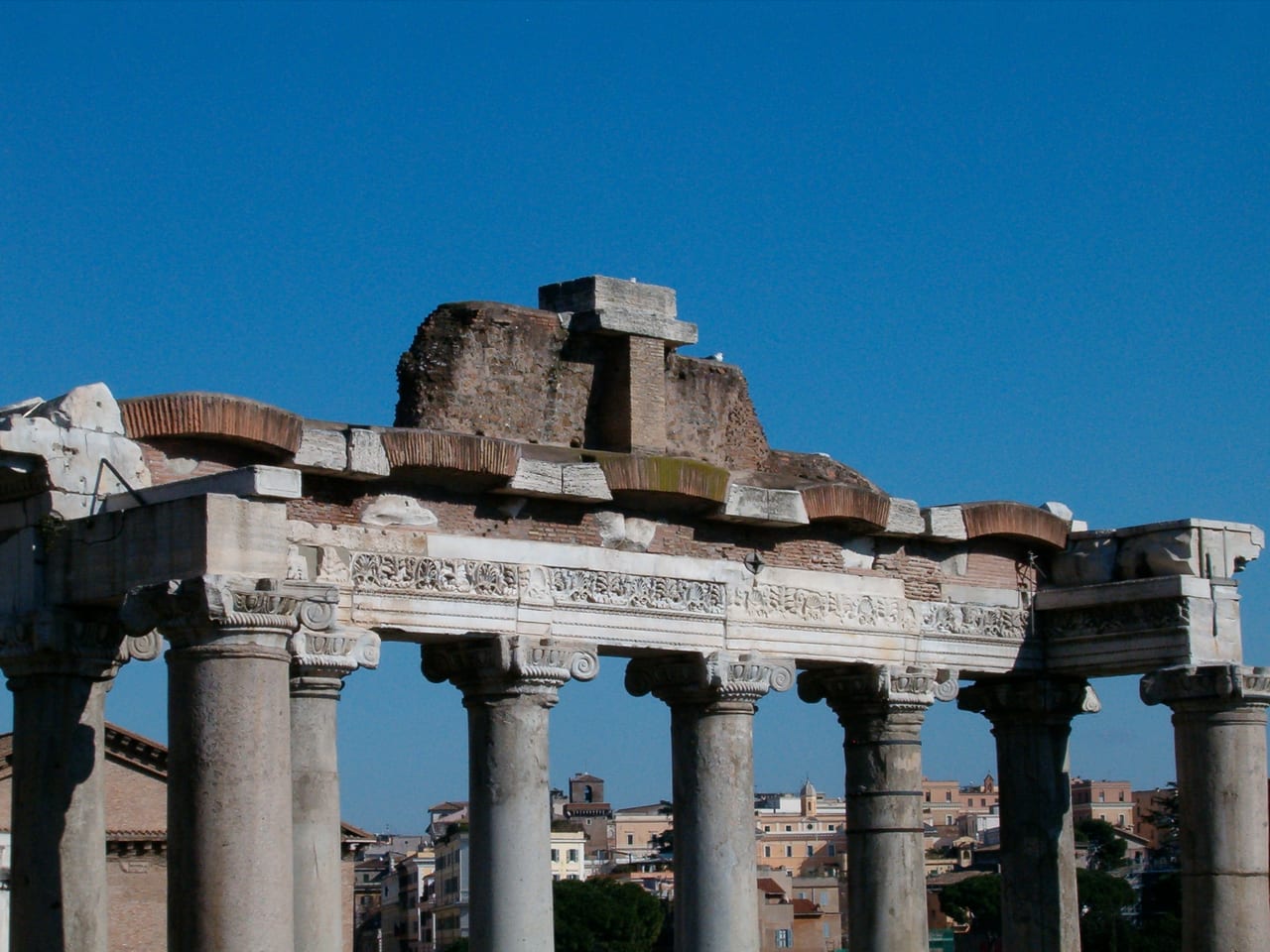
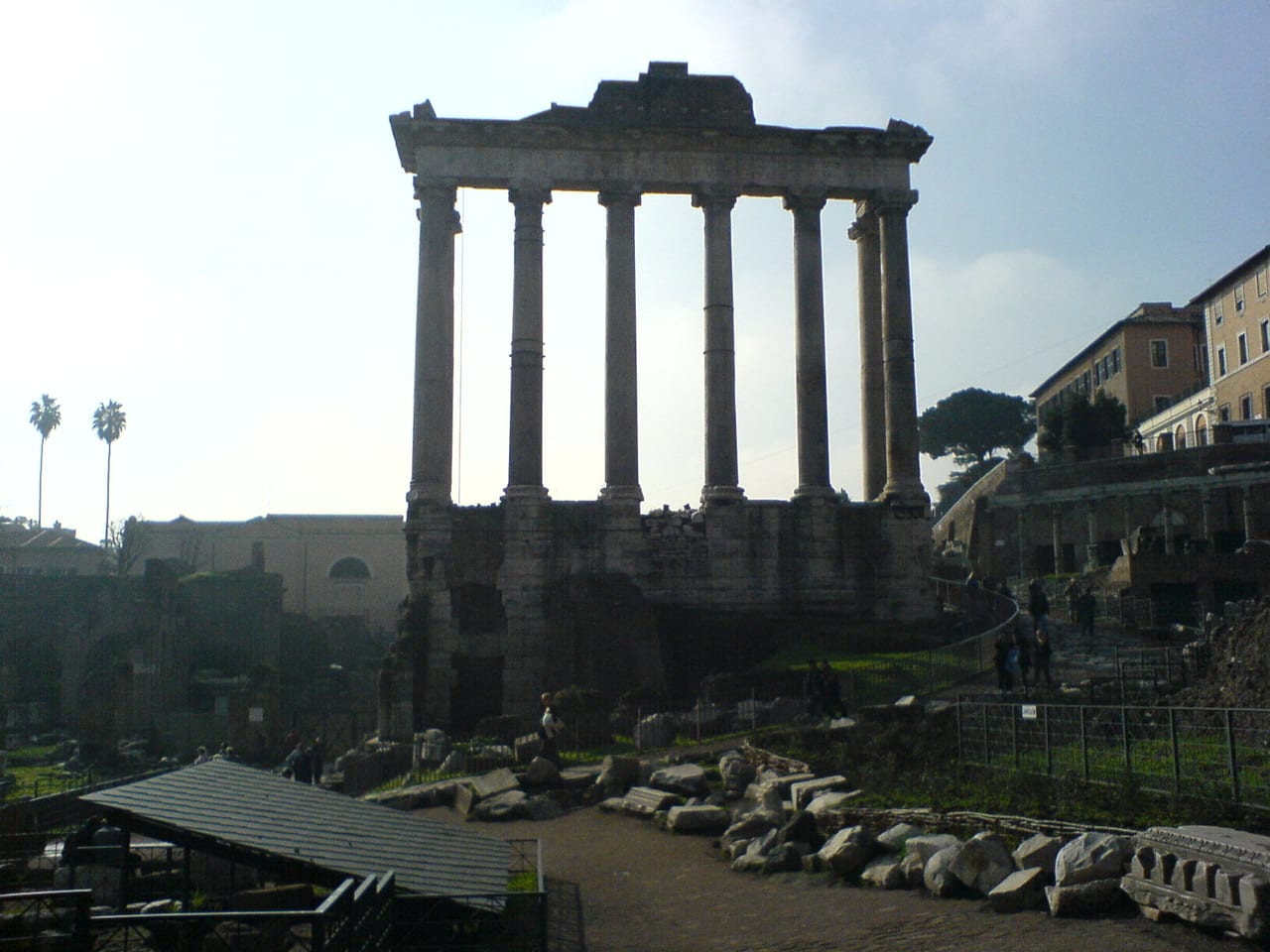
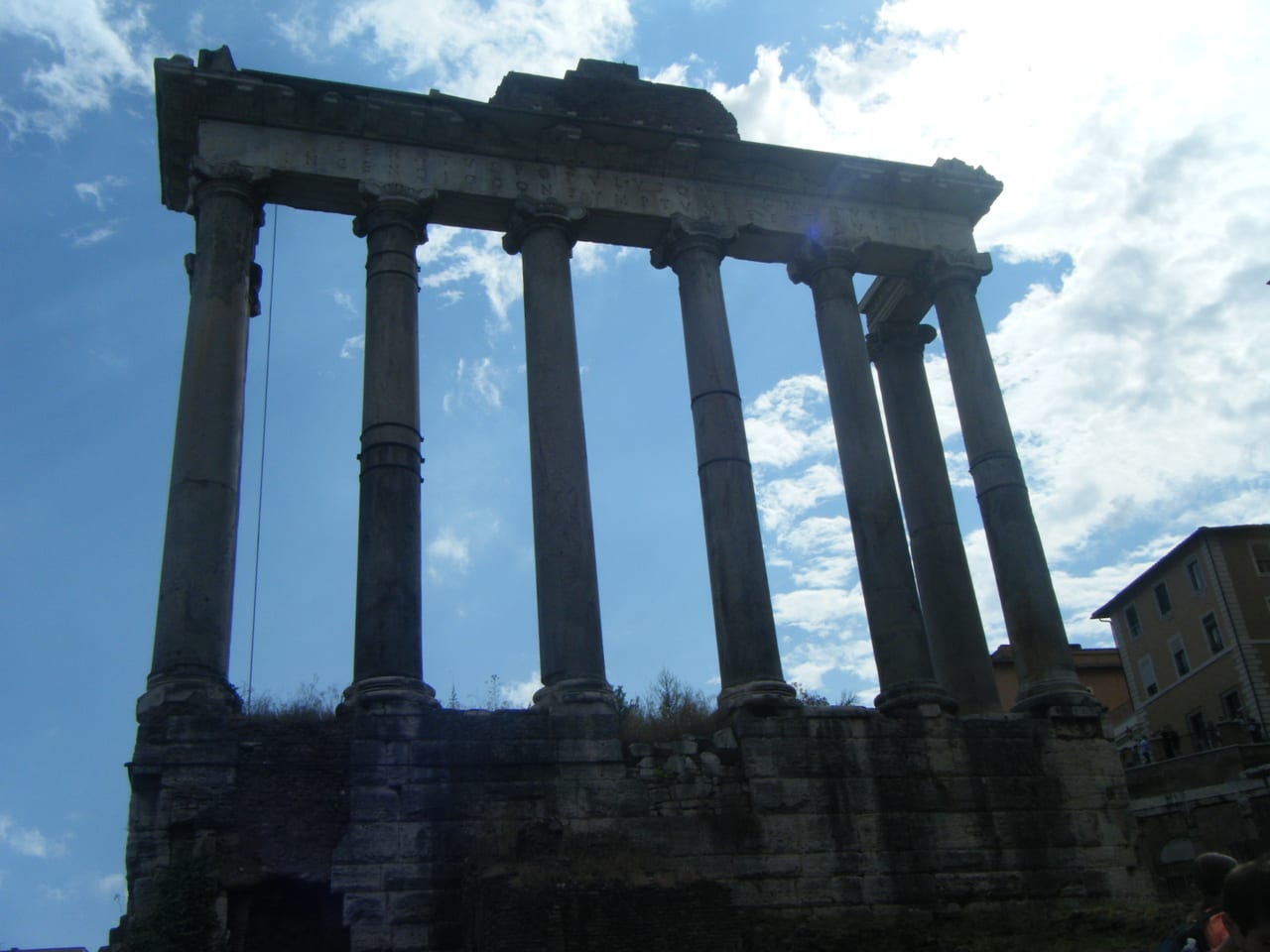
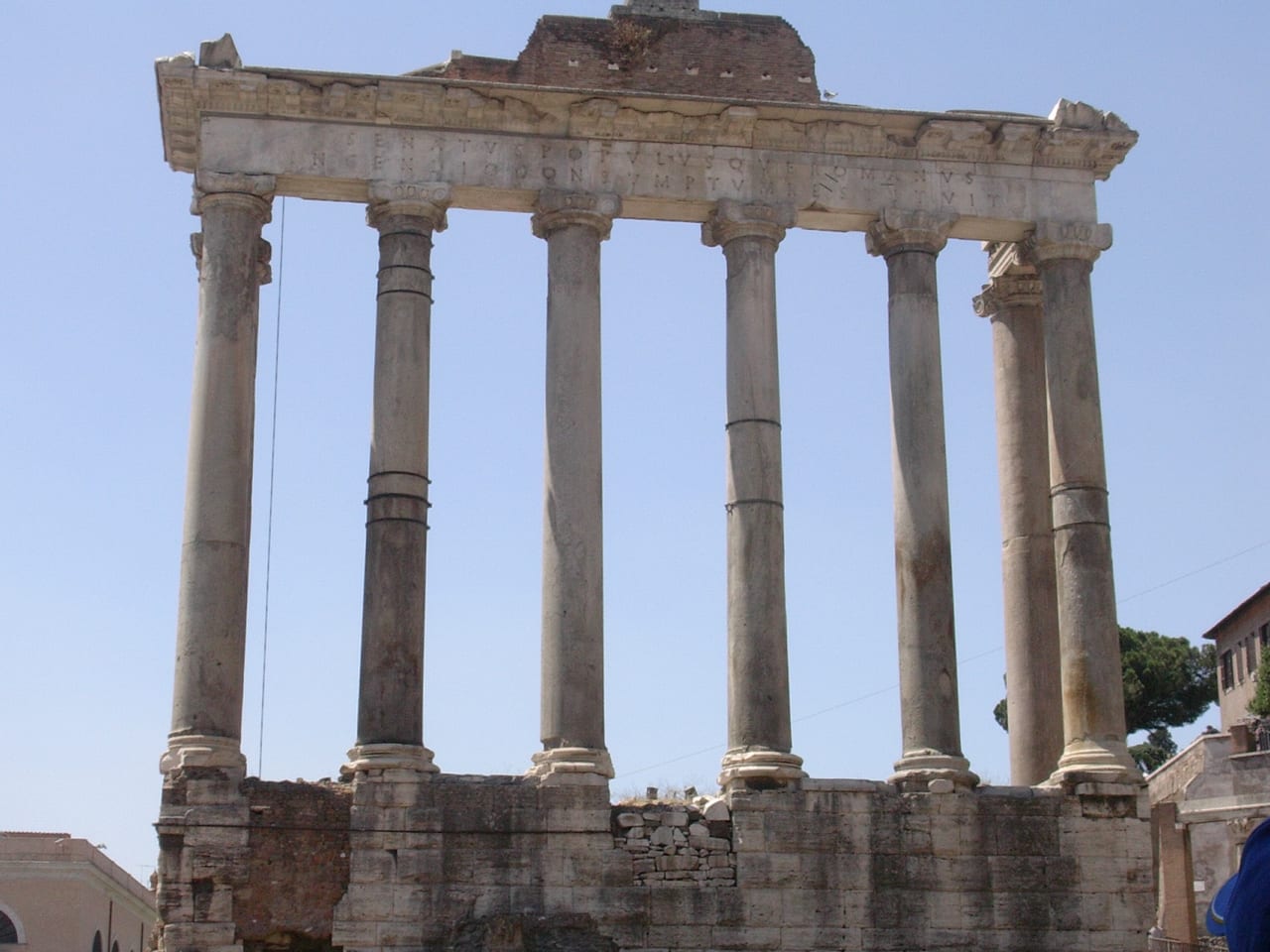
Construction is thought to have begun under Tarquinius Superbus, in the later years of Rome’s monarchy. Its altar was probably older still, associated with Saturn’s founding of the city on the Capitoline Hill. Munatius Plancus completely rebuilt the temple in 42 BC. The ruins belong to a third phase, reconstructed after a fire in AD 360. The surviving frieze inscription records the Senate and Roman people restoring the fire-damaged building, a project associated with the period’s pagan revivalism. Collapse has left mainly the front porch: a partially preserved pediment and eight columns, with Egyptian granite shafts, a Late Republican acanthus frieze, and Ionic capitals carved in the Late Antique style. The other remaining materials were taken from earlier buildings. A veiled wooden statue of Saturn, filled with oil and bearing a scythe, stood in the temple. Wool bands around its legs were removed on December 17 for Saturnalia, when slaves received temporary freedom and families exchanged gifts. The temple later closed during the persecution of pagans.
Ways to explore Temple of Saturn
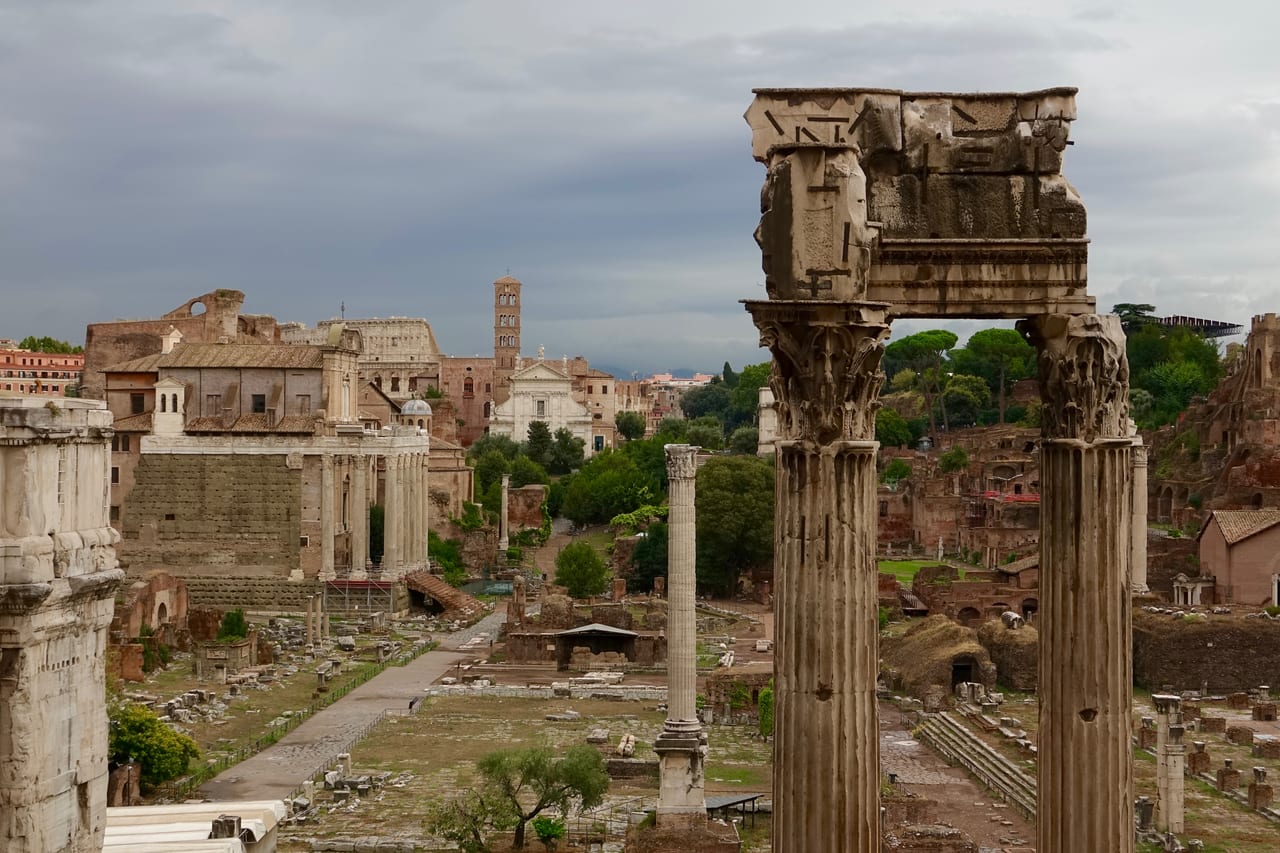
Approach from the western end of the Roman Forum and examine the porch from different angles, especially the surviving pediment inscription and the contrast between the granite shafts and Ionic capitals. The reused architectural elements include the acanthus frieze. The altar’s position in front of the building helps place the sanctuary within the Forum landscape, while the temple’s setting beneath the Capitoline Hill gives the surviving structure its strongest spatial context.
Places to stay near Temple of Saturn

Live availability and prices from Stay22's partners, refreshed periodically and subject to change. Booking through these links may earn us a commission at no extra cost to you. See our privacy policy.
Cafés near Temple of Saturn
Cafés near Temple of Saturn loads as you scroll.
Attractions nearby
Attractions near Temple of Saturn loads as you scroll.
Cities nearby
Cities nearby loads as you scroll.
More in Rome
See more of Rome.
Find great cafés, places to stay and other interesting places to visit in Rome.