Ancient site · Rome
Temple of Jupiter Optimus Maximus
DirectionsIts original terracotta ornament established a new model for sacred architecture, influencing temple decoration across Italy until the 2nd century BC.
Photograph 1 of 2 of Temple of Jupiter Optimus Maximus
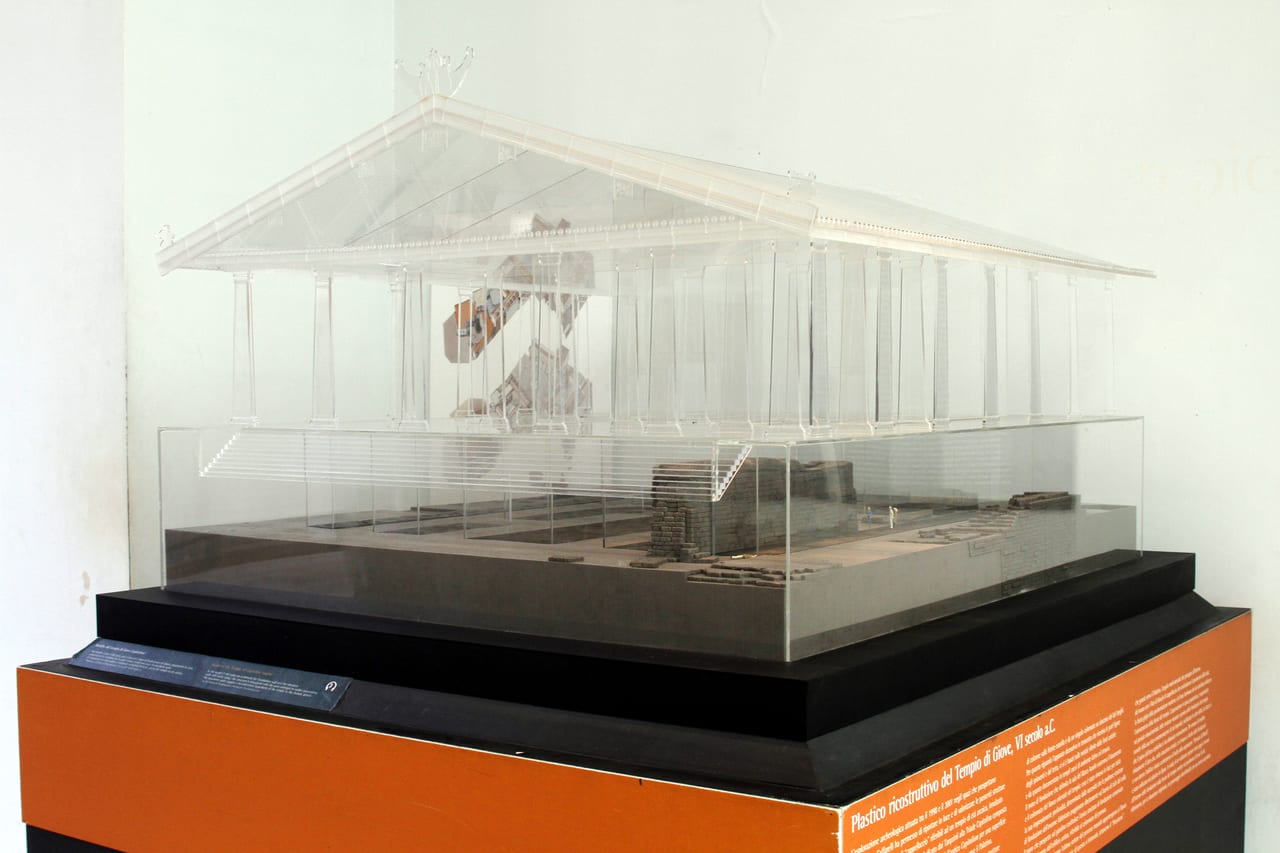
Tradition places the temple’s consecration in 509 BC, when the Roman Republic replaced the monarchy, though Dionysius of Halicarnassus and Tacitus give 507 BC. Lucius Tarquinius Priscus was said to have vowed it during war with the Sabines; Lucius Tarquinius Superbus completed much of the building, while Marcus Horatius Pulvillus oversaw its consecration. Shrines of Terminus and Juventas remained within the structure, and an augural omen interpreted the discovery of a human head as a prophecy of Rome’s future supremacy. The first temple used an Etruscan-influenced plan, with separate cellae for Jupiter, Juno and Minerva, wide eaves, a substantial side colonnade and lavish terracotta sculpture. Vulca of Veii was credited with Jupiter’s cult image and the rooftop quadriga. Repairs continued for centuries before fire destroyed the building in 83 BC, along with the Sibylline Books. Quintus Lutatius Catulus completed a second version in 69 BC, using more expensive materials; its Jupiter cult statue was sculpted by Apollonius of Athens. Fires produced two further reconstructions: Vespasian’s temple was completed in 75 AD, while Domitian’s, finished in 82, had an exceptionally lavish gilded superstructure. Closed in 392, the surviving fabric was later quarried and built over; only foundations and podium fragments remain.
At a glance
- Built
- 509
Ways to explore Temple of Jupiter Optimus Maximus
Begin behind the Palazzo dei Conservatori, where the podium and foundation remains are visible in the Caffarelli Garden and within the Musei Capitolini exhibition area. The eastern corner is also visible on via del Tempio di Giove. The remains convey the scale of the base, while the irregular retaining-wall line preserves the outline associated with the Area Capitolina. The museum setting provides context for the limited survival of the temple’s superstructure.
Places to stay near Temple of Jupiter Optimus Maximus

Live availability and prices from Stay22's partners, refreshed periodically and subject to change. Booking through these links may earn us a commission at no extra cost to you. See our privacy policy.
Cafés near Temple of Jupiter Optimus Maximus
Cafés near Temple of Jupiter Optimus Maximus loads as you scroll.
Attractions nearby
Attractions near Temple of Jupiter Optimus Maximus loads as you scroll.
Cities nearby
Cities nearby loads as you scroll.
More in Rome
See more of Rome.
Find great cafés, places to stay and other interesting places to visit in Rome.