Ancient site · Rome
Temple of Antoninus and Faustina
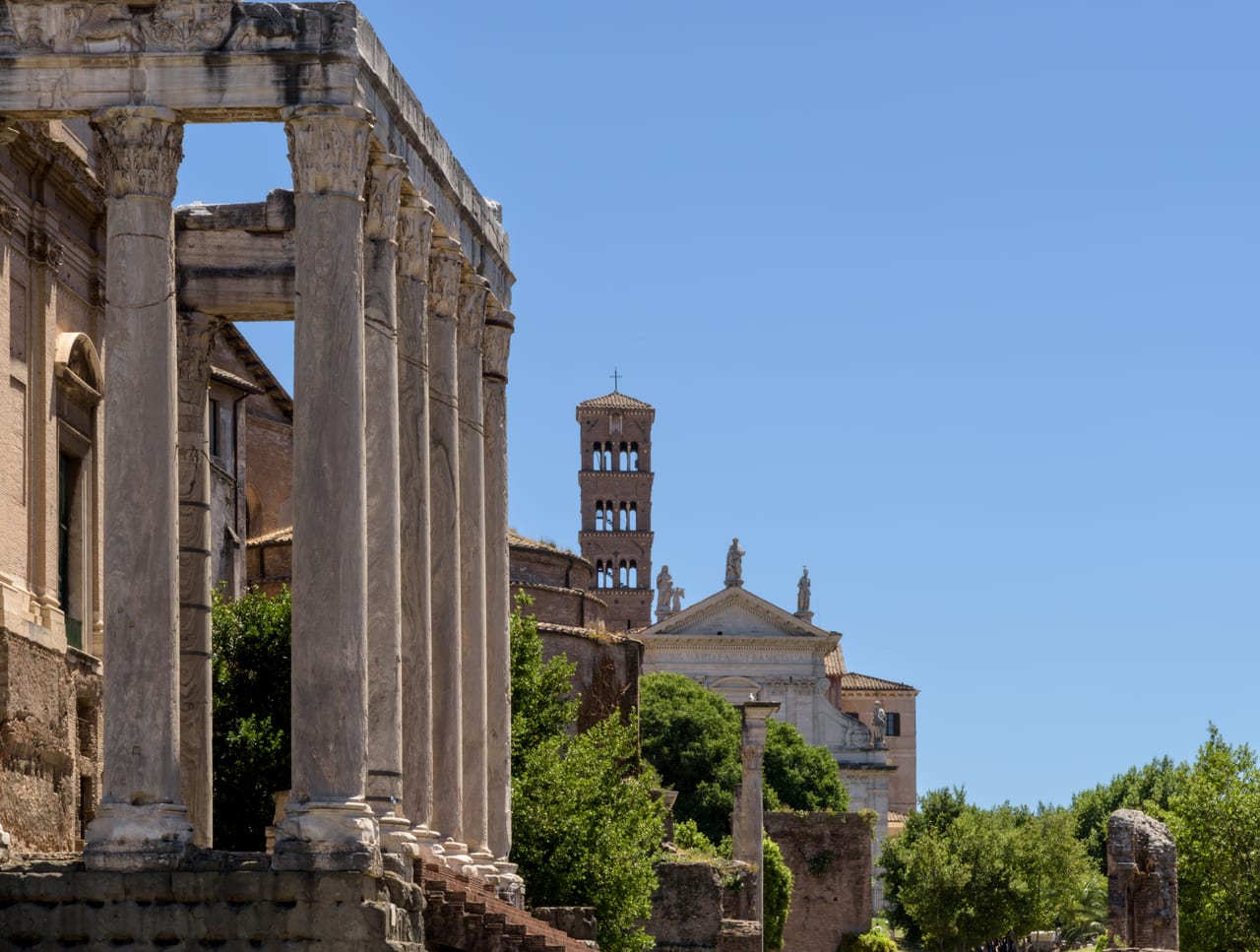
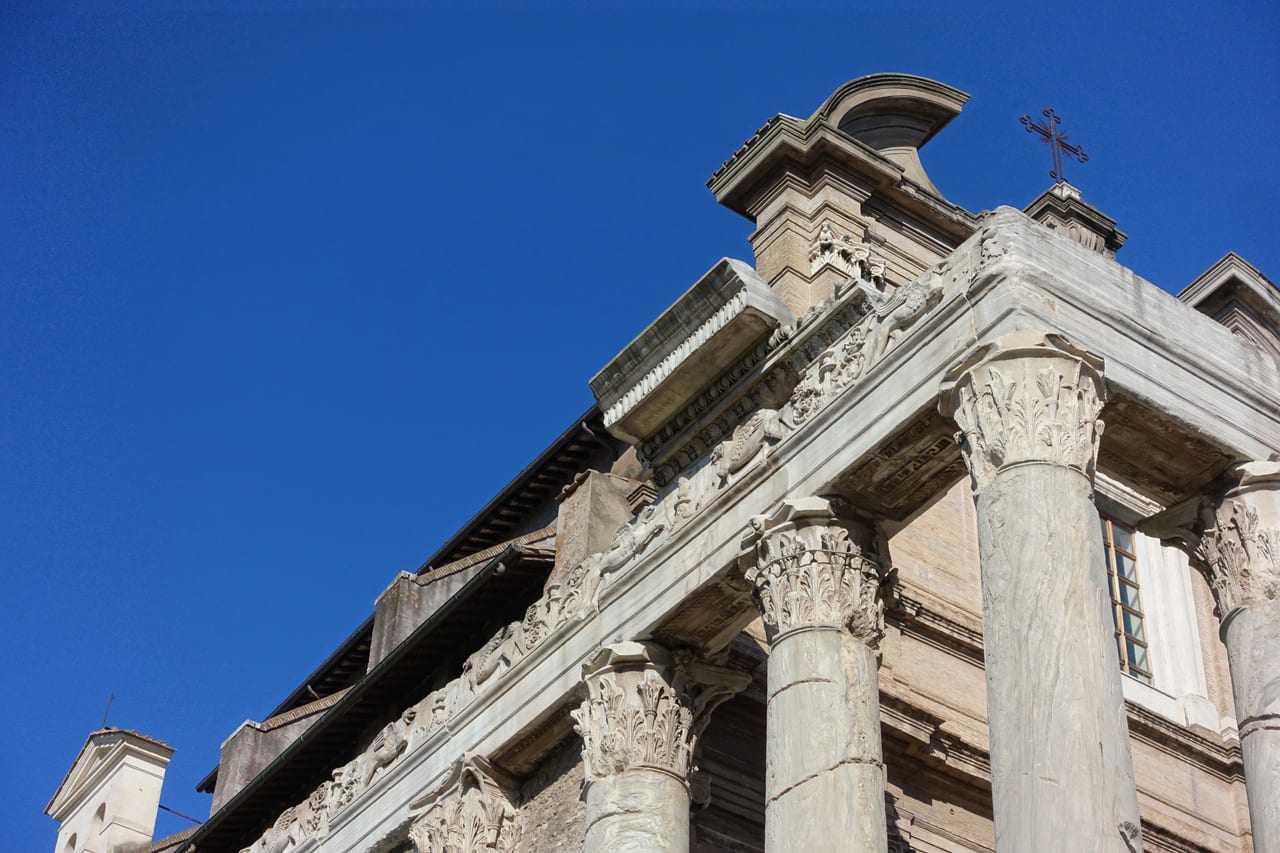
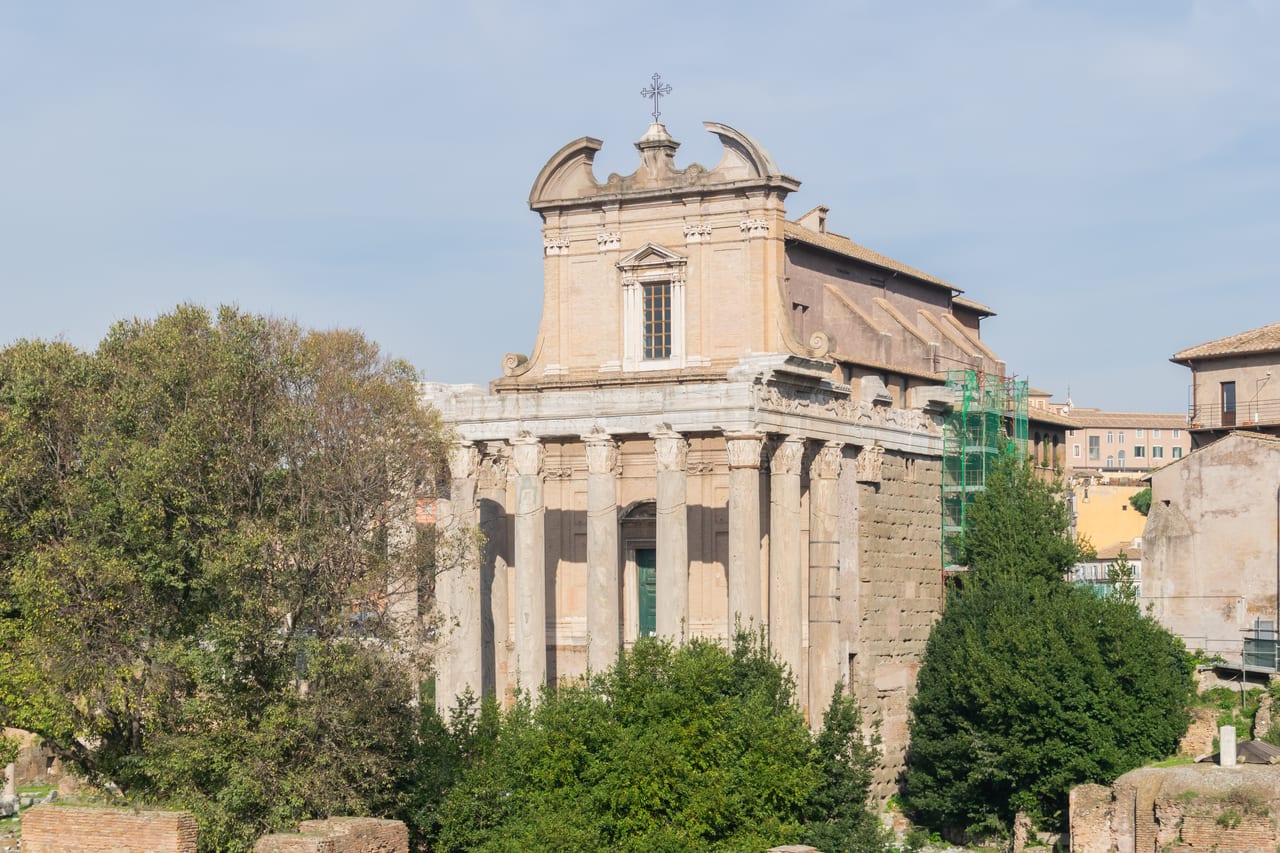
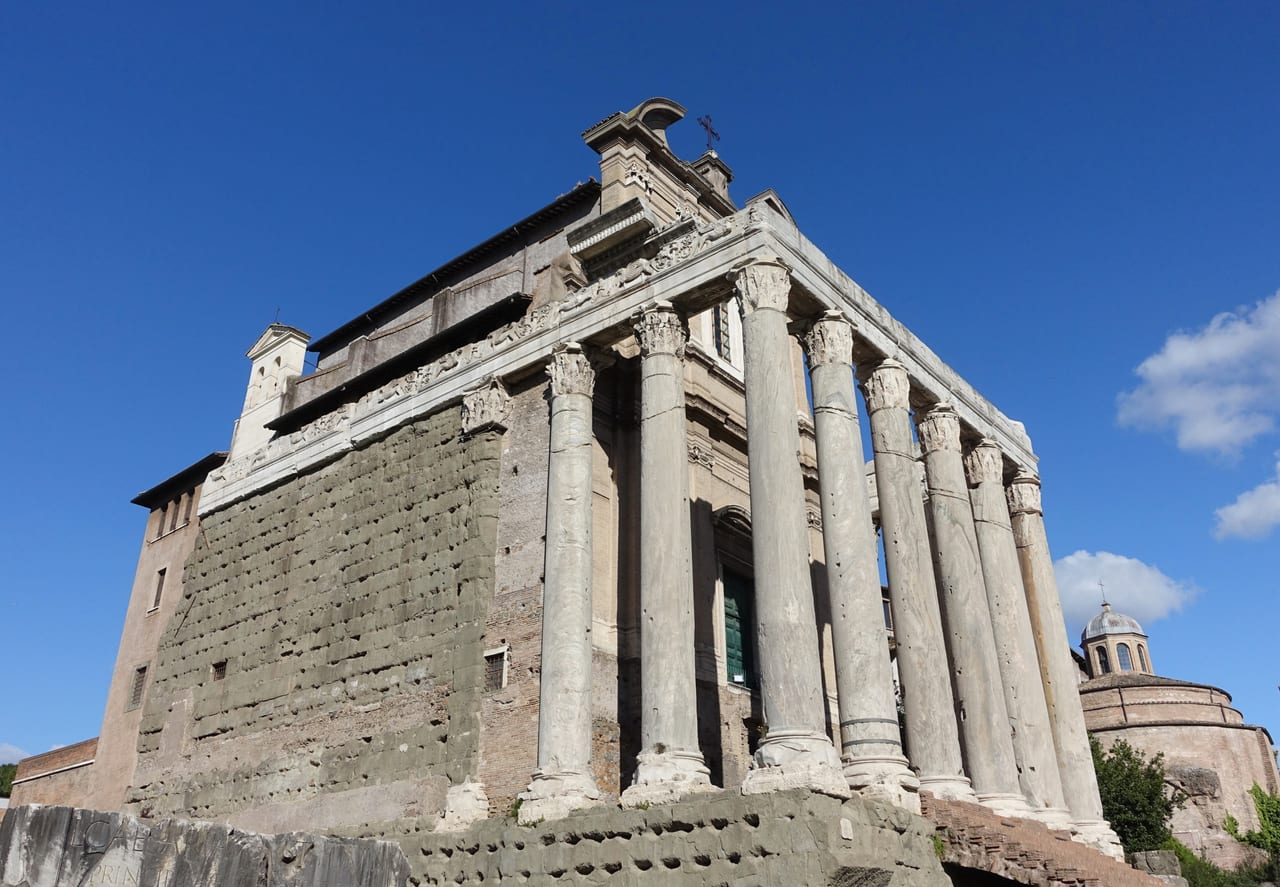
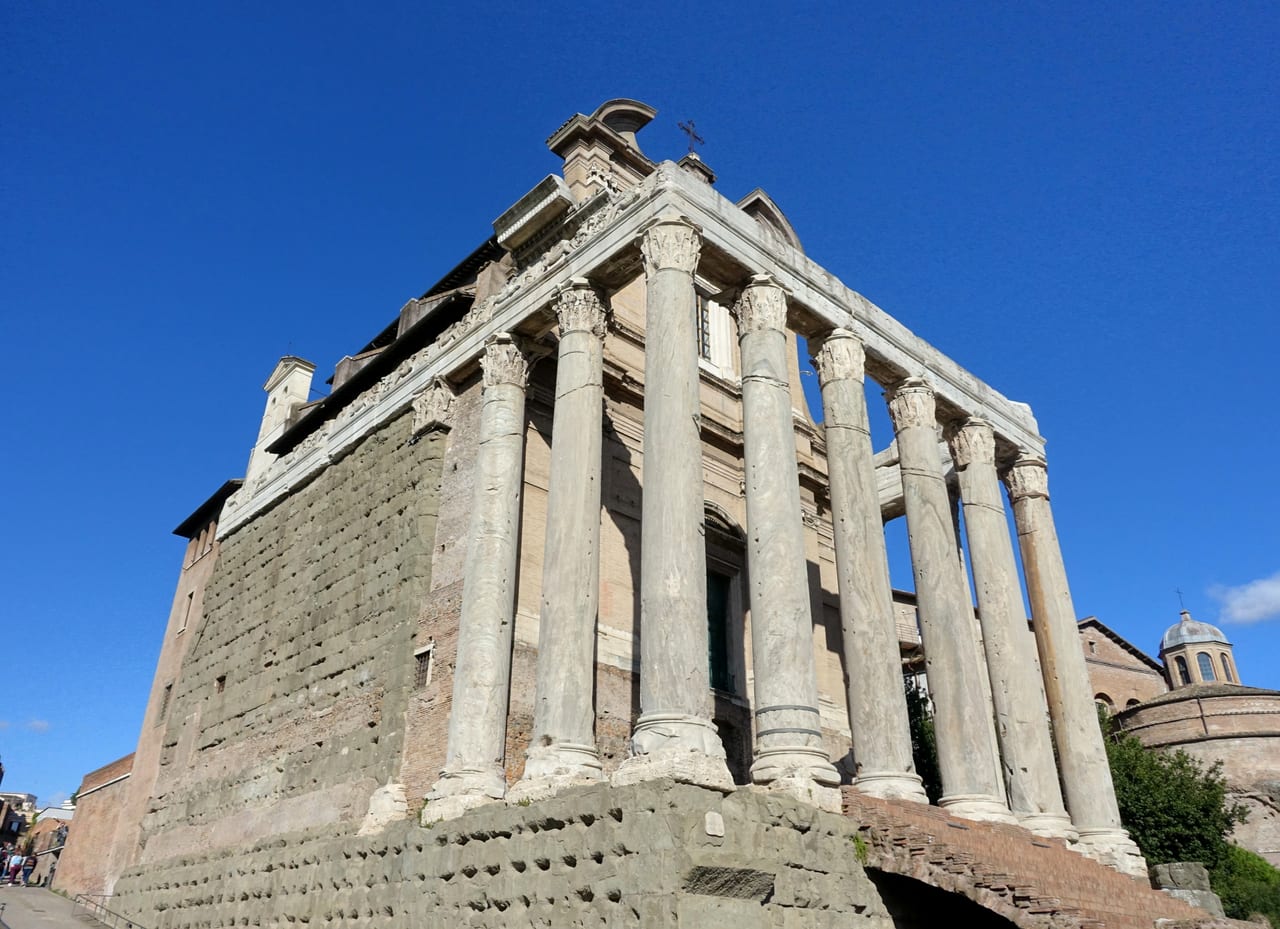
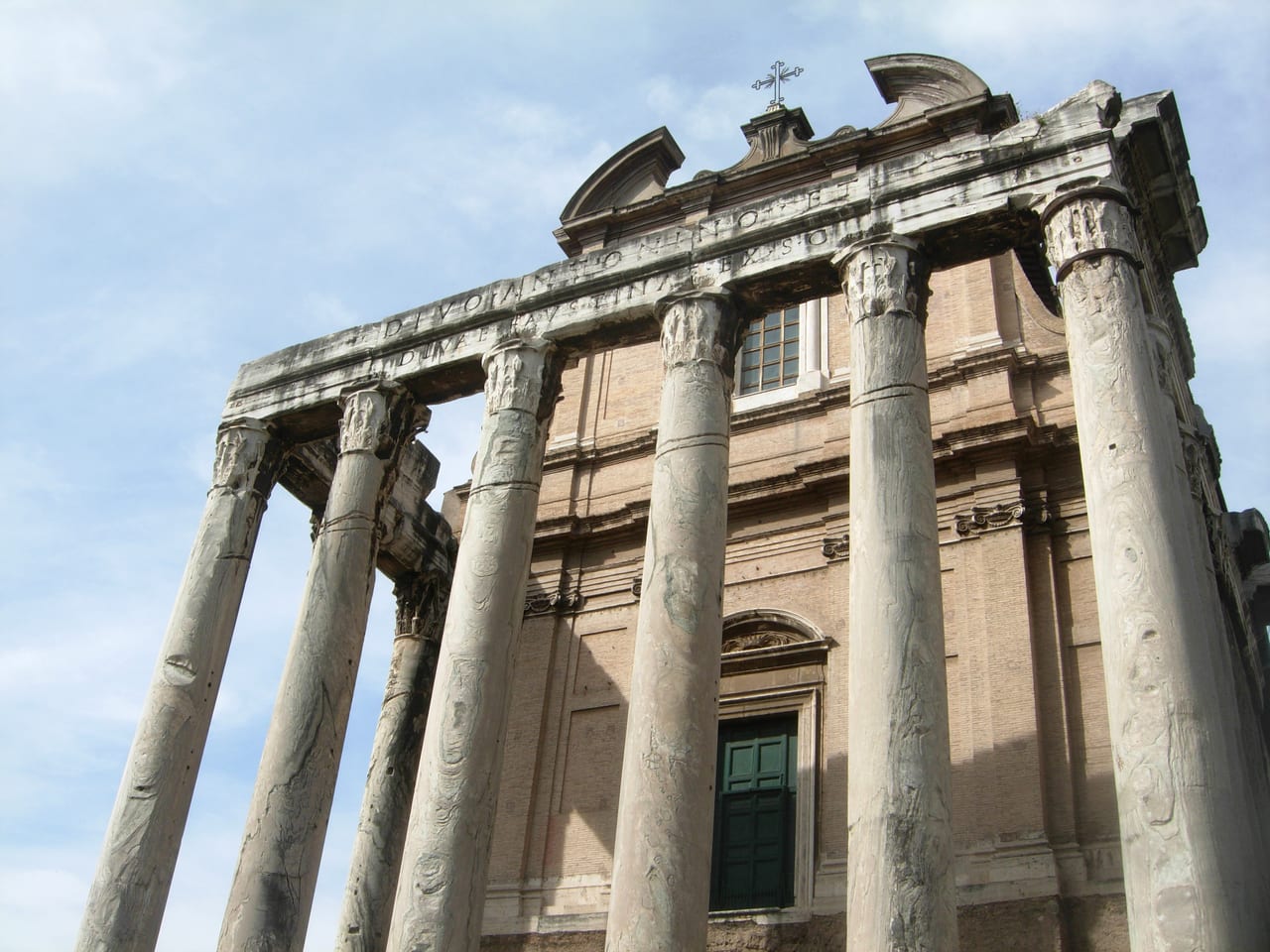
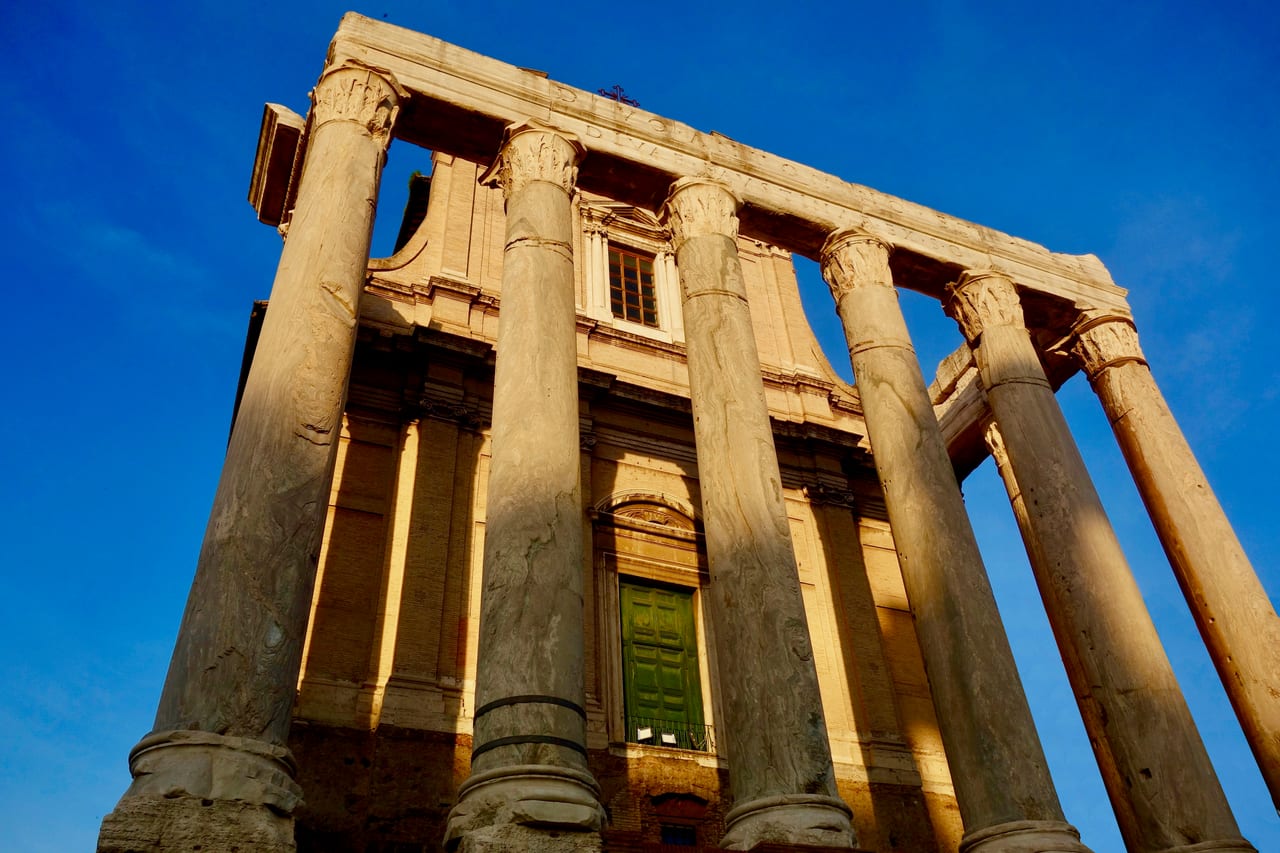
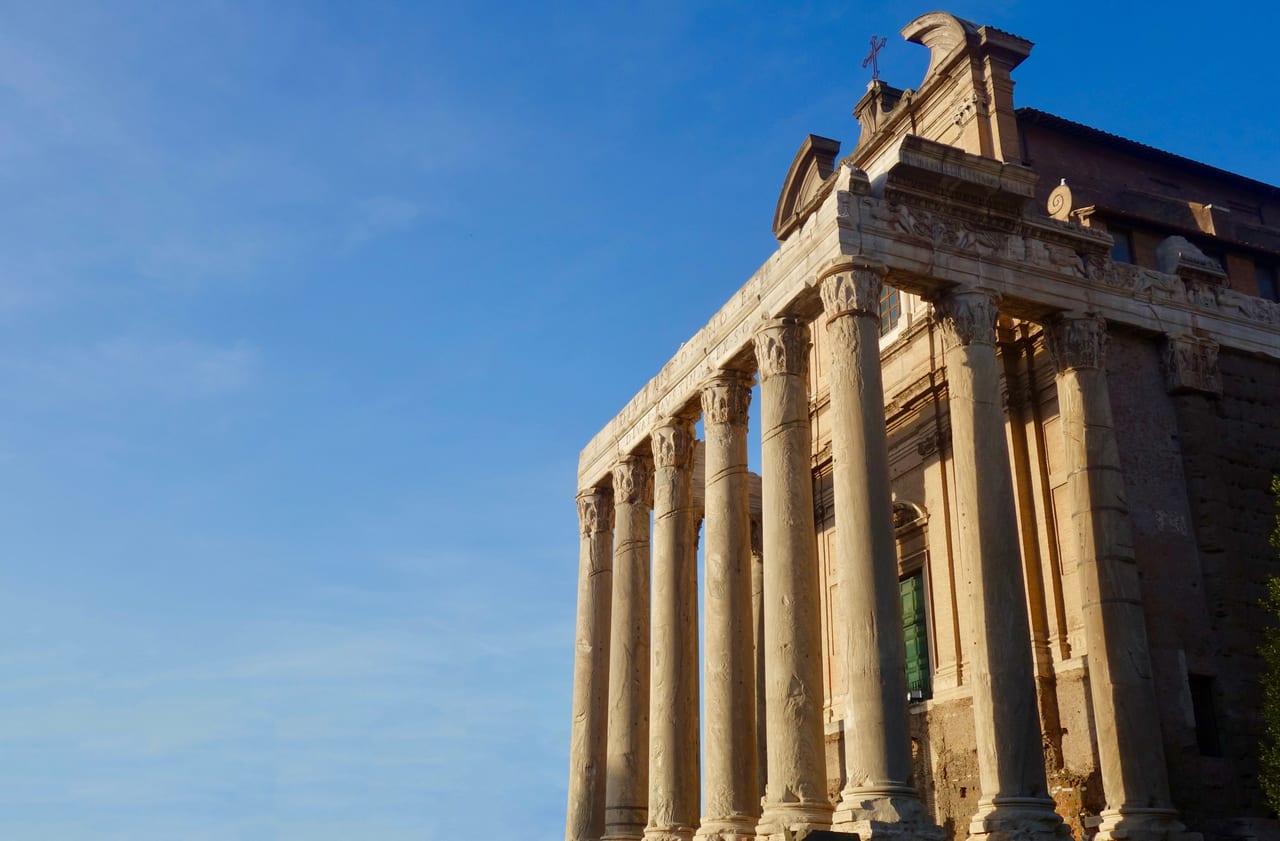
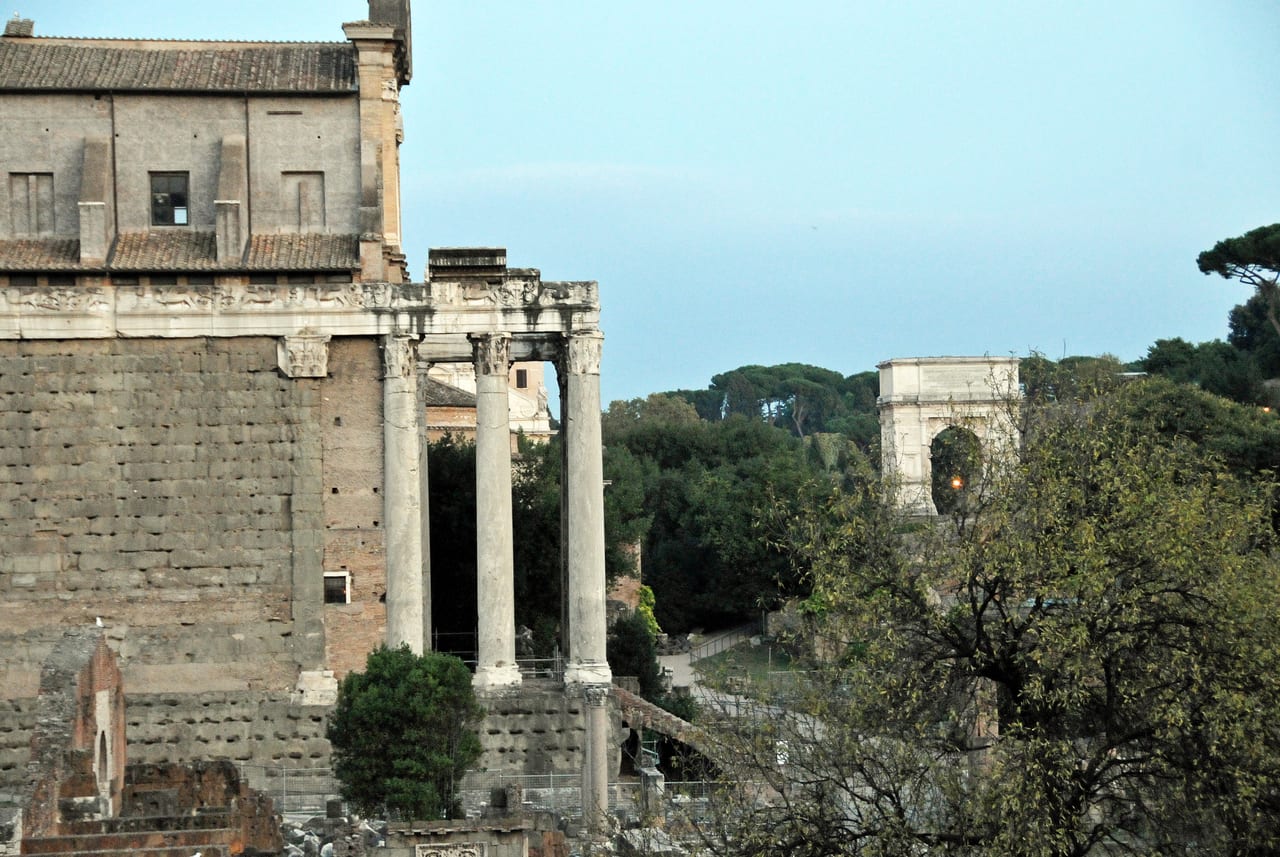
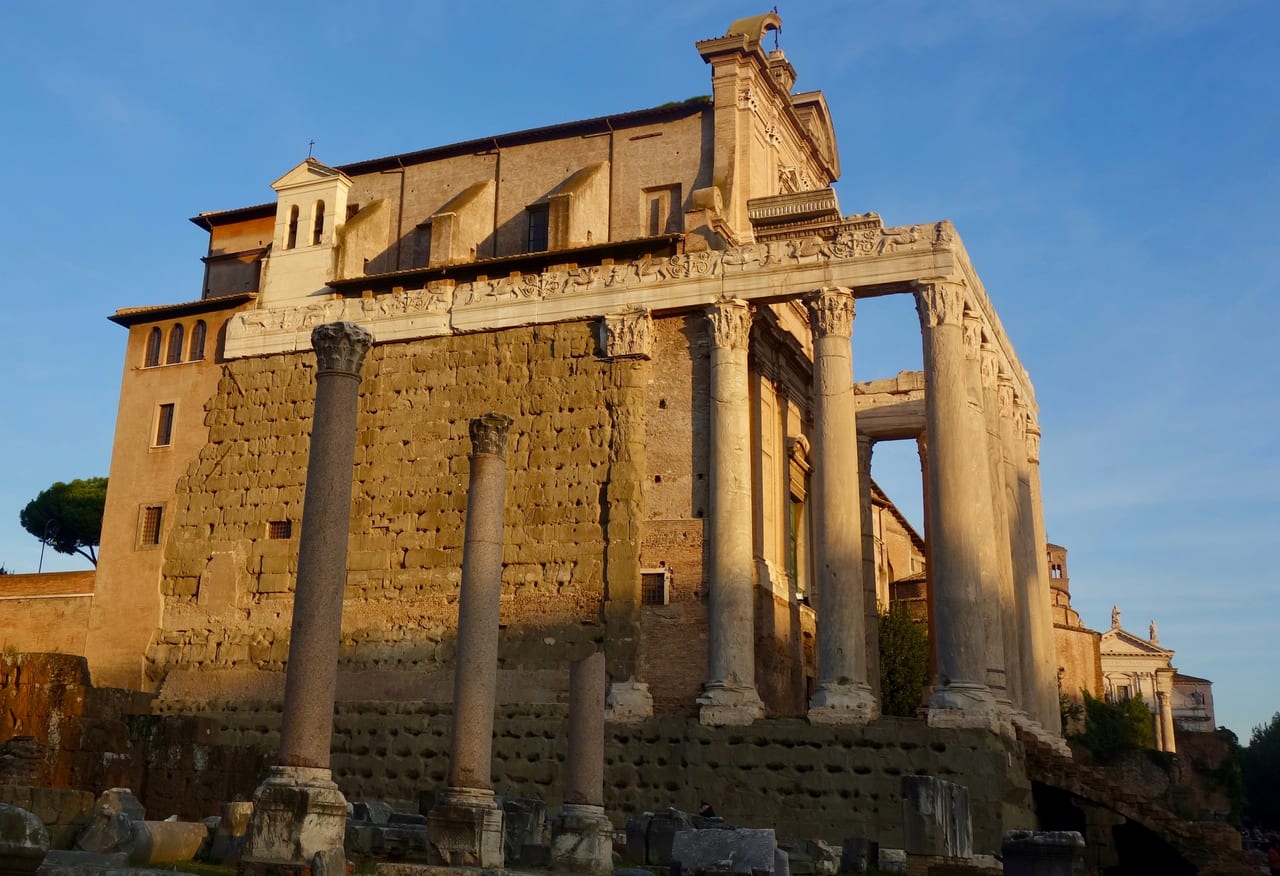
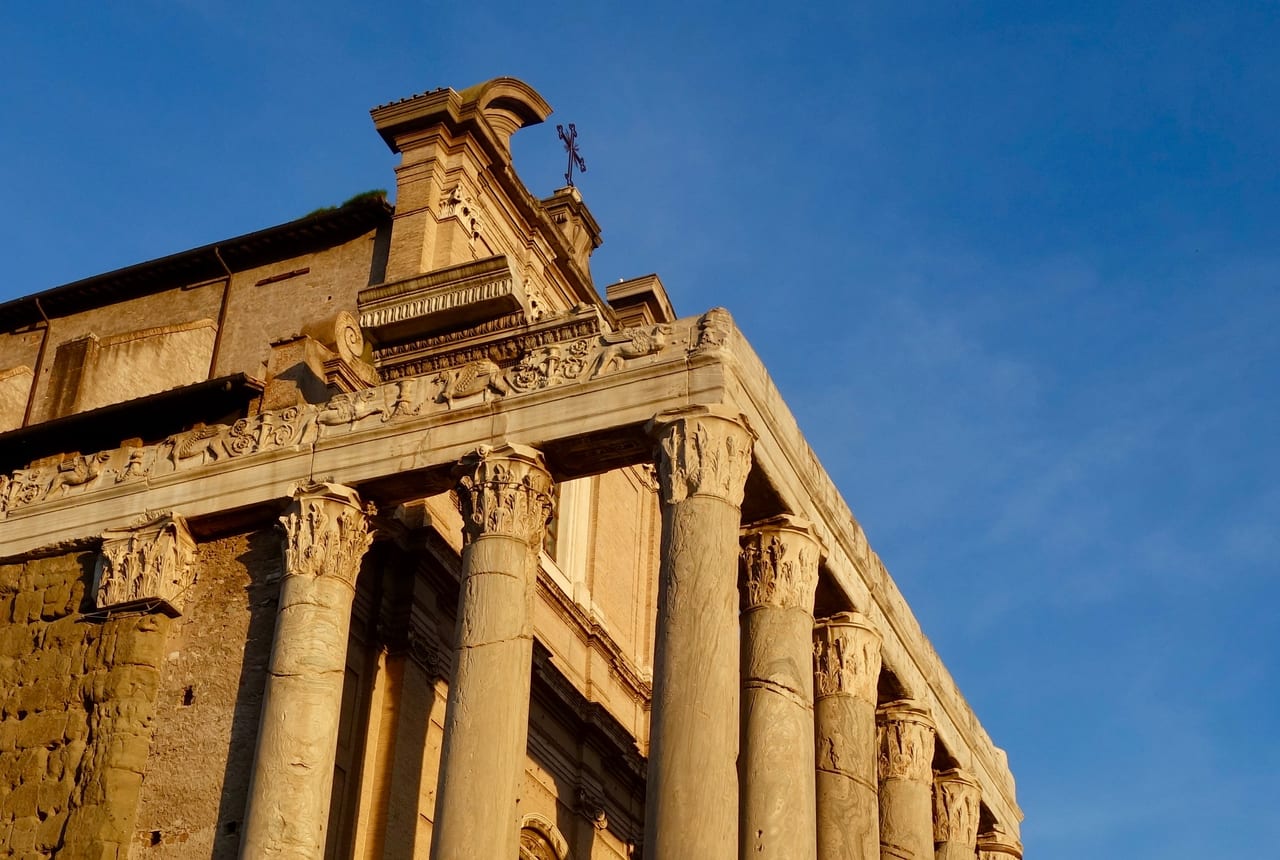
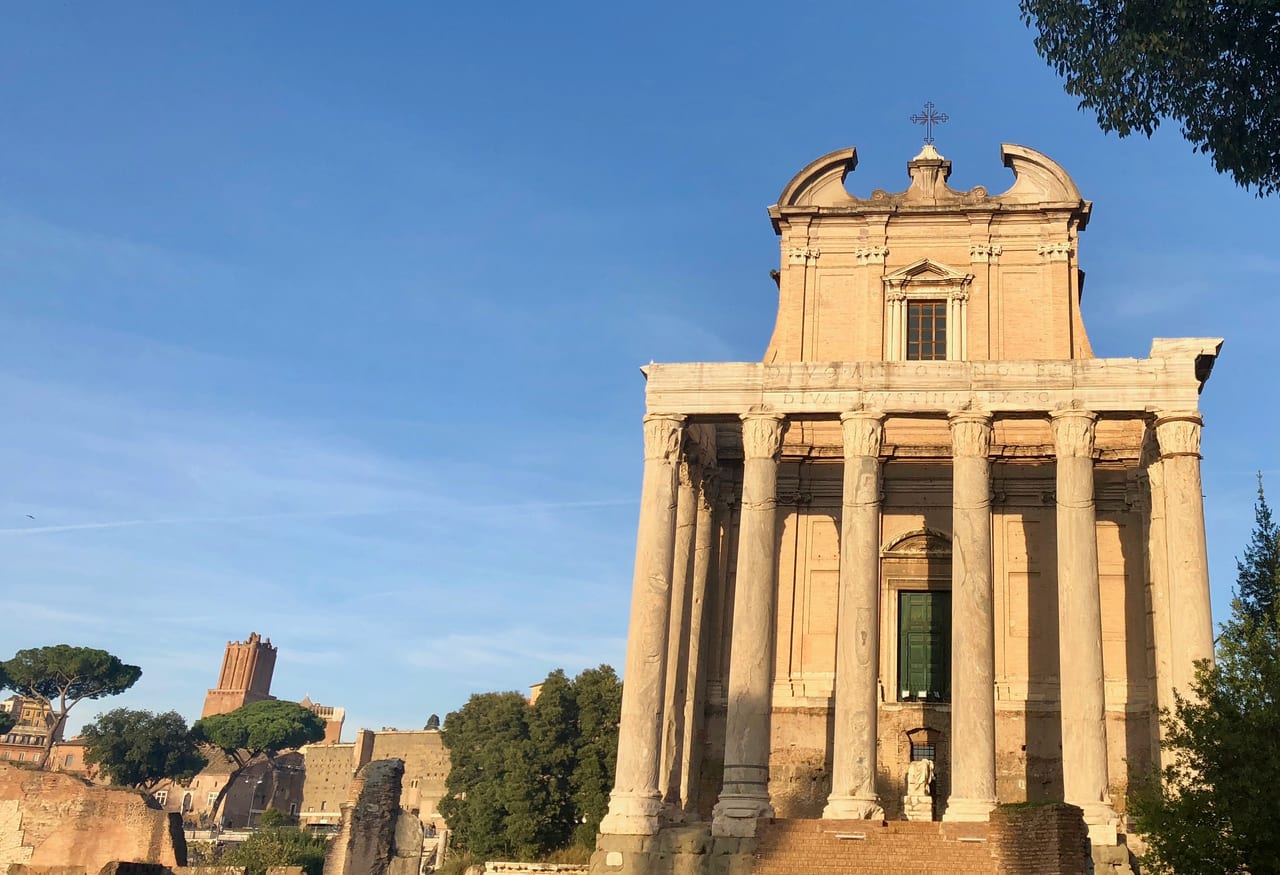
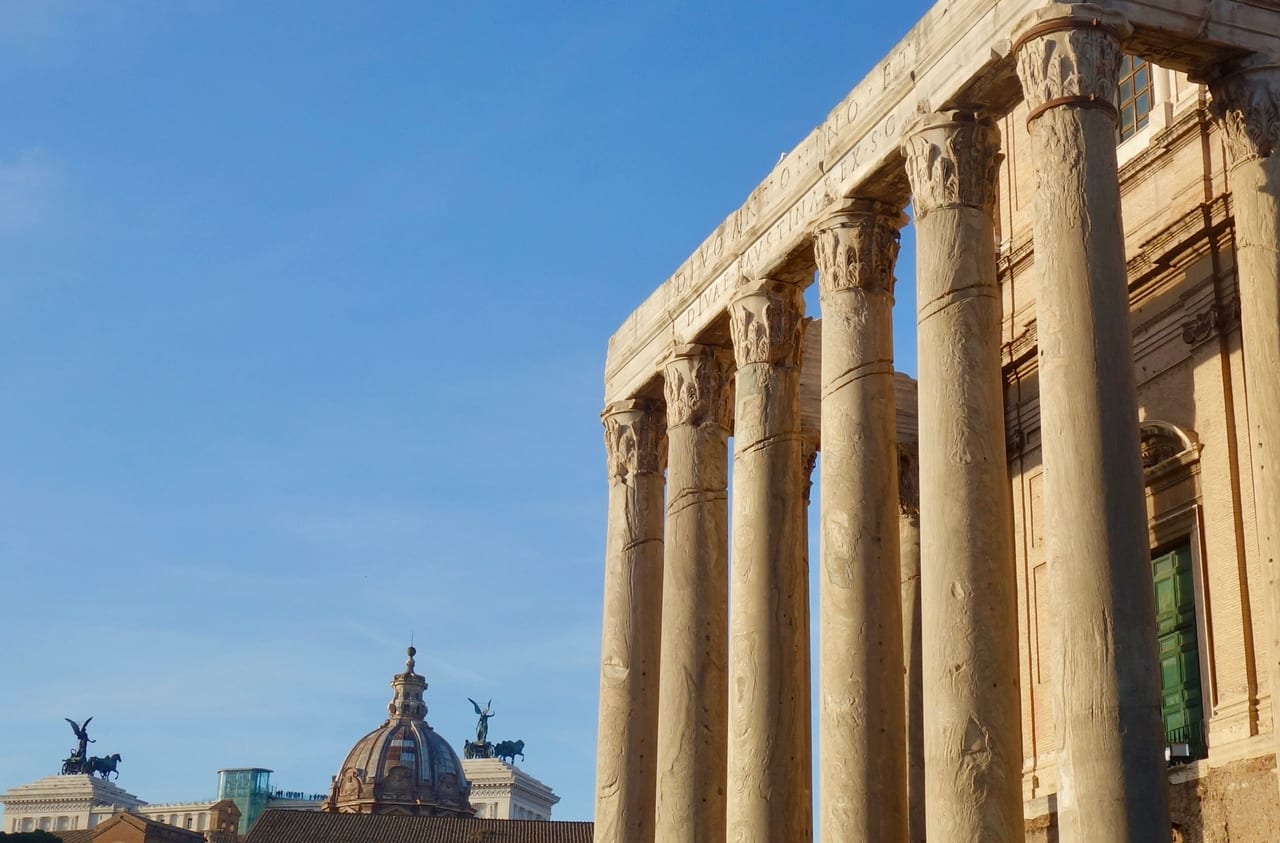
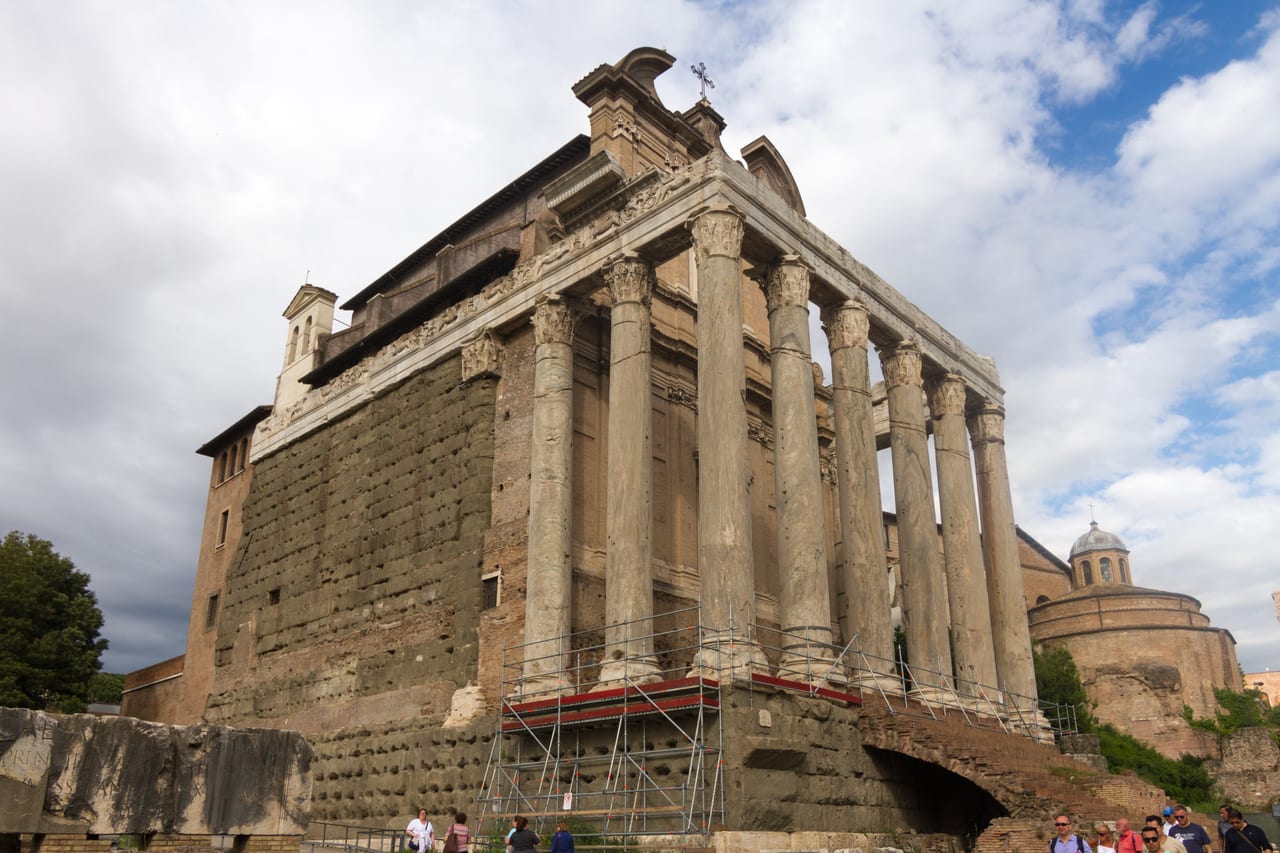
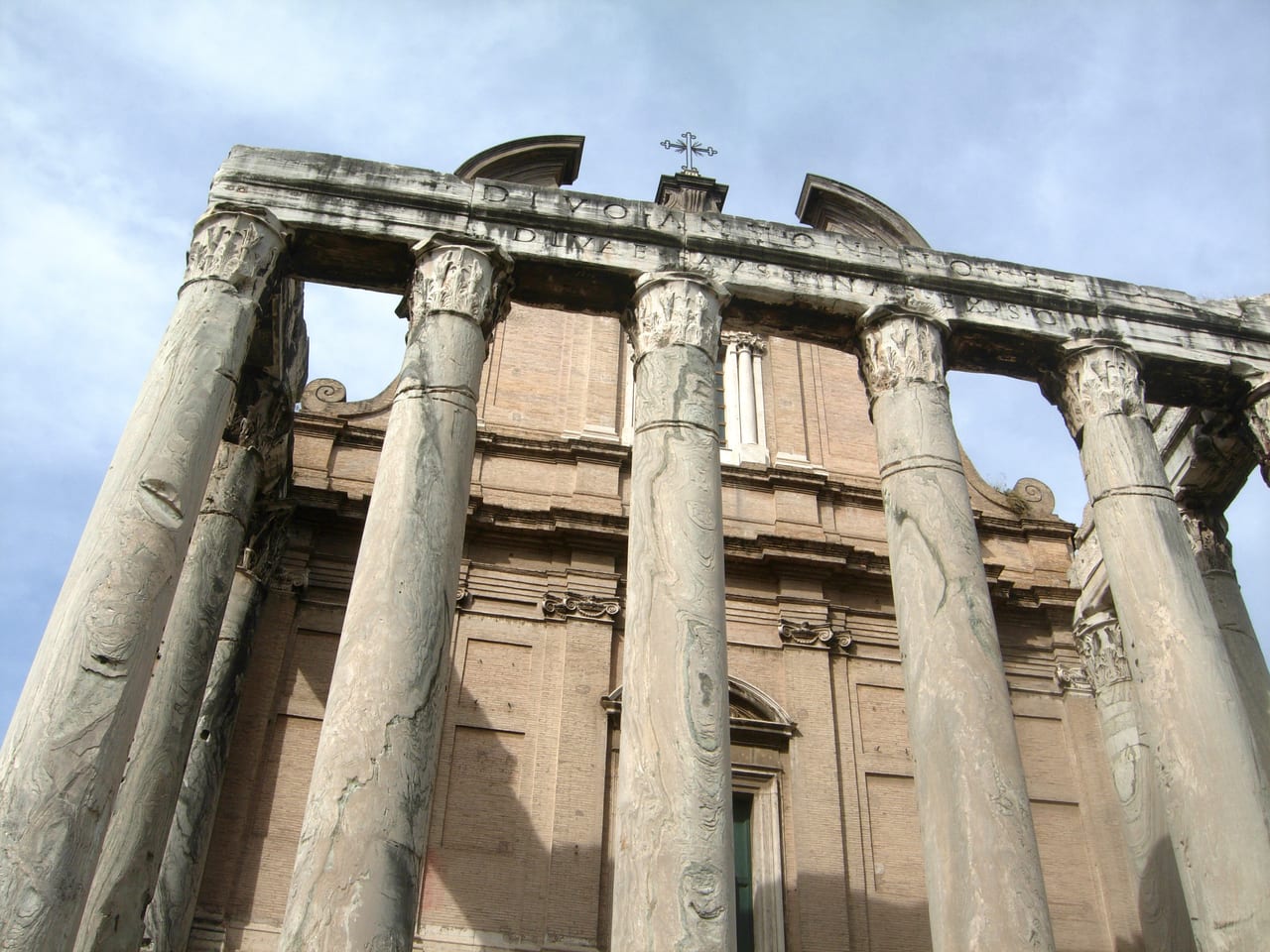
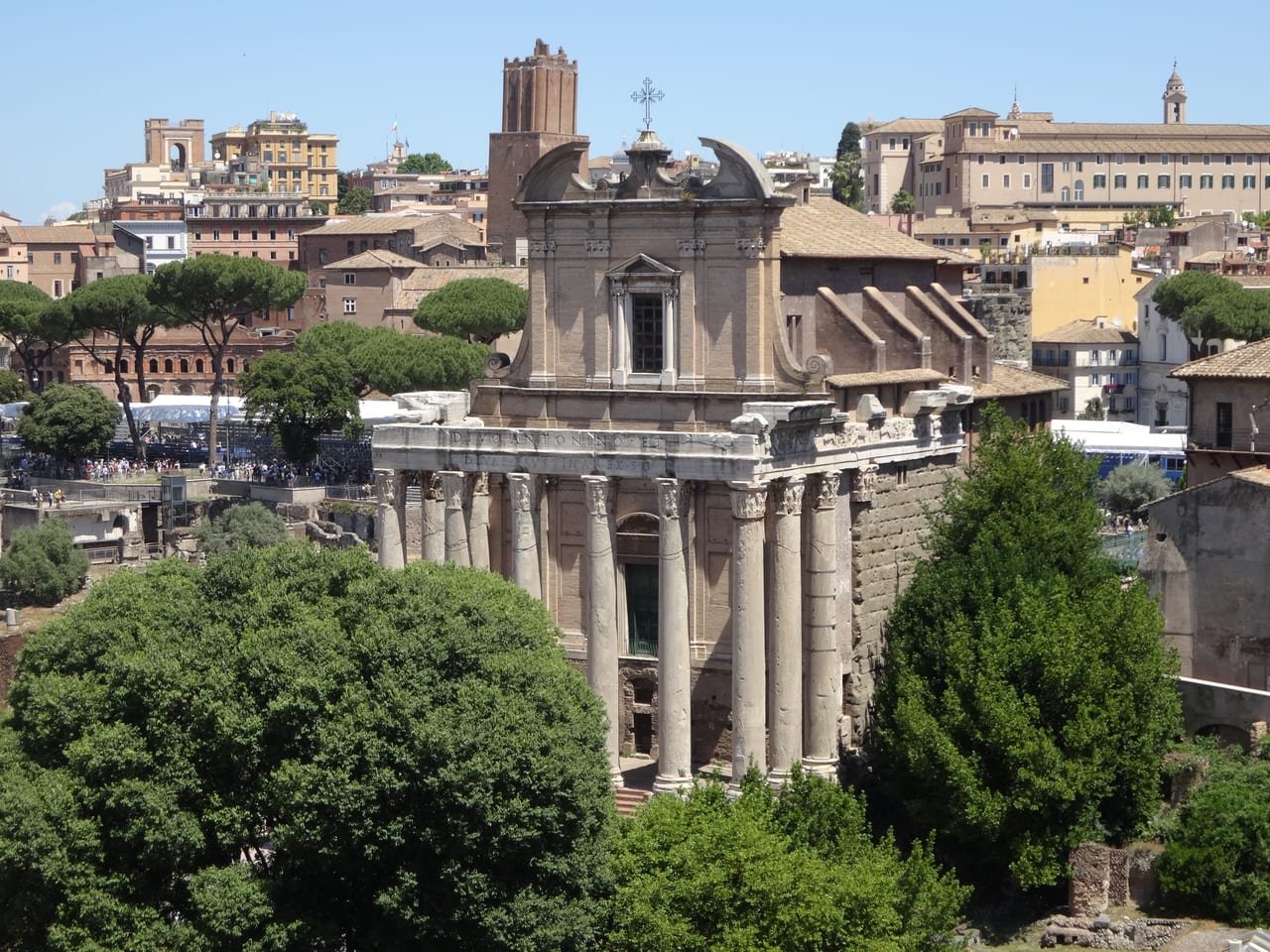
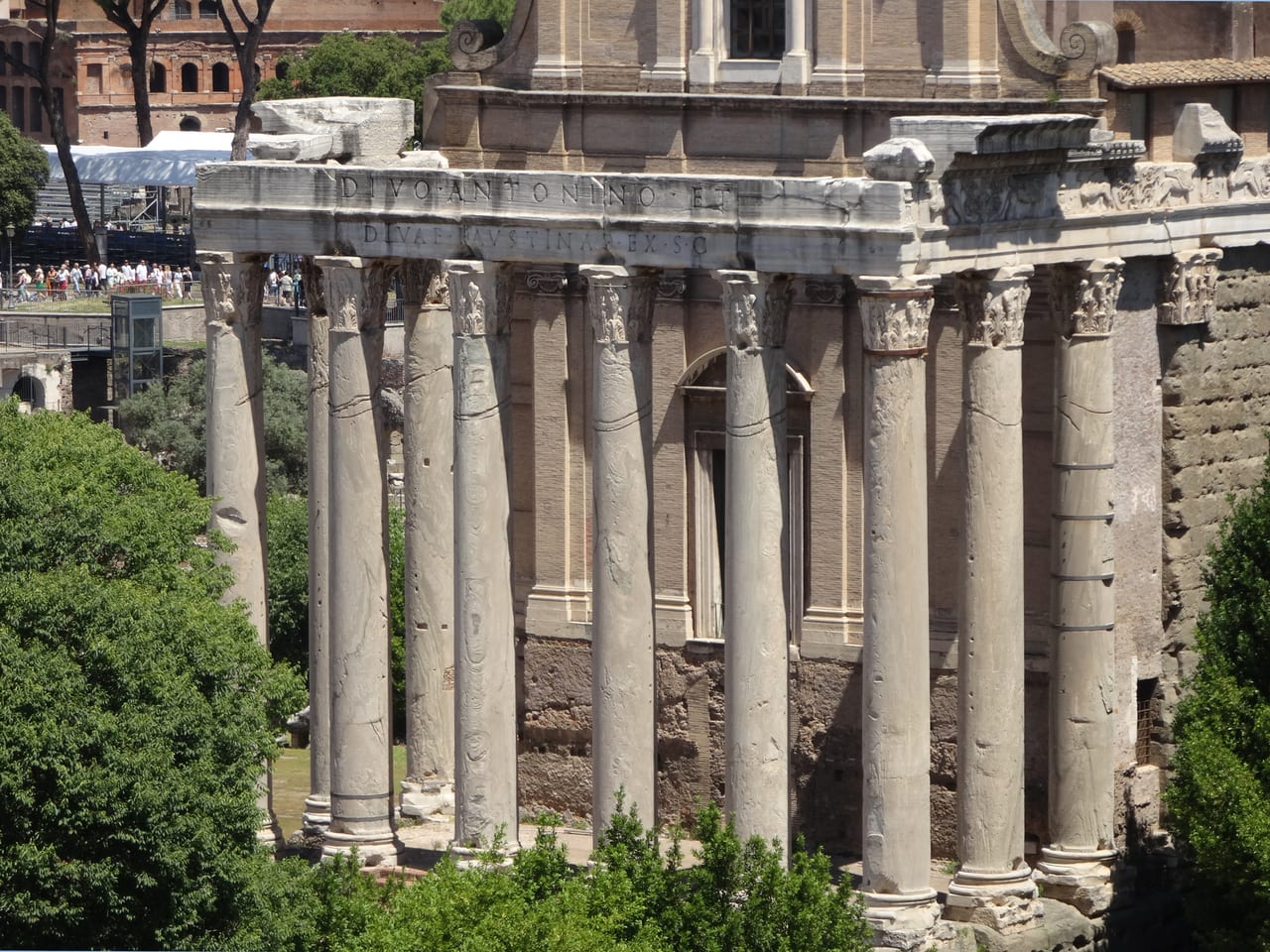
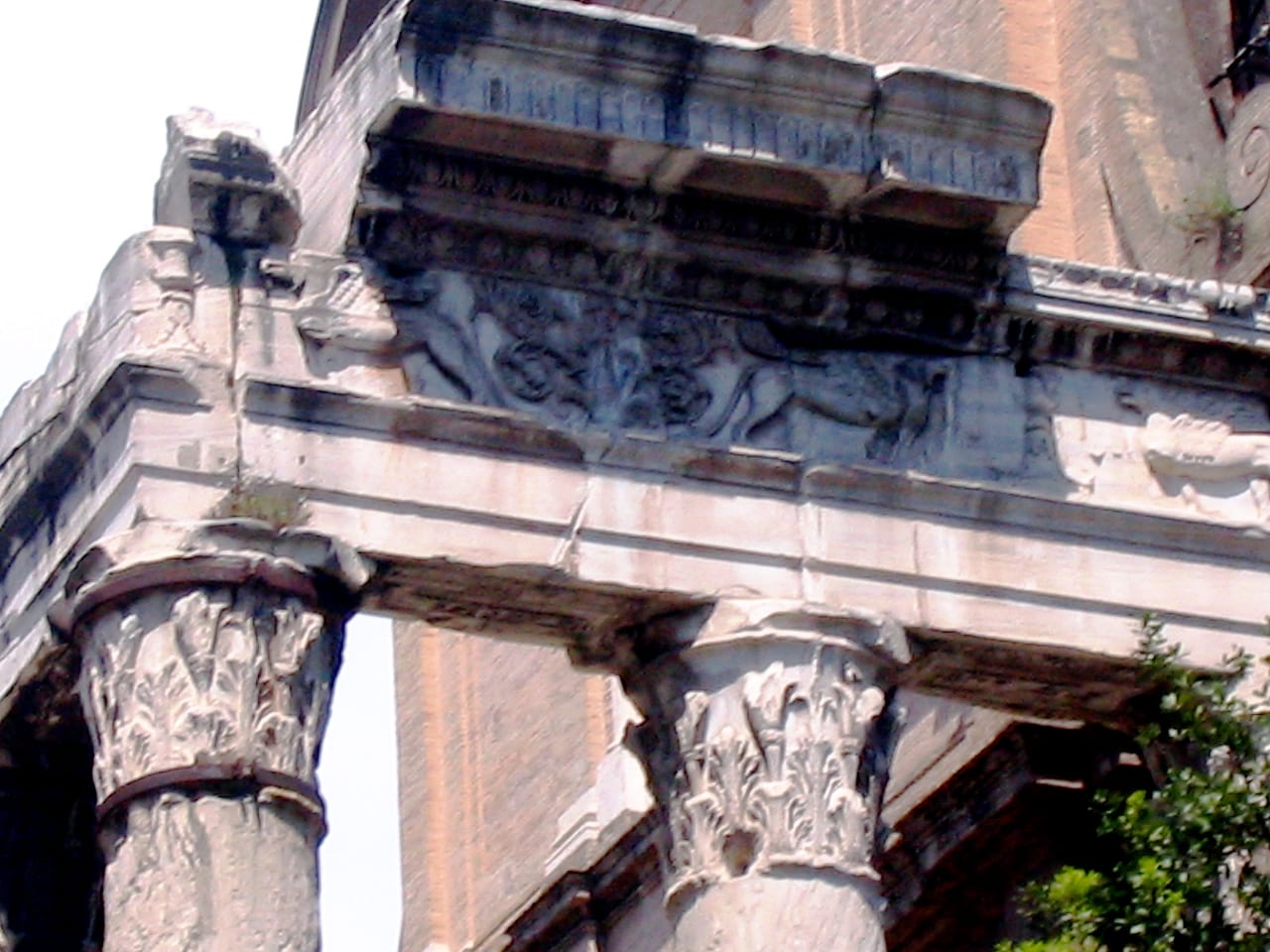
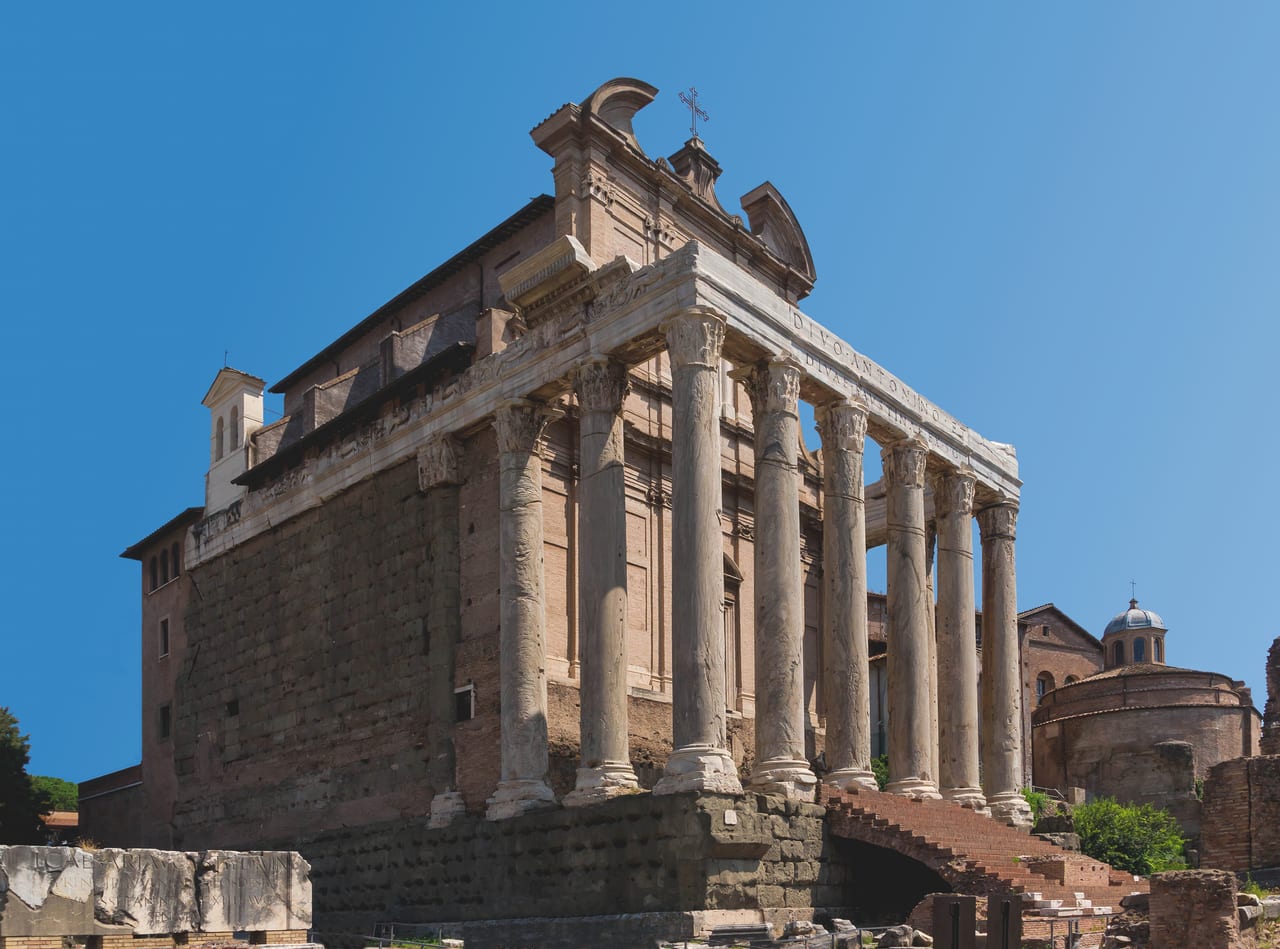
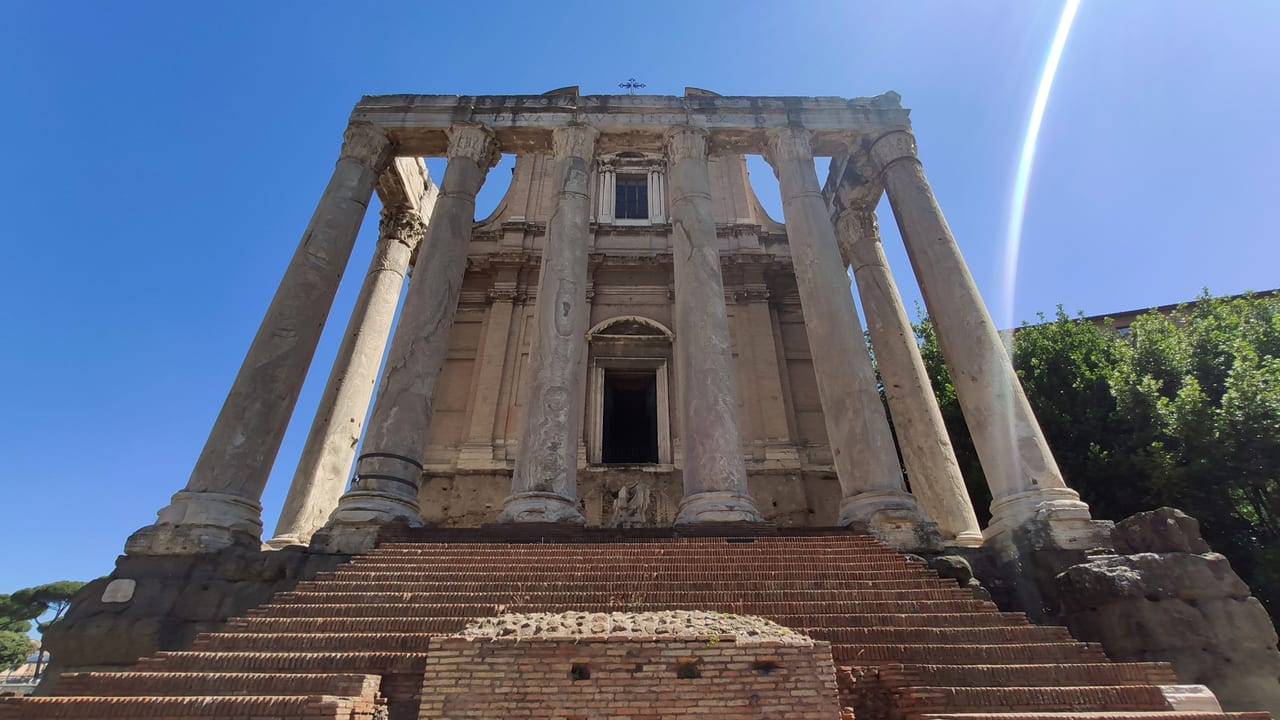
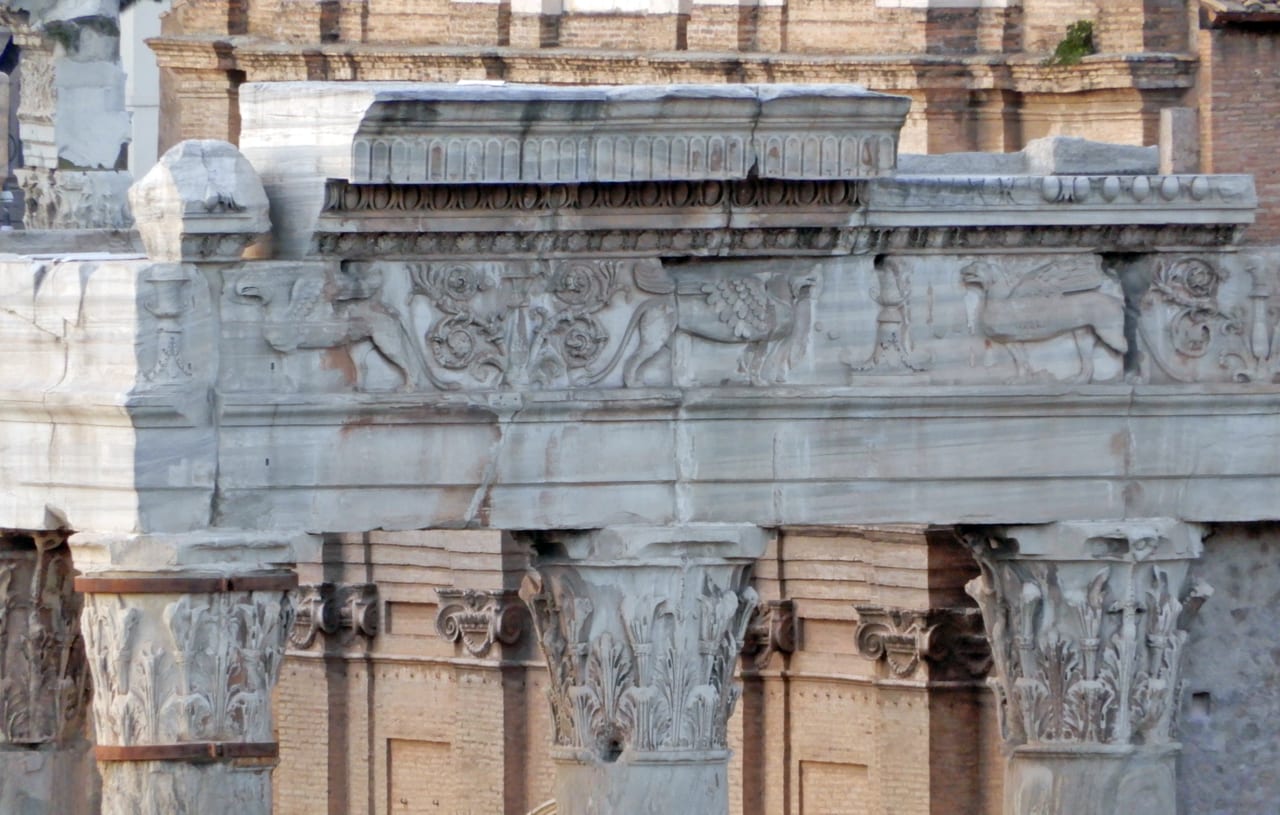
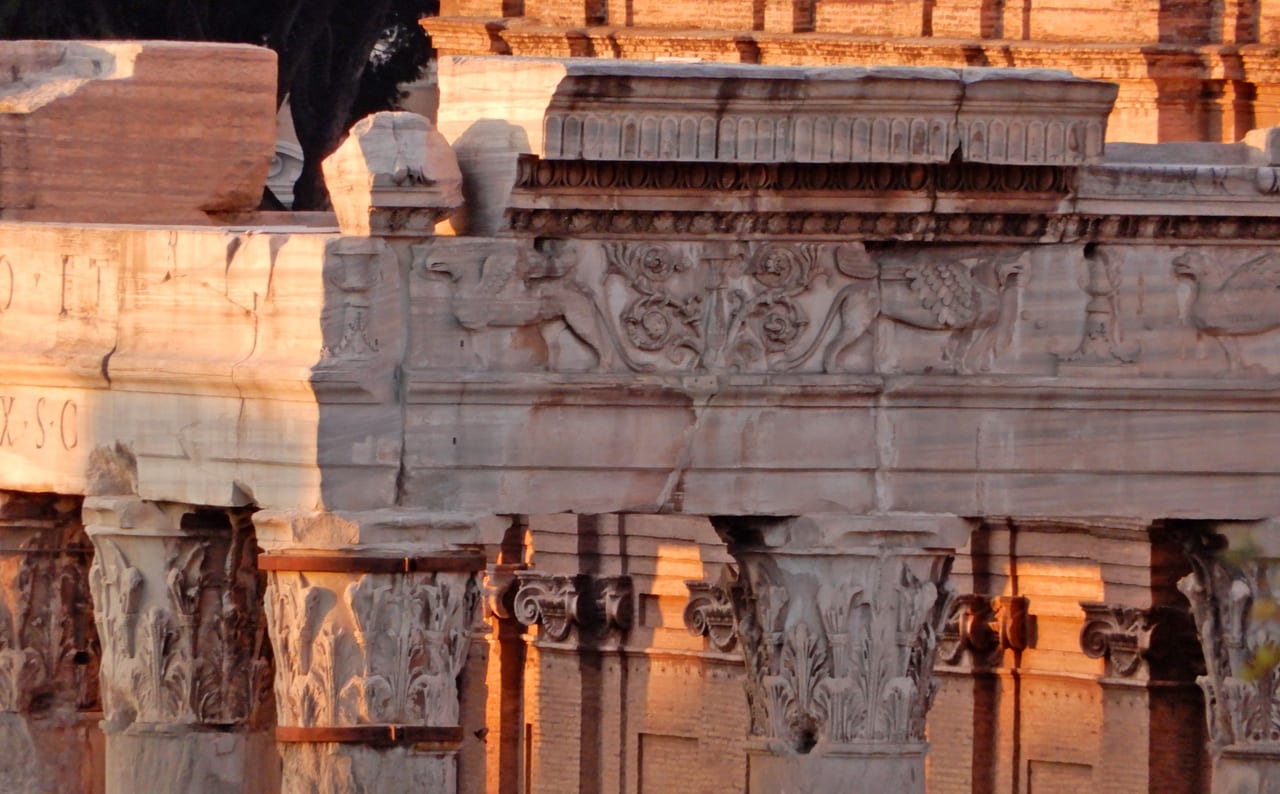
DirectionsIts eight monolithic Corinthian columns, carved from Karystian marble and rising 17 metres, stand before a frieze whose griffins and acanthus ornament inspired centuries of copies.
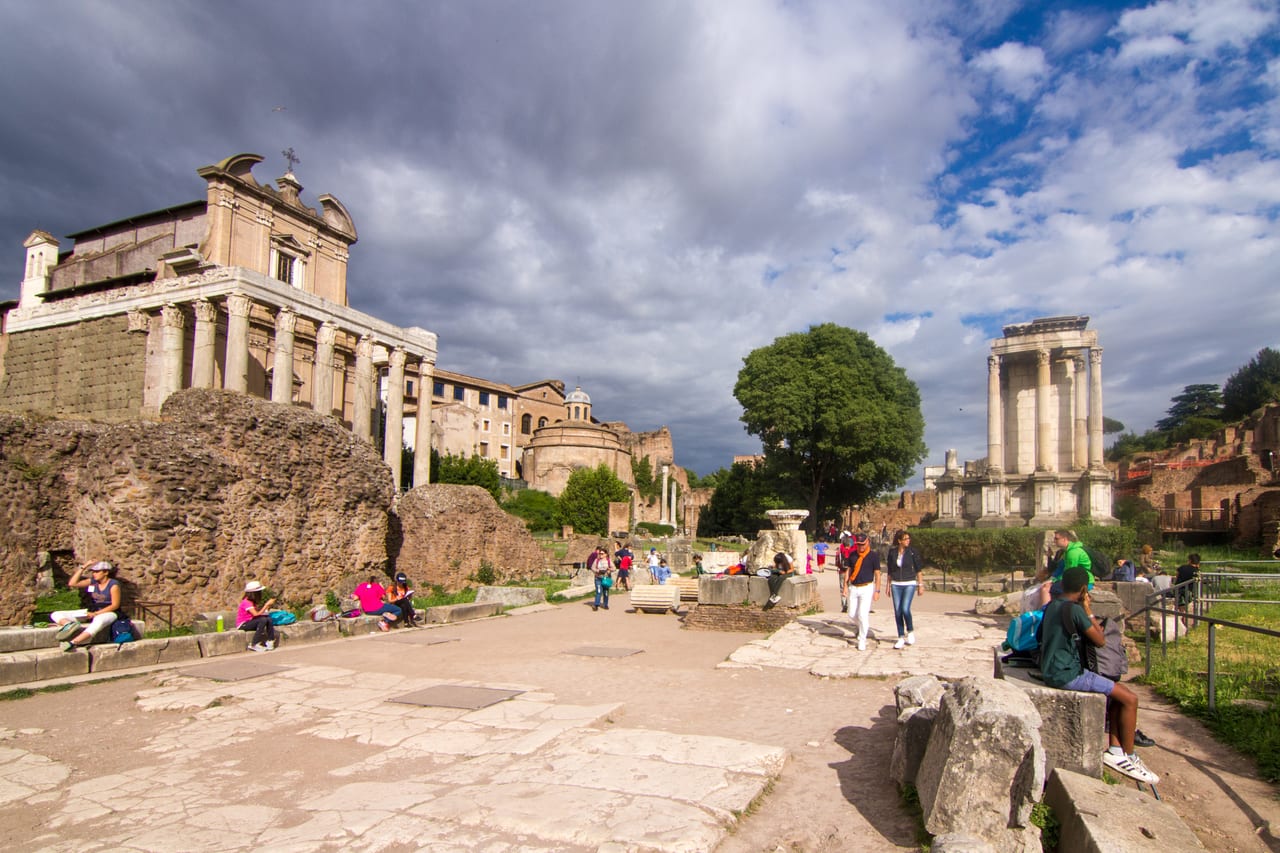
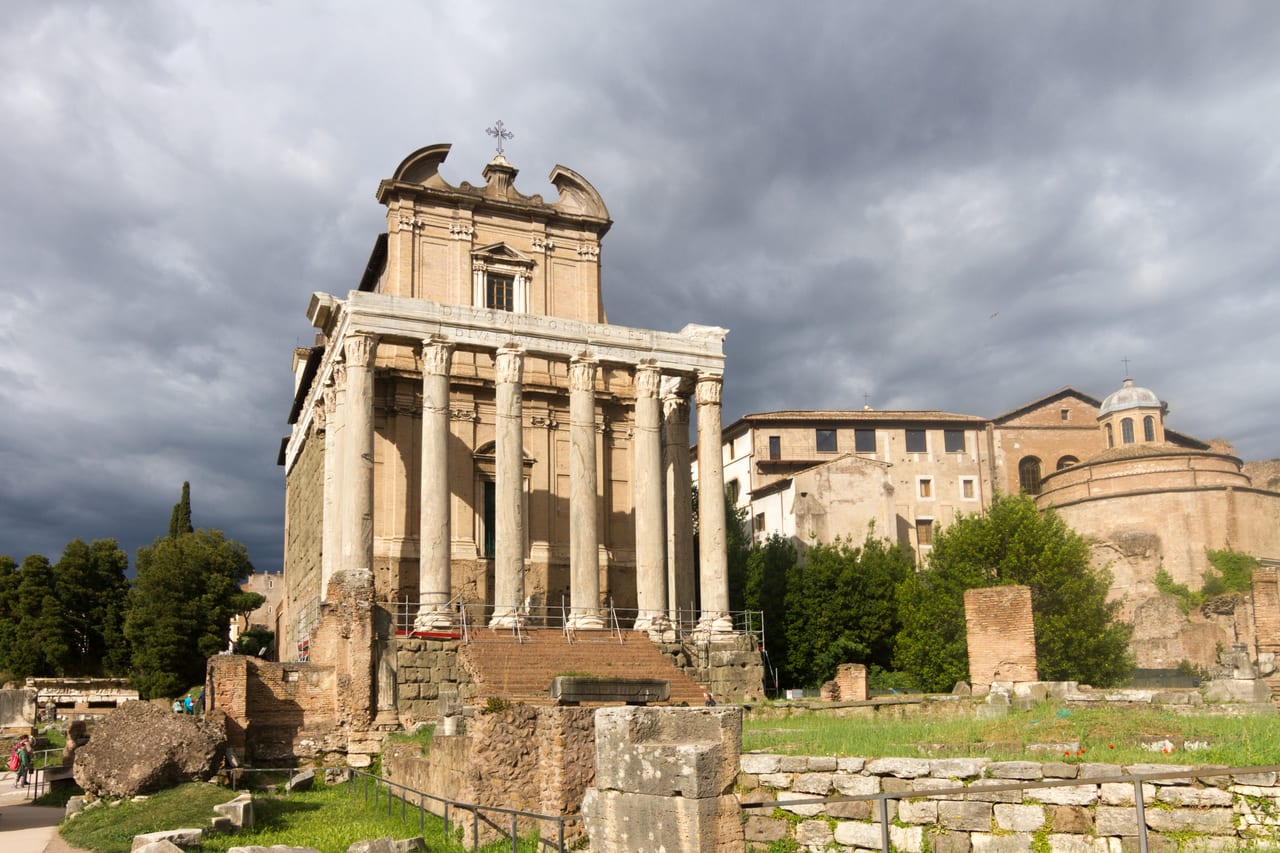
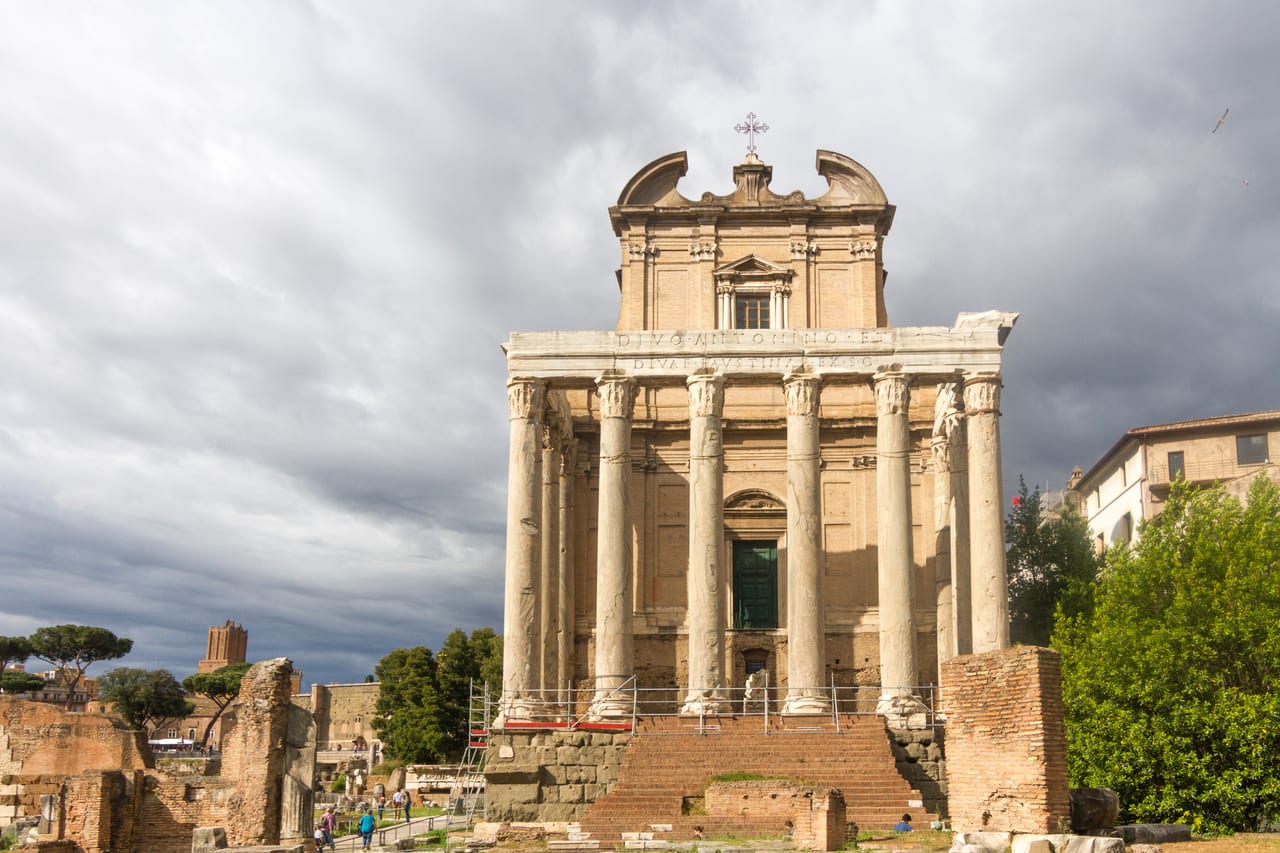
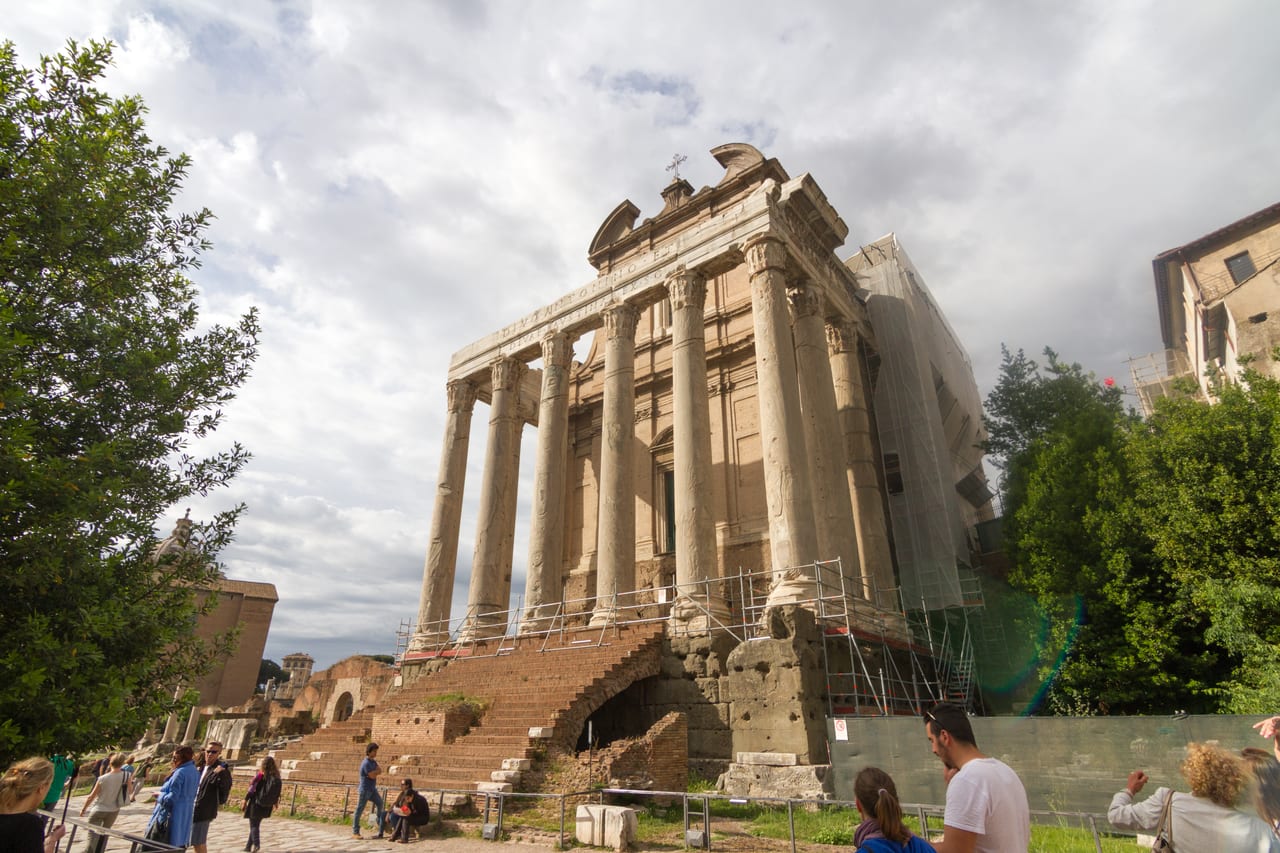
Photograph 1 of 36 of Temple of Antoninus and Faustina
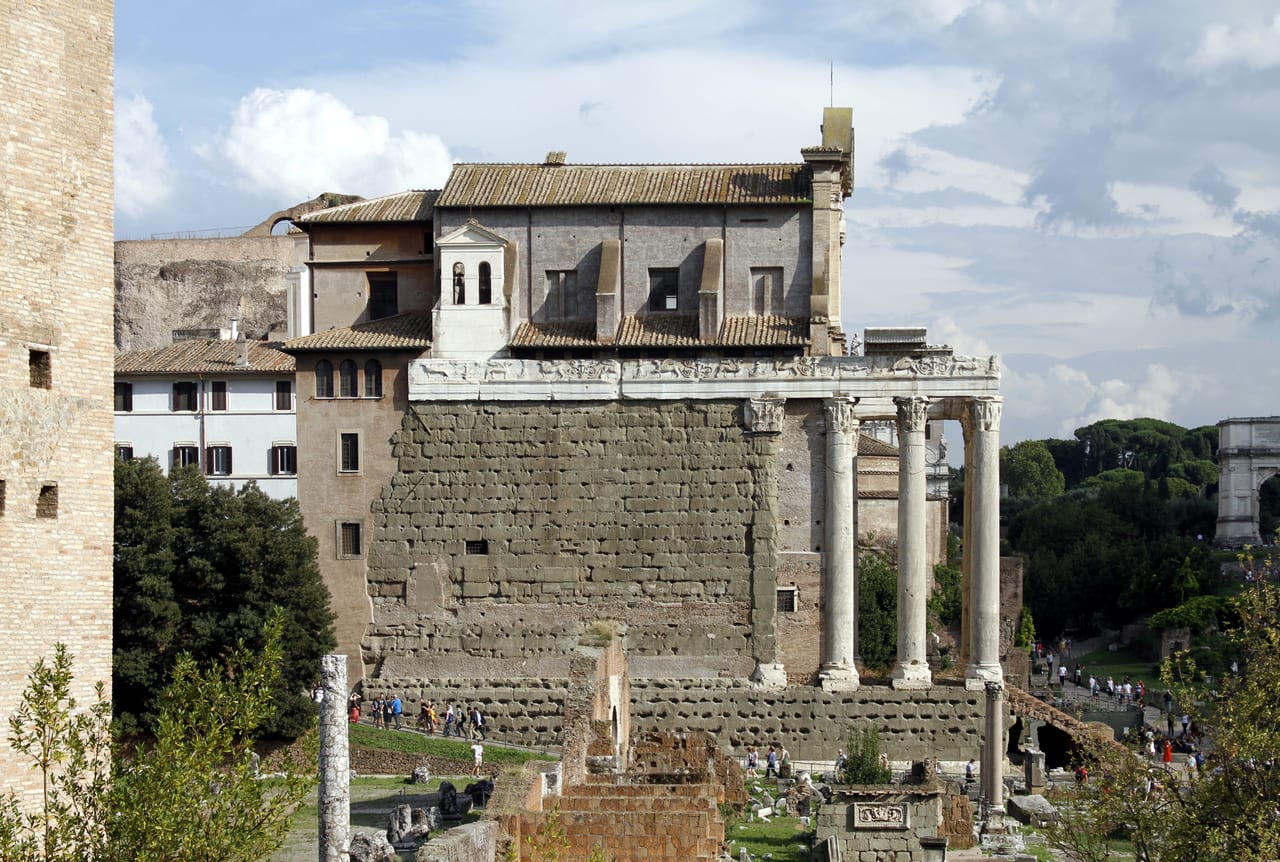
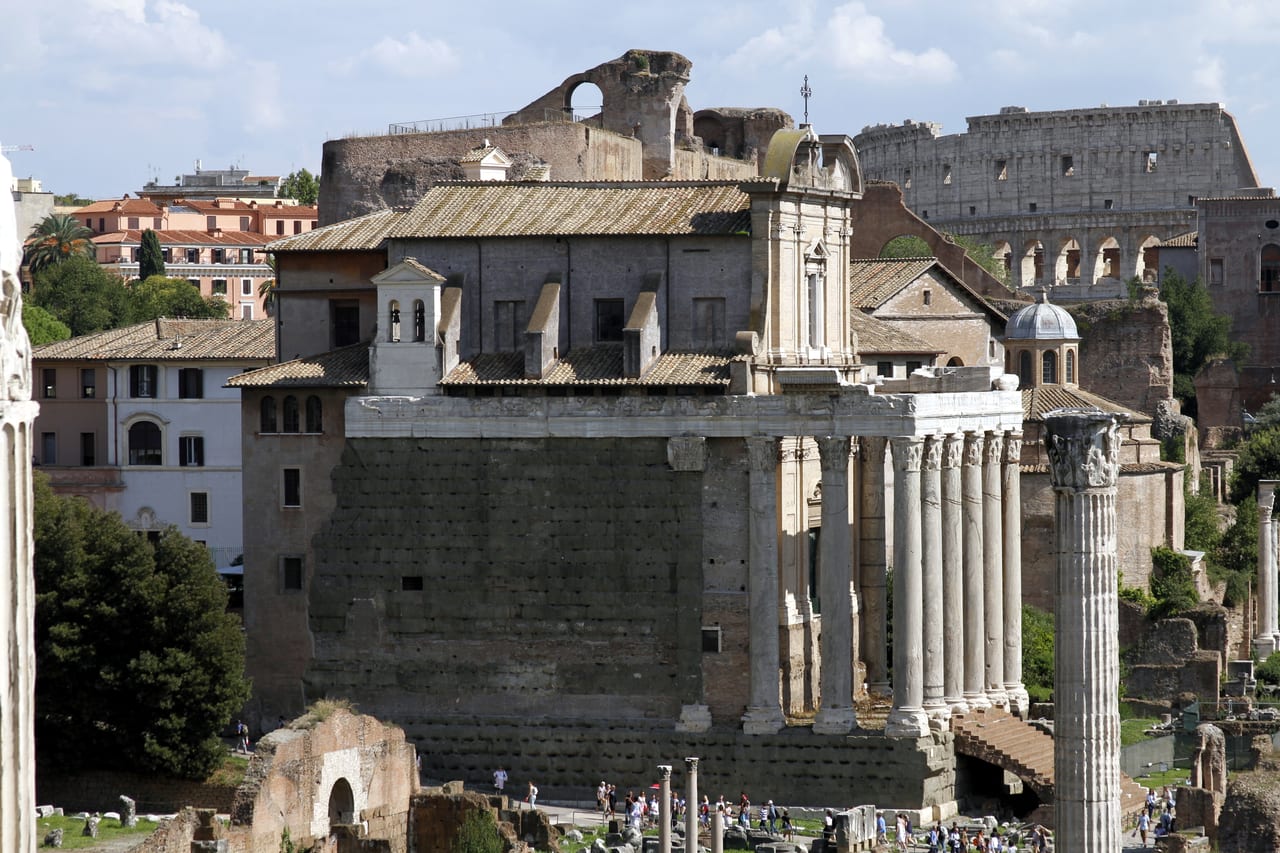
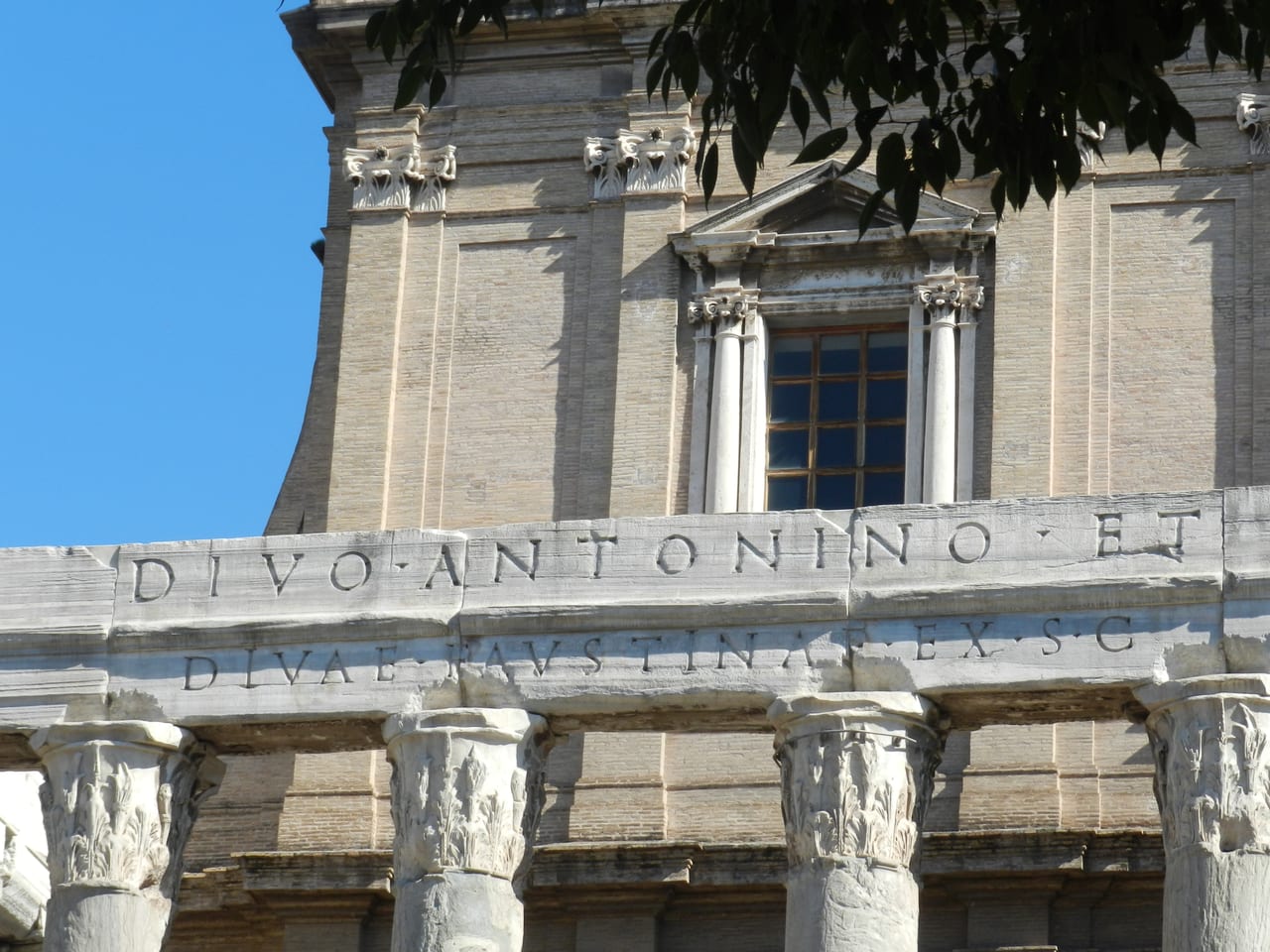
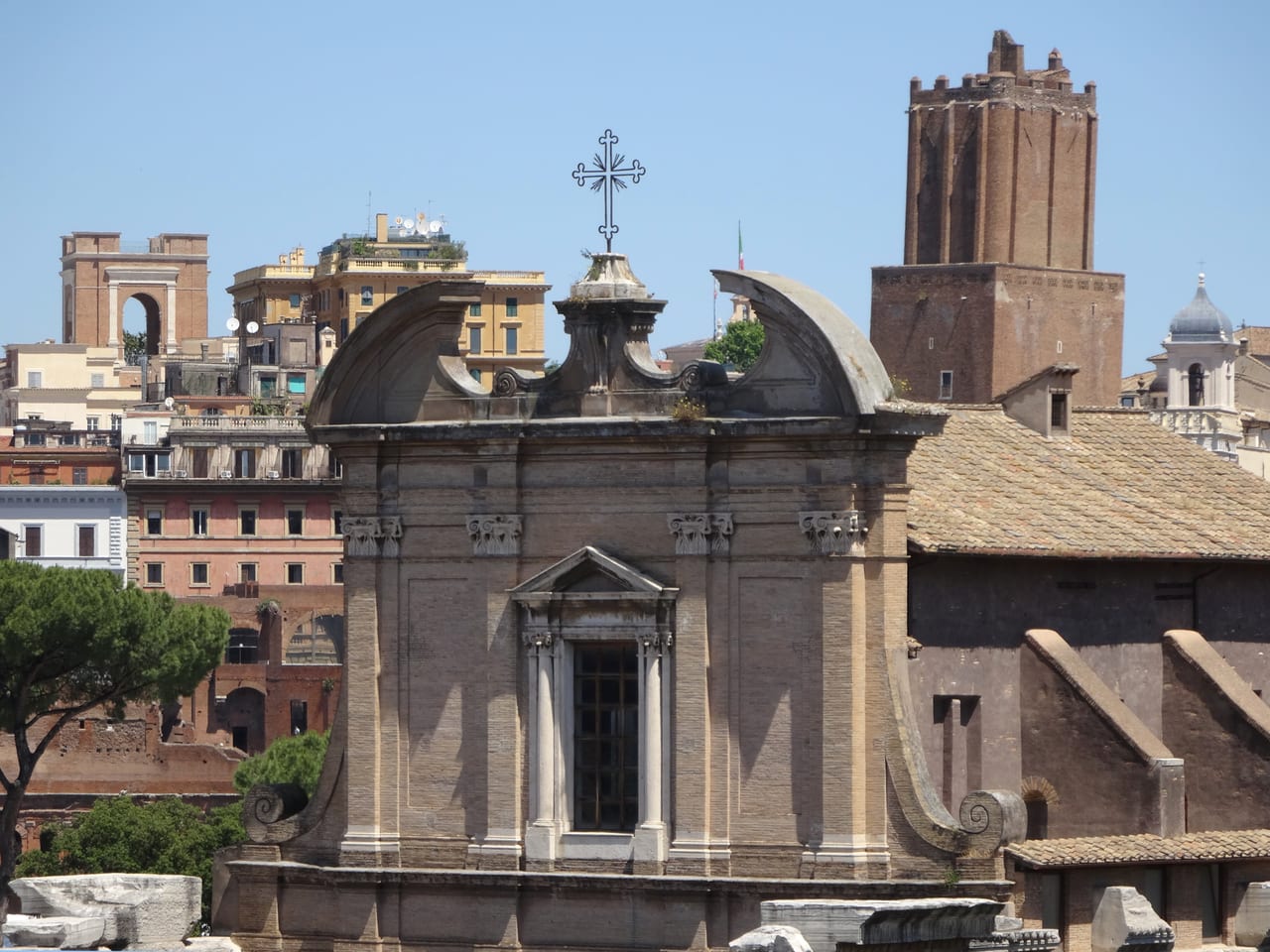
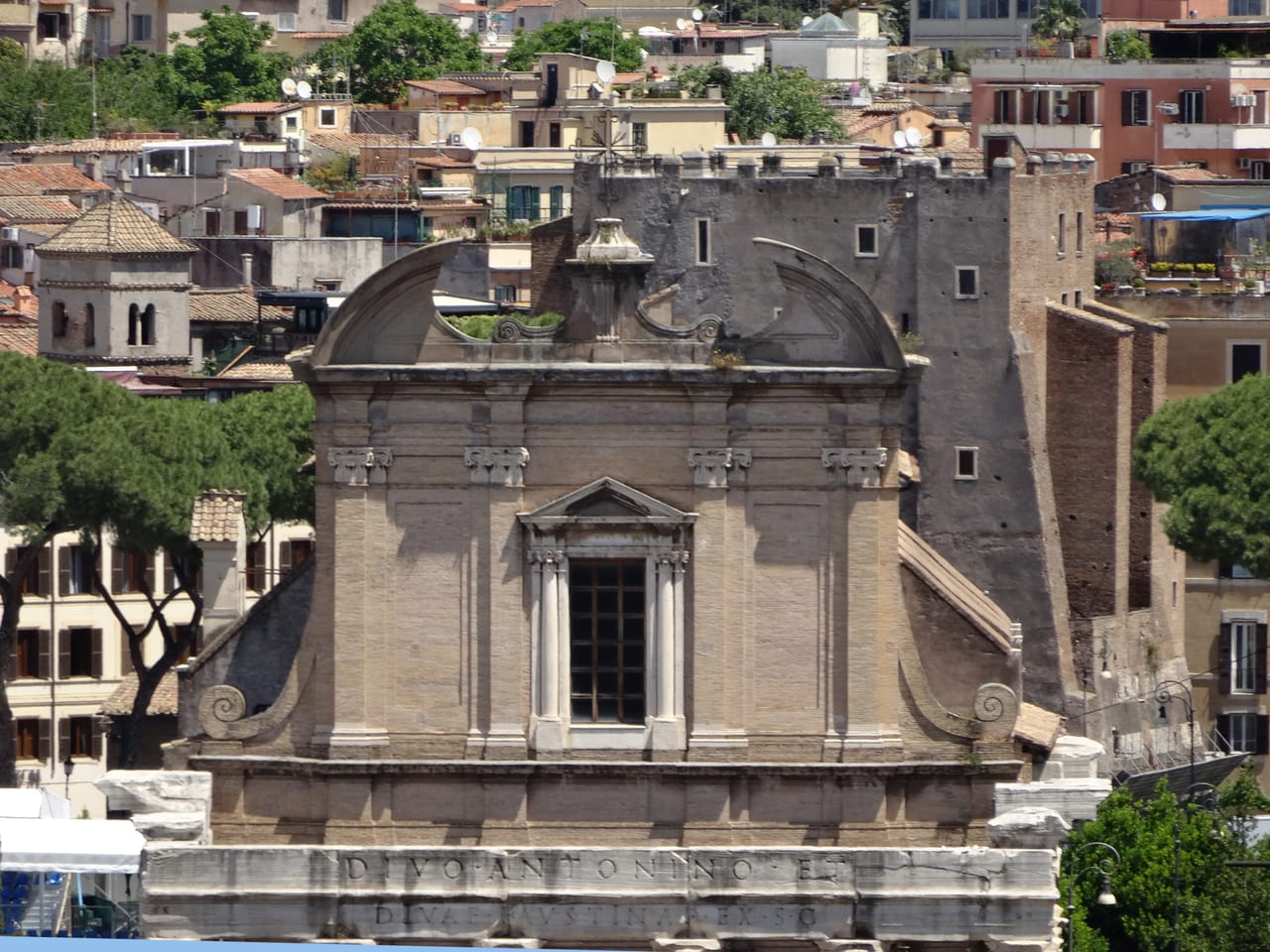
After his own deification in 161 AD, Marcus Aurelius re-dedicated it to both imperial figures. The building rises on a platform of grey peperino tufa, with a dedicatory inscription recording the Senate’s decree. Numismatic evidence suggests that a perimeter fence once separated it from the Via Sacra, while a large seated statue of Faustina probably stood inside the cella. A statue of Antoninus Pius was added later; fragments of both statues were found in front of the temple. The temple was later converted into the church of San Lorenzo in Miranda. The conversion may date to the seventh century, although the church is first attested in the eleventh century. Christian use preserved the cella and portico, despite the loss of most marble facing and grooves cut into the columns. Pope Martin V granted the church to the Guild of Apothecaries in 1429 or 1430. After partial demolition in 1536, Orazio Torriani remodelled it in 1602 as a single-nave church.
At a glance
- Built
- 142
Ways to explore Temple of Antoninus and Faustina
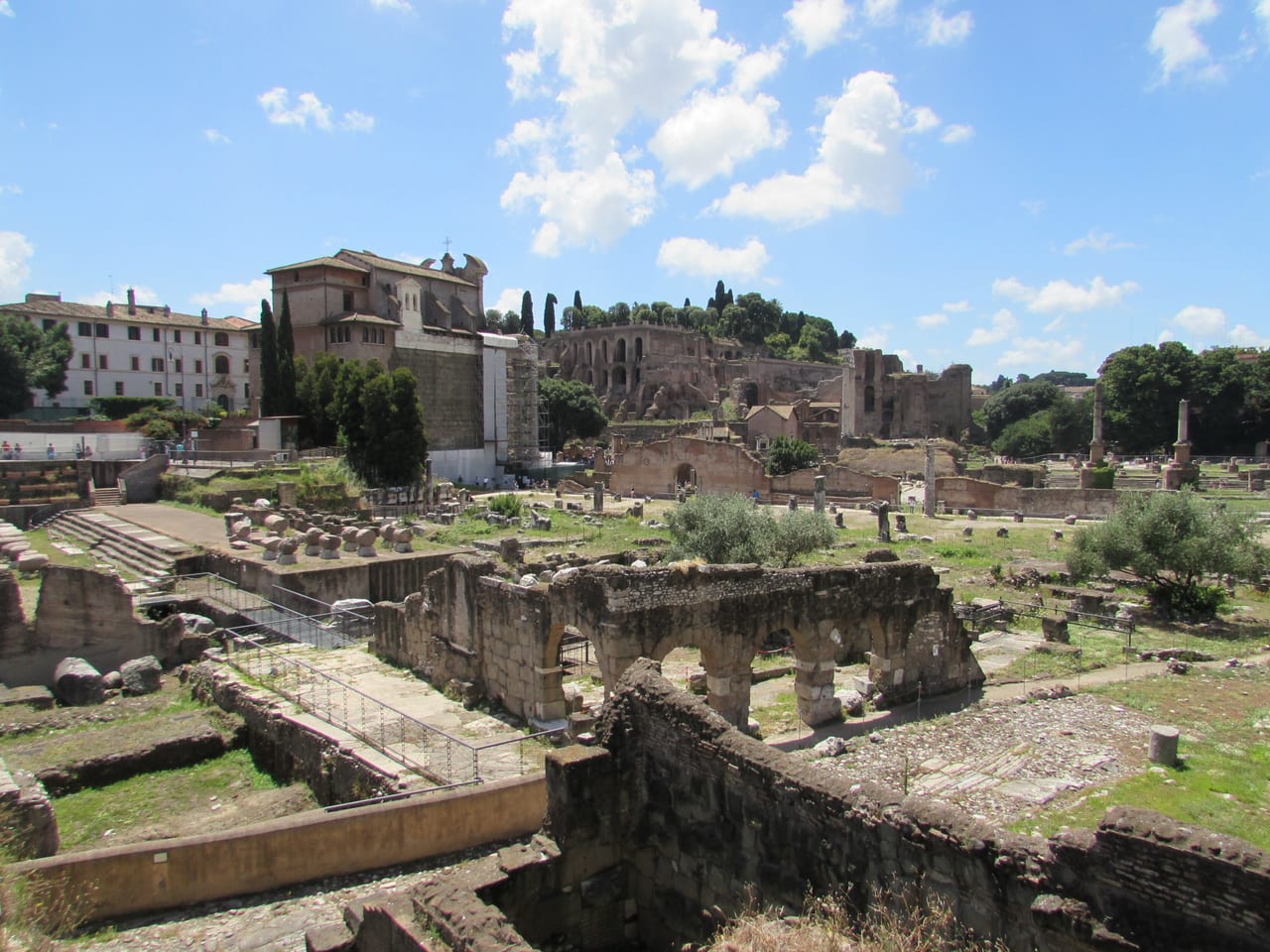
View the monument from the Forum and note the medieval staircase that no longer provides entry: a gap of about 6 metres separates its foot from the bronze door. Inside, look for Pietro da Cortona’s 1646 reredos, The Martyrdom of St. Lawrence, and Domenichino’s 1626 Madonna and Child with Saints. The adjoining guildhall of the Apothecaries contains a small museum with a medicine receipt signed by Raphael.
Places to stay near Temple of Antoninus and Faustina

Live availability and prices from Stay22's partners, refreshed periodically and subject to change. Booking through these links may earn us a commission at no extra cost to you. See our privacy policy.
Cafés near Temple of Antoninus and Faustina
Cafés near Temple of Antoninus and Faustina loads as you scroll.
Attractions nearby
Attractions near Temple of Antoninus and Faustina loads as you scroll.
Cities nearby
Cities nearby loads as you scroll.
More in Rome
See more of Rome.
Find great cafés, places to stay and other interesting places to visit in Rome.