Church · Rome
Sant'Onofrio
DirectionsThe so-called Tasso oak, now dry but monumentalized, preserves the spot where Torquato Tasso was said to contemplate and meditate beneath its branches.
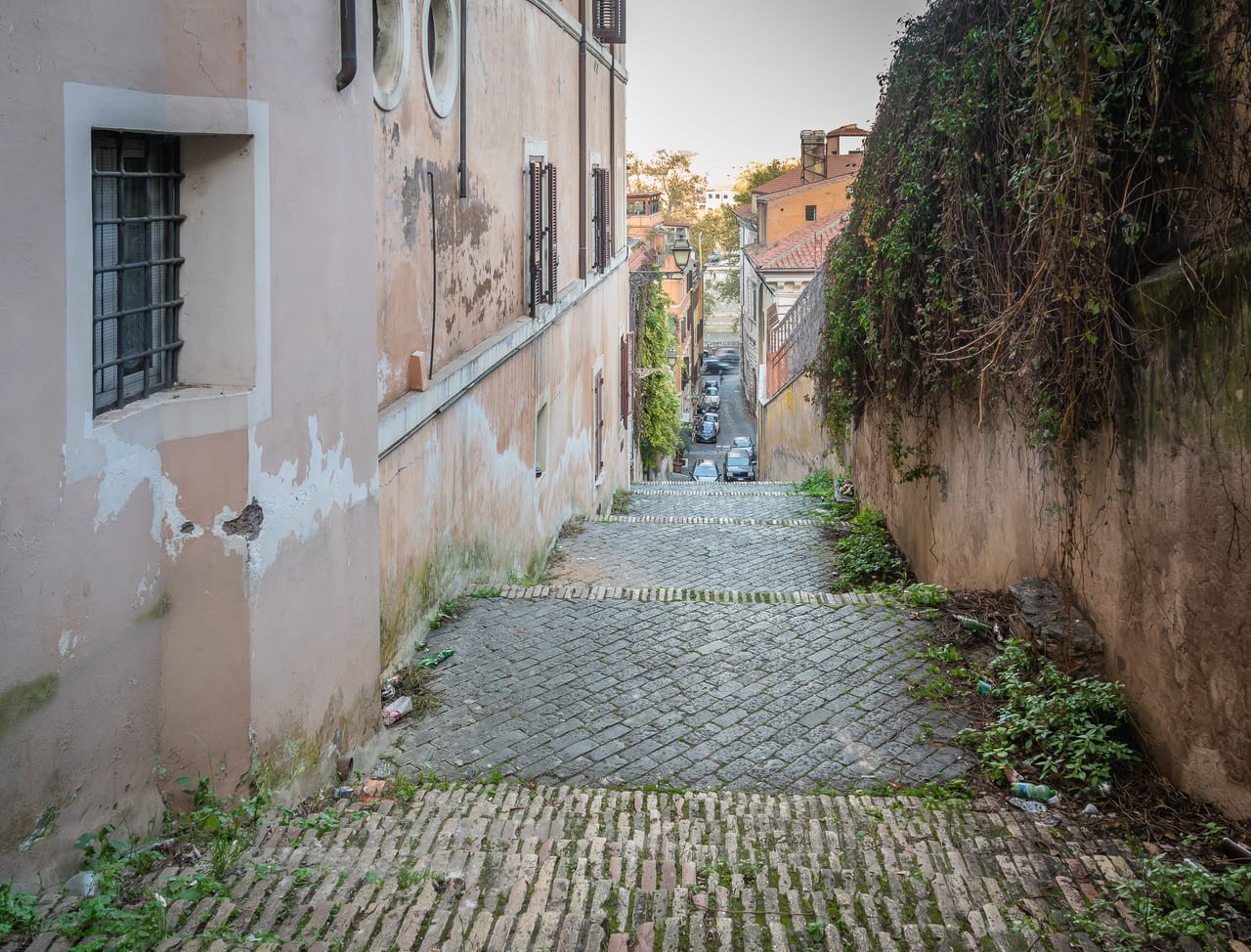
The complex began as a hermitage established by Nicola da Forca Palena in 1419 with alms-funded land; its foundation was approved by Eugenius IV in 1437. Construction of the present church began in 1439, and the approach, salita Sant’Onofrio, was made in 1446. A single nave with two chapels on each side, it was completed in the sixteenth century, when Leo X created its cardinal deaconry in 1517 and Sixtus V raised it to a presbyteral title in 1588. A grassy forecourt and small portico precede the church. Domenichino painted its lunettes with Stories of Saint Jerome, while the Rosario chapel opposite was built for Guido Vaini’s family in the early seventeenth century and received its Baroque façade in 1620. The mid-fifteenth-century cloister, perhaps the oldest part, has an upper portico and lunettes painted for the 1600 Jubilee by Cavalier d’Arpino, Vespasiano Strada and Claudio Ridolfi. Inside are works associated with Pinturicchio, Peruzzi, Antoniazzo Romano, Annibale Carracci and Cesare da Sesto, alongside monuments including Torquato Tasso’s tomb. Tasso died here on 25 April 1595; later visitors included Goethe, Chateaubriand and Leopardi. Since 1946, Franciscan Friars of the Atonement have cared for the complex, whose general procuracy was established here in 1952.
At a glance
- Built
- 1401
- Style
- Renaissance architecture
- Heritage
- Italian national heritage
Ways to explore Sant'Onofrio
Start in the forecourt, reading the portico lunettes before entering the church. Compare the Marian fresco cycle in the apse with Antoniazzo Romano’s Annunciation and the works in the Loreto chapel. In the portico, look for Cesare da Sesto’s former lunette location, Nicola da Forca Palena’s tombstone and the heraldic shields. Continue to the cloister for its upper gallery, saintly scenes and the graves of Alessandro Guidi and Giuseppe Rondinini; note the inscriptions, funerary monuments and the Tasso memorial inside.
Places to stay near Sant'Onofrio

Live availability and prices from Stay22's partners, refreshed periodically and subject to change. Booking through these links may earn us a commission at no extra cost to you. See our privacy policy.
Cafés near Sant'Onofrio
Cafés near Sant'Onofrio loads as you scroll.
Attractions nearby
Attractions near Sant'Onofrio loads as you scroll.
Cities nearby
Cities nearby loads as you scroll.
More in Rome
See more of Rome.
Find great cafés, places to stay and other interesting places to visit in Rome.