Church · Rome
Sant'Eustachio
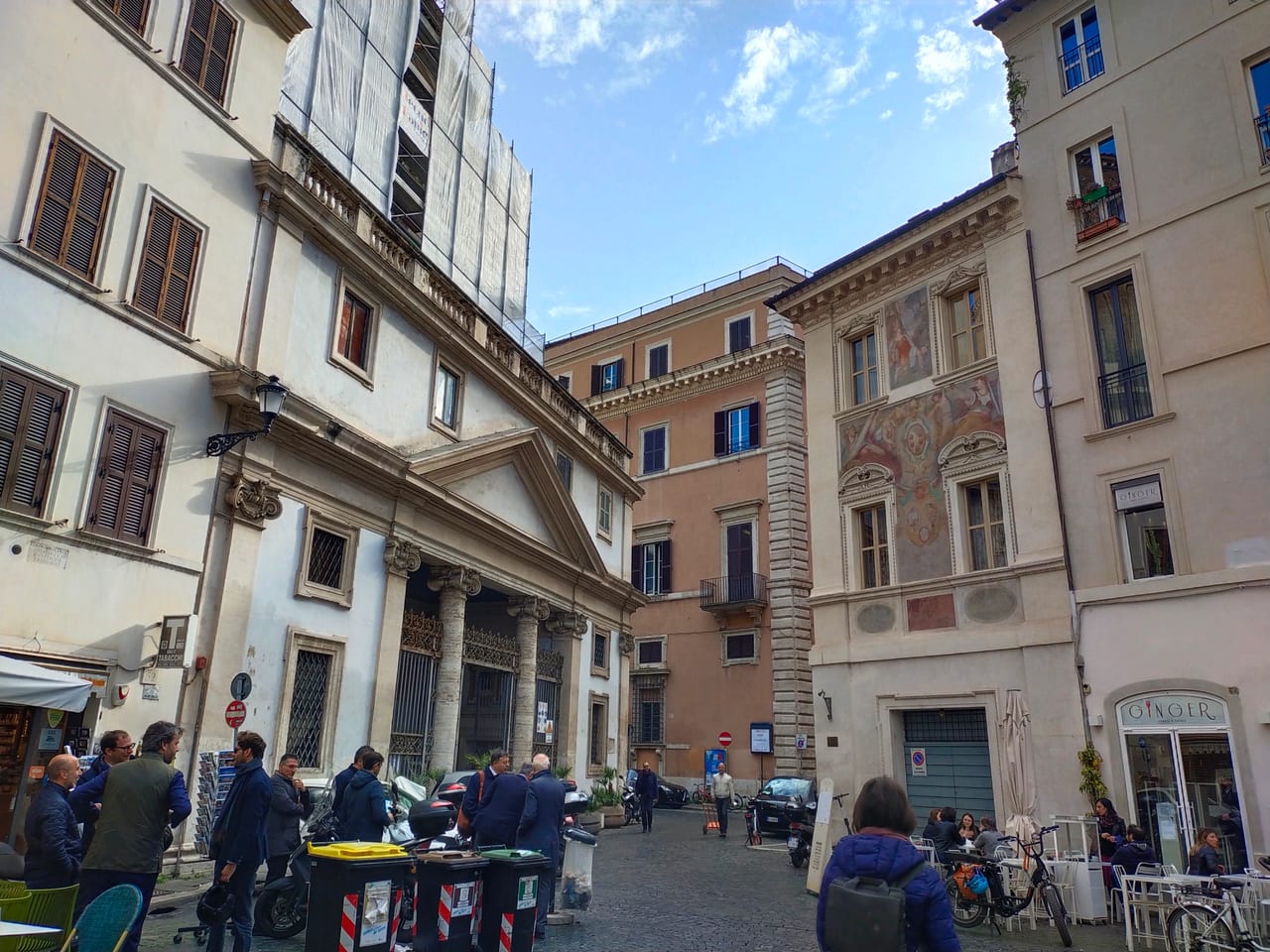
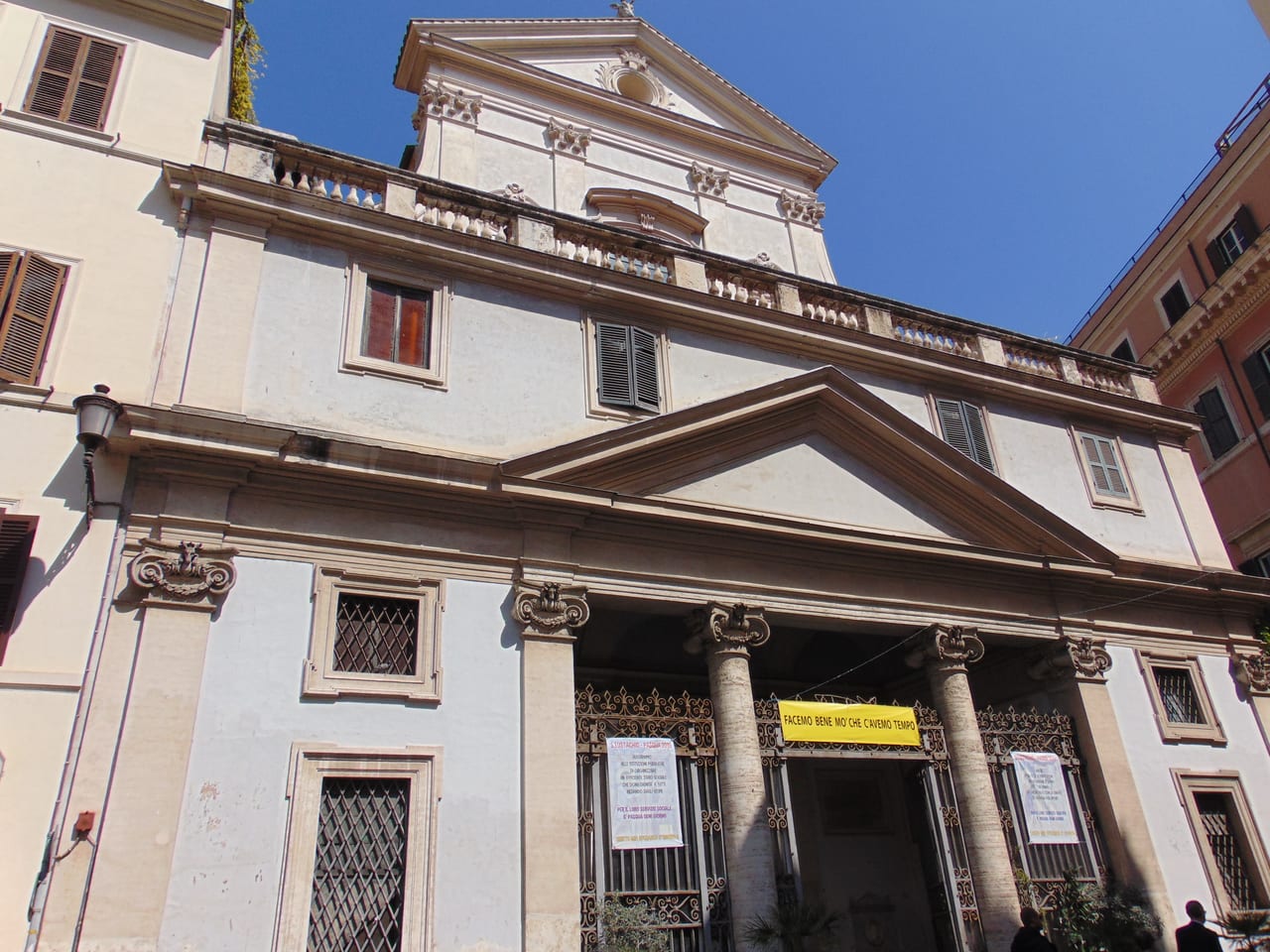
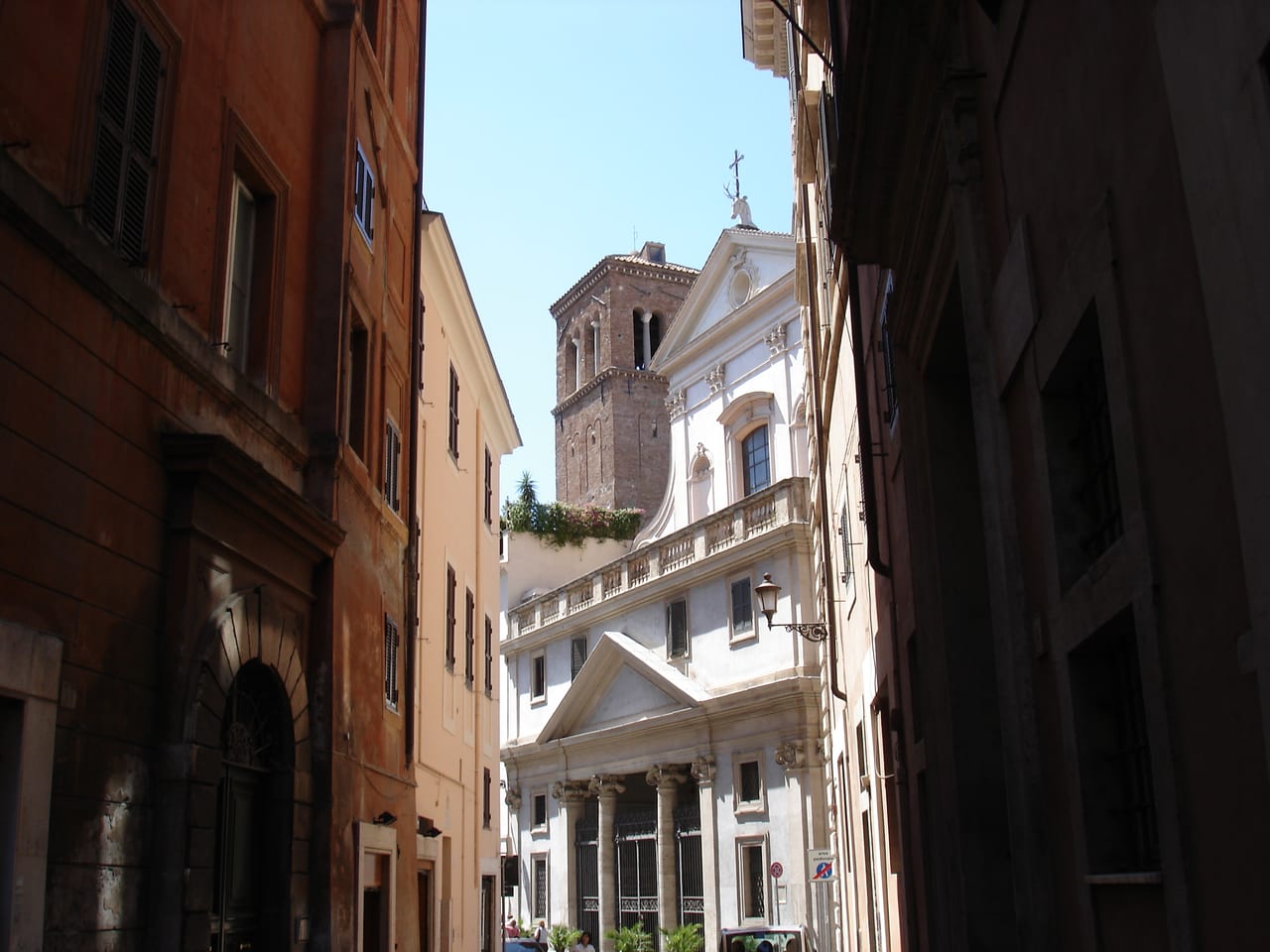
DirectionsA deer’s head bearing a cross between its antlers crowns the façade, linking a Maffey family donation to Saint Eustace’s conversion legend.
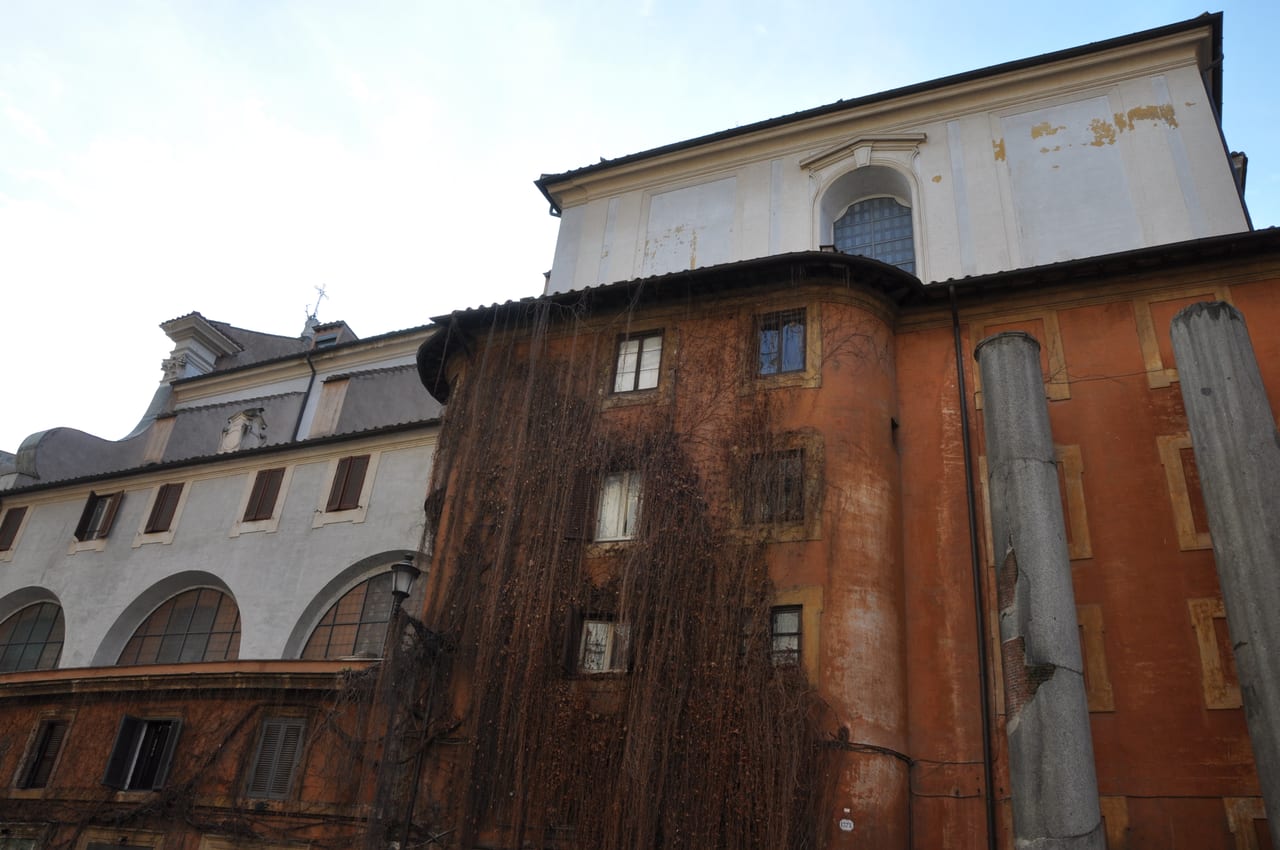
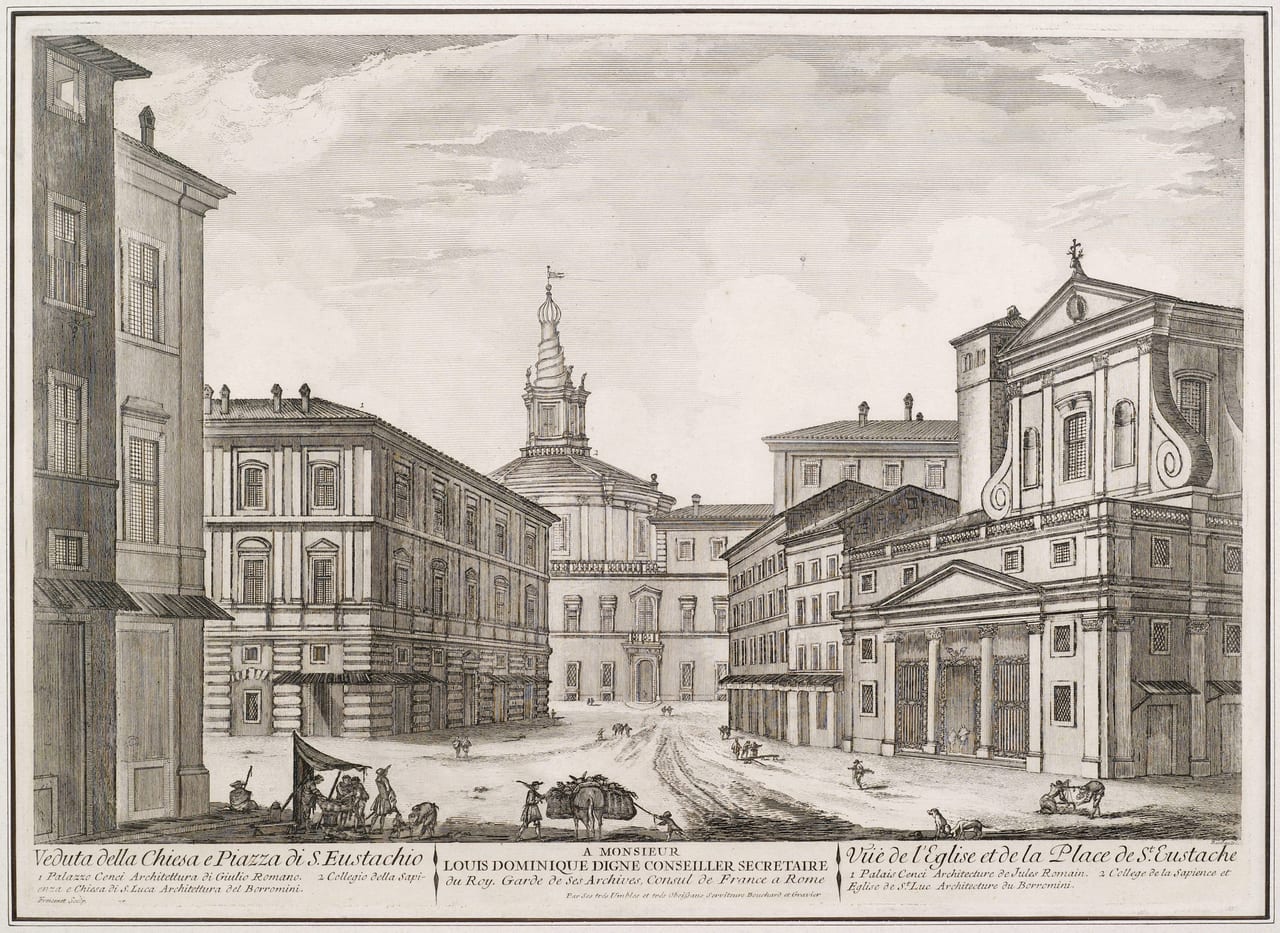
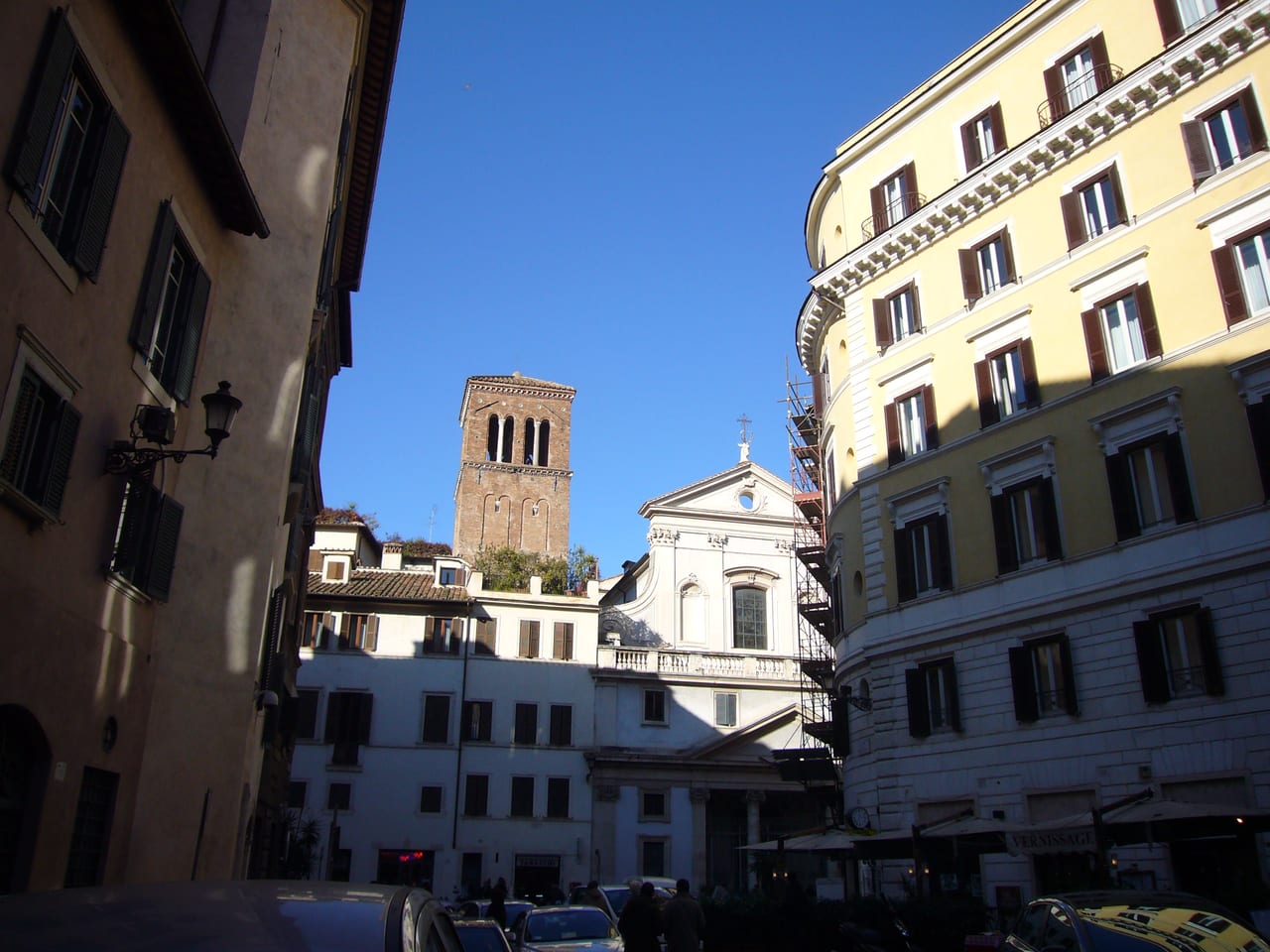
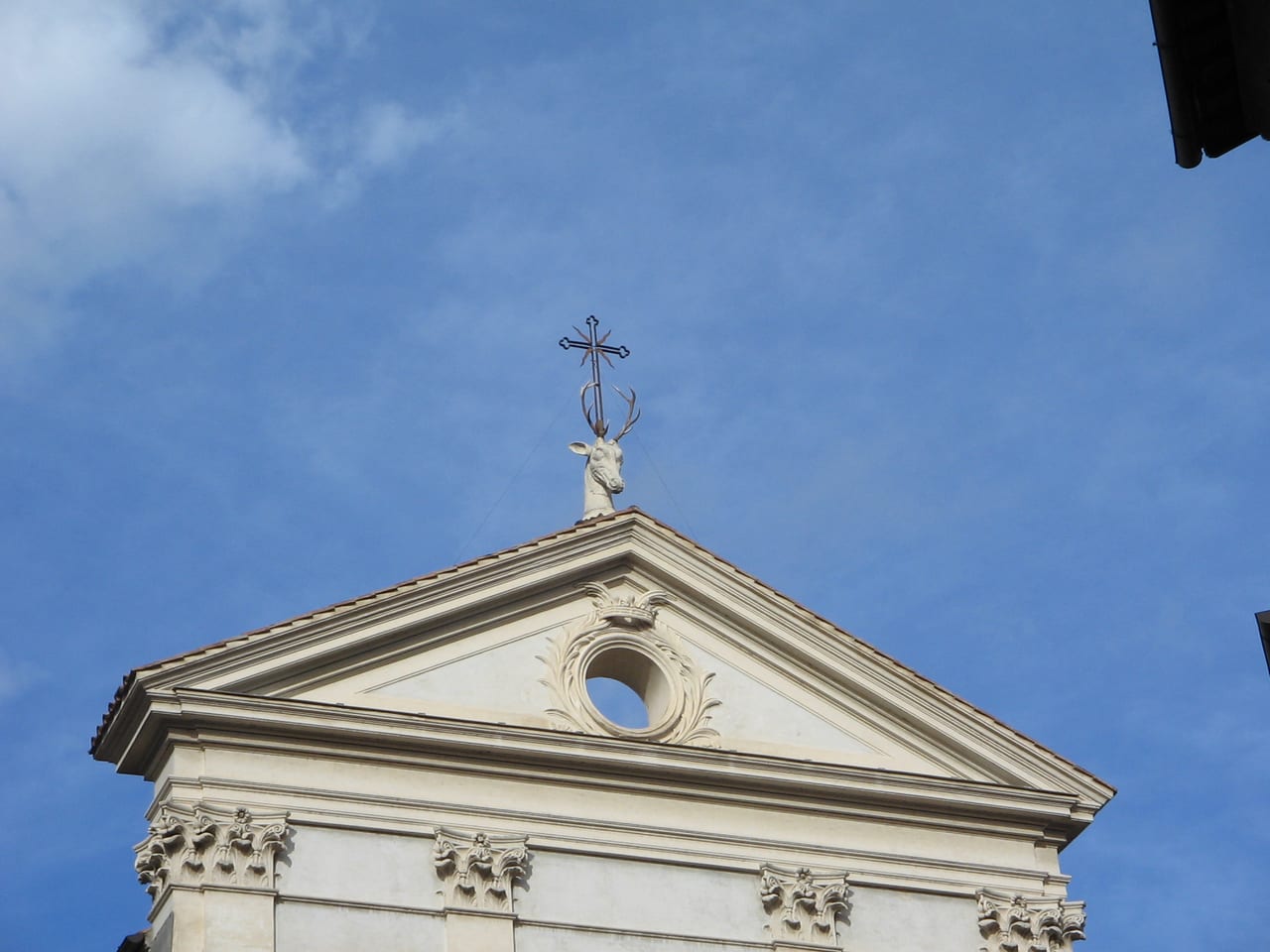
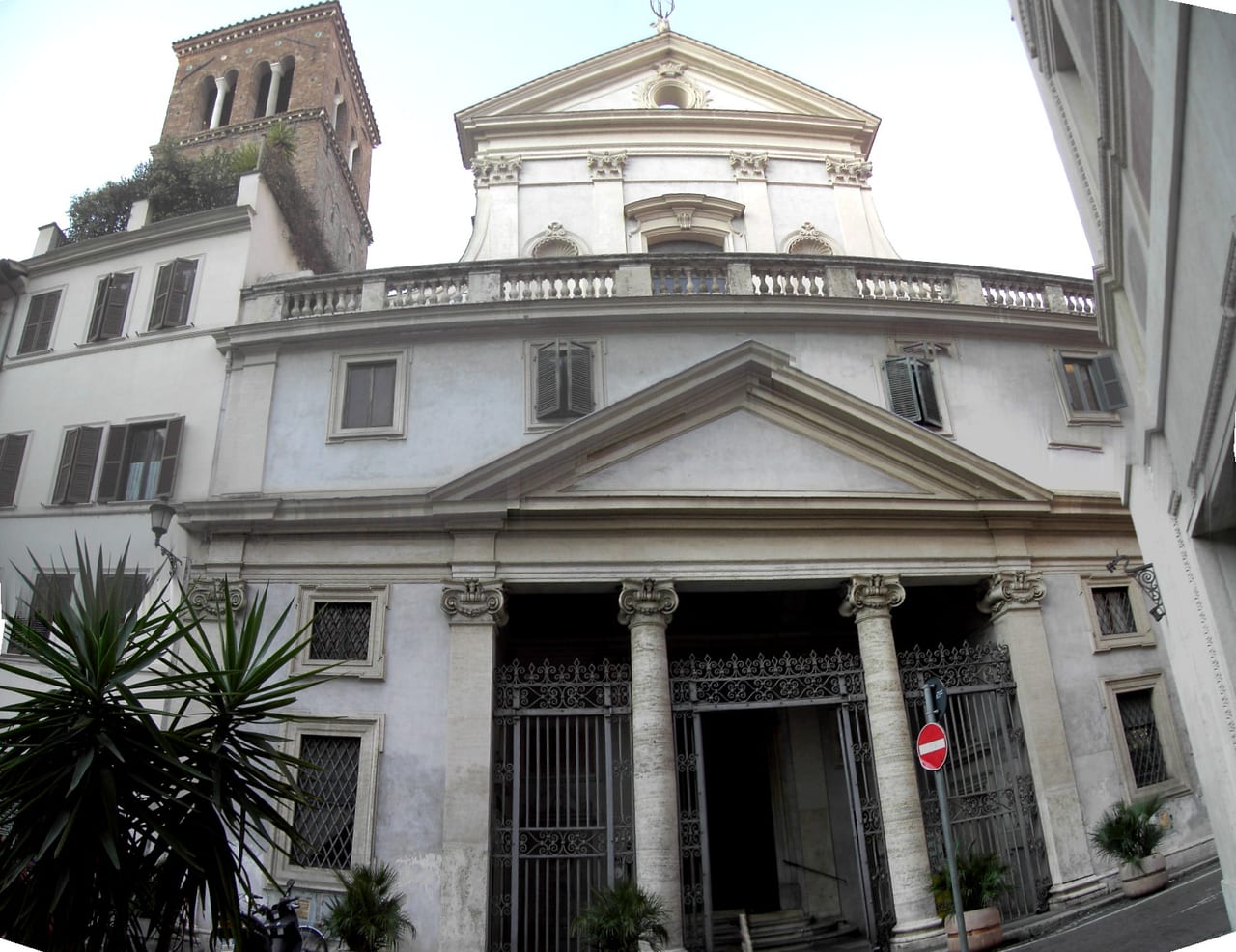
Photograph 1 of 13 of Sant'Eustachio
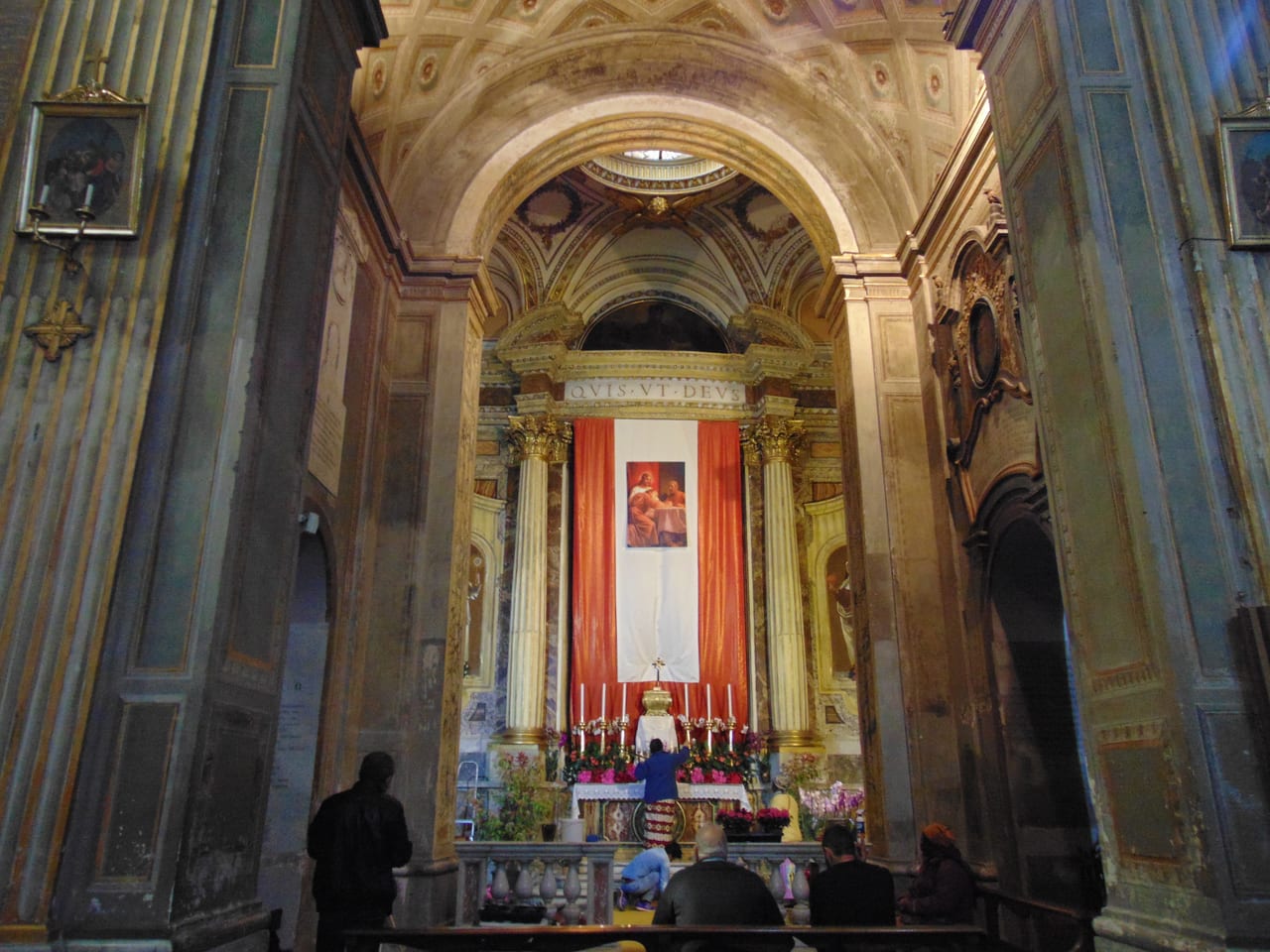
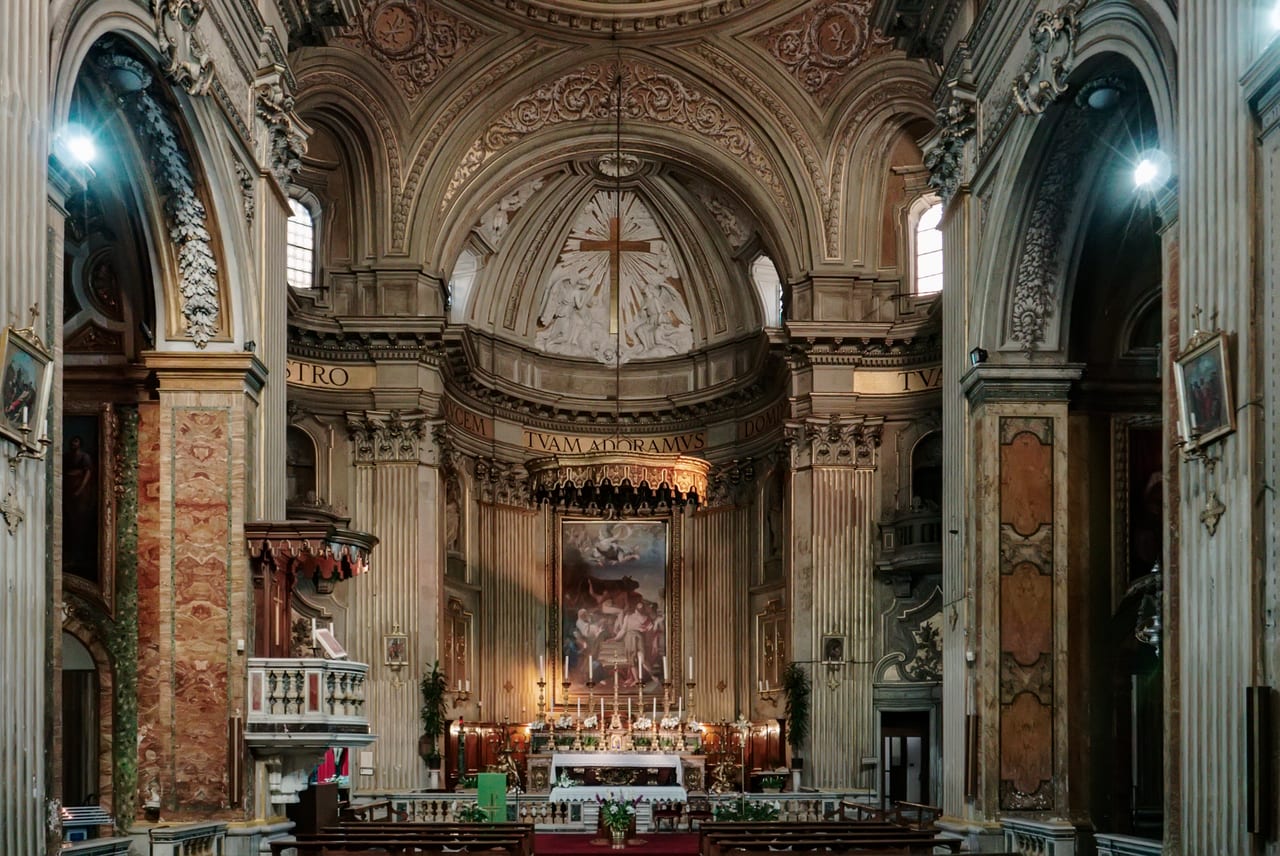
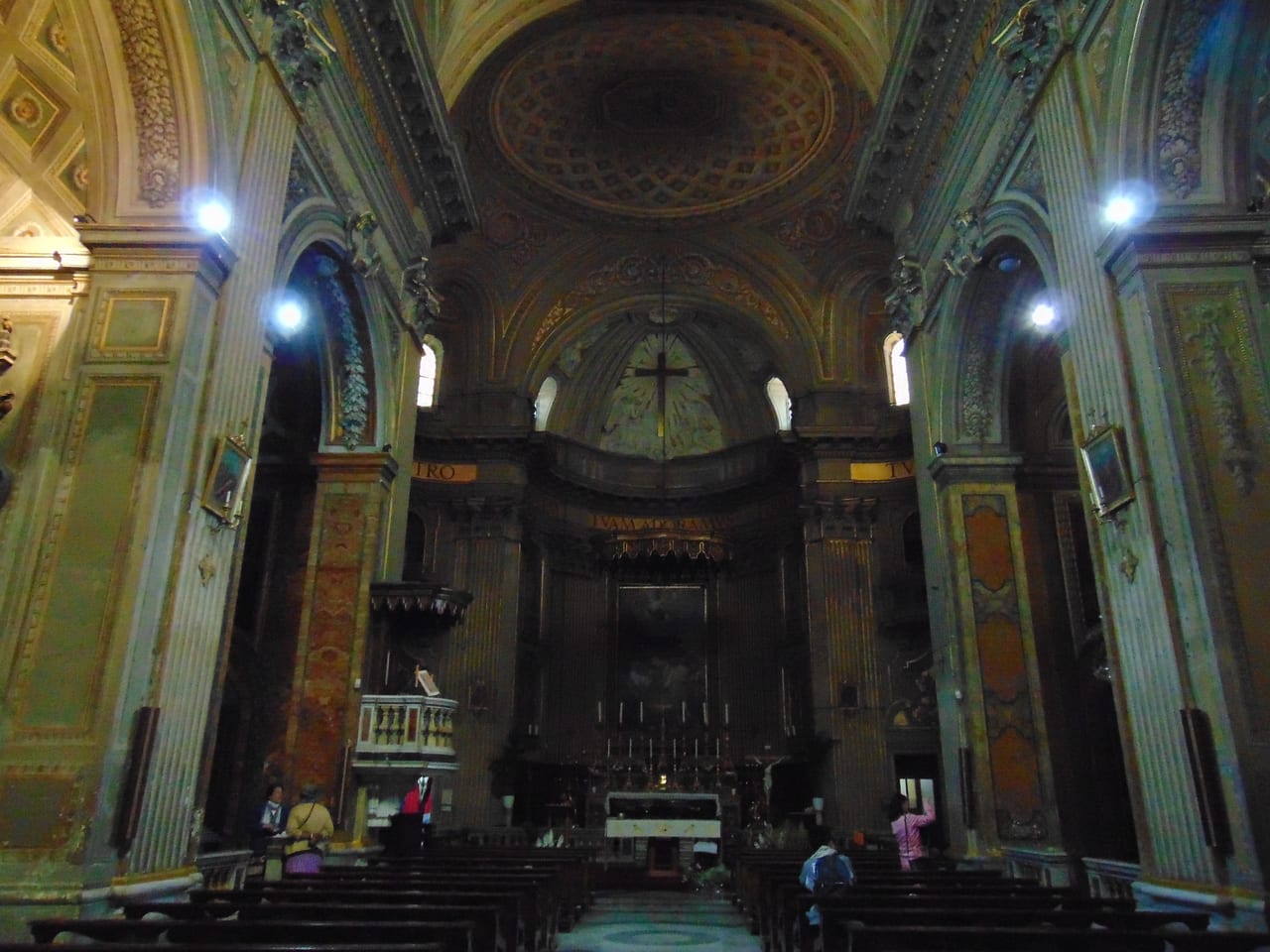
Tradition places an early oratory here beside a plane tree in the garden of the martyr Eustace’s house, supposedly built by Constantine I where the saint was martyred. The church was first recorded in 795, under Leo III, as an ancient Roman diaconia providing assistance to the poor. Celestine III ordered its enlargement and complete rebuilding in 1195–1196; the Romanesque bell tower and a consecration inscription survive from that campaign. A portico and cloister are documented in 1406, while the surrounding buildings housed the Sapienza university from 1431 to 1460. Graduates continued to receive solemn proclamations here after the university moved, and Philip Neri favoured the church for prayer in the sixteenth century. Flooding and persistent damp undermined the medieval foundations, prompting a Baroque reconstruction between the seventeenth and eighteenth centuries. Cesare Corvara directed the first phase in 1701–1703; Giovan Battista Contini, Antonio Canevari, Nicola Salvi and Giovanni Domenico Navone completed the portico, chapels, transept and apse. The Latin-cross interior has one nave and six interconnected side chapels. Notable works include Giacomo Zoboli’s 1727 Visitation and 1729 Saint Jerome, Nicola Salvi’s 1739 high altar with Ferdinando Fuga’s 1749 baldachin, and a restored eighteenth-century organ. Further restorations took place in the nineteenth and twentieth centuries.
At a glance
- Built
- 701
- Style
- baroque architecture
- Heritage
- Italian national heritage
Ways to explore Sant'Eustachio
Begin in the portico, where inscriptions and funerary monuments commemorate Neri Corsini, Filippo Chiappini, Giovanni Giraud, Filippo Maria Renazzi, Francesco Cecilia and Michelangelo Mondani; look also for the seventeenth-century Virgin and Child. Inside, compare the chapels and their stained glass, especially the Baptism of Jesus and the seven gifts of the Holy Spirit. Examine Zoboli’s canvases in the transepts, the relic urn beneath the high altar, and the gilded wooden organ case in the counterfaçade.
Places to stay near Sant'Eustachio

Live availability and prices from Stay22's partners, refreshed periodically and subject to change. Booking through these links may earn us a commission at no extra cost to you. See our privacy policy.
Cafés near Sant'Eustachio
Cafés near Sant'Eustachio loads as you scroll.
Attractions nearby
Attractions near Sant'Eustachio loads as you scroll.
Cities nearby
Cities nearby loads as you scroll.
More in Rome
See more of Rome.
Find great cafés, places to stay and other interesting places to visit in Rome.