Church · Rome
Sant'Antonio dei Portoghesi
DirectionsIts spectacular Chapel of Saint John the Baptist was built in Rome, blessed by Pope Benedict XIV, then dismantled, shipped to Lisbon aboard three vessels, and reassembled there.
Photograph 1 of 6 of Sant'Antonio dei Portoghesi
Founded in 1445 by Cardinal Antão Martins de Chaves on the site of a hostel for Portuguese pilgrims, the church began as a tiny chapel dedicated to Our Lady of Bethlehem. Acquired neighbouring properties from 1624, it was enlarged and completed in 1638 by Martino Longhi the Younger, then rededicated to Saint Anthony of Padua. Carlo Rainaldi and Cristoforo Schor added the dome and high-altar apse in 1657. The church became the Portuguese national church in Rome and a setting for papal visits by Clement XI and Clement XIV, shaped by the delicate diplomatic relationship between the Holy See and Portugal. Napoleon’s occupation brought closure and auction in 1799; Portuguese ownership returned in 1814, followed by restoration and reopening in 1842. Francesco Vespignani directed further restoration in 1873, including stained-glass windows and dome decoration. The former pilgrim hostel became a college after Portugal’s 1910 revolution, and the Instituto Português de Santo António in Rome now manages the church. Baroque richness survives in the narrow façade, Vanvitelli’s transept, and works by Antoniazzo Romano, Antonio Concioli, Giacomo Zoboli and Antonio Canova.
At a glance
- Built
- 1695
- Architect
- Martino Longhi the Younger
- Style
- baroque architecture
- Heritage
- Italian national heritage
Ways to explore Sant'Antonio dei Portoghesi
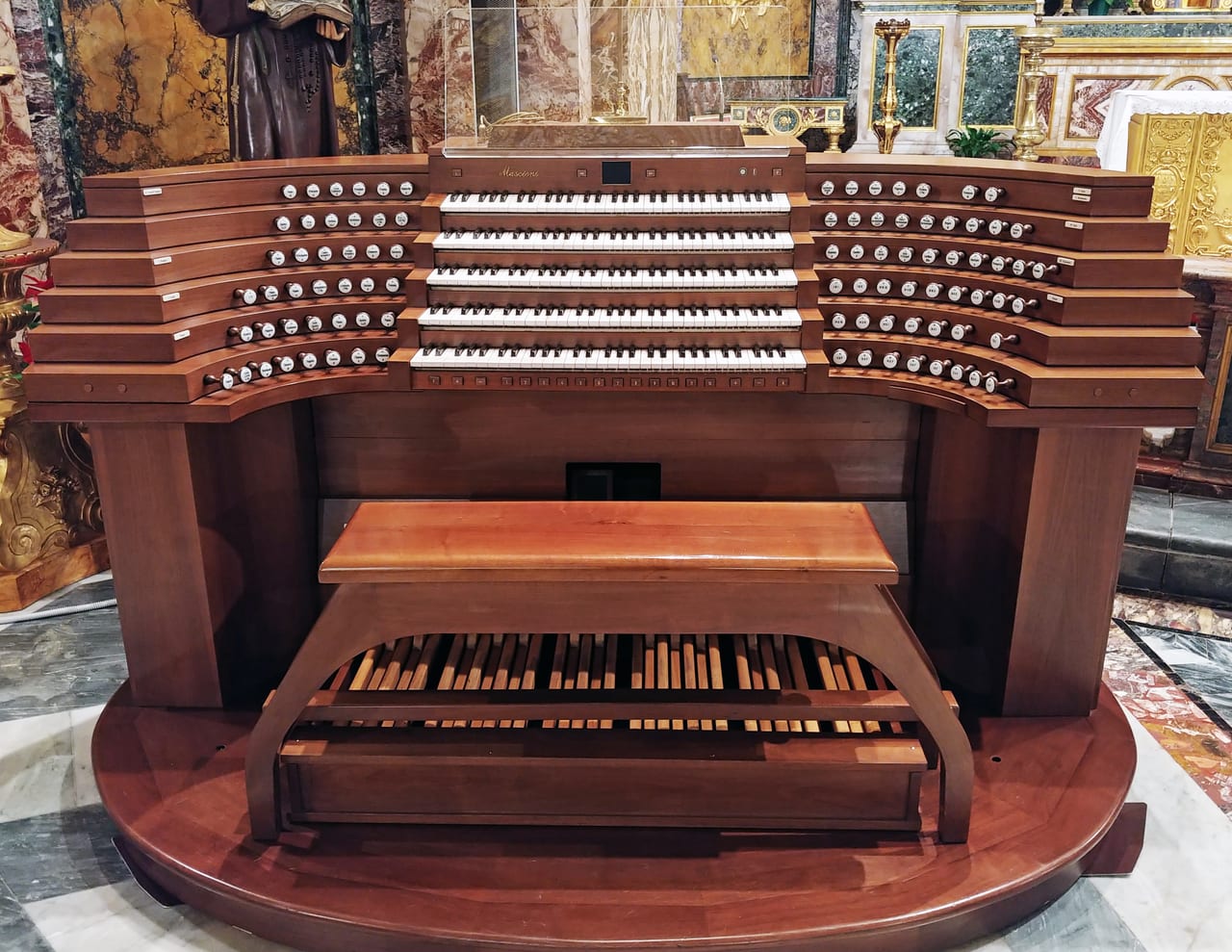
Read the façade from via della Scrofa, where its narrow frontage heightens the contrast with the lavish interior. Inside, look for Antoniazzo Romano’s gold-ground panel, Zoboli’s 1756 Immaculate Conception, Concioli’s three paintings dated 1782, and Canova’s 1808 De Souza monument. Note the dome and high altar, then listen for the Mascioni organ: installed in 2008, it was enlarged in 2015–16 to five manuals, pedal and 60 stops.
Places to stay near Sant'Antonio dei Portoghesi

Live availability and prices from Stay22's partners, refreshed periodically and subject to change. Booking through these links may earn us a commission at no extra cost to you. See our privacy policy.
Cafés near Sant'Antonio dei Portoghesi
Cafés near Sant'Antonio dei Portoghesi loads as you scroll.
Attractions nearby
Attractions near Sant'Antonio dei Portoghesi loads as you scroll.
Cities nearby
Cities nearby loads as you scroll.
More in Rome
See more of Rome.
Find great cafés, places to stay and other interesting places to visit in Rome.