Church · Rome
Santa Maria in Trastevere
DirectionsCarlo Emilio Gadda transformed the basilica’s rebuilding under Innocent II into the subject of a playful fictional biography, later incorporated into Il castello di Udine.
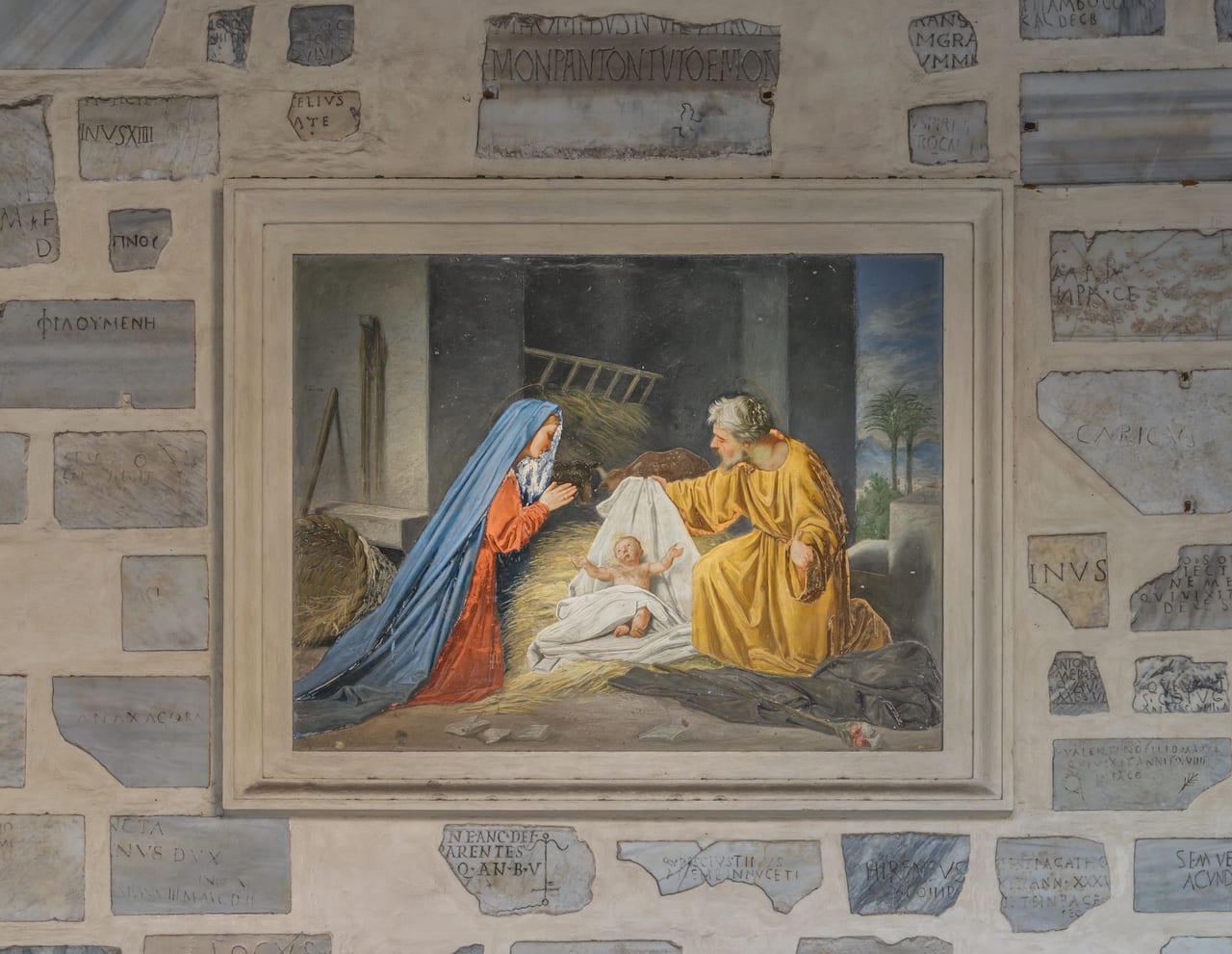
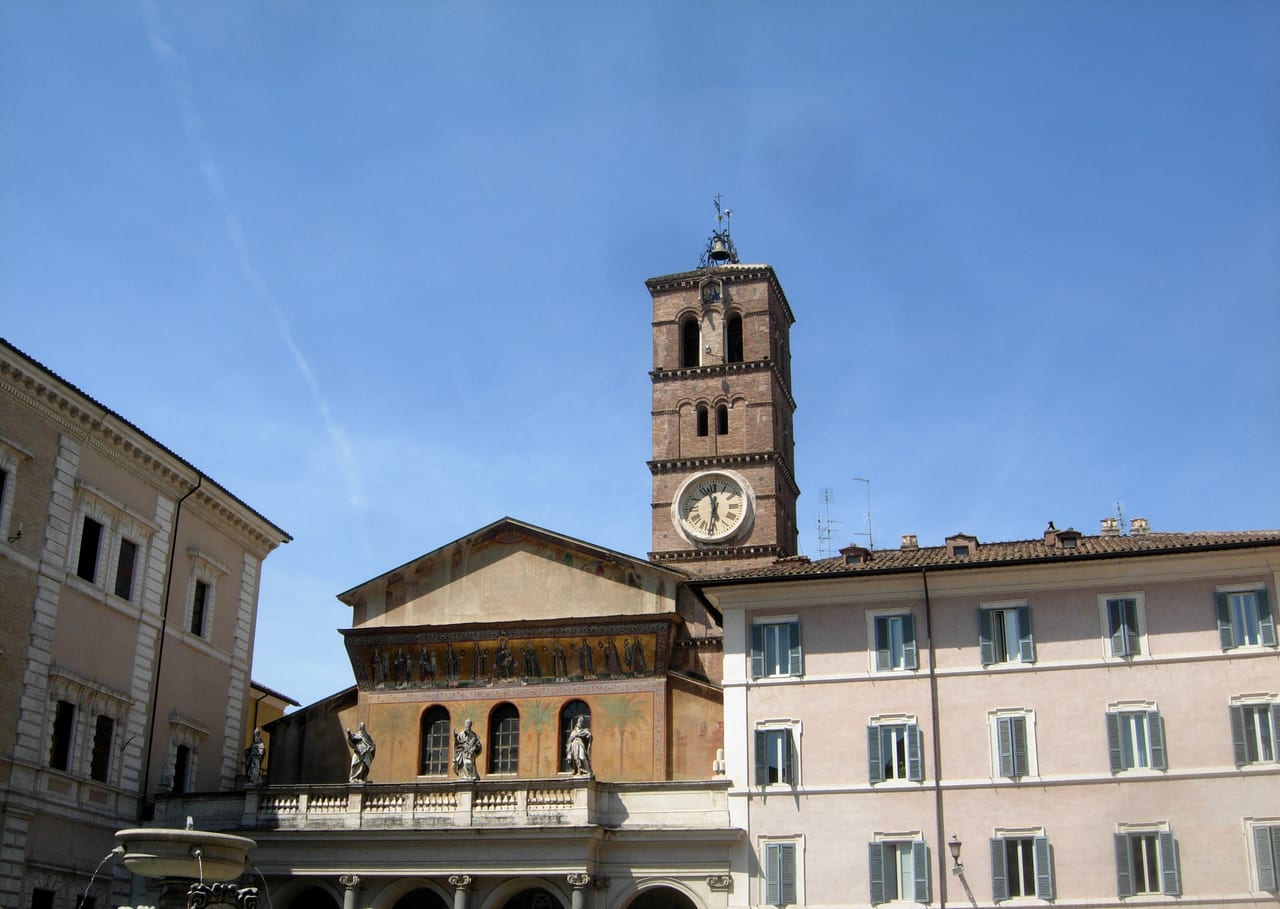
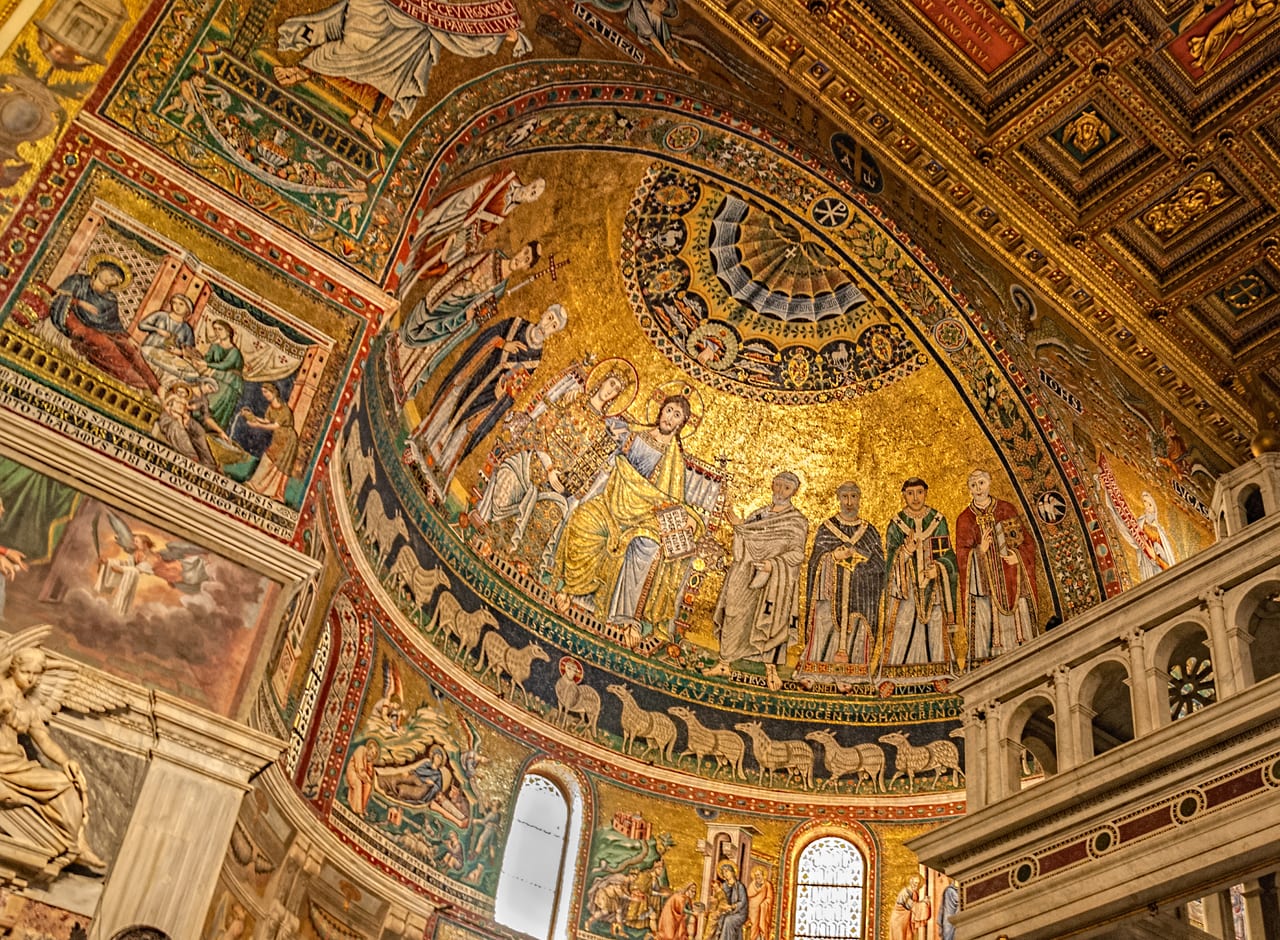
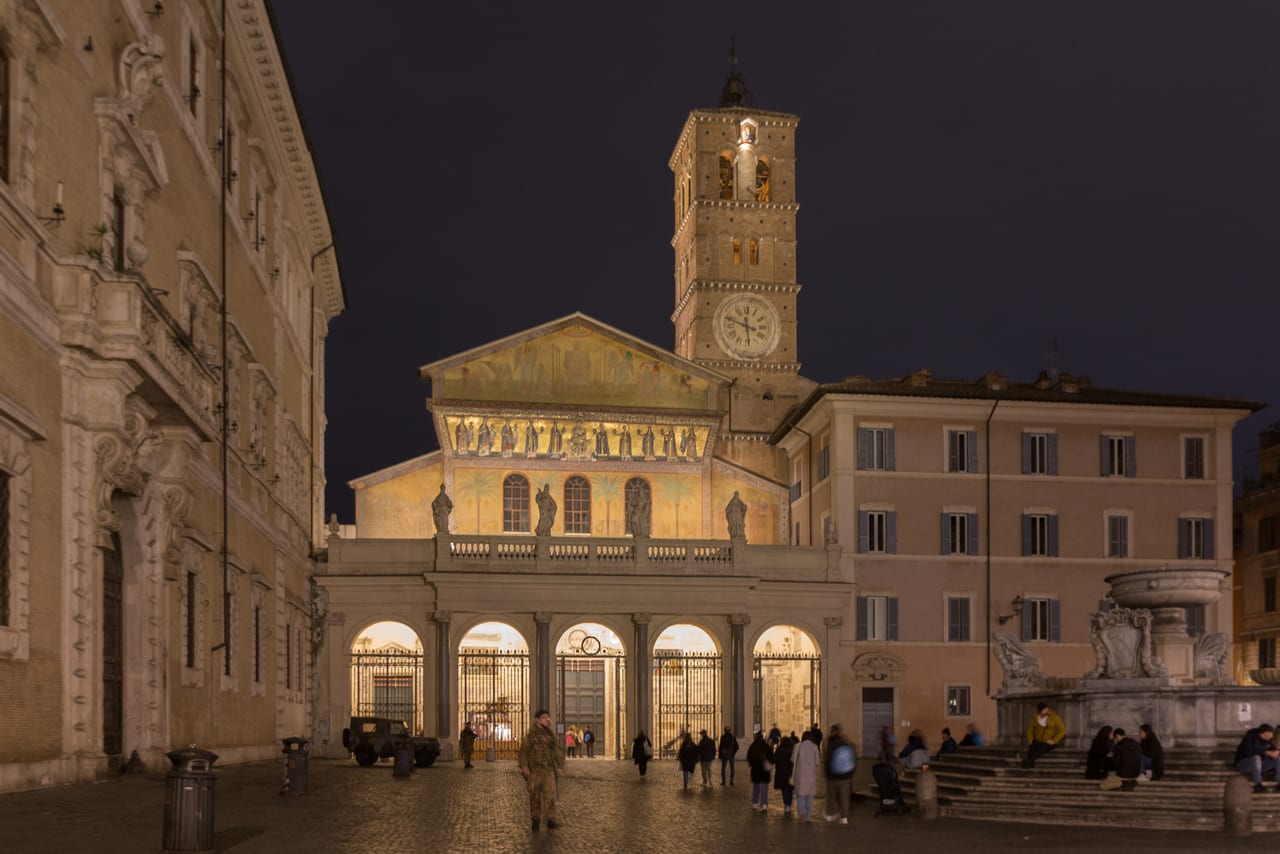
Photograph 1 of 12 of Santa Maria in Trastevere
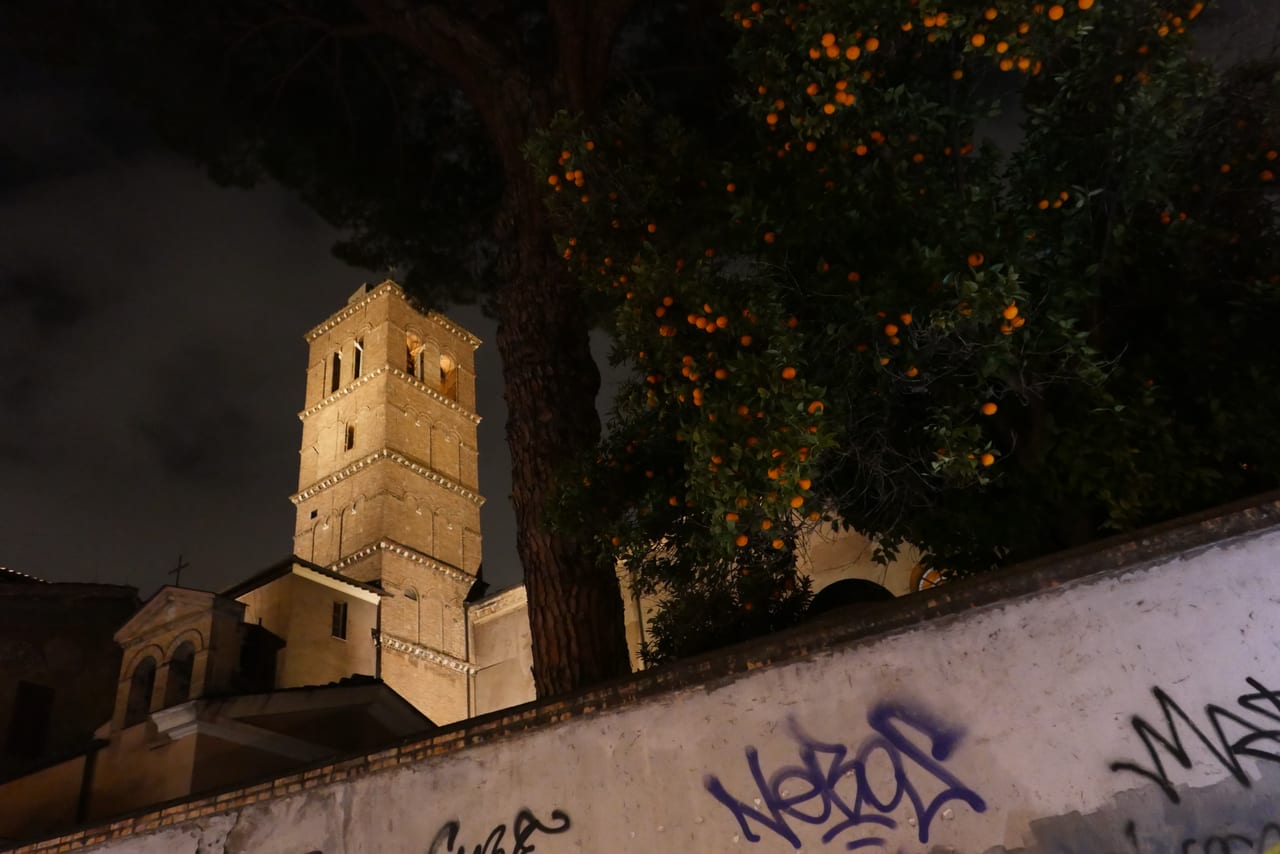
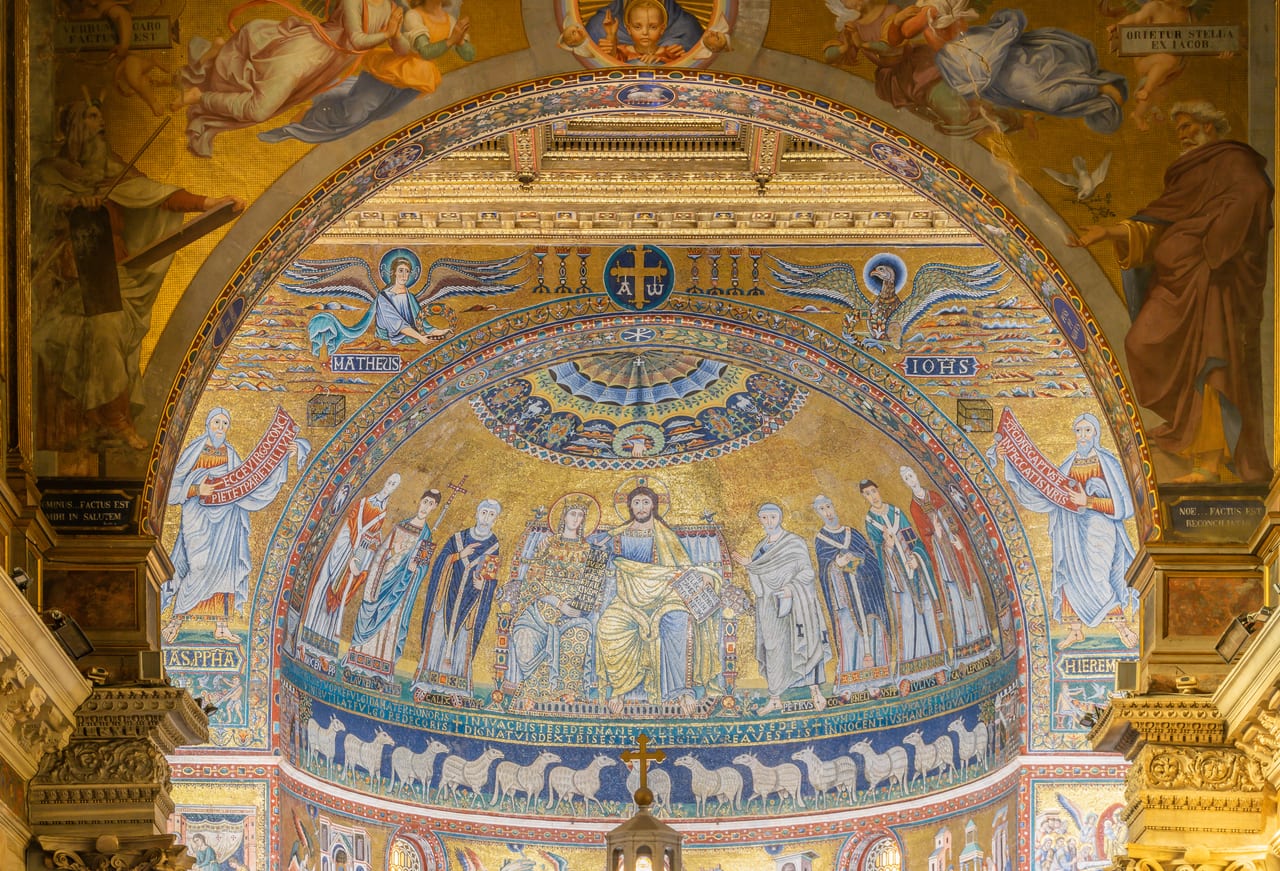
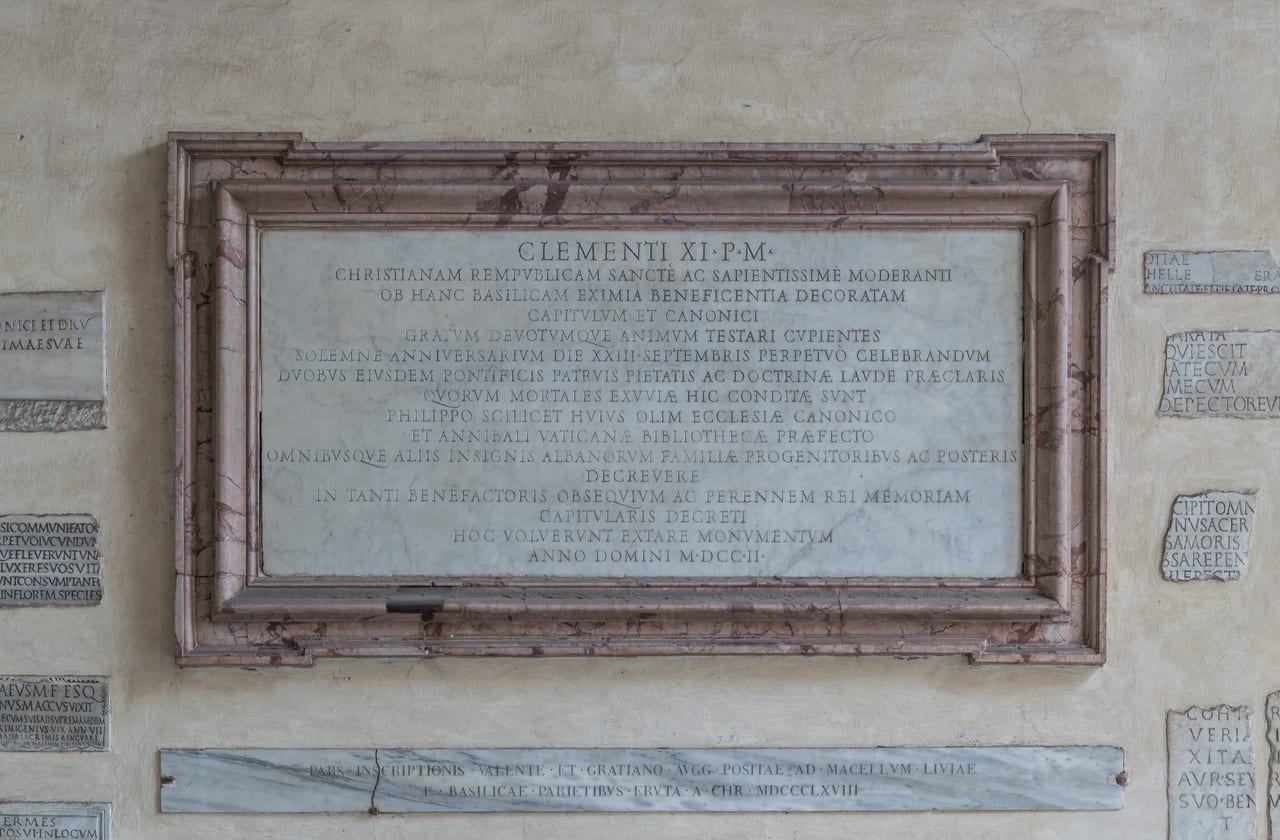
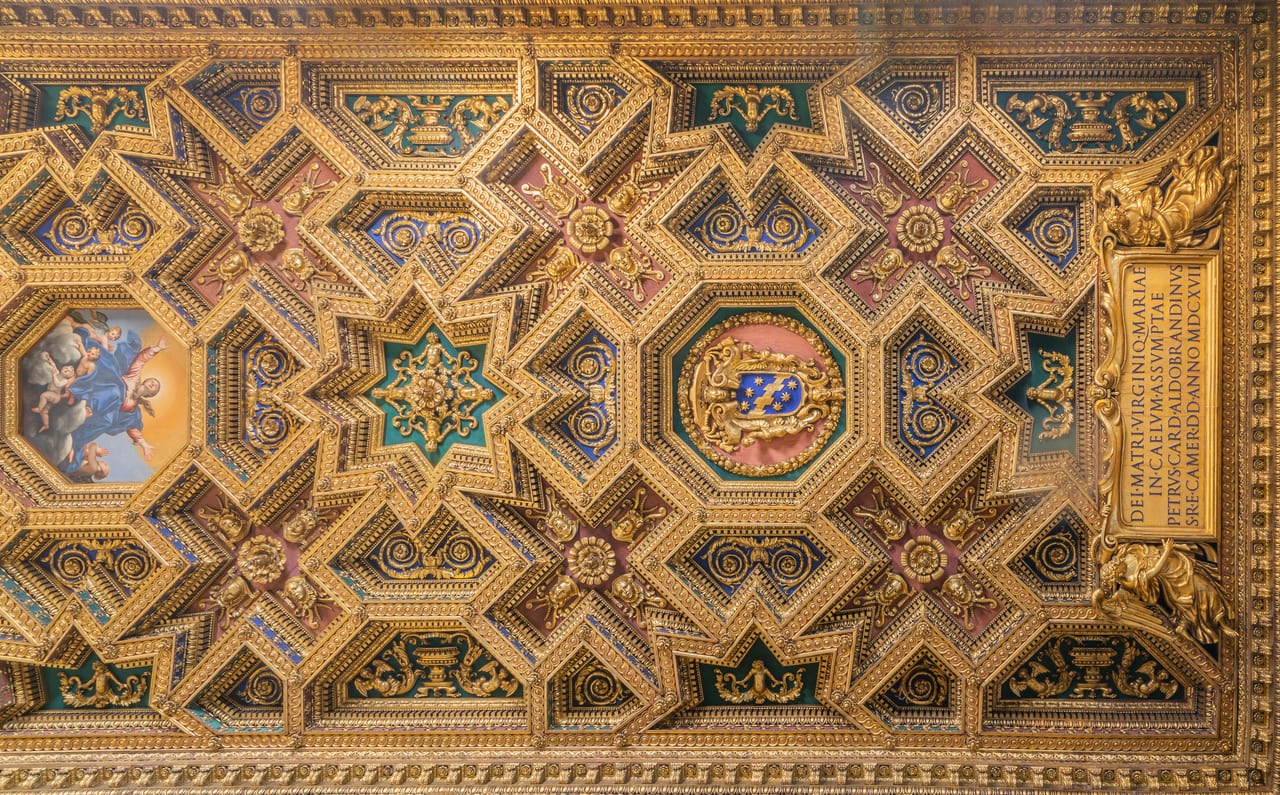
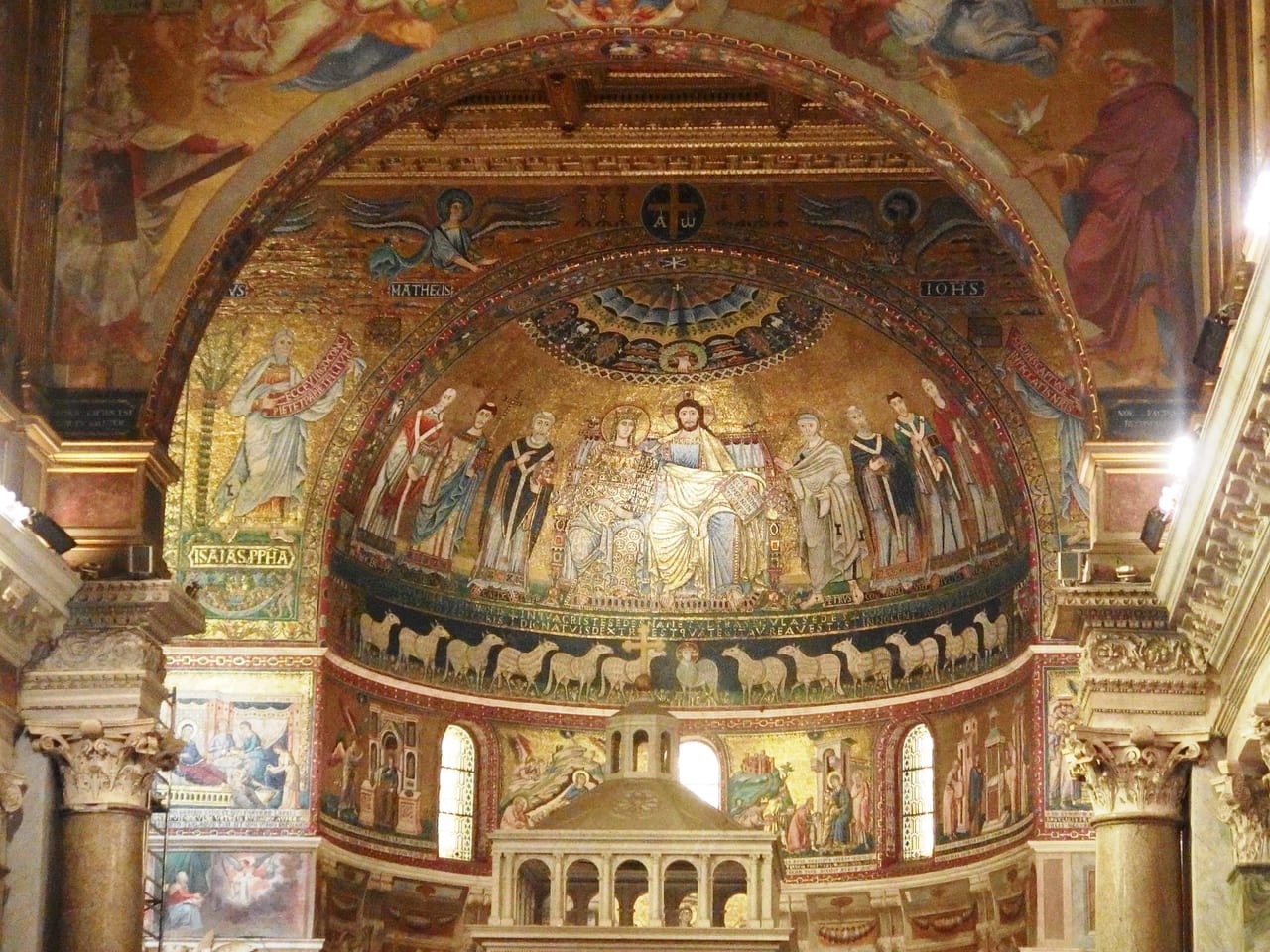
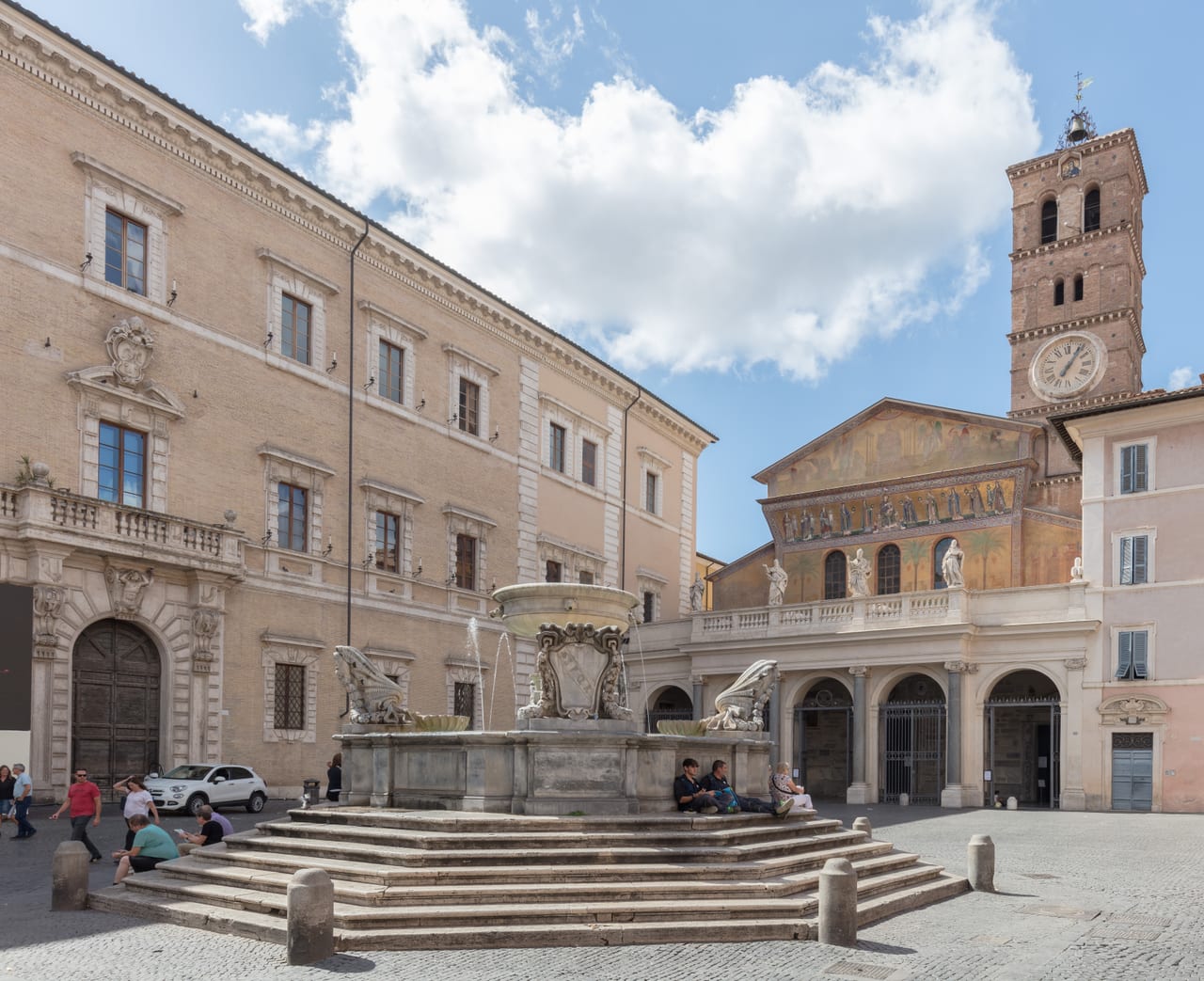
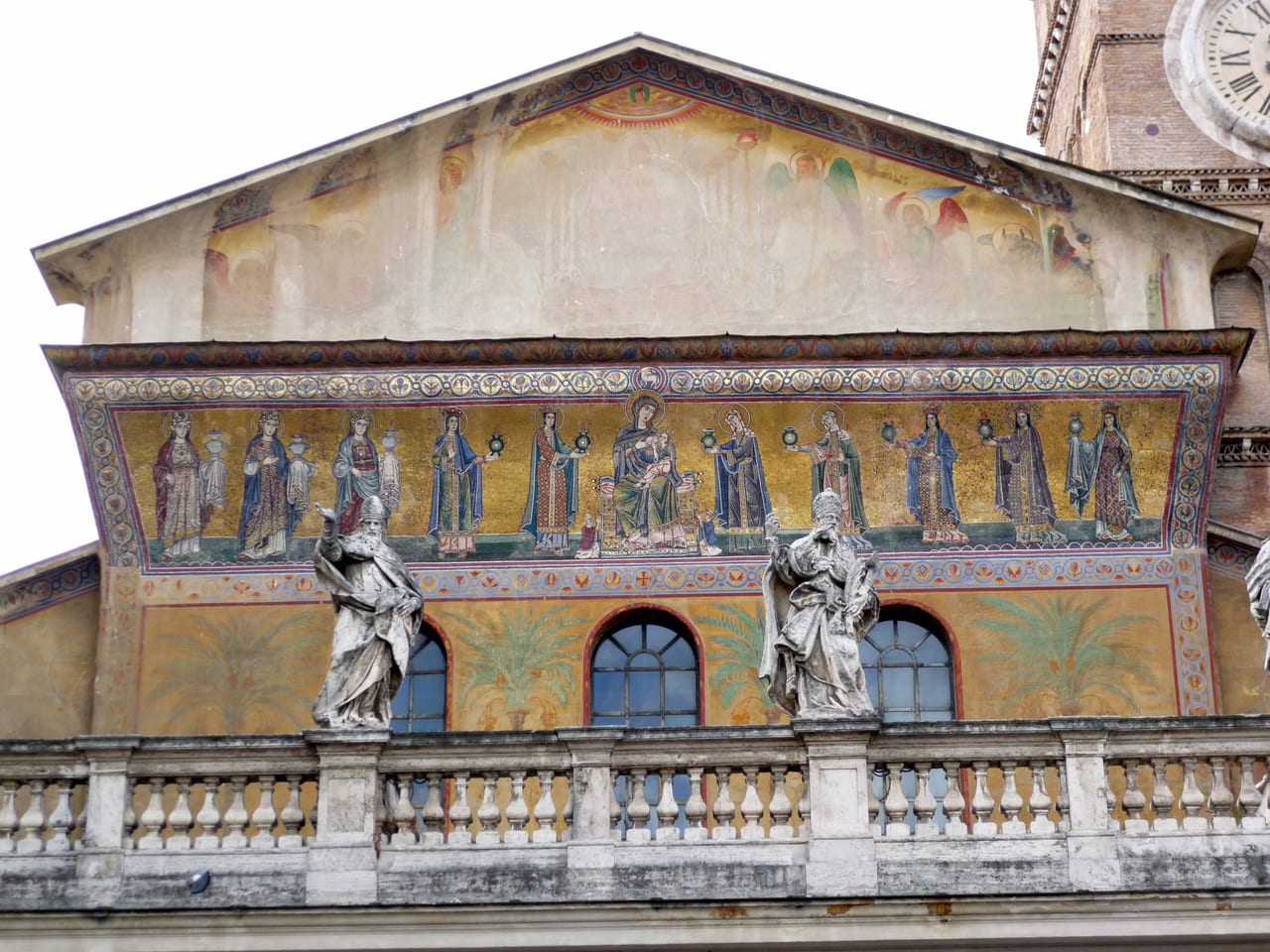
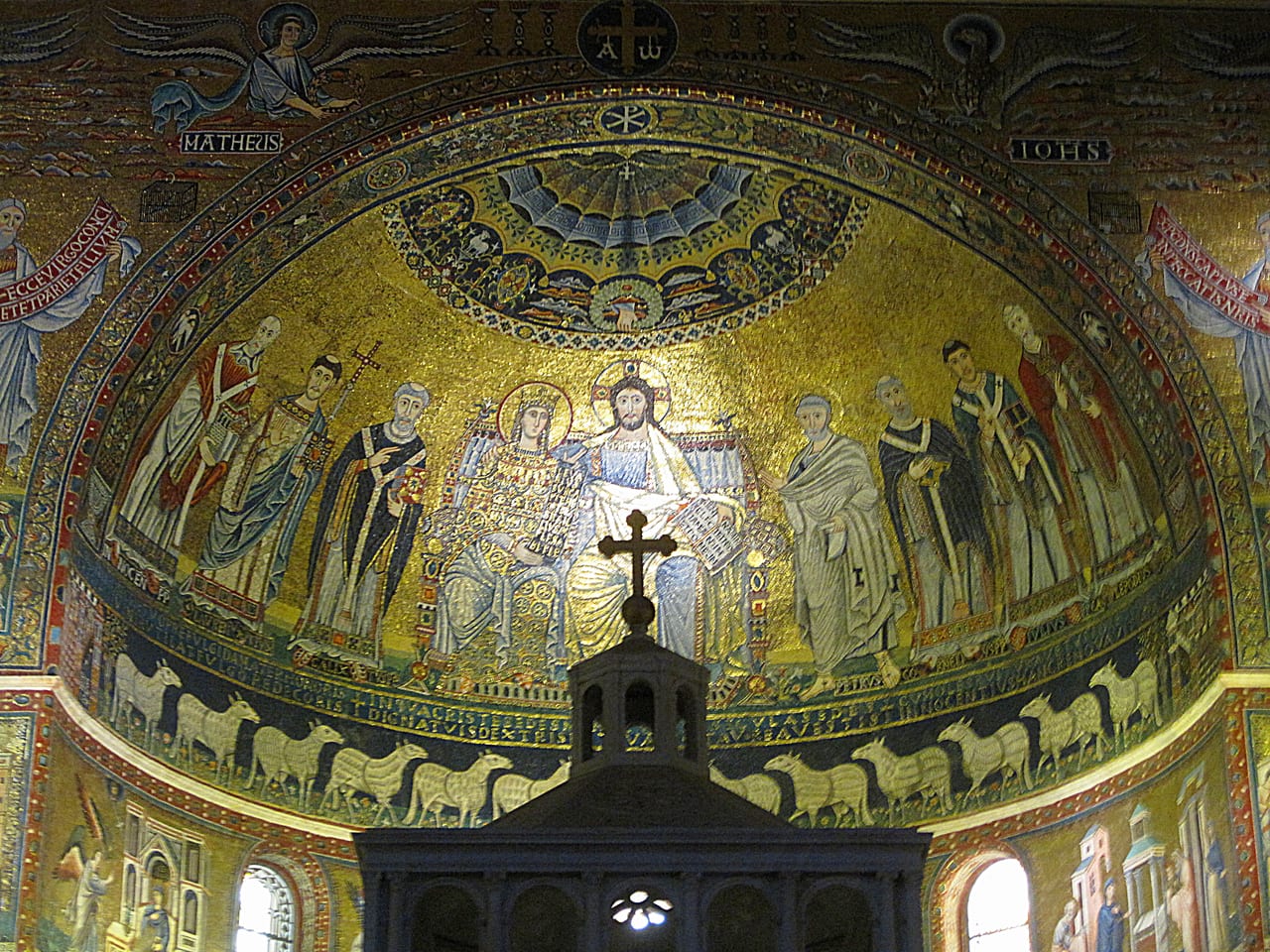
Tradition attributes the basilica’s foundation to Pope Callixtus I (217–222), at the site where oil was said to have sprung from the ground; Julius I (337–352) reportedly completed it. During the eighth and ninth centuries, side aisles were added, the presbytery reorganised and a confession created for martyrs’ remains, including Callixtus’s. The present structure derives chiefly from Innocent II’s reconstruction of 1138–1143, using some spolia from the Baths of Caracalla; the pope died before its completion but provided funds for the works and decoration. In the sixteenth century, Martino Longhi the Elder designed the Chapel of the Madonna della Clemenza and several side chapels for Cardinal Marco Sittico Altemps. Clement XI commissioned Carlo Fontana’s rebuilt portico and altered façade in 1702, while Virginio Vespignani undertook an extensive stylistic restoration between 1866 and 1877 under Pius IX. The façade retains a thirteenth-century mosaic of the enthroned Virgin nursing the Child, while the Romanesque campanile bears another Madonna and Child mosaic. Inside, three aisles unfold beneath a wooden ceiling designed by Domenichino, with works by Giacomo Zoboli, Étienne Parrocel, Giacinto Brandi, Antonio Gherardi, Ferraù Fenzoni and others. The basilica also preserves the Madonna della Clemenza, perhaps sixth-century, and the relics of Julius I, Callixtus I and Innocent II.
At a glance
- Built
- 1101
- Architect
- Carlo Fontana
- Style
- Romanesque architecture
- Heritage
- Italian national heritage
Ways to explore Santa Maria in Trastevere
Begin outside with the portico, the upper façade mosaic and the campanile’s niche. Inside, compare the Ionic and Corinthian columns with the richly carved wooden ceiling, then seek out the Avila Chapel’s Baroque stuccoes and the Chapel of San Francesco’s fresco cycle. In the transept, examine the monuments to Pietro Stefaneschi and Philippe d’Alençon. The paired choir lofts contain two contrasting organs: Filippo Testa’s 1702 instrument and a 1911 Mutin Cavaillé-Coll organ.
Places to stay near Santa Maria in Trastevere

Live availability and prices from Stay22's partners, refreshed periodically and subject to change. Booking through these links may earn us a commission at no extra cost to you. See our privacy policy.
Cafés near Santa Maria in Trastevere
Cafés near Santa Maria in Trastevere loads as you scroll.
Attractions nearby
Attractions near Santa Maria in Trastevere loads as you scroll.
Cities nearby
Cities nearby loads as you scroll.
More in Rome
See more of Rome.
Find great cafés, places to stay and other interesting places to visit in Rome.