Church · Rome
Santa Maria in Domnica
DirectionsA 1288 bell still hangs in the church’s sail-shaped bell tower, an unusually tangible survivor beside a basilica whose origins reach back to Late Antiquity.
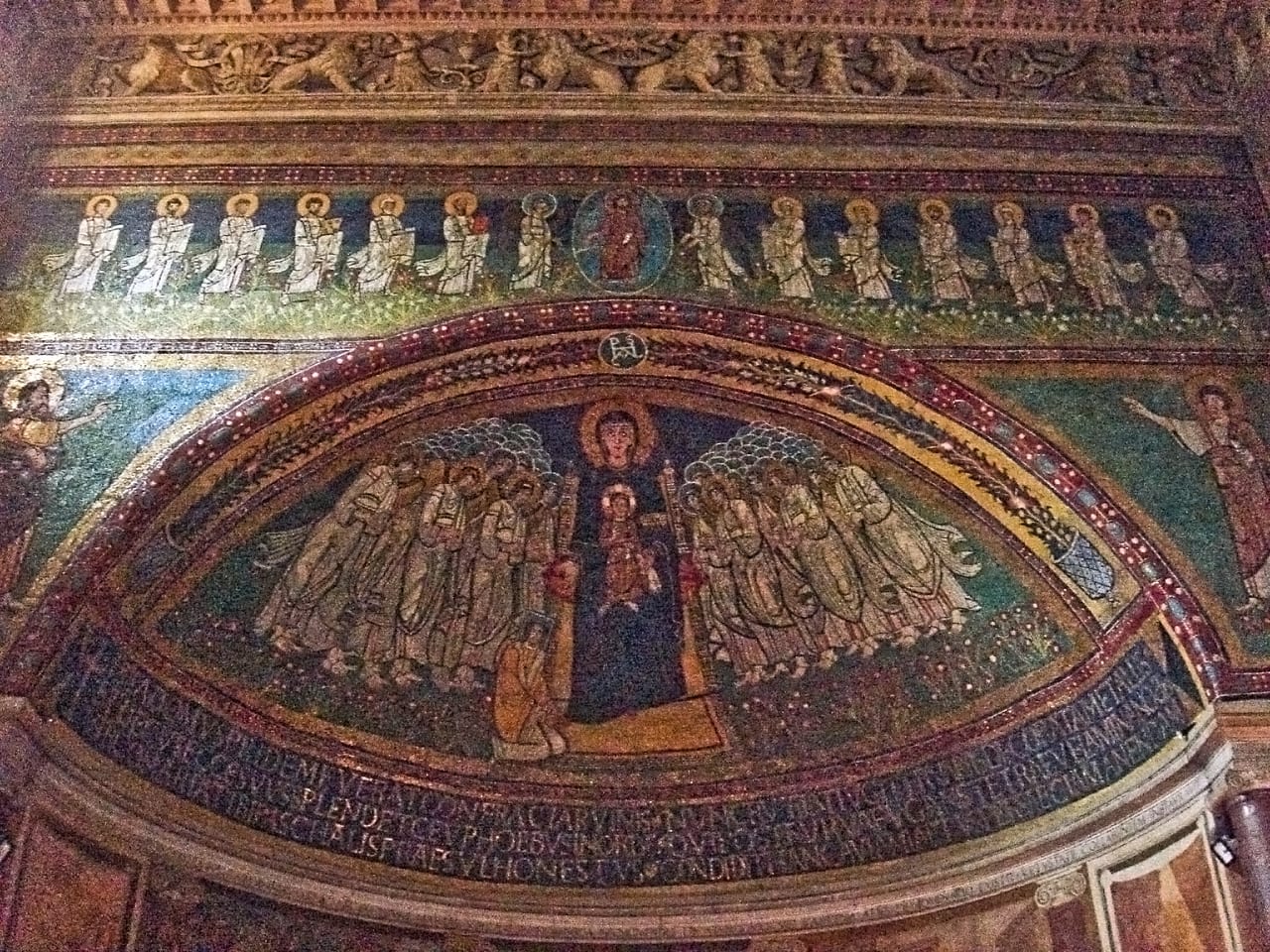
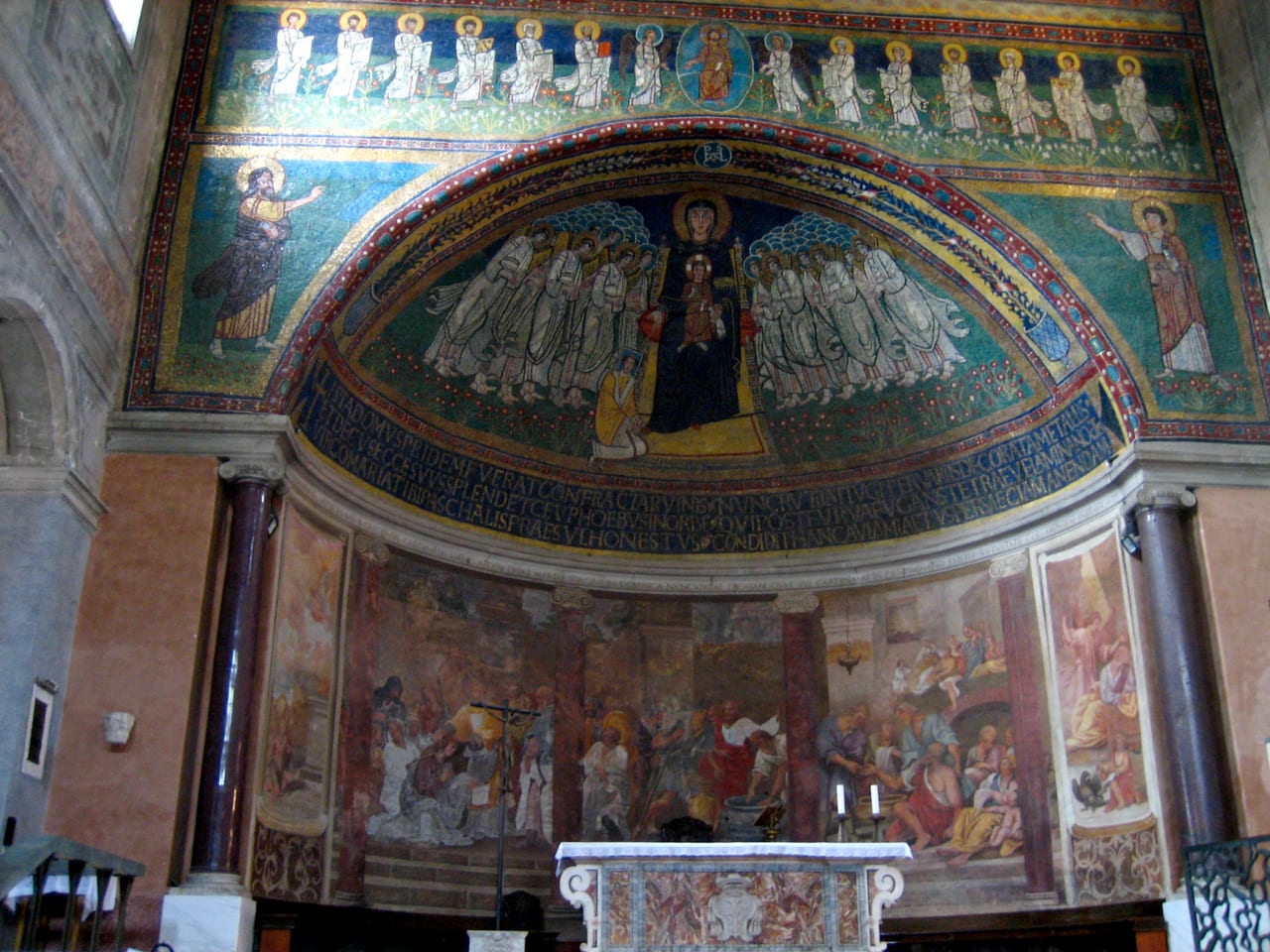
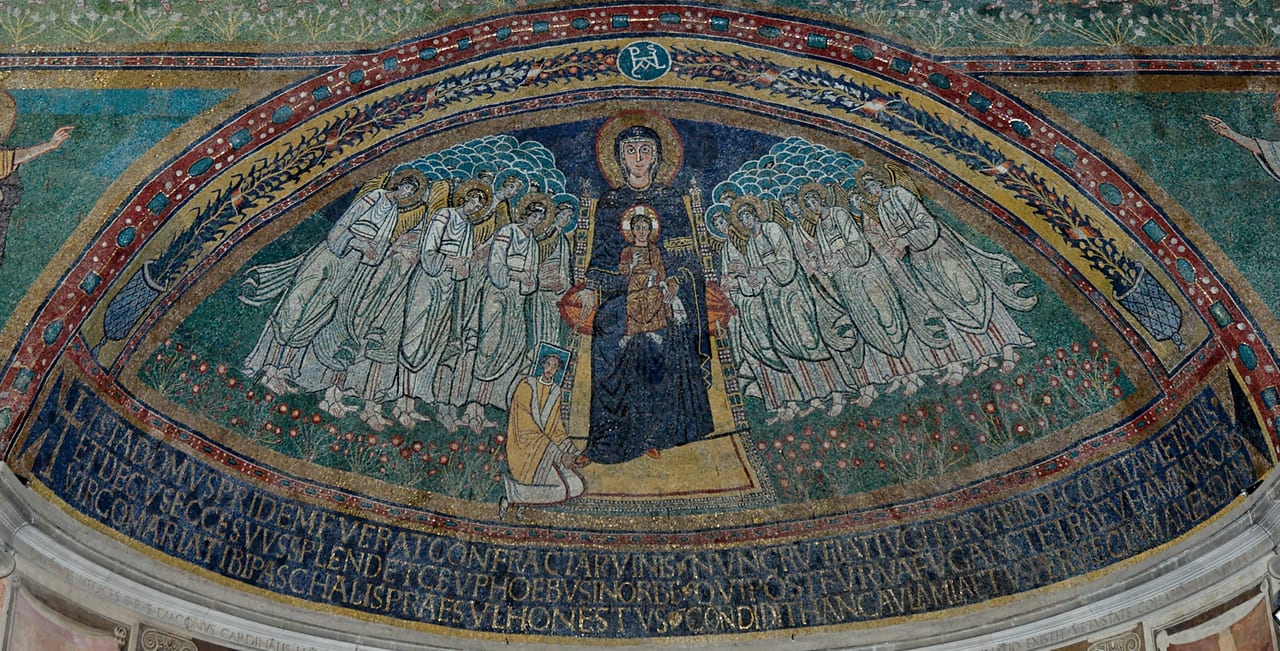
Photograph 1 of 3 of Santa Maria in Domnica
Santa Maria in Domnica, also known as Santa Maria alla Navicella, stands on the Caelian Hill. Its origins are placed in 601, near the barracks of Rome’s fifth cohort of Vigiles; a church on the site appears in the acts of Pope Symmachus’s 499 synod. Pope Agatho established its titular designation in 678. Pope Paschal I rebuilt the basilica between 818 and 822, giving it the lavish mosaic decoration associated with Rome’s artistic renewal under his pontificate. The present exterior largely derives from the Medici-linked renovations of the early sixteenth century. Giovanni de’ Medici, later Pope Leo X, commissioned Andrea Sansovino’s Renaissance façade and the Navicella fountain in 1513–1514. Its portico has five travertine- pilaster-separated arches, while the pediment bears the arms of Innocent VIII and Cardinals Giovanni and Ferdinando de’ Medici. Inside, the ninth-century basilican plan survives: three equal-length aisles divided by two rows of nine reused columns and ending in three apses. Ferdinando commissioned the coffered ceiling in 1566. Later restoration addressed damp, structural damage and the portico between 1879 and 1882; the church reopened on 5 March 1882. A 1932 rebuilding created parish rooms, a semicircular confession was added beneath the apse in 1958, and the presbytery was rearranged in 1985.
At a glance
- Built
- 601
- Architect
- Andrea Sansovino
- Style
- Early Christian architecture
- Heritage
- Italian national heritage
Ways to explore Santa Maria in Domnica
Begin beneath the Renaissance portico, noting the later-opened windows flanking the original circular rose window and the marble heraldry above. Inside, compare the reused columns and the three-apse arrangement, then examine Lazzaro Baldi’s wall frescoes and the Medici emblem at the centre of the ceiling. Look closely at the ceiling’s two Navicella scenes, the ancient sarcophagi in the crypt, and the 1910 Natale Balbiani organ in the counter-façade gallery. The adjacent northern building includes a towered structure erected in the seventeenth century.
Places to stay near Santa Maria in Domnica

Live availability and prices from Stay22's partners, refreshed periodically and subject to change. Booking through these links may earn us a commission at no extra cost to you. See our privacy policy.
Cafés near Santa Maria in Domnica
Cafés near Santa Maria in Domnica loads as you scroll.
Attractions nearby
Attractions near Santa Maria in Domnica loads as you scroll.
Cities nearby
Cities nearby loads as you scroll.
More in Rome
See more of Rome.
Find great cafés, places to stay and other interesting places to visit in Rome.