Church · Rome
Santa Cecilia in Trastevere
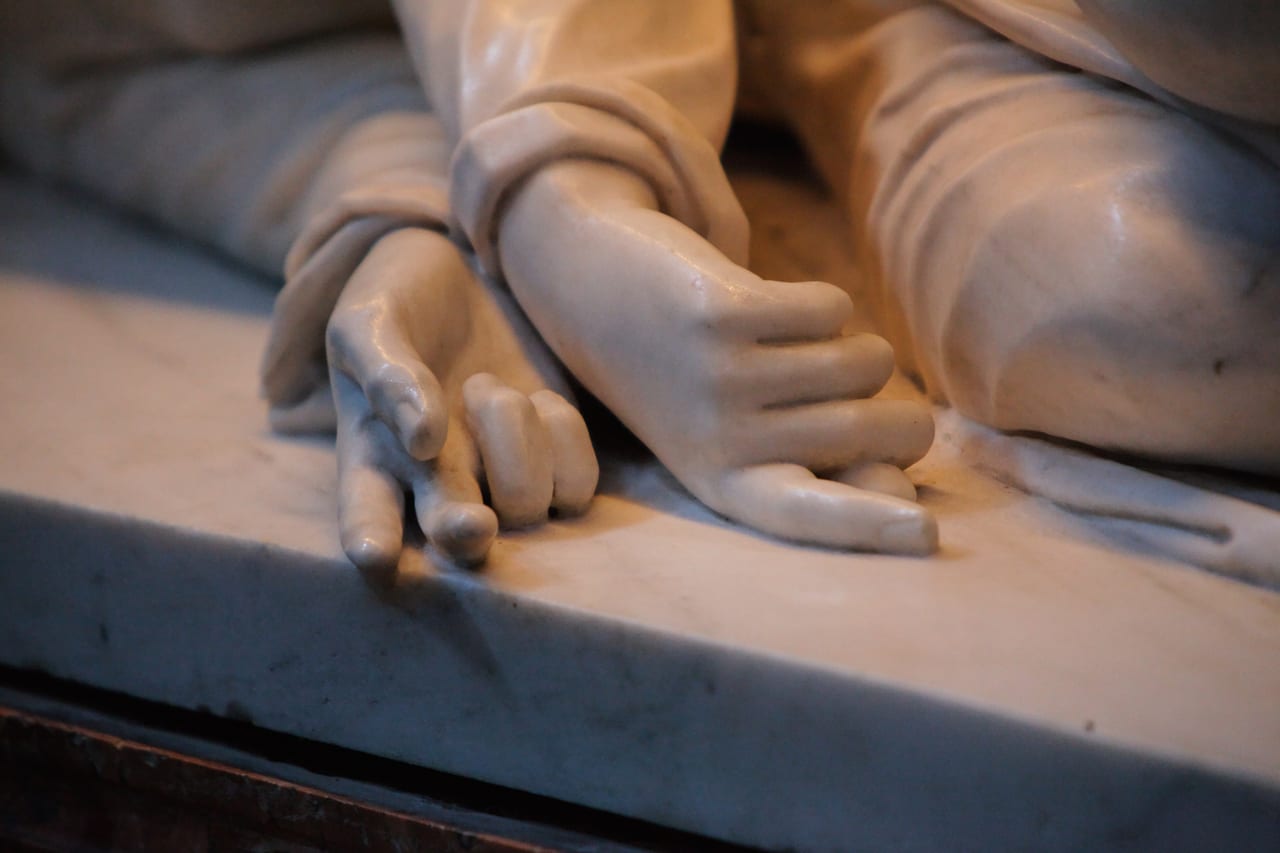
DirectionsBeneath its altar lies Stefano Maderno’s marble recreation of Saint Cecilia’s body, discovered almost intact in 1599 with the wounds of her martyrdom still visible on her neck.
Photograph 1 of 11 of Santa Cecilia in Trastevere
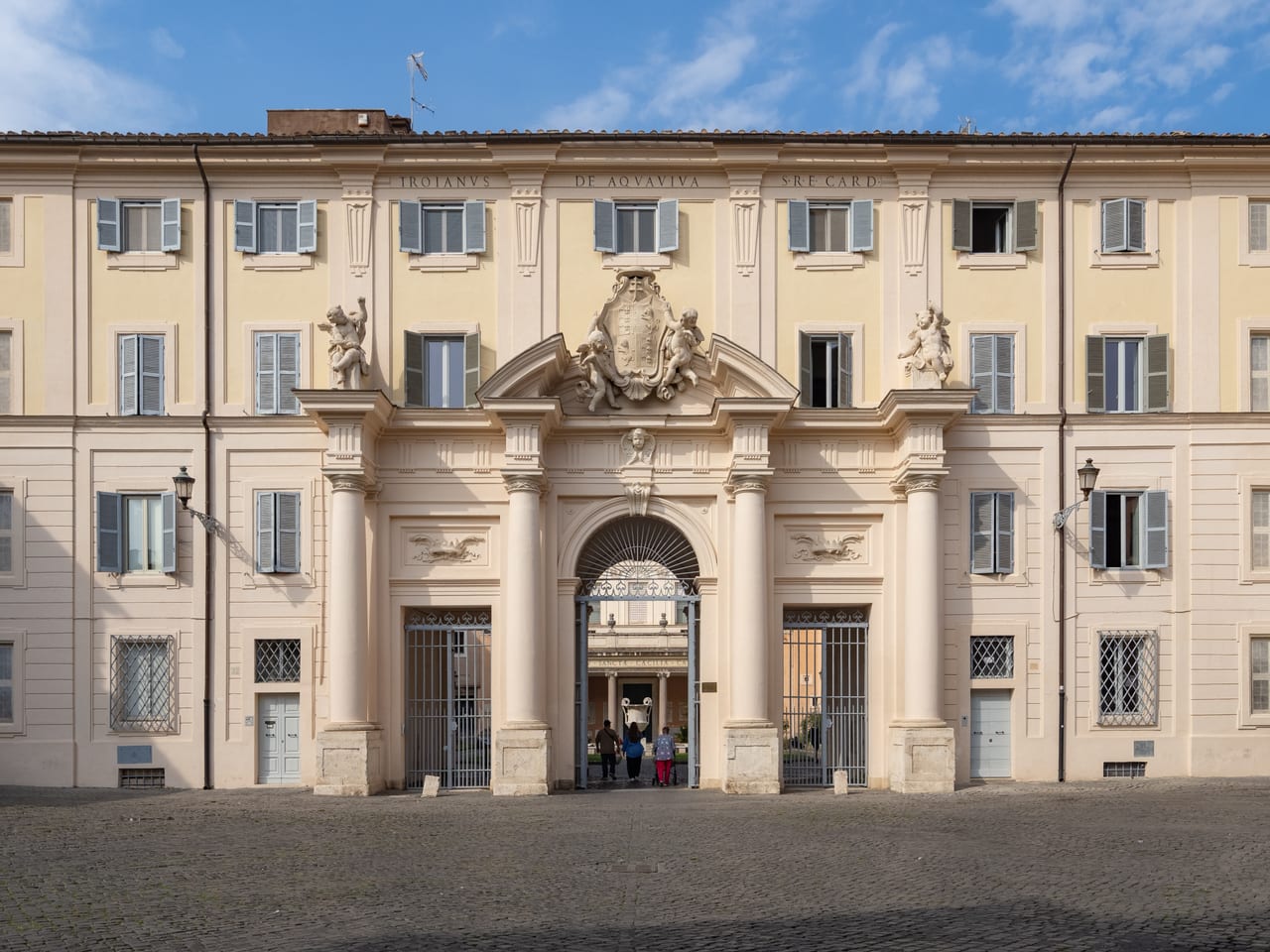
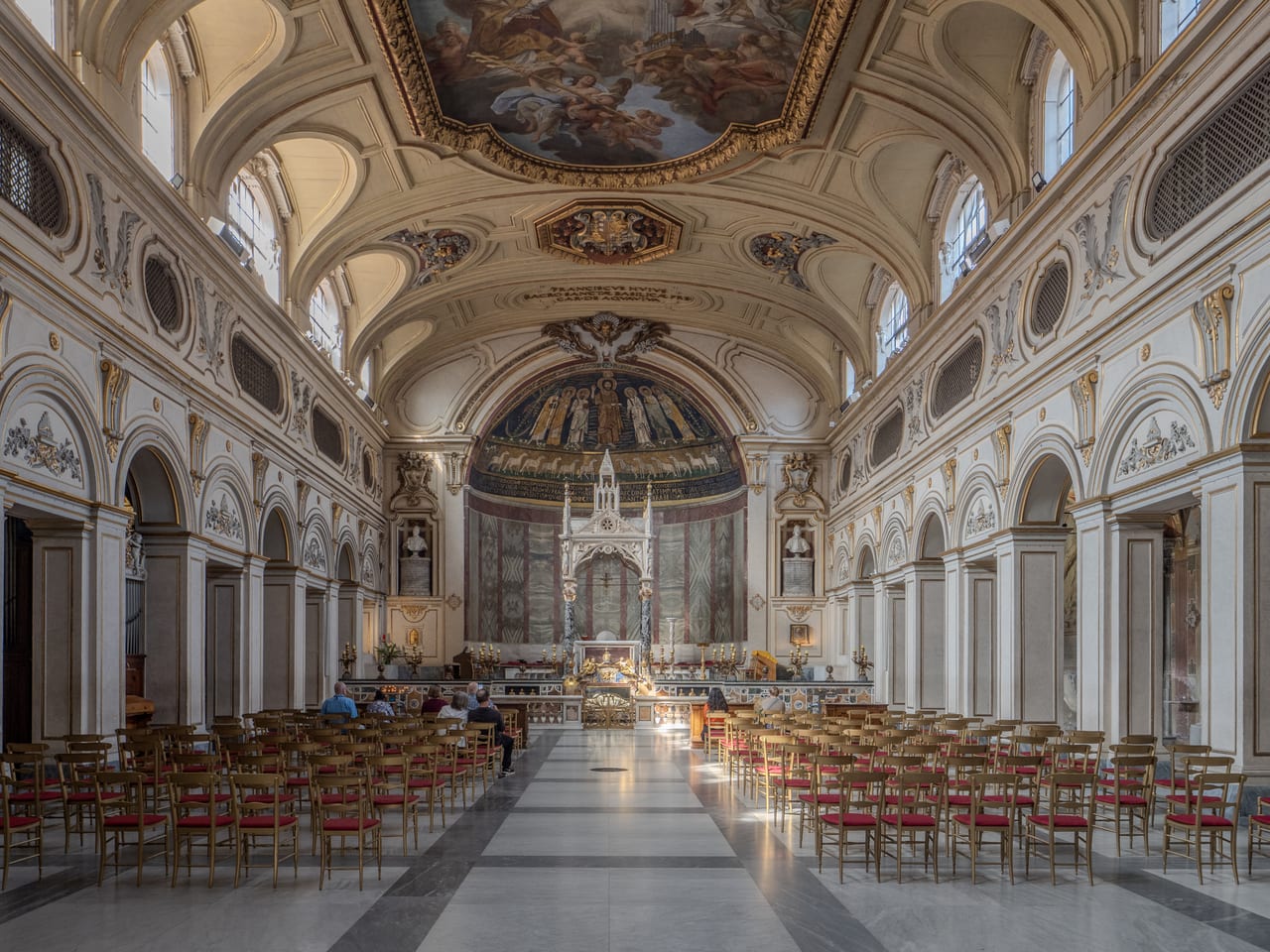
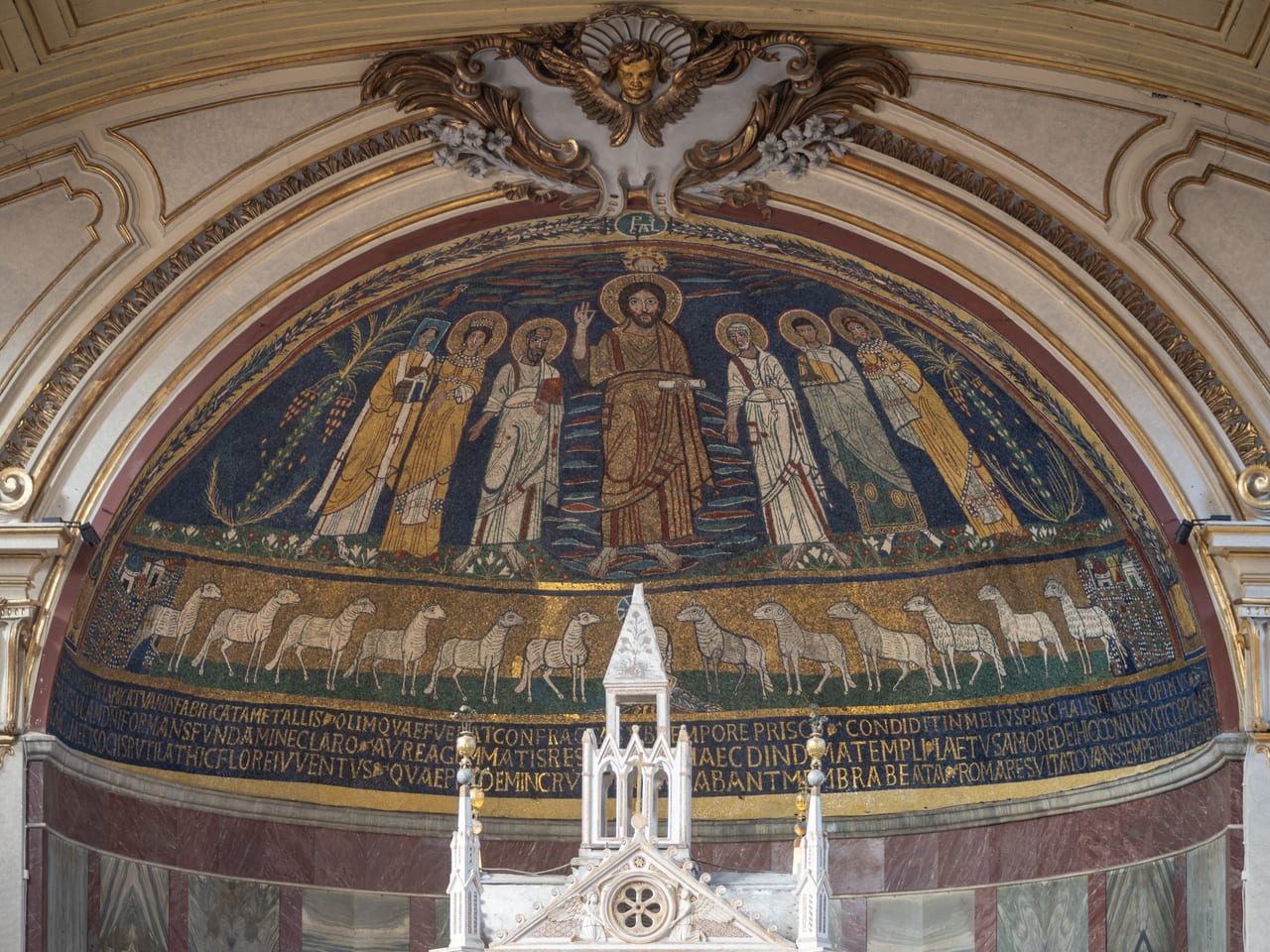
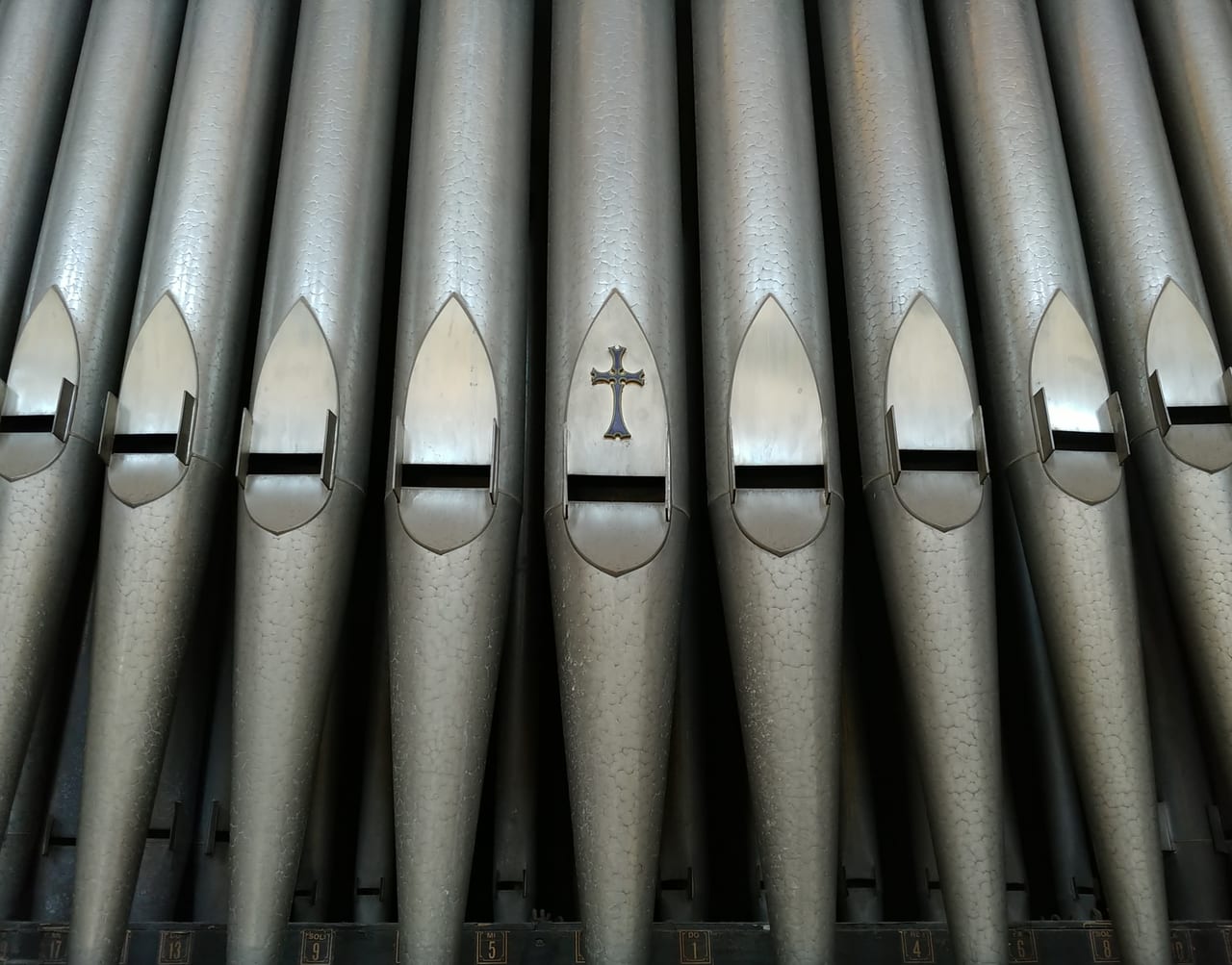
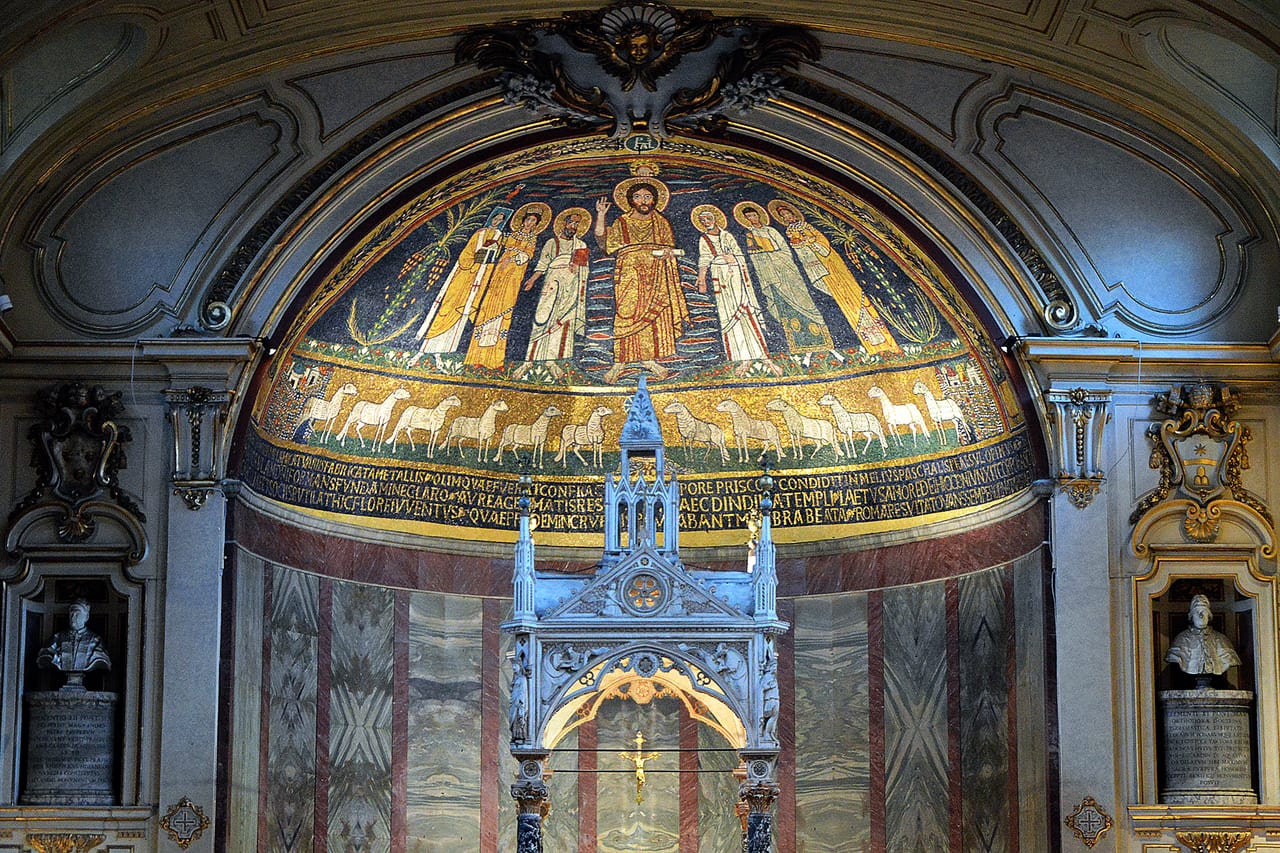
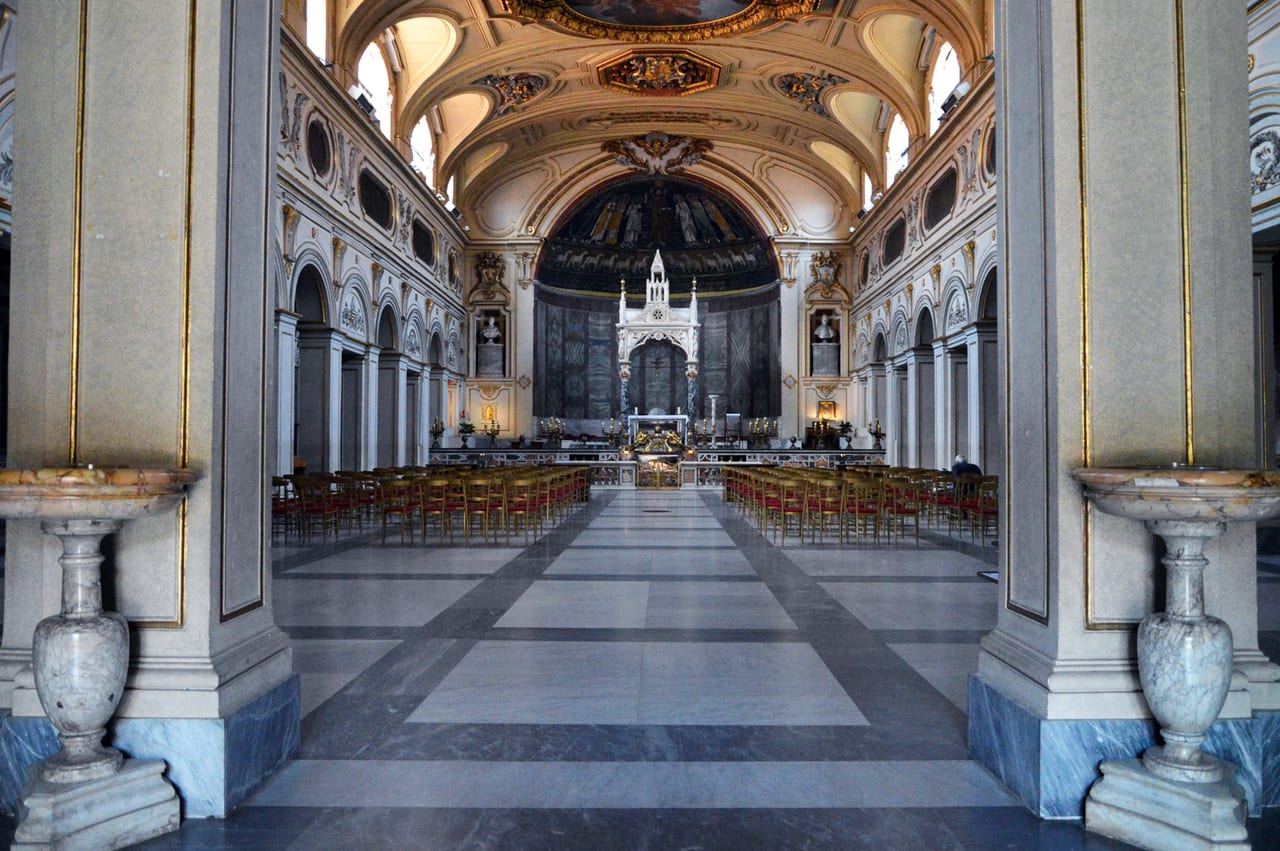
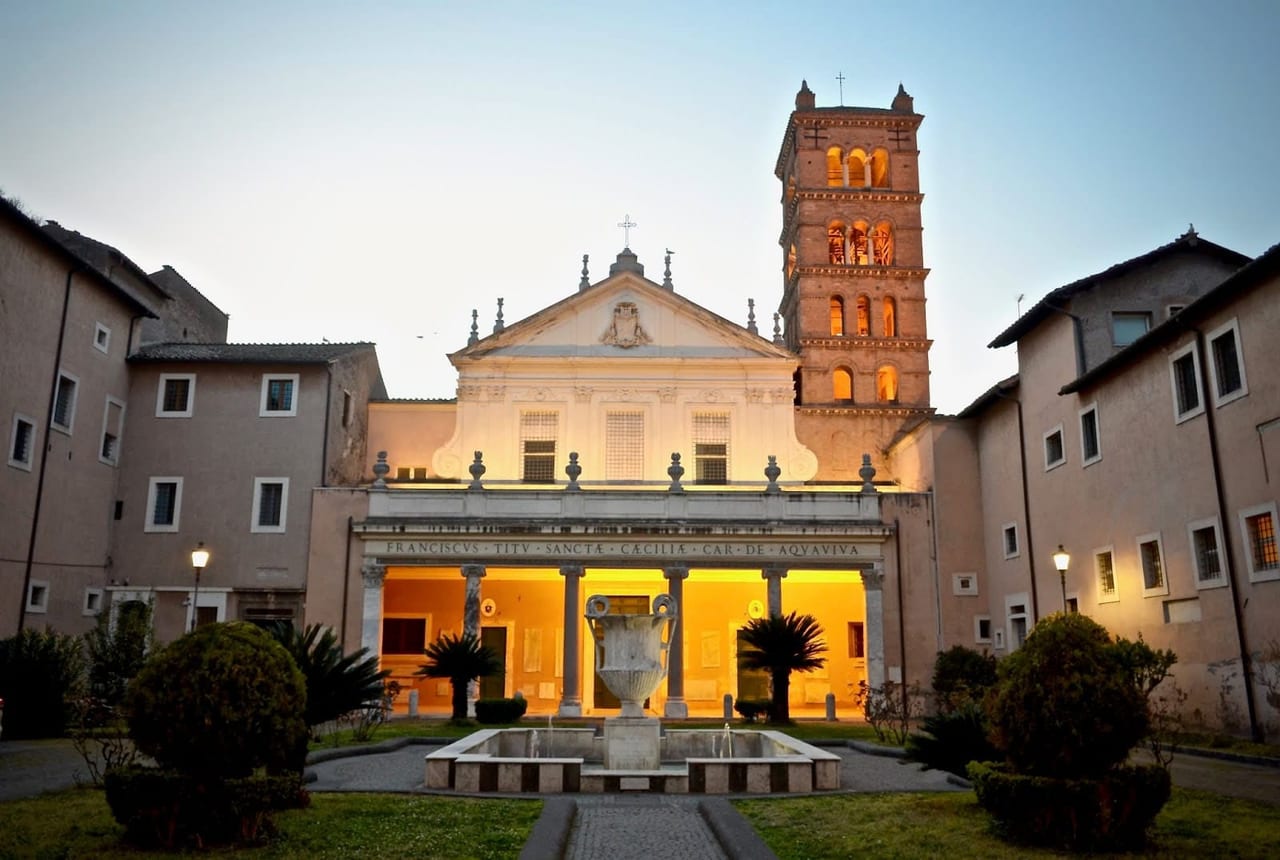
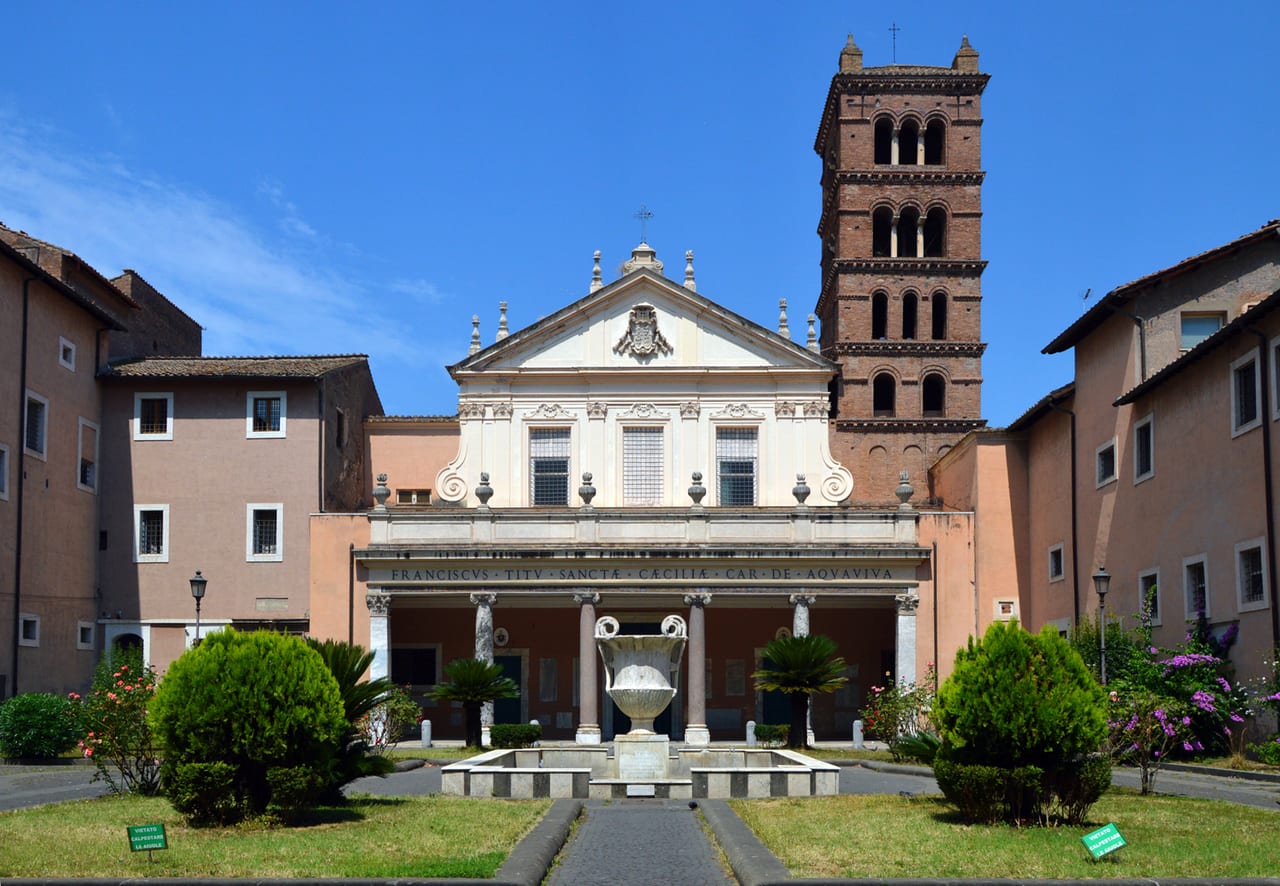
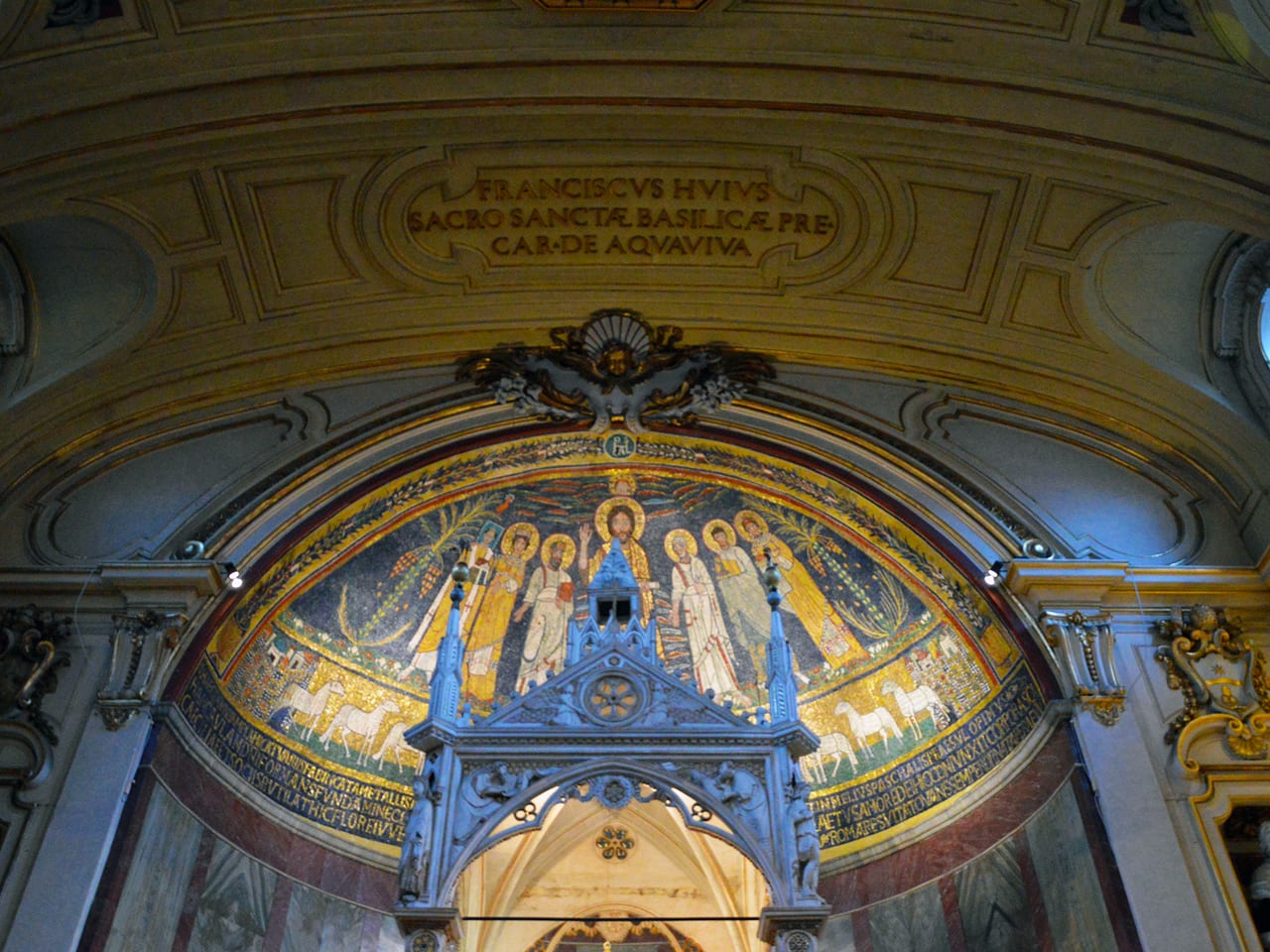
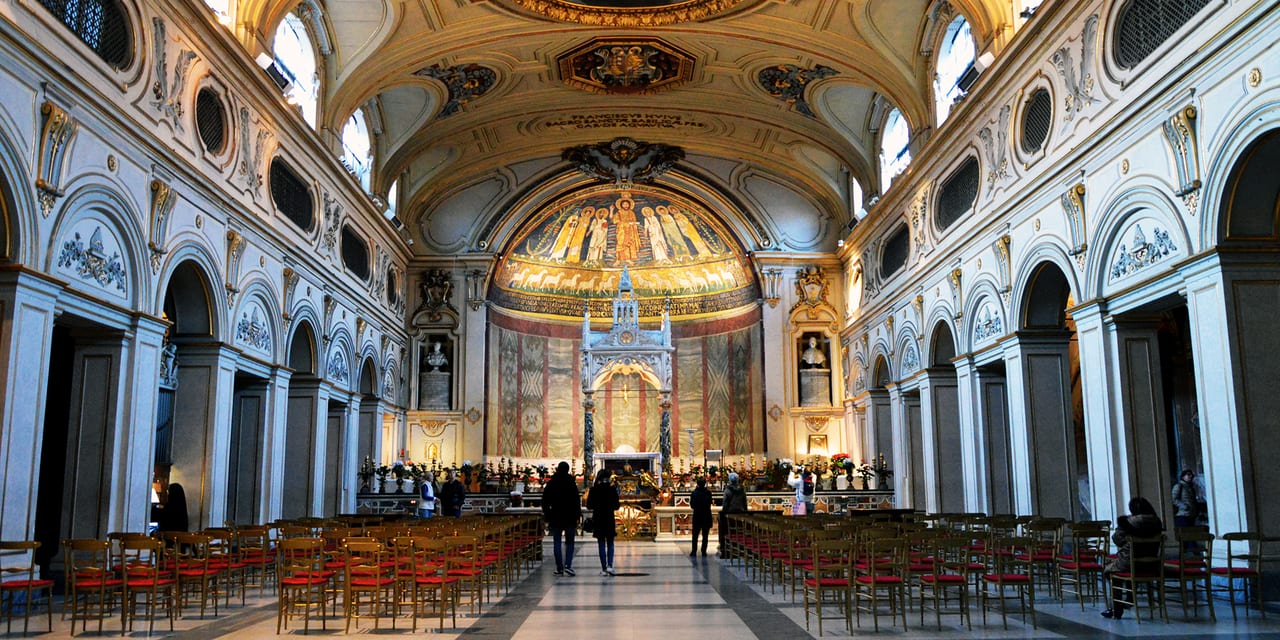
The basilica’s origins are tied to the Roman martyr Cecilia, whose family home tradition places here; the Titulus Caeciliae is attested by the fifth century. In 822, Pope Paschal I, after dreaming of Cecilia’s burial place, built a basilica over the earlier church and transferred her body there. Its original form had a central nave, twelve columns, a semicircular apse with mosaic decoration, a timber roof and a small crypt beneath the high altar. The complex expanded over the centuries: Paschal II added the campanile and portico in the twelfth century; Pietro Cavallini painted the Last Judgment in the later thirteenth century, while Arnolfo di Cambio created the ciborium in 1293. Seventeenth- and eighteenth-century remodelling raised the presbytery, replaced the Cosmatesque pavement and timber roof, reduced the windows and added enclosed galleries for the nuns. Cardinal Francesco Acquaviva d’Aragona commissioned Ferdinando Fuga’s monumental entrance and courtyard scheme. In 1830, the columns were enclosed in brick piers. Excavations later revealed a second-century BC domus, an imperial insula, a private bath and a Christian baptismal room. Vegezzi Bossi’s pneumatic organ dates from 1903.
At a glance
- Built
- 401
- Architect
- Ferdinando Fuga
- Style
- baroque architecture
- Heritage
- Italian national heritage
Ways to explore Santa Cecilia in Trastevere
Begin with the portico and Fuga’s theatrical façade, then compare the heavy brick piers with the surviving basilical rhythm of the nave. Look upward for the decorated wooden ceiling and Sebastiano Conca’s central painting, and examine the apse, ciborium and enclosed galleries above the arcades. Descend to the crypt and underground rooms, where ancient walls, pavements, the hexagonal baptistery and the traditional balneum can be read as layers beneath the church.
Places to stay near Santa Cecilia in Trastevere

Live availability and prices from Stay22's partners, refreshed periodically and subject to change. Booking through these links may earn us a commission at no extra cost to you. See our privacy policy.
Cafés near Santa Cecilia in Trastevere
Cafés near Santa Cecilia in Trastevere loads as you scroll.
Attractions nearby
Attractions near Santa Cecilia in Trastevere loads as you scroll.
Cities nearby
Cities nearby loads as you scroll.
More in Rome
See more of Rome.
Find great cafés, places to stay and other interesting places to visit in Rome.