Church · Rome
San Silvestro in Capite
DirectionsSan Silvestro in Capite is distinguished by its medieval association with the head of John the Baptist, a relic that altered the church’s name in the twelfth century.
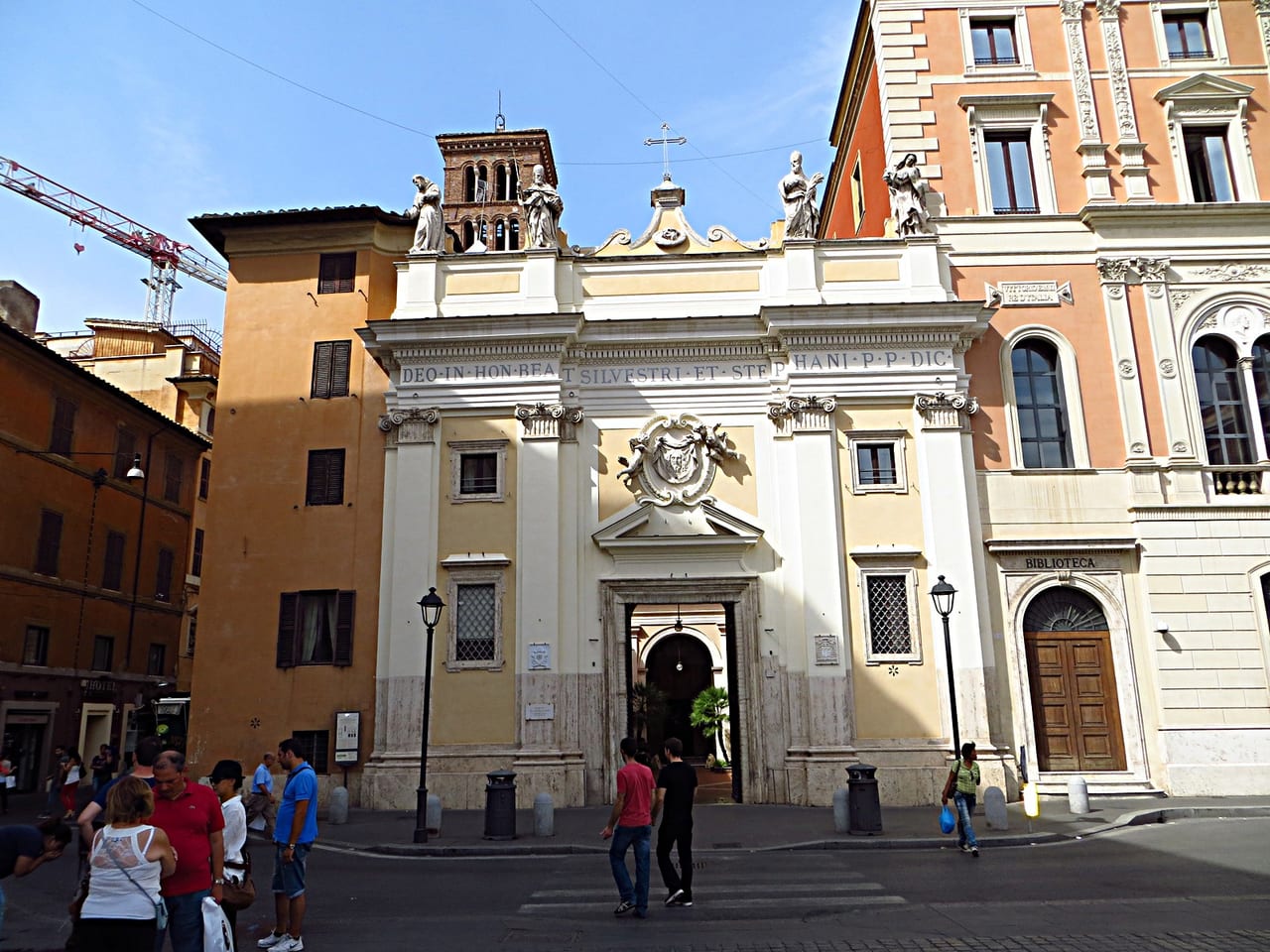
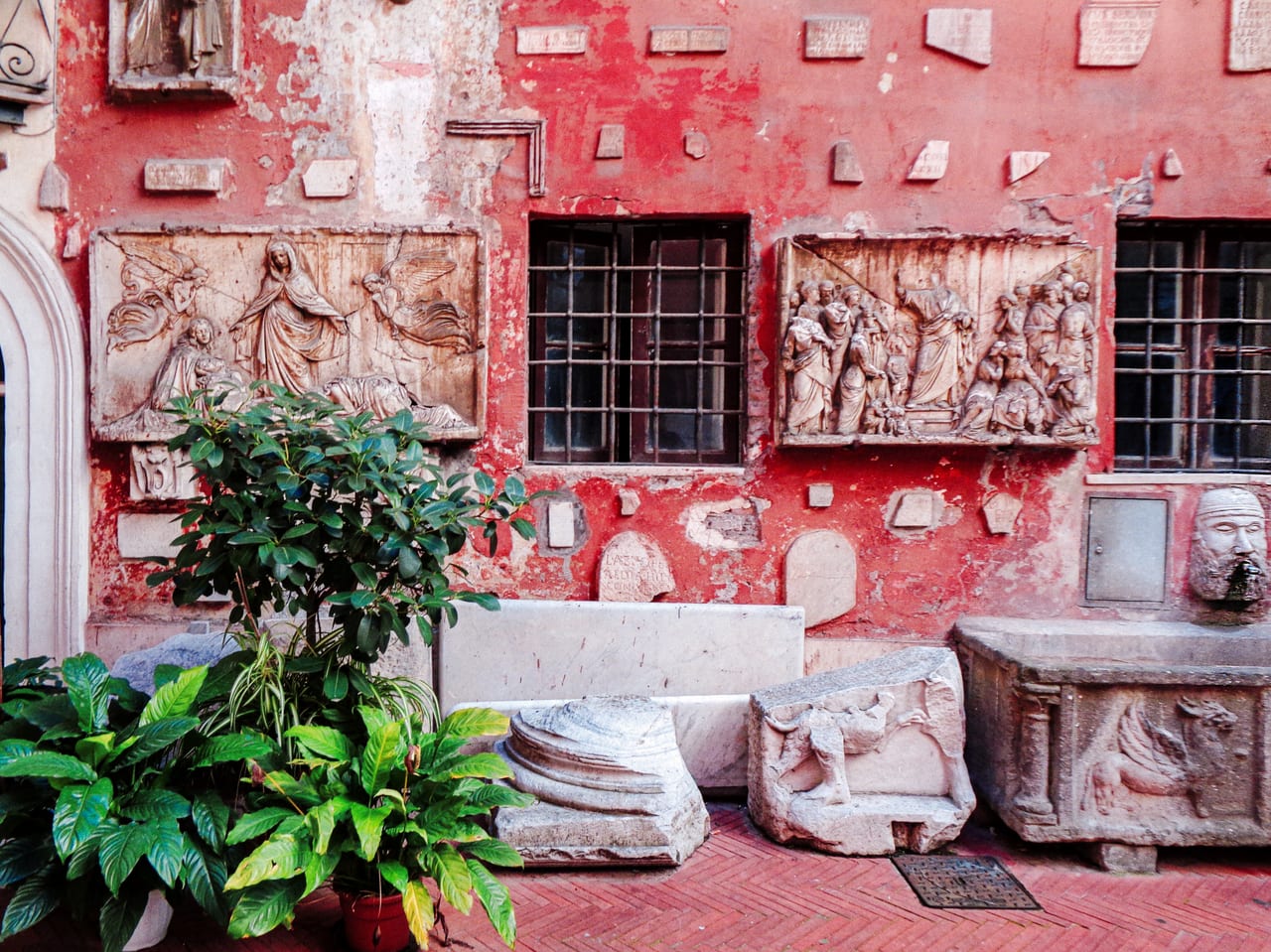
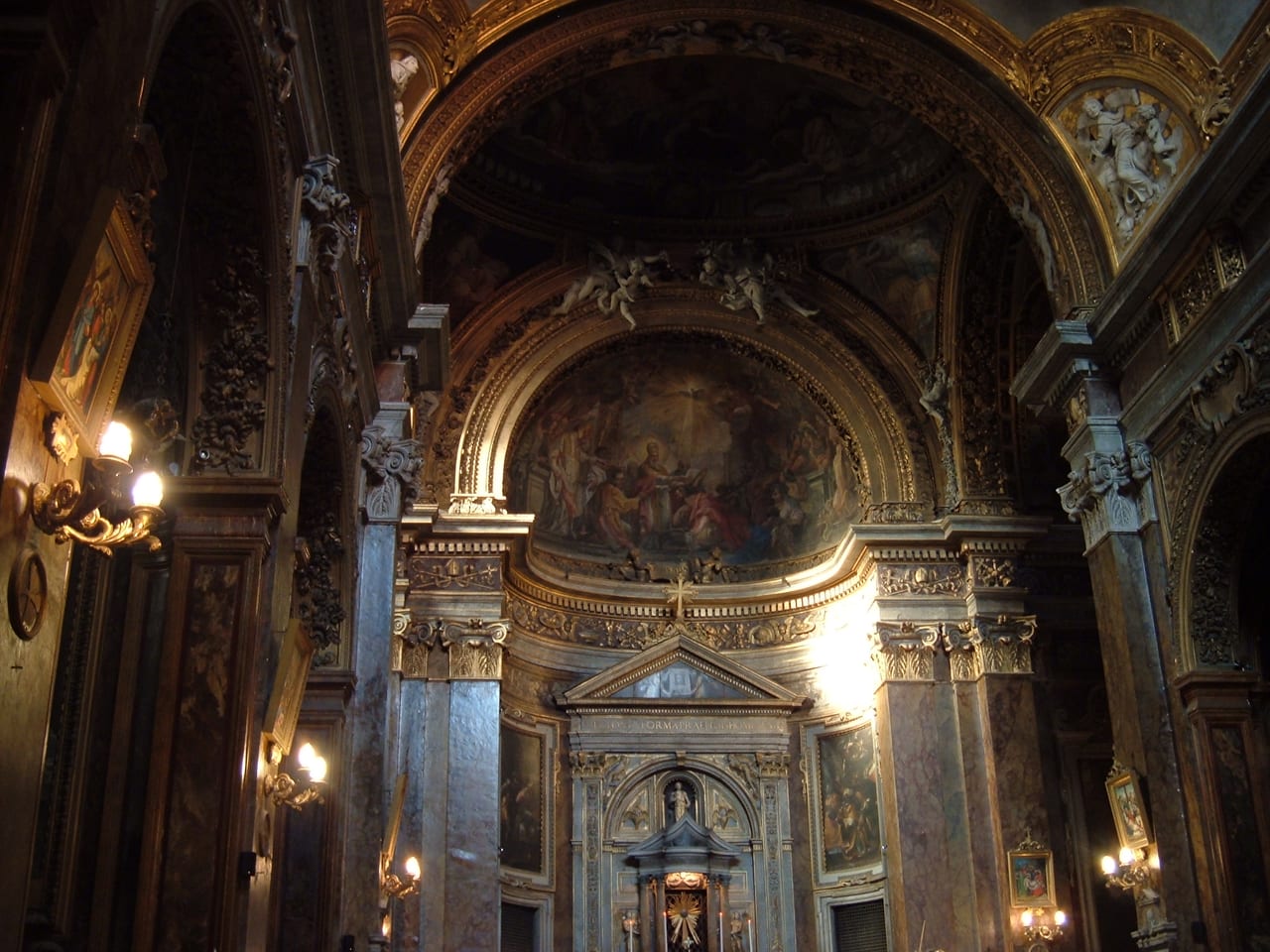
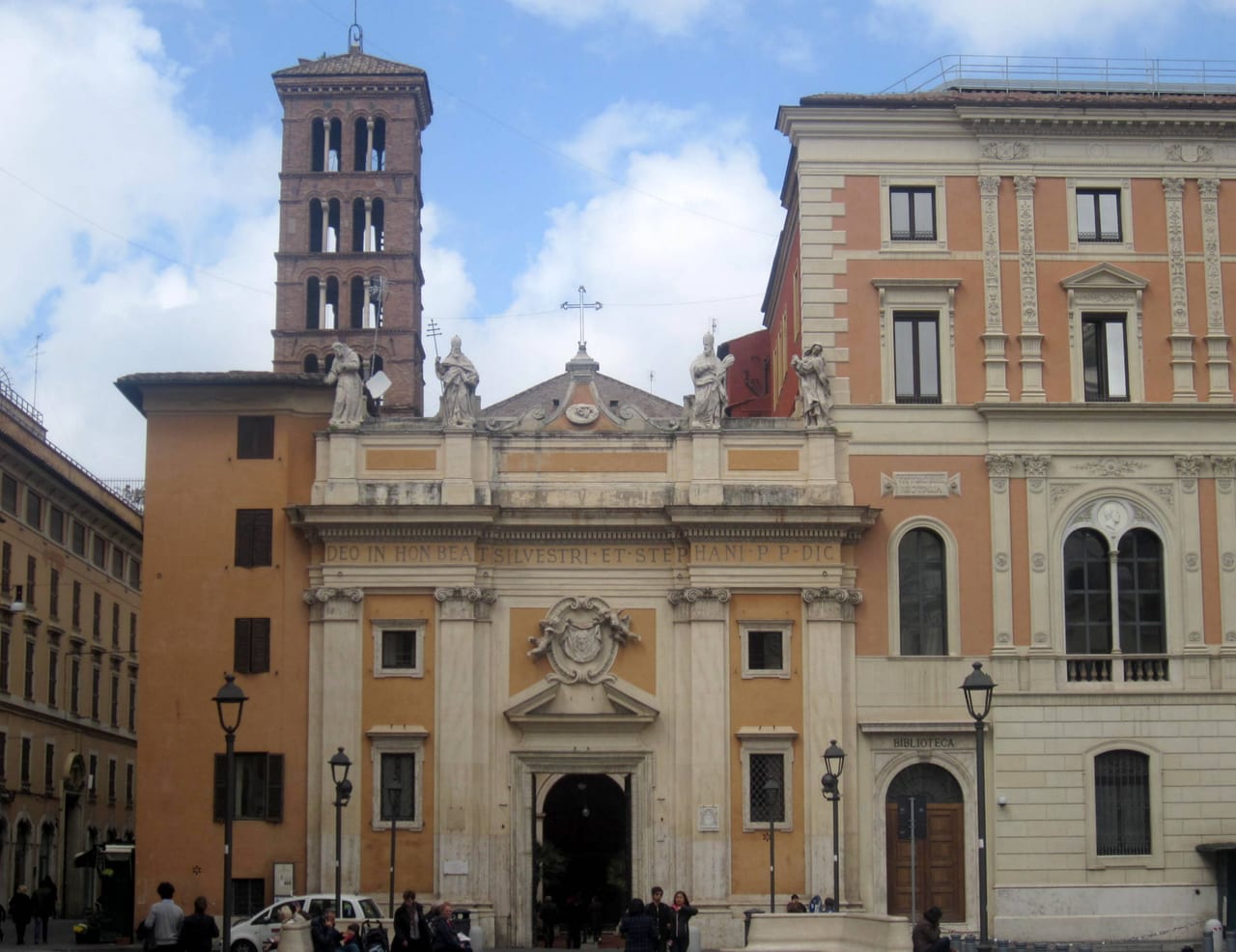
Photograph 1 of 4 of San Silvestro in Capite
Founded in 701 by Pope Stephen II or his brother and successor, Pope Paul I, San Silvestro in Capite occupied the family palace, built over the remains of a circular temple to the sun erected by Emperor Aurelian. Its first dedication was to Saints Silvester and Stephen. During the twelfth century, the monastery became Benedictine; between 1198 and 1216 the church was remodelled and received its Romanesque campanile. In 1285 the monastery passed to Poor Clare nuns. The complex was reshaped repeatedly: the monastery in 1588–1591 and the church between 1593 and 1601, with Carlo Maderno taking charge from 1595 at Cardinal Francesco Dietrichstein’s expense. Decoration concluded in 1696, followed by Domenico De Rossi’s façade in 1703. The English Pallottine Fathers officiated from 1855 and created an inscription collection in the quadriportico. The Italian state expropriated the convent in 1876, converting it into the central post office in 1878. The church remains the English national church in Rome and a reference point for the city’s Filipino community.
At a glance
- Built
- 701
- Architect
- Francesco da Volterra
- Style
- baroque architecture
- Heritage
- Italian national heritage
Ways to explore San Silvestro in Capite
Begin in the quadriportico, then examine the eighteenth-century façade: four Ionic pilasters, the statues of Saints Silvester, Stephen, Francis and Clare, and reliefs of the Edessan Image and John the Baptist’s head. Inside, look up to Giacinto Brandi’s Assumption fresco and the gilded 1680 organ case, which houses a twentieth-century instrument by Jules Anneessens. The six side chapels reward close viewing, especially Gentileschi’s Saint Francis Receiving the Stigmata and the paintings in the Chapel of the Holy Spirit.
Places to stay near San Silvestro in Capite

Live availability and prices from Stay22's partners, refreshed periodically and subject to change. Booking through these links may earn us a commission at no extra cost to you. See our privacy policy.
Cafés near San Silvestro in Capite
Cafés near San Silvestro in Capite loads as you scroll.
Attractions nearby
Attractions near San Silvestro in Capite loads as you scroll.
Cities nearby
Cities nearby loads as you scroll.
More in Rome
See more of Rome.
Find great cafés, places to stay and other interesting places to visit in Rome.