Church · Rome
San Lorenzo in Lucina
DirectionsBeneath the basilica lie remains of a fourth-century Christian complex, including a paleochristian baptistery and traces of the earlier Roman building associated with the matron Lucina.
Photograph 1 of 3 of San Lorenzo in Lucina
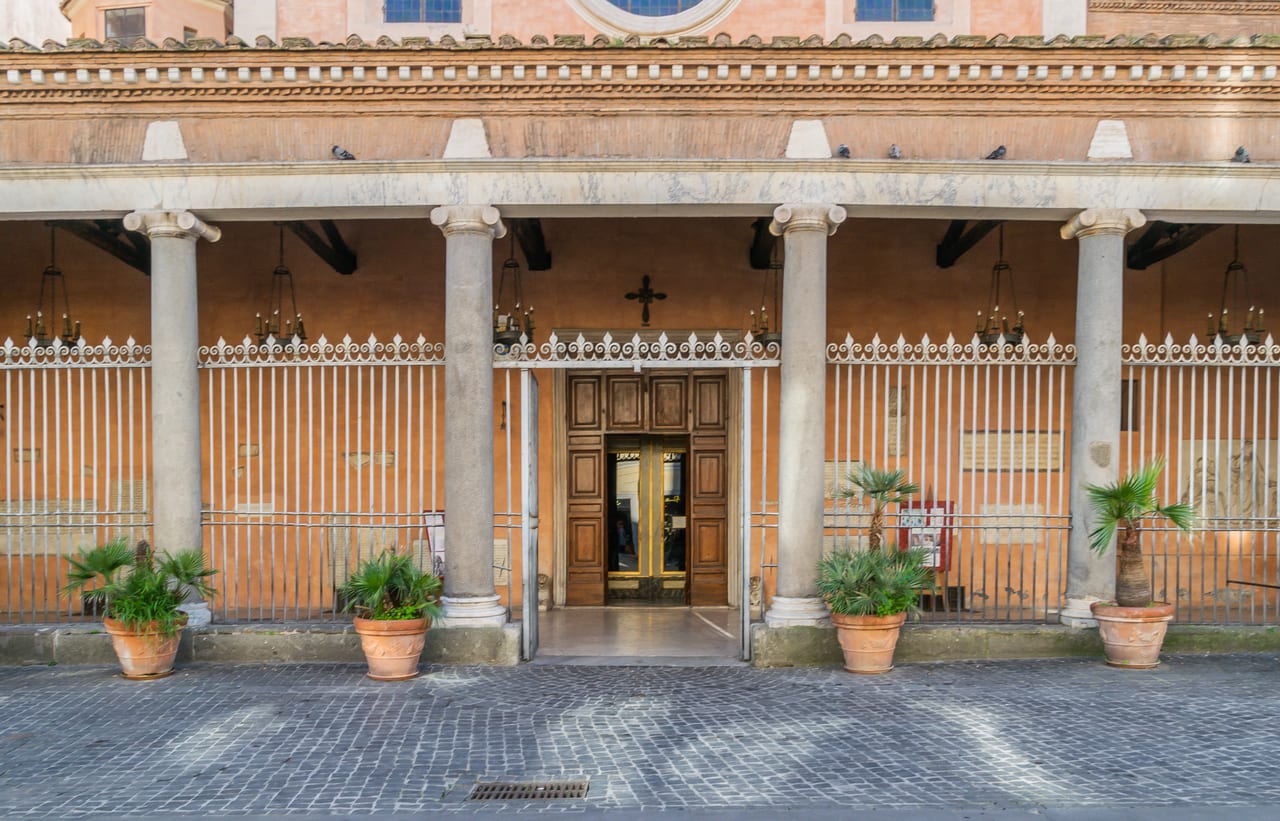
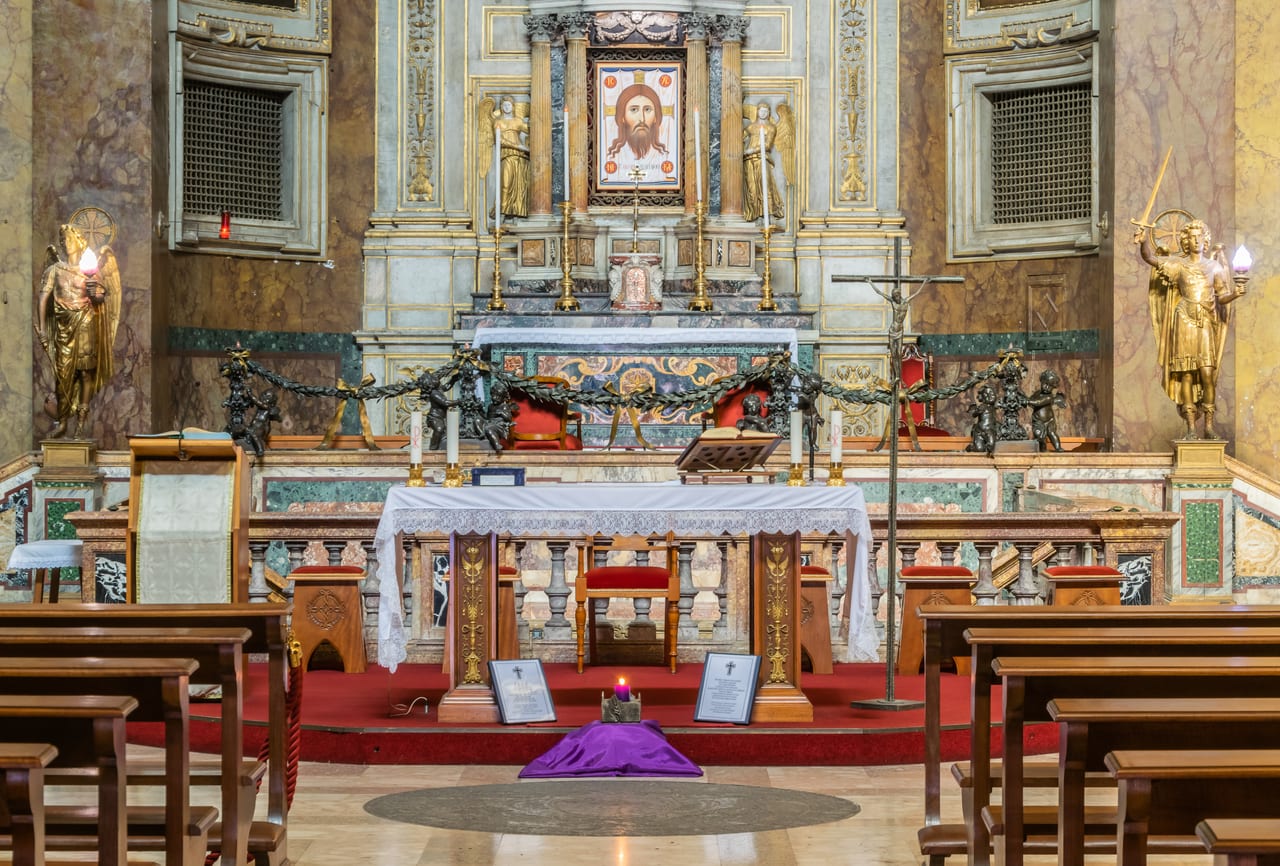
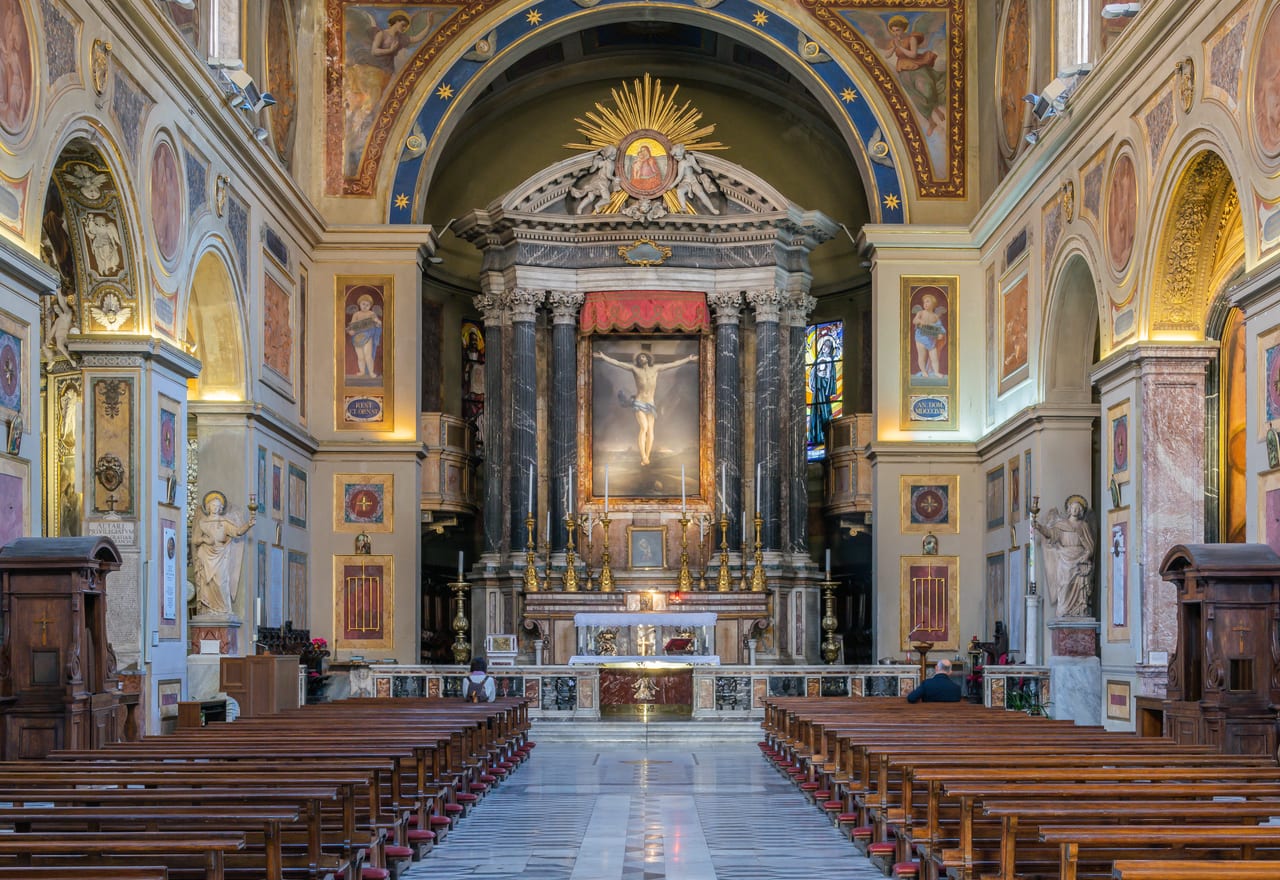
San Lorenzo in Lucina originated in the fourth century, traditionally on the Roman matron Lucina’s residence. Pope Sixtus III consecrated the domus as an official place of worship in 440; Pope Paschal II then rebuilt it, completing the work in 1130. In the mid-seventeenth century, Cosimo Fanzago radically reshaped the interior, converting its three aisles into a single nave and turning the former side aisles into family chapels. A later nineteenth-century restoration removed the nave’s Baroque decoration on the orders of Pius IX, replacing it with frescoes by Roberto Bompiani; only the pulpit remained. Pius X raised the church to minor-basilica status in November 1908. Its broad portico has six granite columns, while a huge ancient fluted column forms the architrave; a five-tiered Romanesque bell tower rises behind it. The basilica preserves the tombs of Nicolas Poussin, Pompeo Batoni, Adam Elsheimer, Luca Marenzio and other artists, musicians, architects and churchmen. The nineteenth-century tomb of Poussin bears “et in Arcadia ego.”
At a glance
- Architect
- Cosimo Fanzago
- Style
- baroque architecture
- Heritage
- Italian national heritage
Ways to explore San Lorenzo in Lucina
Begin with the portico, noting the antique column used above its granite supports, then look up to the rose window, Baroque windows and Romanesque campanile. Inside, follow the three visual sequences: Christological scenes, episodes from the life of the Virgin, and the martyrdom of San Lorenzo. Seek out Bernini’s Fonseca Chapel and bust, the seventeenth-century works by Simon Vouet, Carlo Saraceni’s San Carlo, and the Mascioni organ on the right eighteenth-century gallery. The parish museum preserves San Lorenzo’s chains.
Places to stay near San Lorenzo in Lucina

Live availability and prices from Stay22's partners, refreshed periodically and subject to change. Booking through these links may earn us a commission at no extra cost to you. See our privacy policy.
Cafés near San Lorenzo in Lucina
Cafés near San Lorenzo in Lucina loads as you scroll.
Attractions nearby
Attractions near San Lorenzo in Lucina loads as you scroll.
Cities nearby
Cities nearby loads as you scroll.
More in Rome
See more of Rome.
Find great cafés, places to stay and other interesting places to visit in Rome.