Church · Rome
Saint Charles at the Four Fountains
DirectionsKnown as San Carlino for its tiny scale, the church occupies an area comparable to just one of the four pillars supporting St Peter’s dome.
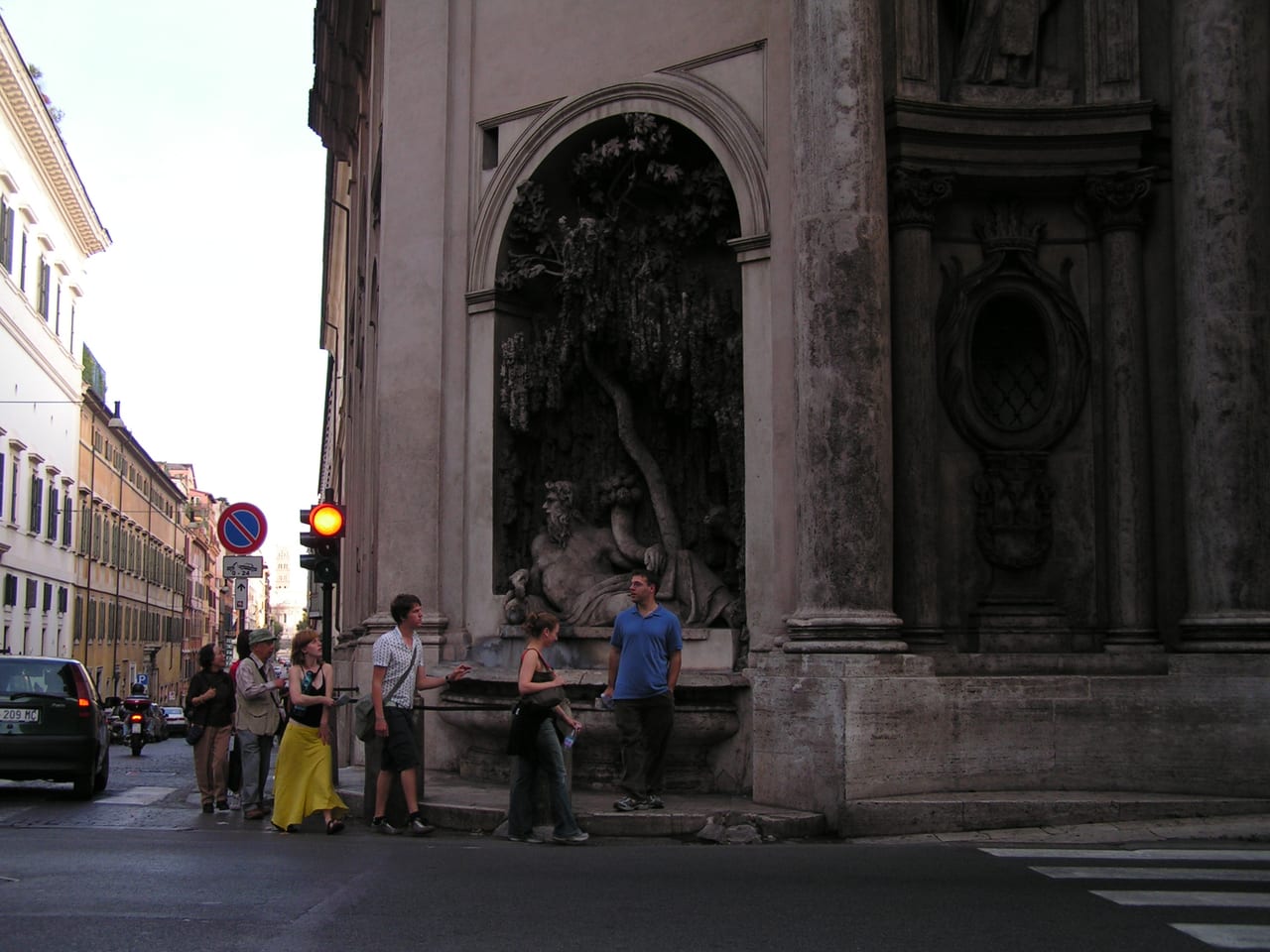
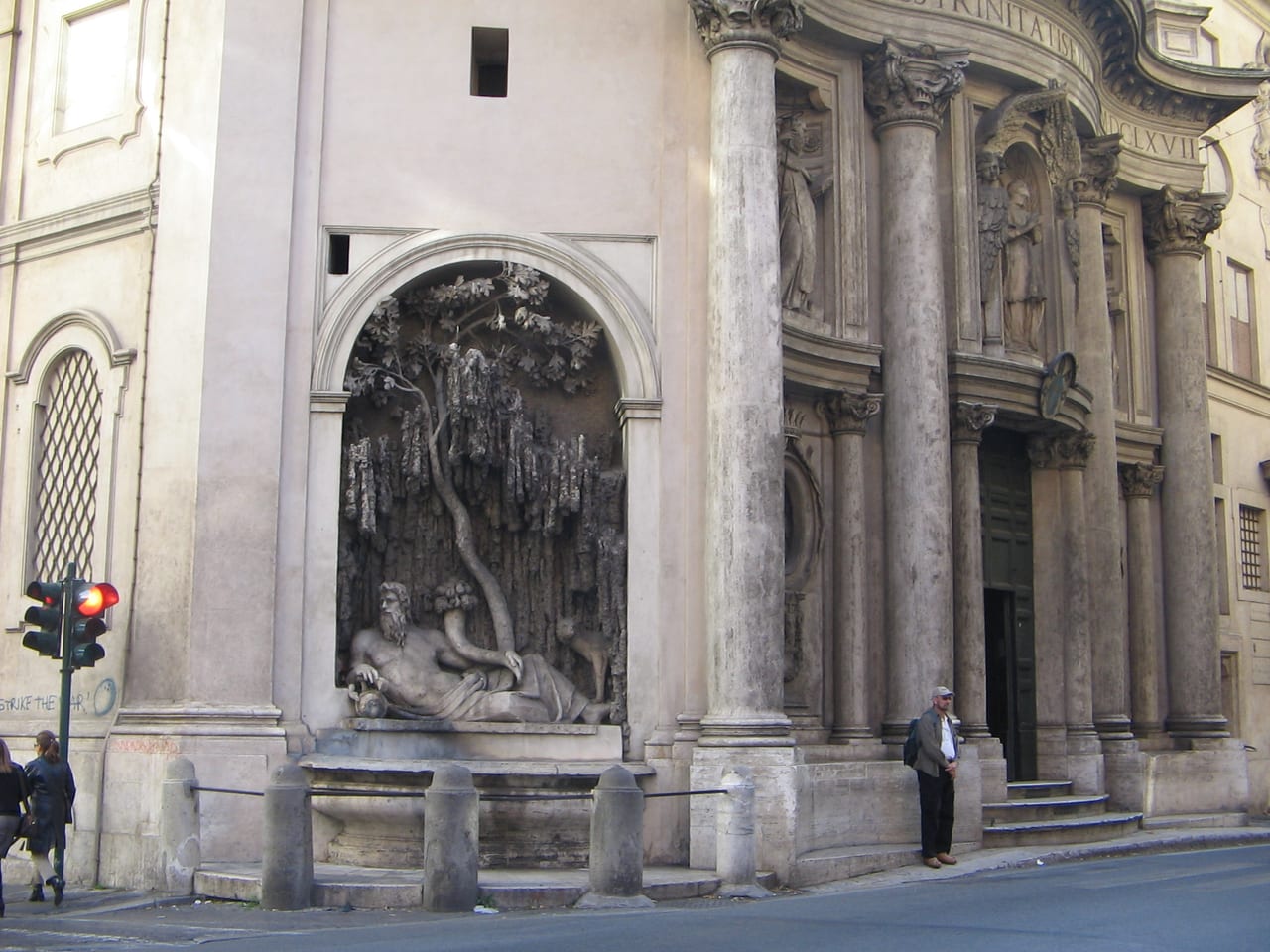
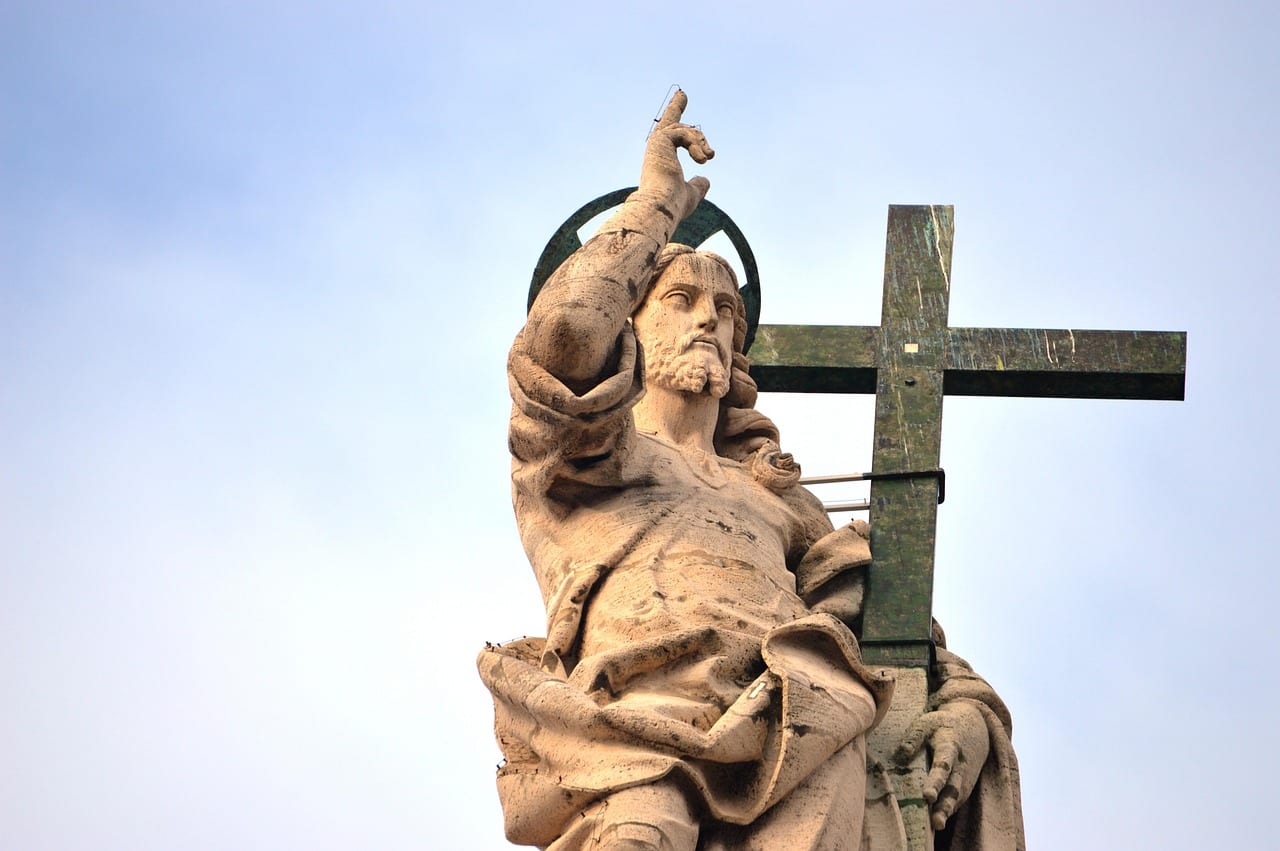
Photograph 1 of 35 of Saint Charles at the Four Fountains
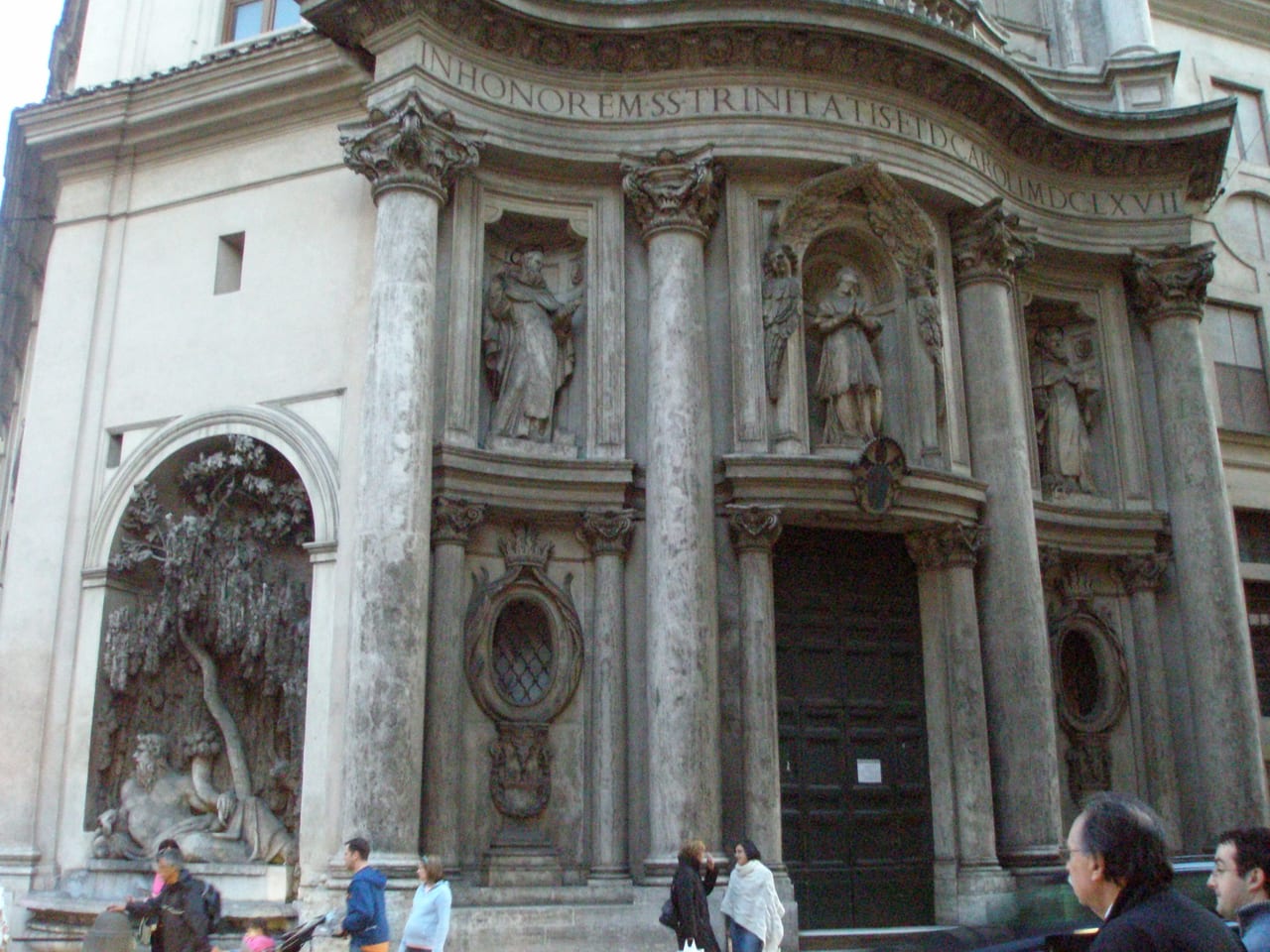
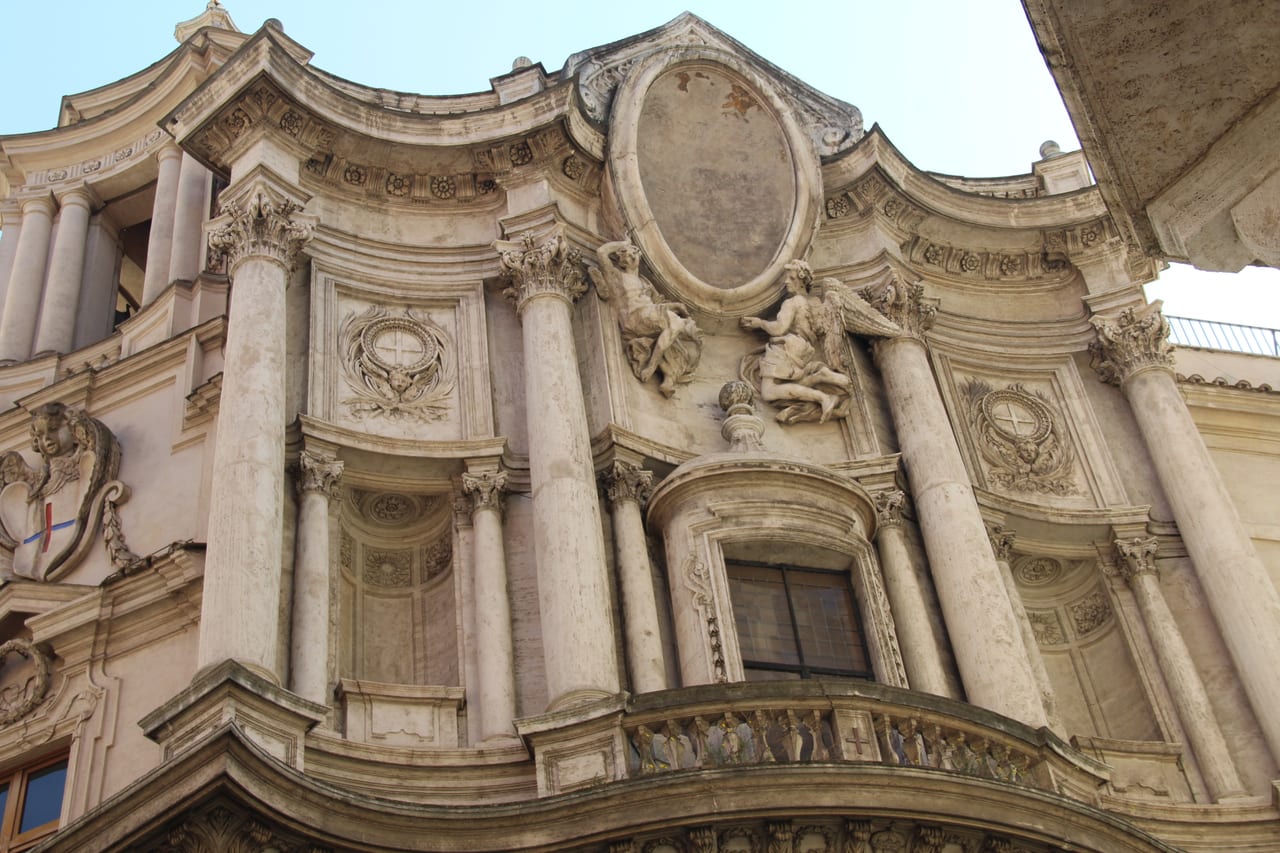
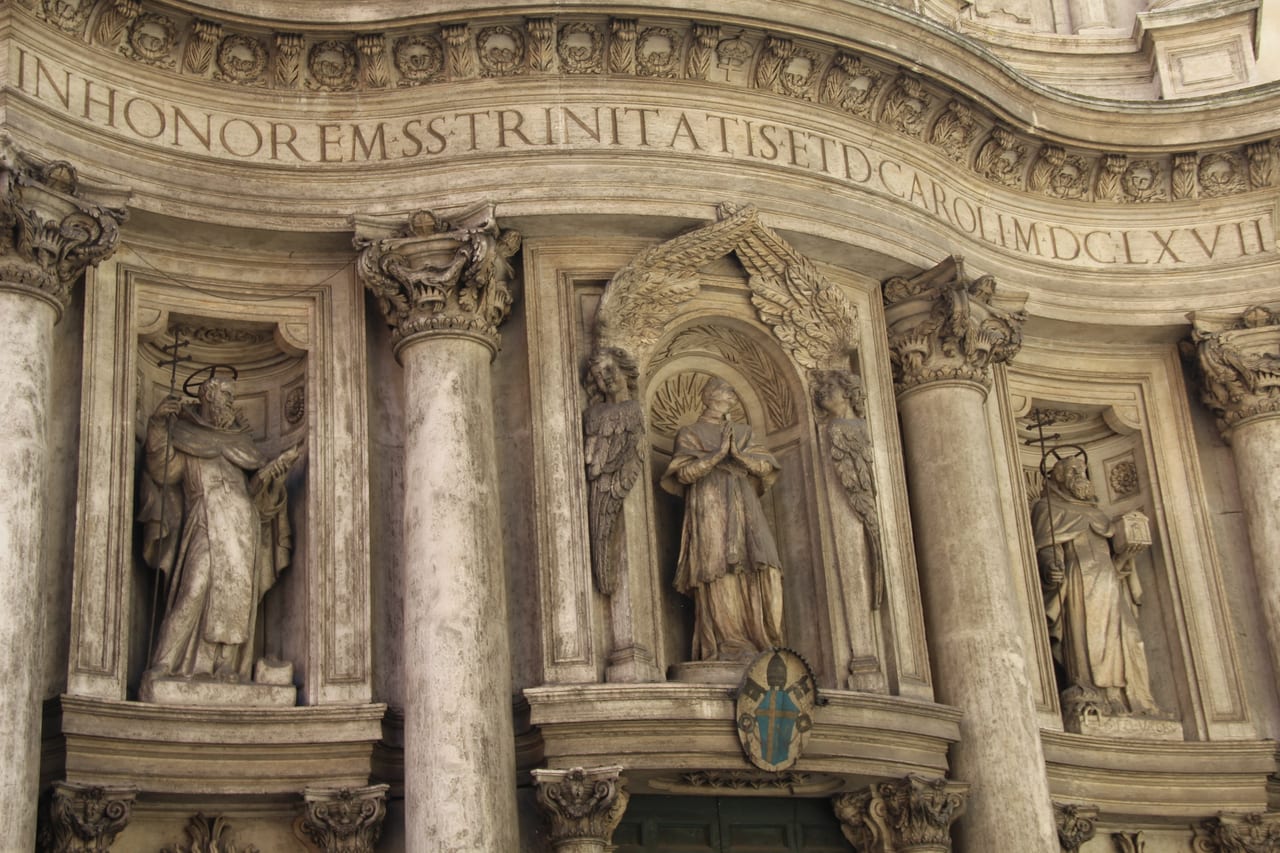
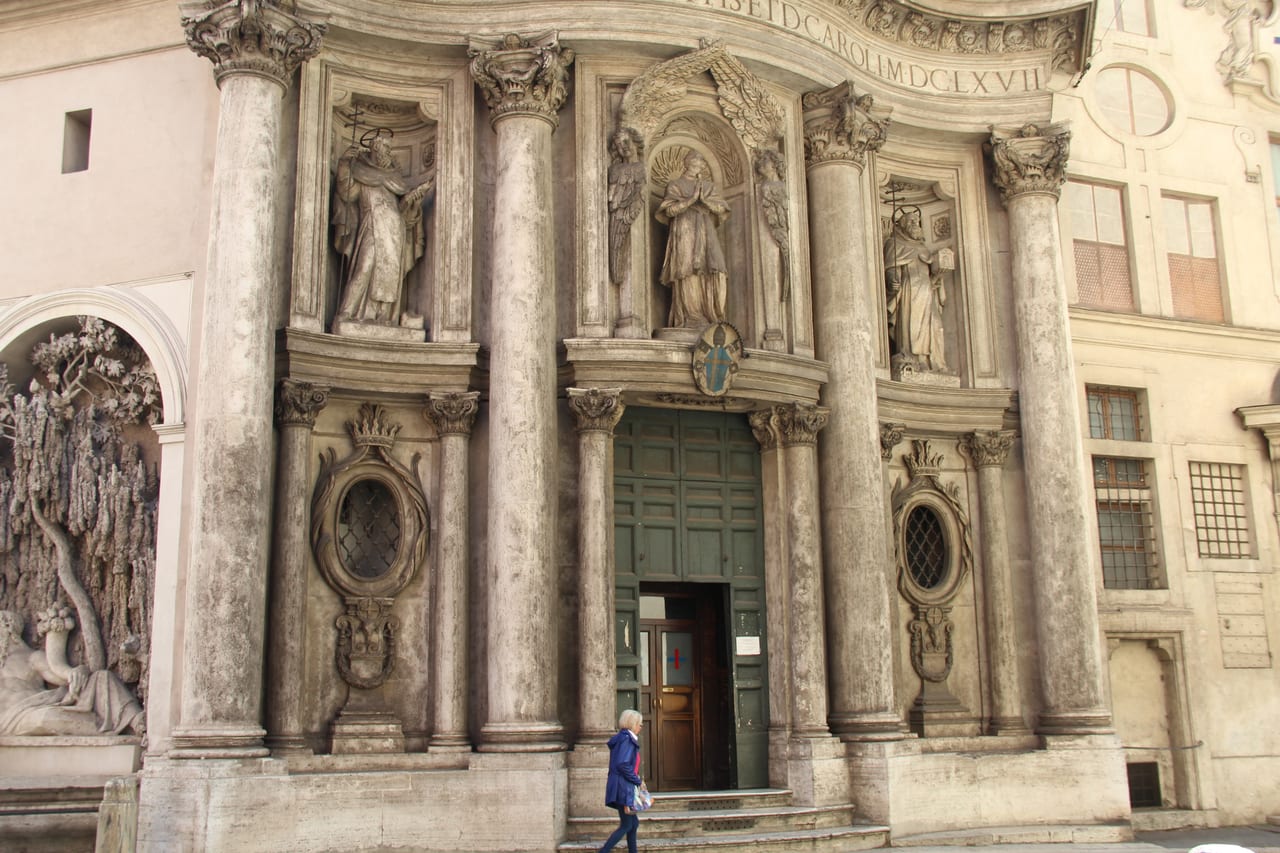
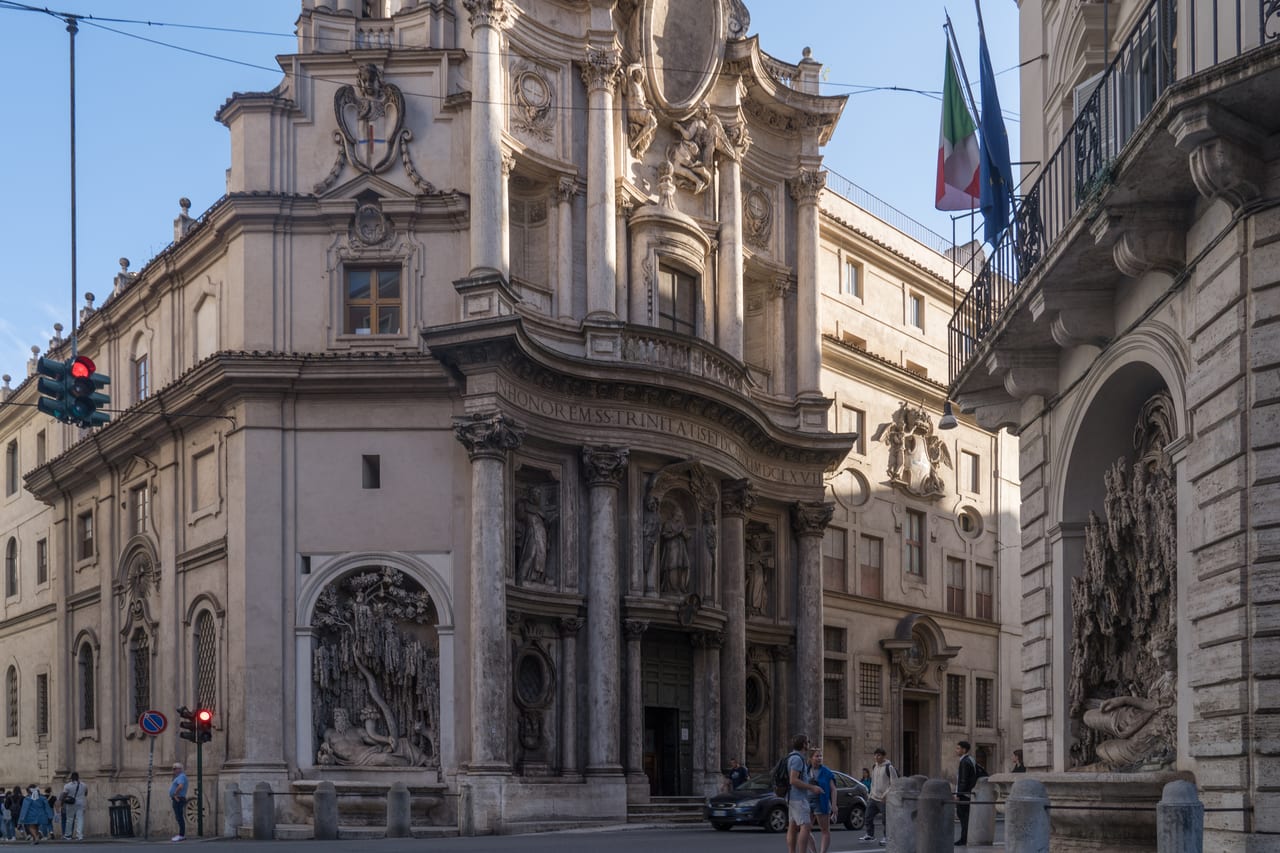
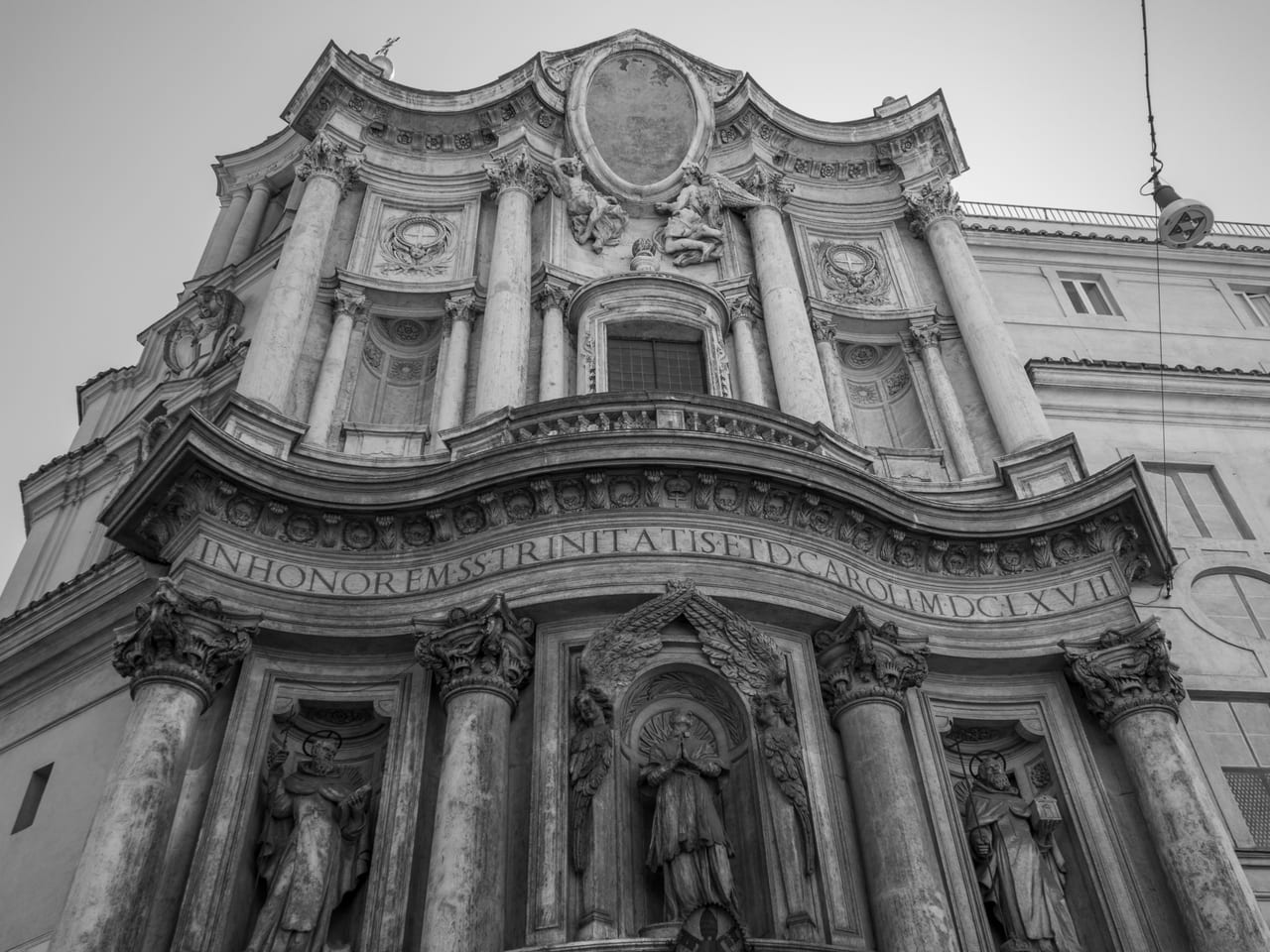
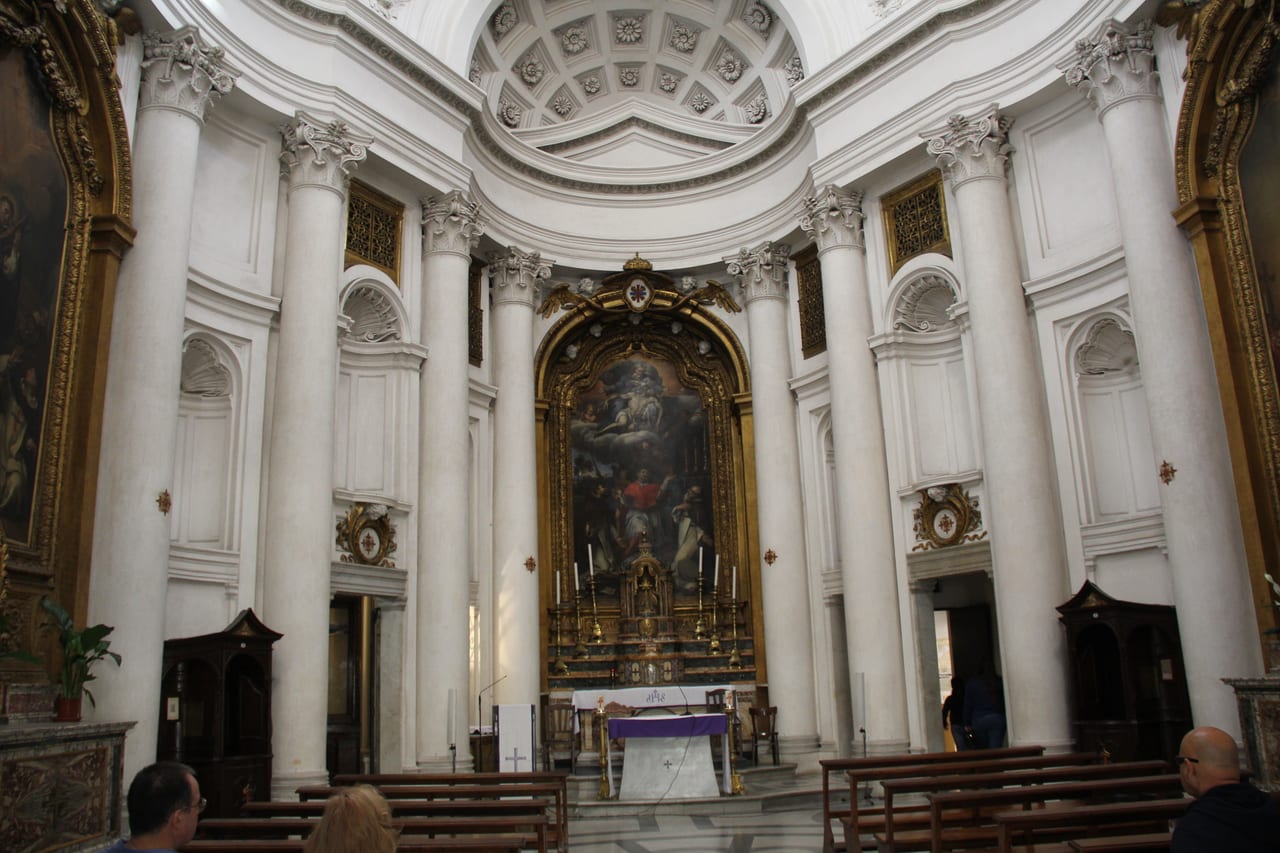
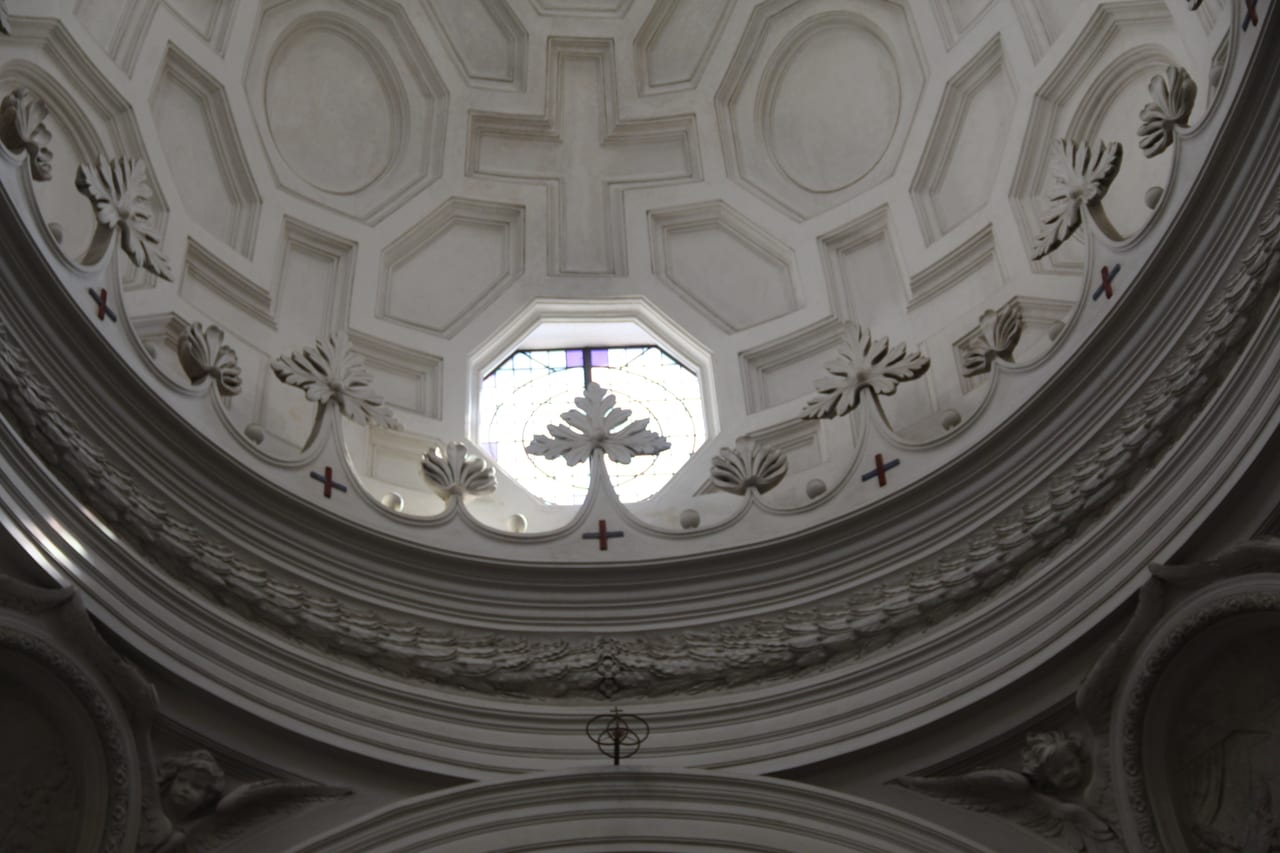
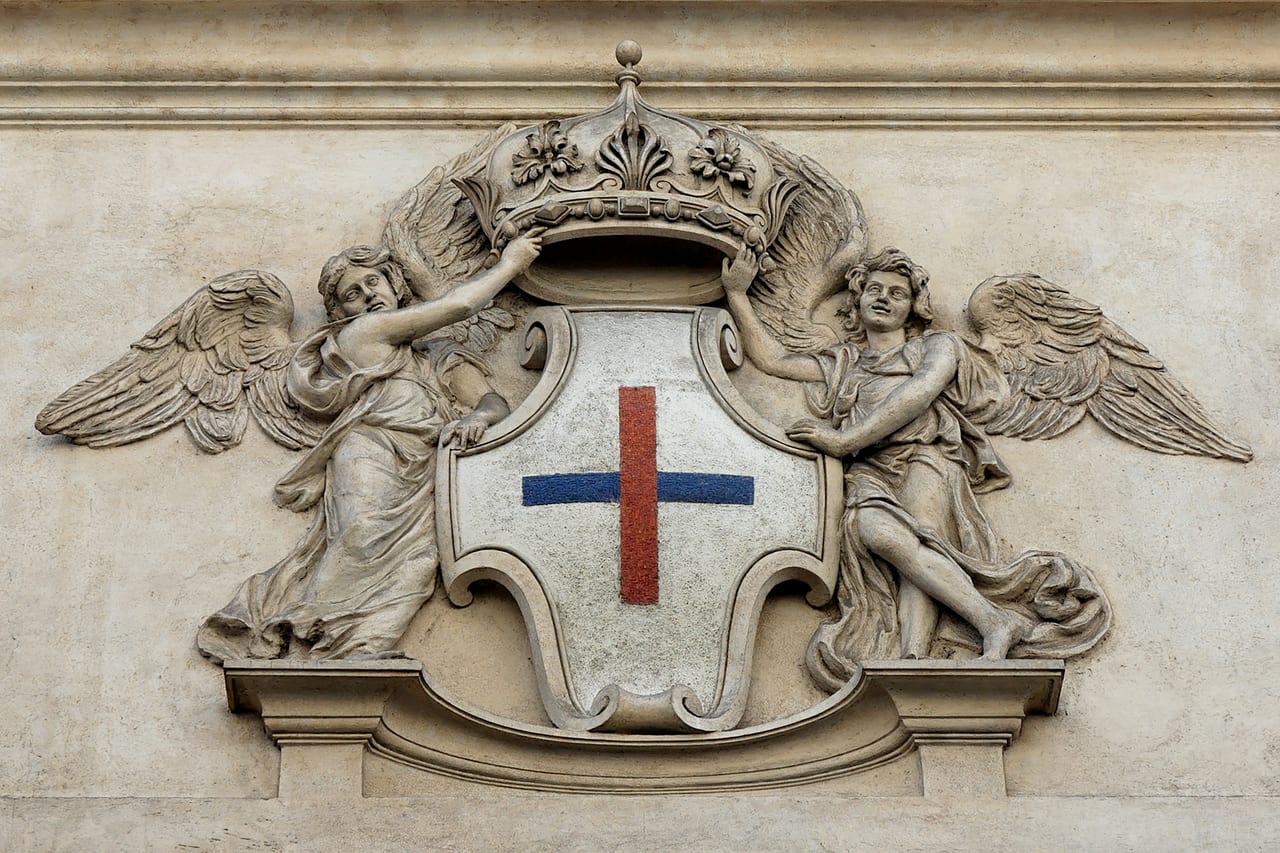
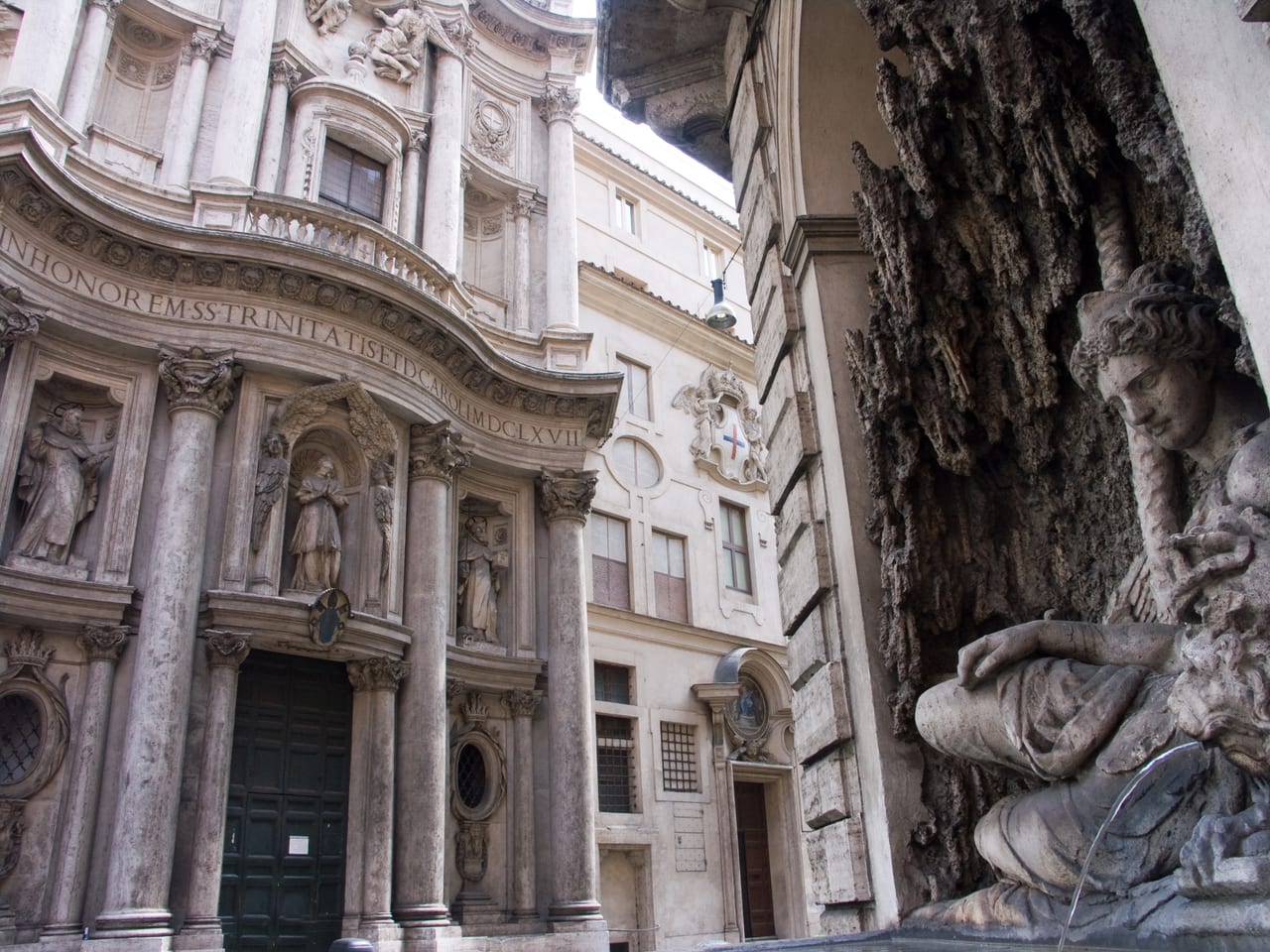
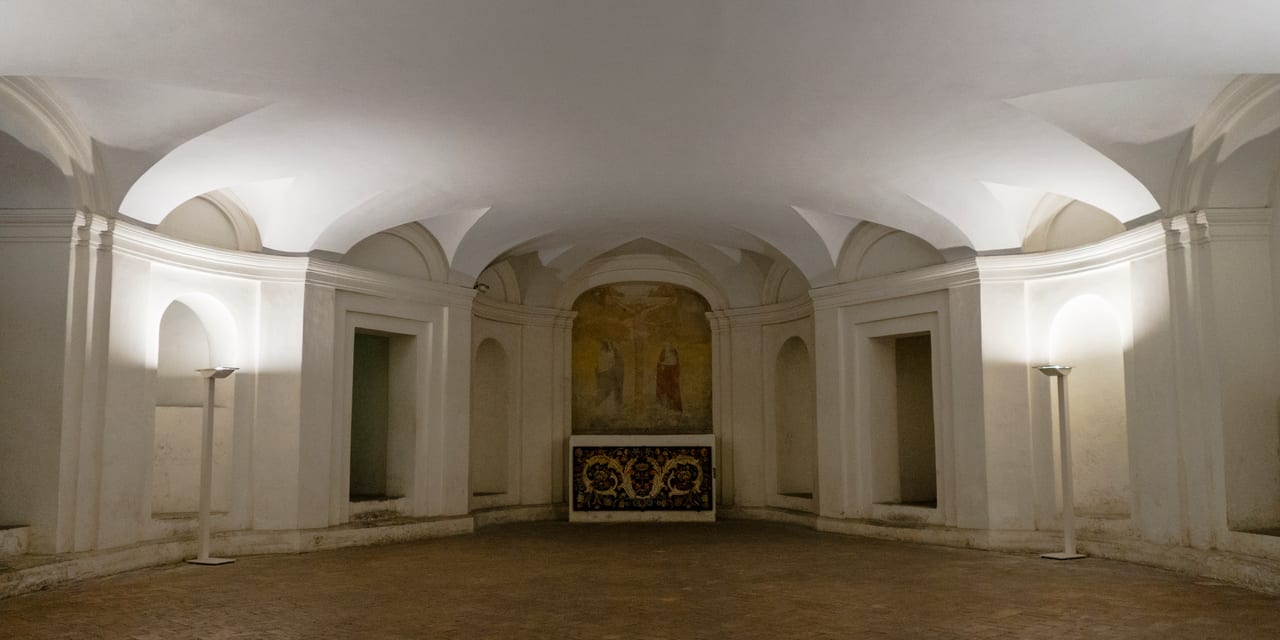
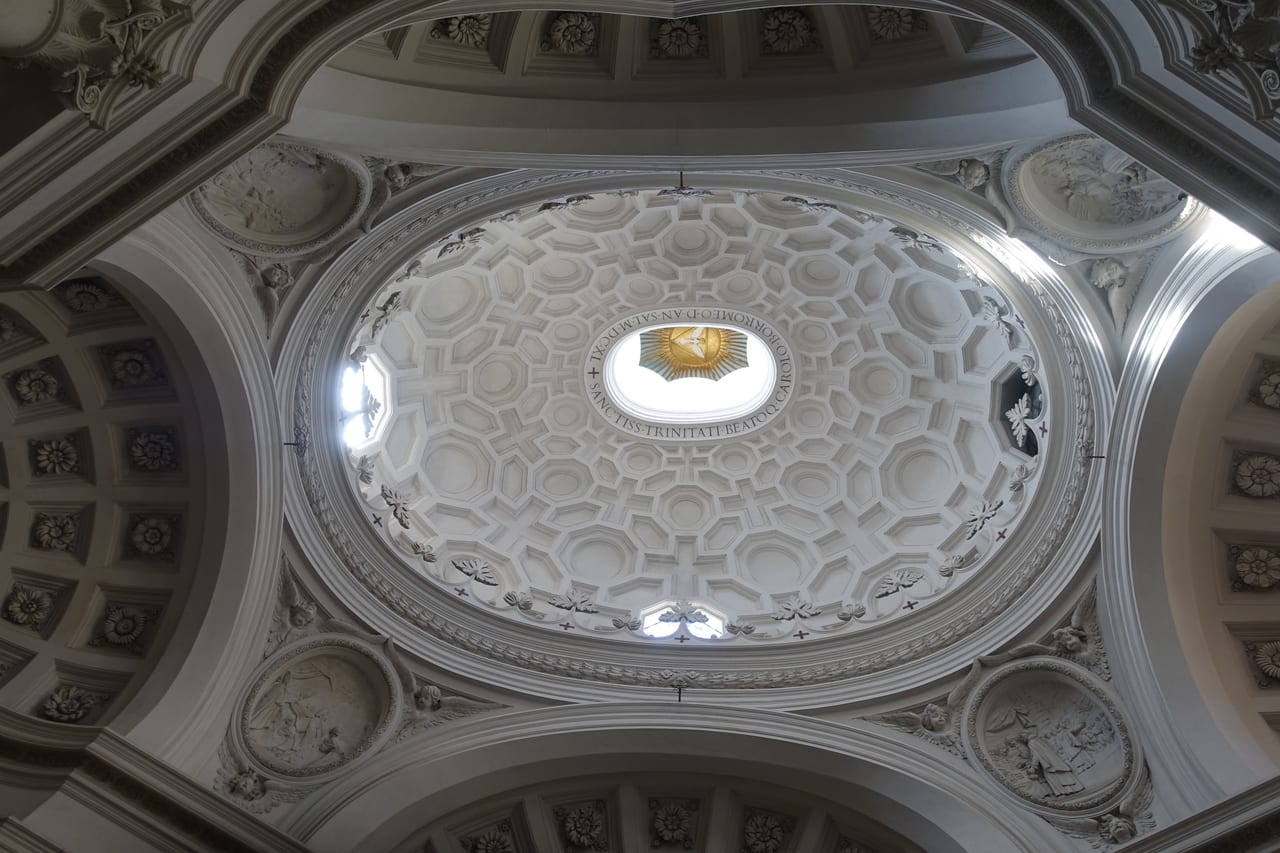
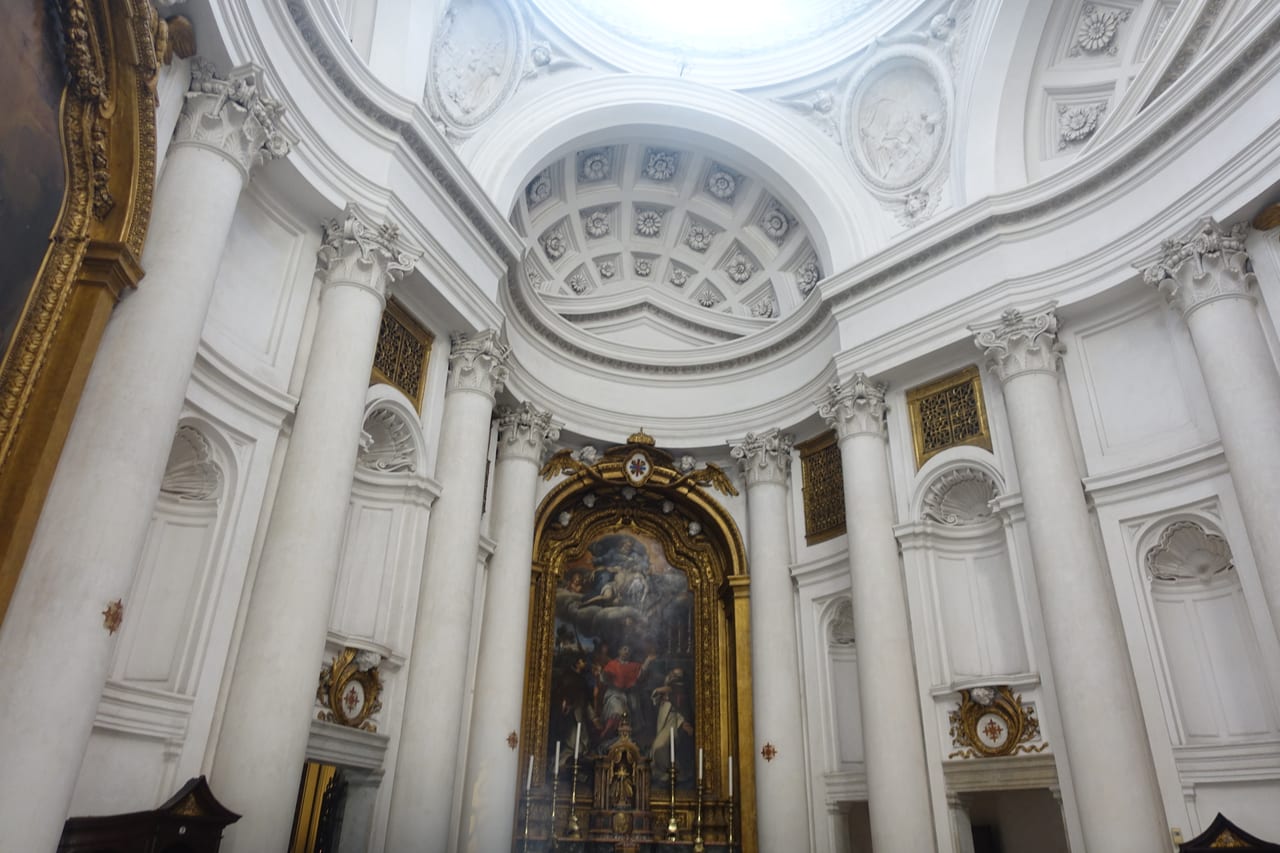
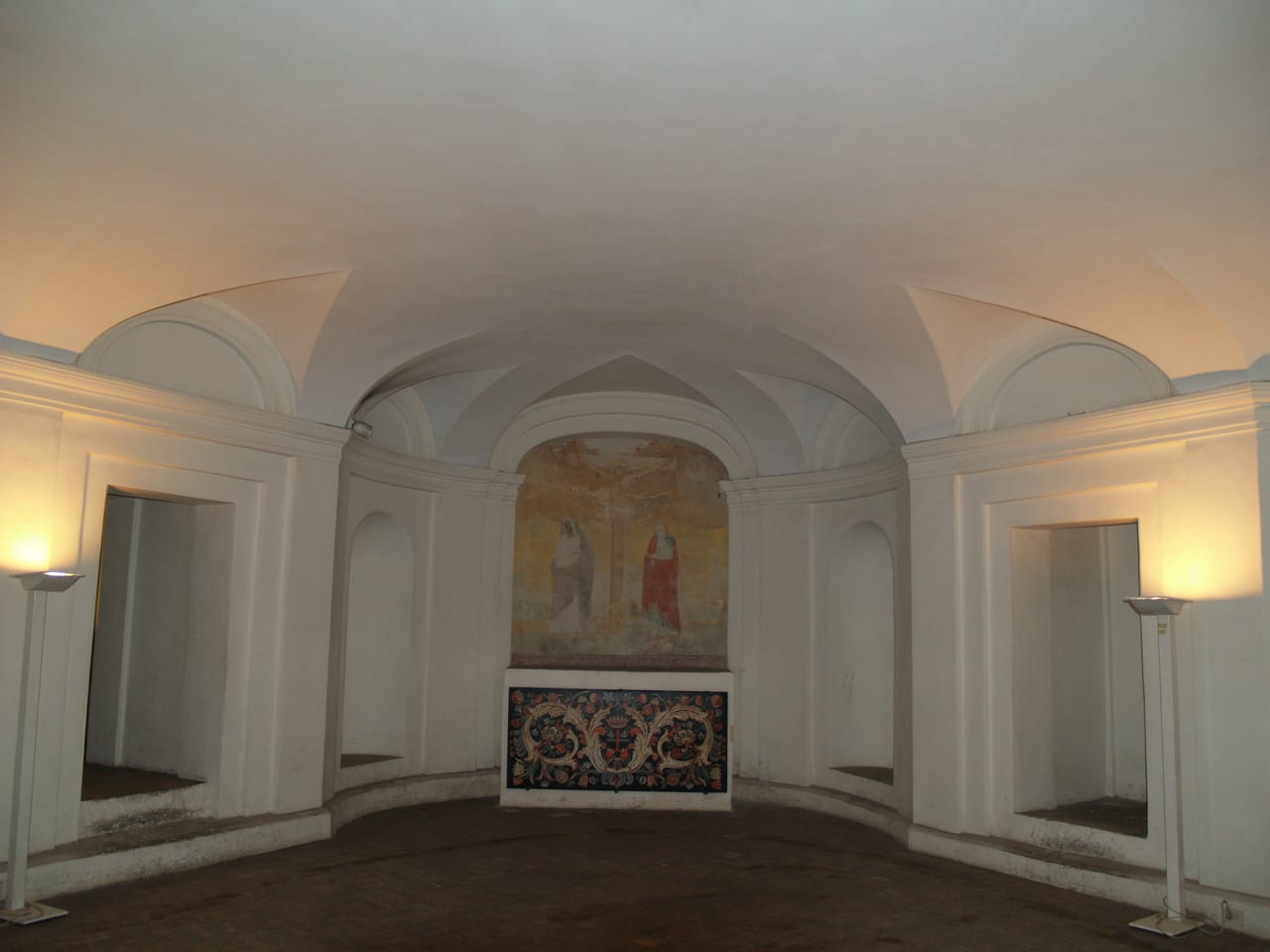
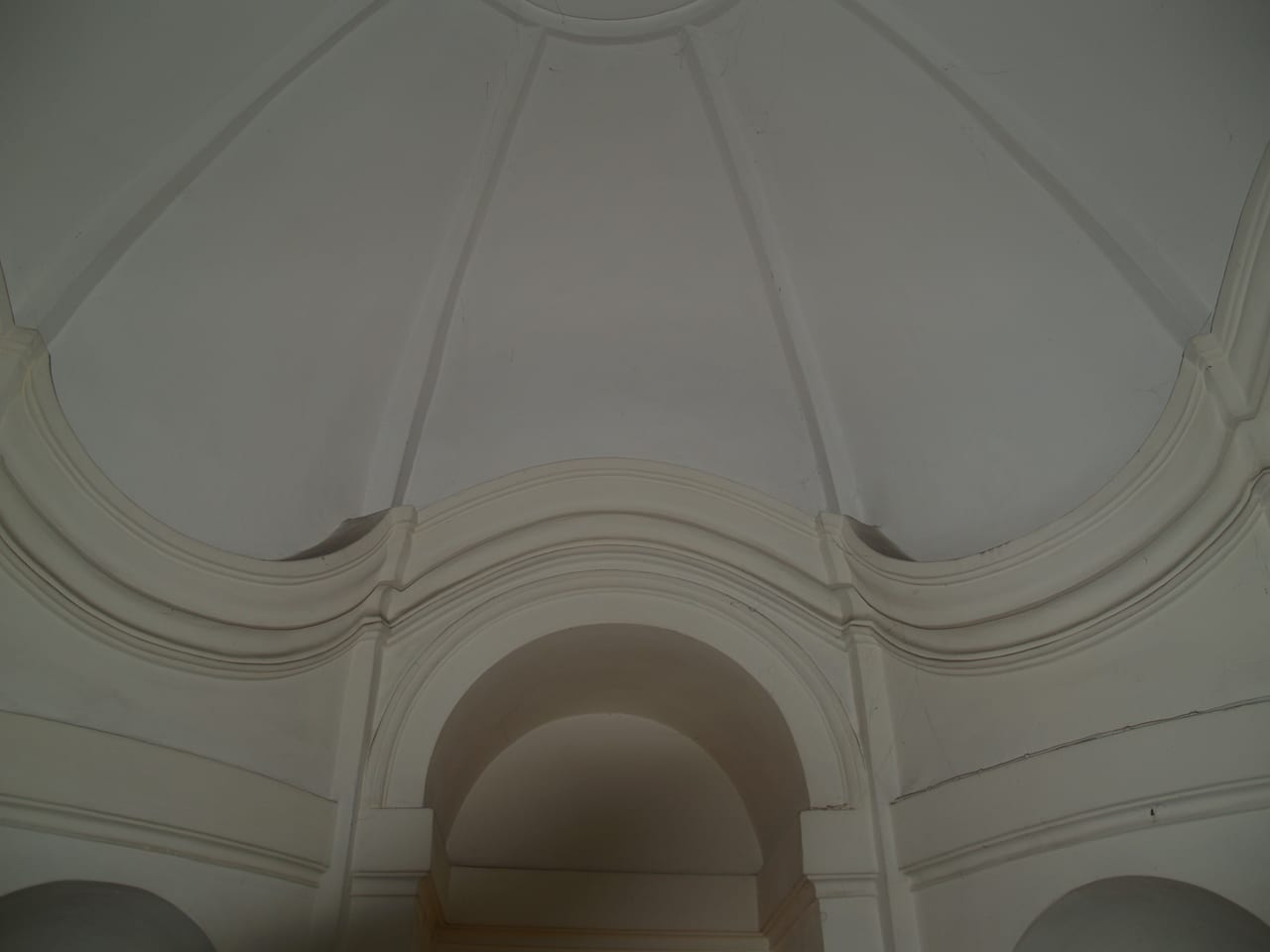
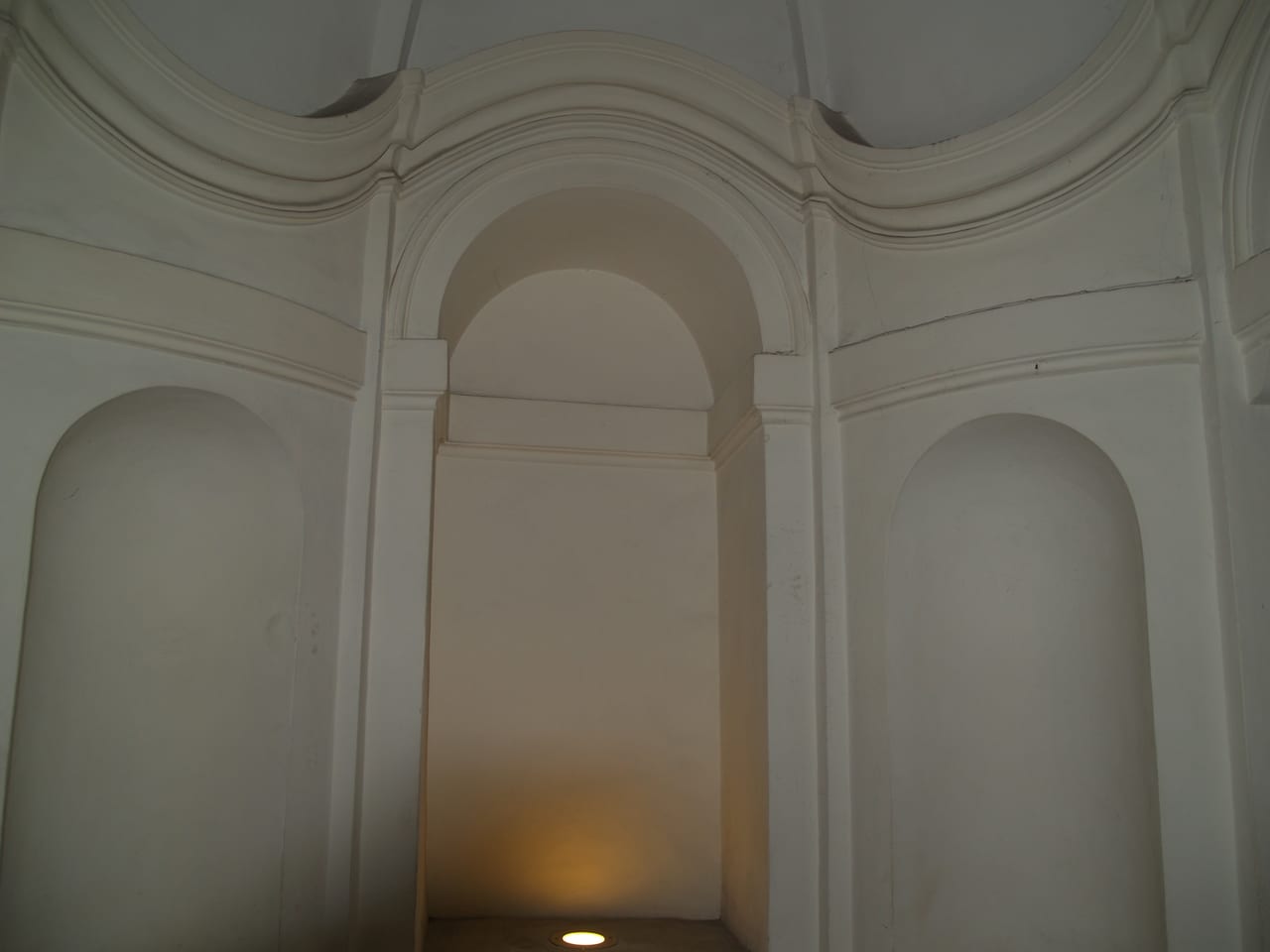
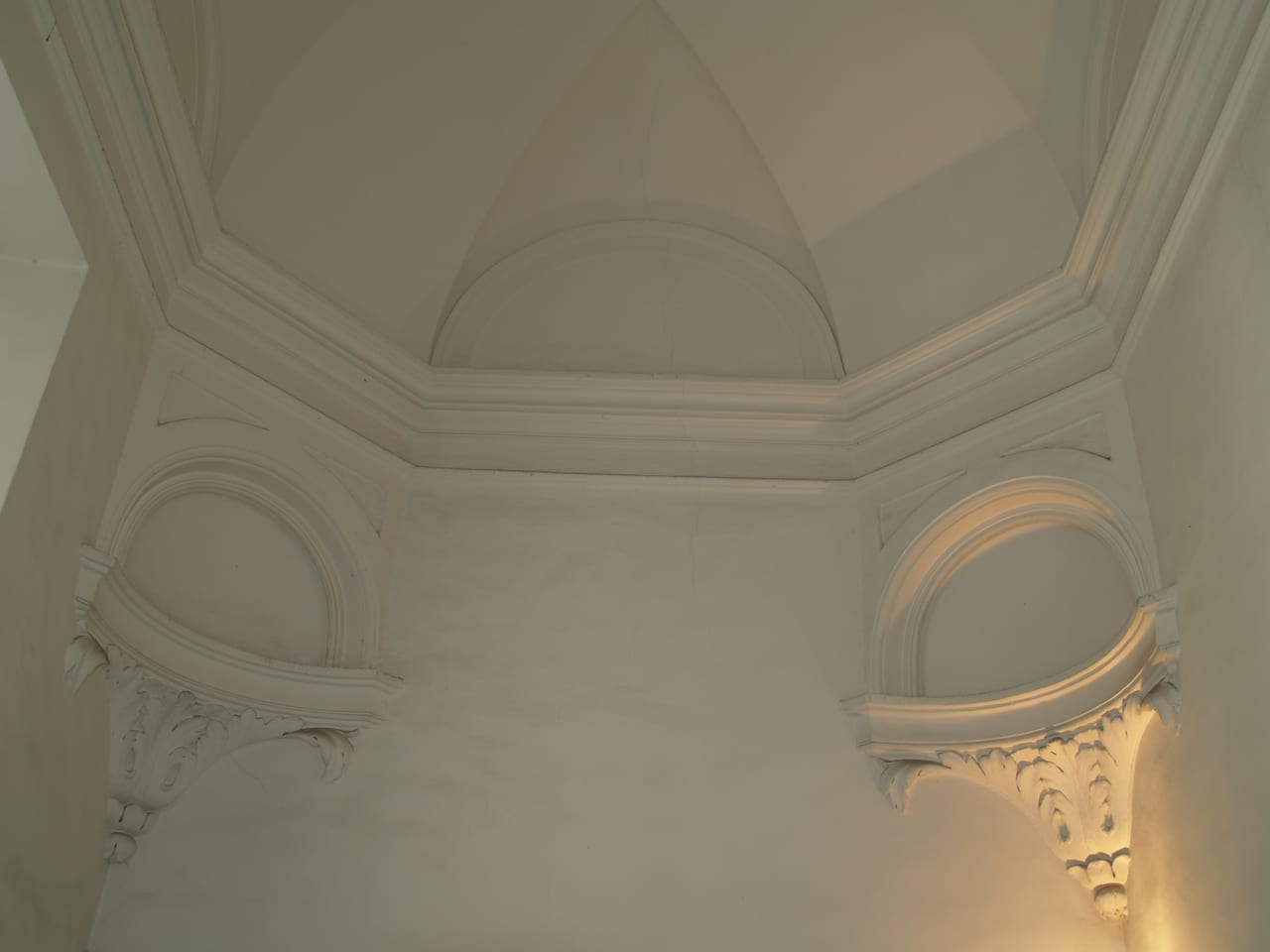
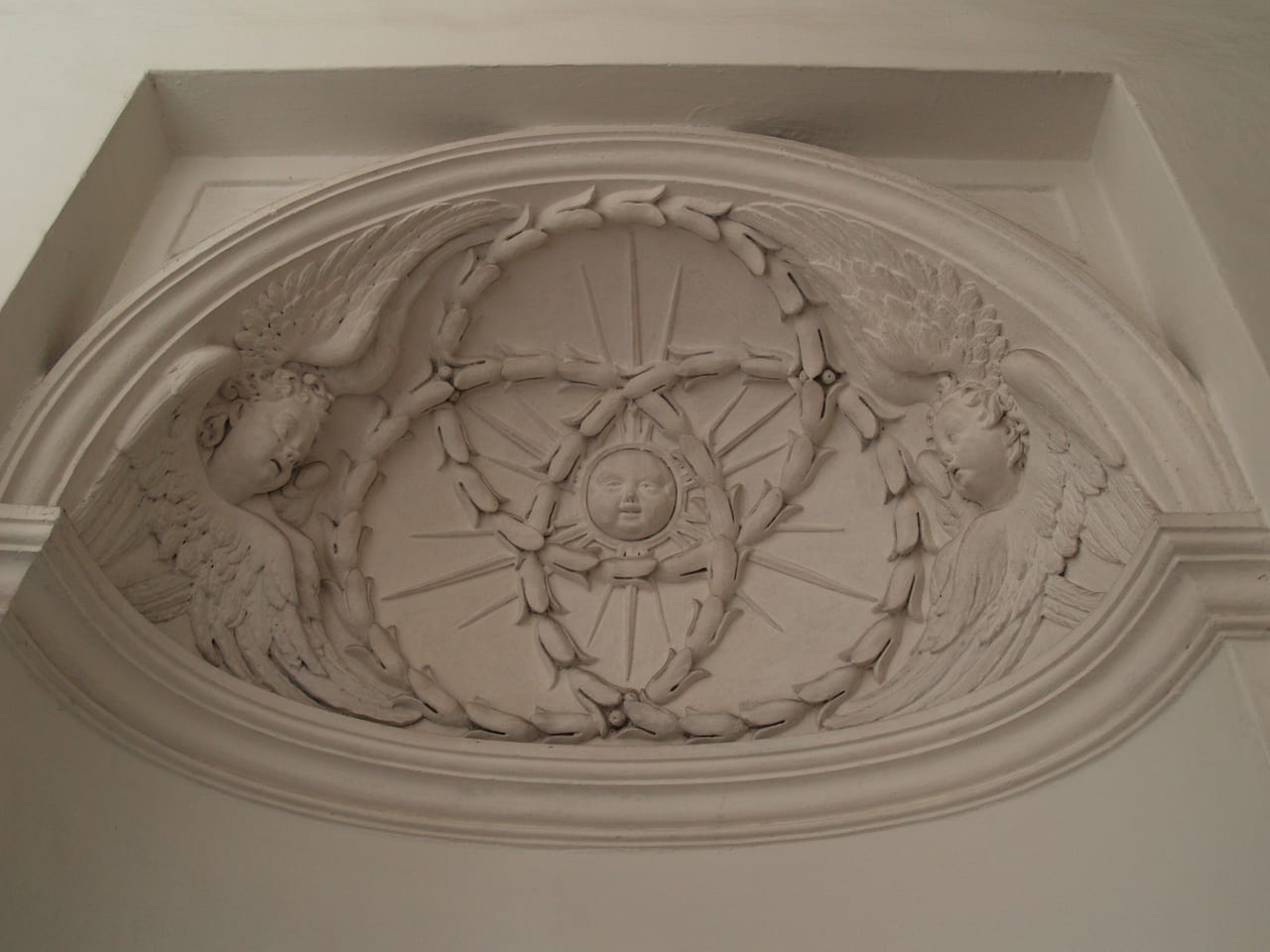
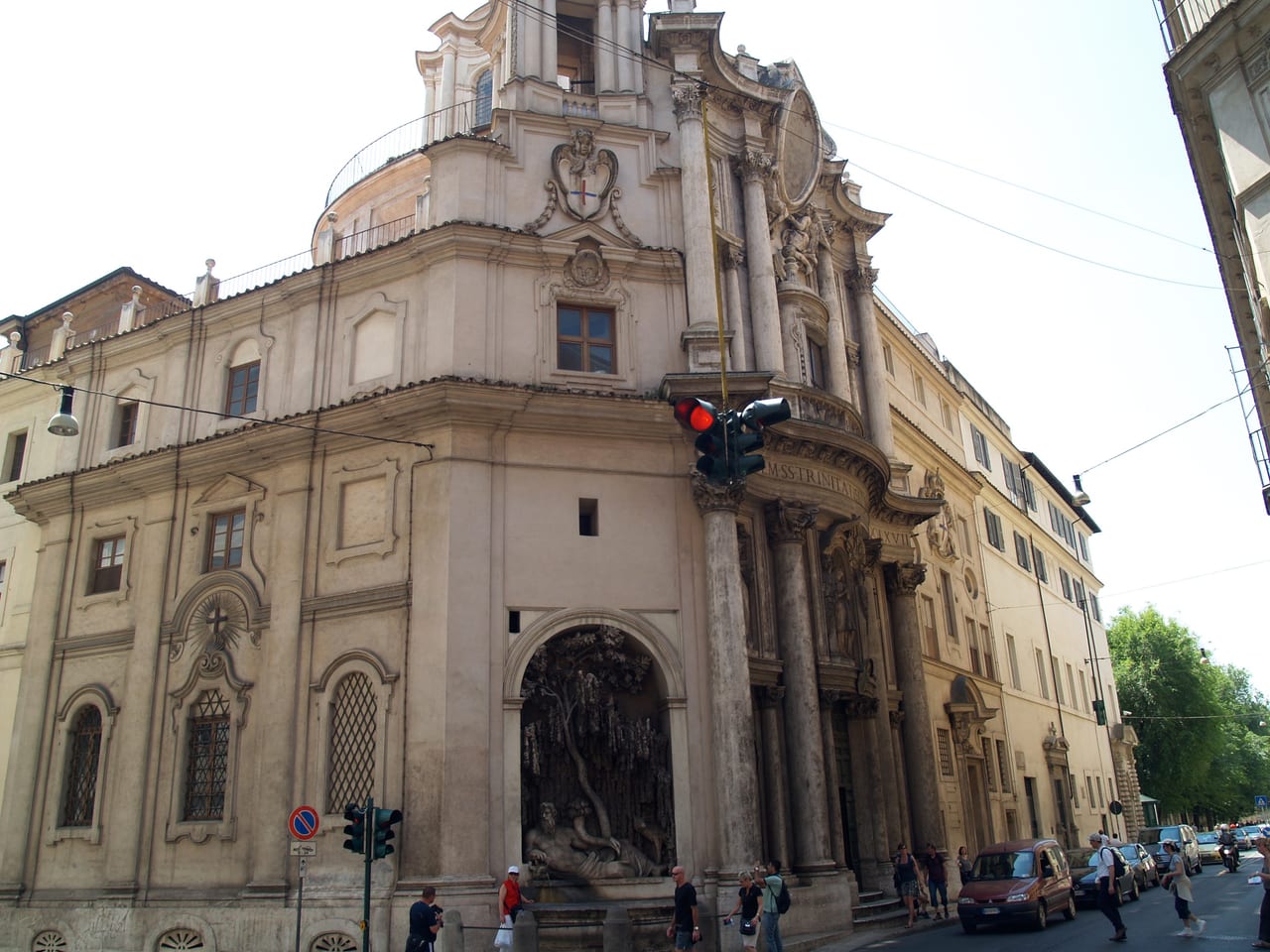
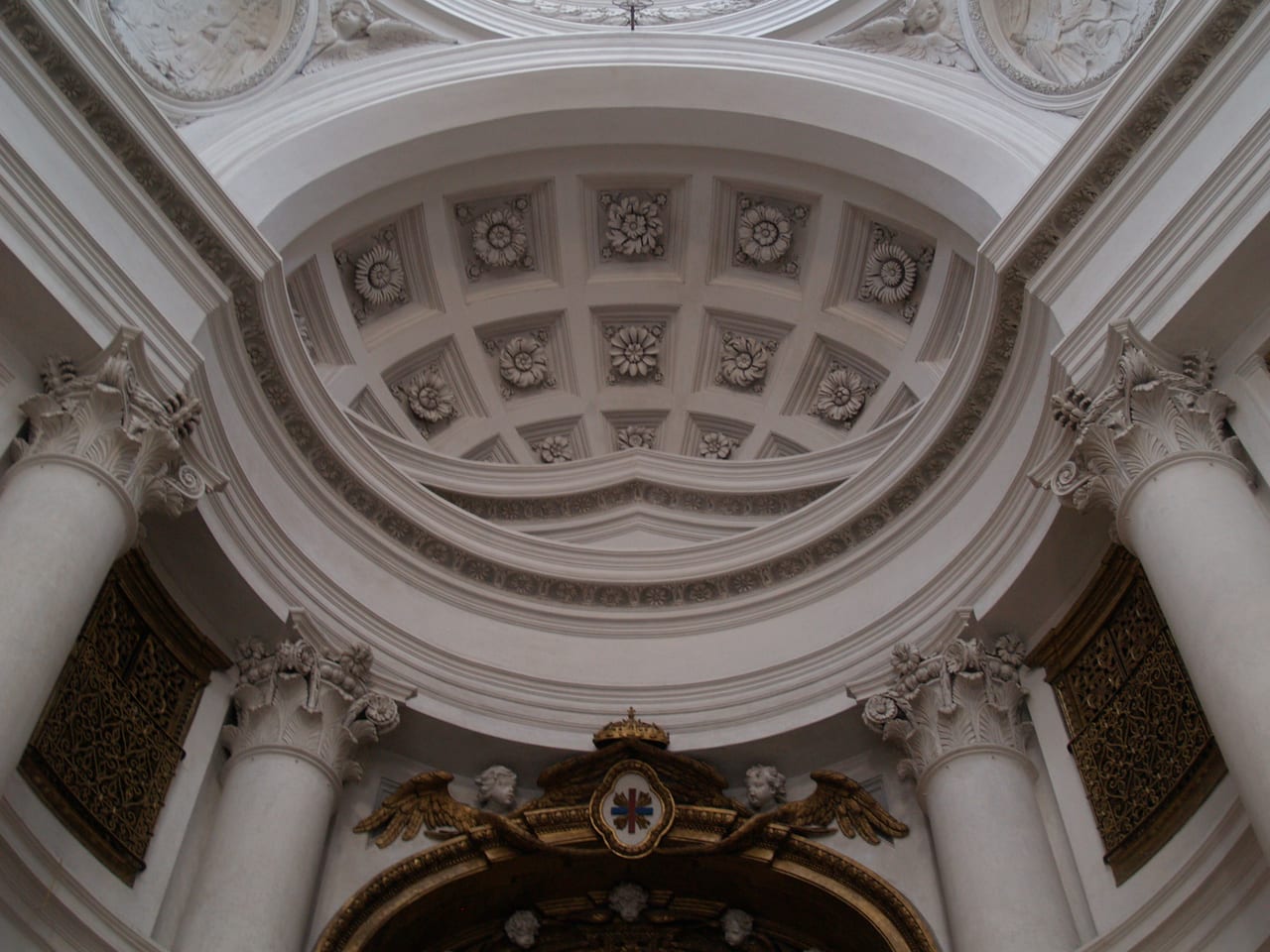
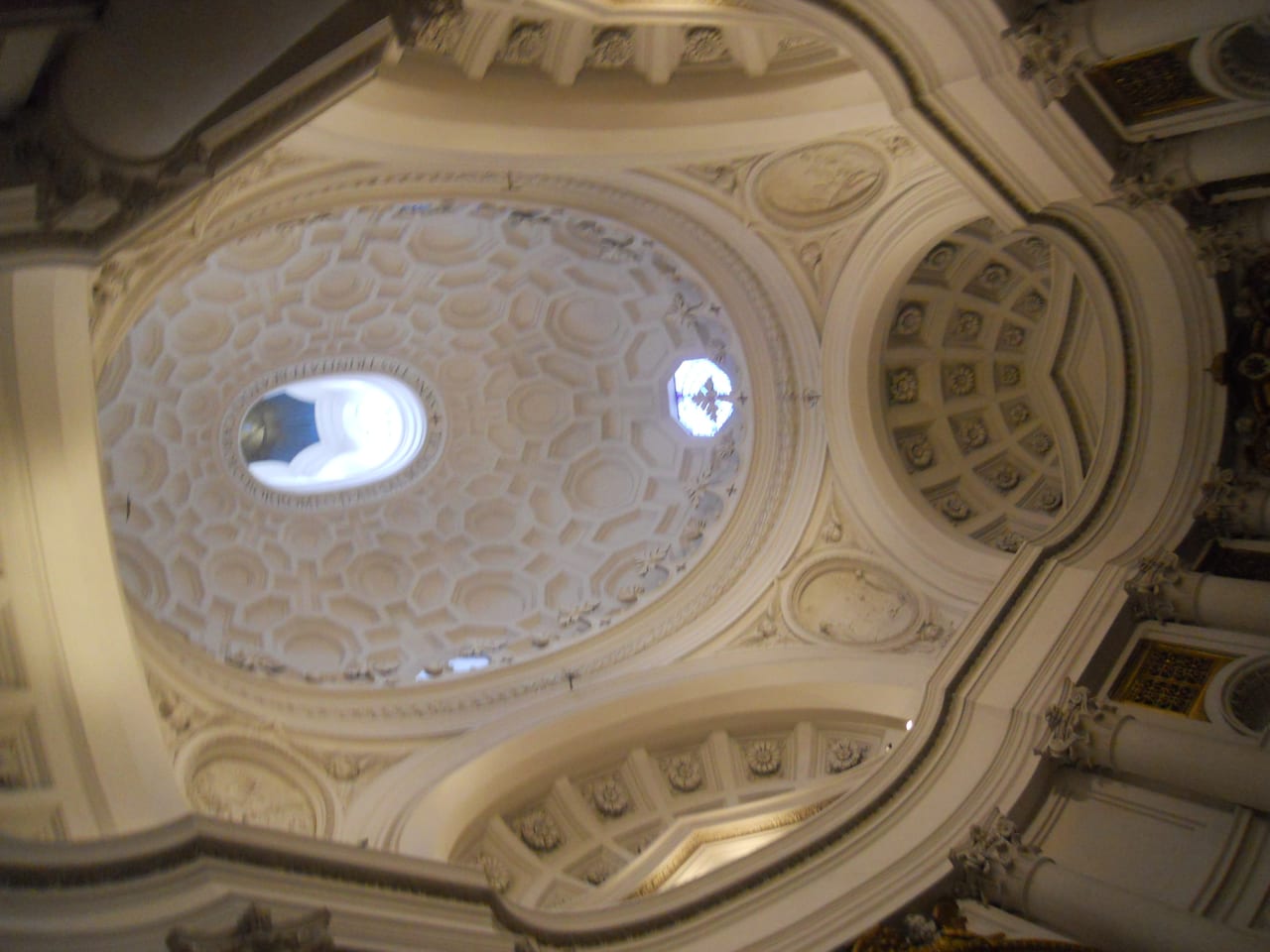
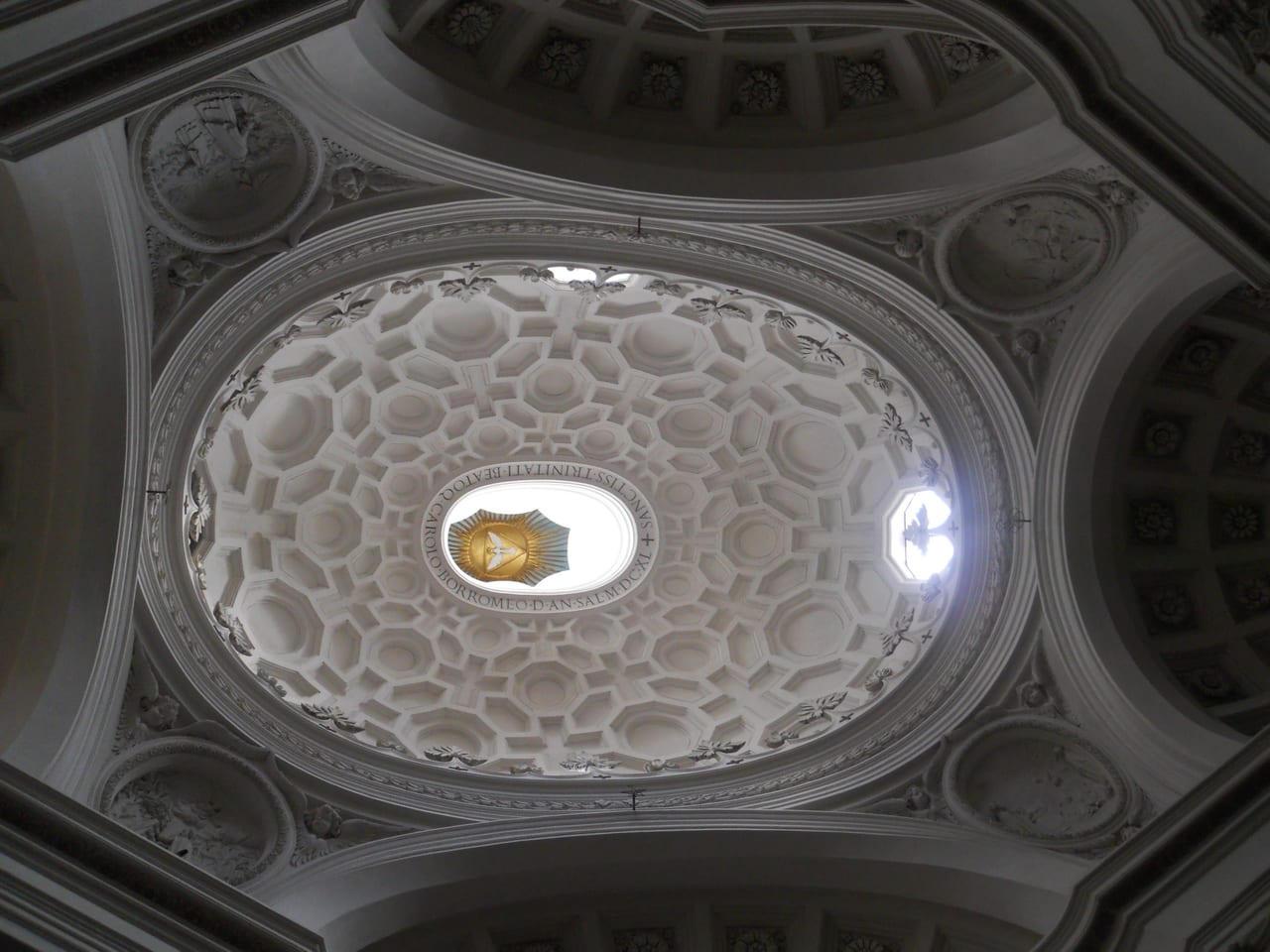
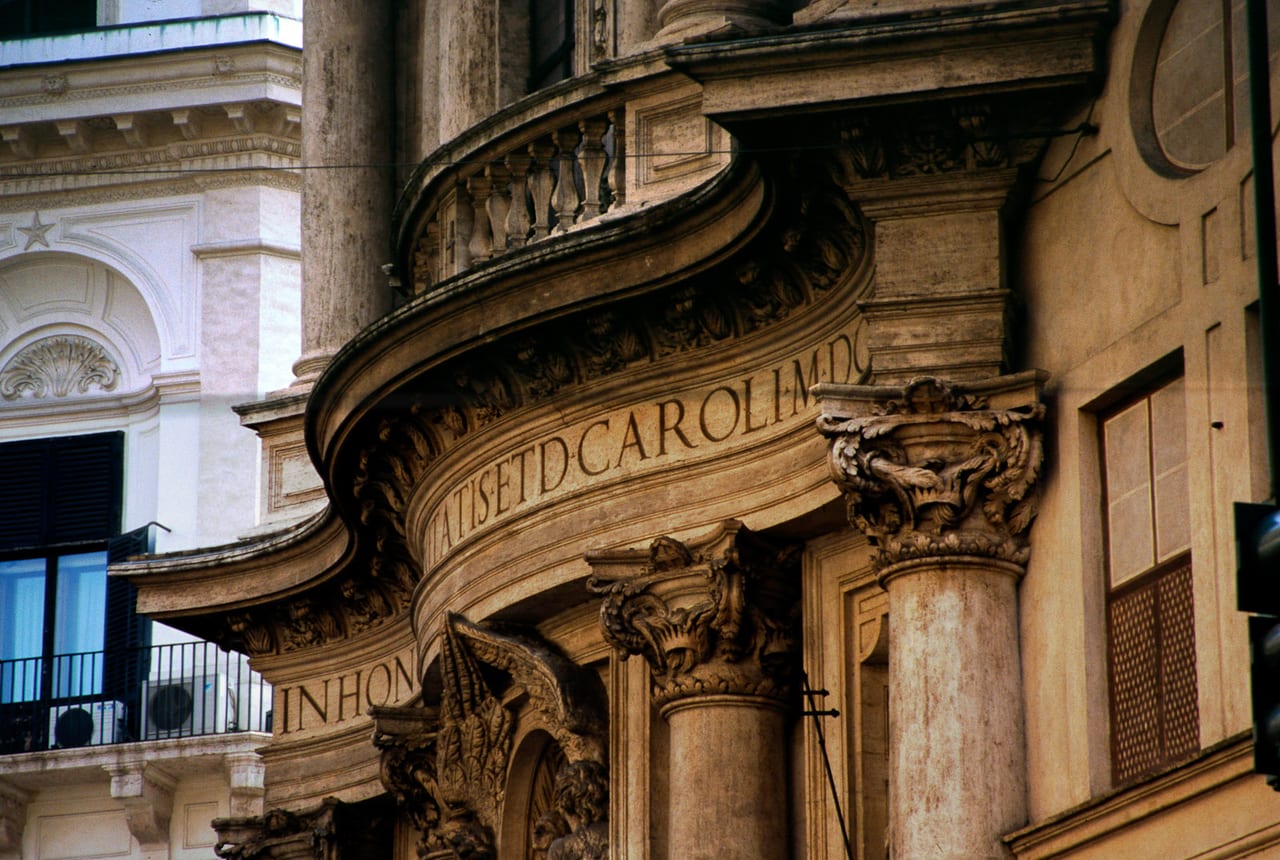
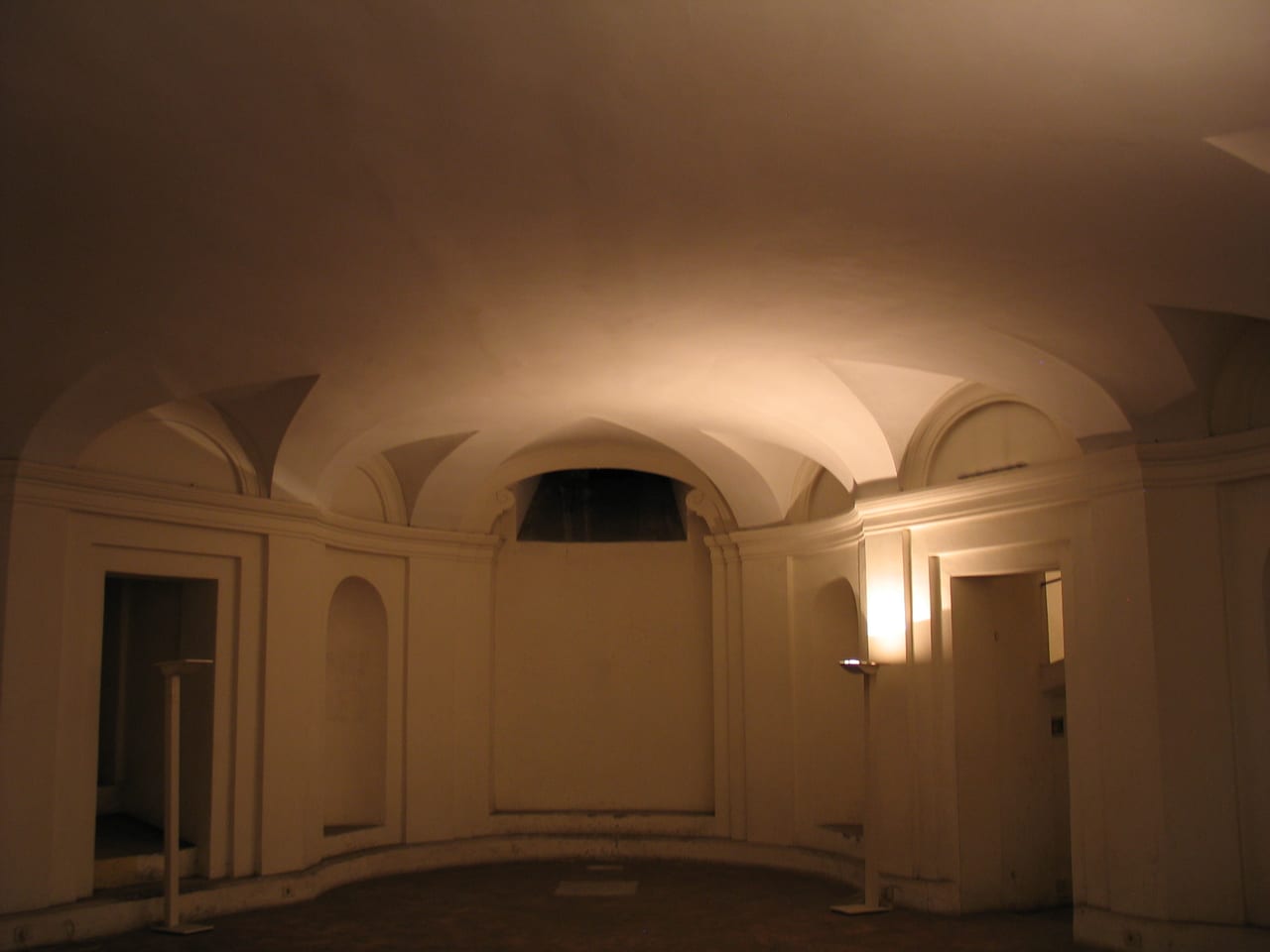
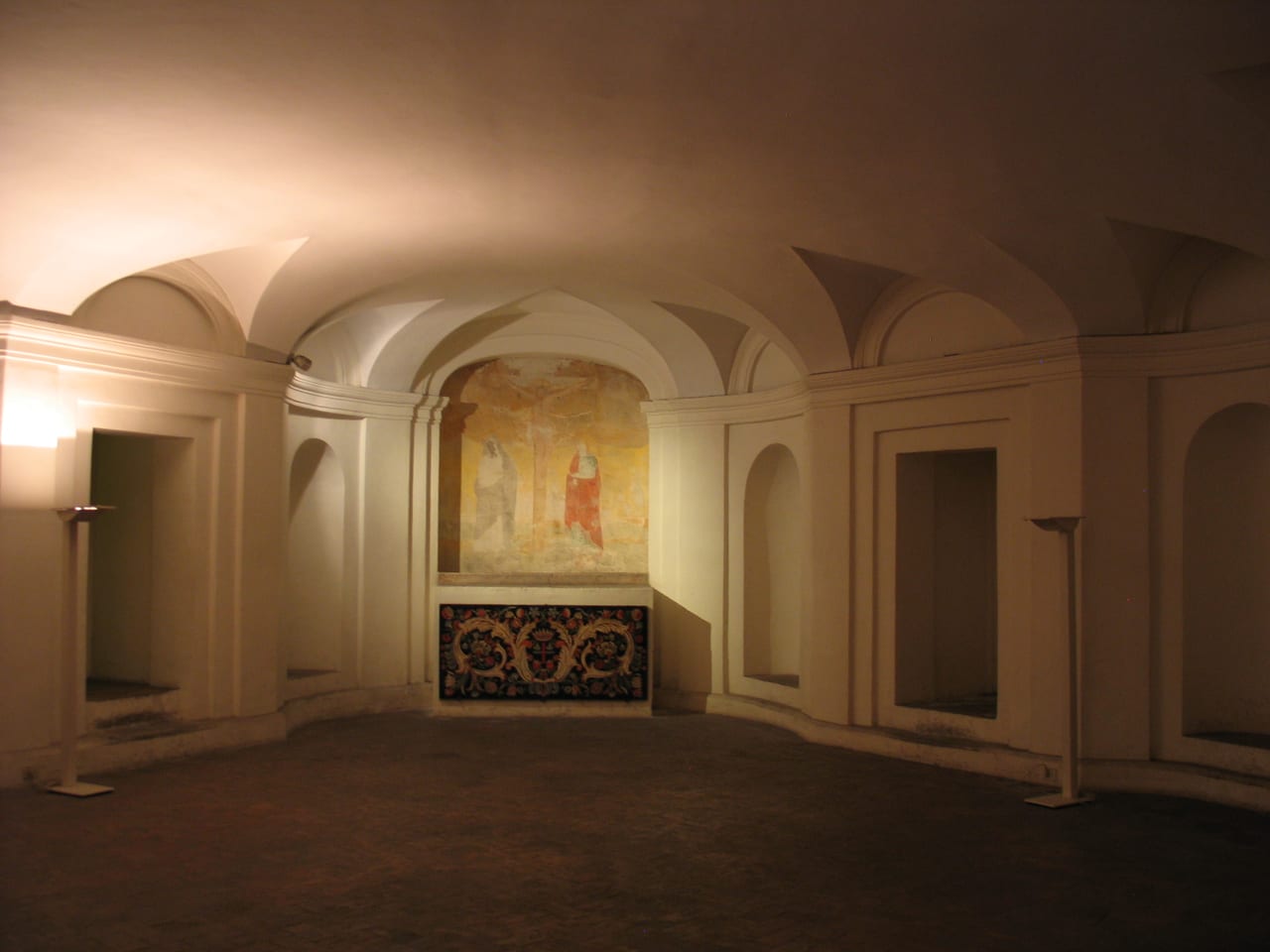
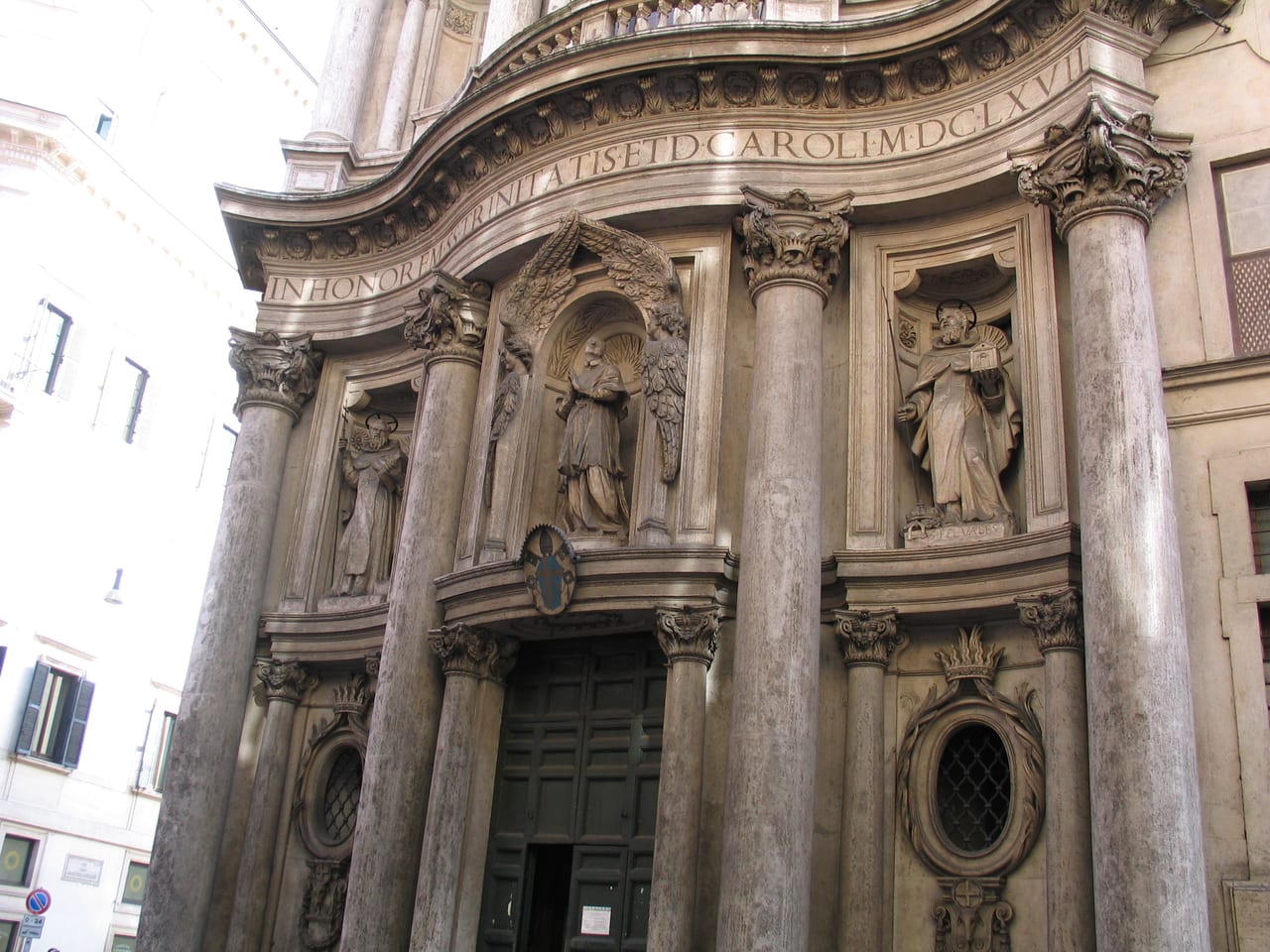
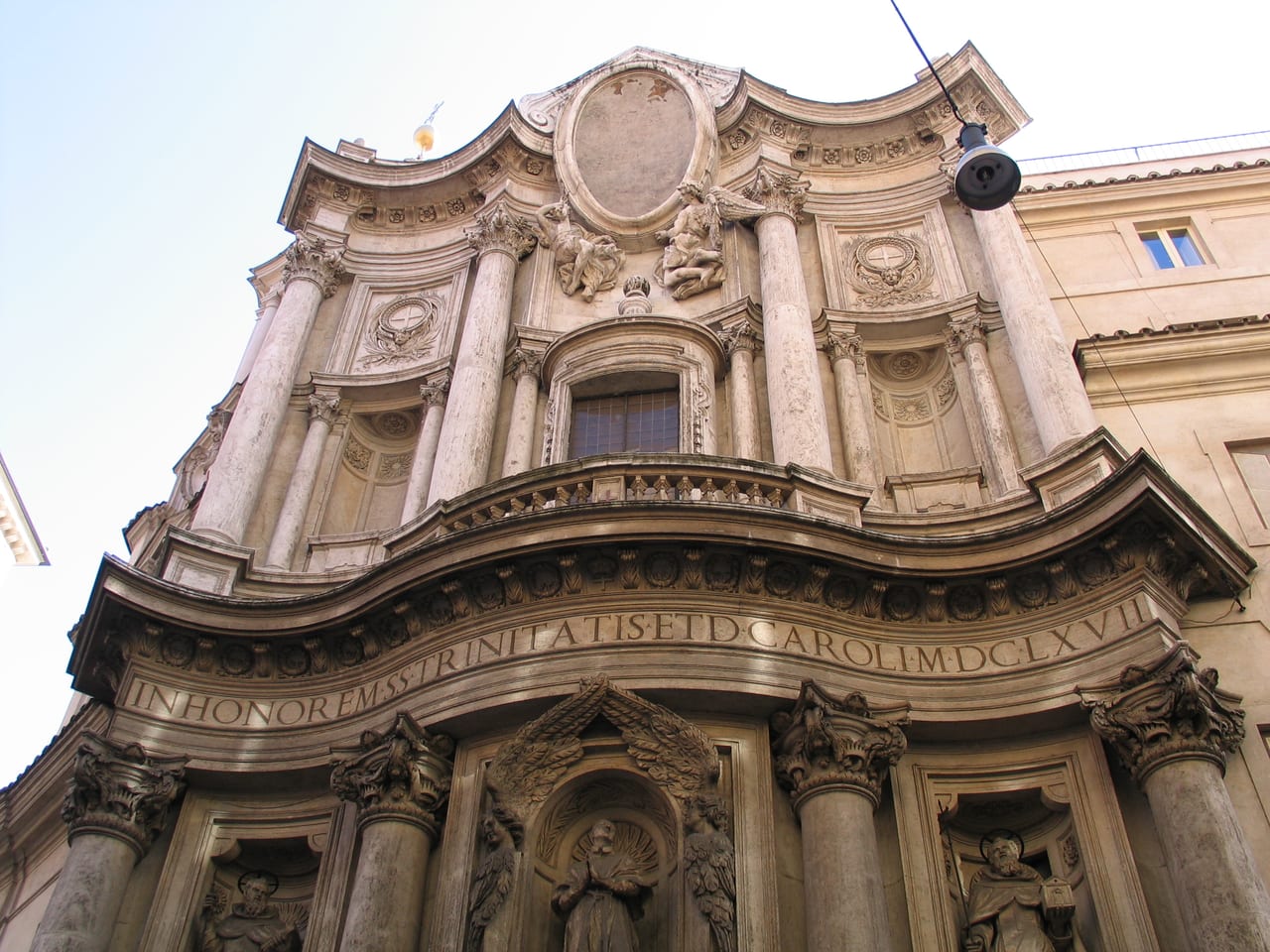
San Carlo alle Quattro Fontane belongs to a Trinitarian convent complex begun by Francesco Borromini between 1634 and 1644, on the site of an earlier chapel. The church itself was started in 1638, with funding and patronage from Cardinal Francesco Barberini. Borromini, who had arrived in Rome from the Canton of Ticino around 1620 and worked on St Peter’s Baldacchino and Palazzo Barberini, designed the complex for limited means and an exceptionally tight site. His preference for plaster and stucco turned restraint into invention. The church’s fluid plan combines an elongated Greek cross with an ellipse, while its undulating walls alternate between projections and recesses. An oval brick dome carries a honeycomb pattern of crosses, hexagons and octagons, lit by windows and a lantern; its centre shows the Holy Spirit within the Trinity’s triangle. The two-tiered façade plays concave against convex surfaces, with Antonio Raggi’s statue of Saint Charles Borromeo above the portal. Borromini worked on it until his death in 1667; his nephew Bernardo continued the design from 1670 to 1680. The complex is Italian national heritage. Its crypt, paintings, and surviving Trinitarian motifs extend the architectural concept, while later echoes appeared at Gubbio and in Mario Botta’s temporary 1999 Lugano reconstruction.
At a glance
- Built
- 1638
- Architect
- Francesco Borromini
- Style
- baroque architecture
- Heritage
- Italian national heritage
Ways to explore Saint Charles at the Four Fountains
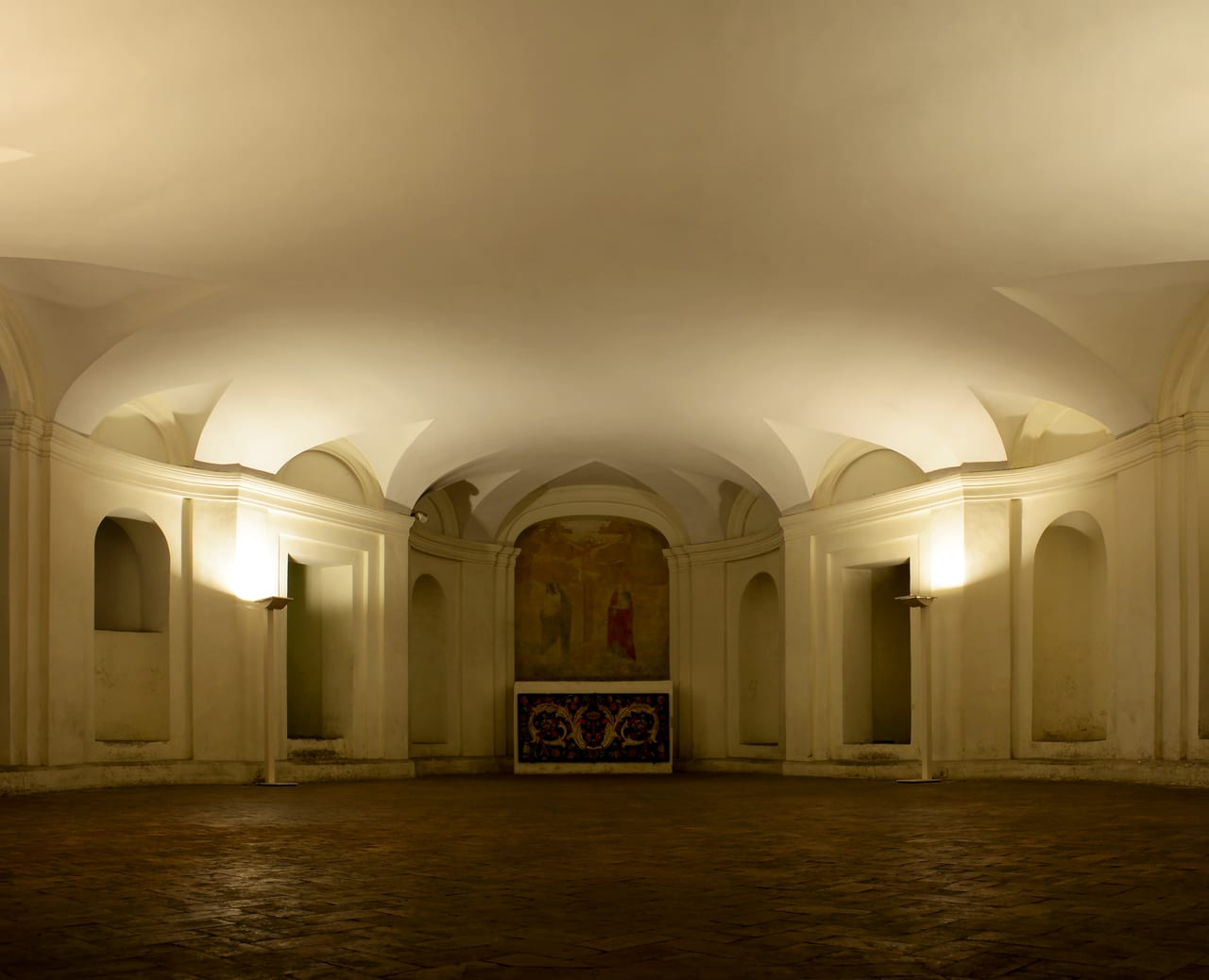
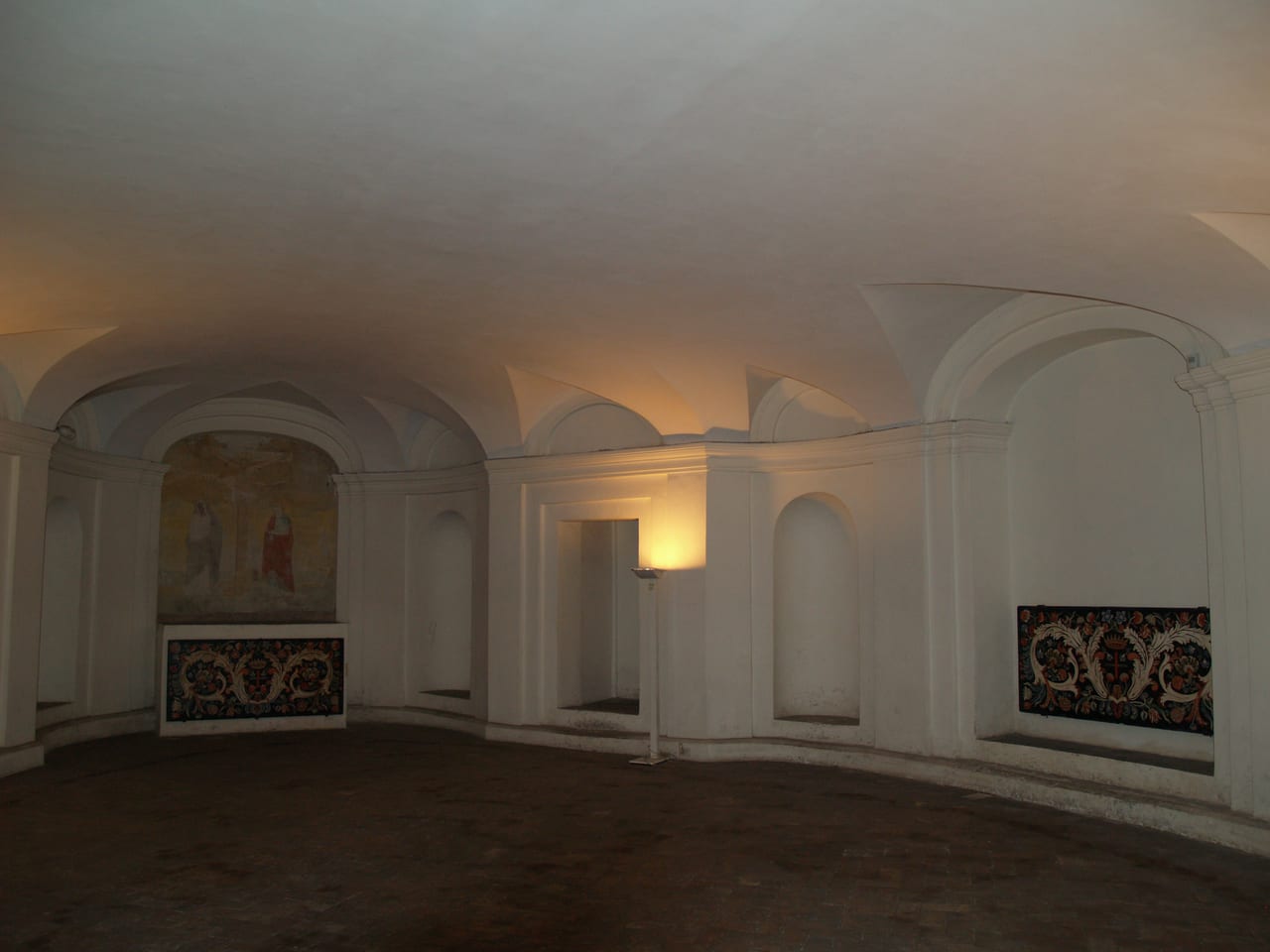
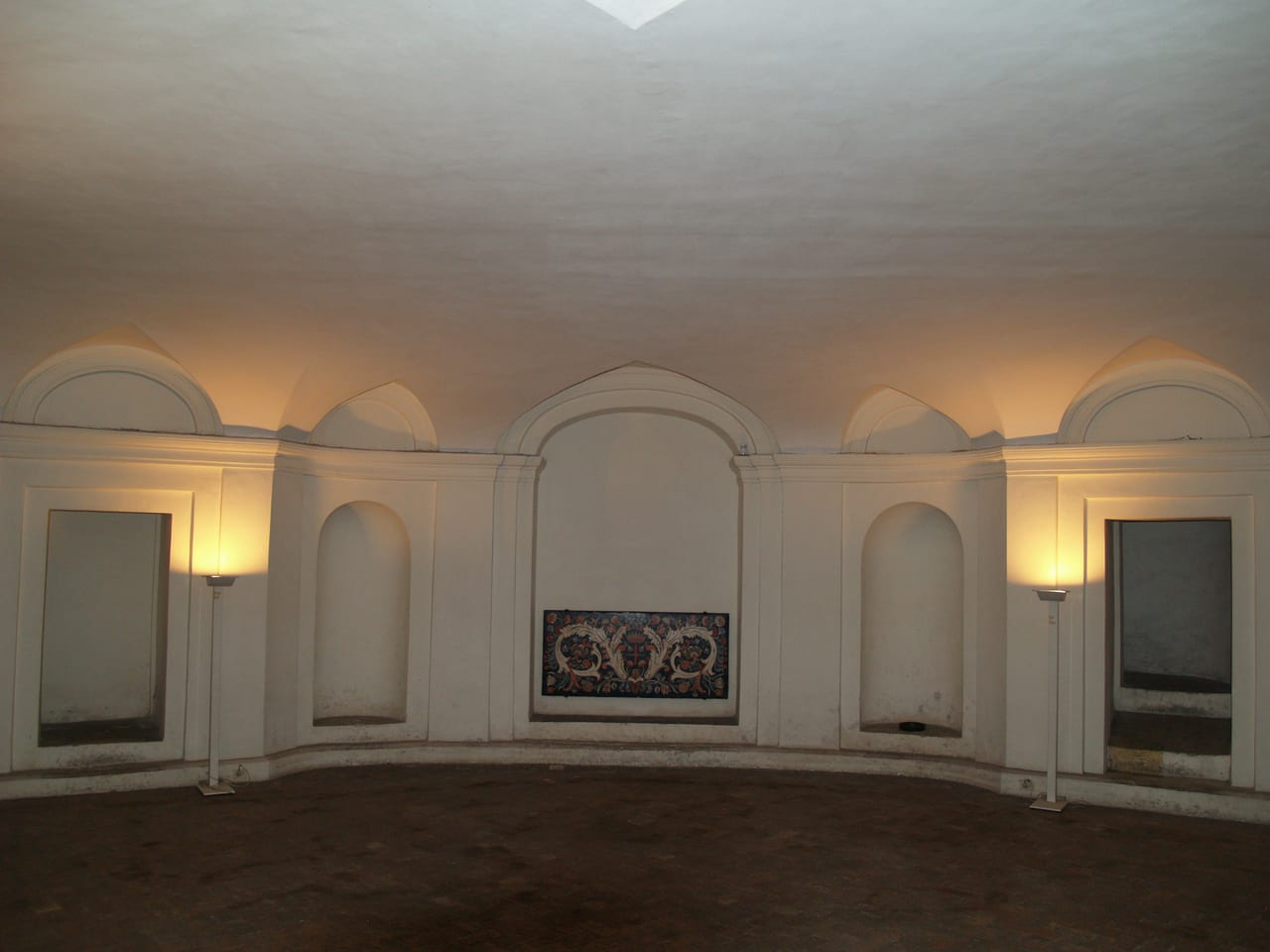
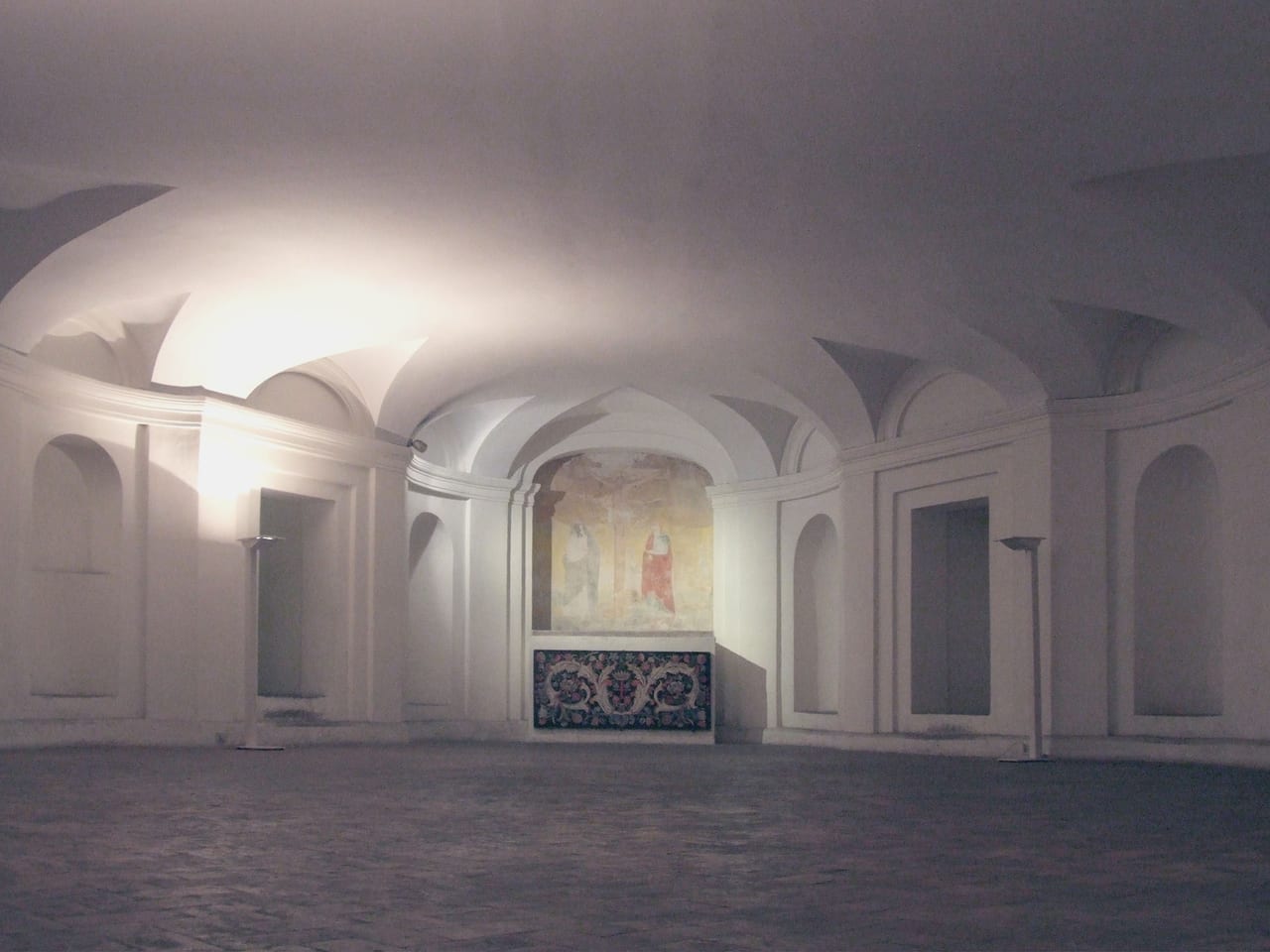
Begin in the small mistilinear cloister: its irregular octagonal geometry, paired loggias, curved corner serlianas, upper balustrade and octagonal well reward close looking. Inside, follow the repeated groups of three, Trinitarian crosses and alternating wall rhythms. Look upward for the dome’s geometric coffers, lantern and central Trinity emblem, then examine the three altar paintings: Pierre Mignard’s seventeenth-century altarpiece and the nineteenth-century works by Prospero Mallerini and Amalia de Angelis. The austere crypt repeats the church’s plan and contains two chapels; the church also preserves Blessed Elisabetta Canori Mora’s urn.
Places to stay near Saint Charles at the Four Fountains

Live availability and prices from Stay22's partners, refreshed periodically and subject to change. Booking through these links may earn us a commission at no extra cost to you. See our privacy policy.
Cafés near Saint Charles at the Four Fountains
Cafés near Saint Charles at the Four Fountains loads as you scroll.
Attractions nearby
Attractions near Saint Charles at the Four Fountains loads as you scroll.
Cities nearby
Cities nearby loads as you scroll.
More in Rome
See more of Rome.
Find great cafés, places to stay and other interesting places to visit in Rome.