Ancient site · Rome
Saepta Julia
DirectionsAs Rome’s voting complex lost its political role, the Saepta Julia became a venue for gladiatorial combats, naumachiae, gymnastics, senate meetings and luxury markets.
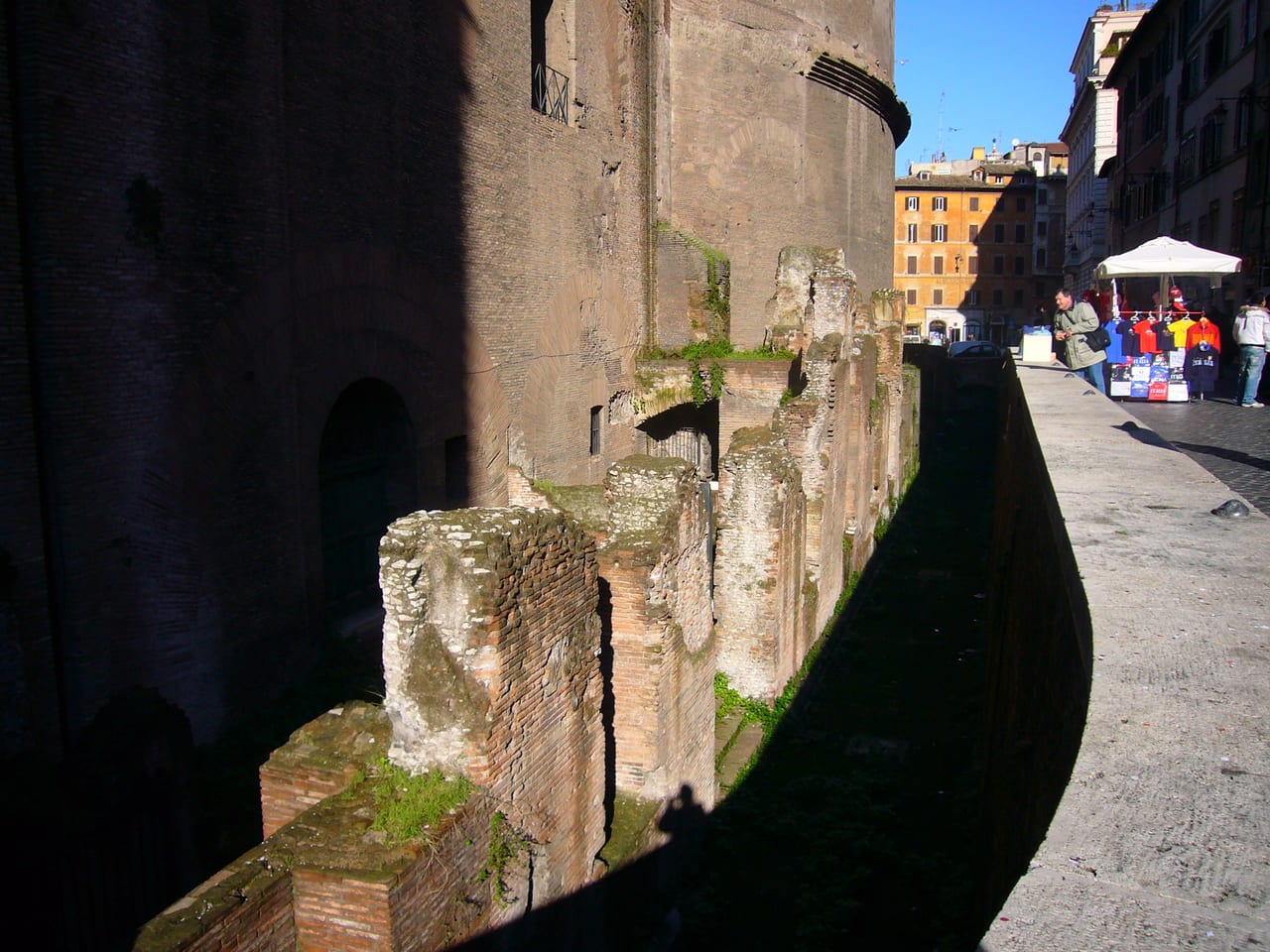
Conceived during Julius Caesar’s reign, the Saepta Julia replaced the earlier Ovile, where the comitia tributa had gathered. Caesar’s assassination in 44 BC interrupted the project, but Marcus Aemilius Lepidus continued it; Marcus Vipsanius Agrippa completed and dedicated the building in 26 BC, adding marble tablets and Greek paintings. The complex took the form of a vast quadriporticus, measuring approximately 310 metres by 120 metres and extending between the Baths of Agrippa and the Serapeum along the west side of the Via Lata. Built in travertine marble, it had eastern and western porticoes, a northern lobby and a broad southern corridor linking it to the Diribitorium. Aqua Virgo supplied its water. The western Porticus Argonautarum, completed by Agrippa around 25 BC, depicted Jason and the Argonauts; the eastern Porticus Meleagri is known chiefly through the Forma Urbis Romae. Fire destroyed the complex in AD 80, and it was rebuilt sometime before Domitian’s reign. Domitian reconstructed the Porticus Argonautarum, while Hadrian later restored the wider Saepta Julia.
At a glance
- Built
- 26
Ways to explore Saepta Julia
Begin beside the Pantheon, where part of the original western wall survives. At the excavated remains, travertine piers reveal the scale and structural rhythm of the complex; their varied dimensions have prompted speculation about a second floor. Use the Forma Urbis Romae to reconstruct the rectangular plan, its paired porticoes, northern lobby and southern connection to the Diribitorium.
Places to stay near Saepta Julia

Live availability and prices from Stay22's partners, refreshed periodically and subject to change. Booking through these links may earn us a commission at no extra cost to you. See our privacy policy.
Cafés near Saepta Julia
Cafés near Saepta Julia loads as you scroll.
Attractions nearby
Attractions near Saepta Julia loads as you scroll.
Cities nearby
Cities nearby loads as you scroll.
More in Rome
See more of Rome.
Find great cafés, places to stay and other interesting places to visit in Rome.