Church · Rome
Lateran Baptistery
DirectionsIts octagonal, centrally planned form became an archetype for baptisteries across medieval Christendom, while the building remained Rome’s only baptistery for many generations.
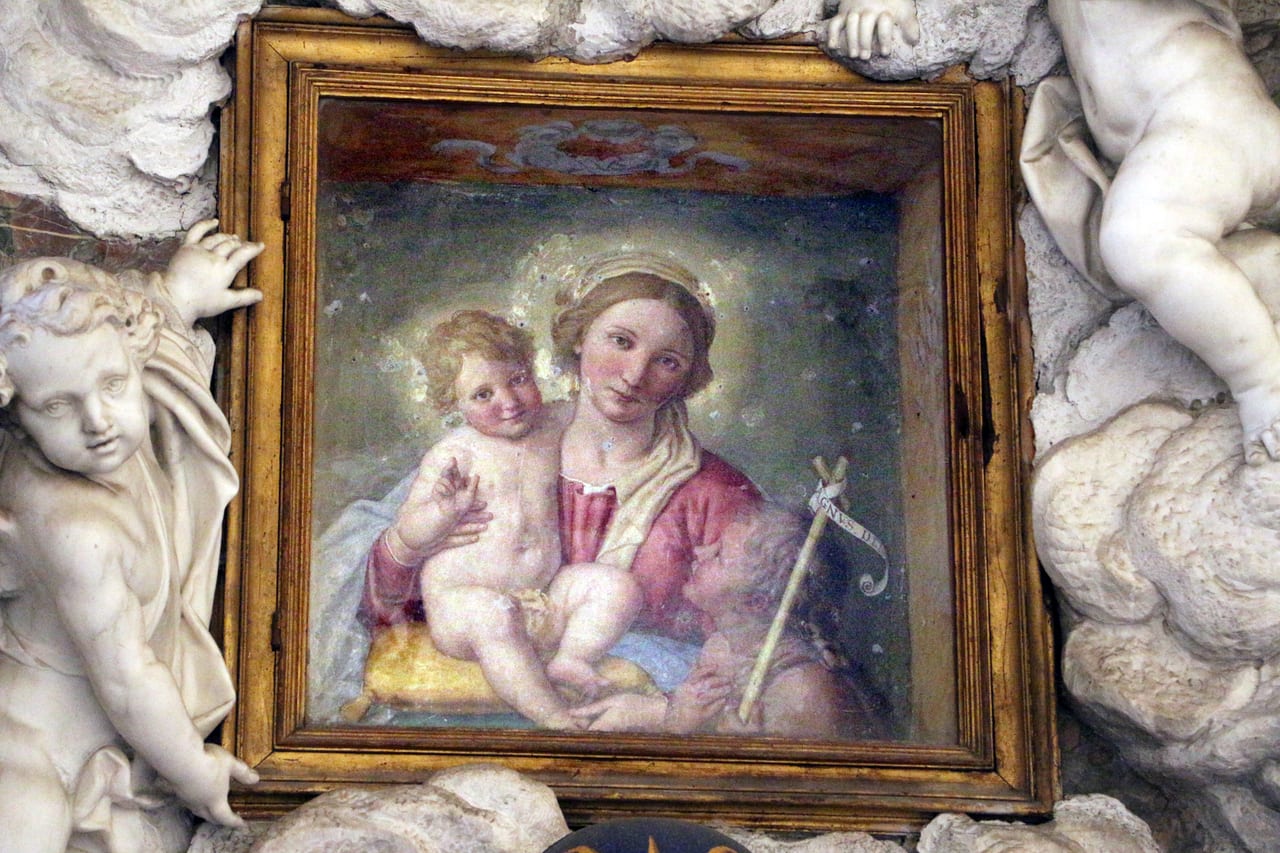
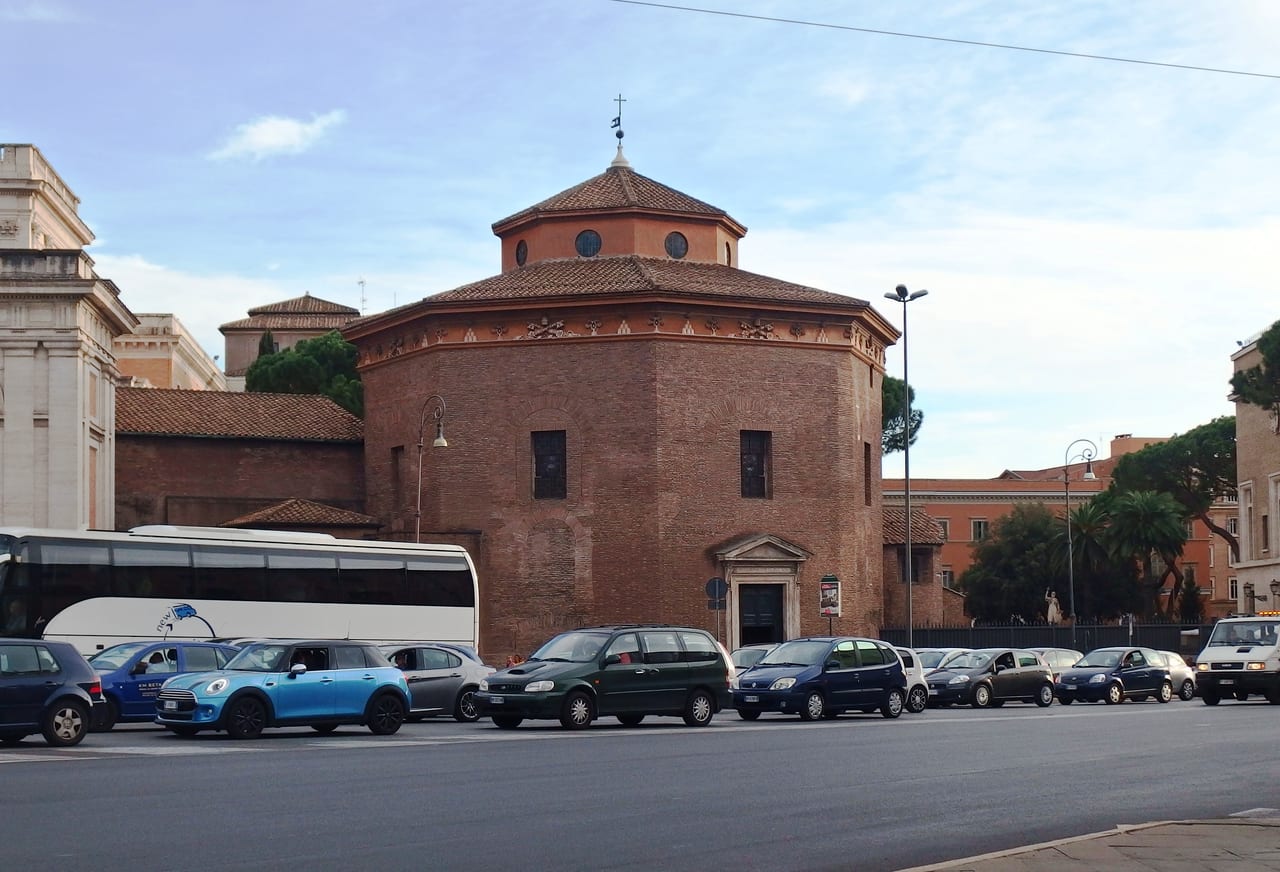
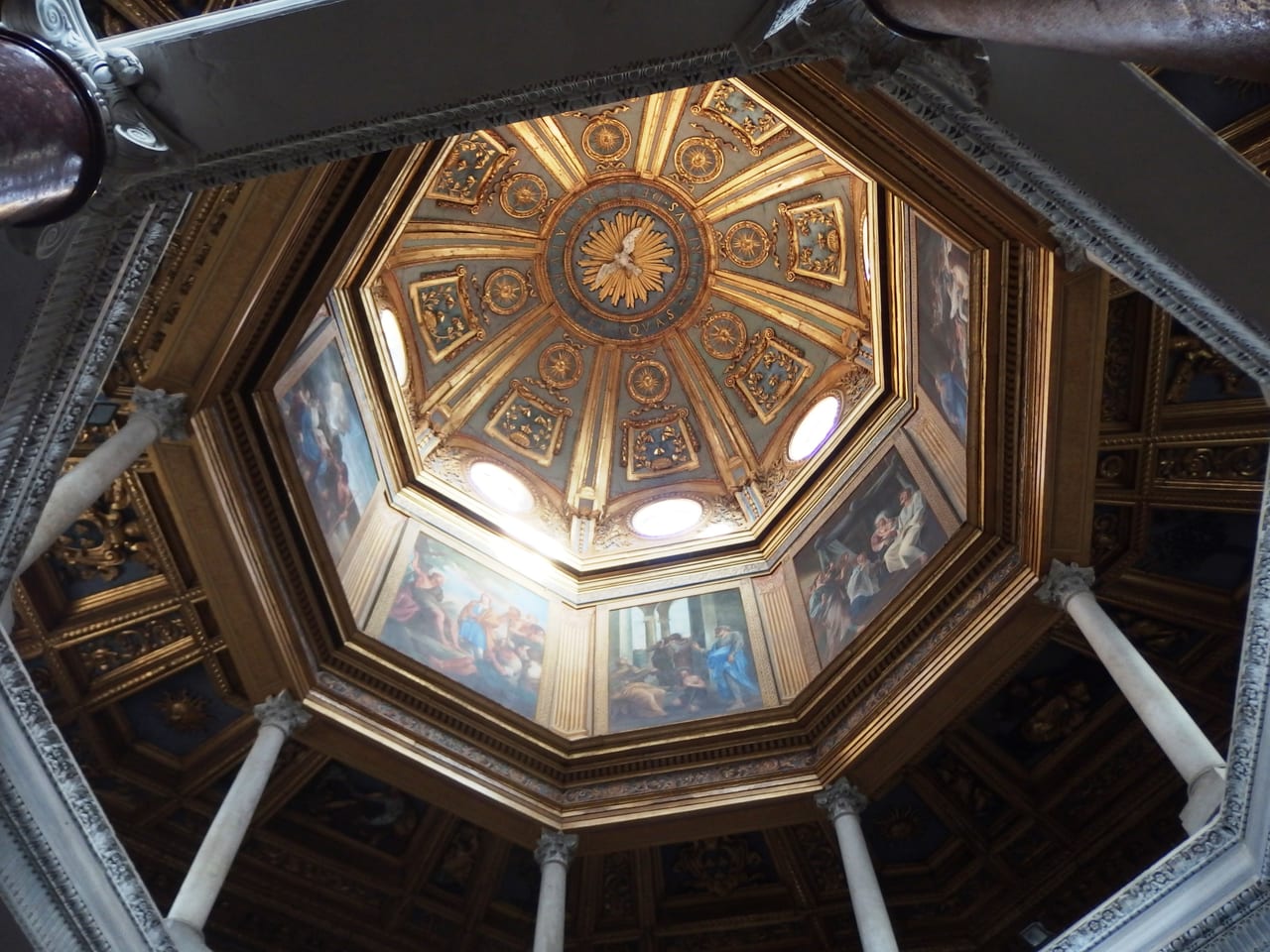
Photograph 1 of 3 of Lateran Baptistery
The first structure, probably commissioned by Constantine in the fourth century, may have adapted a room within an imperial or Domus Faustae thermal complex. It was likely a single, spacious hall, dominated by an immersion basin supplied by water spilling from silver deer sculptures. Between 432 and 440, Sixtus III substantially rebuilt it with an inner colonnade. Under Pope Hilary, an atrium and three chapels were added; the seventh-century Chapel of San Venanzio brought gold-ground mosaics to the complex. After decline during the papacy’s residence at Avignon and later at the Vatican, restoration began in the sixteenth century. A new entrance opened onto the renewed Piazza San Giovanni, and the northern chapel was removed. The seventeenth century brought a fresh interior decorative scheme. The surviving building retains its fifth-century arrangement beneath a dome, with two superimposed orders of columns and an octagonal lantern. The eastern chapel preserves a Greek-cross plan and a mosaic centred on the Agnus Dei. Episodes from Constantine’s life were painted under Urban VIII, while Francesco Borromini designed the external brick frieze in 1657.
At a glance
- Built
- 400
- Style
- Early Christian architecture
- Heritage
- Italian national heritage
Ways to explore Lateran Baptistery
Begin in the atrium, where the surviving eastern apse mosaic combines a green ground, golden foliage, the Agnus Dei, doves and suspended crosses. Inside, examine the red-porphyry lower columns, their marble inscribed beam, and the upper white-marble order supporting the lantern. Look for the baptismal font beneath the dome and the coffered annular passage. In the eastern chapel, bronze doors lead to the gold-ground mosaic vault; outside, trace Borromini’s brick frieze and the sealed openings.
Places to stay near Lateran Baptistery

Live availability and prices from Stay22's partners, refreshed periodically and subject to change. Booking through these links may earn us a commission at no extra cost to you. See our privacy policy.
Cafés near Lateran Baptistery
Cafés near Lateran Baptistery loads as you scroll.
Attractions nearby
Attractions near Lateran Baptistery loads as you scroll.
Cities nearby
Cities nearby loads as you scroll.
More in Rome
See more of Rome.
Find great cafés, places to stay and other interesting places to visit in Rome.