Ancient site · Rome
Imperial fora
DirectionsThe Temple of Peace contained a garden with pools and sculpture pedestals, while a marble map of ancient Rome once covered a wall in an adjoining chamber.
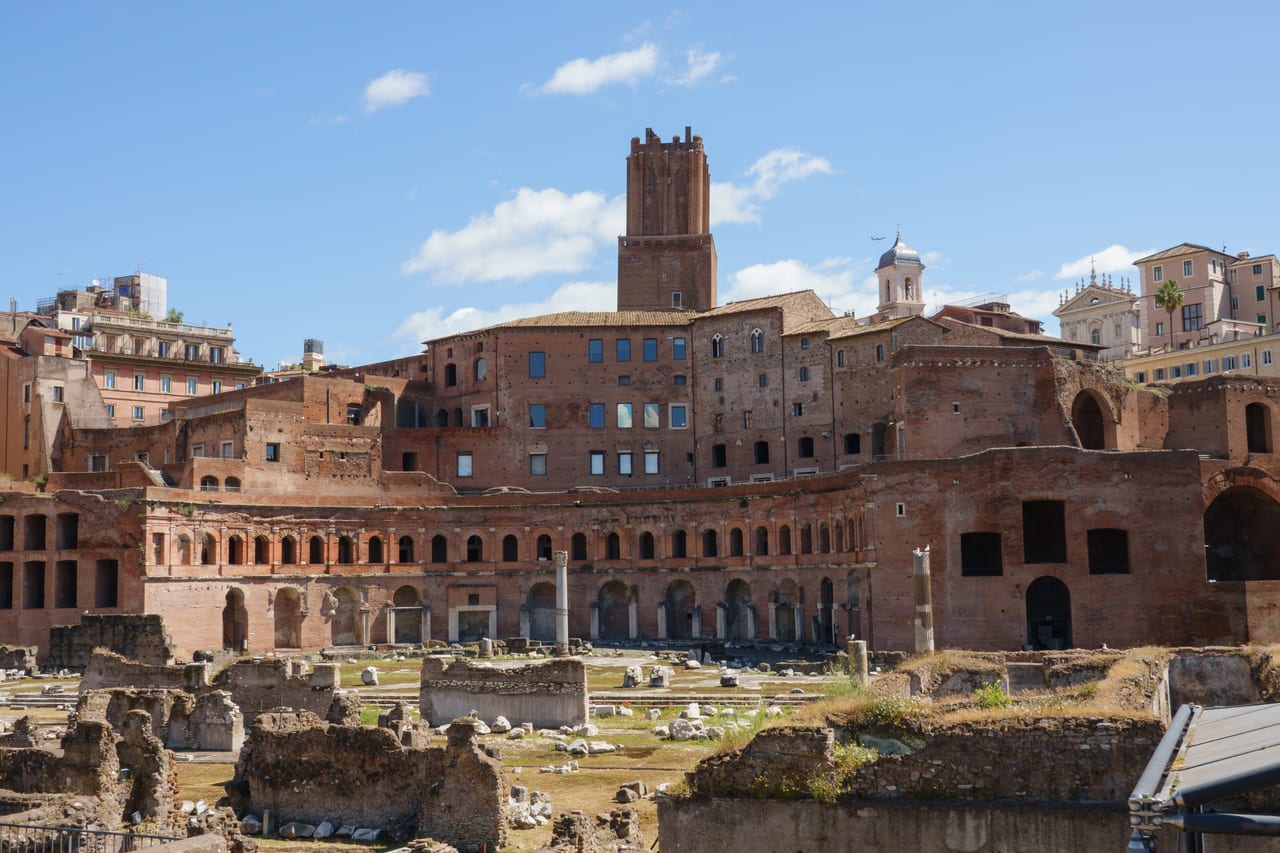
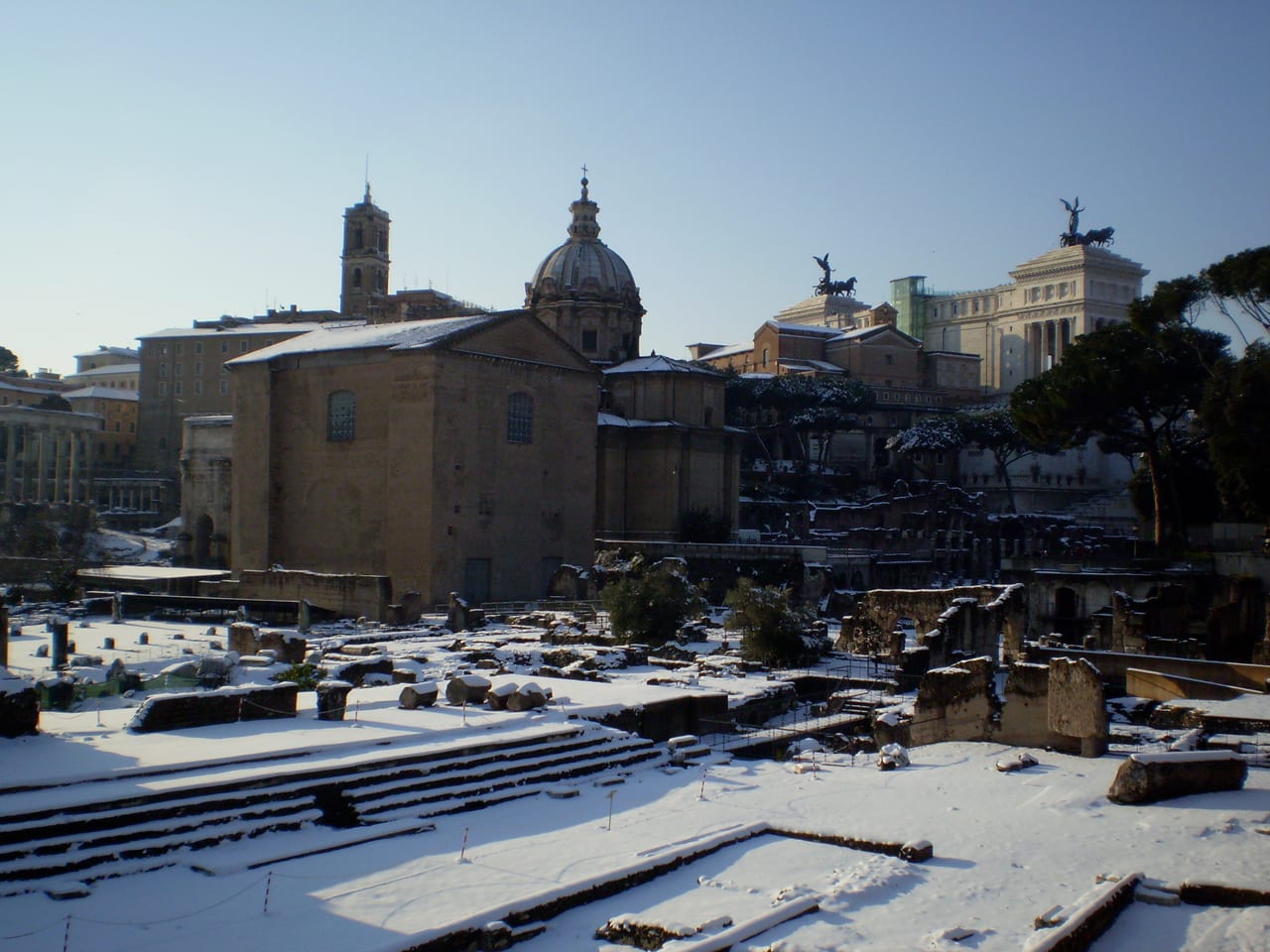
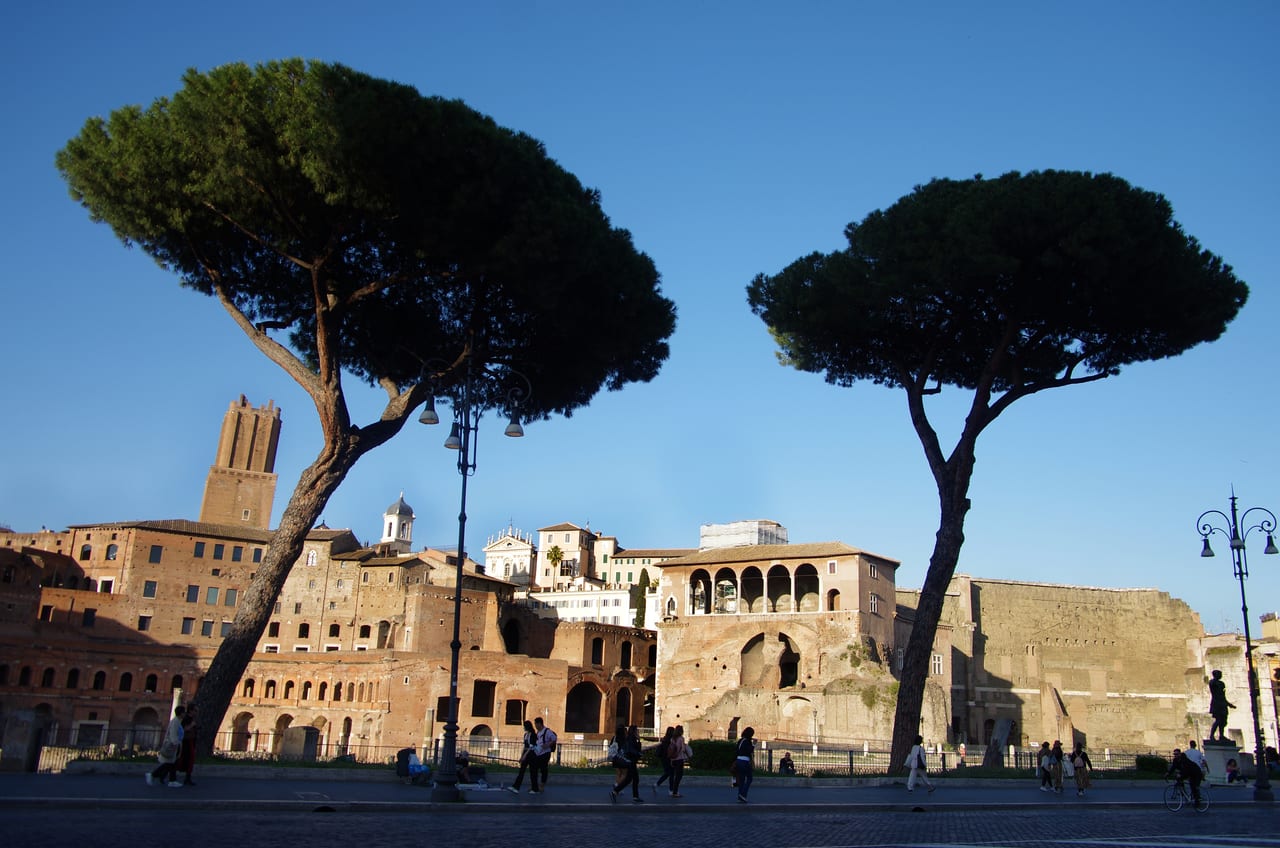
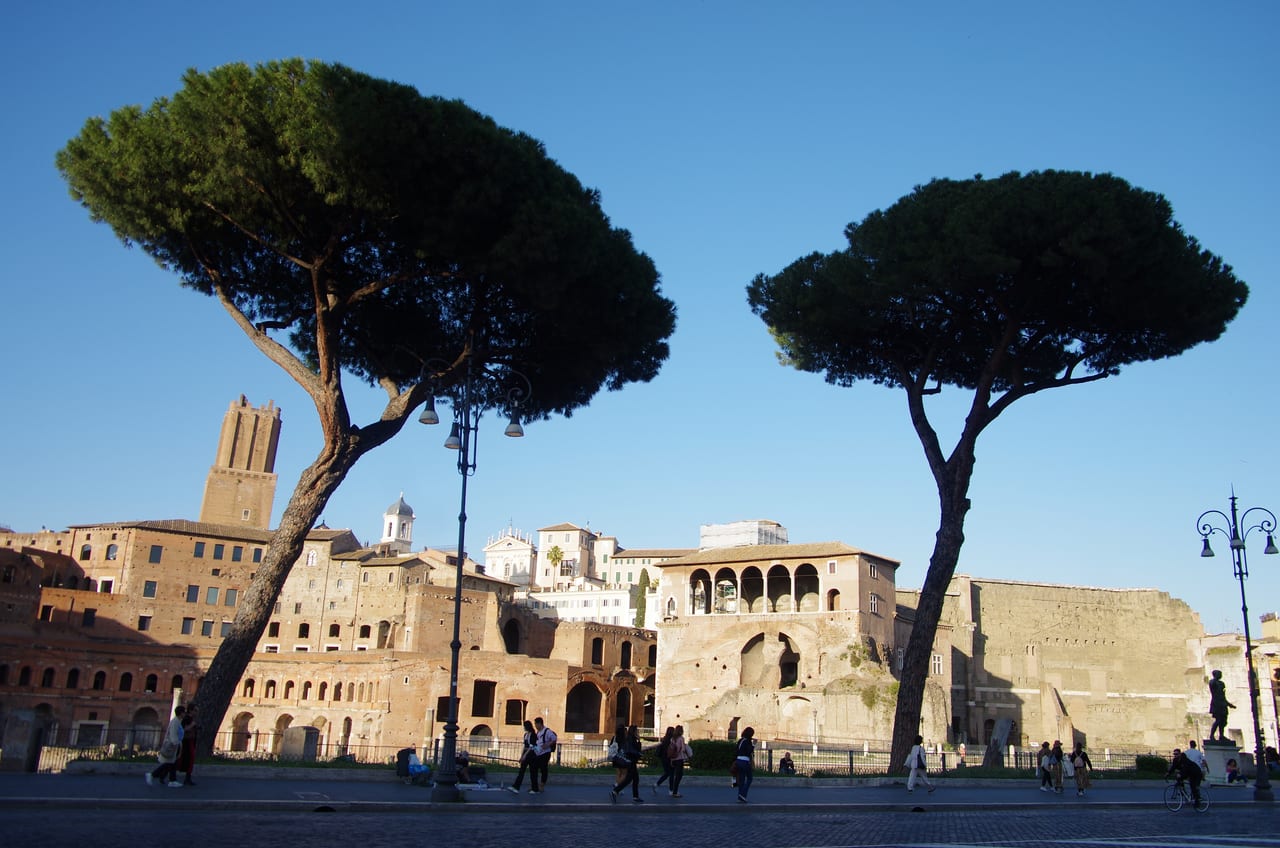
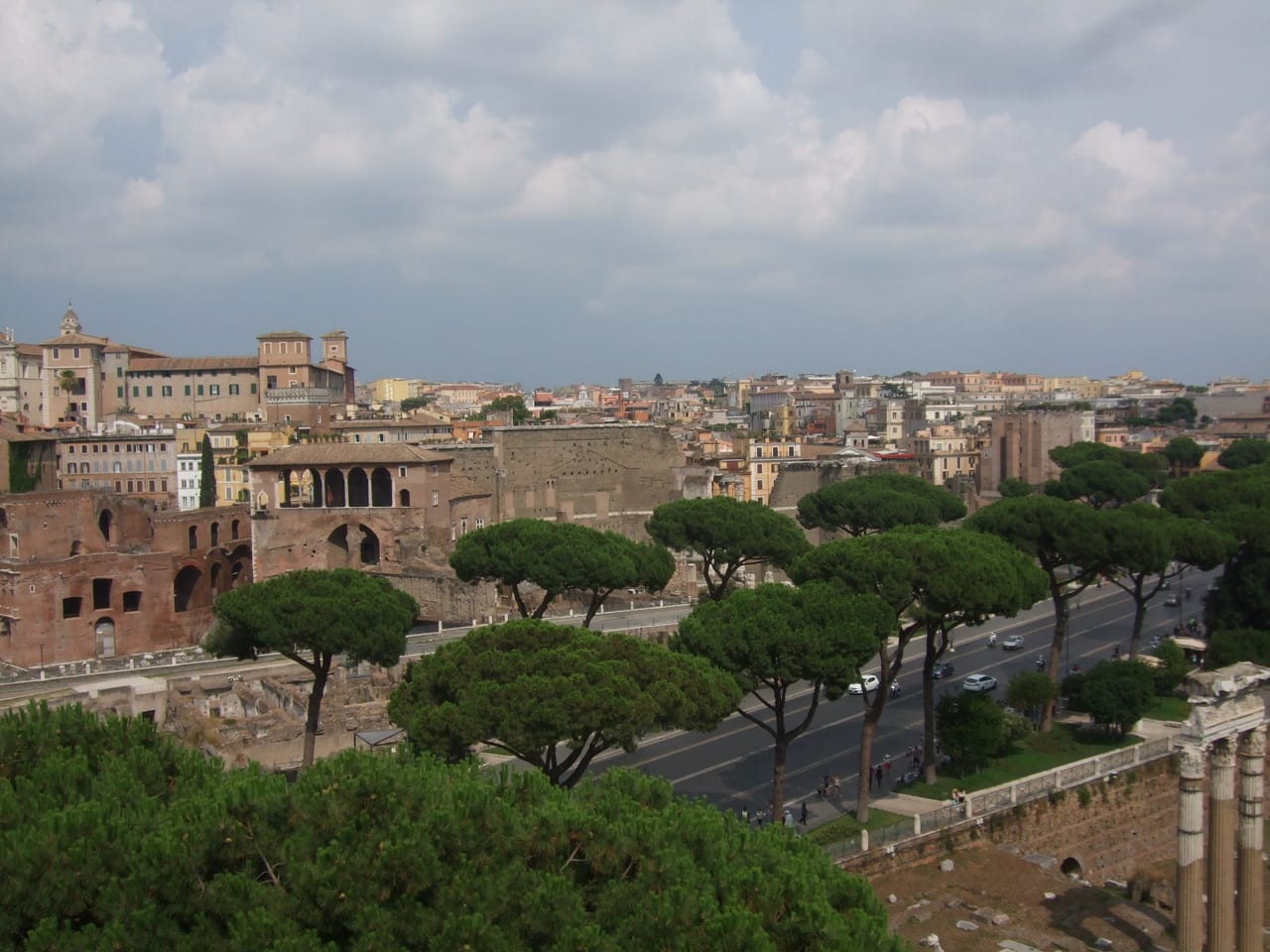
Photograph 1 of 13 of Imperial fora
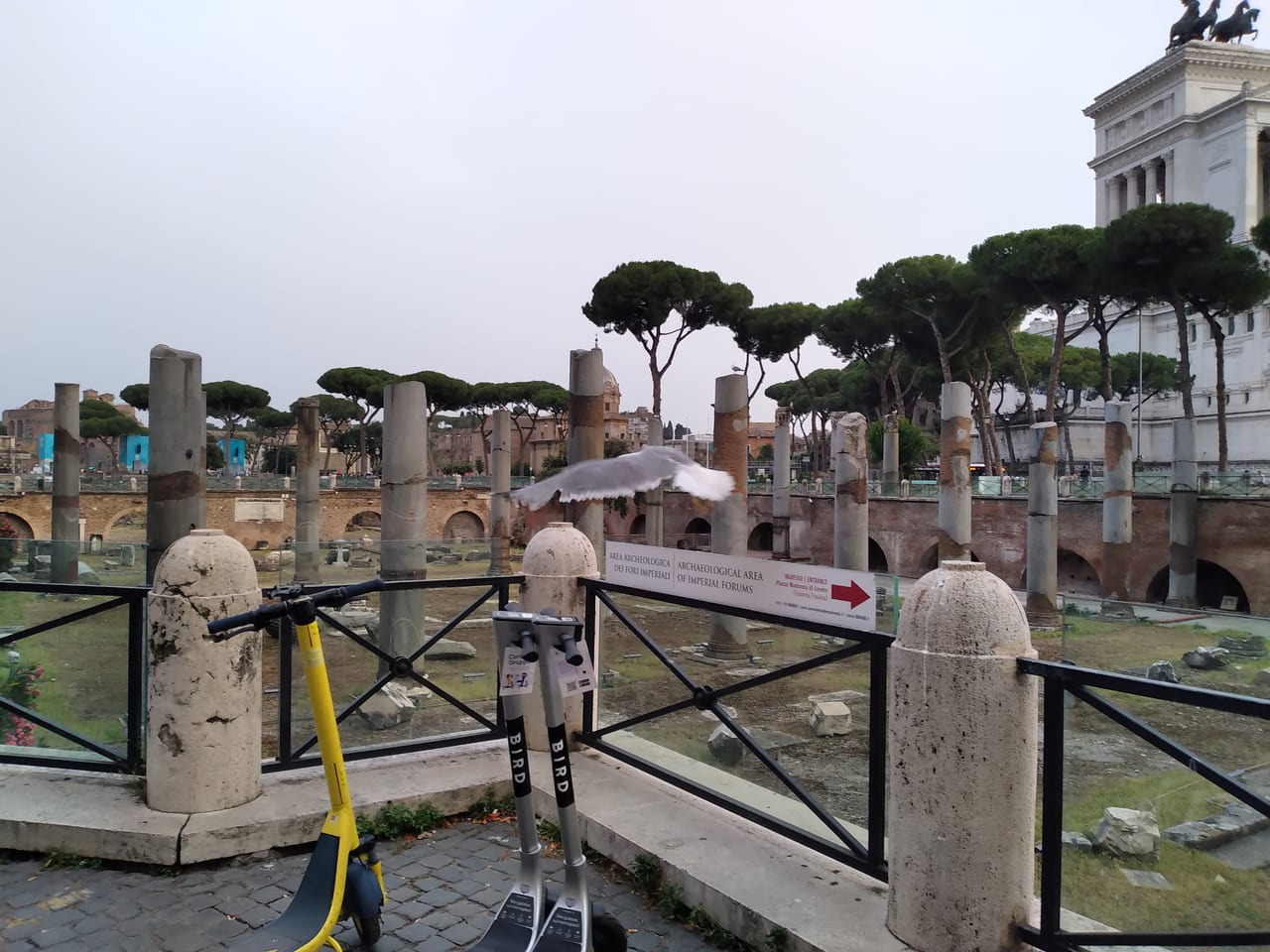
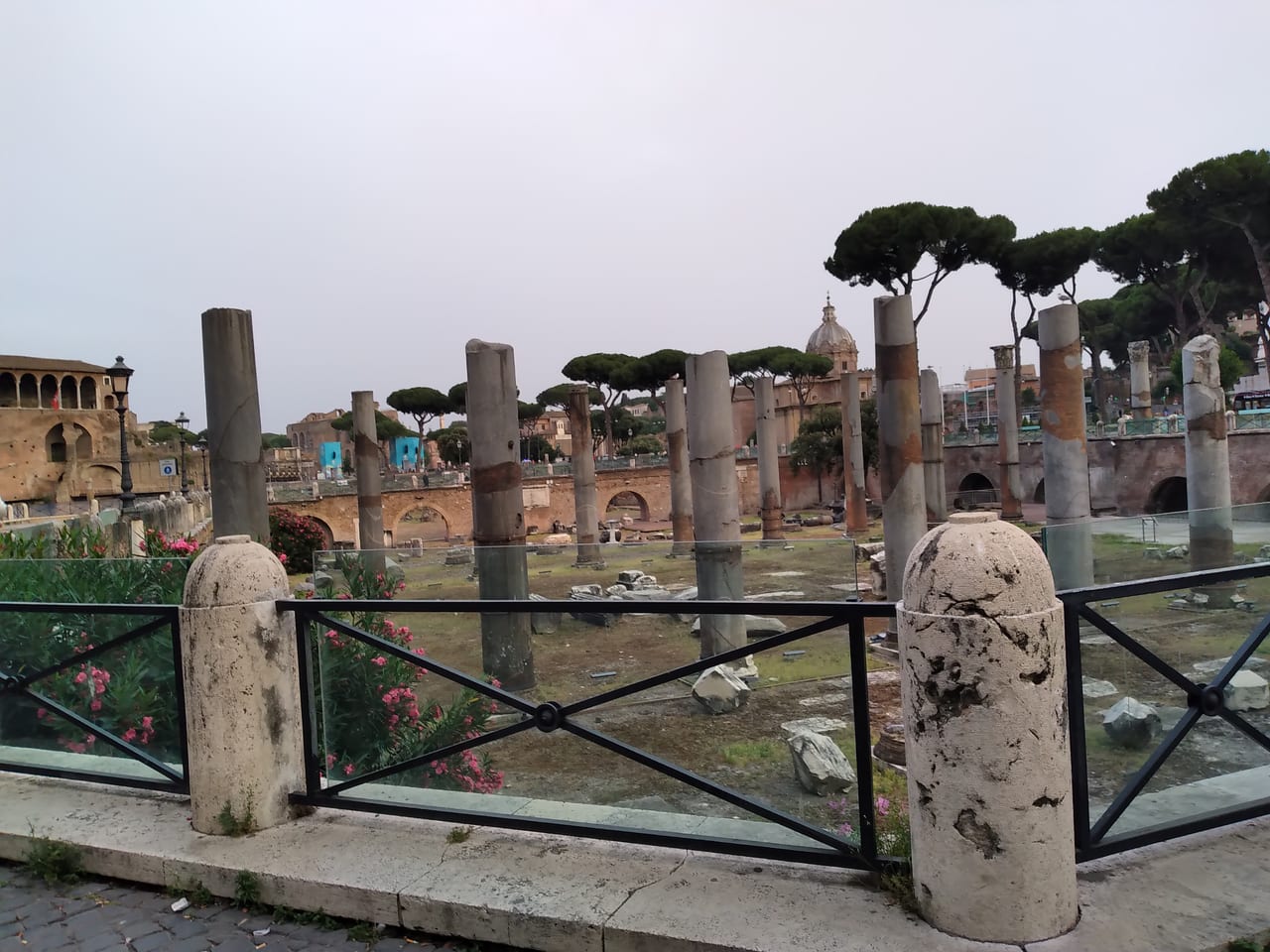
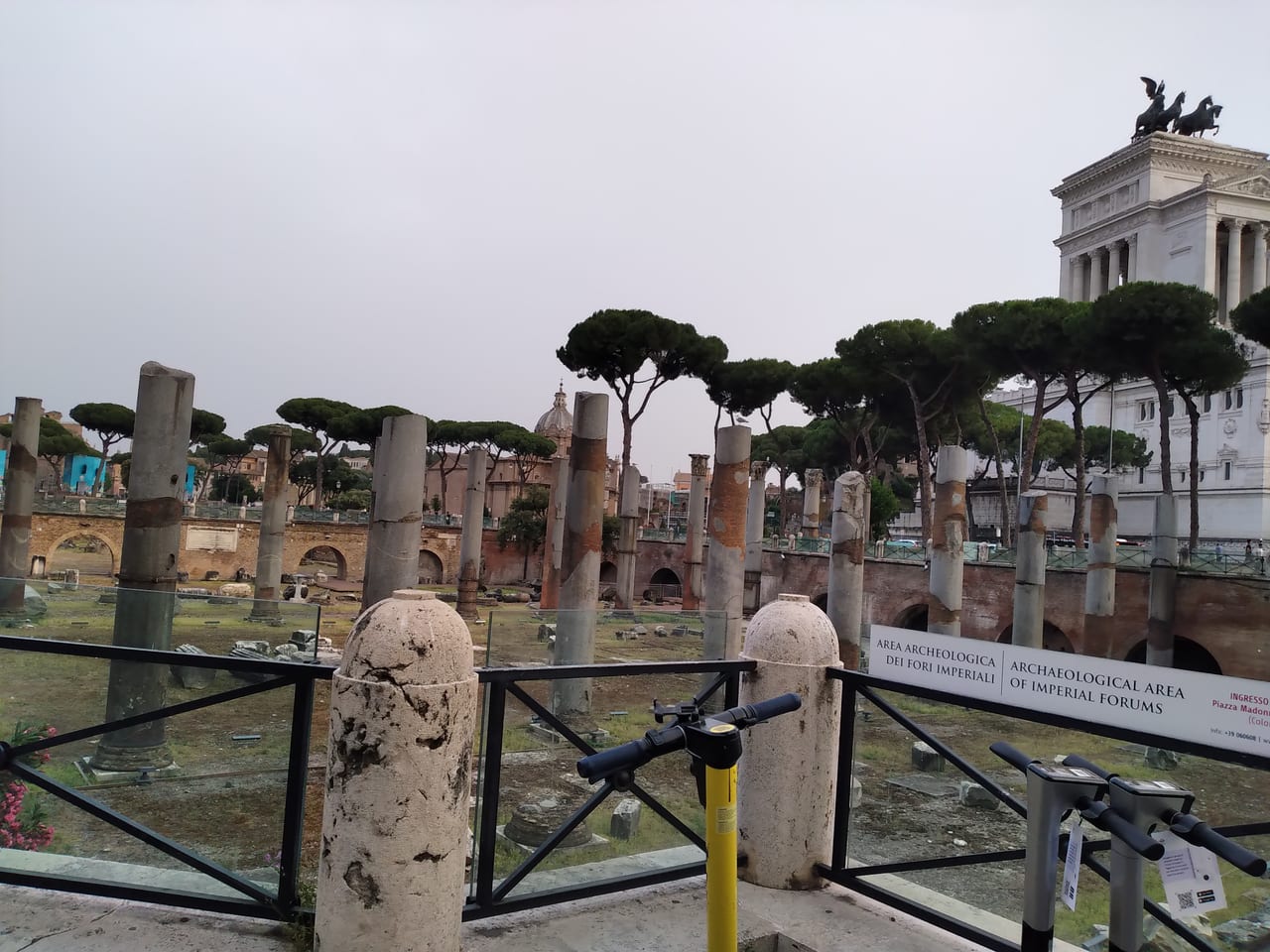
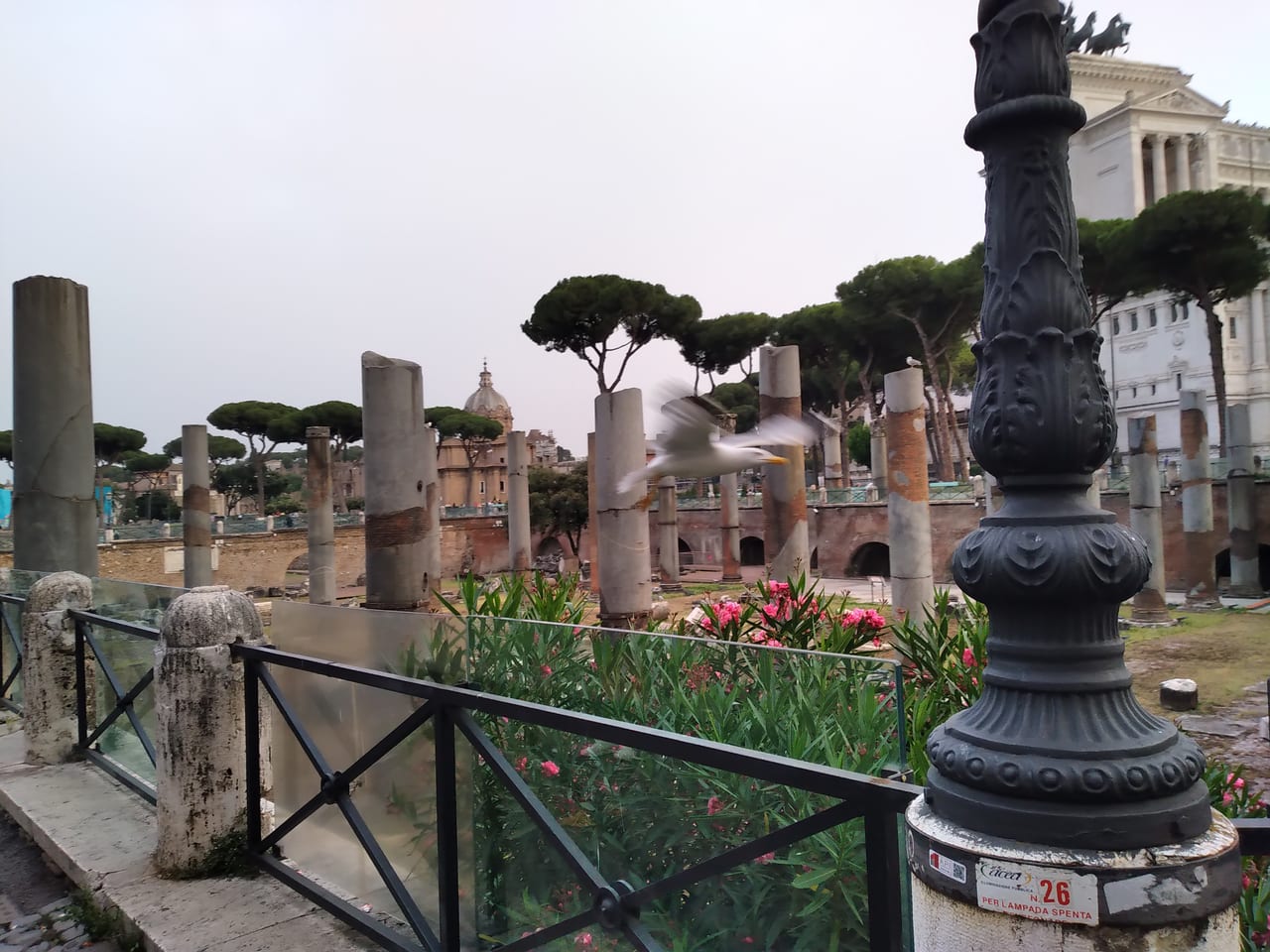
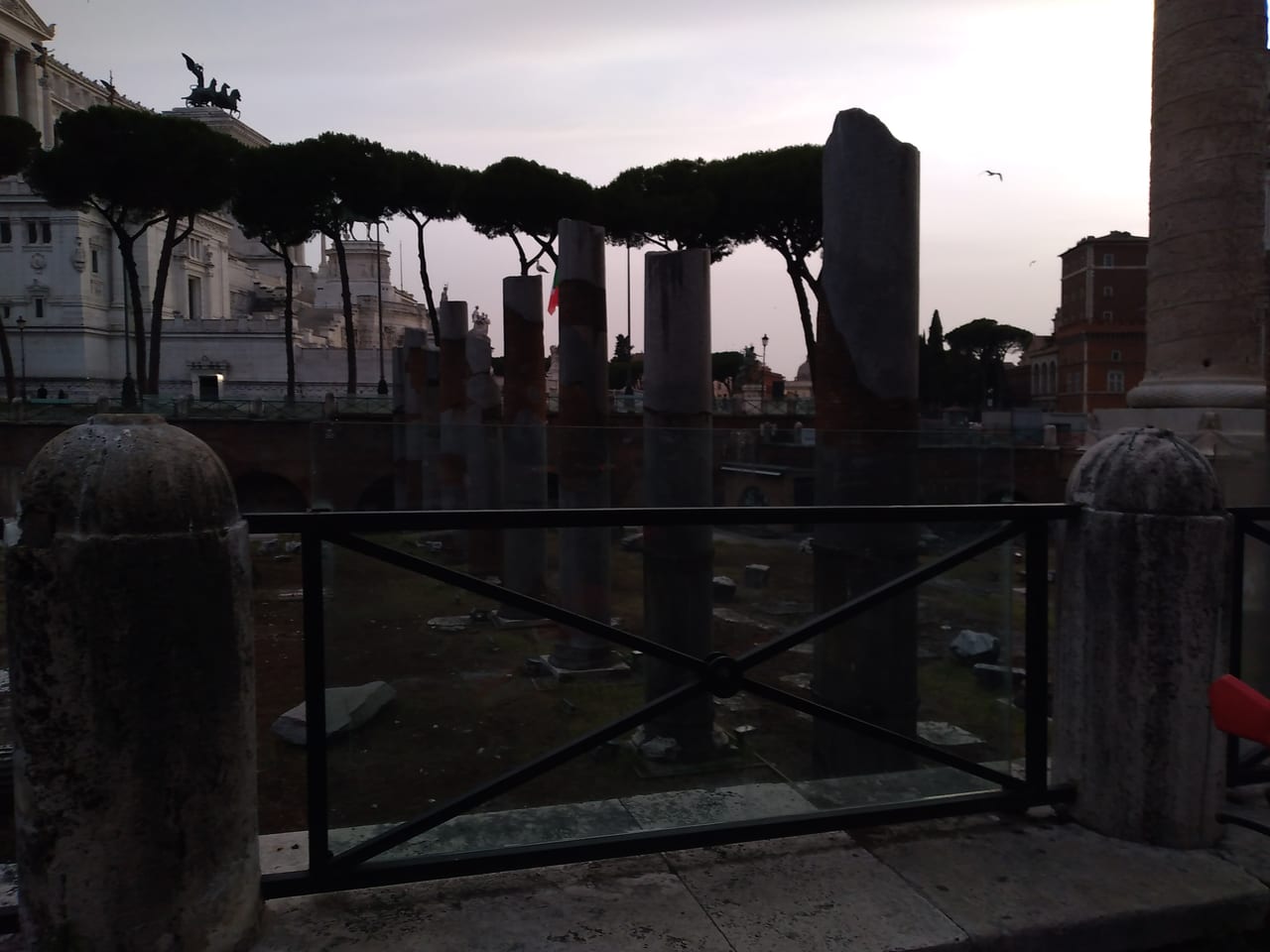
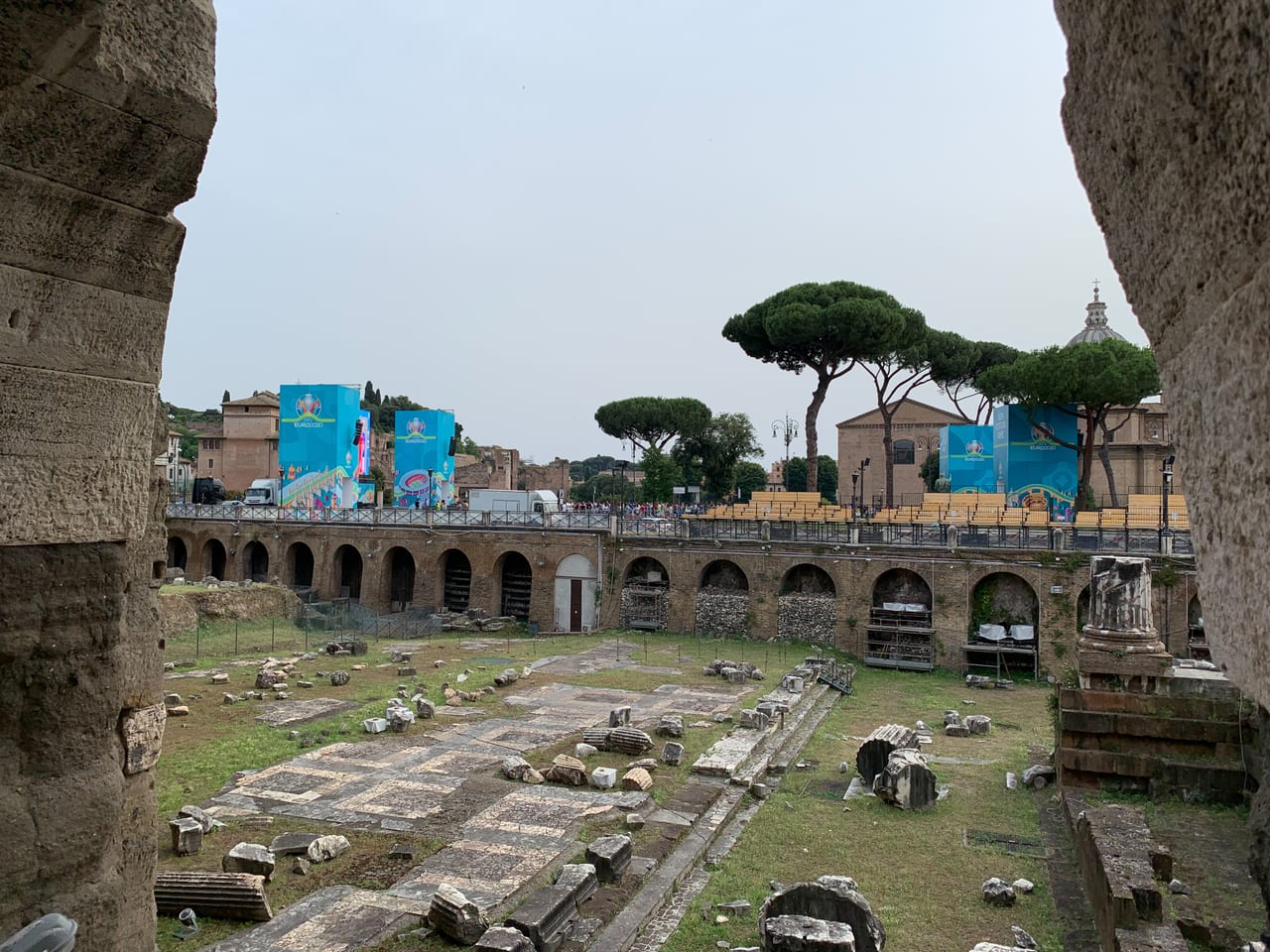
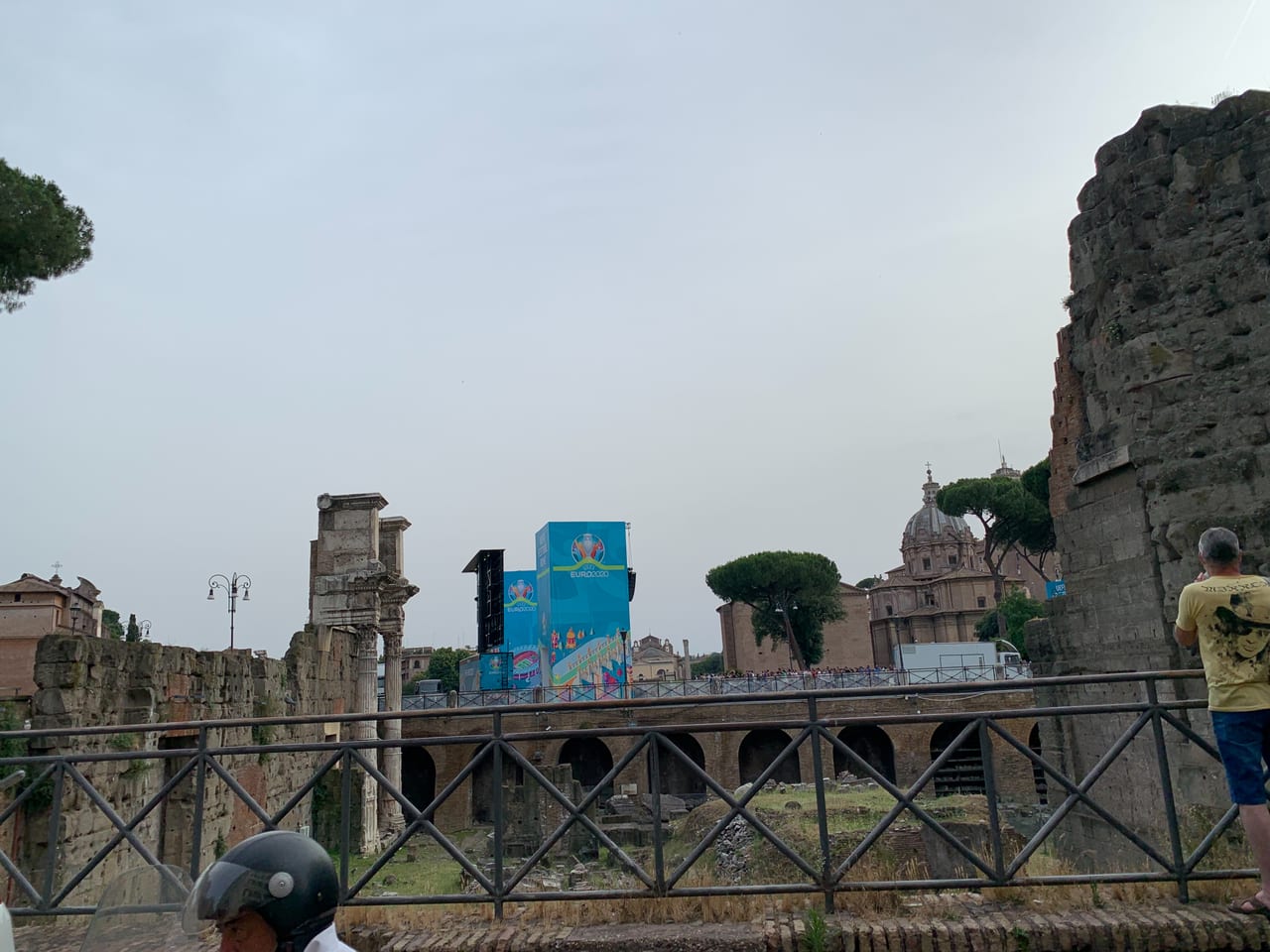
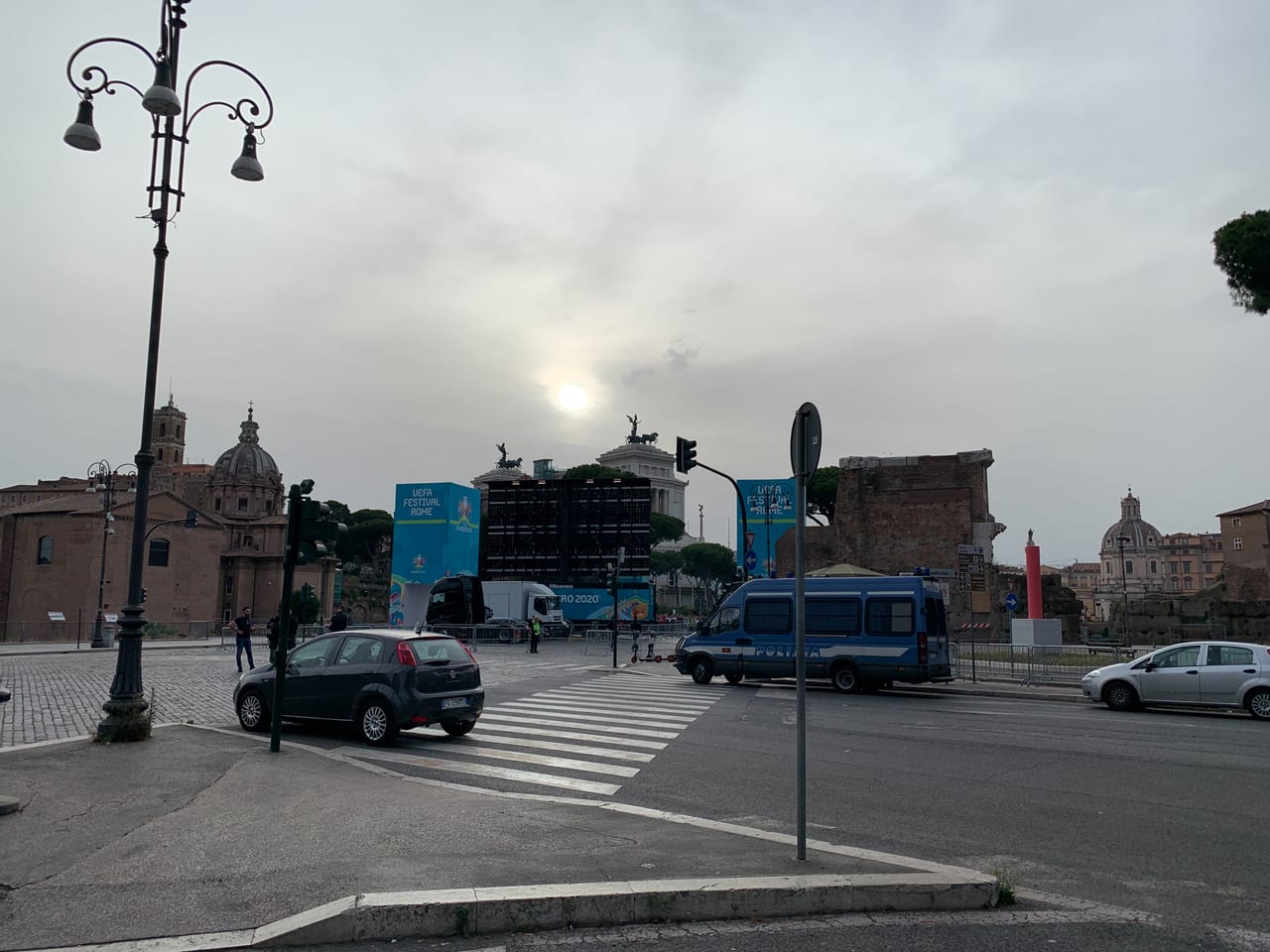
Julius Caesar began the programme with his forum, inaugurated in 46 BC and completed under Augustus. Its Temple of Venus Genetrix asserted the claimed descent of Caesar’s family from Venus through Aeneas, while Caesar’s equestrian statue, mounted on Bucephalus, conveyed concentrated power. Augustus’s forum, inaugurated in 2 BC after four decades of construction, introduced deep porticos, semicircular exedras and a tall firebreak wall beside the Suburra. Vespasian’s Temple of Peace followed in 75 AD, and Domitian’s connecting project became the Forum of Nerva after his death. Trajan completed the sequence in 112–113 AD after the conquest of Dacia, cutting through the saddle between the Capitoline and Quirinal hills. His forum included the Basilica Ulpia, Trajan’s Column, Trajan’s Market and an equestrian statue. In the early twentieth century, Mussolini restored the ruins while driving the Via dei Fori Imperiali through them; vibration and pollution continue to threaten the remains.
Ways to explore Imperial fora
Among the ruins, compare the surviving porticos and exedras of Augustus’s forum with the grander spatial ambition of Trajan’s complex. Notice the tall wall beside the Suburra, the Basilica Ulpia and Trajan’s Column, then inspect the surviving mounting holes for the Forma Urbis on the façade of the church adjoining the Temple of Peace.
Places to stay near Imperial fora

Live availability and prices from Stay22's partners, refreshed periodically and subject to change. Booking through these links may earn us a commission at no extra cost to you. See our privacy policy.
Cafés near Imperial fora
Cafés near Imperial fora loads as you scroll.
Attractions nearby
Attractions near Imperial fora loads as you scroll.
Cities nearby
Cities nearby loads as you scroll.
More in Rome
See more of Rome.
Find great cafés, places to stay and other interesting places to visit in Rome.