Ancient site · Rome
House of Livia
DirectionsIts celebrated Second Style frescoes turn the tablinum into an illusionistic stage, with painted Corinthian columns, receding architecture and theatrical perspective dating to 30 BC.
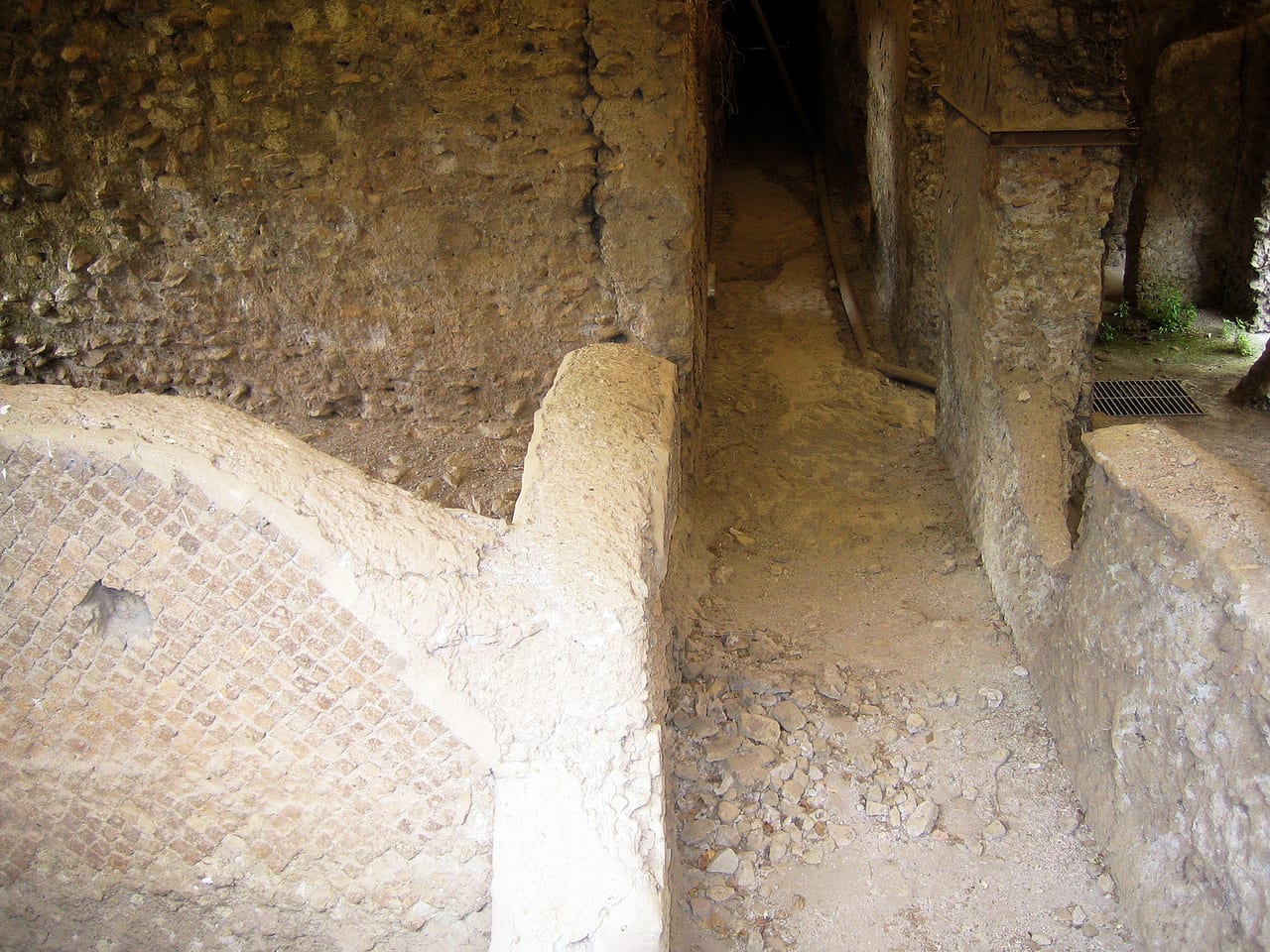
Excavated from 1869, the so-called House of Livia was identified during Pietro Rosa’s early campaigns, commissioned by Napoleon III, after a lead water pipe bearing the name Iulia Aug(usta) was found. The attribution remains uncertain: the name could refer to Livia or Julia, Titus’s daughter. The building is now thought to have been an apartment reserved for Livia within Augustus’s larger residence, itself assembled from earlier houses, rather than the home she shared with Tiberius Nero. Its oldest fabric dates to 75–50 BC. An inclined entrance corridor leads to a rectangular courtyard, where only the bases of the pillars supporting a canopy survive. The tablinum and adjoining rooms retain detached Second Style paintings from around 30 BC, while the walls beneath them are earlier, irregular reticulate masonry. Painted garlands, fruit, foliage, sphinxes, winged figures and Egyptianising scenes complement the architectural compositions; a painting of Polyphemus and Galatea has almost disappeared. After Augustus returned from Sicily in 36 BC, major alterations may have turned the house into a dependent, non-self-sufficient annex. Brick repairs may follow the fire of 3.
At a glance
- Heritage
- Italian national heritage
Ways to explore House of Livia
Follow the sloping entrance corridor and examine its original black-and-white mosaic, then compare it with the simpler surviving floors in the rooms around the courtyard. Look for the bases of the former canopy pillars and the arrangement linking the tablinum with its adjoining chambers. The better-preserved wall paintings reward close viewing of their small decorative details, while the triclinium’s surviving painted landscape with an aniconic image of Diana provides a contrasting subject.
Places to stay near House of Livia

Live availability and prices from Stay22's partners, refreshed periodically and subject to change. Booking through these links may earn us a commission at no extra cost to you. See our privacy policy.
Cafés near House of Livia
Cafés near House of Livia loads as you scroll.
Attractions nearby
Attractions near House of Livia loads as you scroll.
Cities nearby
Cities nearby loads as you scroll.
More in Rome
See more of Rome.
Find great cafés, places to stay and other interesting places to visit in Rome.