Ancient site · Rome
Circus Flaminius
DirectionsUnlike the Circus Maximus, the Circus Flaminius was a multifunctional Roman field whose only recorded games were the Taurian horse races, tied to underworld rites.
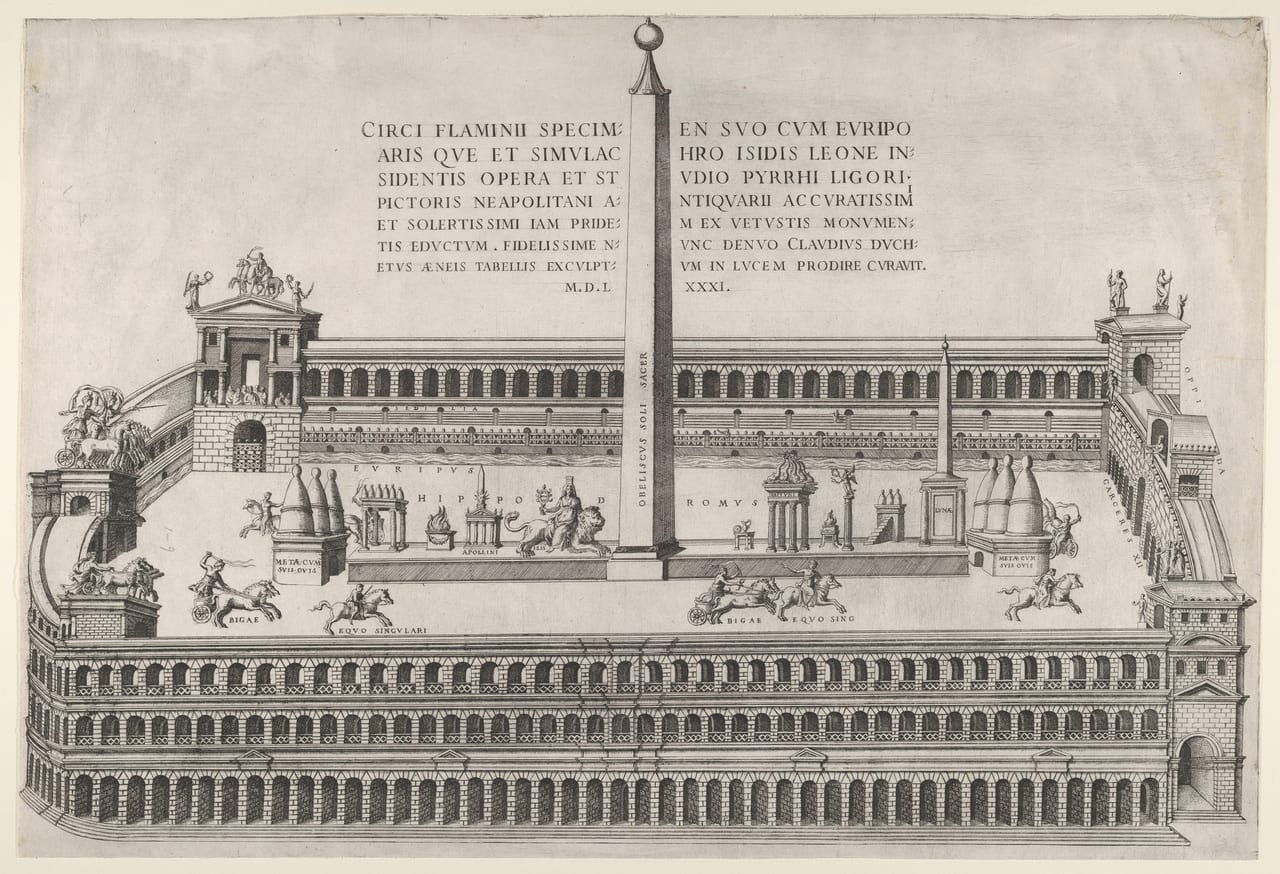
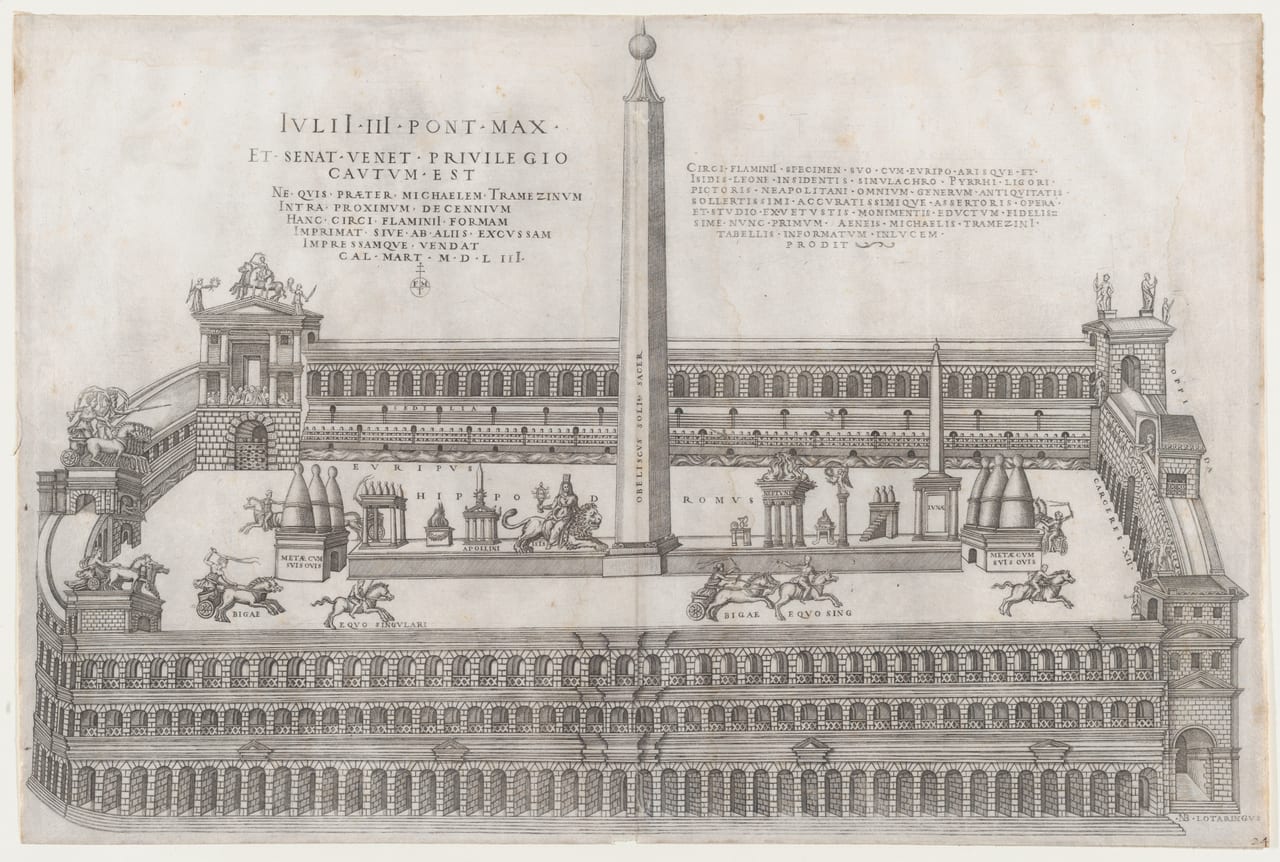
Photograph 1 of 2 of Circus Flaminius
Gaius Flaminius sectioned off the Circus Flaminius in 221 BC within the already hallowed Flaminian Fields, where the ludi Taurei had been held since the reign of Lucius Tarquinius Superbus. Varro described a loop roughly 500 metres long, but it had no permanent seating or structures marking its perimeter. By the 2nd century BC, temples and monuments had begun to constrict the space; by the early 3rd century AD, only a central piazza of no more than 300 metres remained. The surrounding complex included temples to Pietas, Mars, Apollo, Diana and Hercules Musarum, while a theatre dedicated to Apollo appeared in 179 BC and was later rebuilt under Caesar. Augustus paved the area, demolished the Apollo theatre and temples of Diana and Pietas for the Theatre of Marcellus, and built the Porticus Octaviae. Arches honouring Germanicus and Drusus followed in the early Principate. The Circus hosted triumphal displays, markets, assemblies and Augustus’s 9 BC laudatio of Drusus; in 82 BC, Sulla had prisoners massacred there. Abandoned by the end of the 4th century, its location was reinterpreted repeatedly until excavations and the Marble Plan placed it nearer the Tiber. The 1555 Jewish Ghetto encompassed much of the former site.
At a glance
- Built
- 221
Ways to explore Circus Flaminius
Read the area as a dispersed archaeological landscape rather than a surviving arena. The former site lies between the Tiber, the Porticos of Octavia and Phillipus, and the Theatre of Marcellus; the Pons Fabricius helps establish the southern setting. The relationship between the Theatre of Marcellus and the portico enclosure indicates how the former open space was bounded.
Places to stay near Circus Flaminius

Live availability and prices from Stay22's partners, refreshed periodically and subject to change. Booking through these links may earn us a commission at no extra cost to you. See our privacy policy.
Cafés near Circus Flaminius
Cafés near Circus Flaminius loads as you scroll.
Attractions nearby
Attractions near Circus Flaminius loads as you scroll.
Cities nearby
Cities nearby loads as you scroll.
More in Rome
See more of Rome.
Find great cafés, places to stay and other interesting places to visit in Rome.