Church · Rome
Chiesa di San Giuliano dei Fiamminghi
DirectionsFor three days, the adjoining hospital admitted even people who were not ill, making this Flemish foundation both a place of worship and a refuge for travellers.
Photograph 1 of 7 of Chiesa di San Giuliano dei Fiamminghi
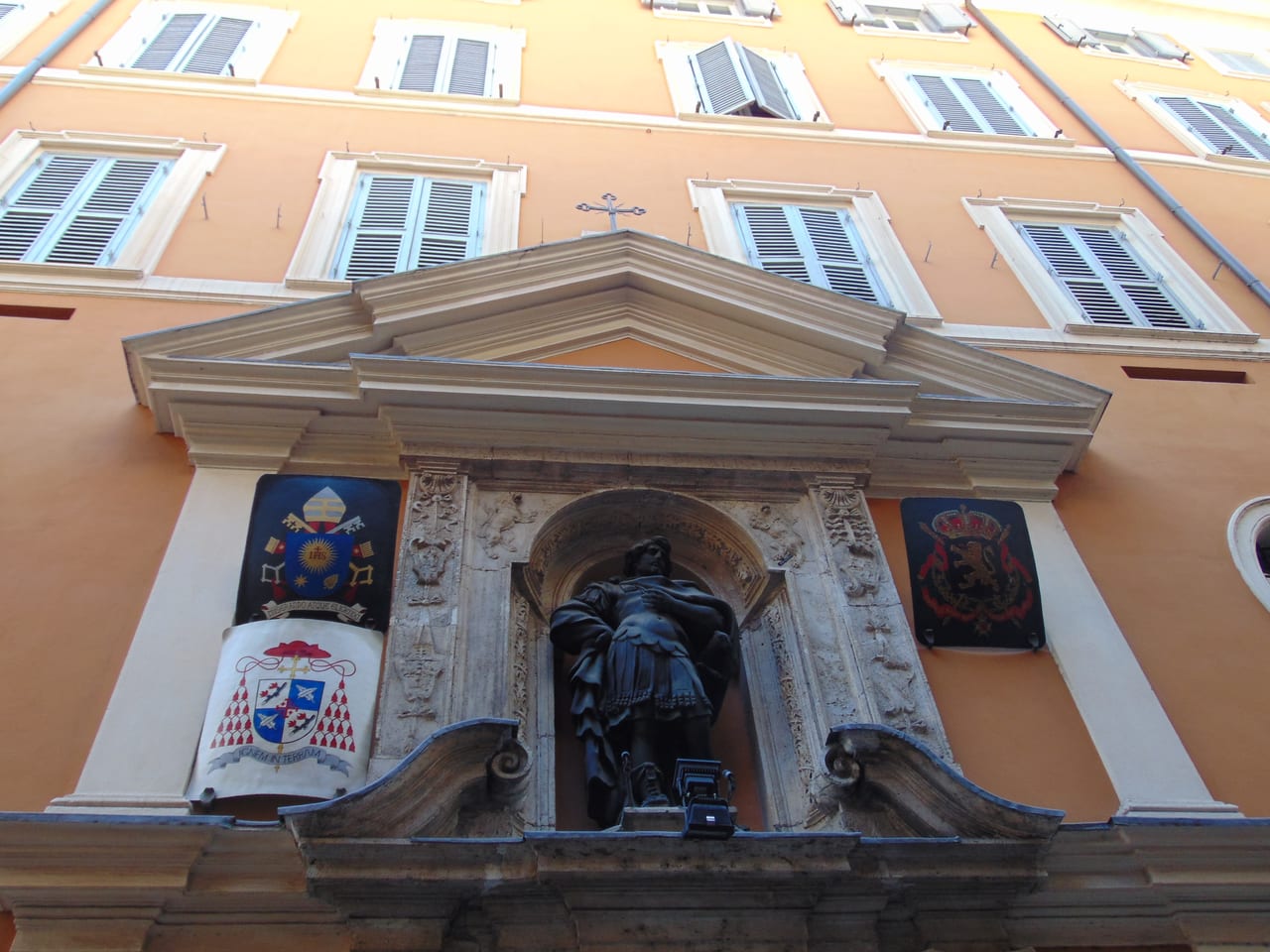
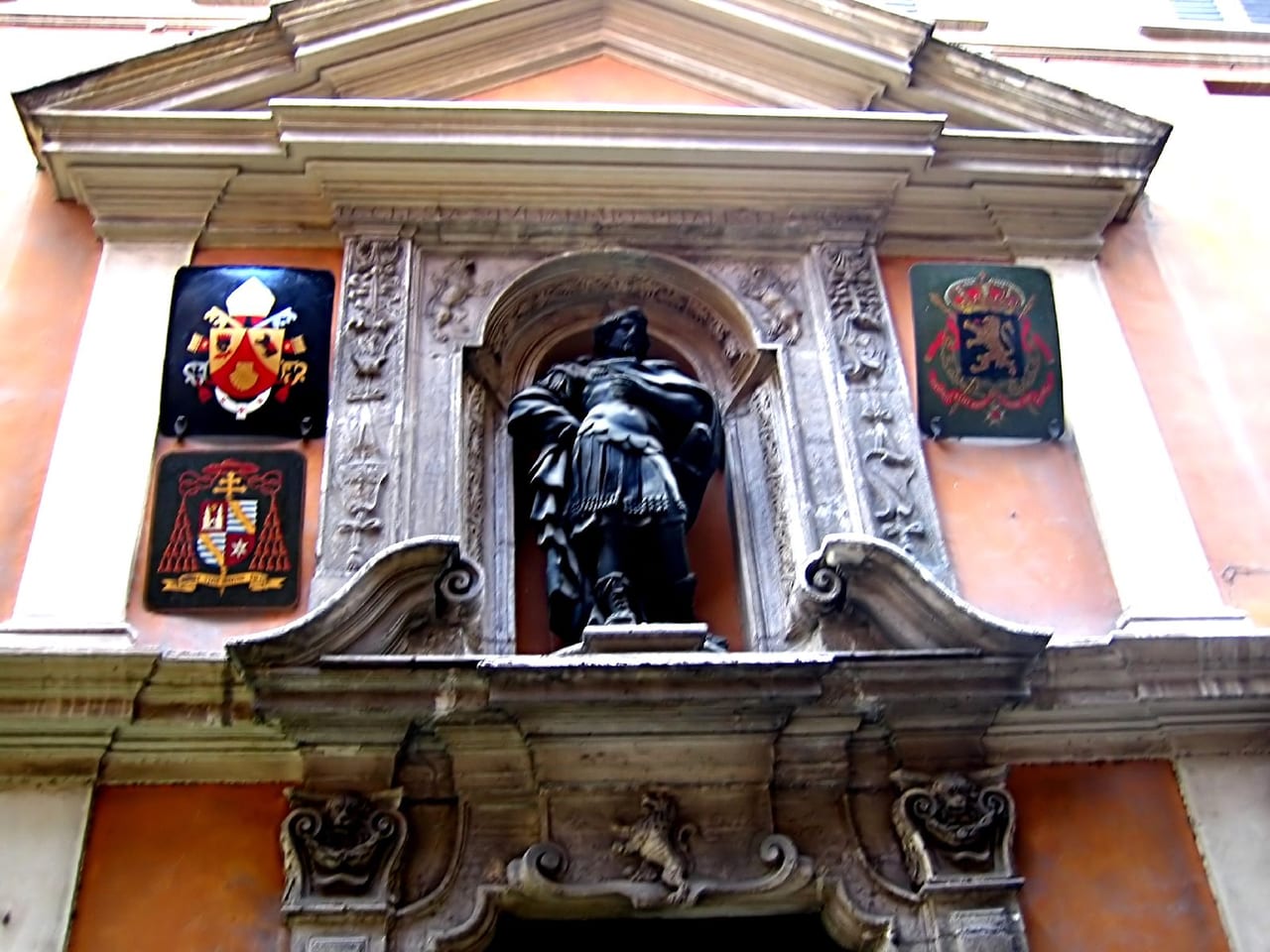
San Giuliano dei Fiamminghi has an ancient, partly uncertain origin, traditionally linked to the pontificate of Gregory II in the eighth century, when Flanders was converted to Christianity. It was named for Saint Julian the Hospitaller, a Flemish saint. Tradition also holds that Robert II of Flanders stayed here in 1094 while travelling to the Crusade and later arranged its restoration. The earliest firm records date to 1444, when statutes and regulations for the pilgrim hospital were drawn up. Church and hospital were restored during the fifteenth century; the church was subsequently enlarged and embellished, reaching its present form in 1675. The French Revolution ended the hospital’s work for pilgrims. Administration then passed first to the Netherlands and later to Belgium, and the church is now Belgium’s national church; its title is also attached to the diaconia of San Giuliano dei Fiamminghi. A seventeenth-century statue of Saint Julian occupies a niche in the facade. Inside, the Baroque church has a single nave and preserves works mostly dating from the early eighteenth century. It is recognised as Italian national heritage.
At a glance
- Built
- 1675
- Style
- Baroque
- Heritage
- Italian national heritage
Ways to explore Chiesa di San Giuliano dei Fiamminghi
Pause before the facade to examine the seventeenth-century statue in its niche, then enter the single nave and look closely at the early-eighteenth-century decoration. The principal visual focus is the ceiling medallion by William Kent, the English artist later associated with the English landscape garden: it depicts the Apotheosis of Saint Julian and is framed by four allegorical figures representing the four counties of Flanders. The compact interior rewards an unhurried, upward-looking visit.
Places to stay near Chiesa di San Giuliano dei Fiamminghi

Live availability and prices from Stay22's partners, refreshed periodically and subject to change. Booking through these links may earn us a commission at no extra cost to you. See our privacy policy.
Cafés near Chiesa di San Giuliano dei Fiamminghi
Cafés near Chiesa di San Giuliano dei Fiamminghi loads as you scroll.
Attractions nearby
Attractions near Chiesa di San Giuliano dei Fiamminghi loads as you scroll.
Cities nearby
Cities nearby loads as you scroll.
More in Rome
See more of Rome.
Find great cafés, places to stay and other interesting places to visit in Rome.