Ancient site · Rome
Baths of Diocletian
DirectionsThe Baths of Diocletian were twice as extensive as the Baths of Caracalla, an extraordinary scale whose surviving halls, walls and monumental exedra still shape the surrounding city.
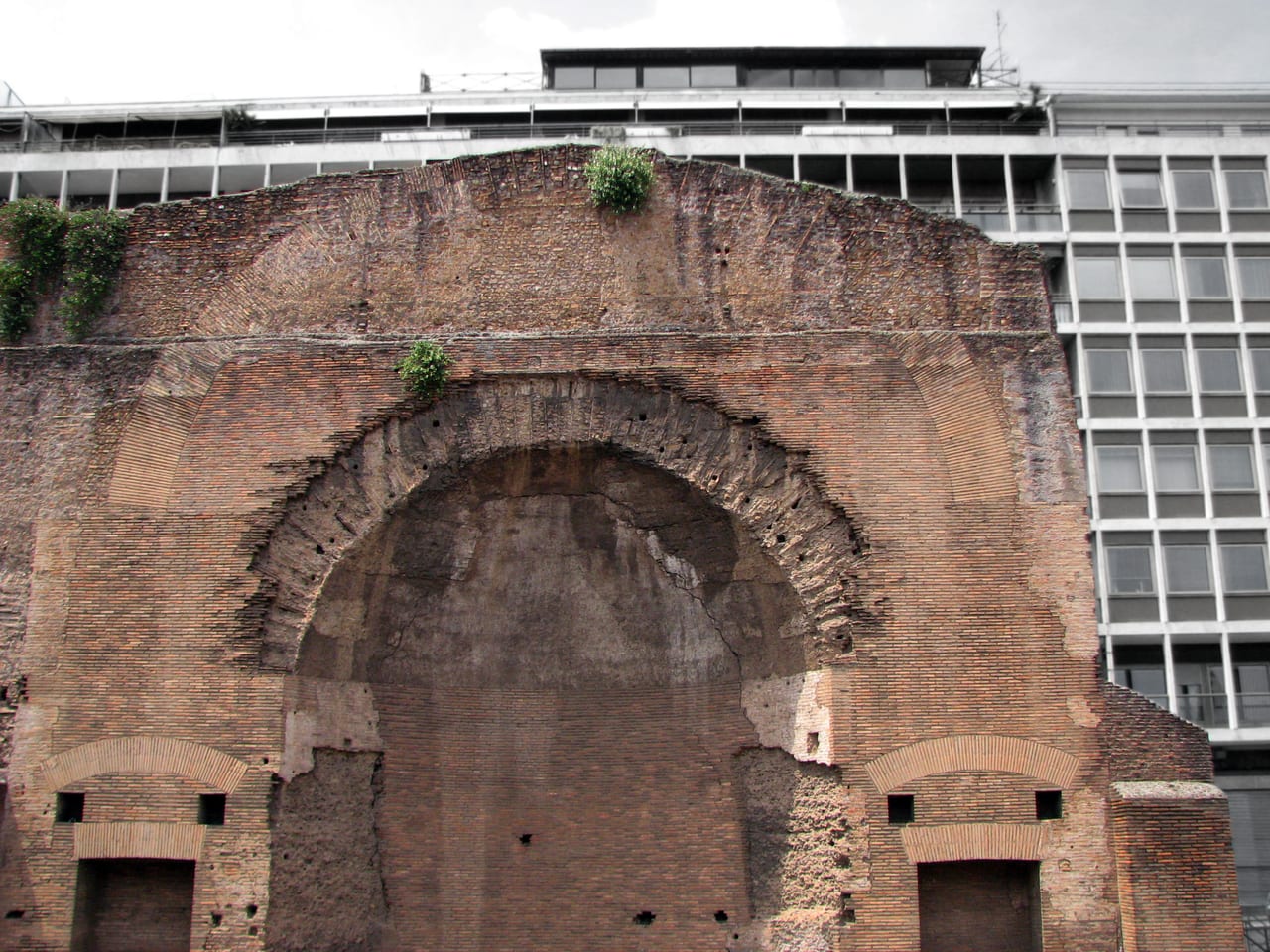
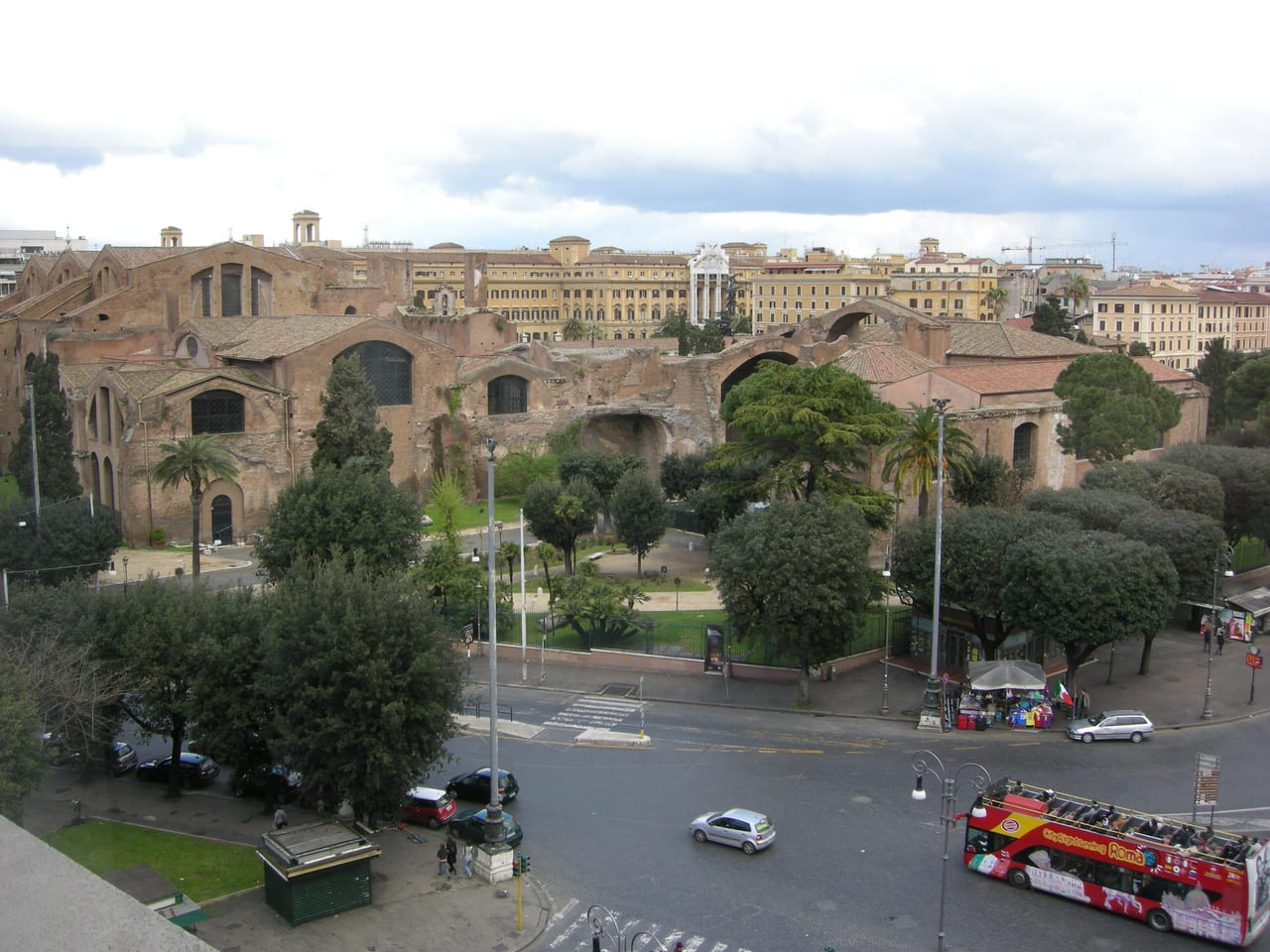
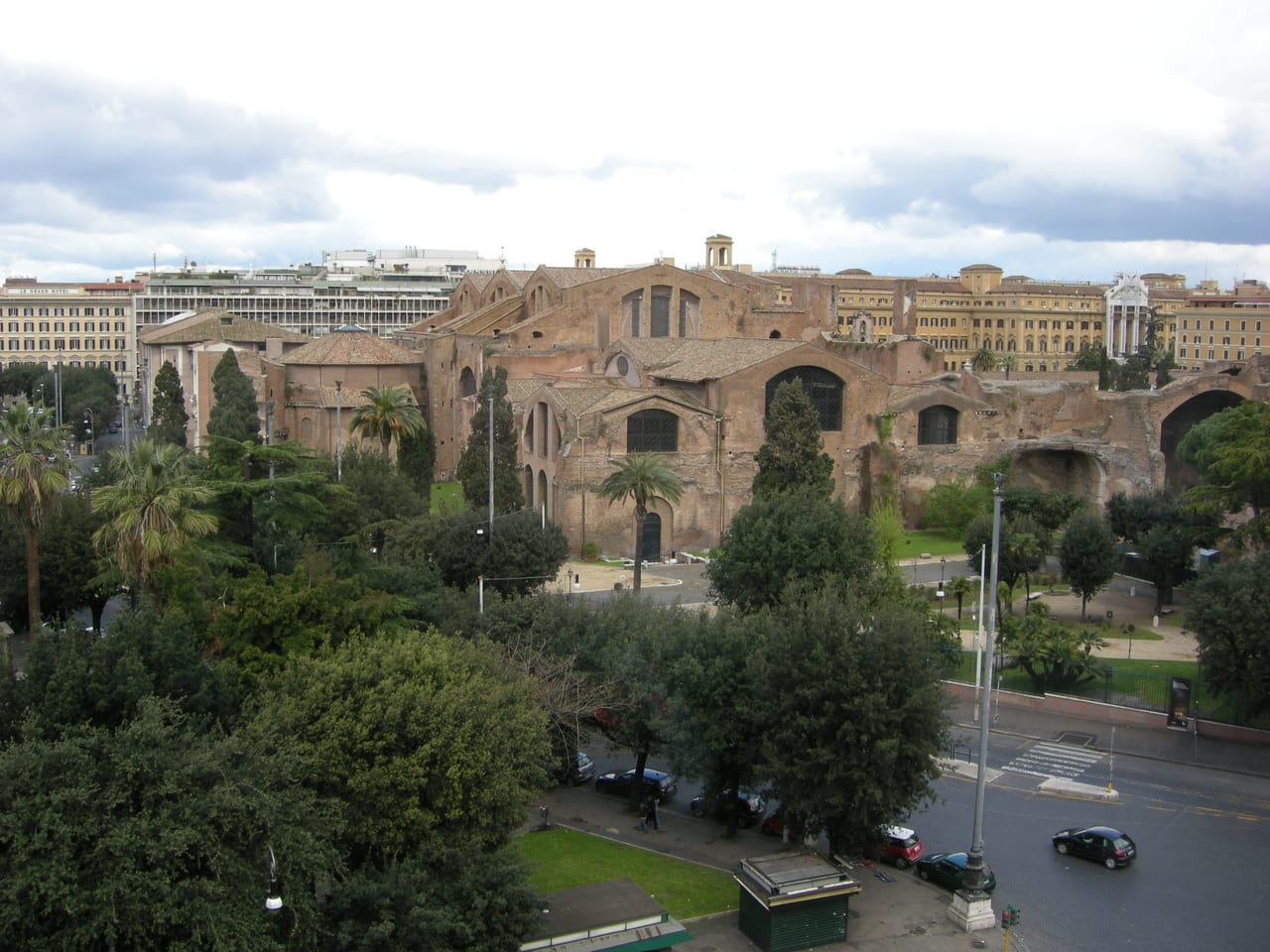
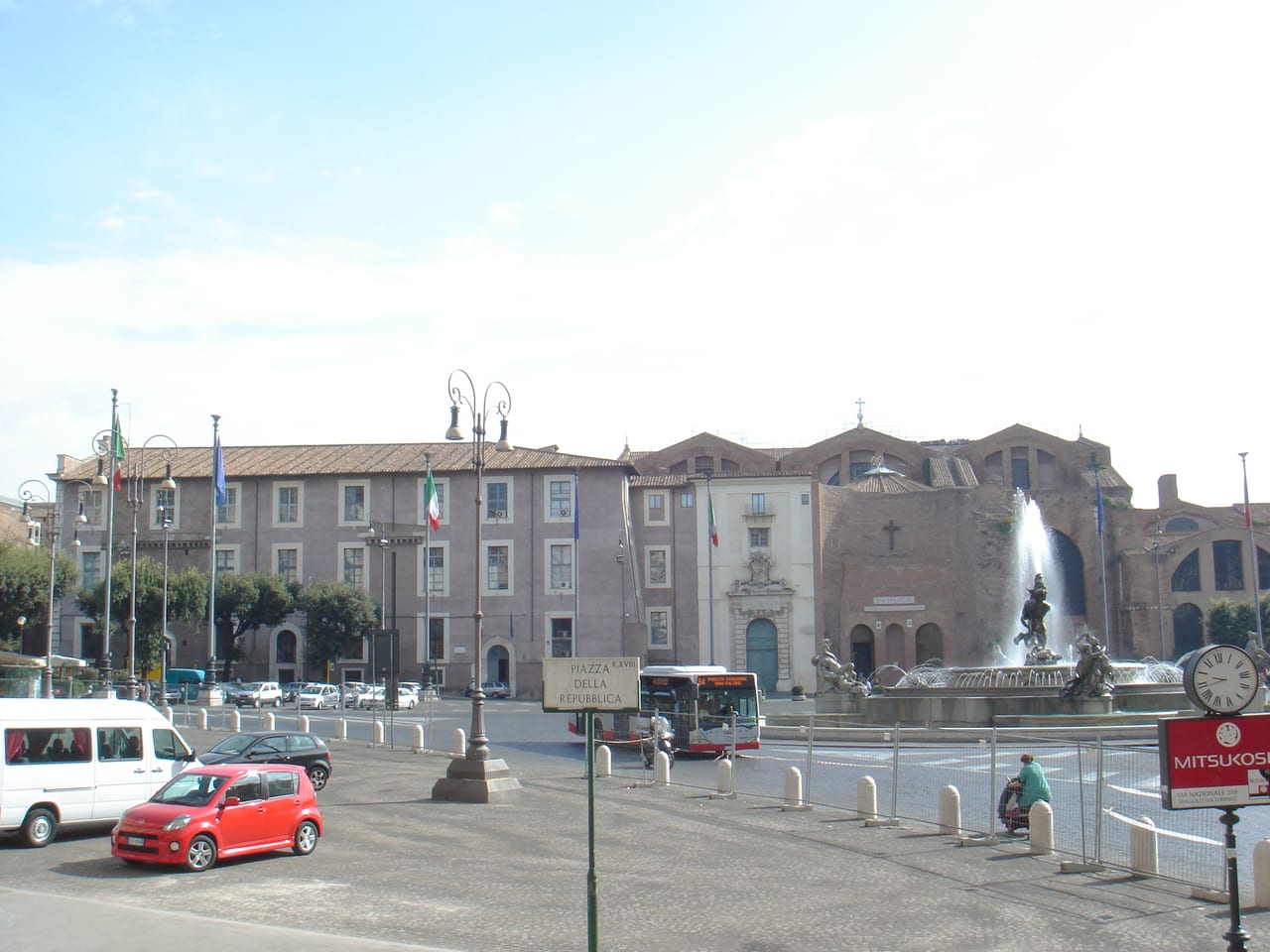
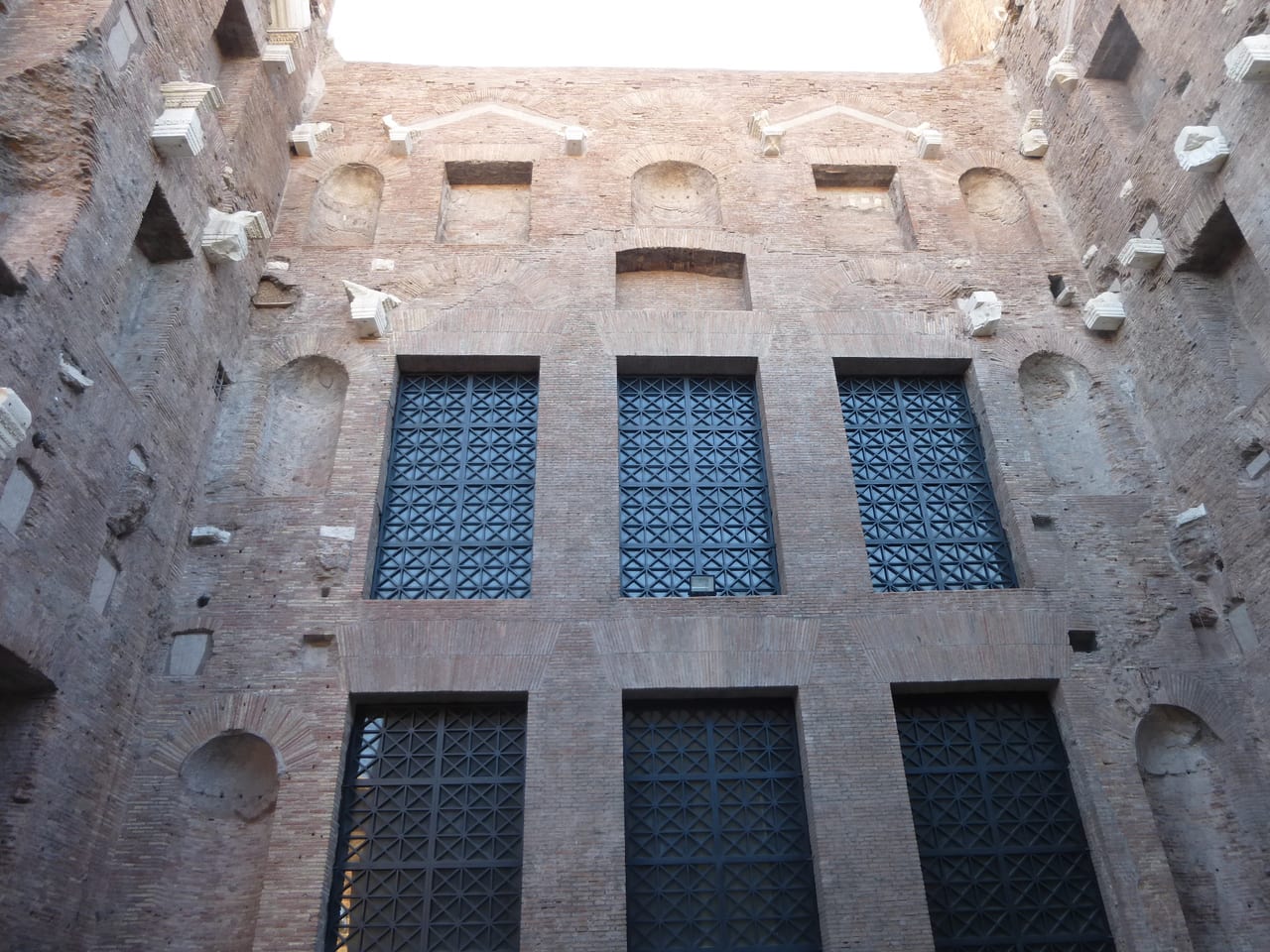
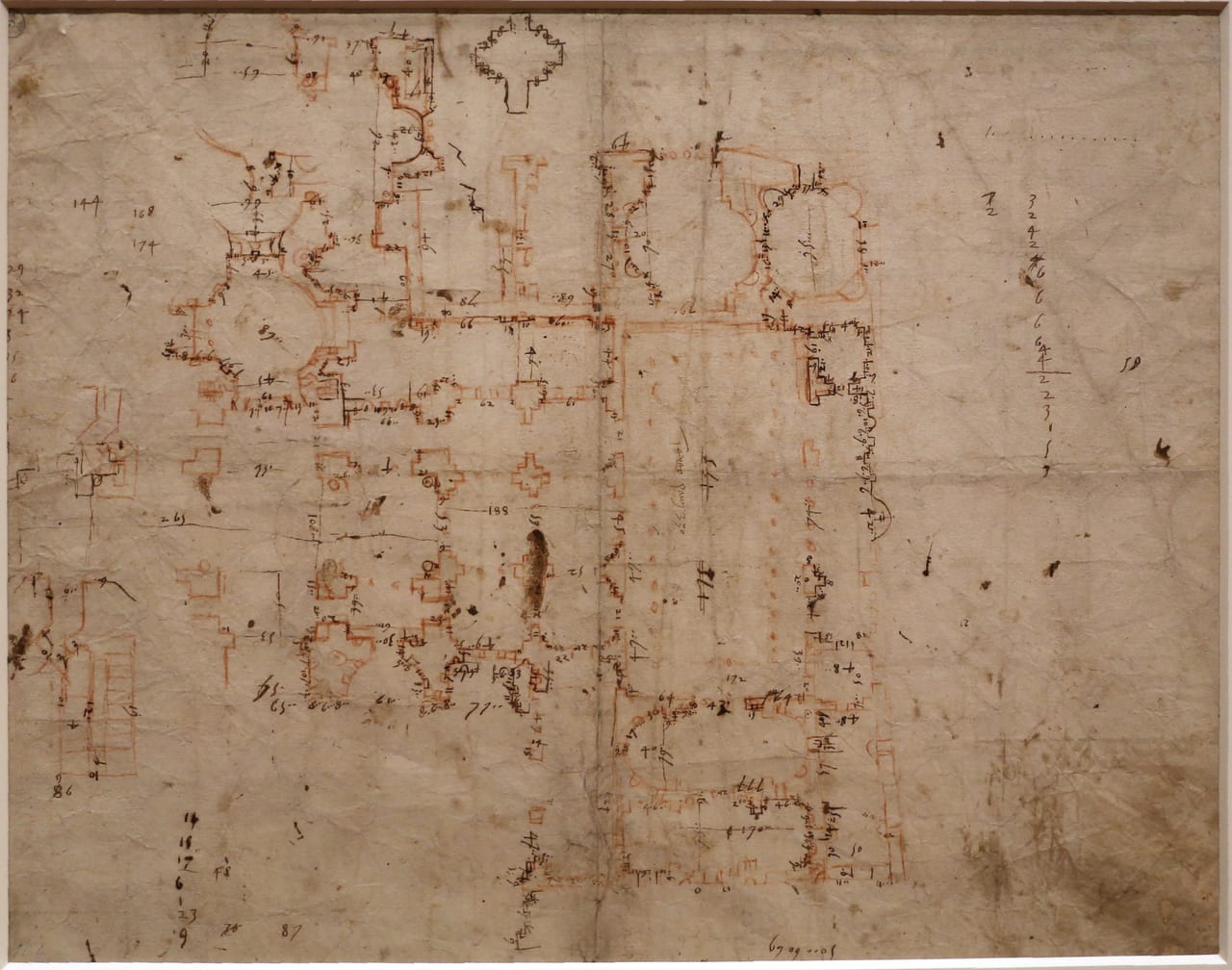
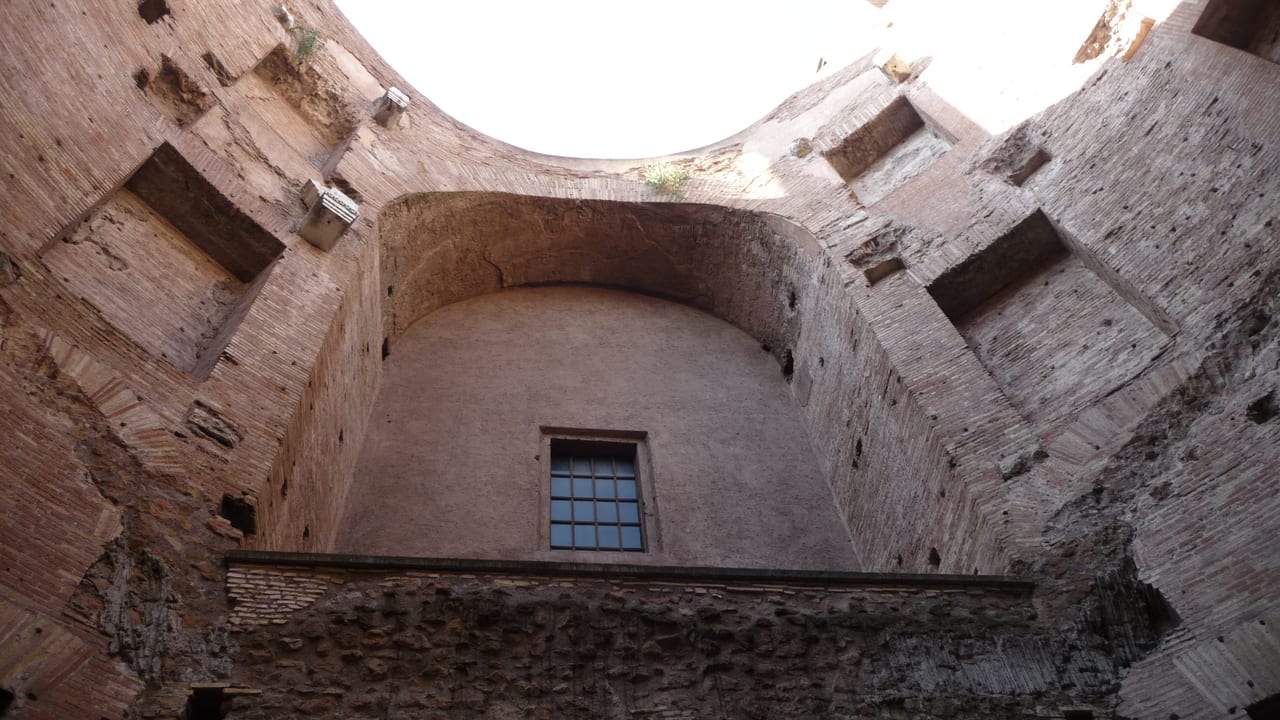
Photograph 1 of 23 of Baths of Diocletian
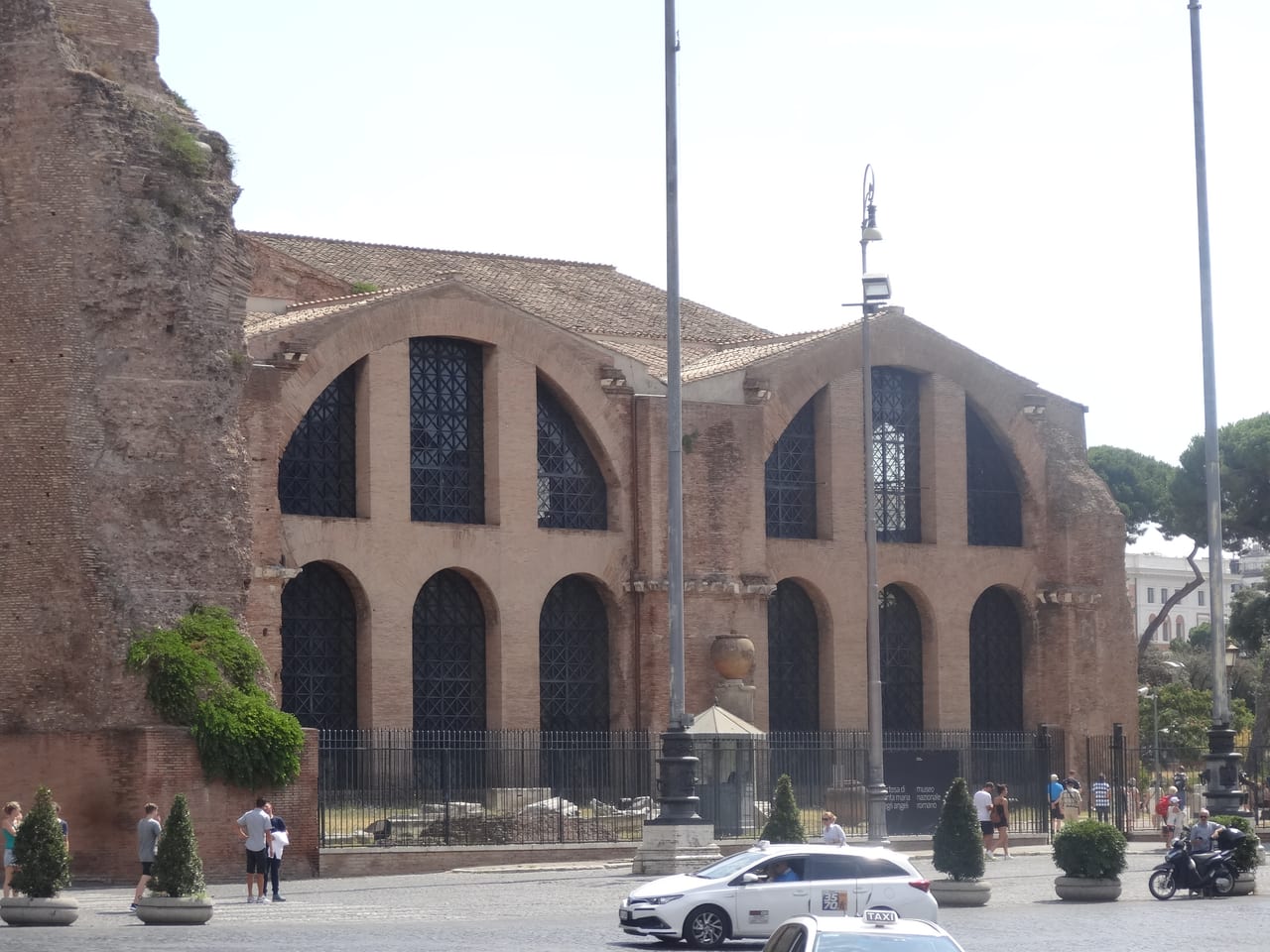
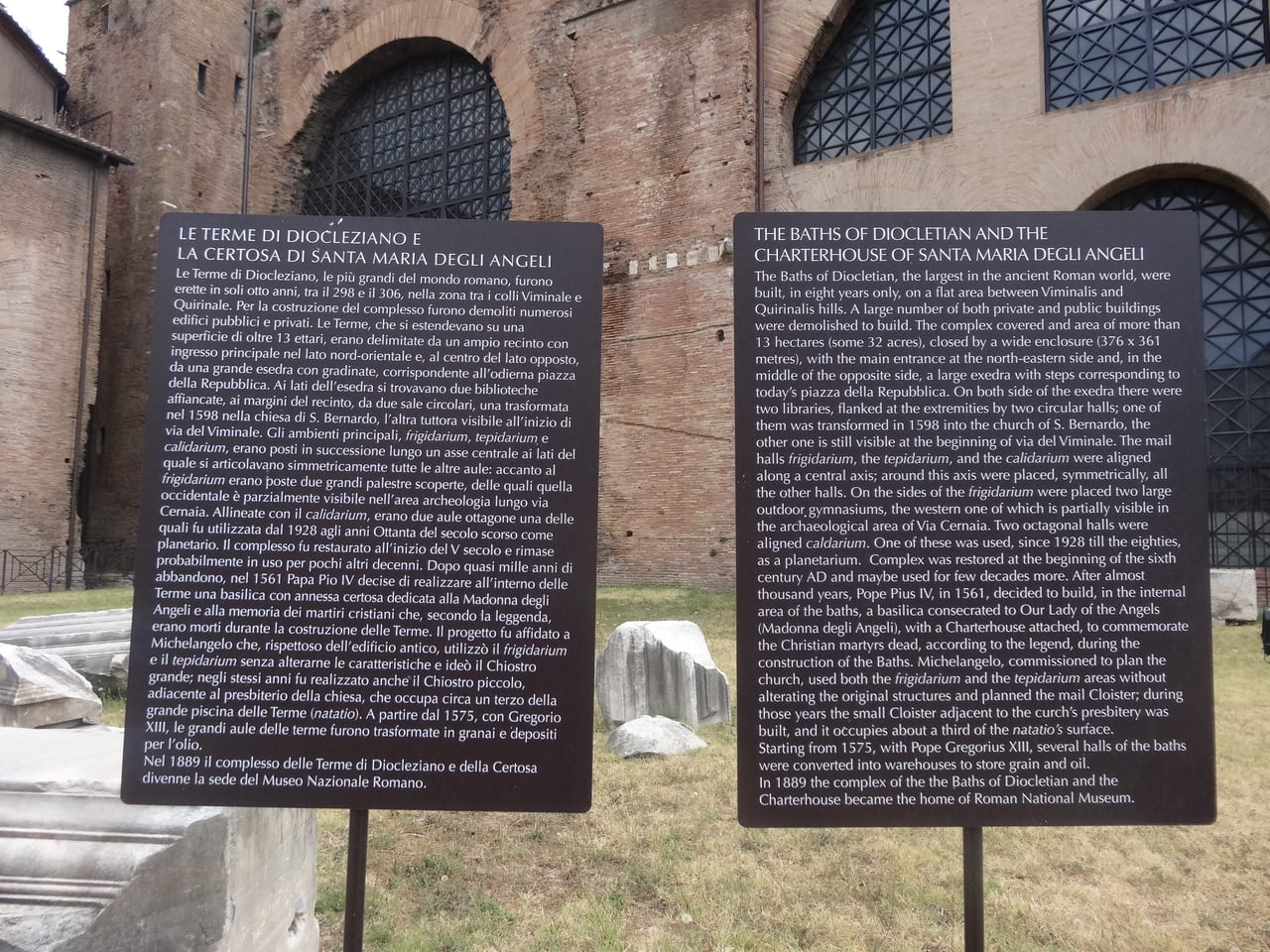
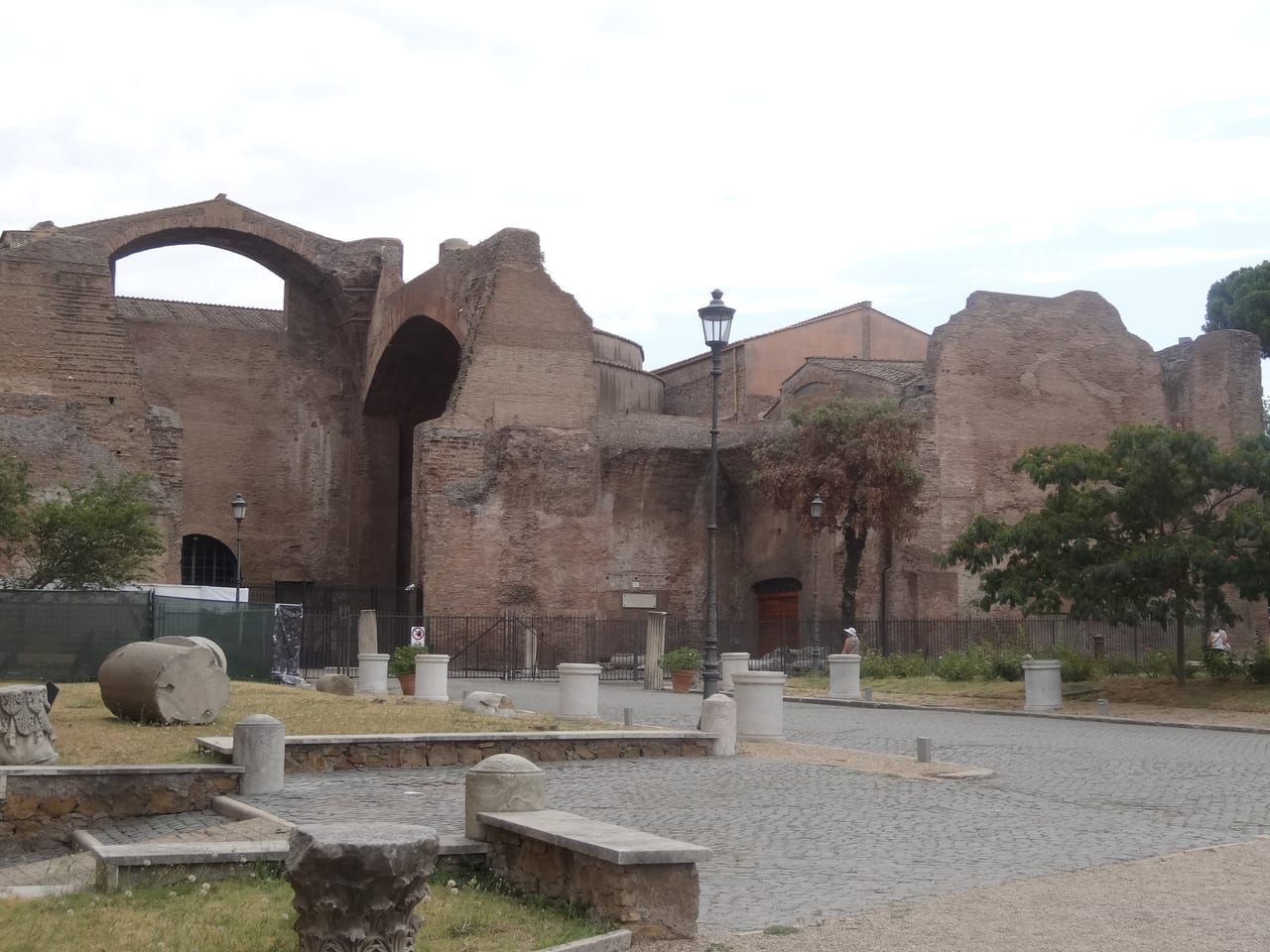
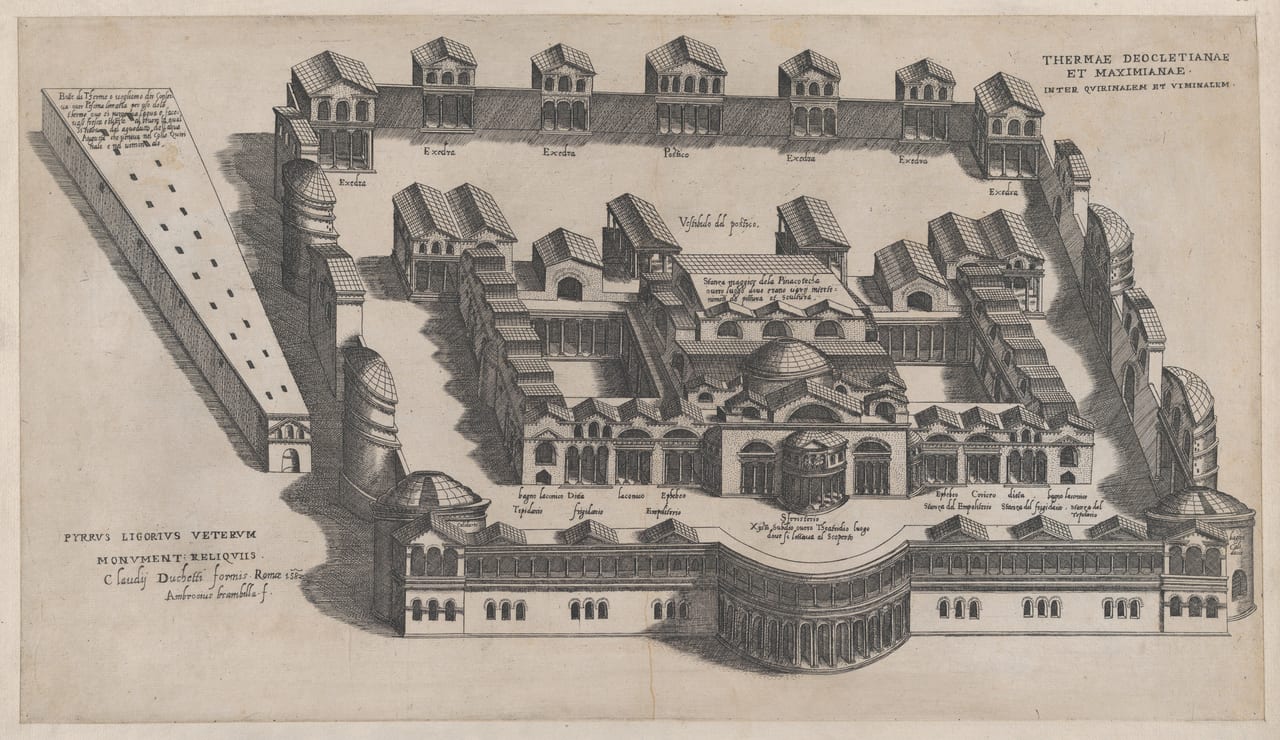
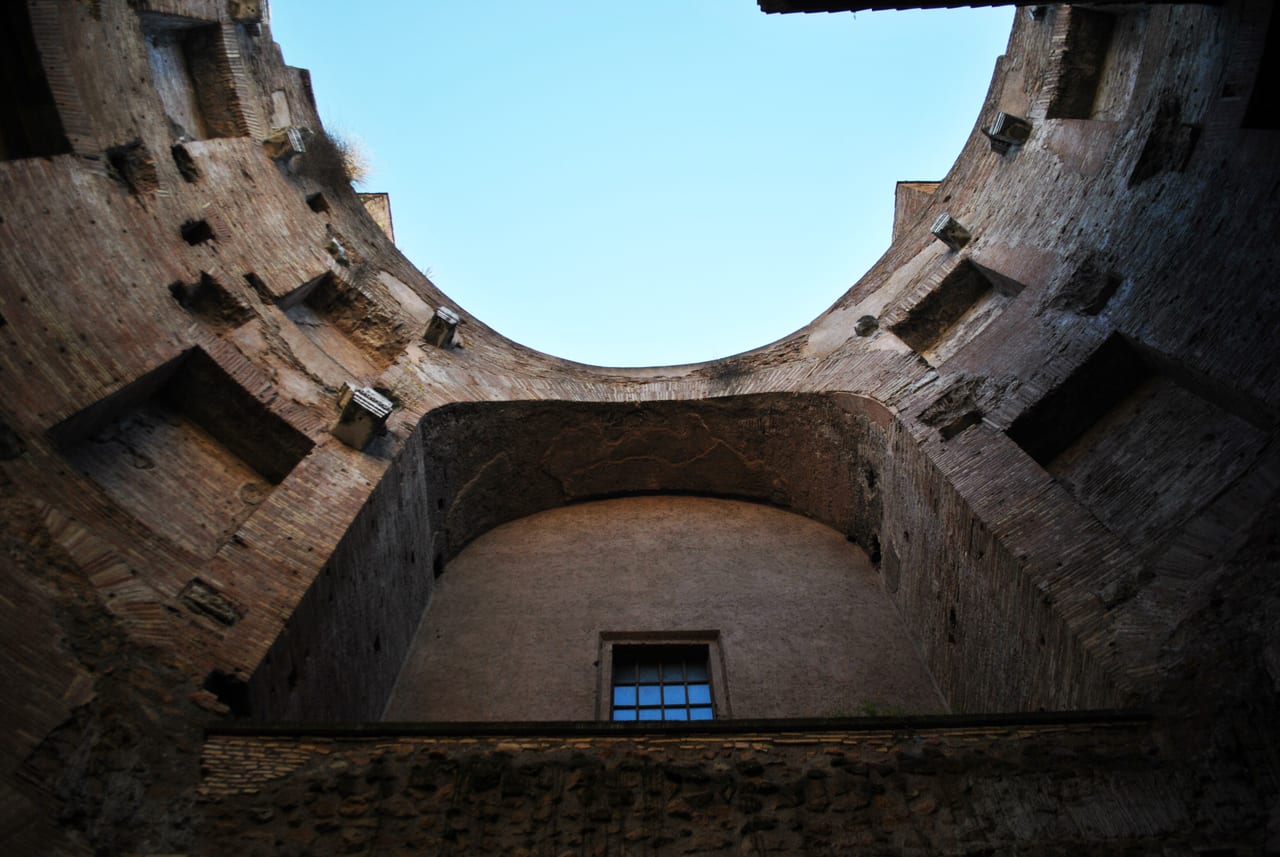
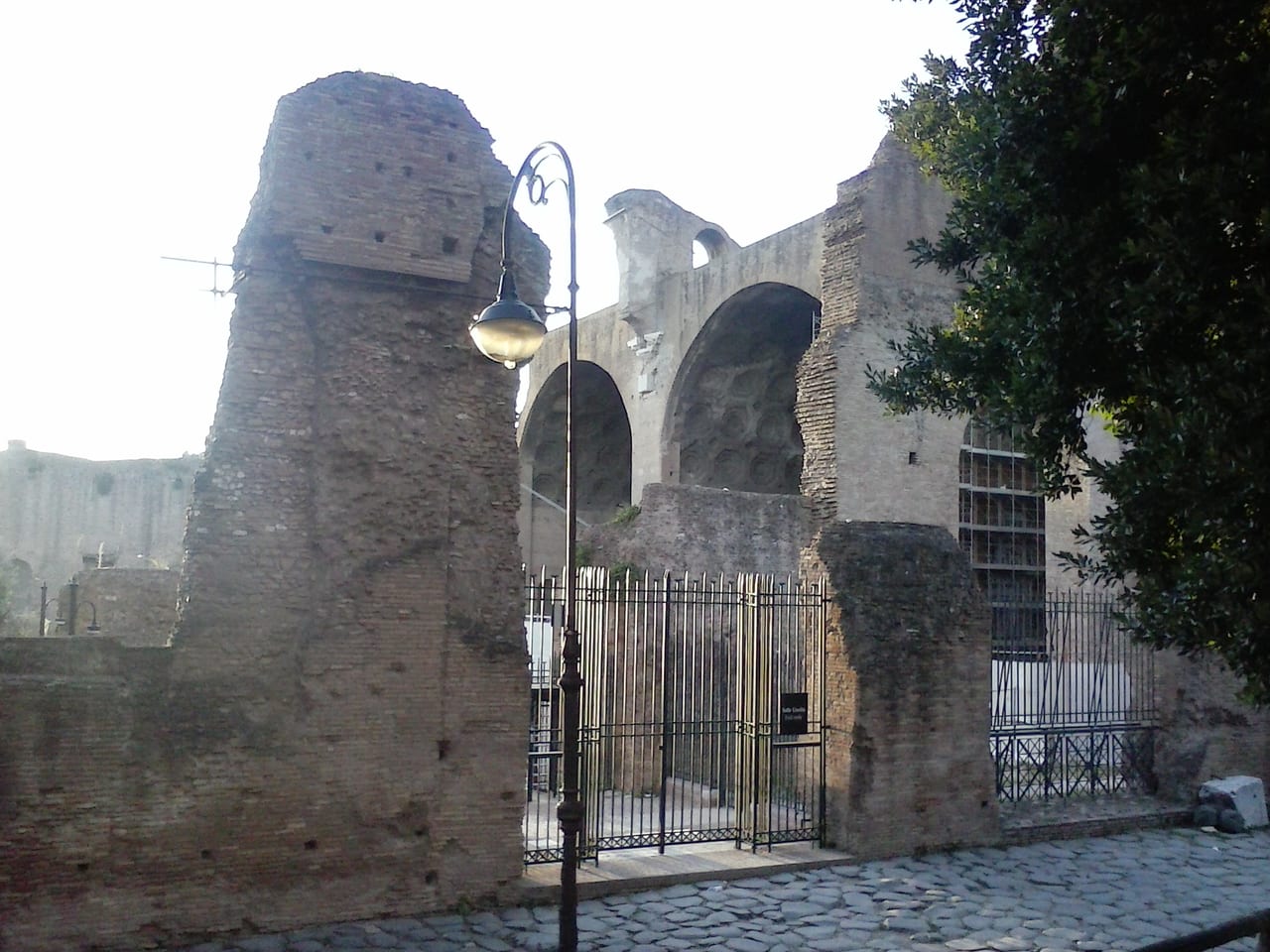
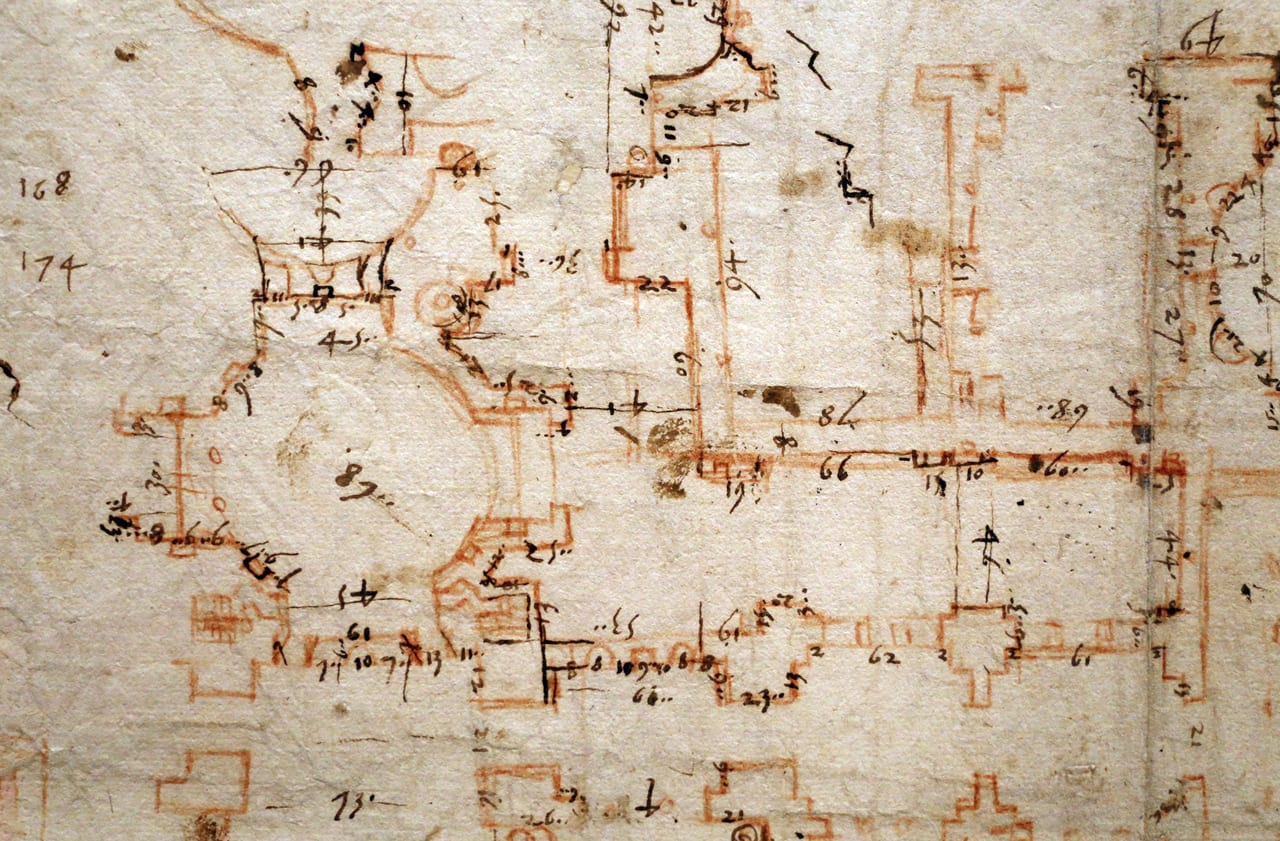
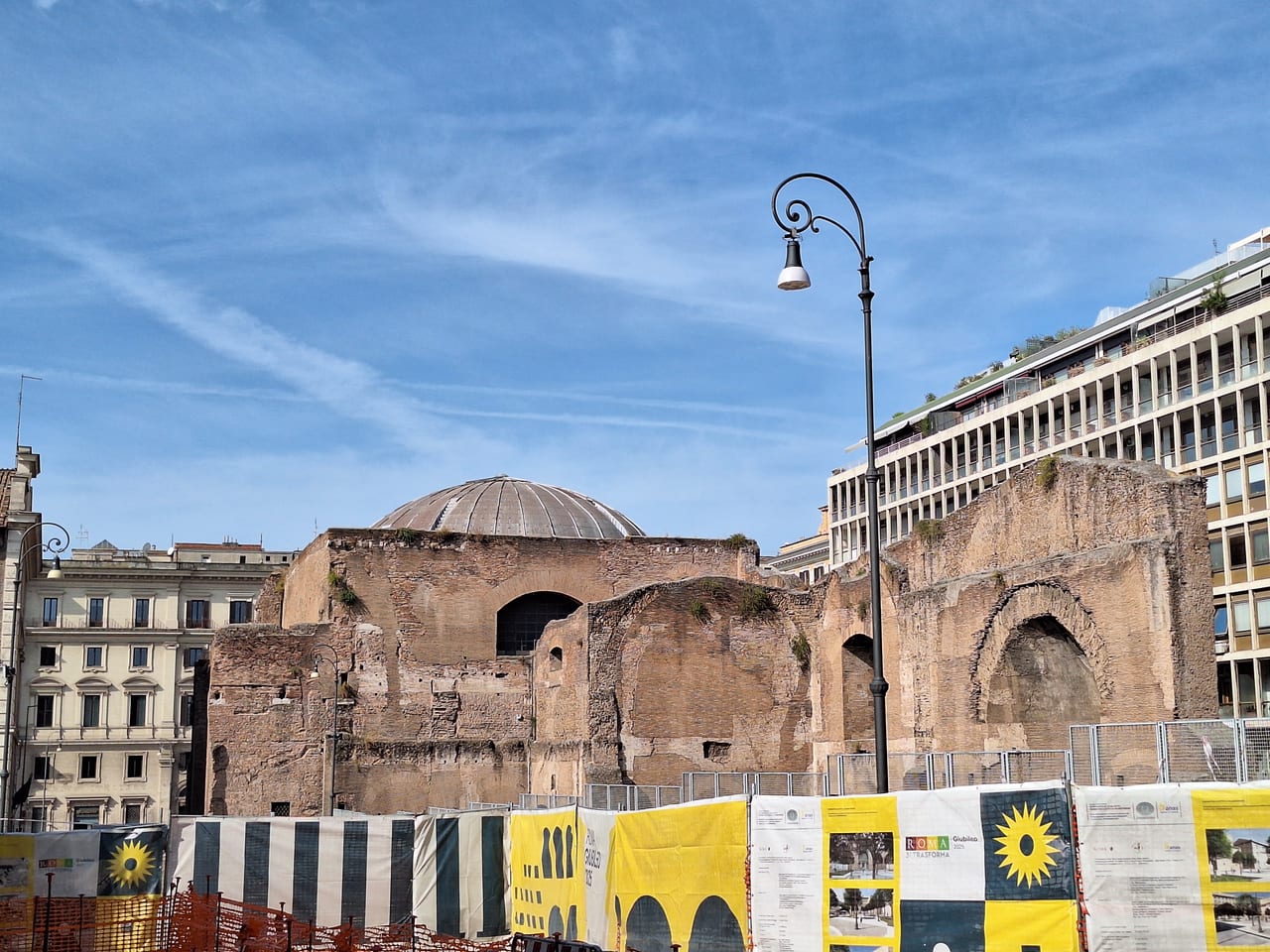
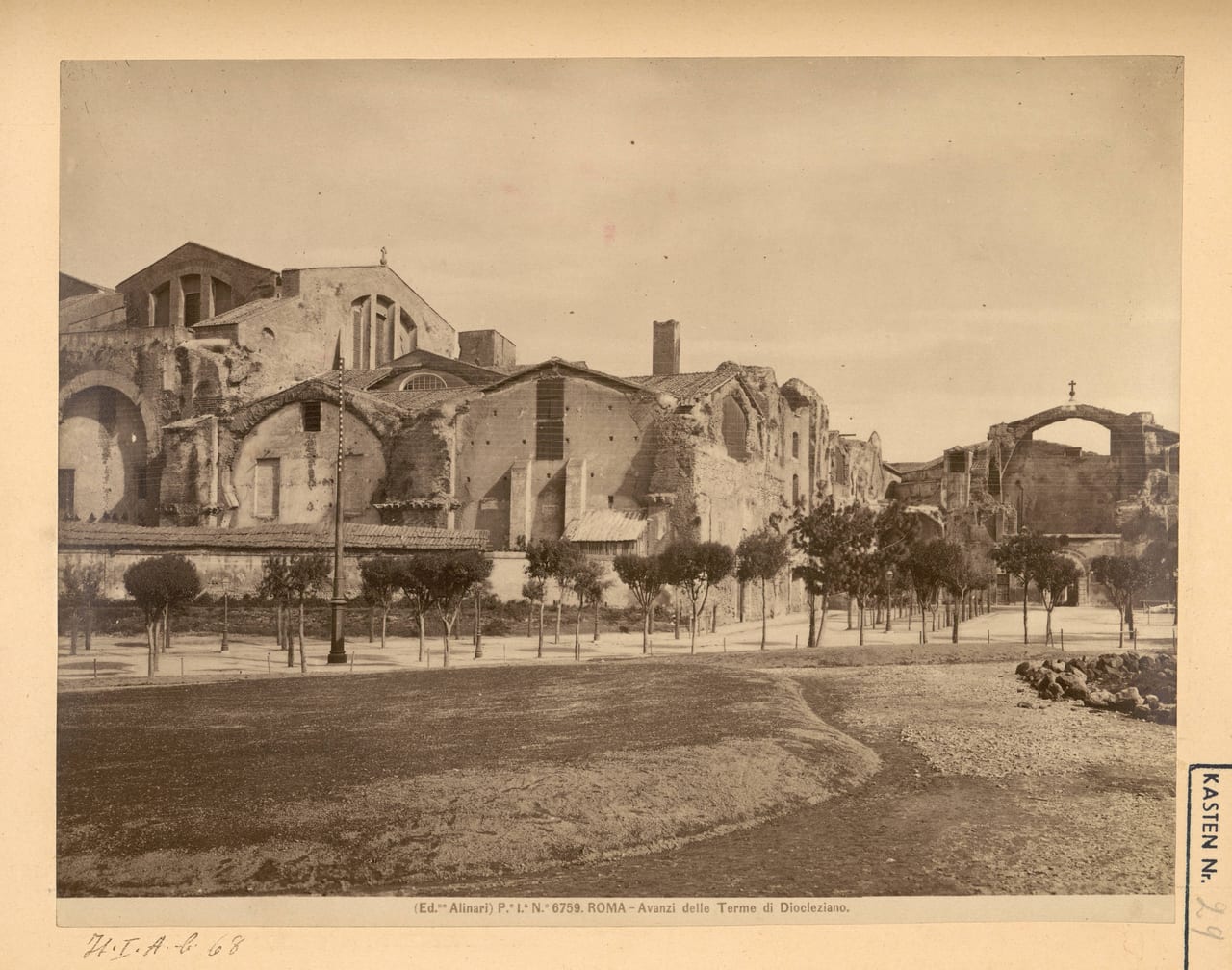
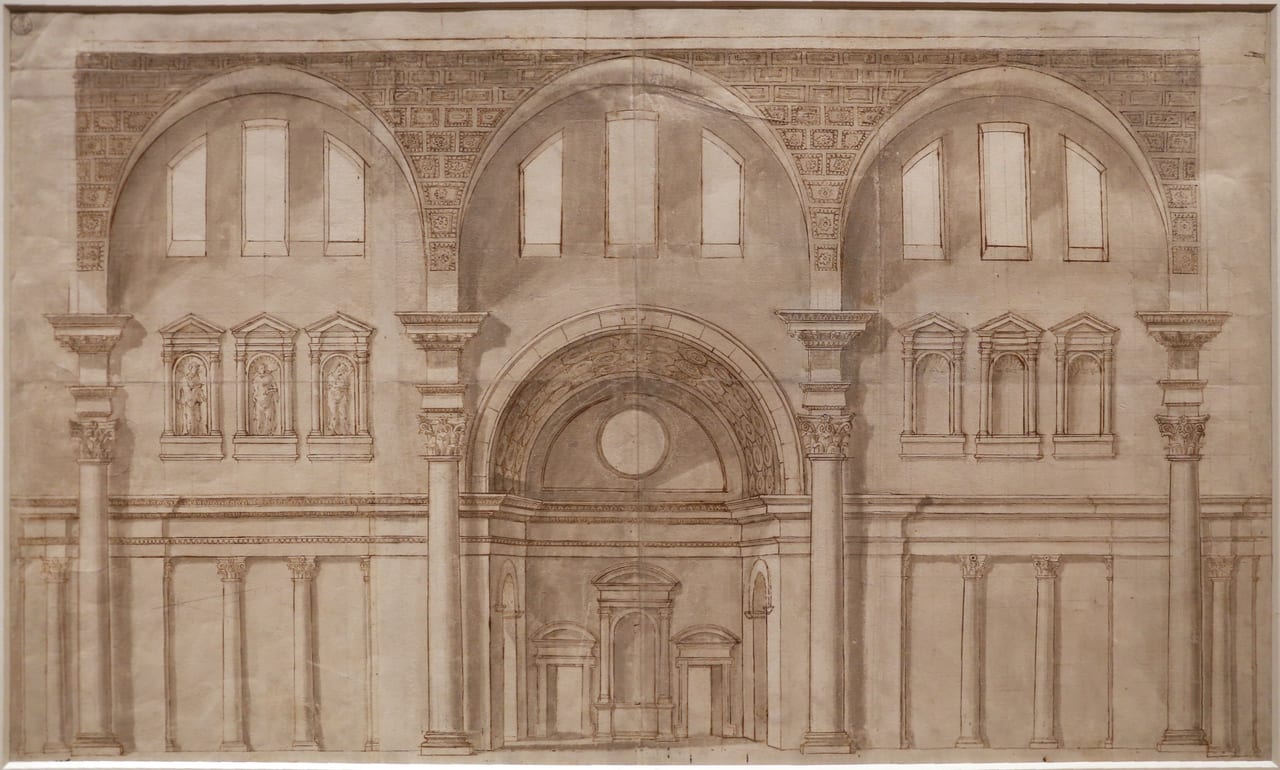
Construction began in 298 under Maximian, Augustus of the West appointed by Diocletian, and the baths opened in 306, shortly after both emperors abdicated. An entire residential quarter was cleared for the project, whose brickwork carries unusually abundant Diocletianic stamps. The baths remained partly in use until 537, when Vitiges’s Goths cut the aqueducts; Belisarius also blocked their entrances through the walls. Like the Baths of Trajan and Caracalla, the complex was arranged around a symmetrical central block, with calidarium, tepidarium and frigidarium aligned on one axis, and palaestrae on the other. Its south-western orientation allowed sunlight to heat the calidarium without warming the frigidarium. Over subsequent centuries, the ruins became a quarry and accommodated private uses, including horse training. Between 1586 and 1589, Sixtus V demolished major remains for his villa. In 1560, the frigidarium became Santa Maria degli Angeli e dei Martiri, remodelled by Michelangelo and later Vanvitelli. The former Carthusian convent became the first site of the Museo Nazionale Romano in 1889; other spaces became exhibition rooms in 2000. Palladio had already drawn the ruins in full.
At a glance
- Heritage
- Italian national heritage
Ways to explore Baths of Diocletian
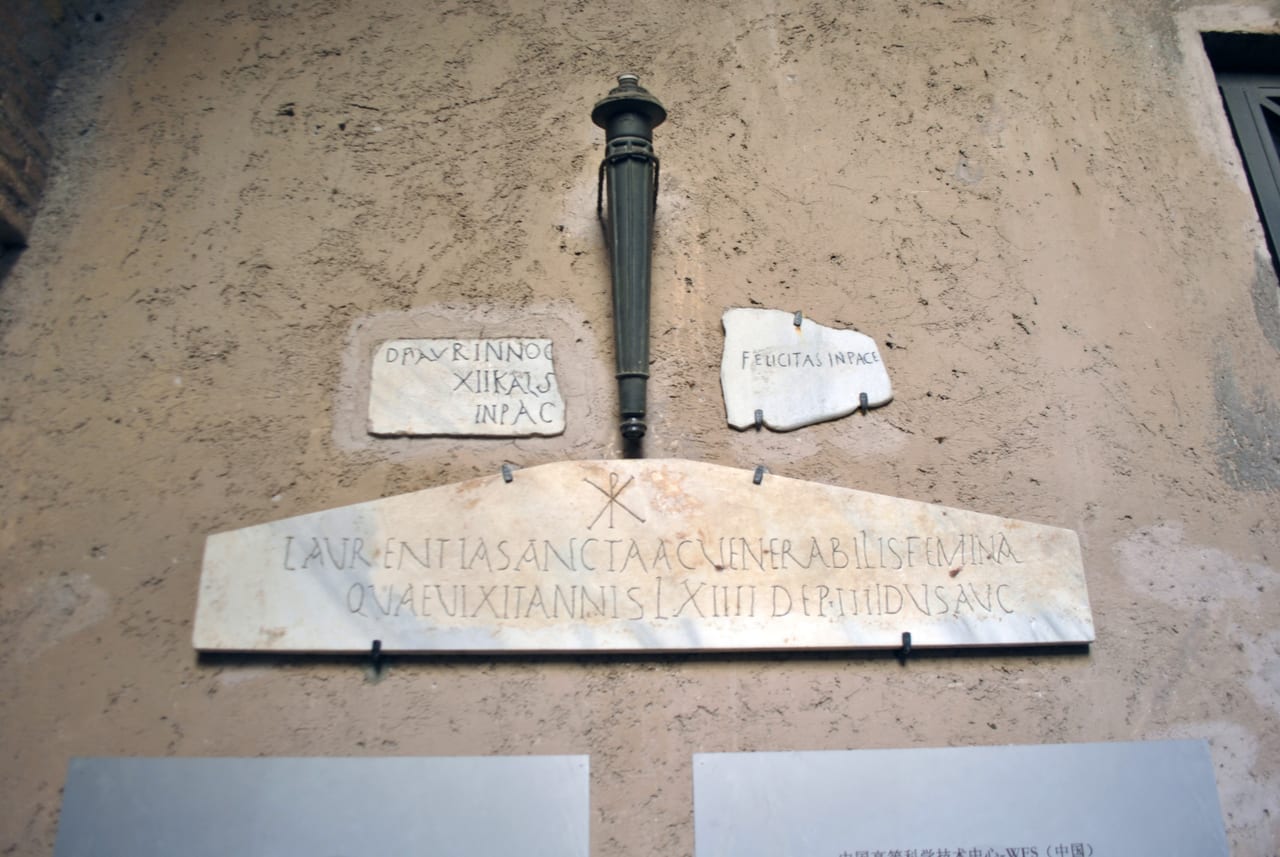
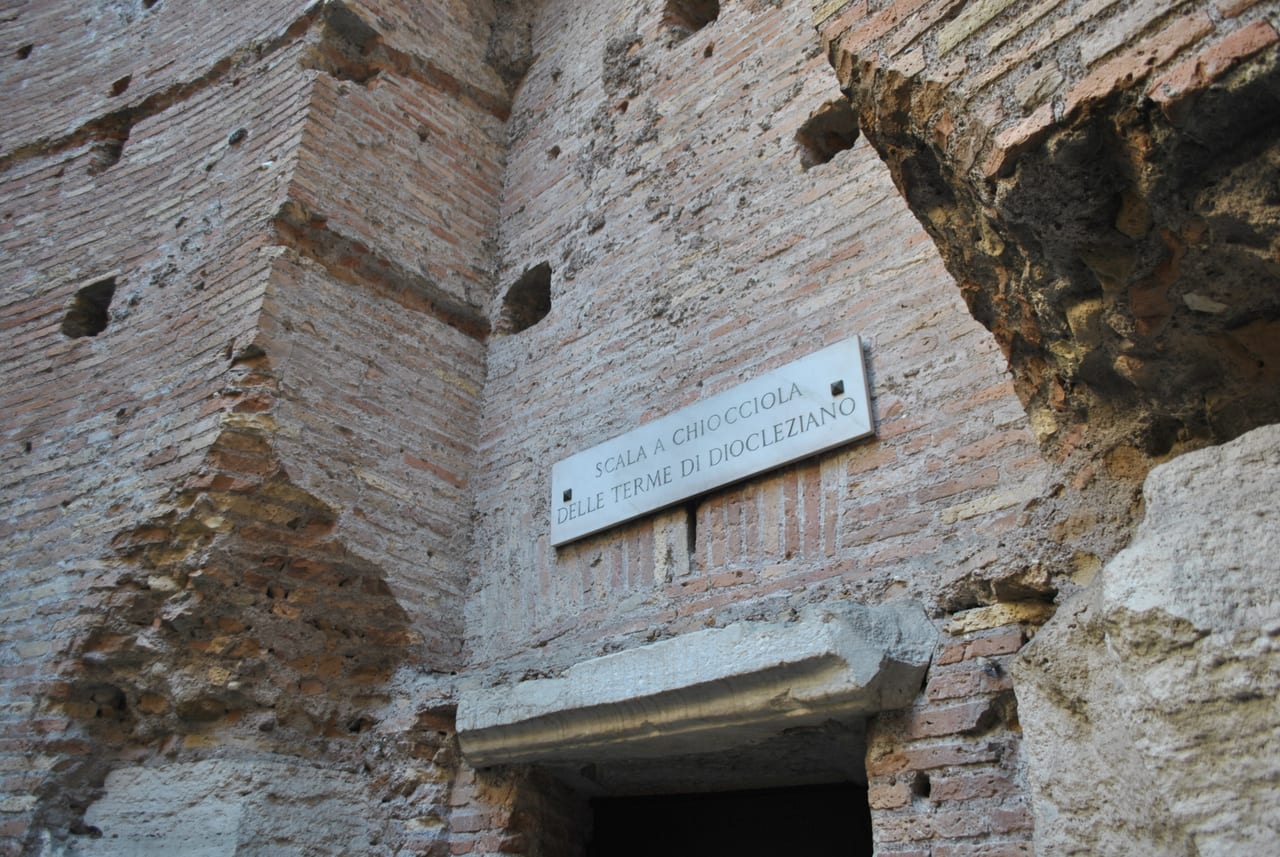
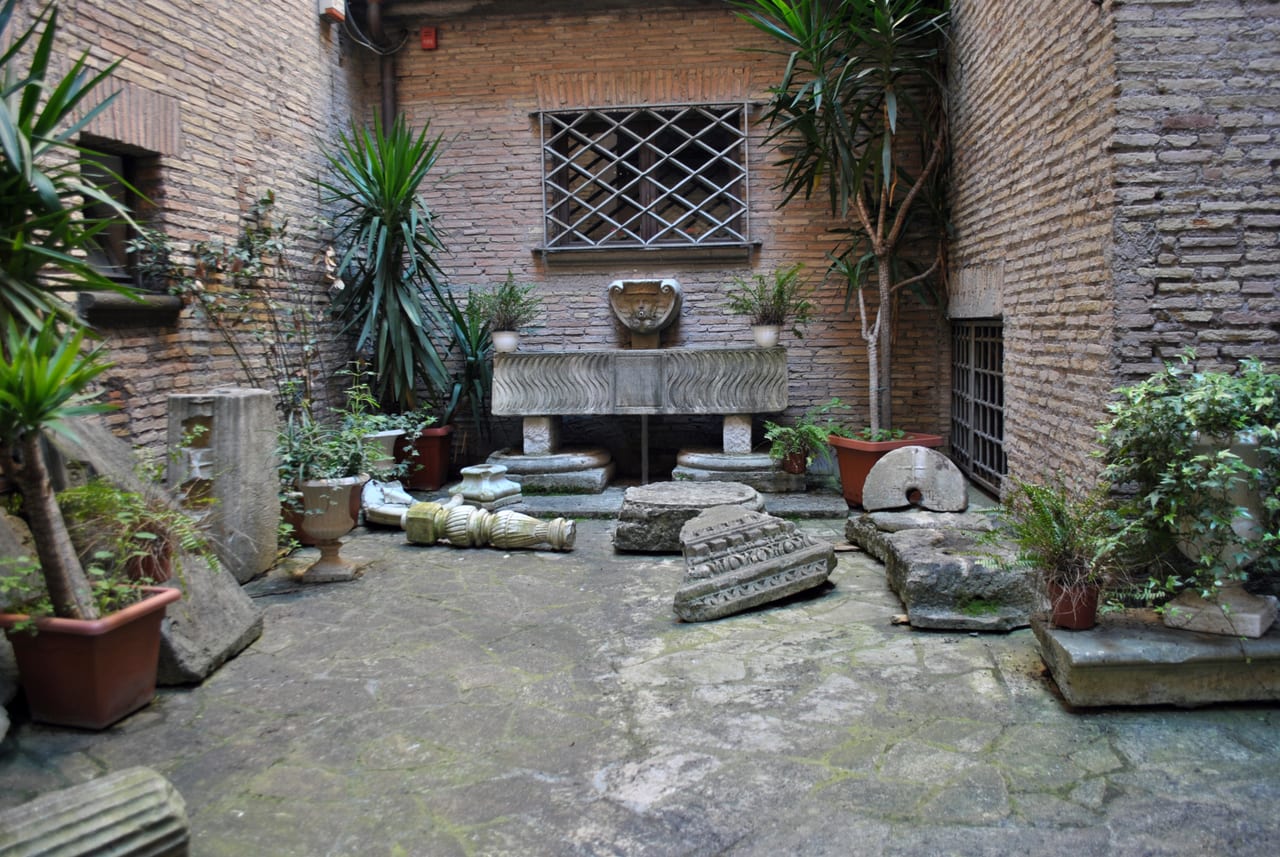
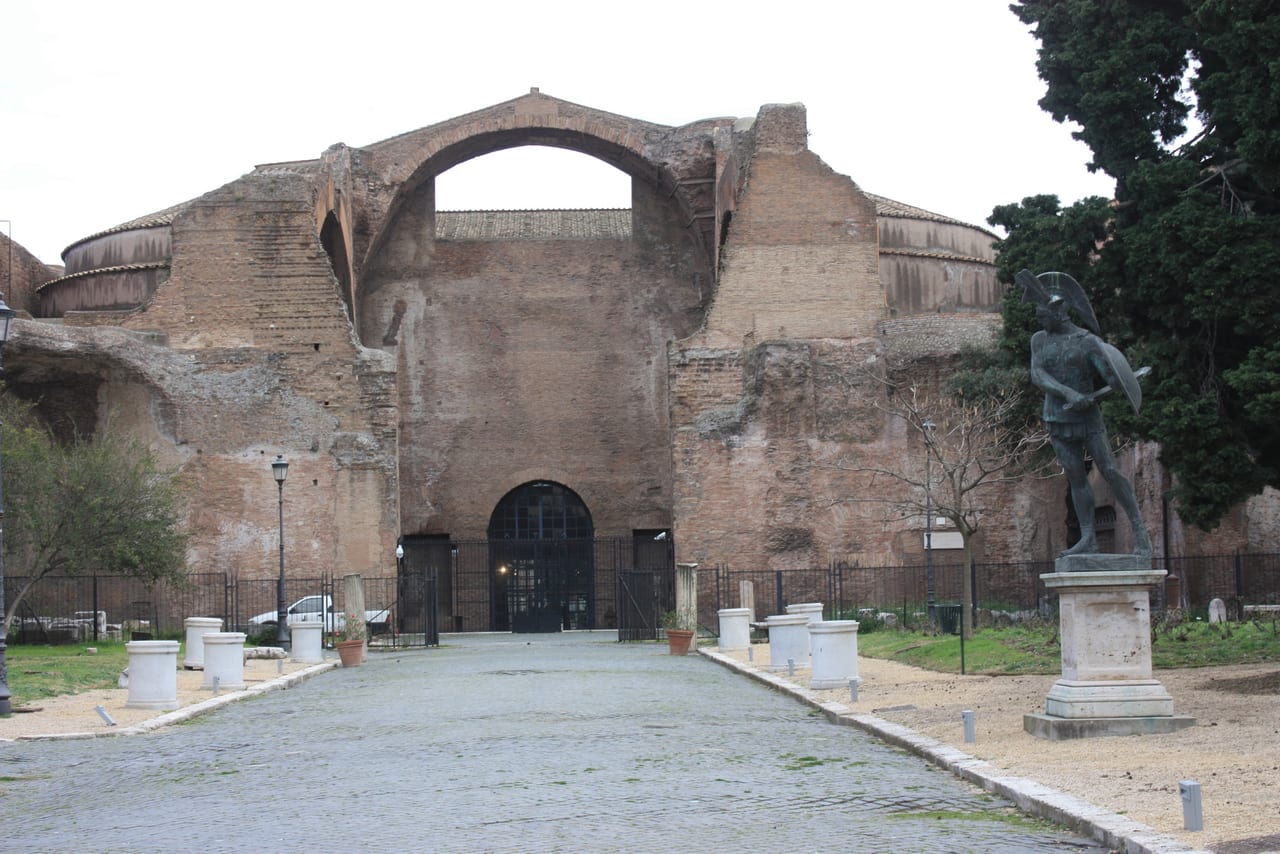
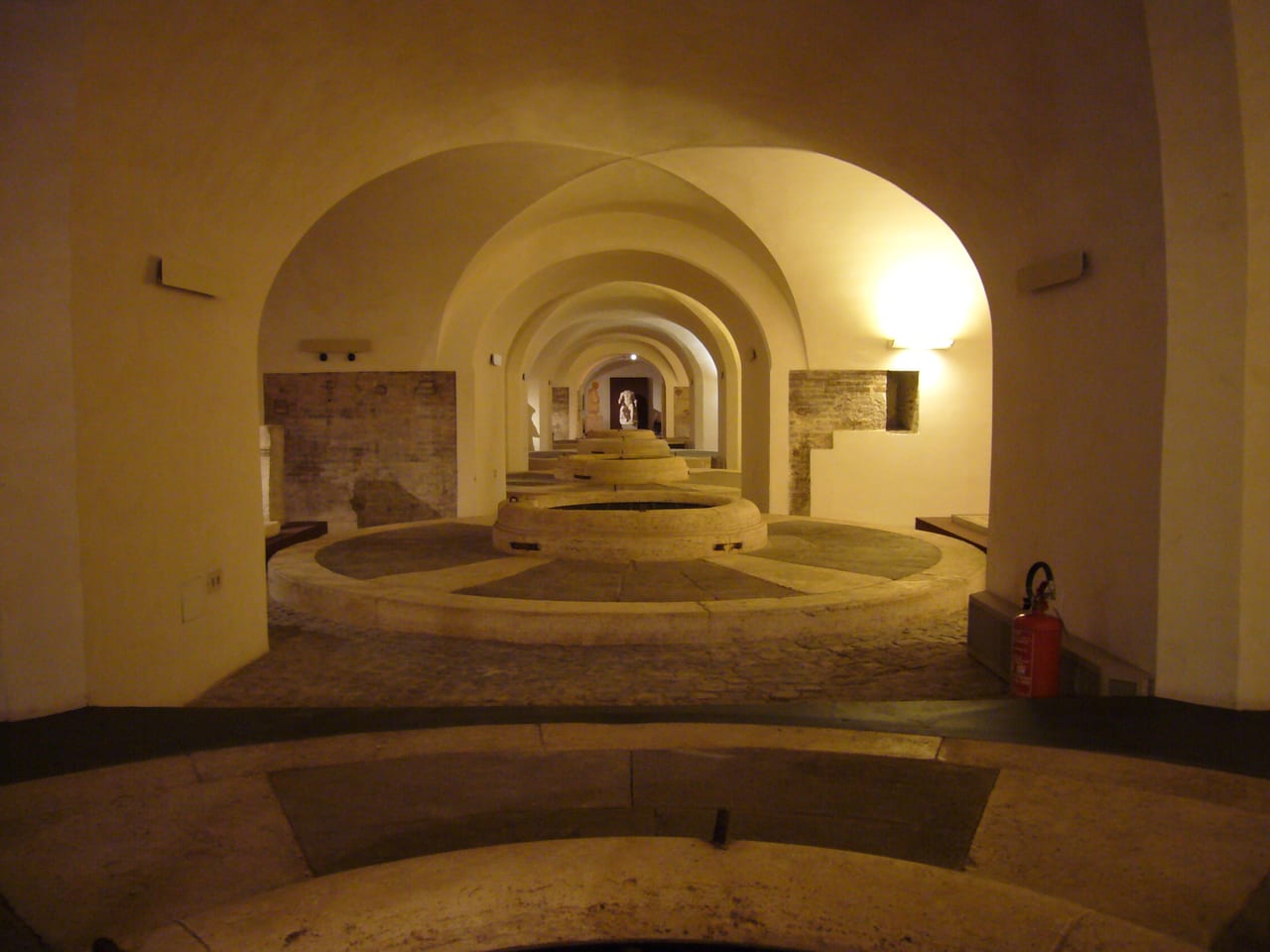
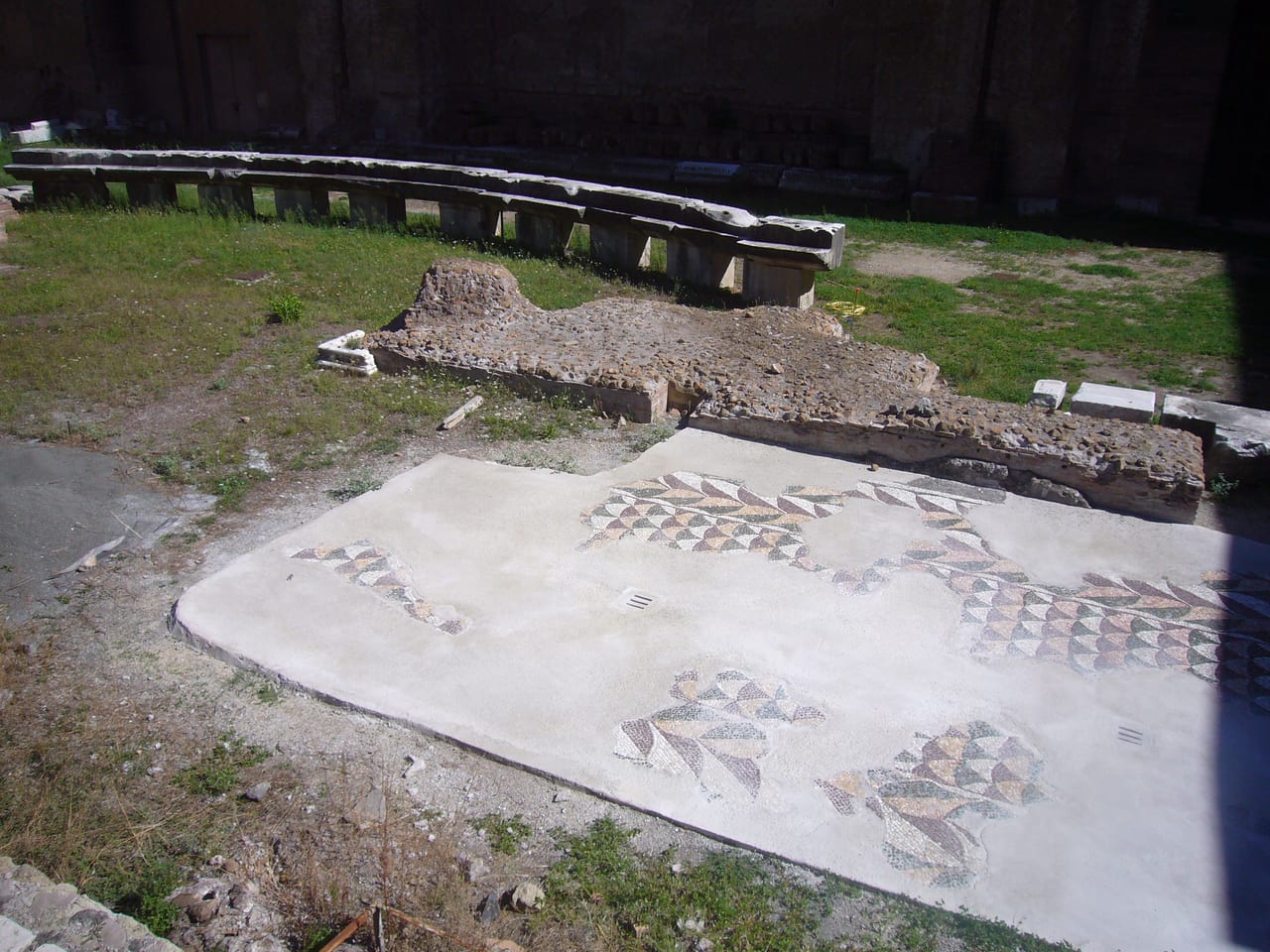
Begin with Santa Maria degli Angeli e dei Martiri, where the ancient interior survives in the transept’s three cross vaults and eight huge monolithic granite columns. In the Museo delle Terme, inspect the remains of the natatio, its wall brackets and decorative details, then look into the oval and rectangular rooms beside it. From the museum garden, study the surviving façade and the two exedrae, one retaining its mosaic floor. Outside, follow the preserved enclosure wall and compare the curved piazza colonnade with the ancient entrance outline. The complex is reachable from Roma Termini.
Places to stay near Baths of Diocletian

Live availability and prices from Stay22's partners, refreshed periodically and subject to change. Booking through these links may earn us a commission at no extra cost to you. See our privacy policy.
Cafés near Baths of Diocletian
Cafés near Baths of Diocletian loads as you scroll.
Attractions nearby
Attractions near Baths of Diocletian loads as you scroll.
Cities nearby
Cities nearby loads as you scroll.
More in Rome
See more of Rome.
Find great cafés, places to stay and other interesting places to visit in Rome.