Ancient site · Rome
Baths of Caracalla
DirectionsBeneath its monumental bathing halls lies Rome’s largest known mithraeum, an underground sanctuary discovered in 1938 within the service network of the ancient complex.
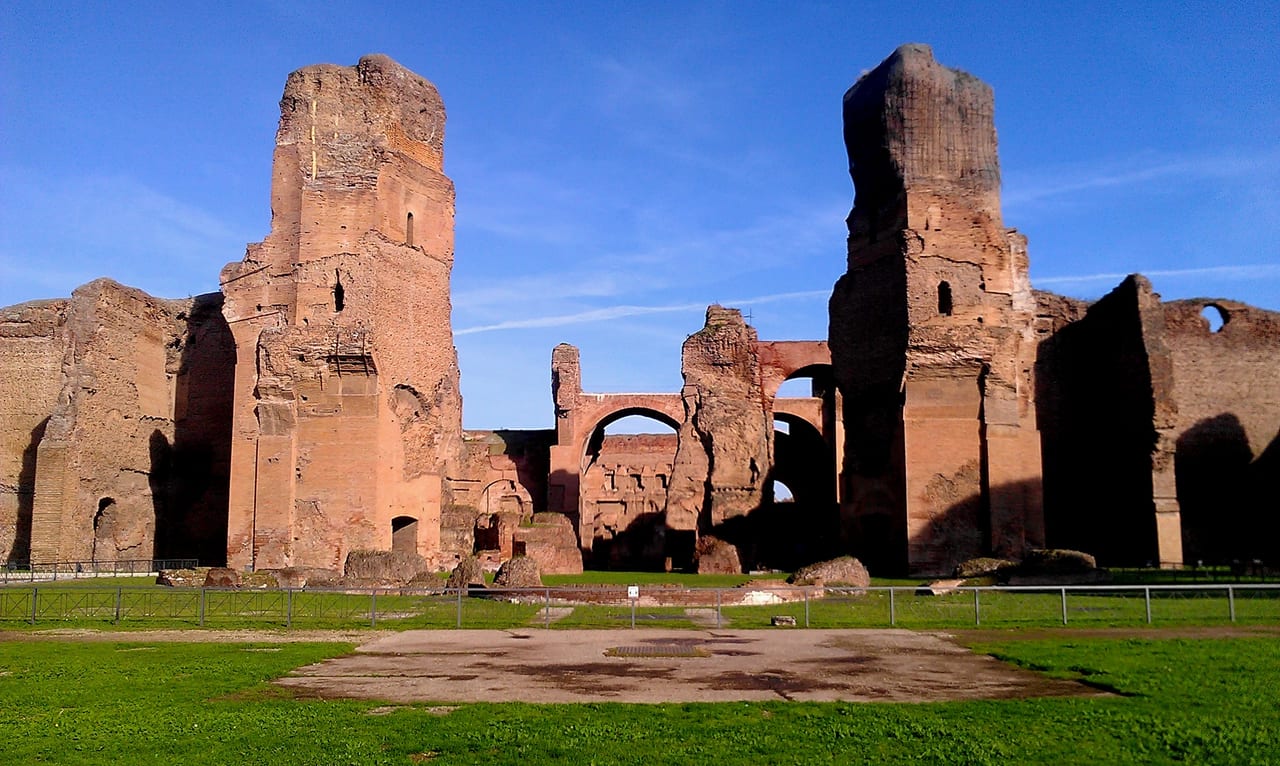
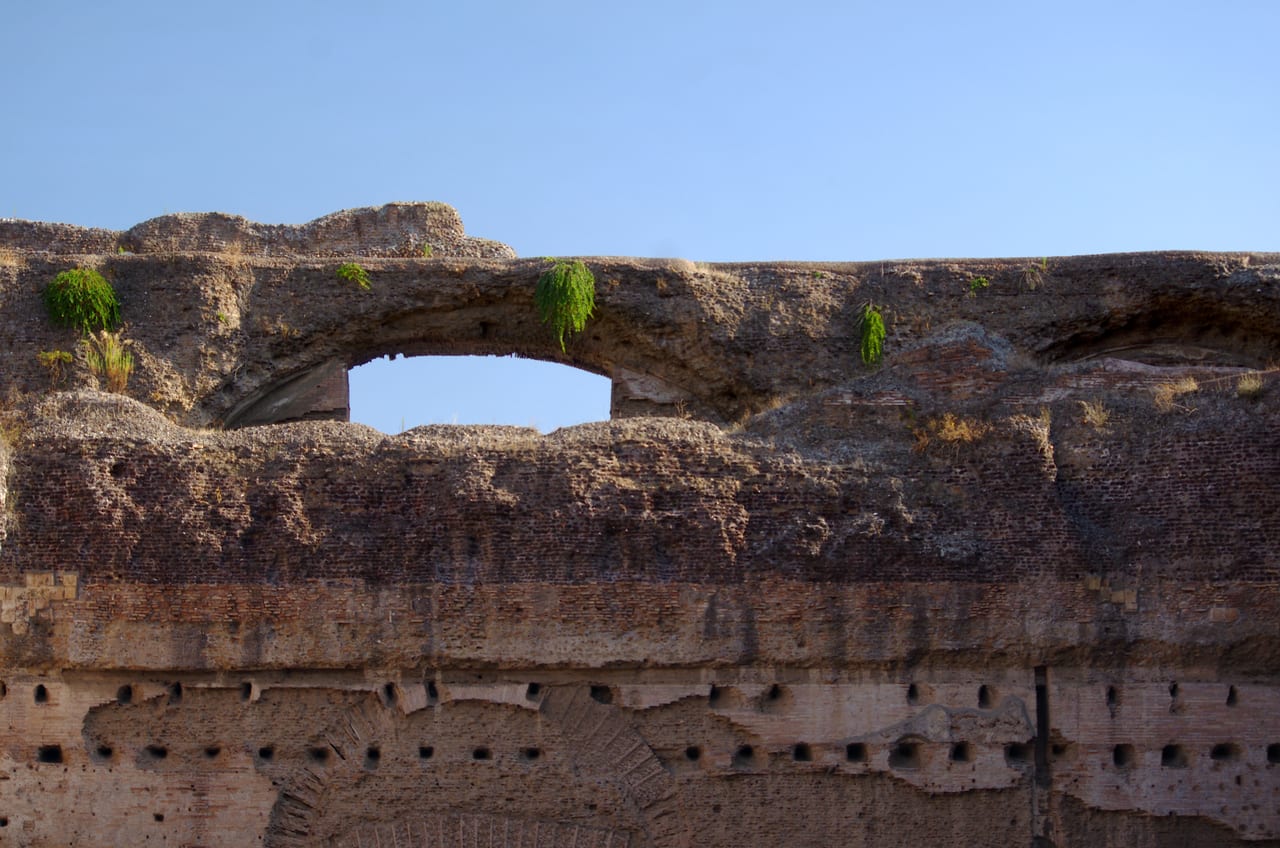
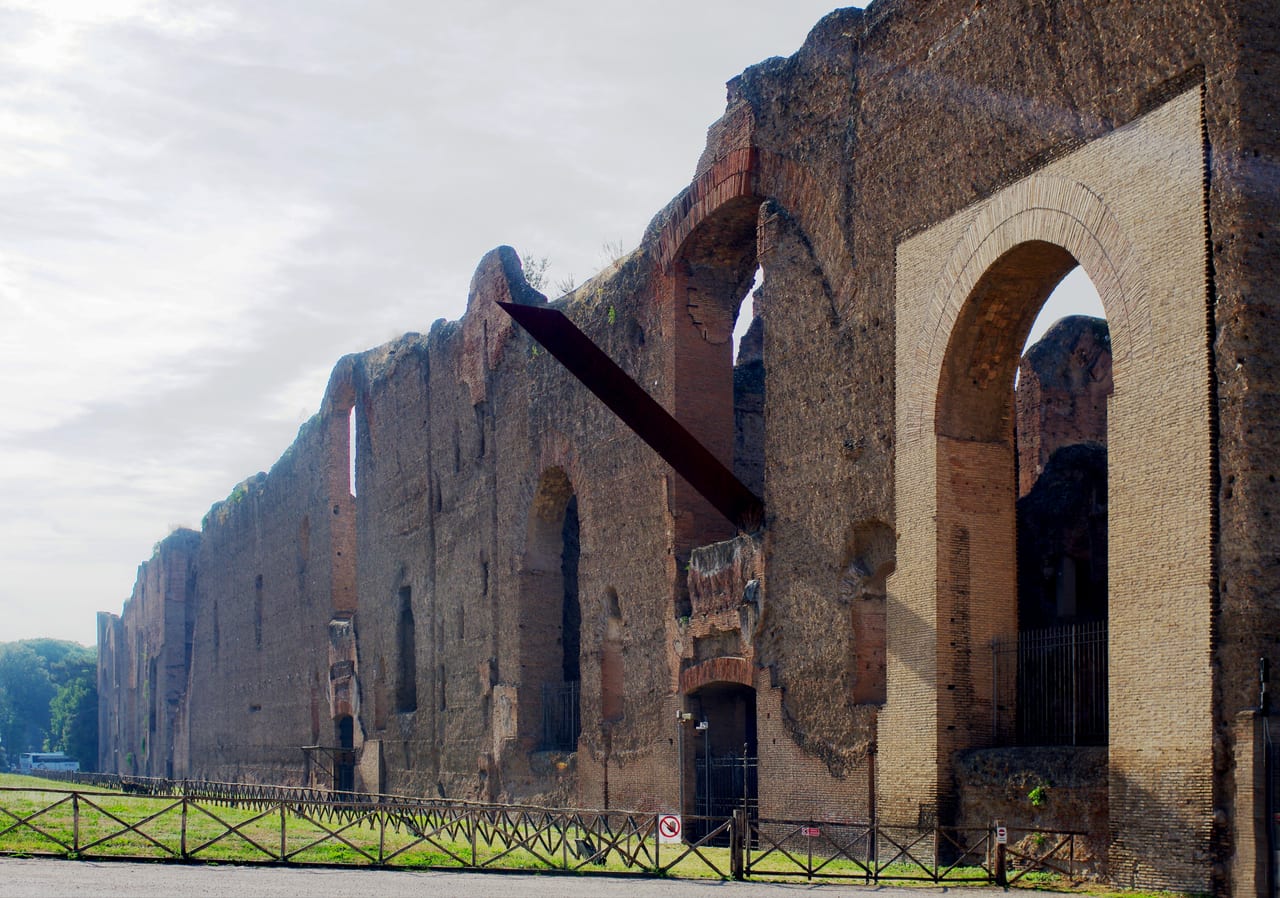
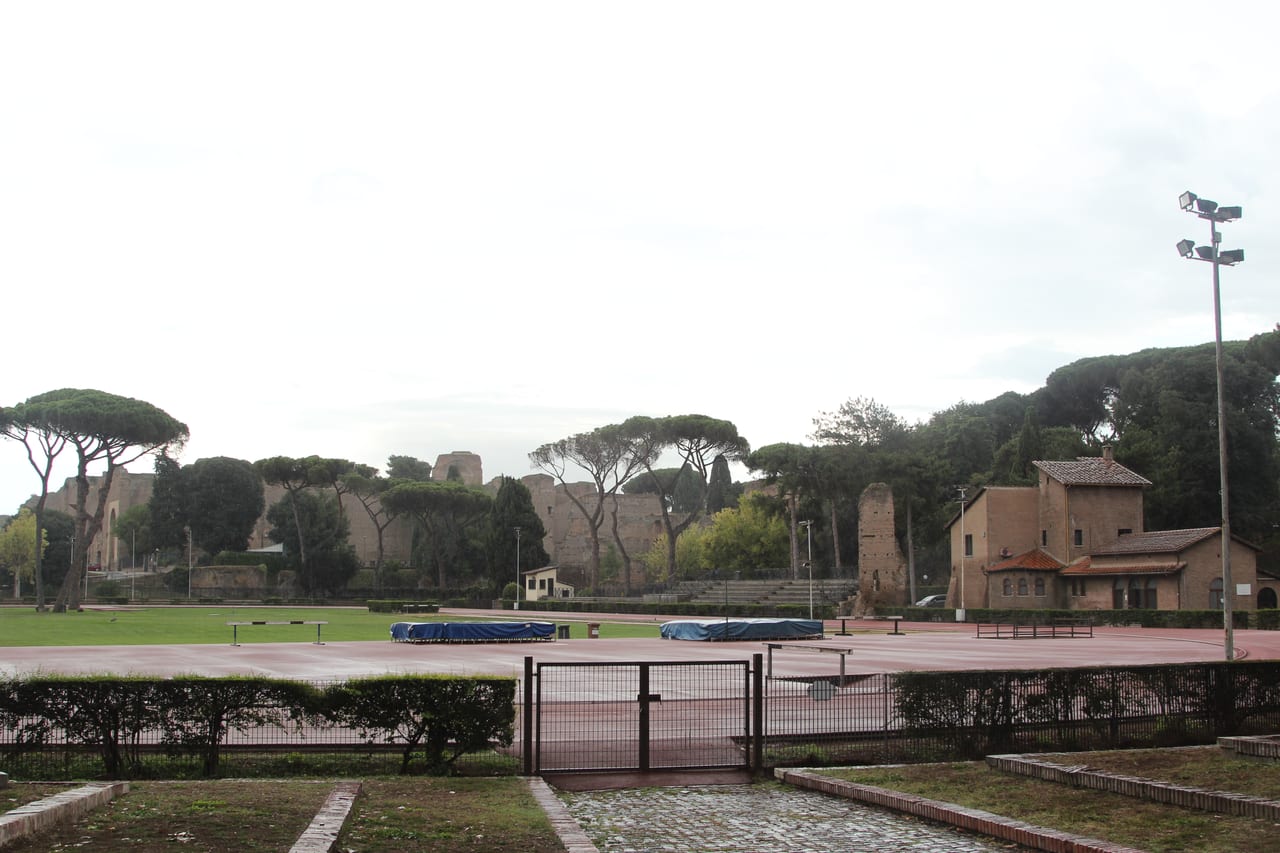
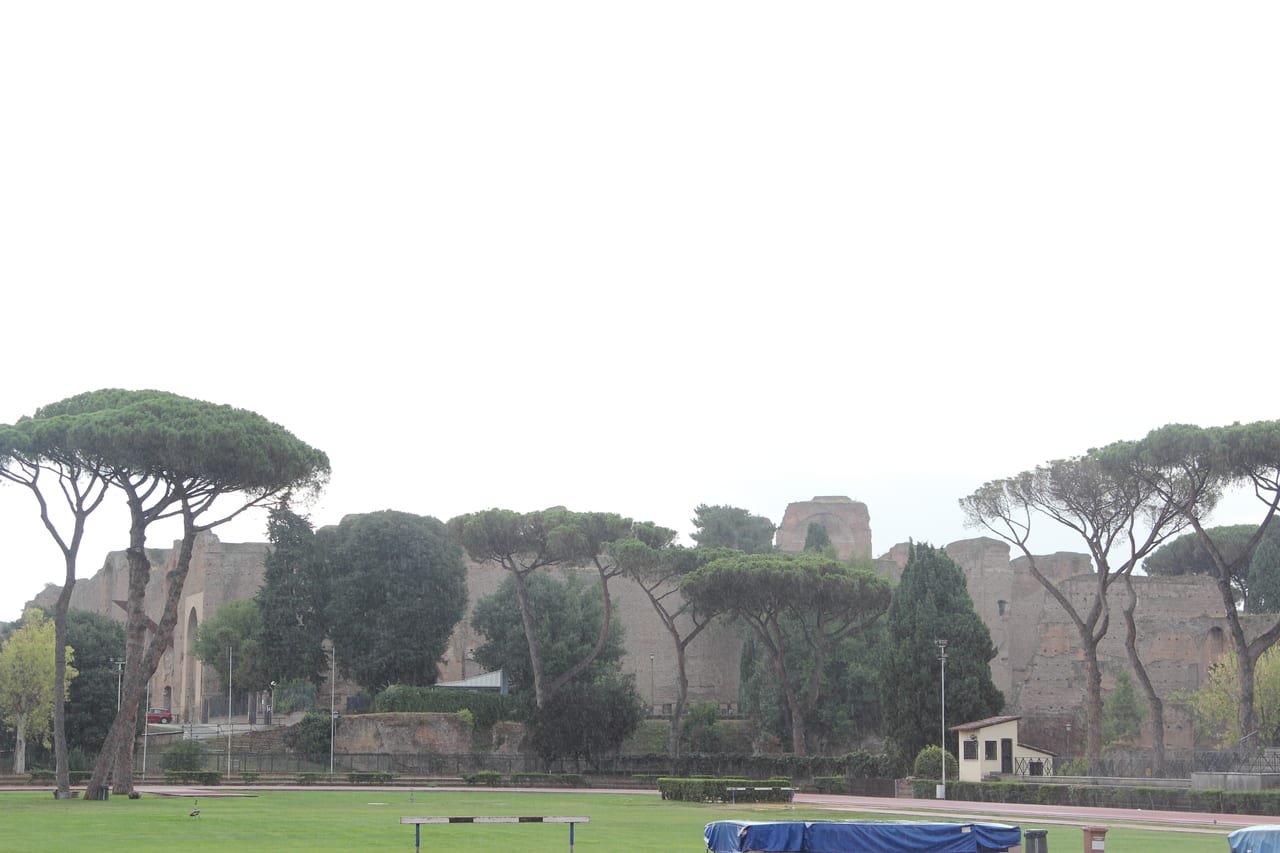
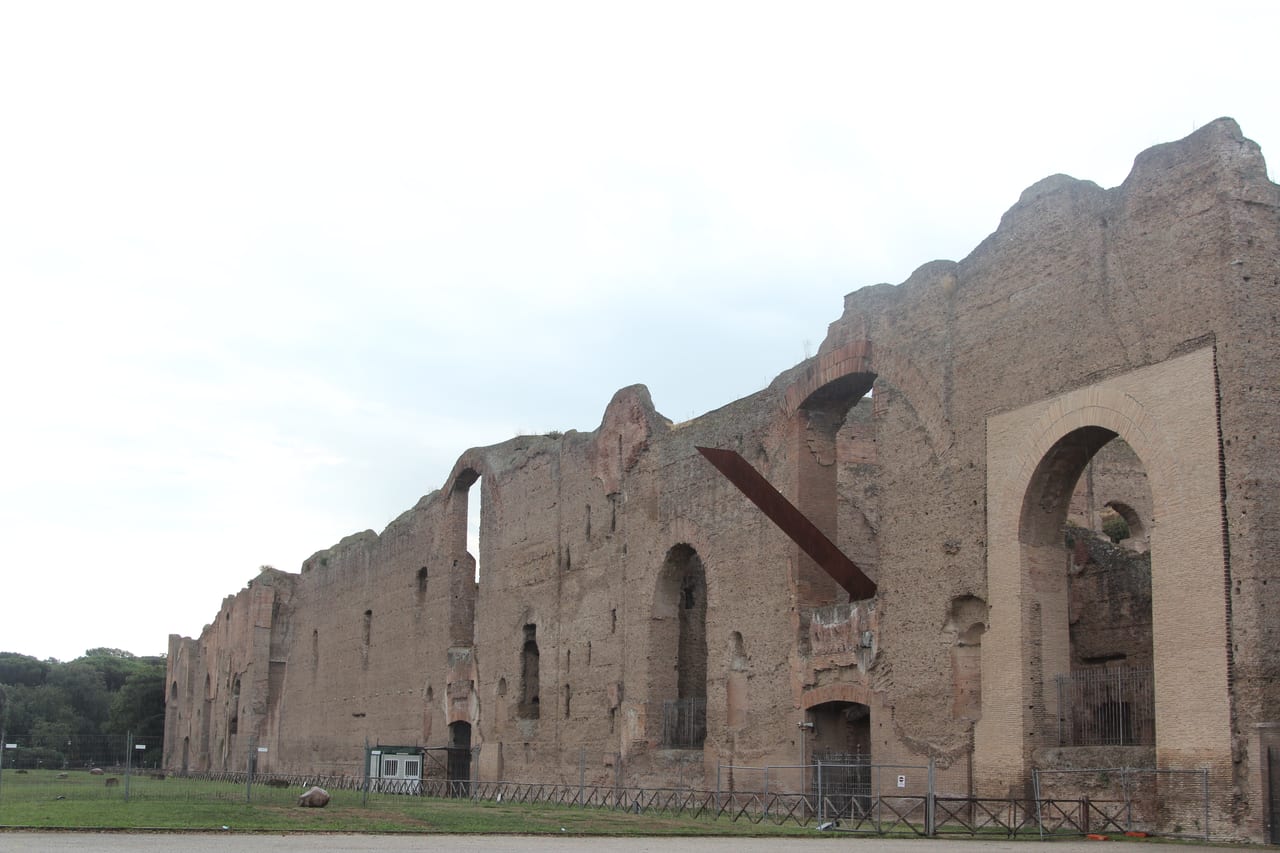
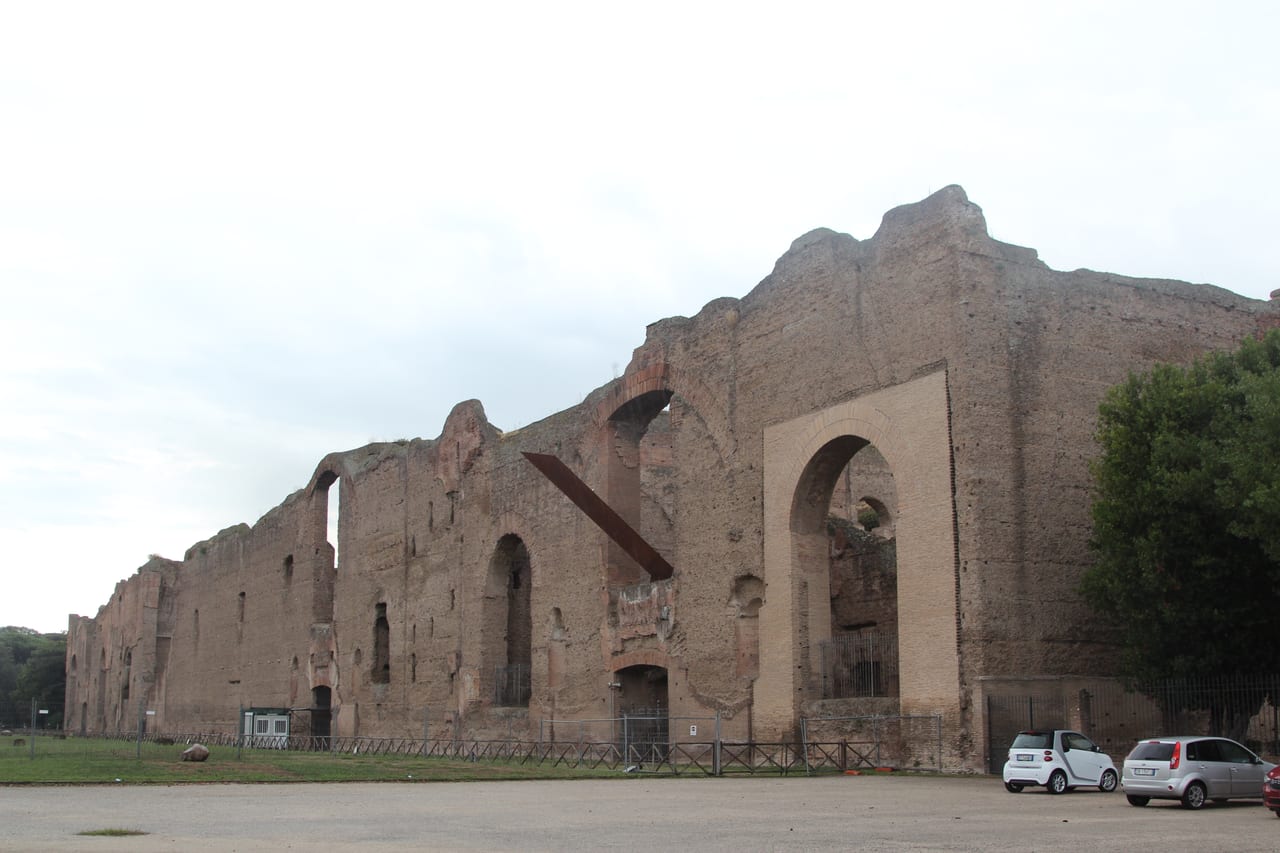
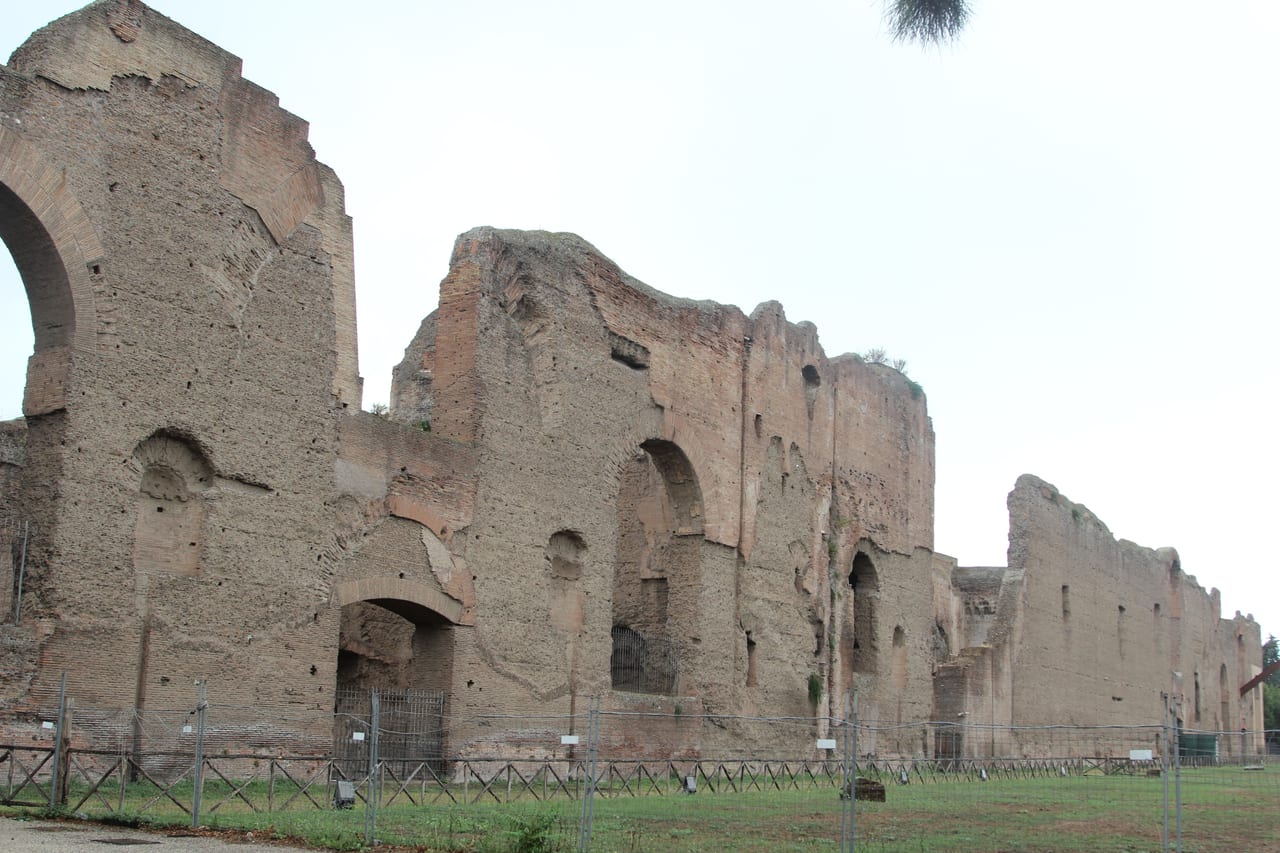
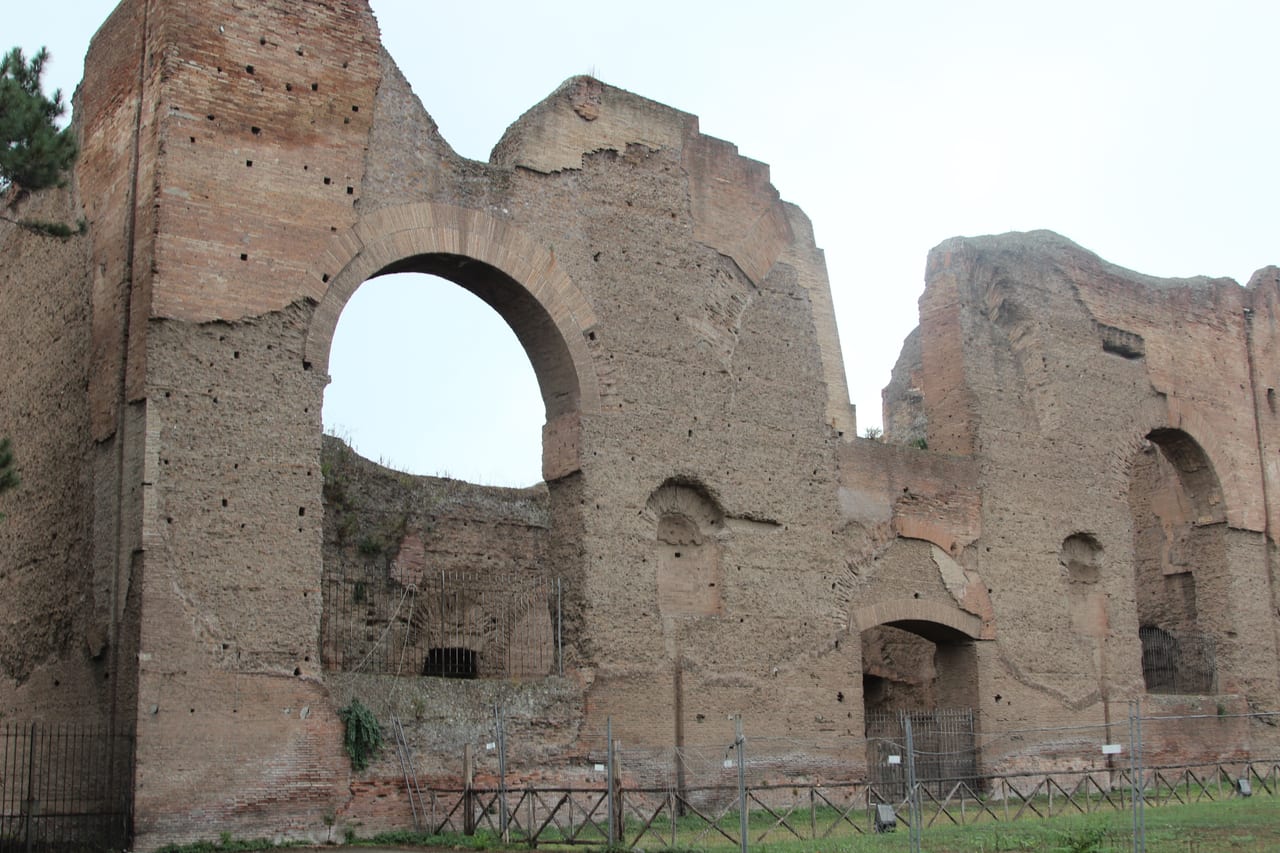
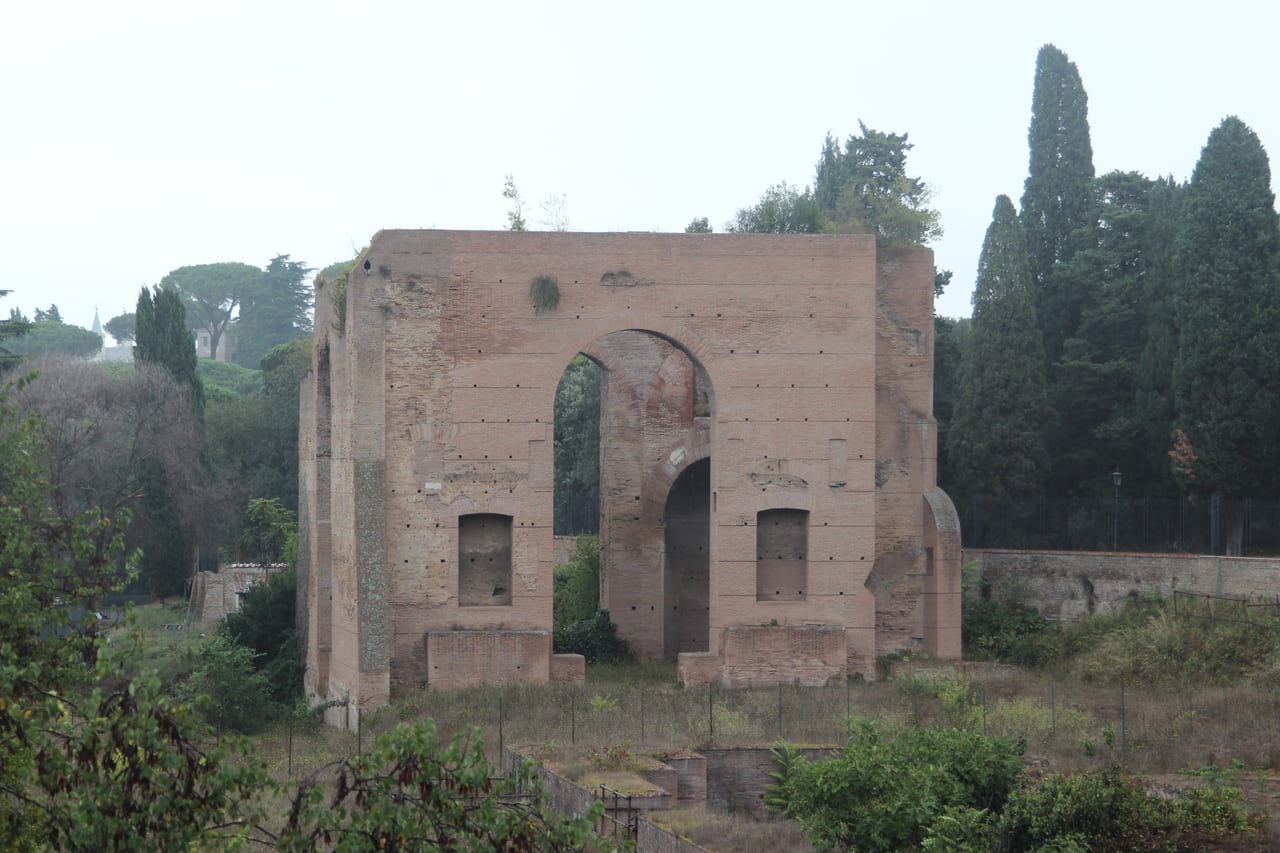
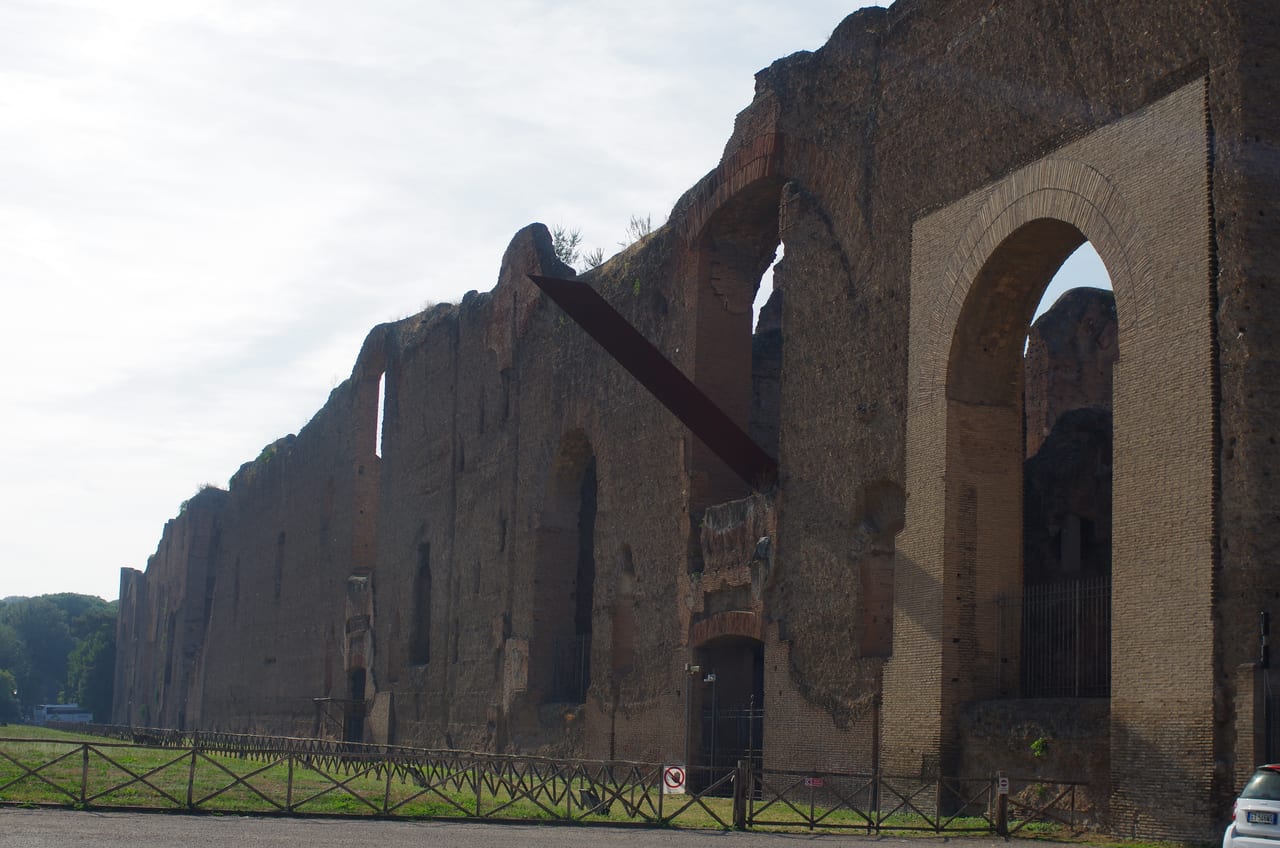
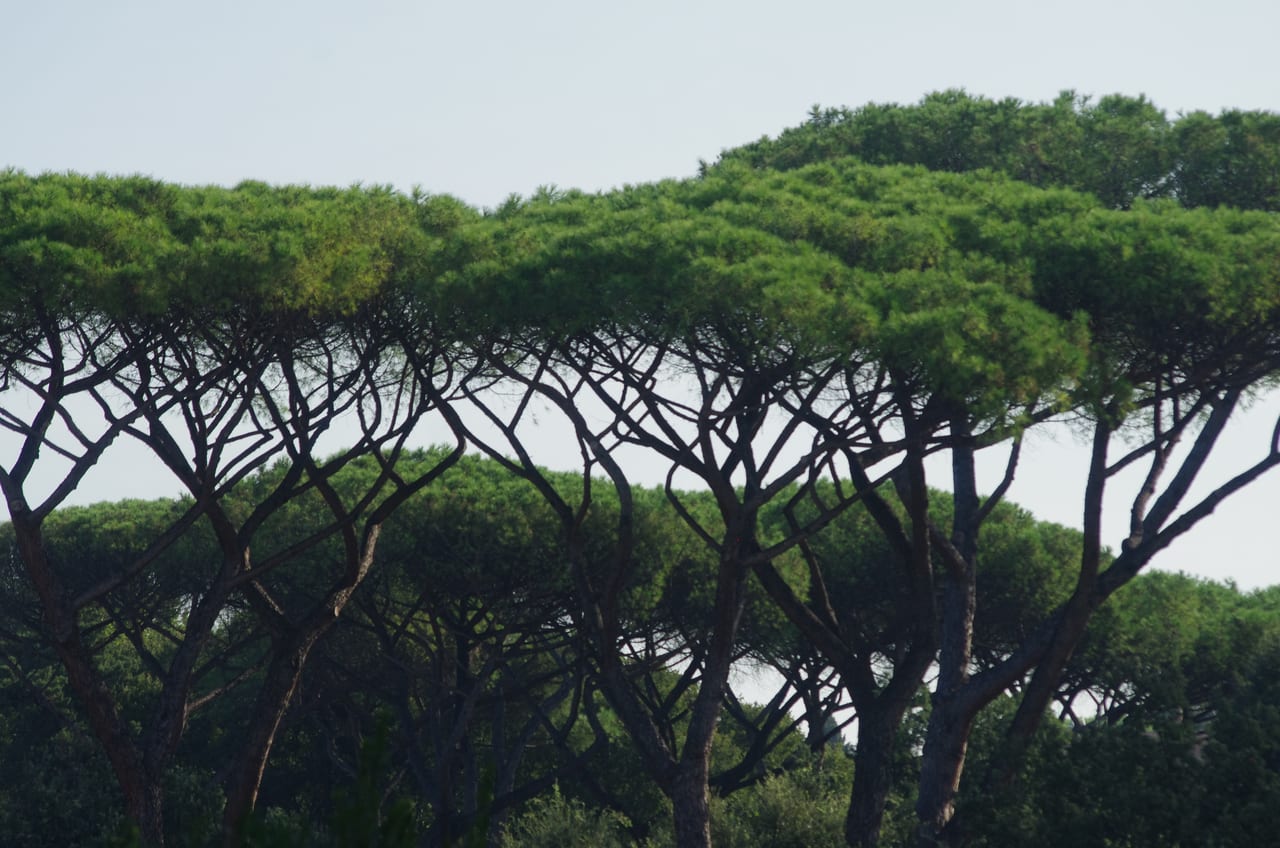
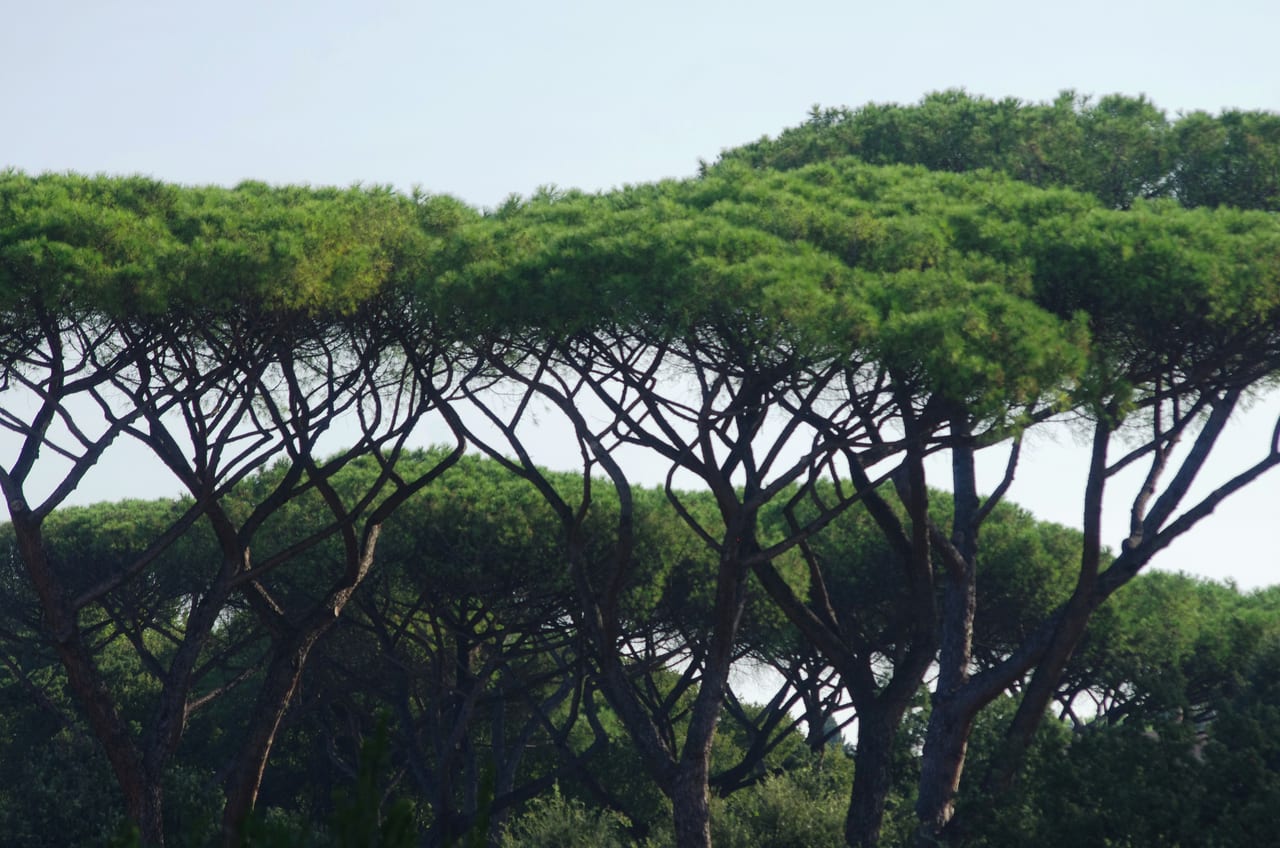
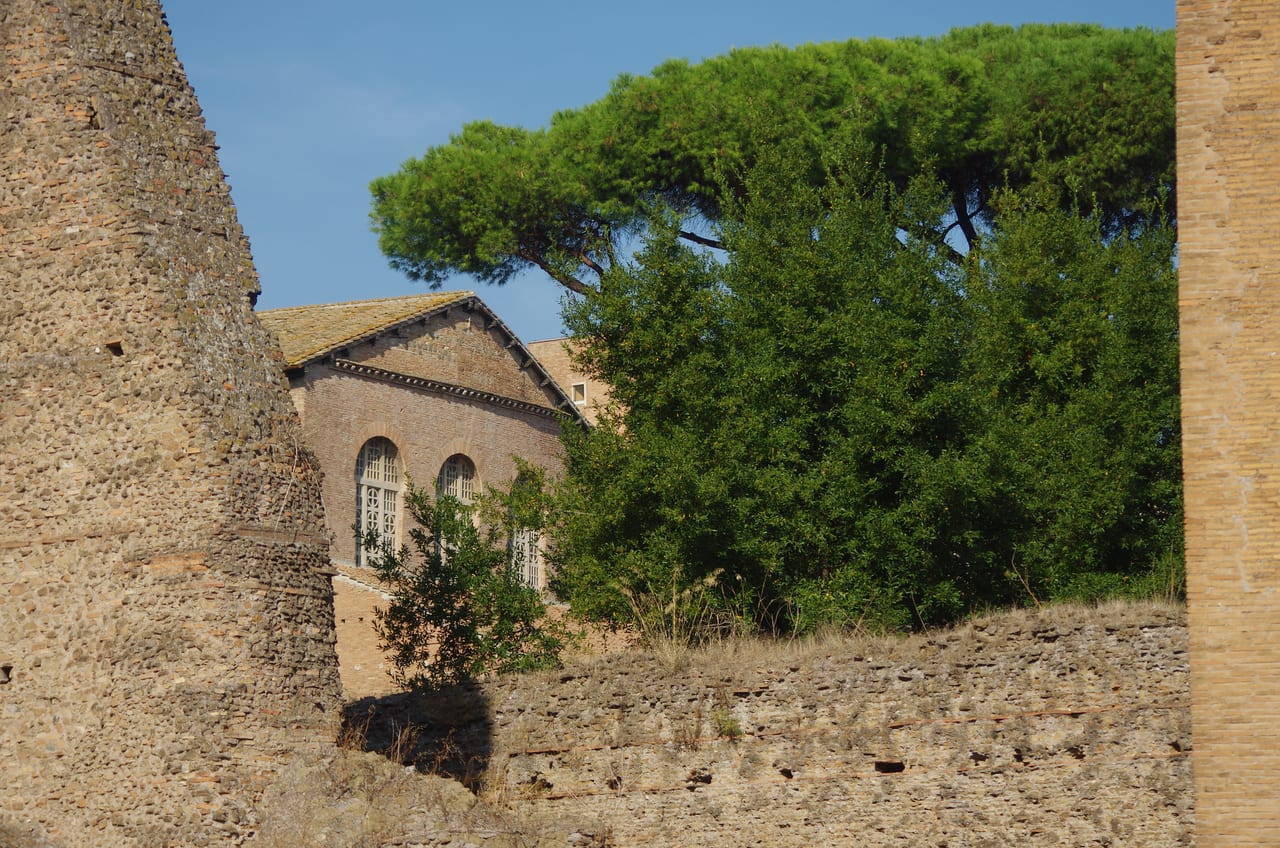
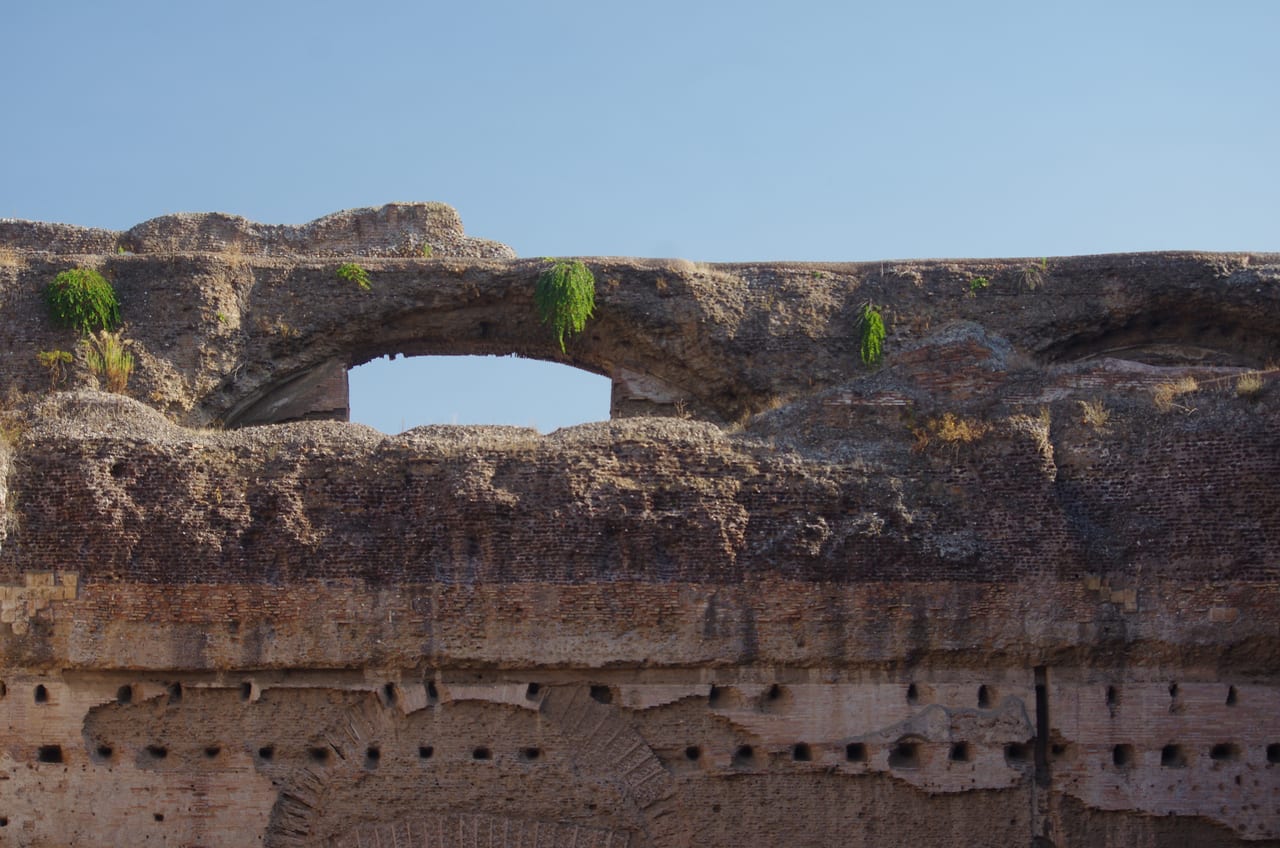
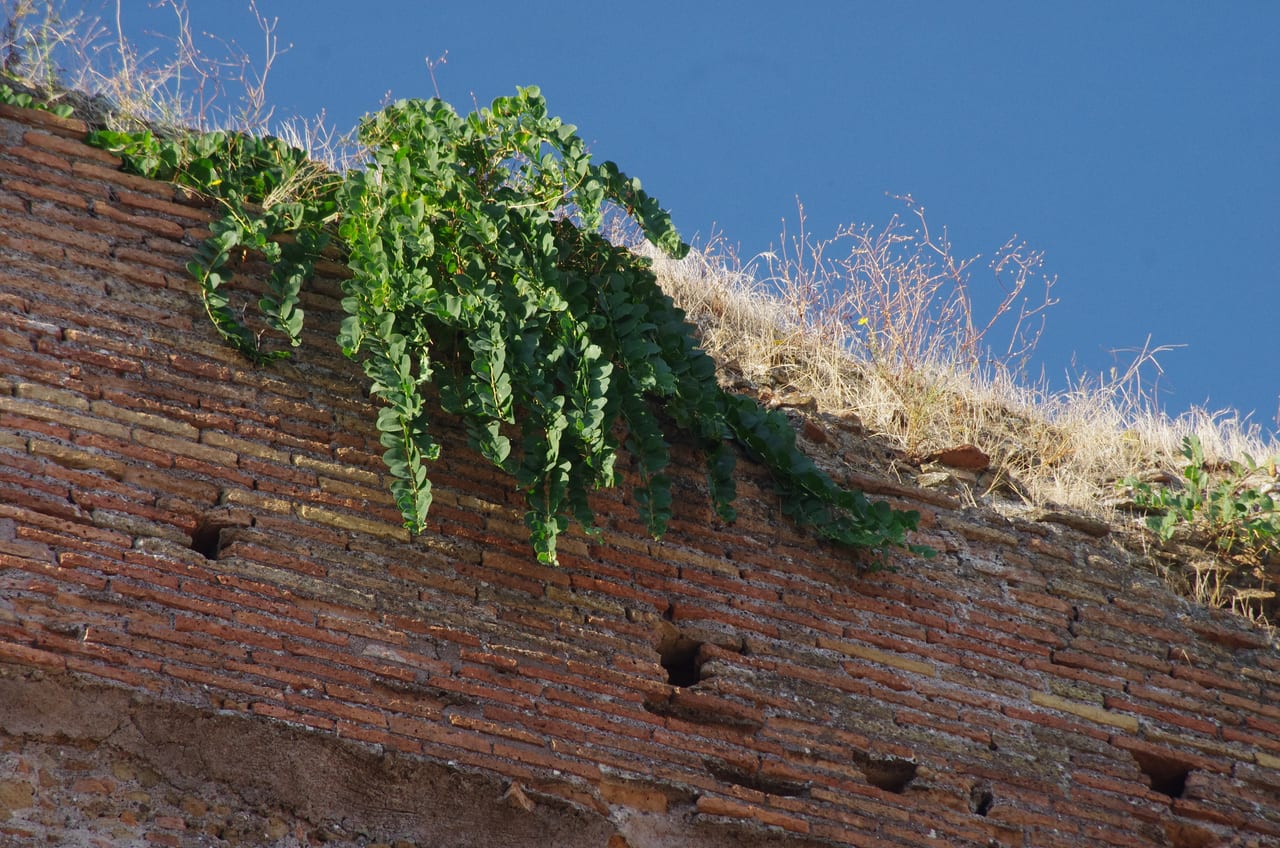
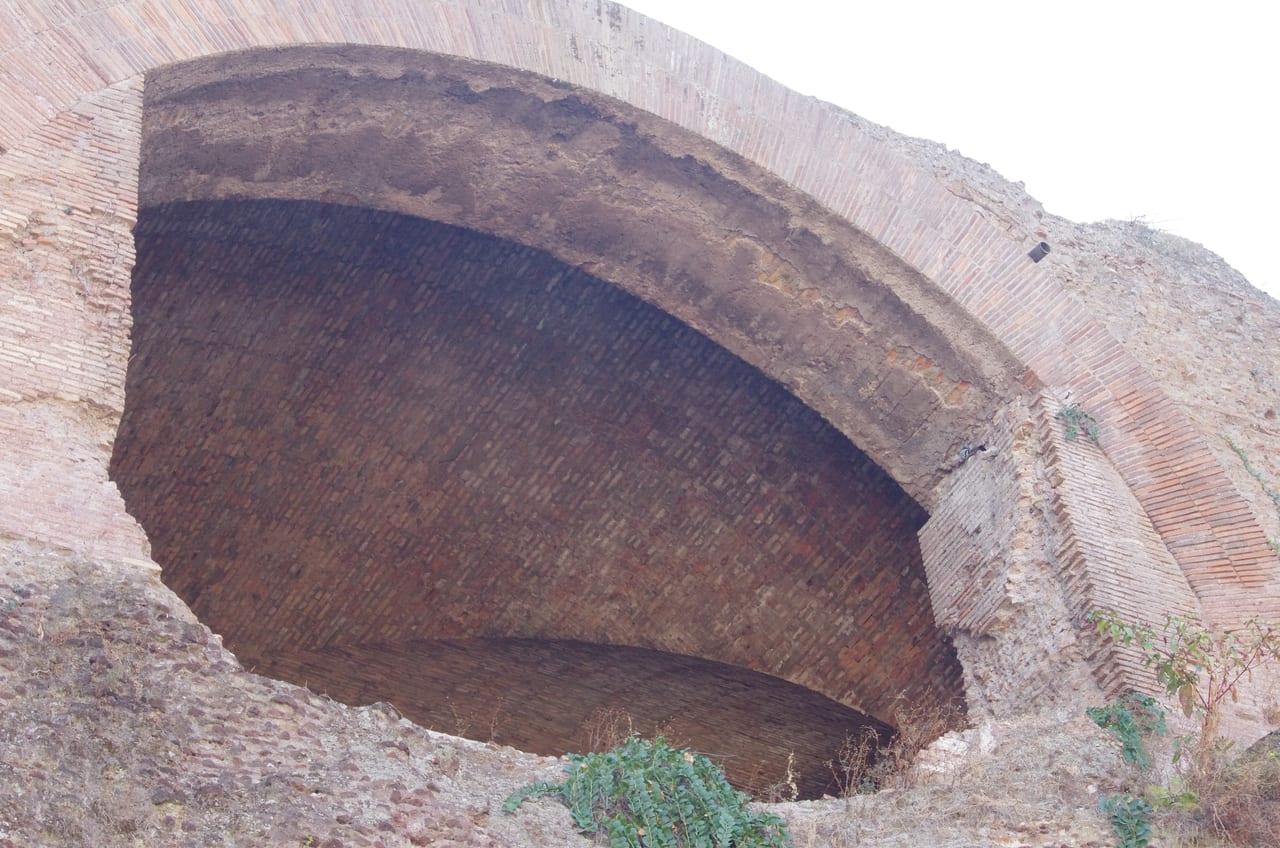
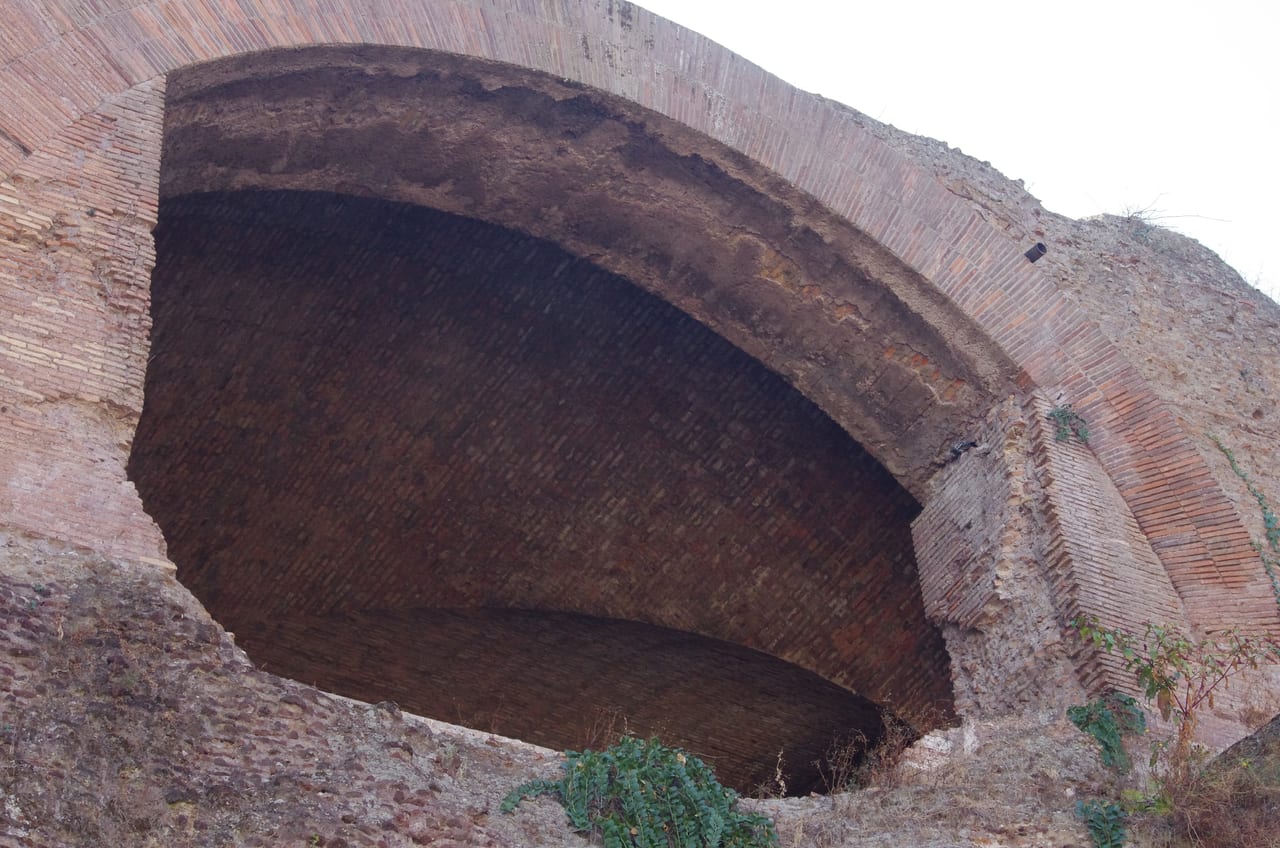
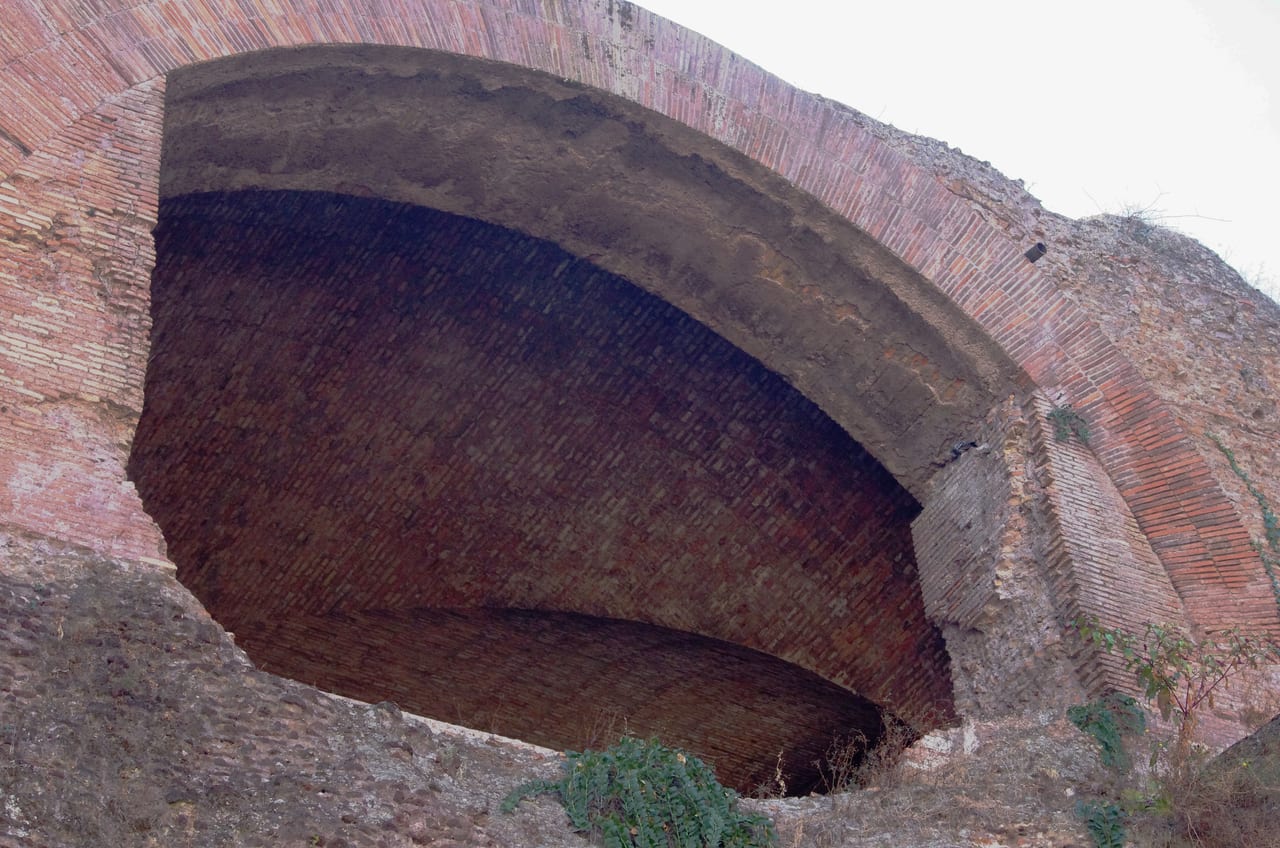
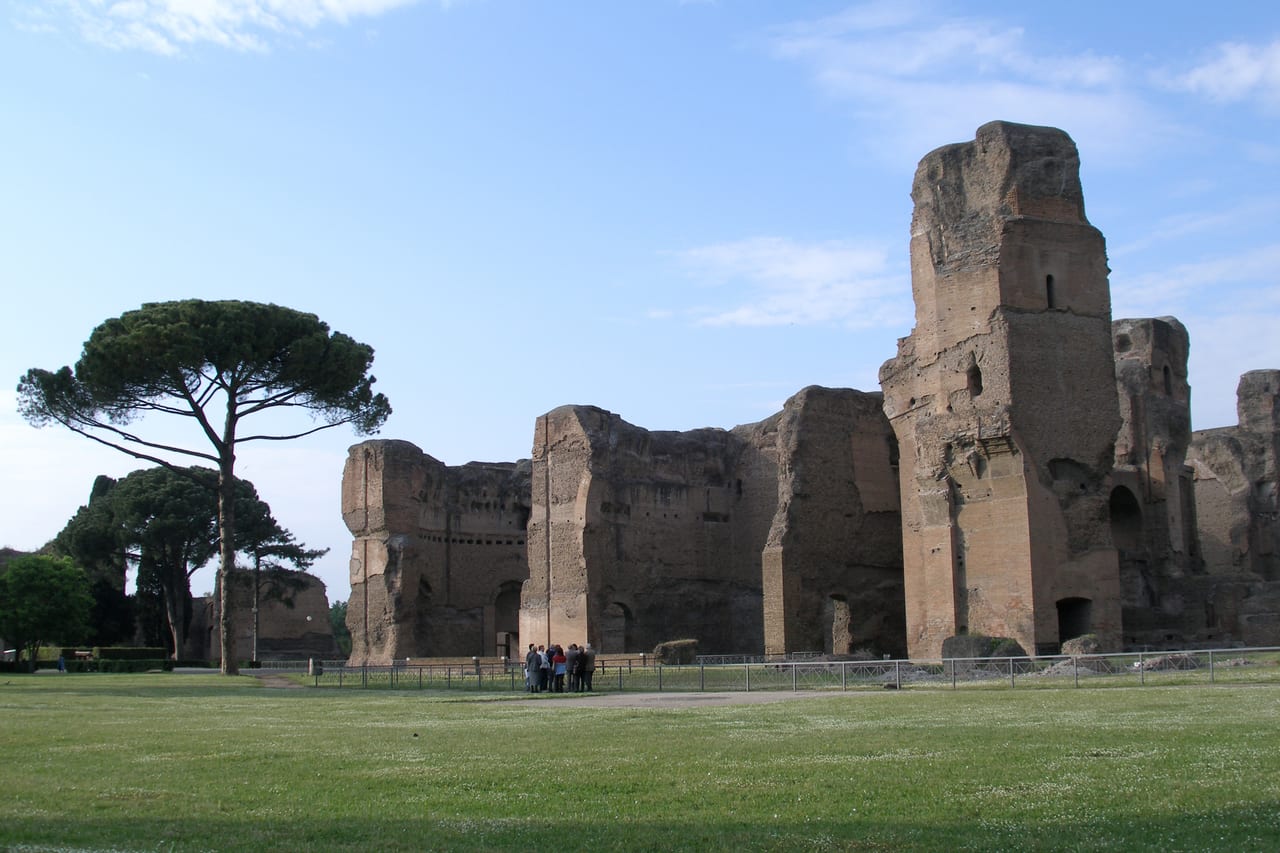
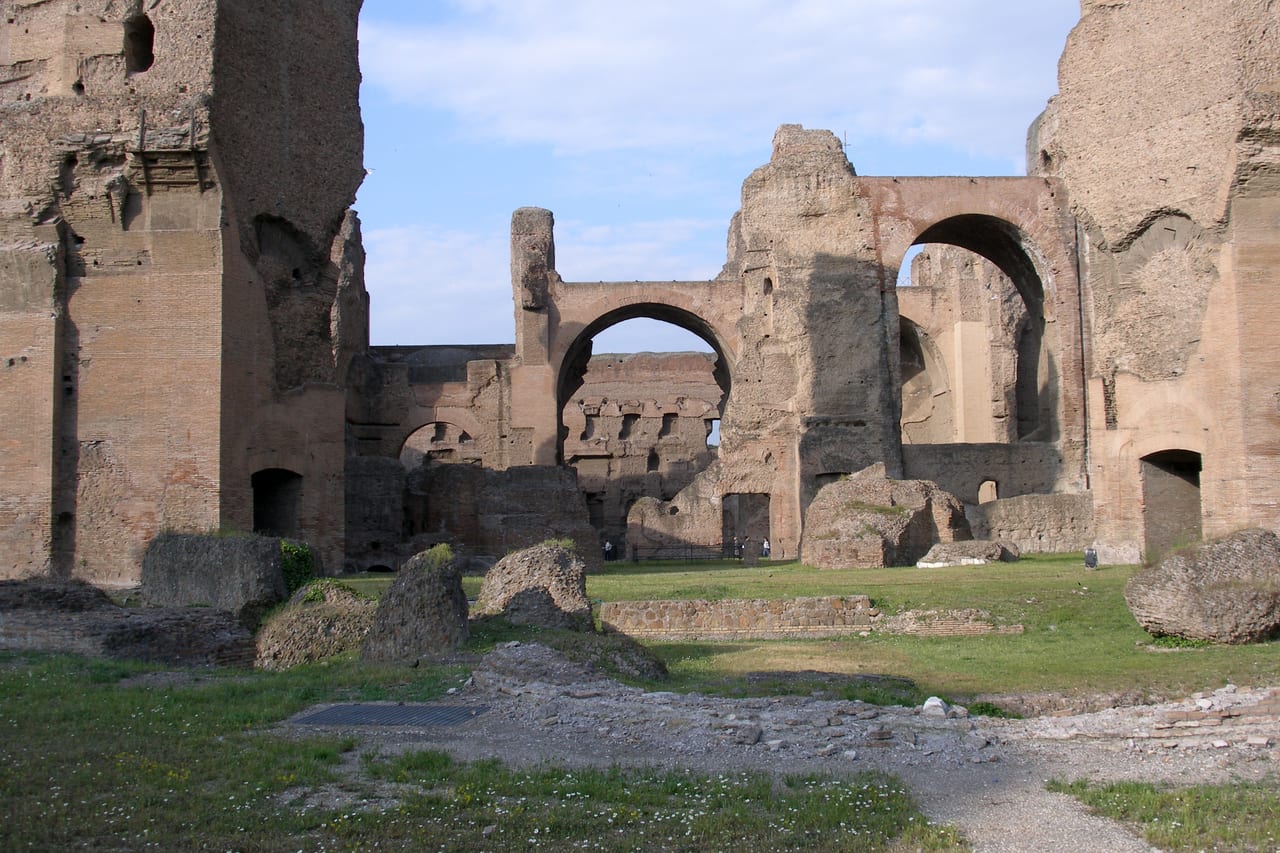
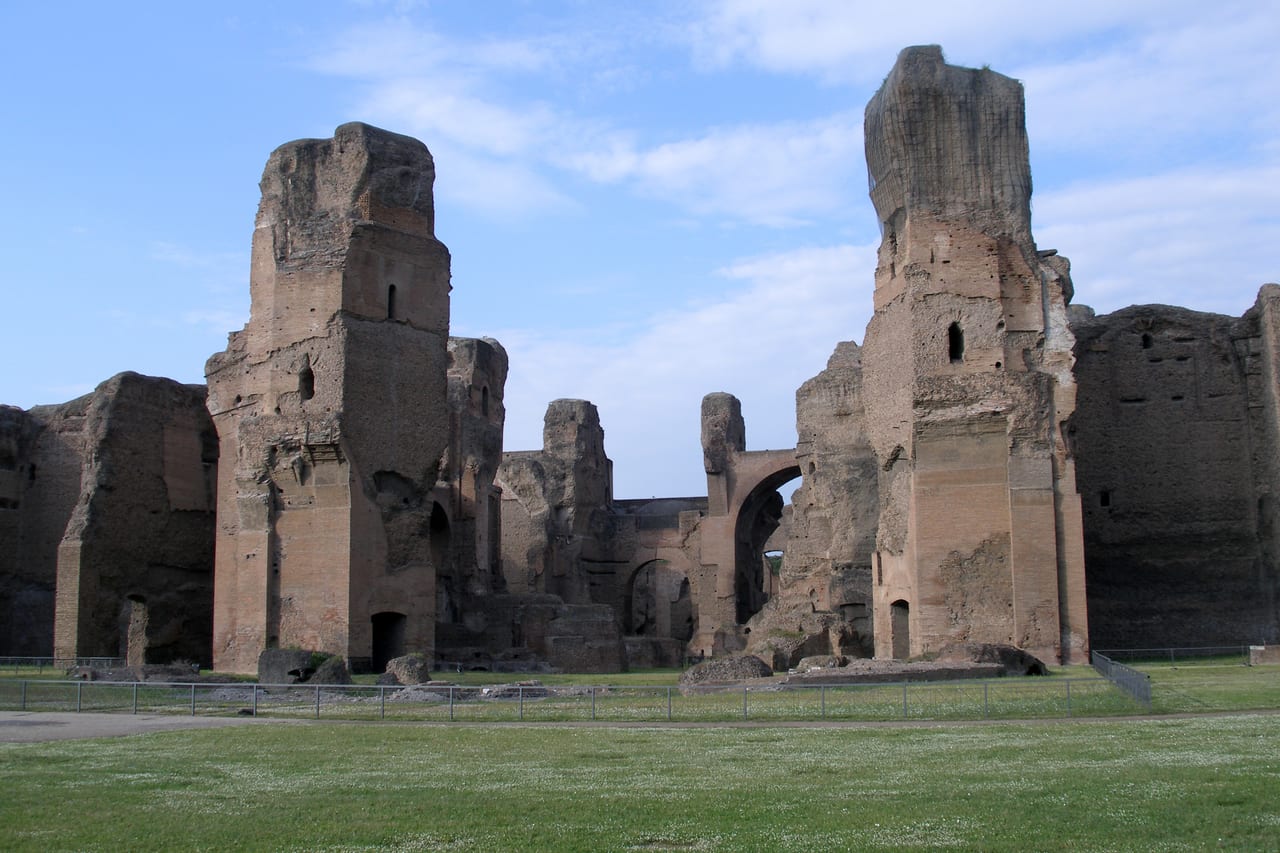
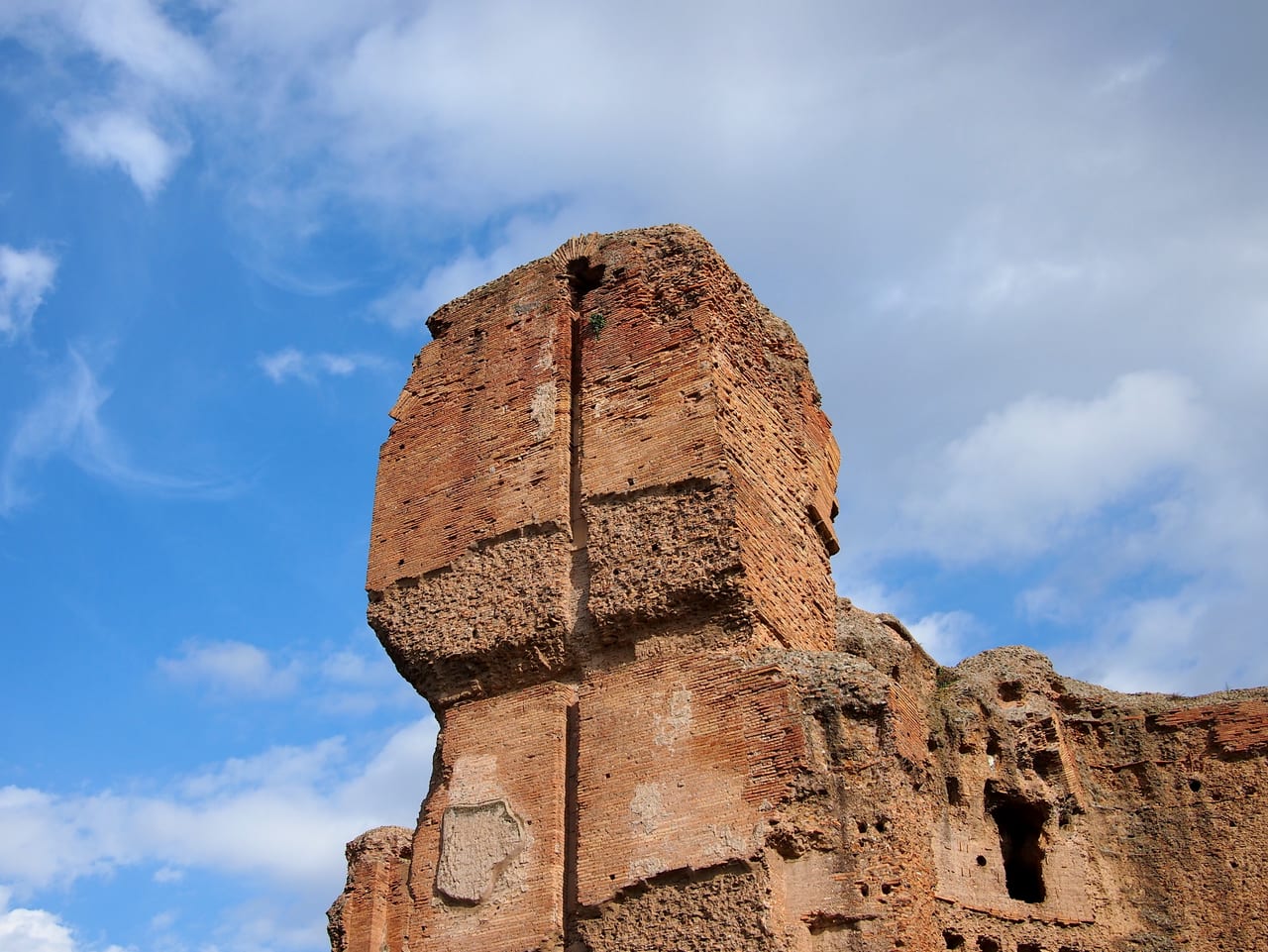
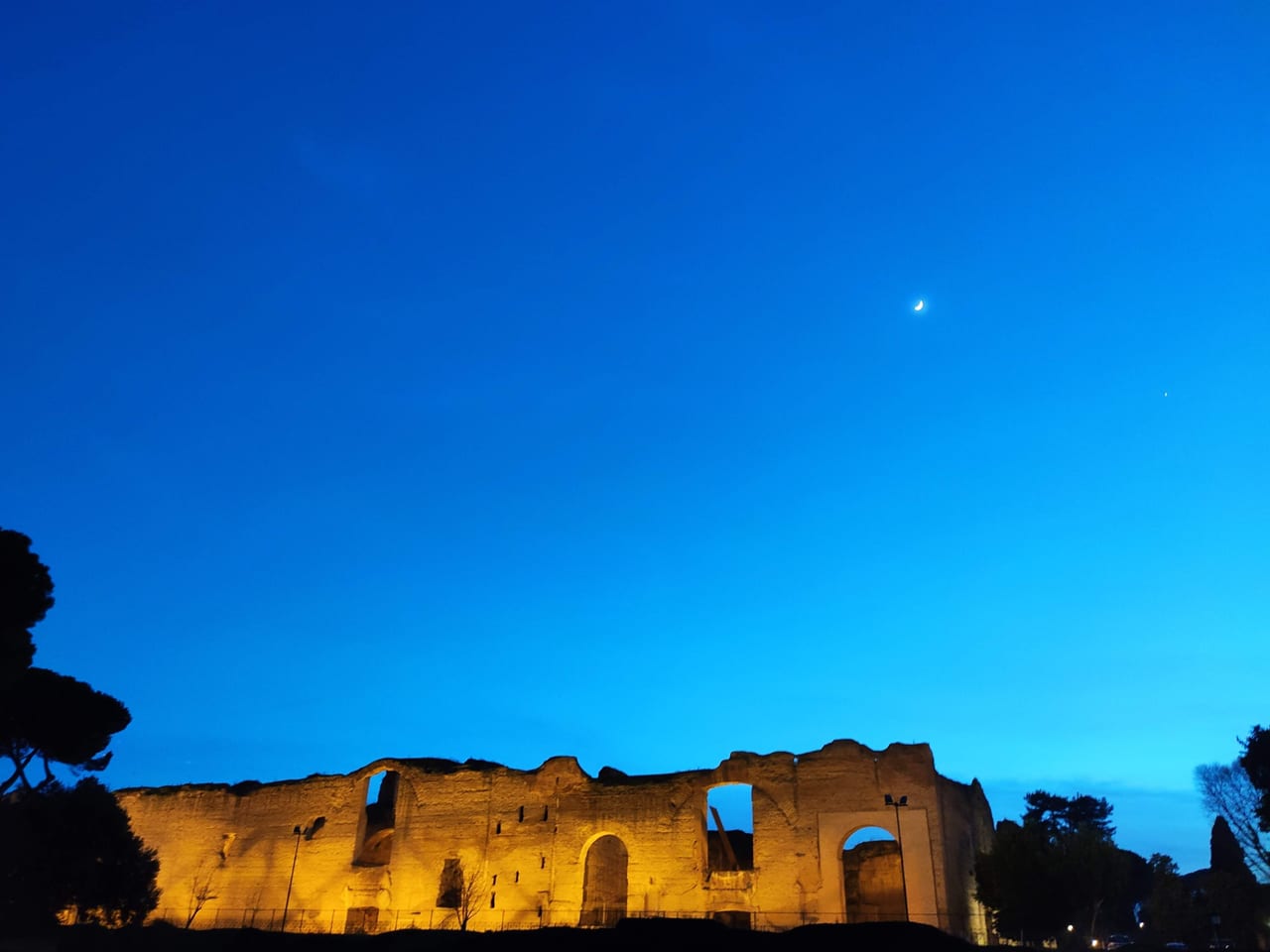
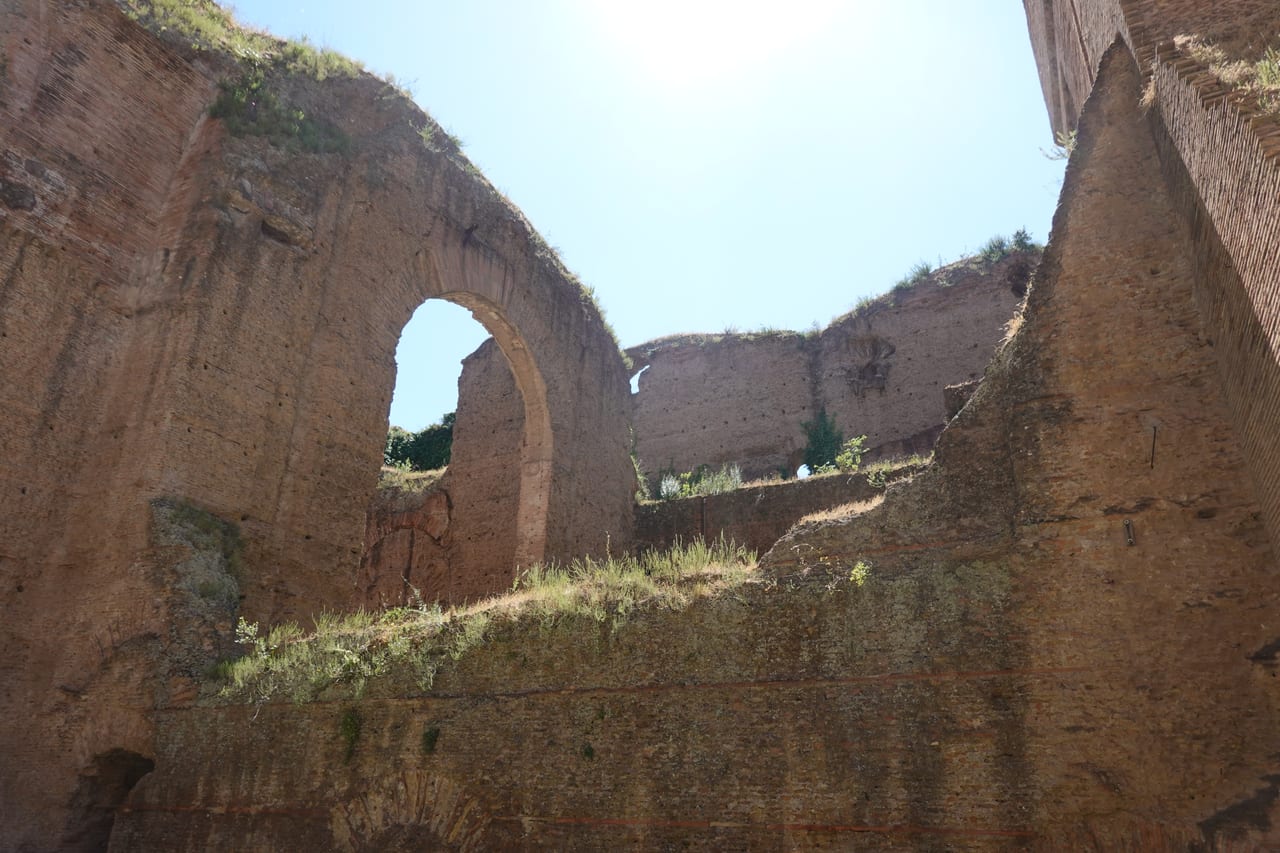
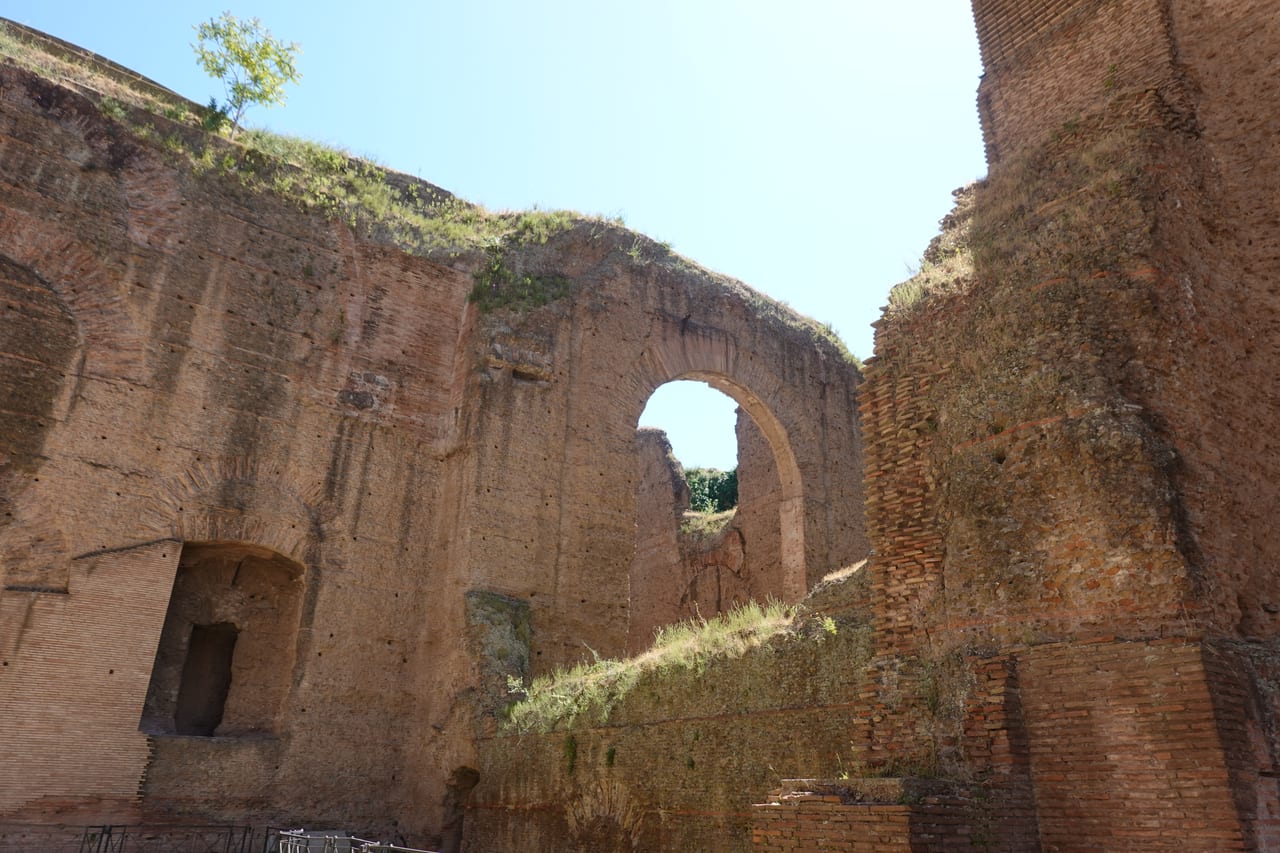
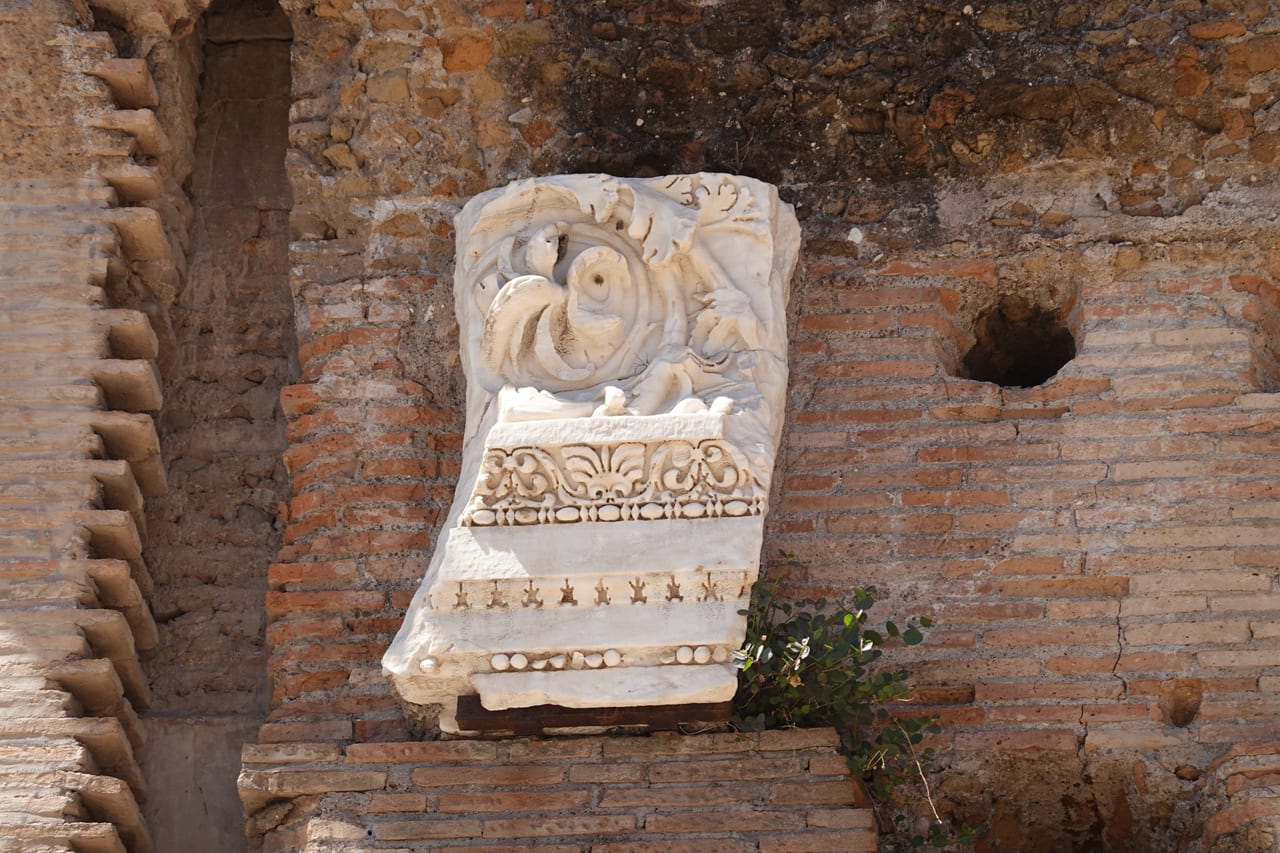
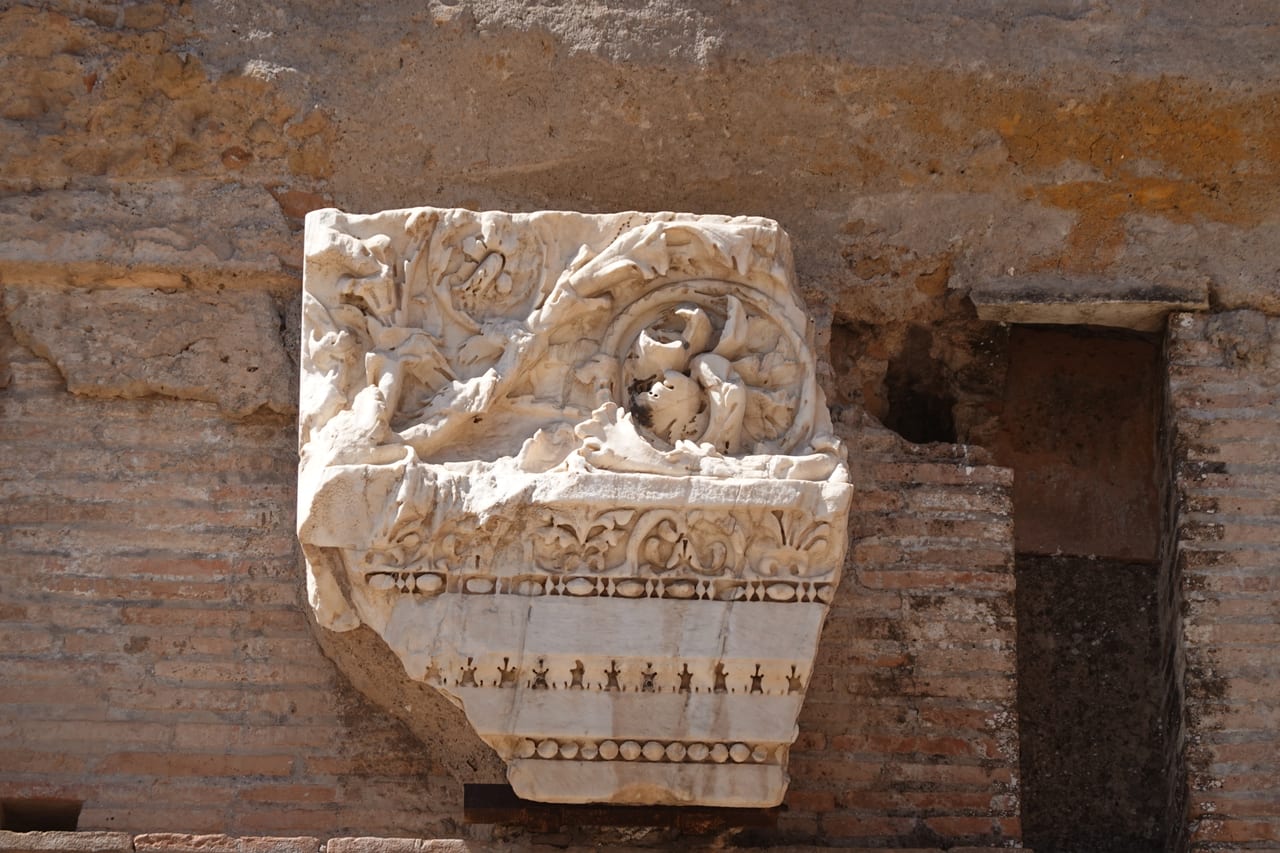
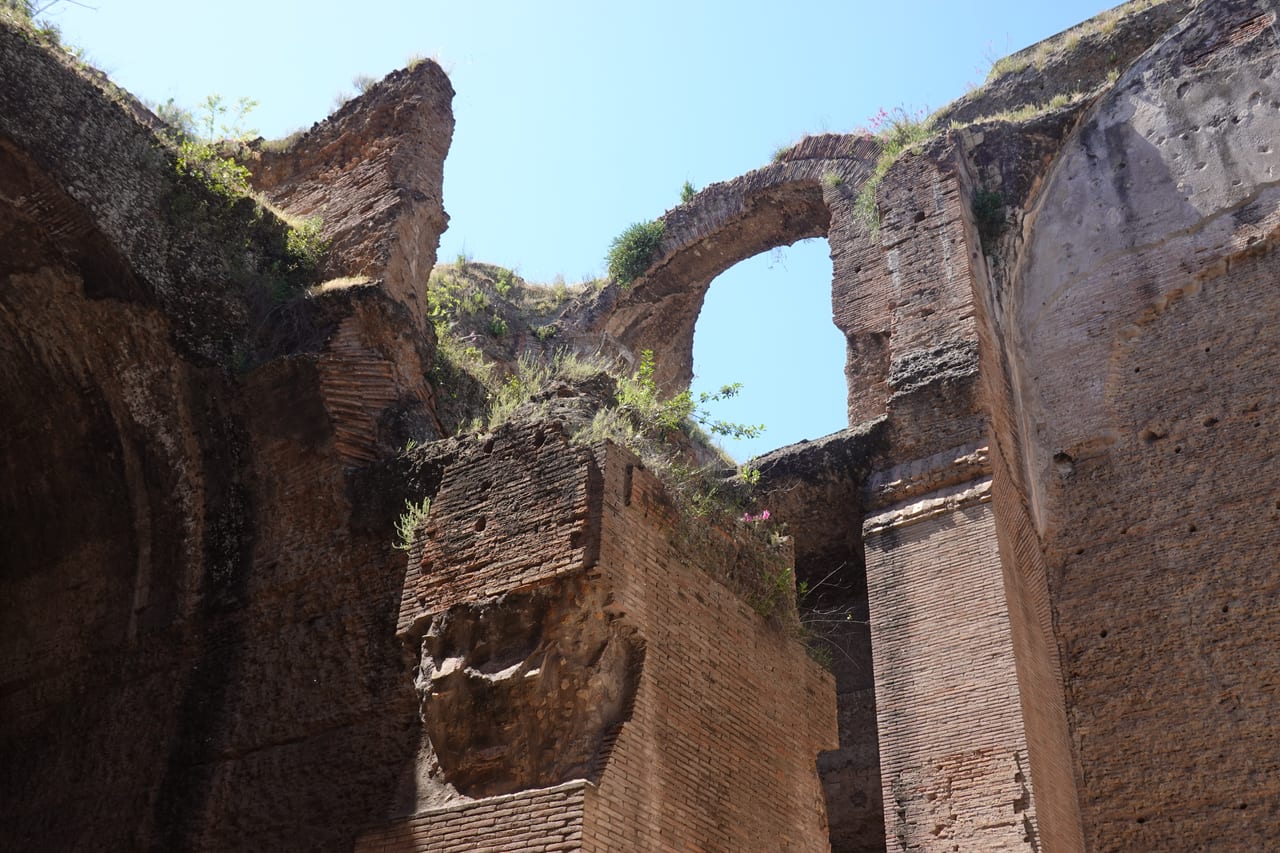
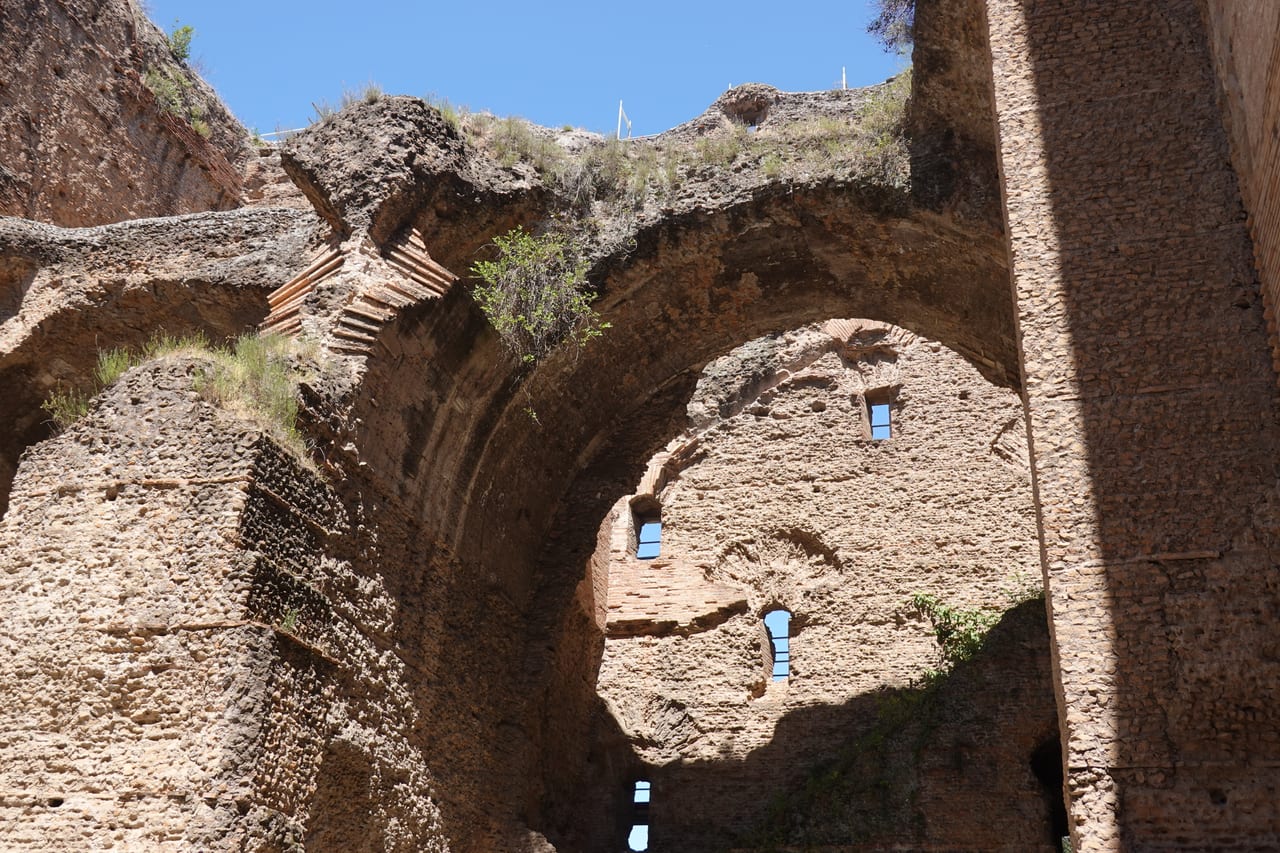
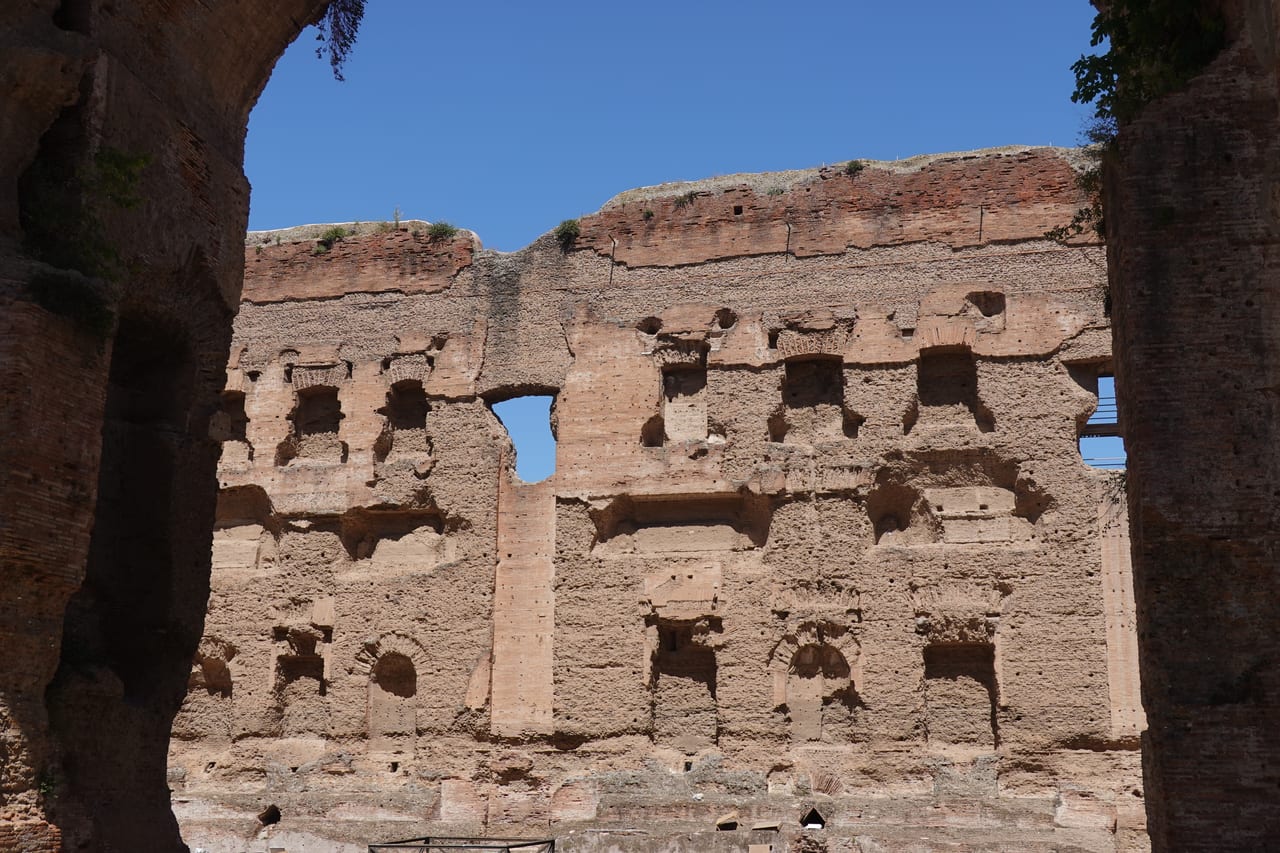
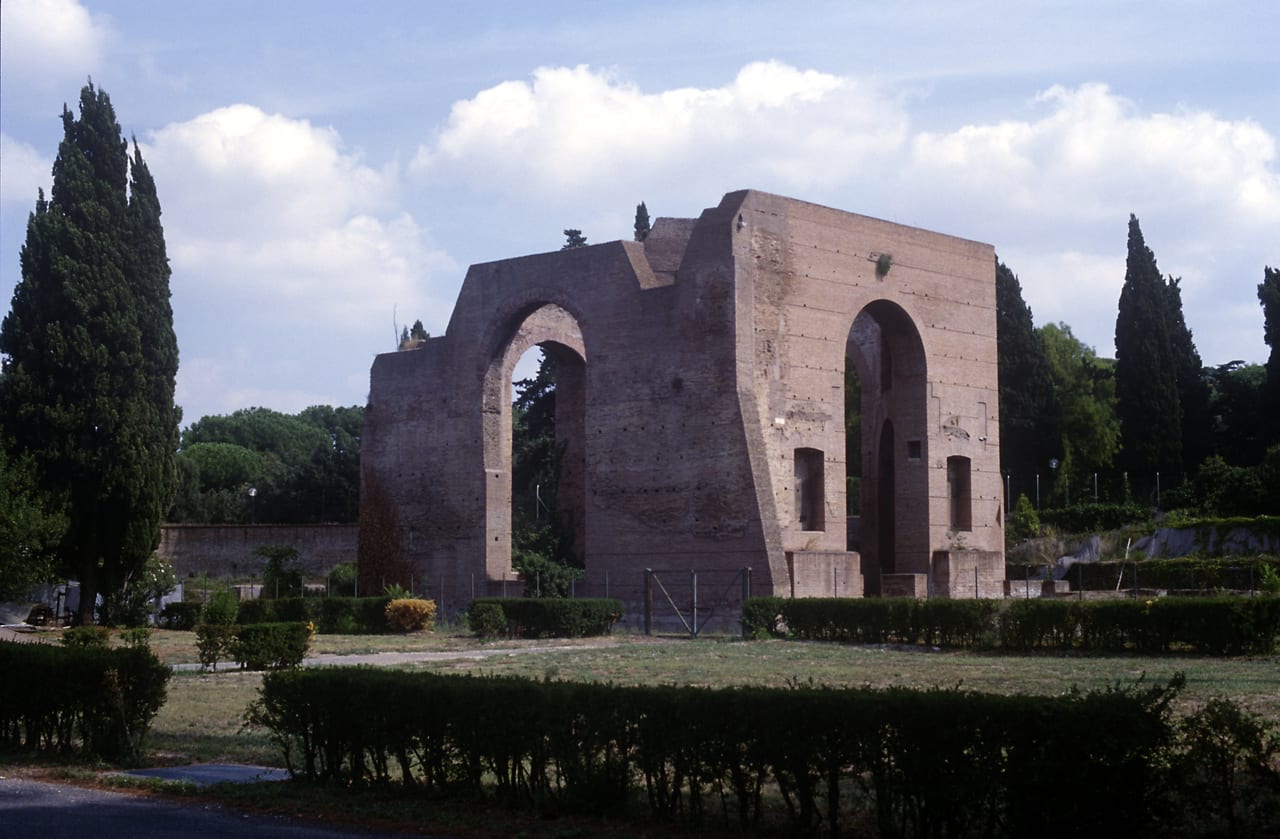
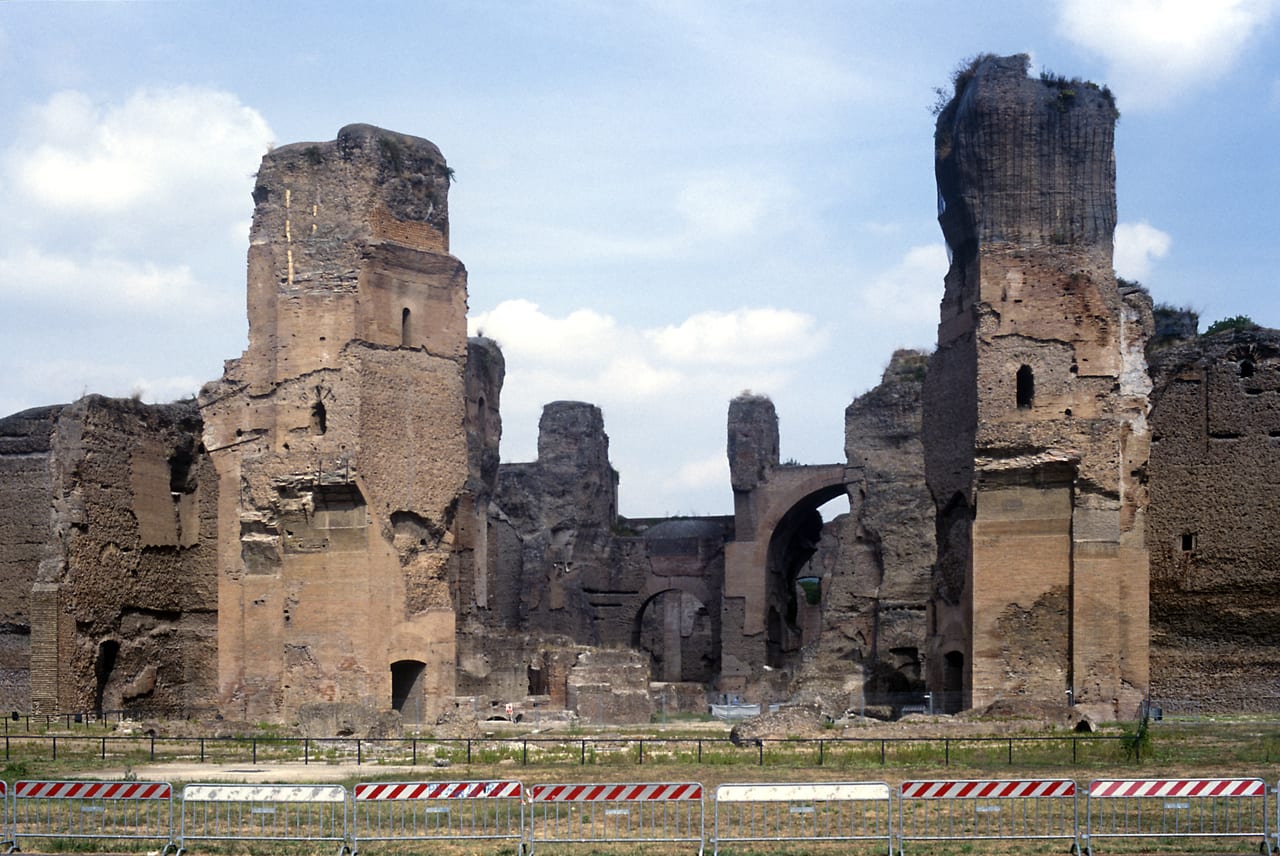
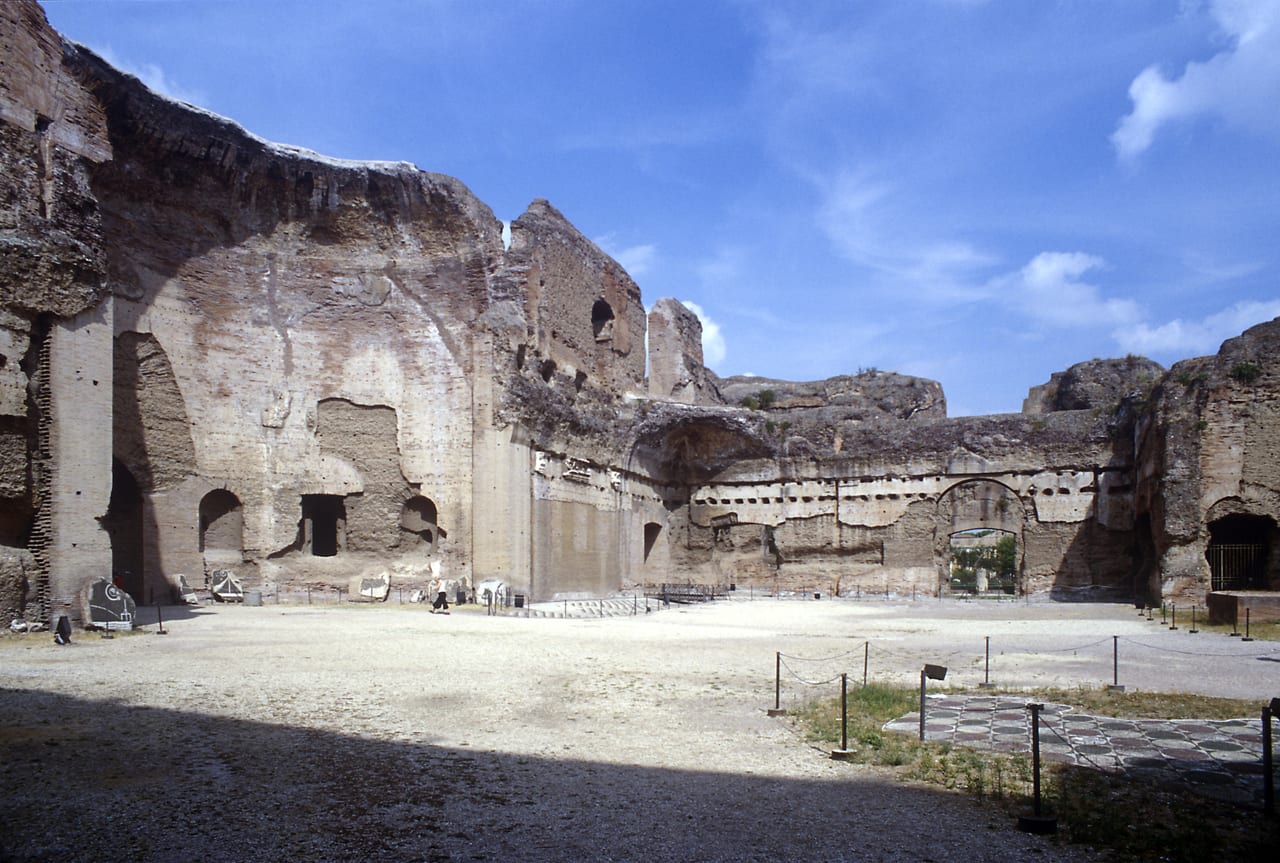
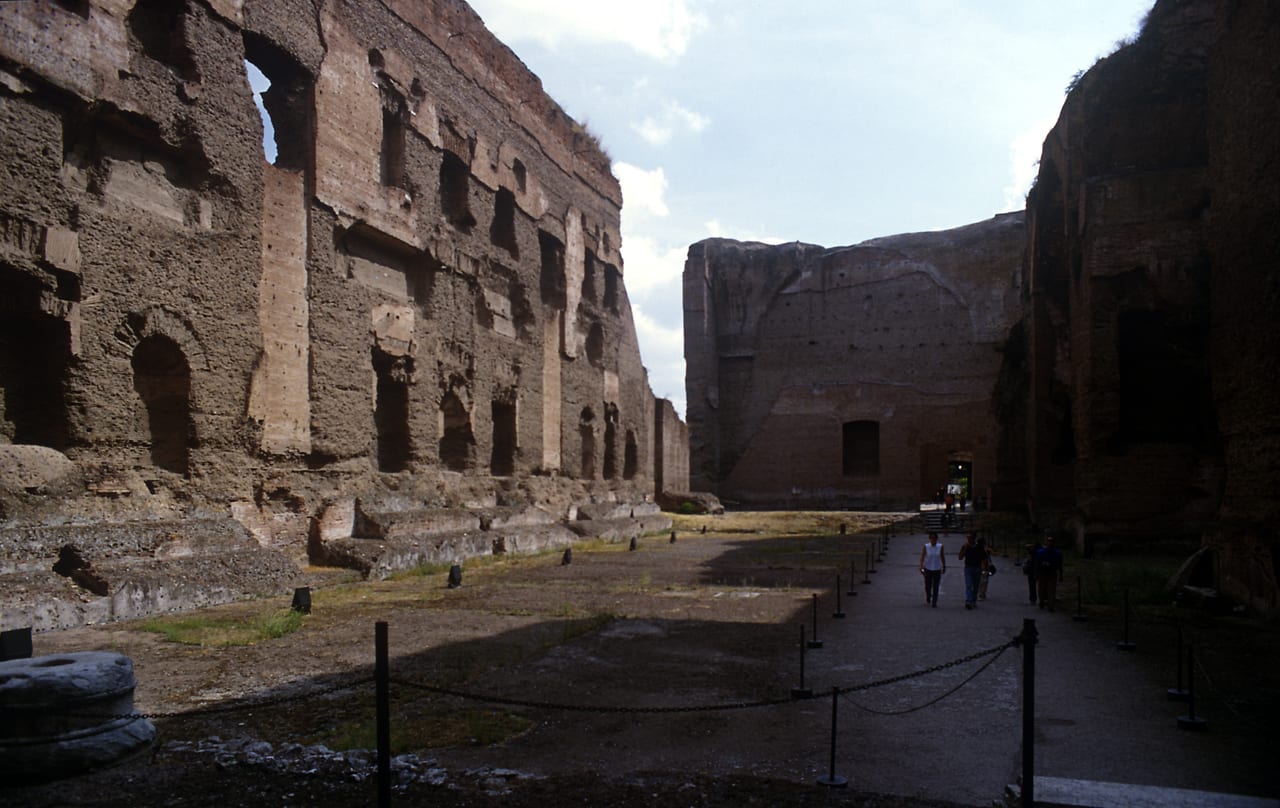
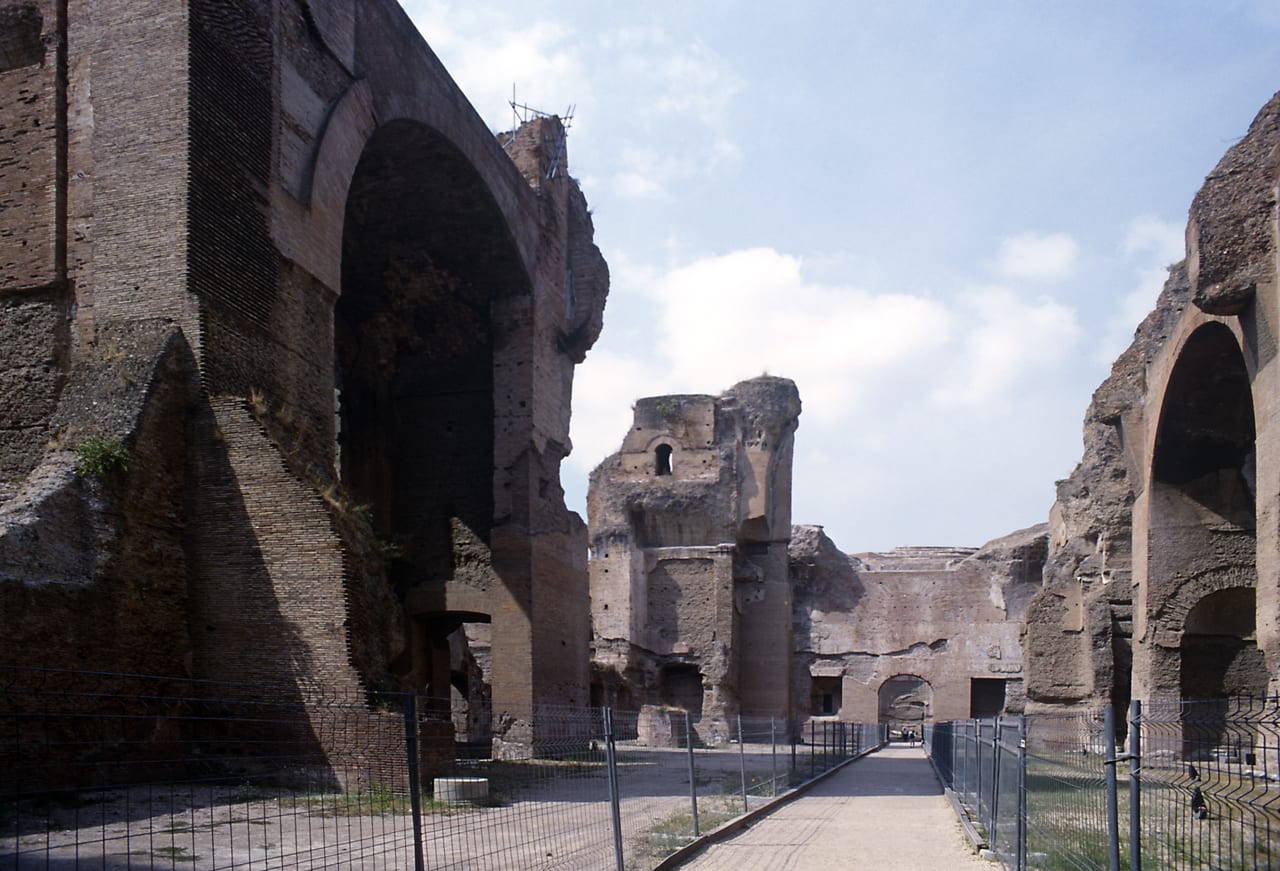
Photograph 1 of 45 of Baths of Caracalla
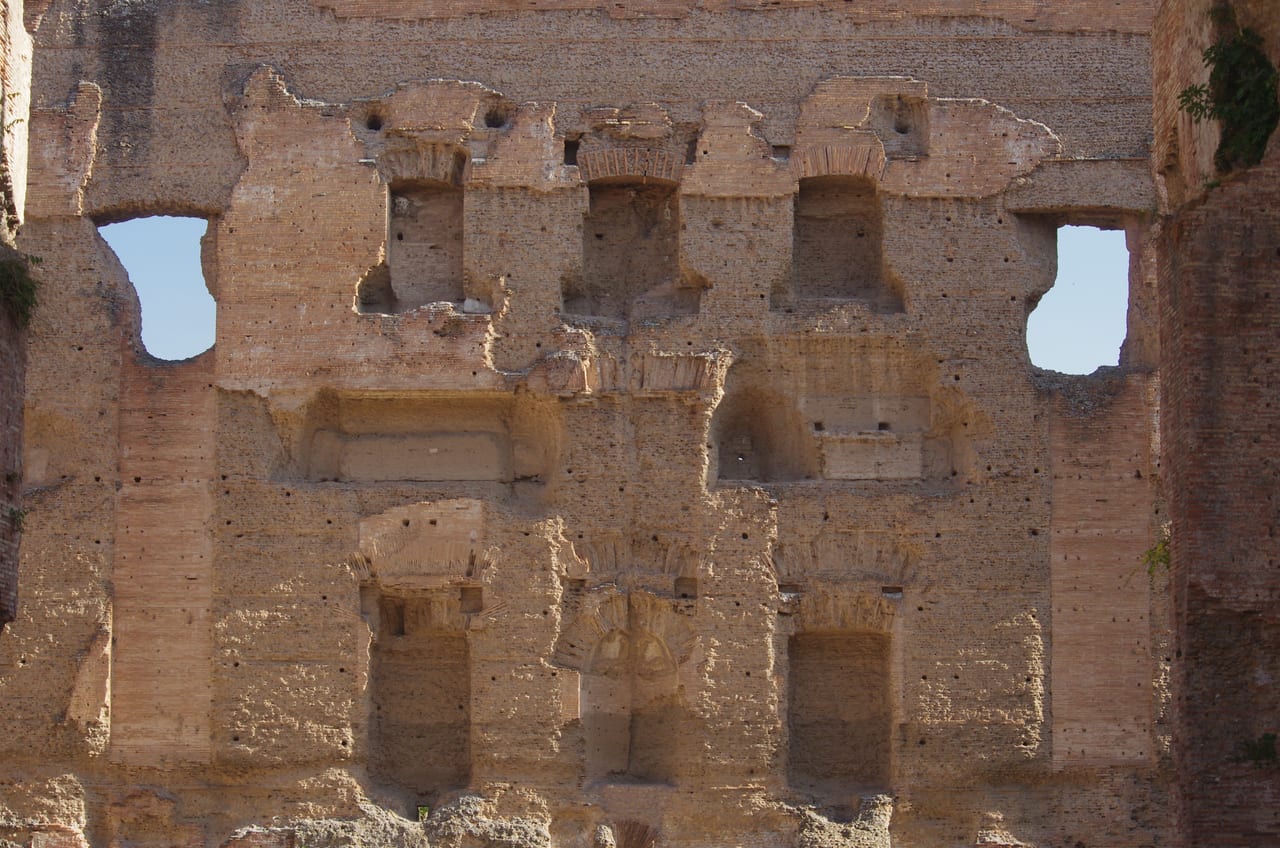
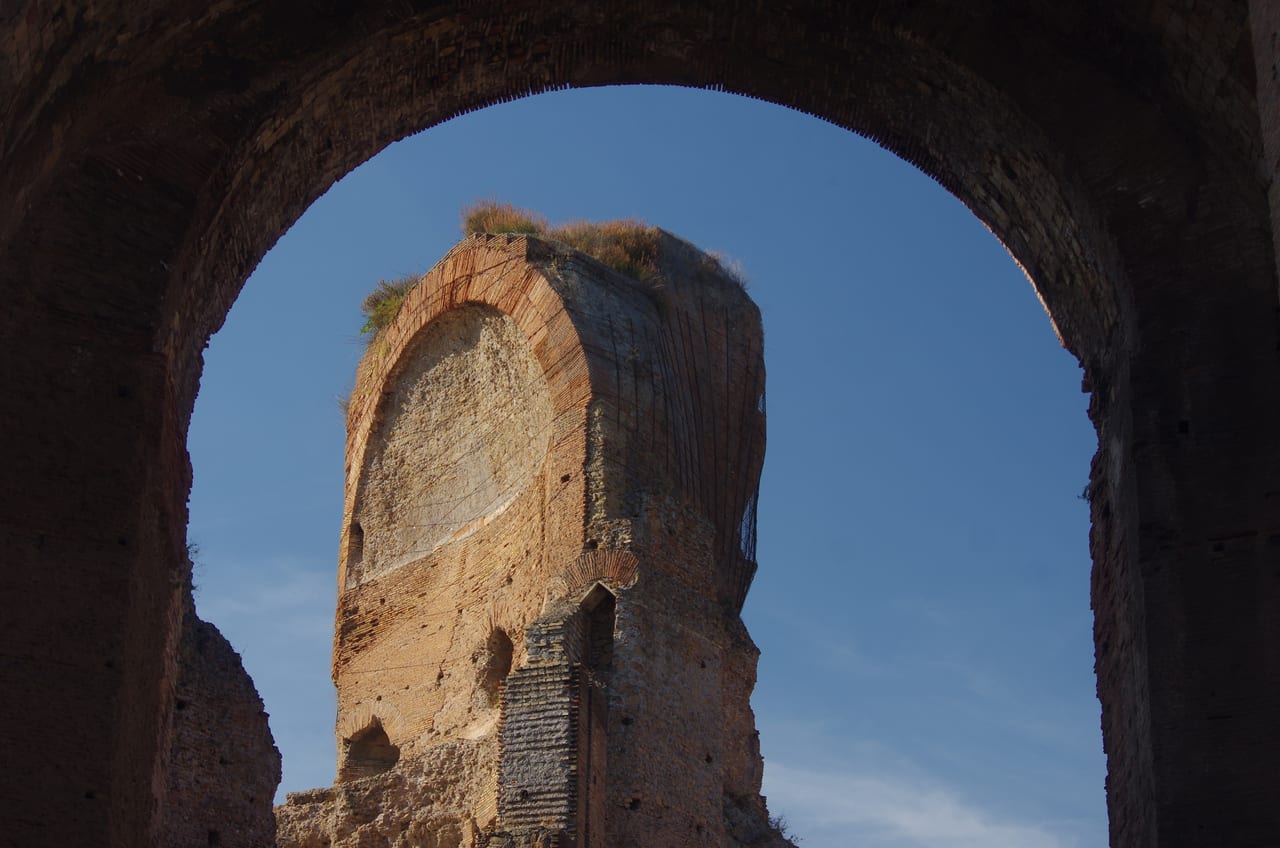
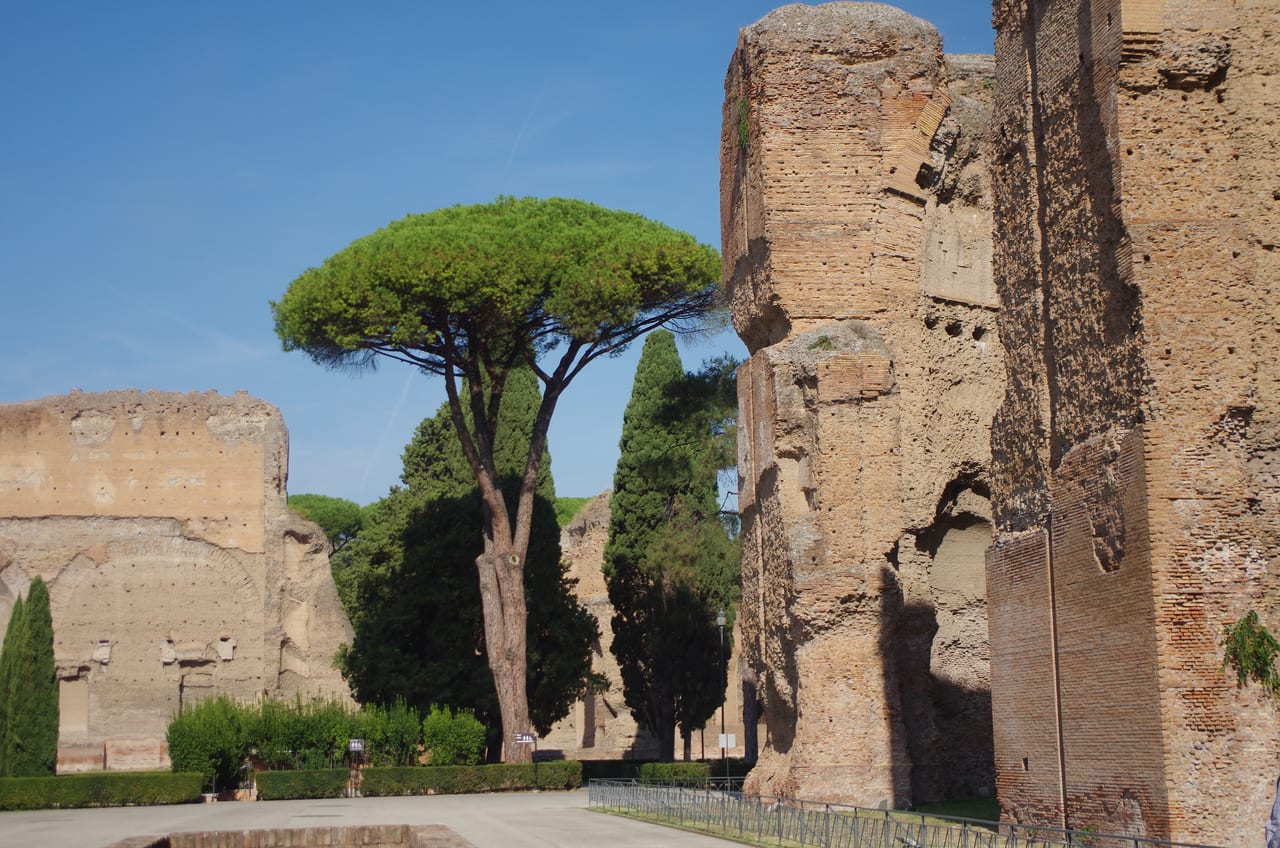
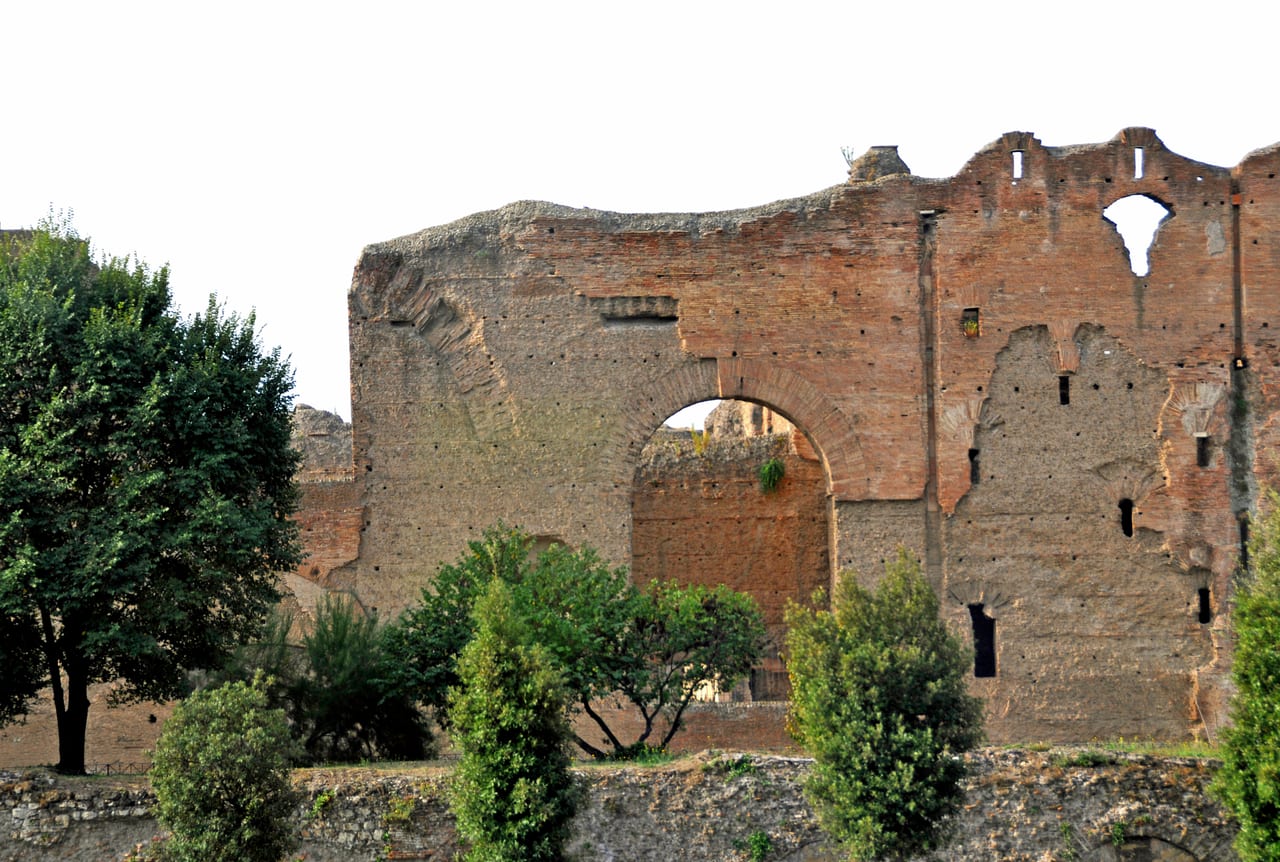
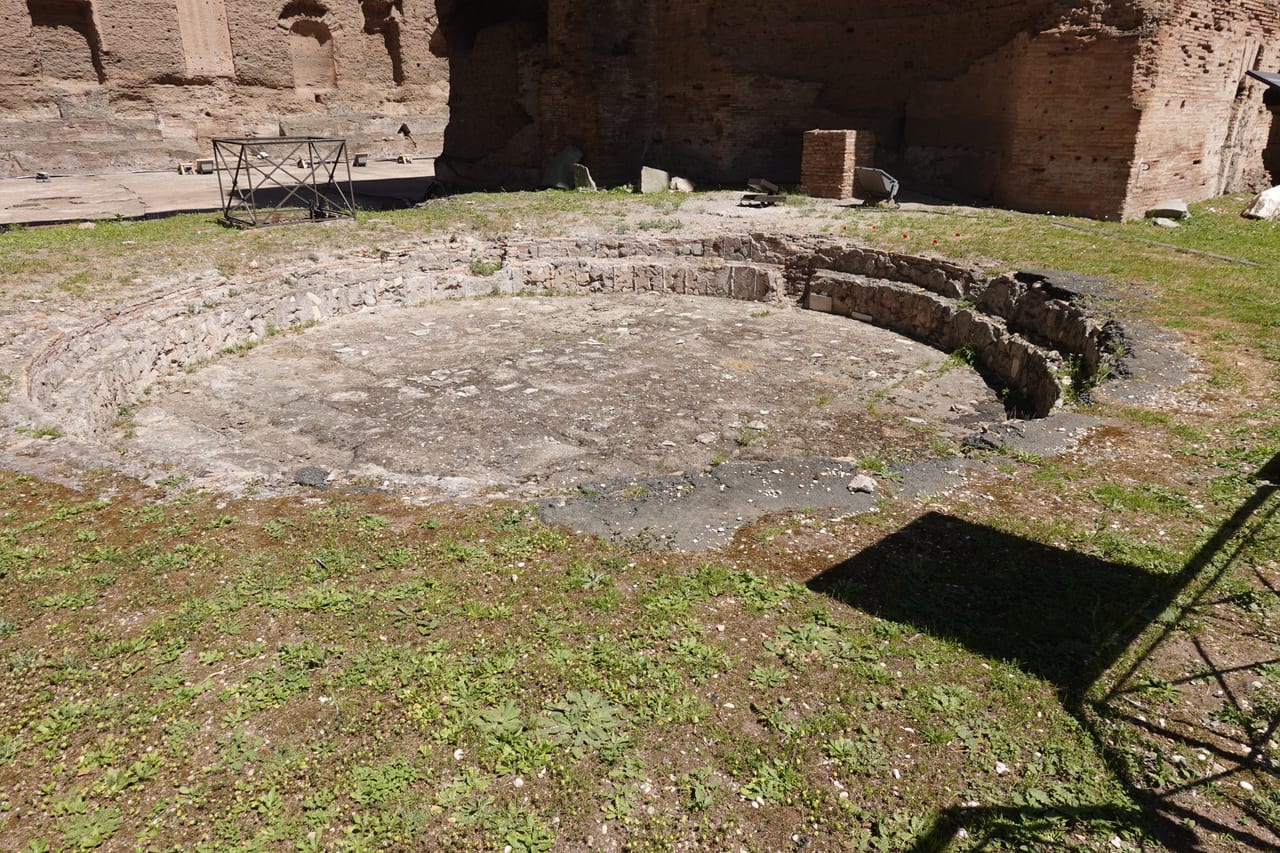
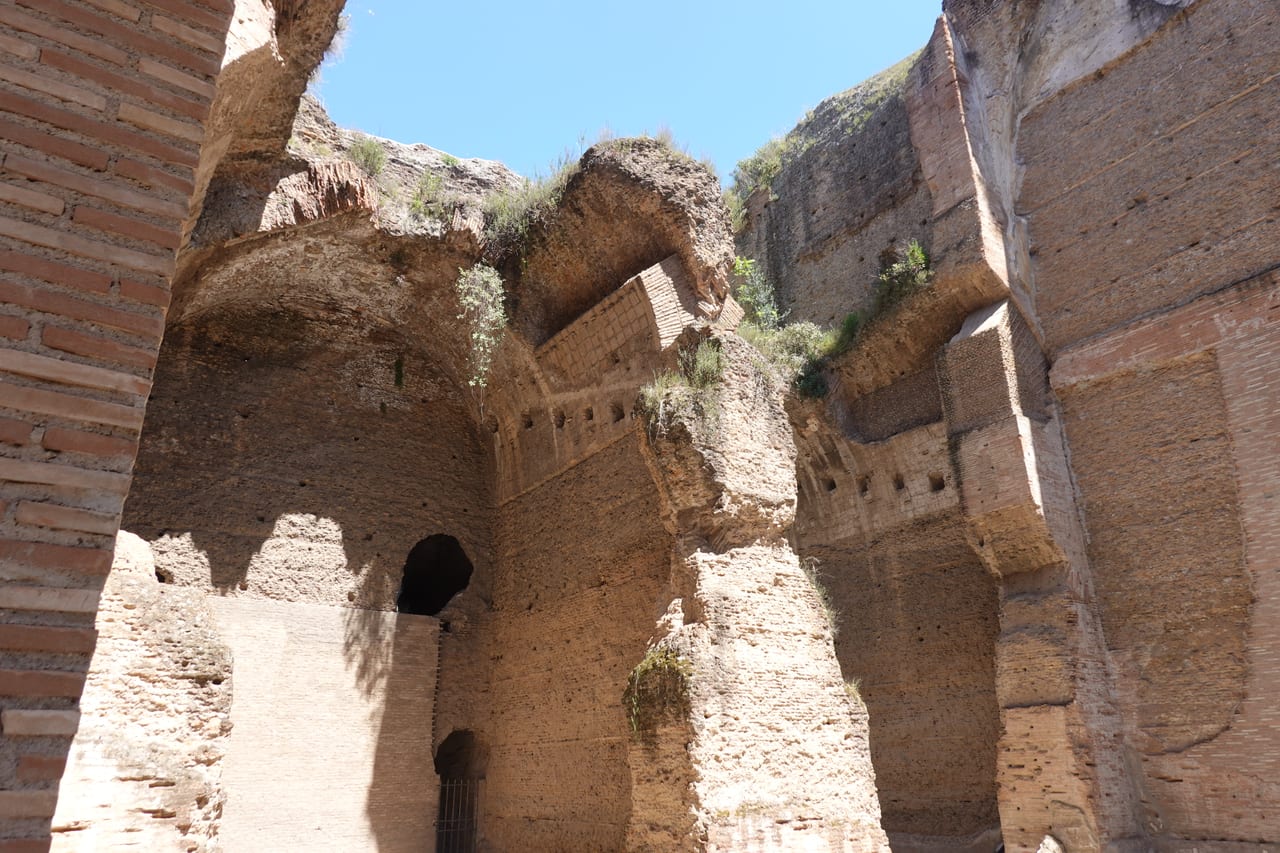
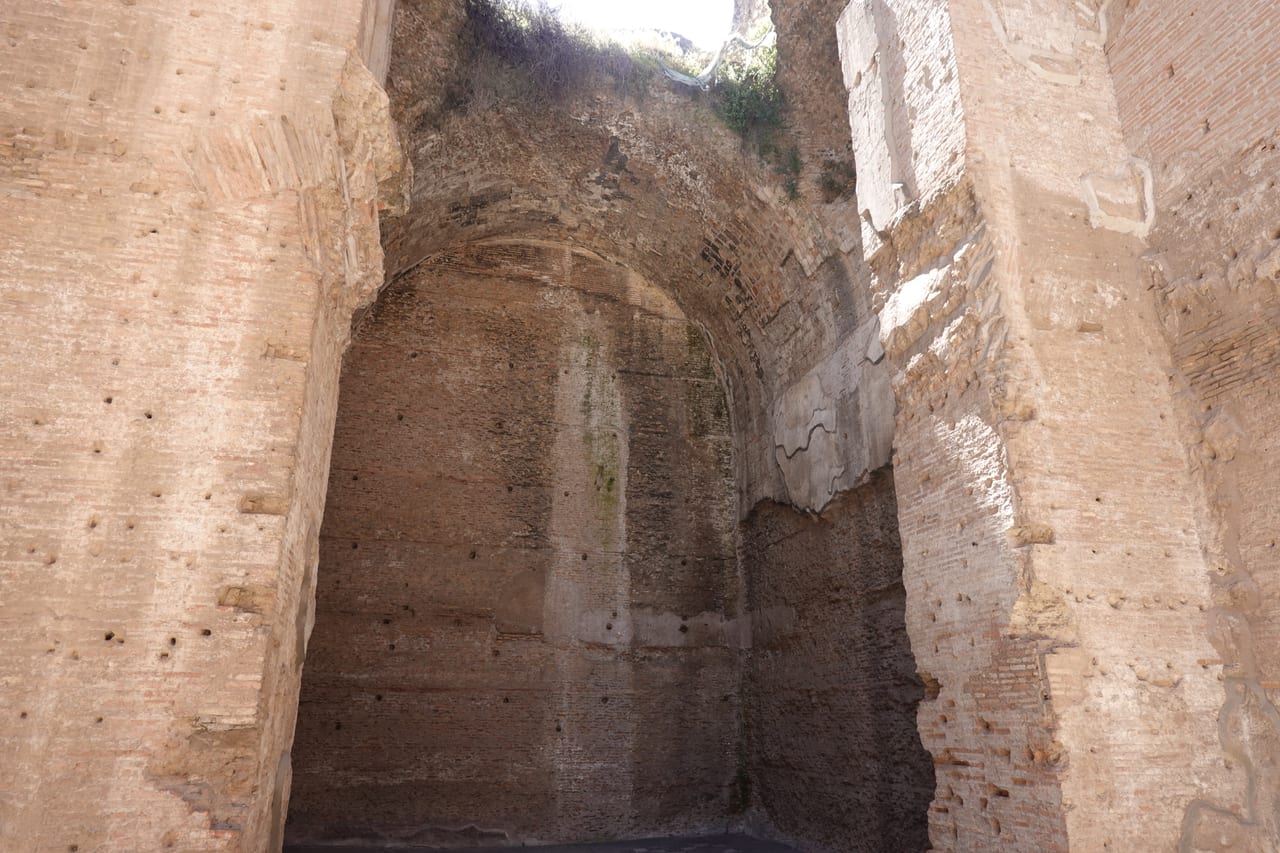
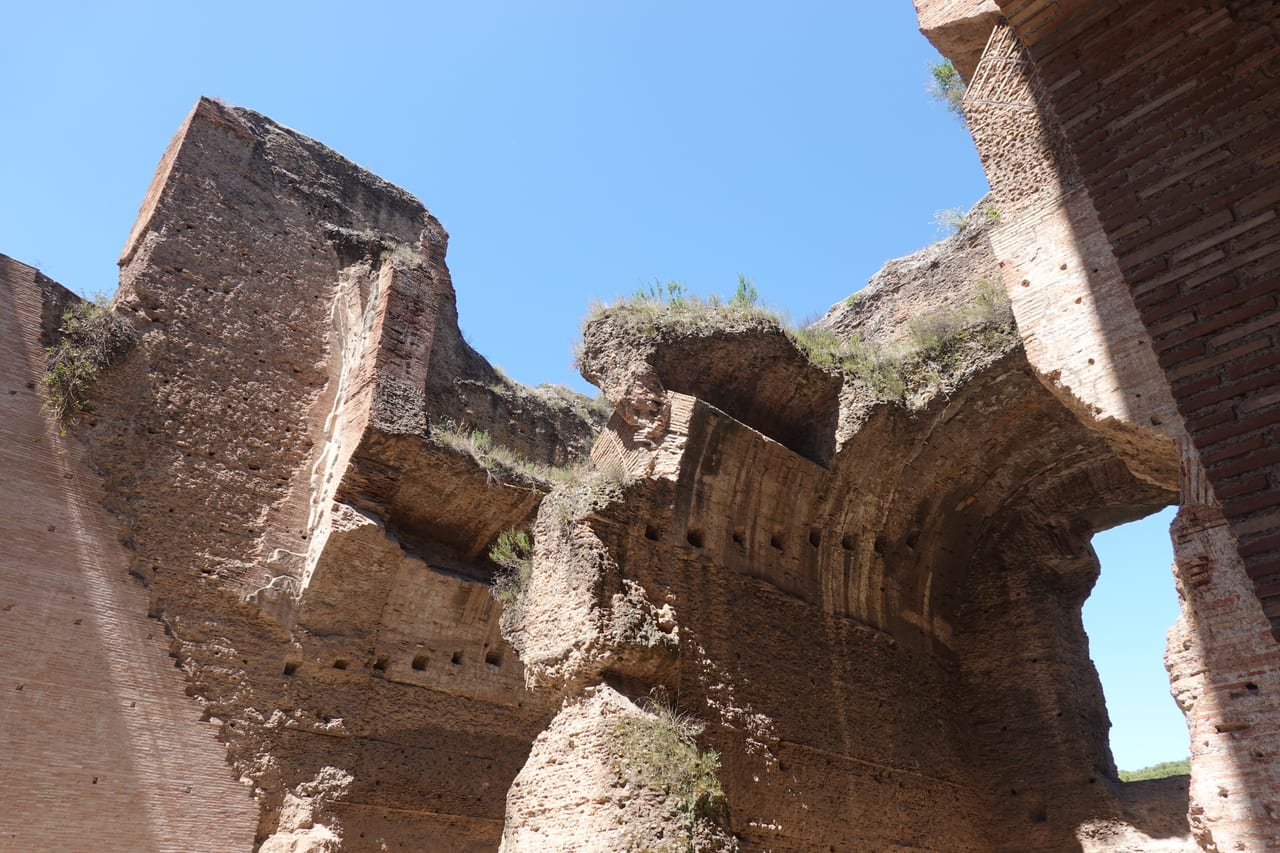
Built on the Little Aventine between 212 and 216 CE, the baths were inaugurated by the emperor Caracalla, who had succeeded his father Septimius Severus in 211. Their construction required the clearance of earlier buildings and the reshaping of the hill. A branch of the Aqua Marcia, the Aqua Antoniniana, supplied the complex, while the broad Via Nova formed its approach. Caracalla’s successors Elagabalus and Alexander Severus continued the enclosure and decoration; later restorations were undertaken by Aurelian, Diocletian, Theodosius and the Gothic king Theodoric. Designed on the model of Trajan’s Baths, the complex extended 337 by 328 metres, with a central block measuring 114 by 220 metres. Its symmetrical plan grouped changing rooms, gyms and bathing halls around the natatio. The south-facing caldarium projected from the main structure, its 34-metre circular room illuminated through large windows. After the aqueducts were cut during the Gothic War, the baths ceased operating in 537. They were later quarried, excavated from the sixteenth century onward, and adapted for gymnastics during the 1960 Olympic Games and for open-air opera performances from 1937.
At a glance
- Built
- 216
- Heritage
- Italian national heritage
Ways to explore Baths of Caracalla
Begin with the scale of the enclosure and its surviving garden spaces, then follow the central axis from the entrance through the natatio and the mosaic-floored apodyteria. Compare the preserved cold-water basins in the frigidarium with the remains of the immense caldarium and its eight supporting piers. Look for the gymnasium courtyards, the cistern cells along the rear enclosure, the surviving library structure and traces of the covered xystus. Several celebrated finds are now elsewhere, including the Farnese Bull and the athletes’ mosaic.
Places to stay near Baths of Caracalla

Live availability and prices from Stay22's partners, refreshed periodically and subject to change. Booking through these links may earn us a commission at no extra cost to you. See our privacy policy.
Cafés near Baths of Caracalla
Cafés near Baths of Caracalla loads as you scroll.
Attractions nearby
Attractions near Baths of Caracalla loads as you scroll.
Cities nearby
Cities nearby loads as you scroll.
More in Rome
See more of Rome.
Find great cafés, places to stay and other interesting places to visit in Rome.