Ancient site · Rome
Baths of Agrippa
DirectionsBuilt by Marcus Vipsanius Agrippa, the Baths became Rome’s first public bathing complex when his will opened them free to citizens after his death in 12 BC.
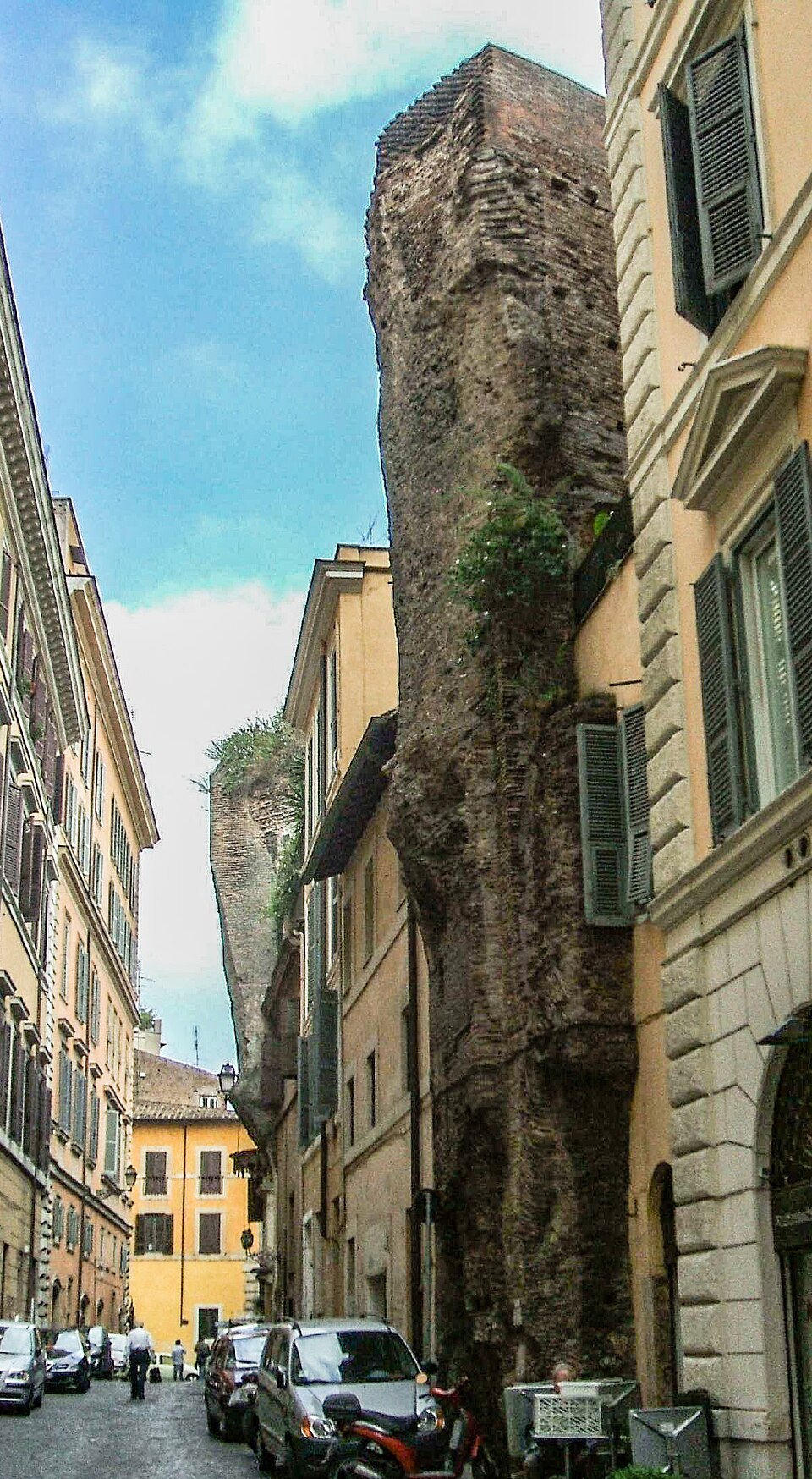
Completed in stages, the complex began in 25 BC as a laconicum, a heated room associated with exercise. The Aqua Virgo, completed in 19 BC at Agrippa’s expense, supplied the water that enabled its fuller development. Gardens, colonnades, the Stagnum lake and the Euripus canal extended the setting, while the baths combined frigidarium, tepidarium and caldarium spaces with exercise, conversation, reading and dining. Their design occupied roughly 110 by 90 metres; a 25-metre rotunda stood to the north, and heated rooms to its west used hypocausts and hollow terra-cotta tiles. Glazed terracotta, paintings and Lysippus’s Apoxyomenos adorned the complex, making it an early Roman setting for monumental sculpture. A fire in AD 80 brought restoration under Titus or Domitian. Hadrian enlarged the baths in the second century, while Constantius and Constans rebuilt them in 354–355. They remained in use into the fifth century. Pope Gregory I converted them into a nunnery in 599; after the aqueducts were cut off in the 530s, the abandoned structure was quarried.
Ways to explore Baths of Agrippa
Look for the surviving circular masonry, now absorbed into later buildings, and trace the curve of the former rotunda around Arco della Ciambella. Use the old plans by Peruzzi and Palladio to reconstruct the complex’s scale. The surrounding streets reveal reused ancient fabric; the Aqua Virgo’s continuing route toward the Trevi Fountain also helps explain the baths’ water infrastructure.
Places to stay near Baths of Agrippa

Live availability and prices from Stay22's partners, refreshed periodically and subject to change. Booking through these links may earn us a commission at no extra cost to you. See our privacy policy.
Cafés near Baths of Agrippa
Cafés near Baths of Agrippa loads as you scroll.
Attractions nearby
Attractions near Baths of Agrippa loads as you scroll.
Cities nearby
Cities nearby loads as you scroll.
More in Rome
See more of Rome.
Find great cafés, places to stay and other interesting places to visit in Rome.