Monument · Rome
Arch of Constantine
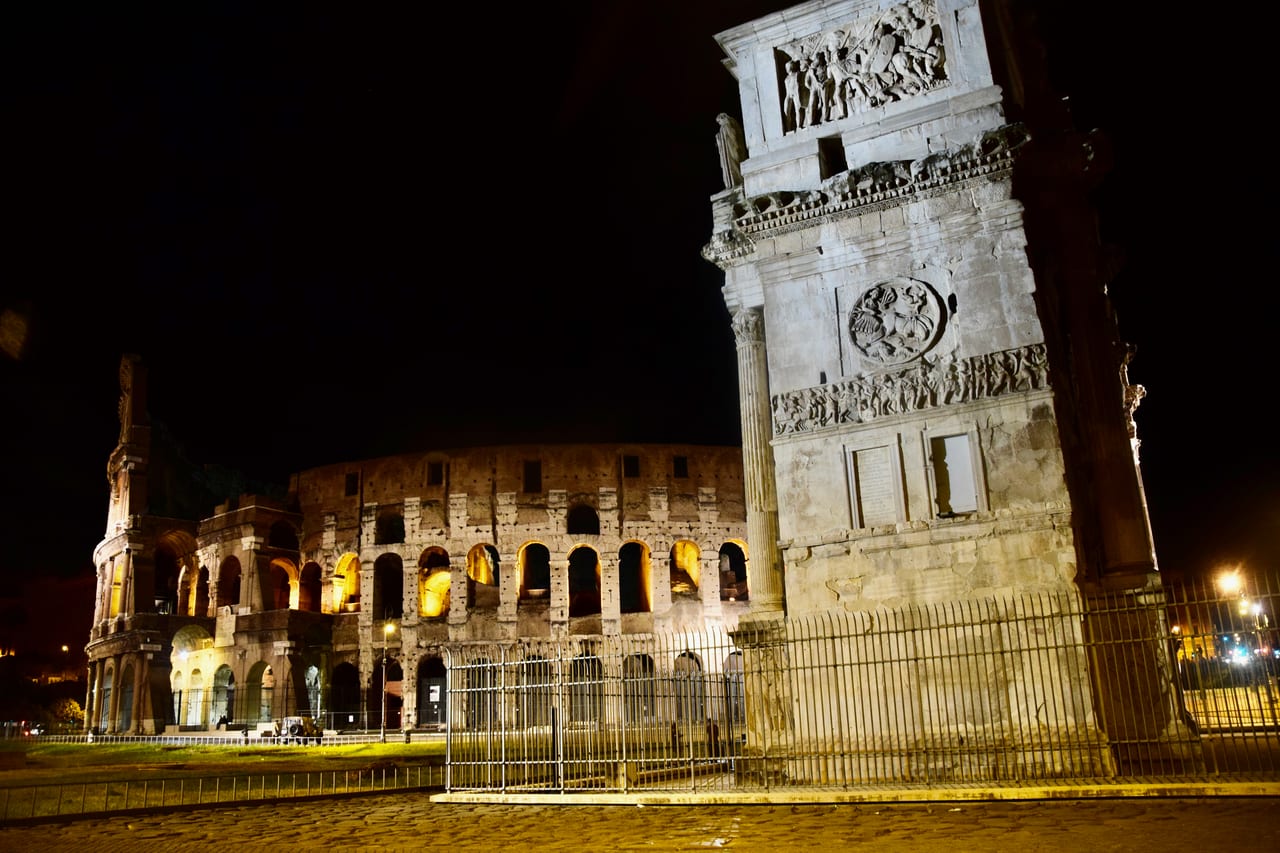
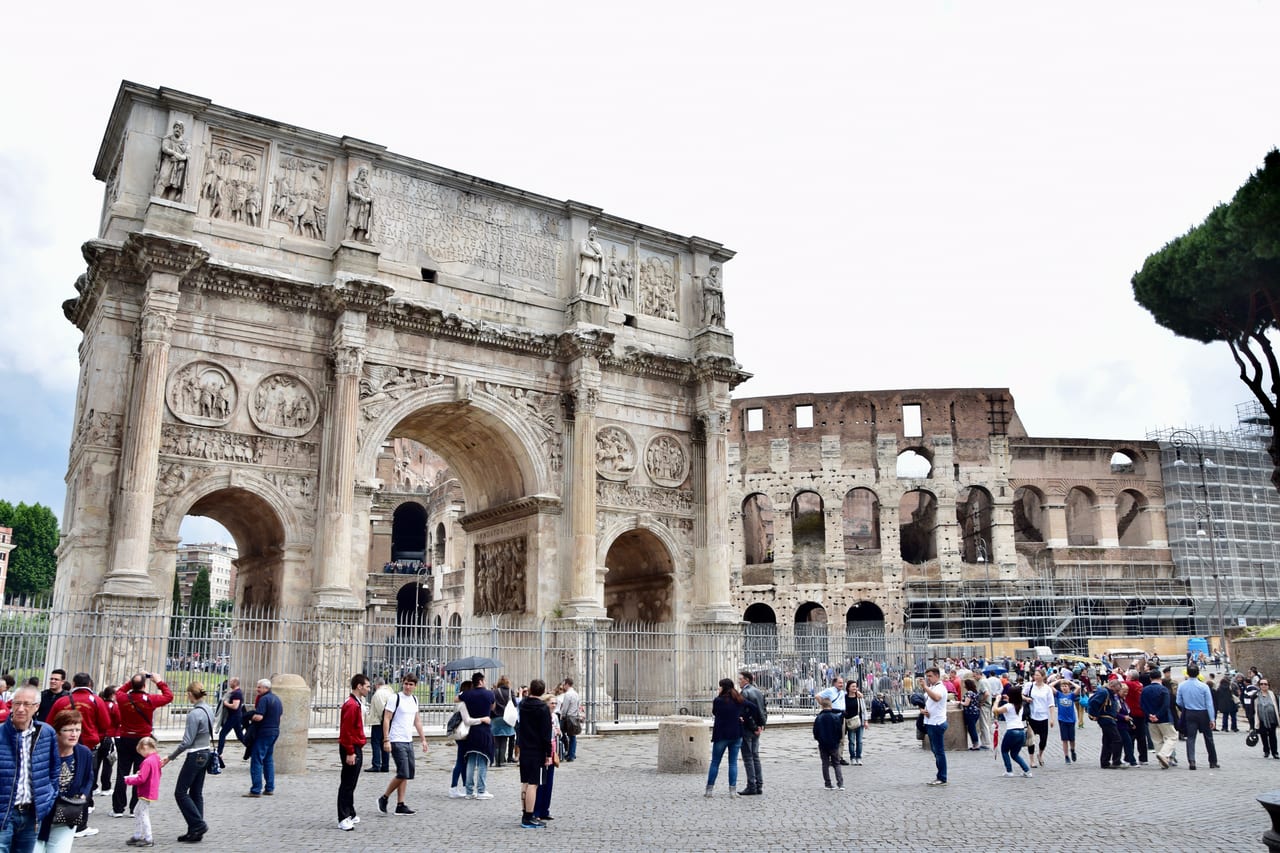
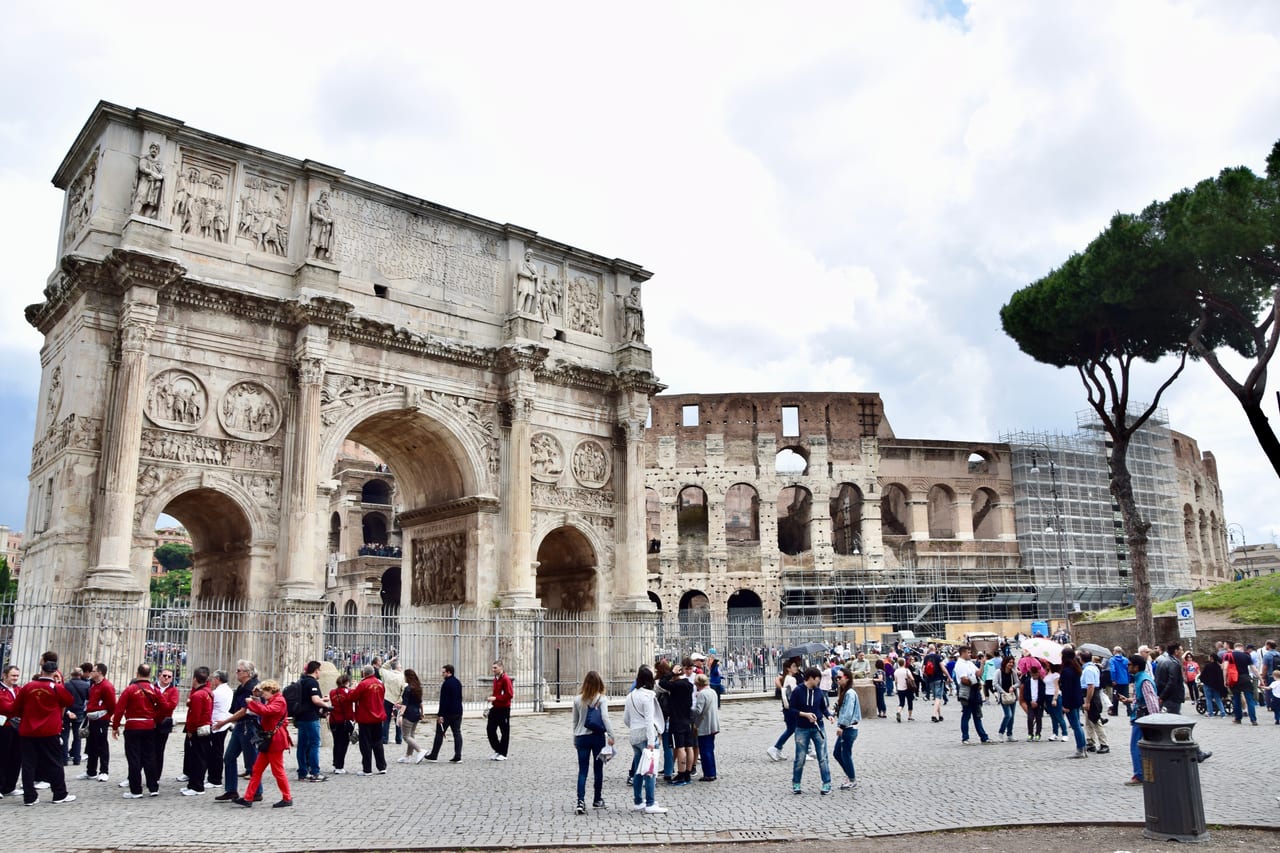
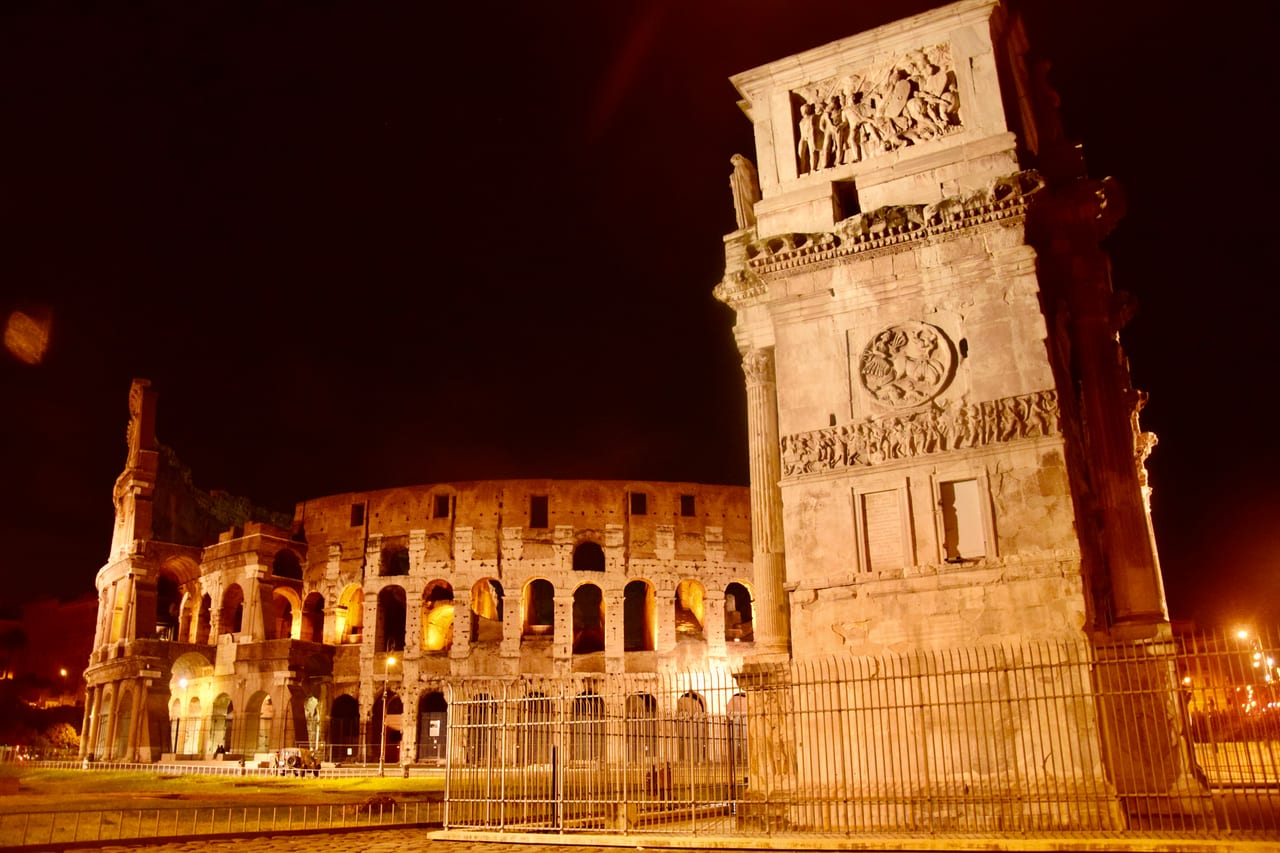
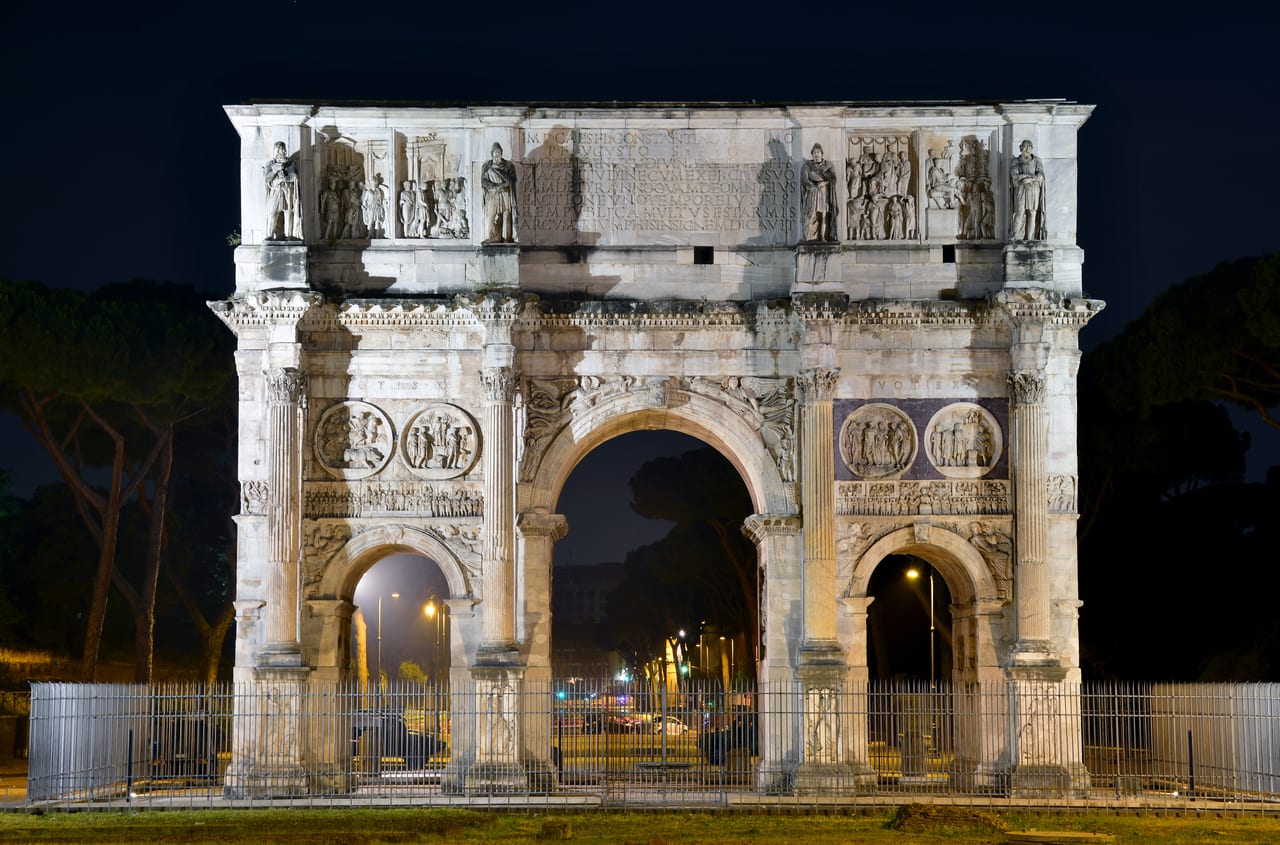
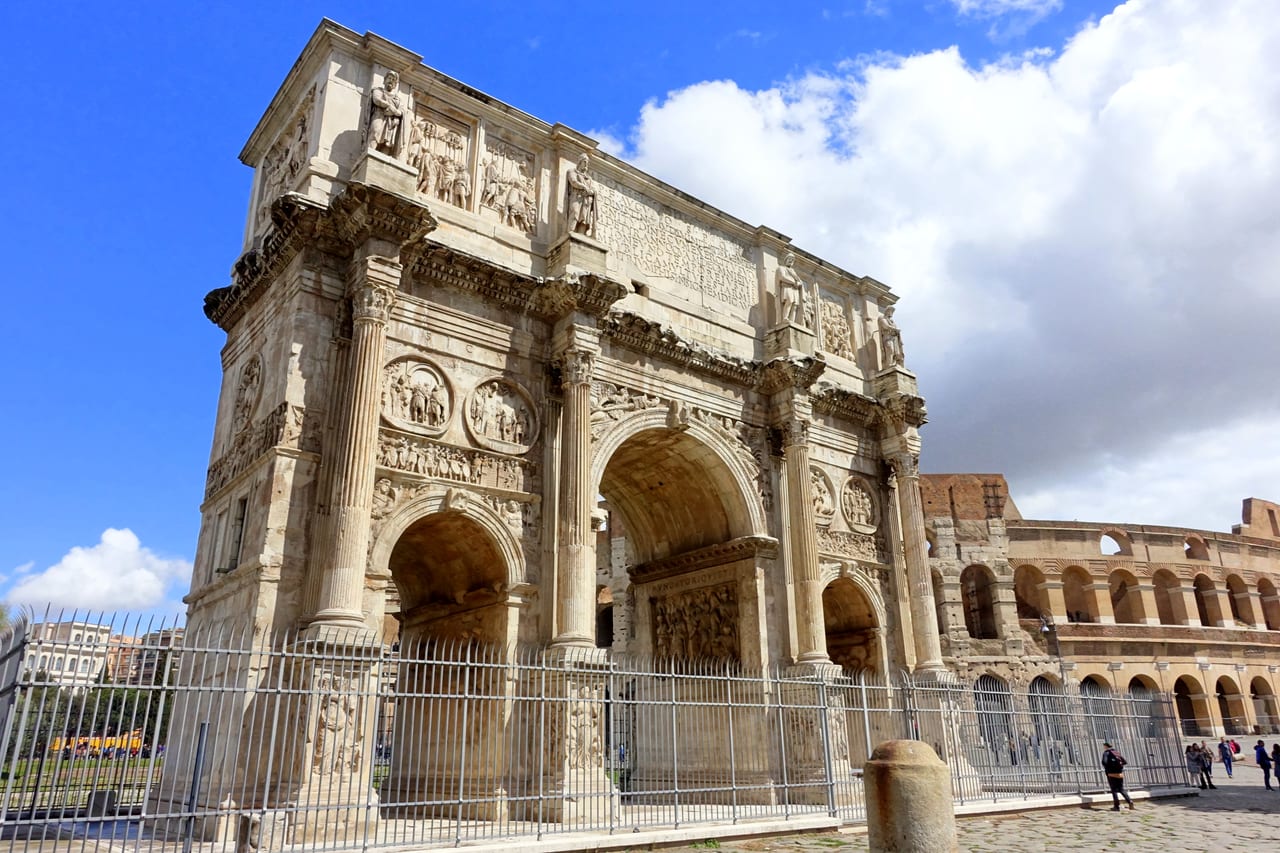
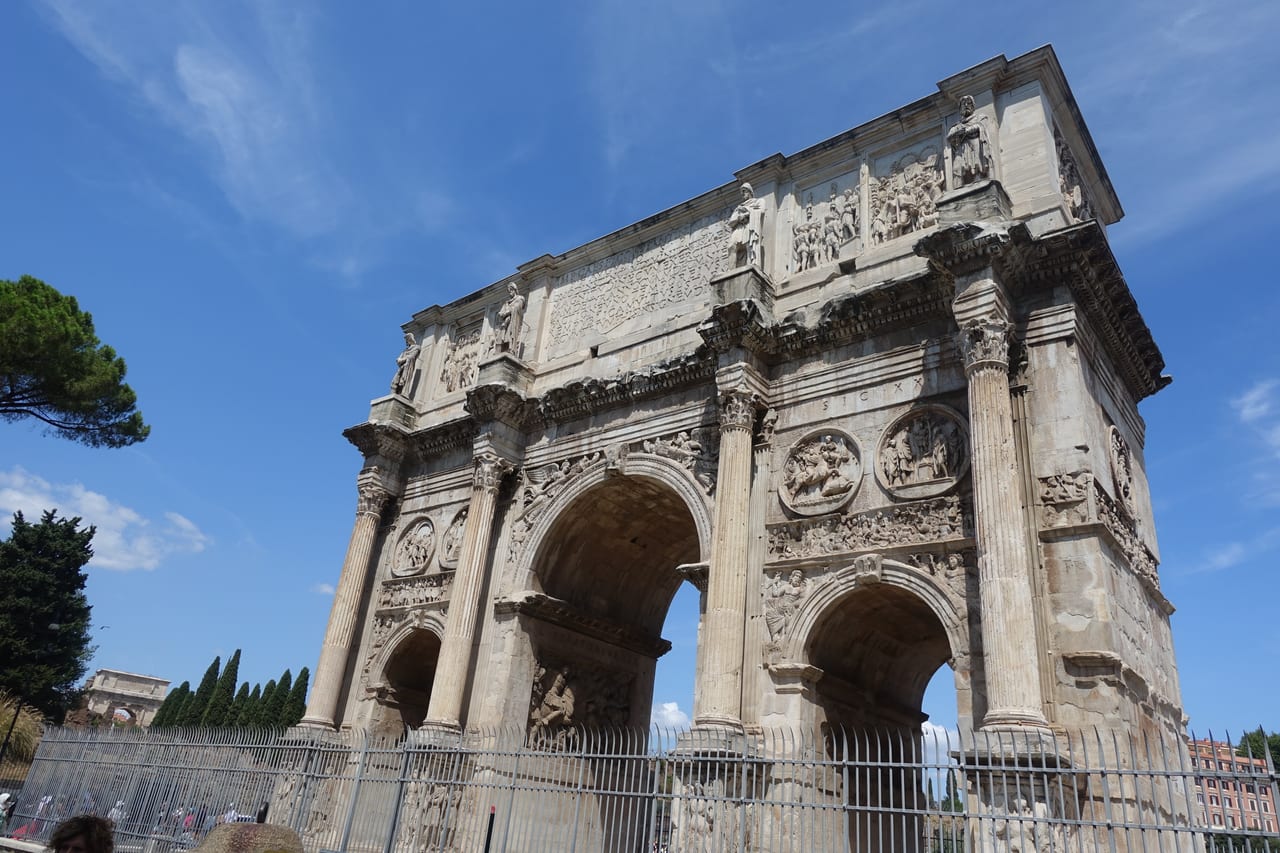
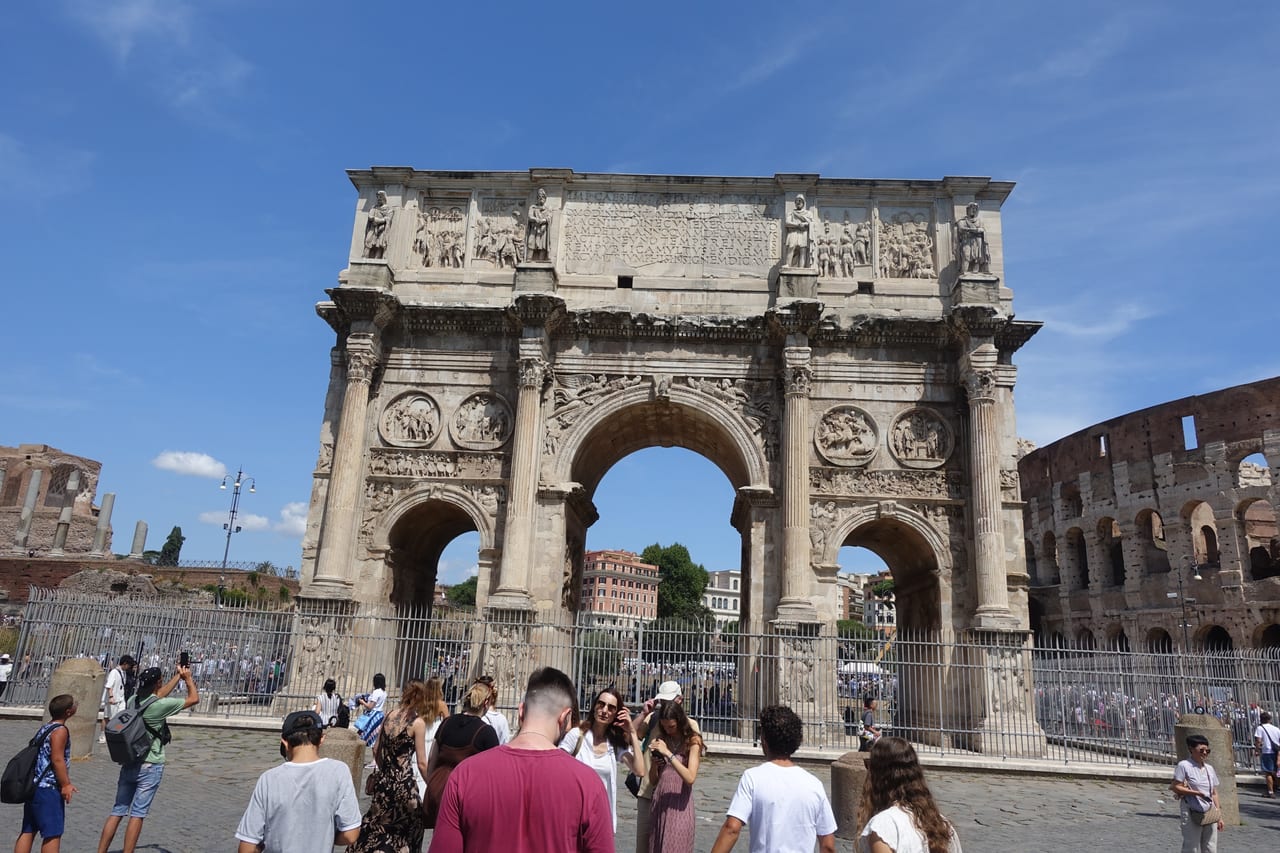
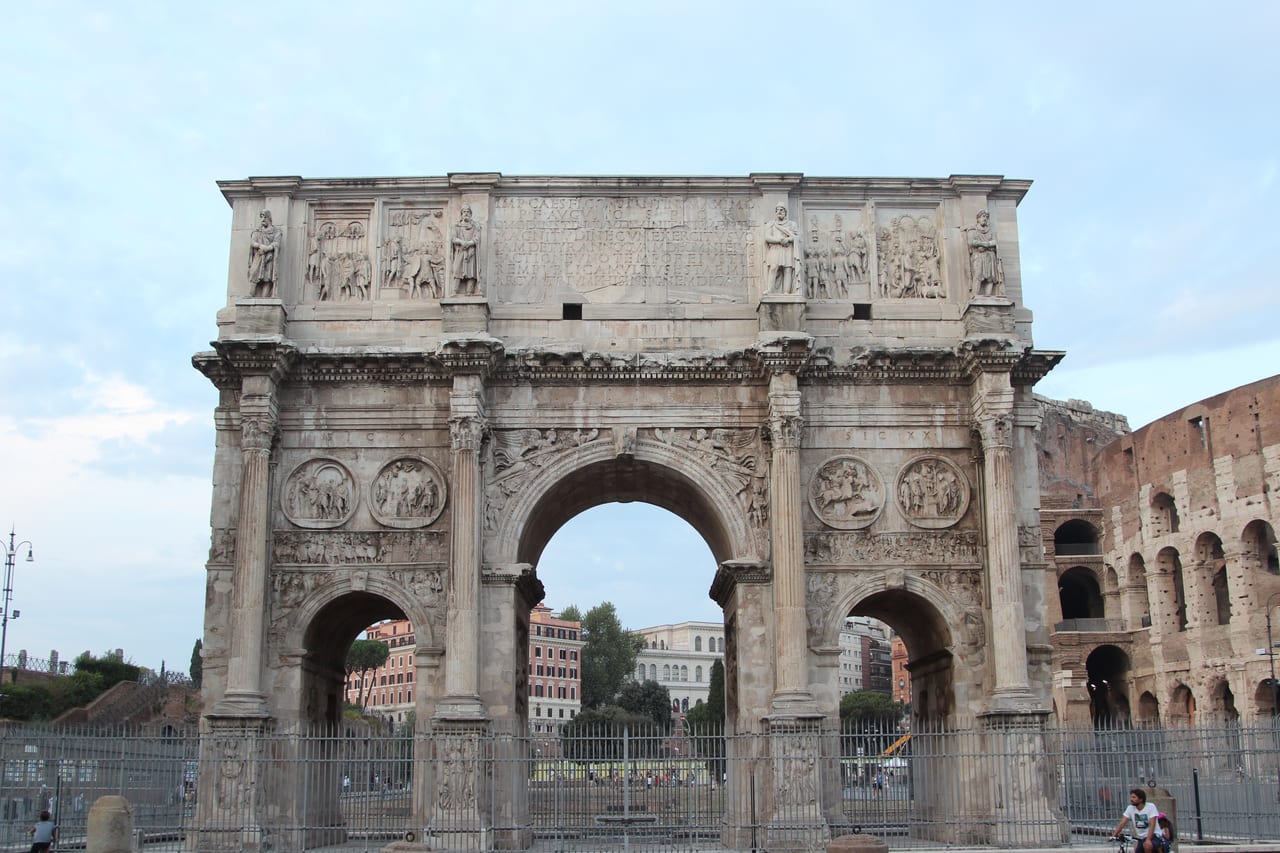
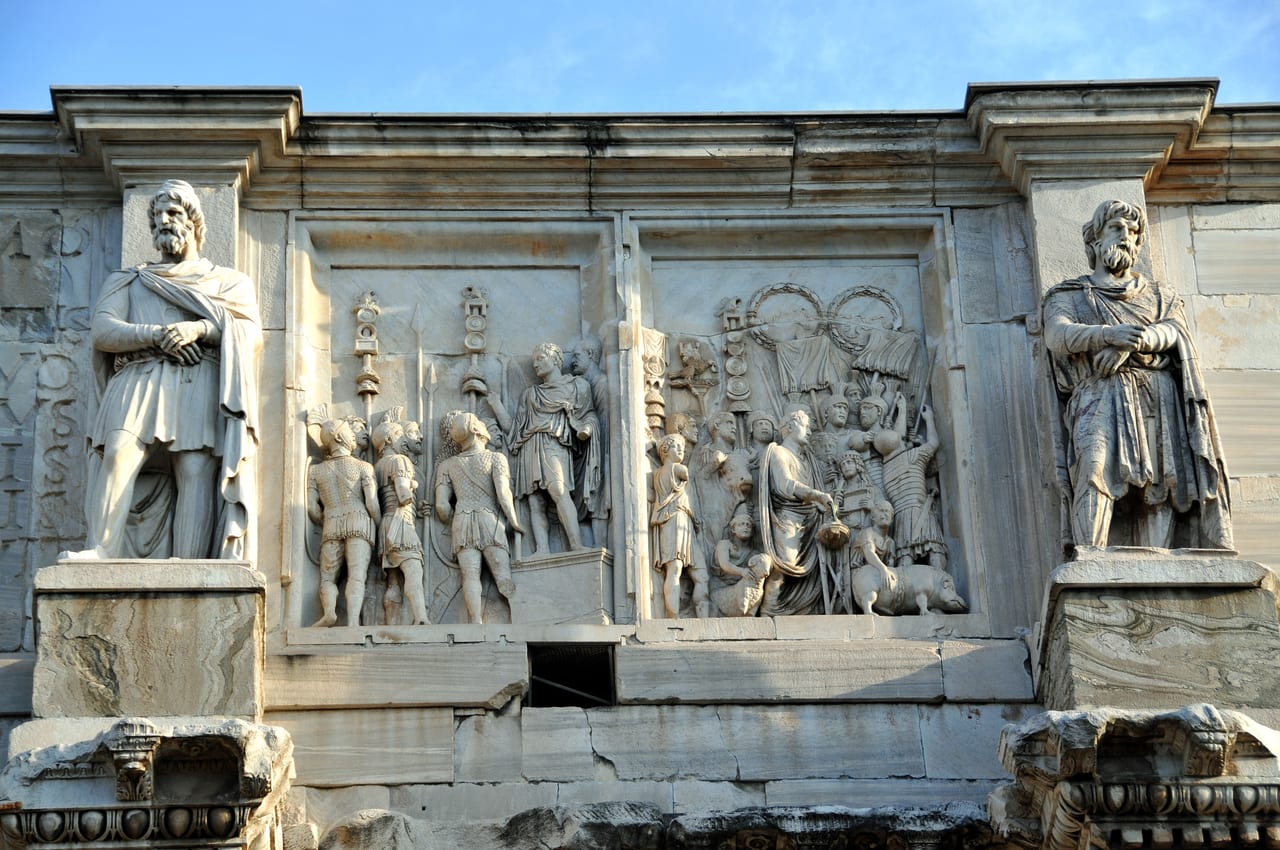
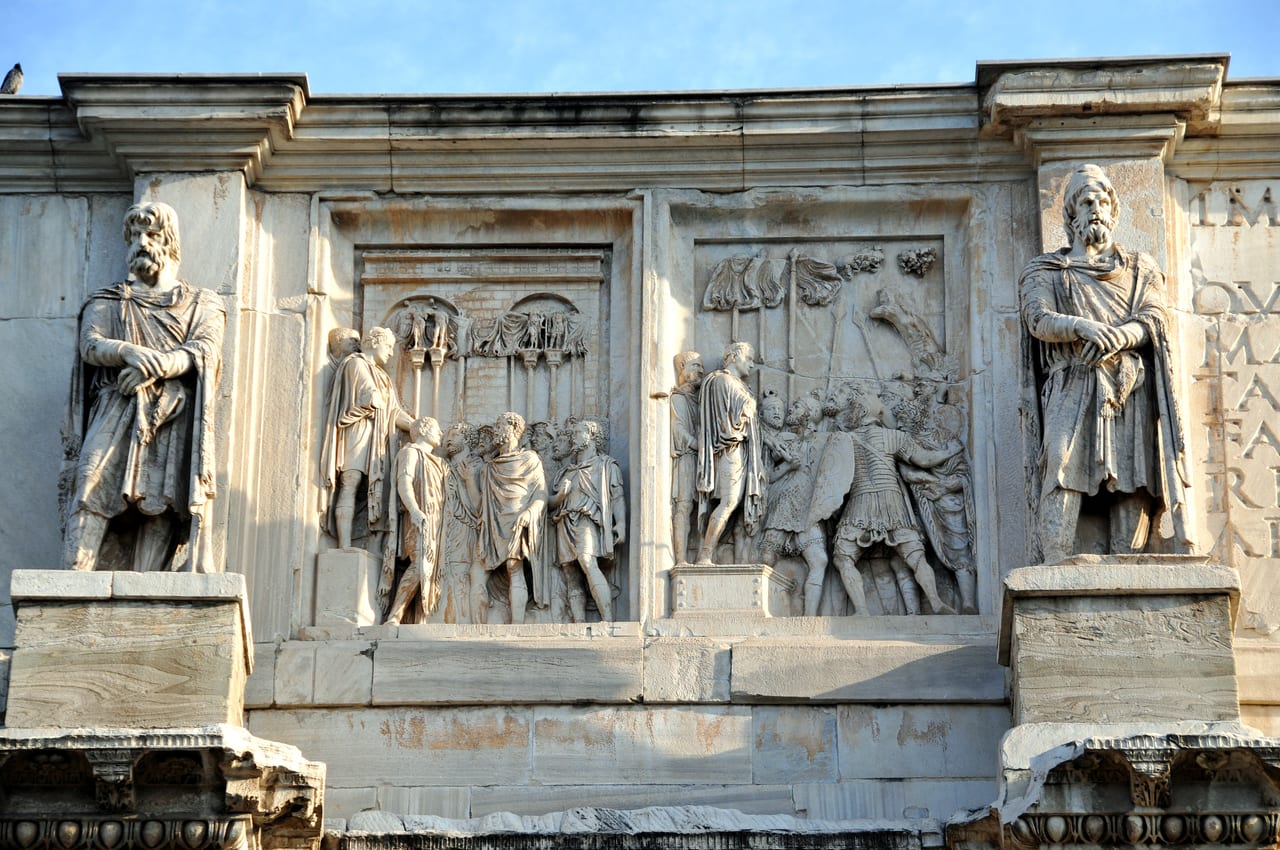
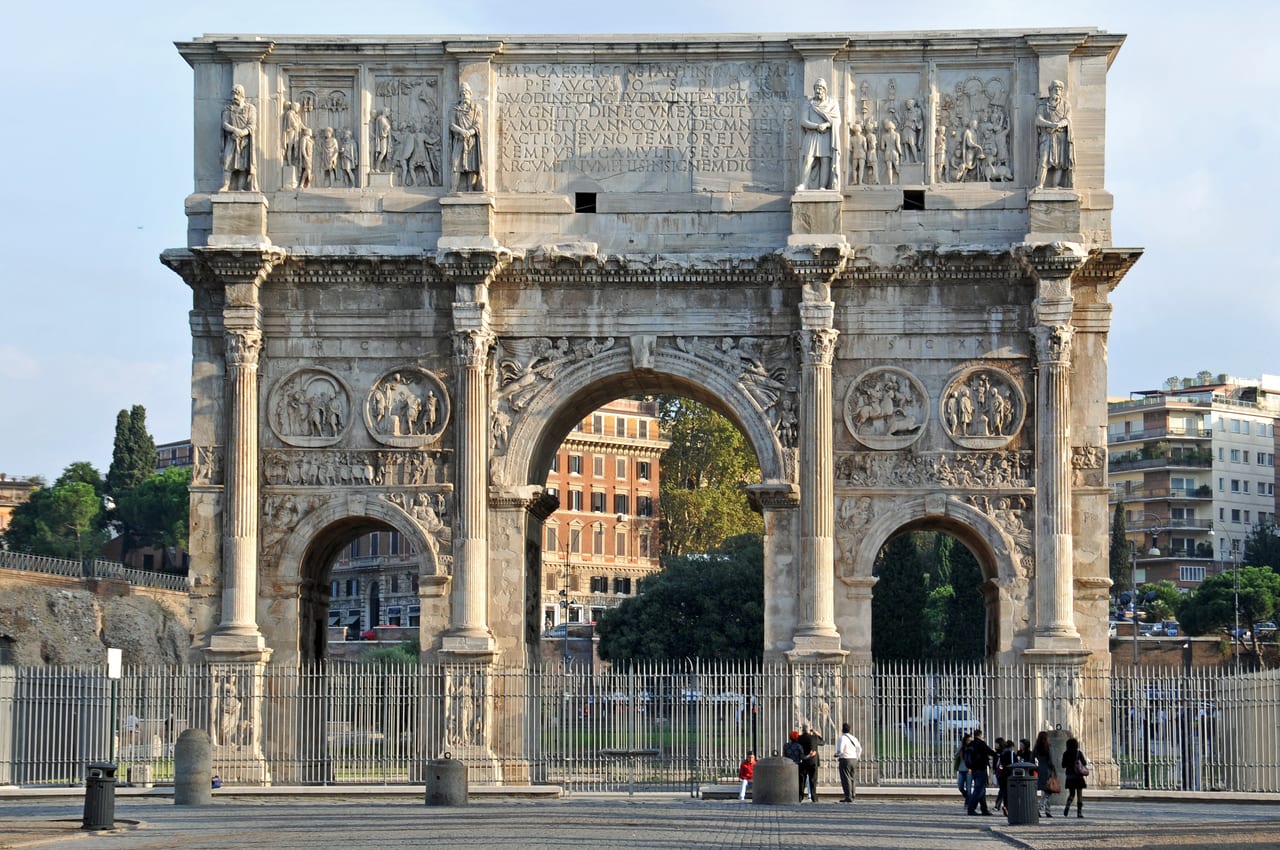
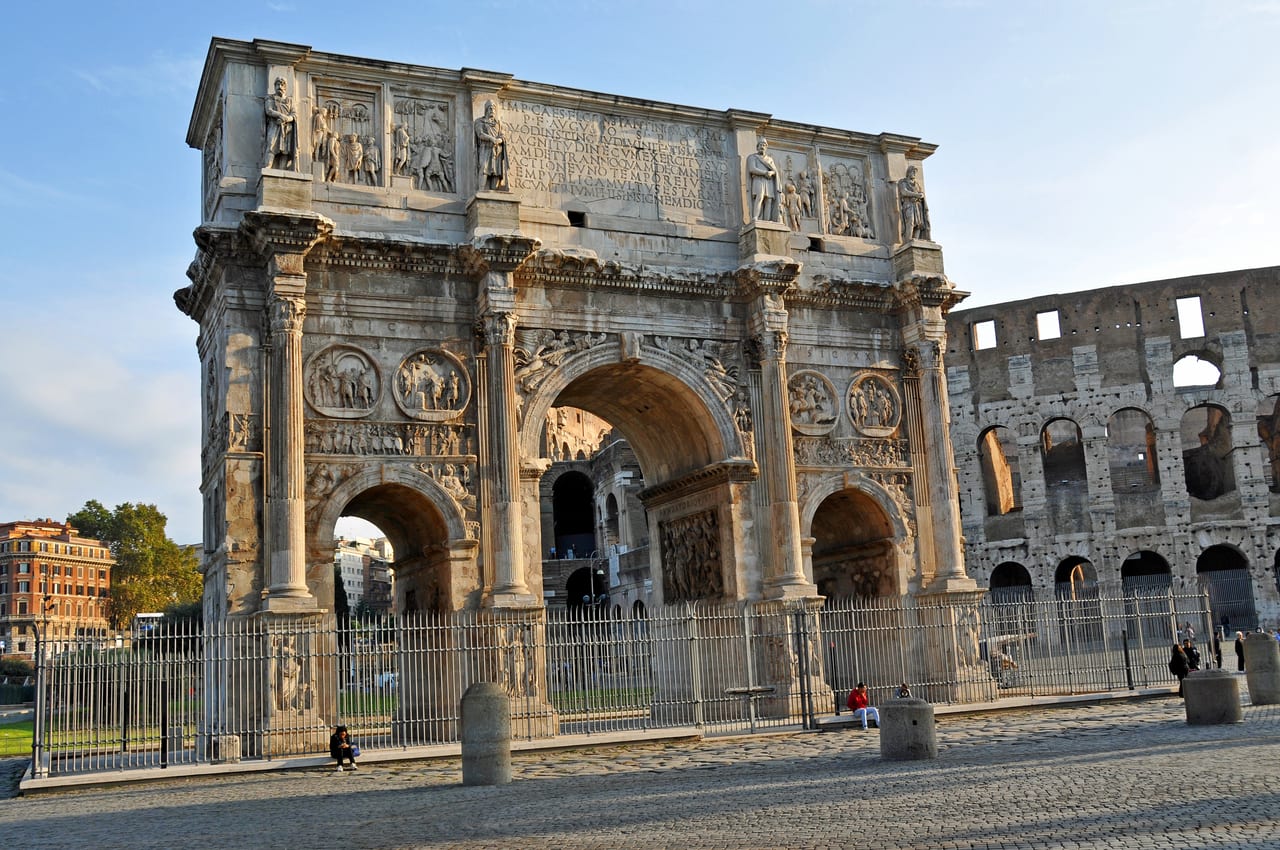
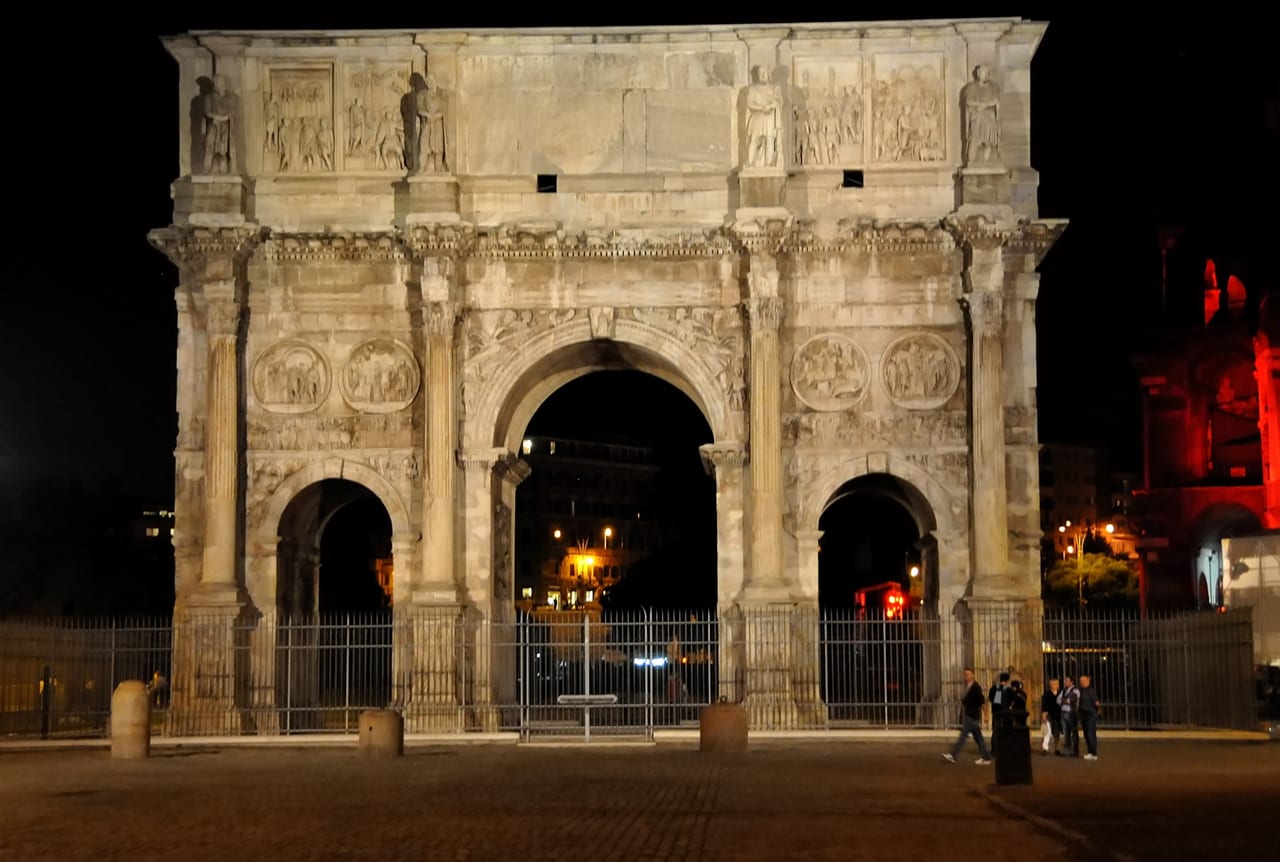
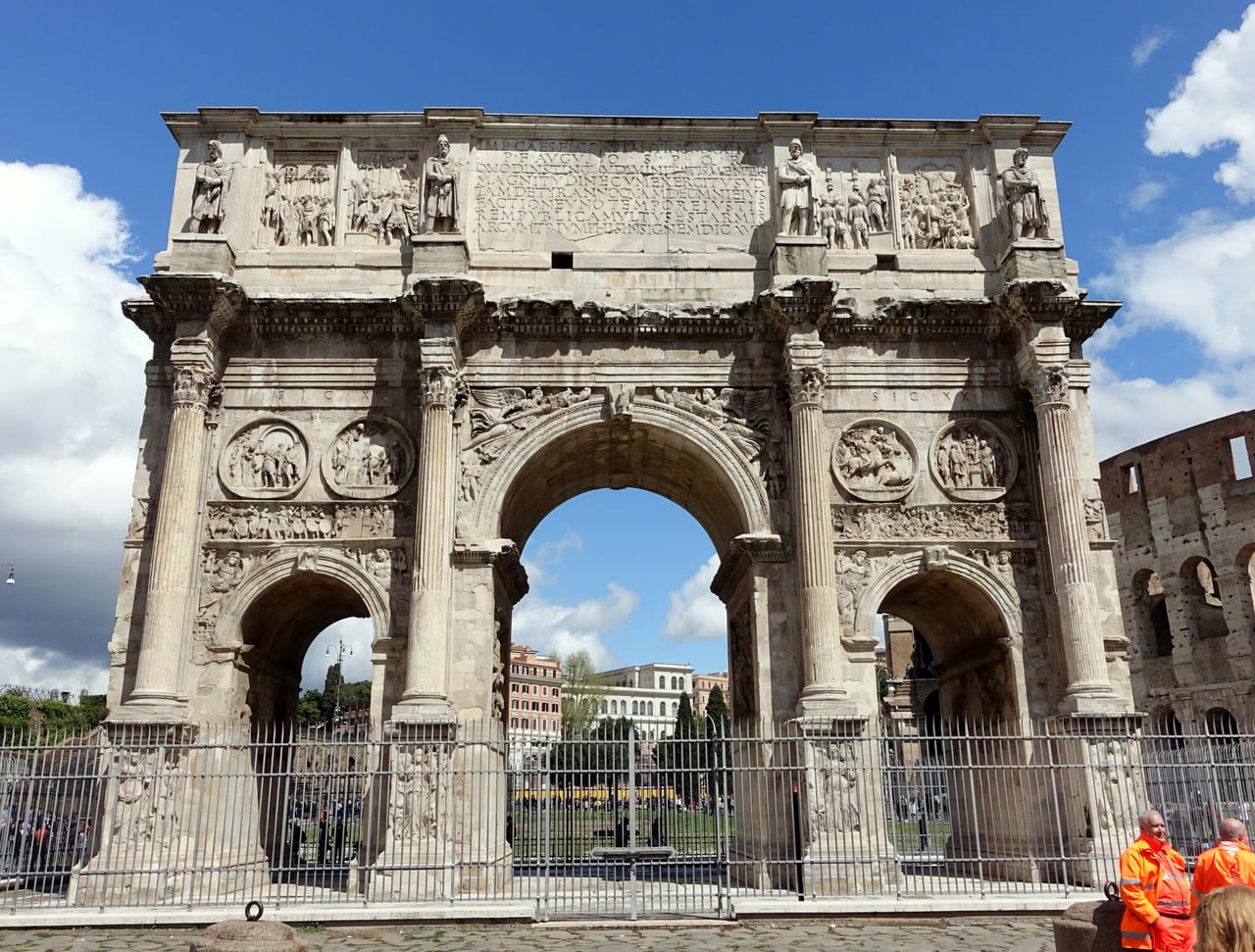
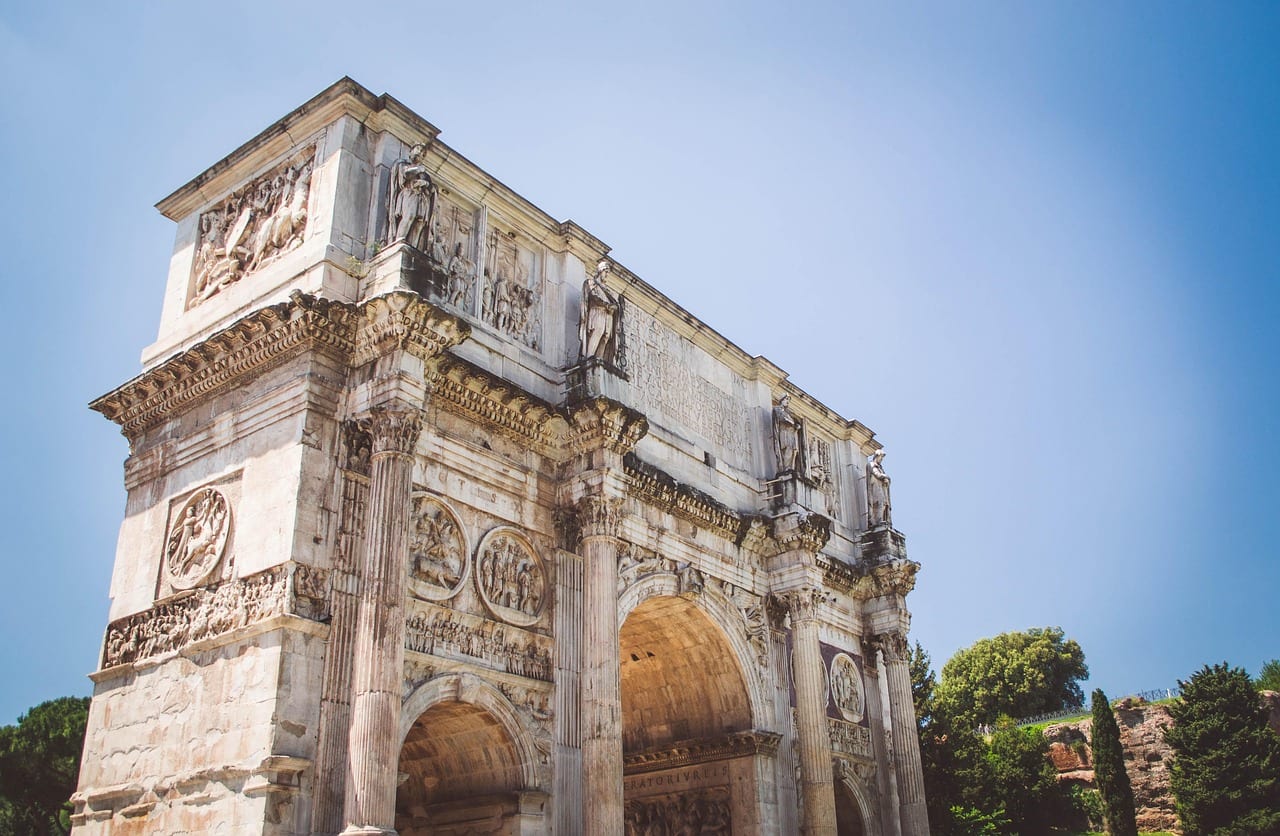
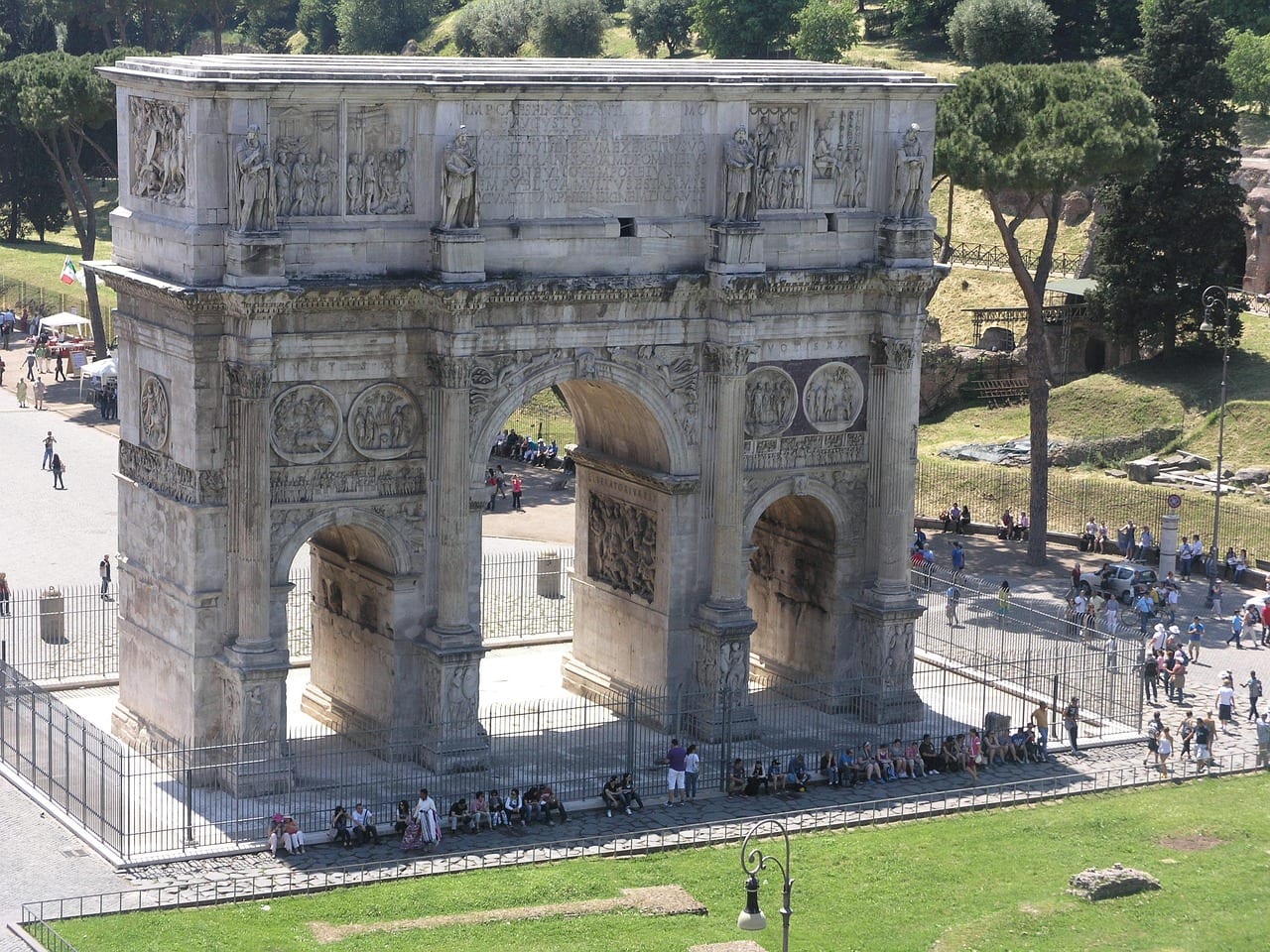
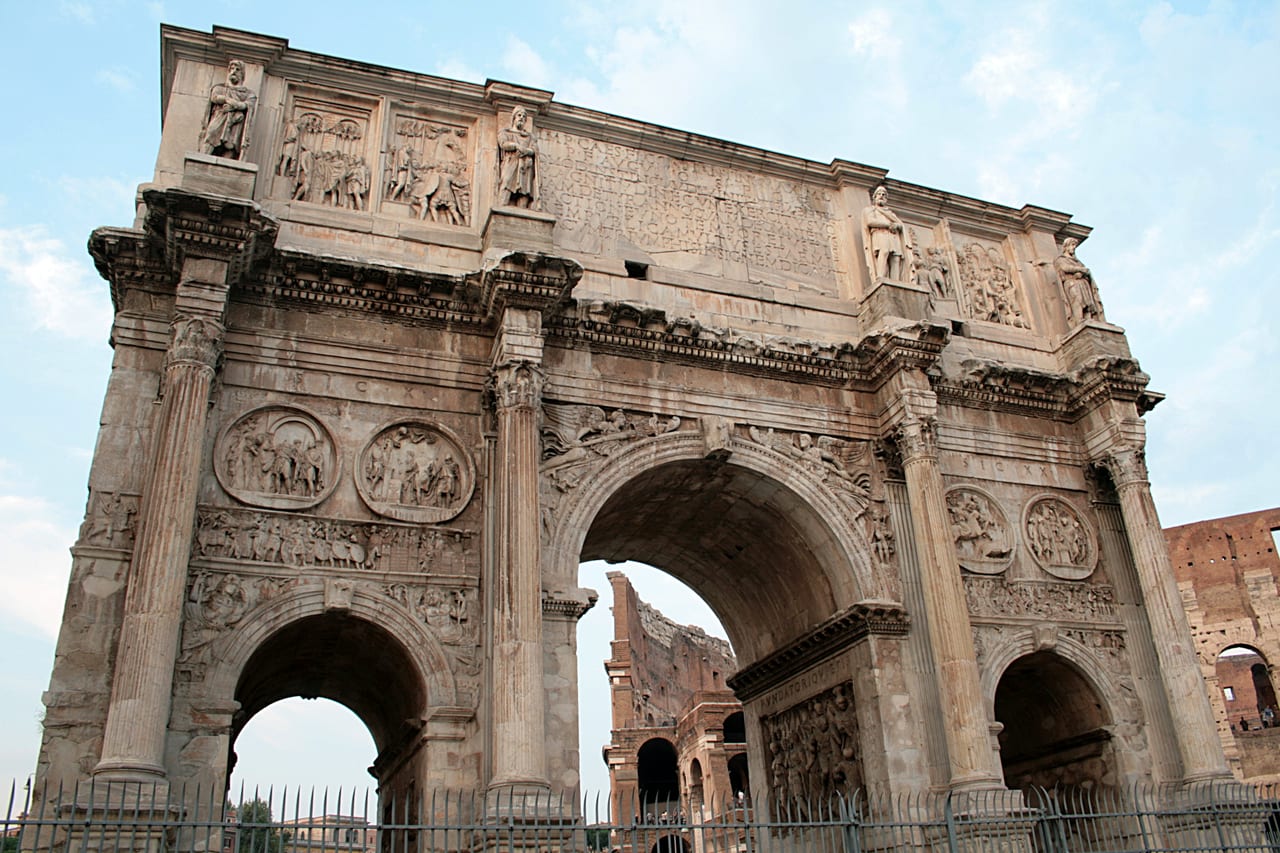
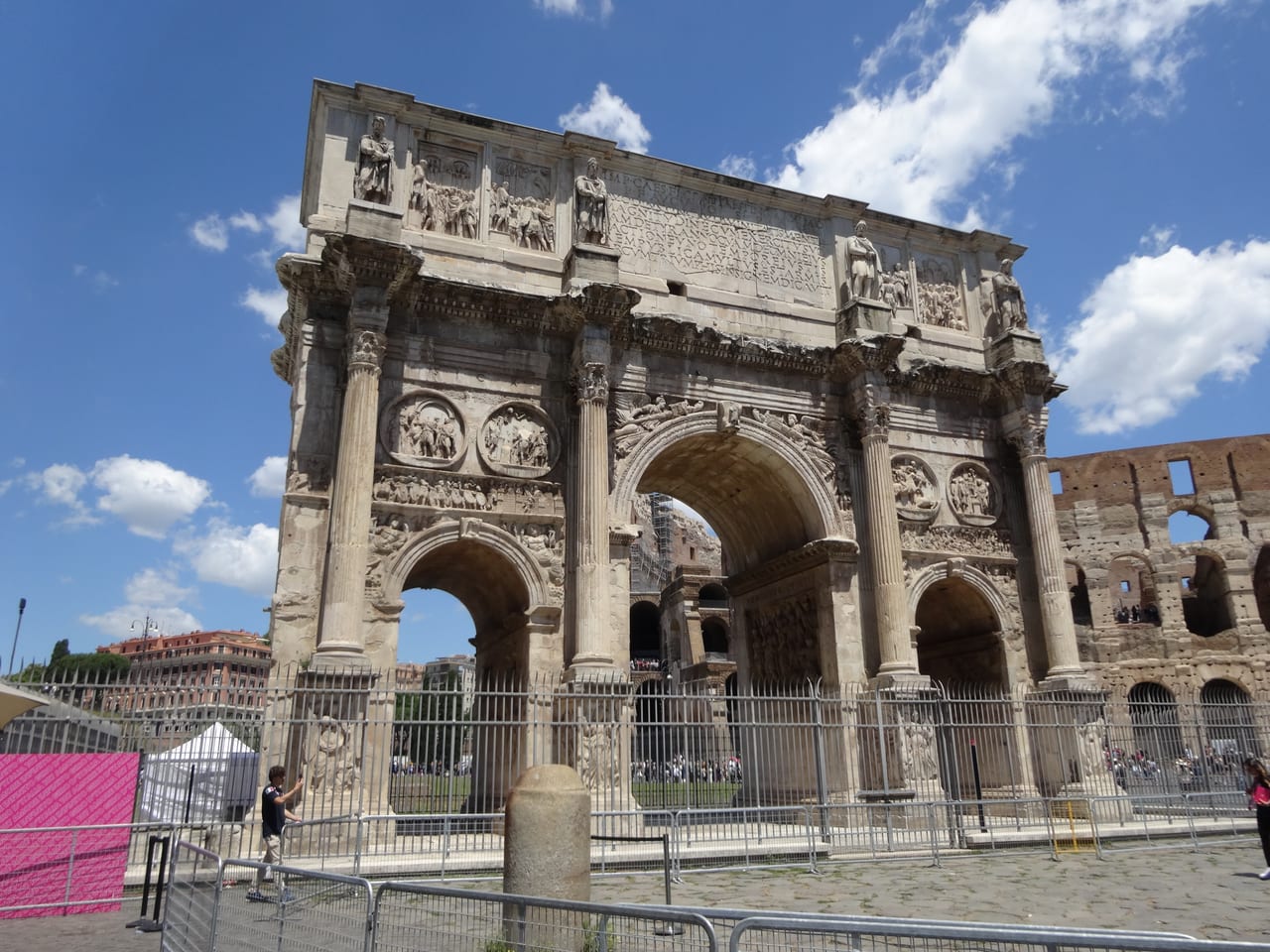
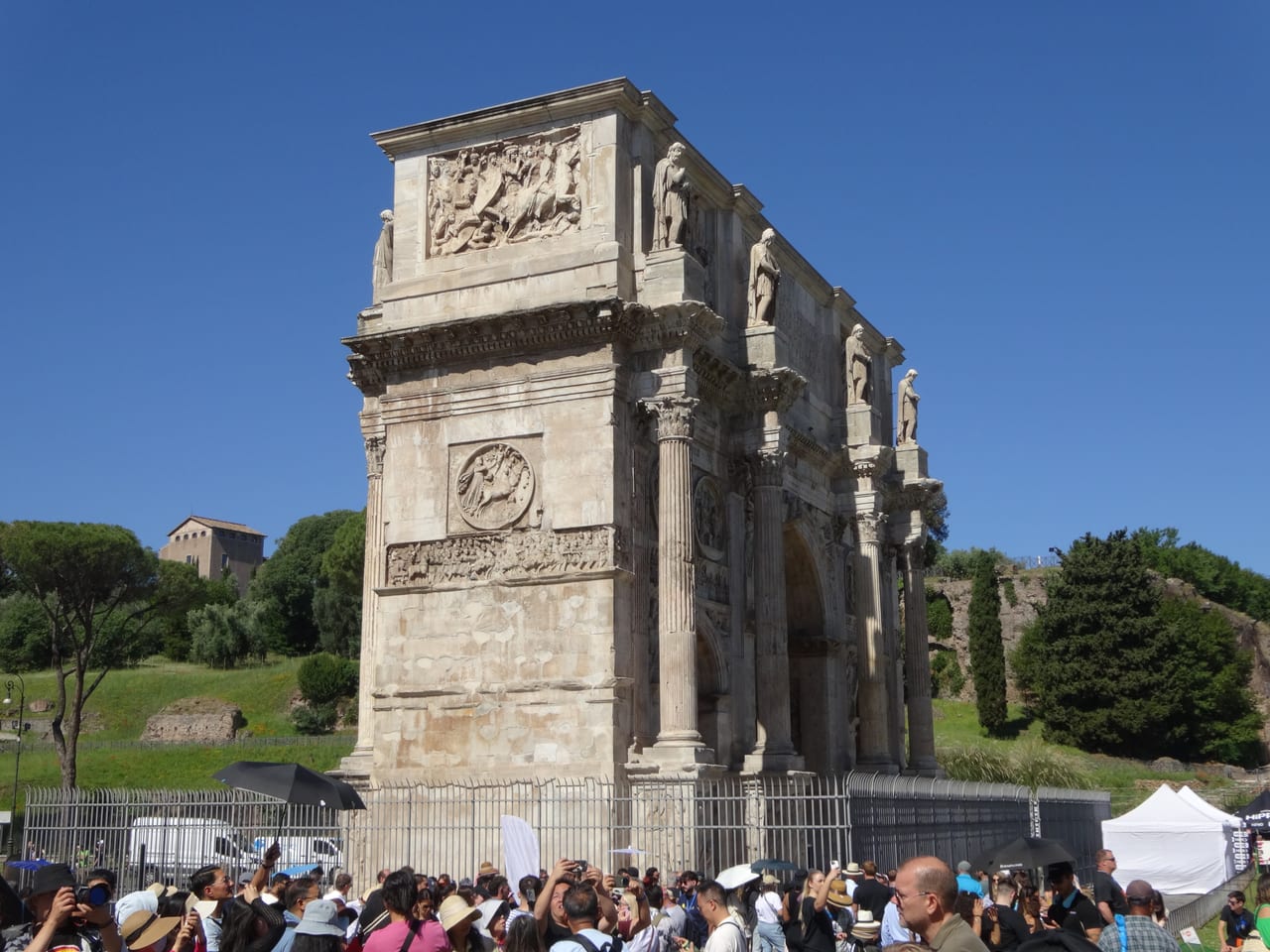
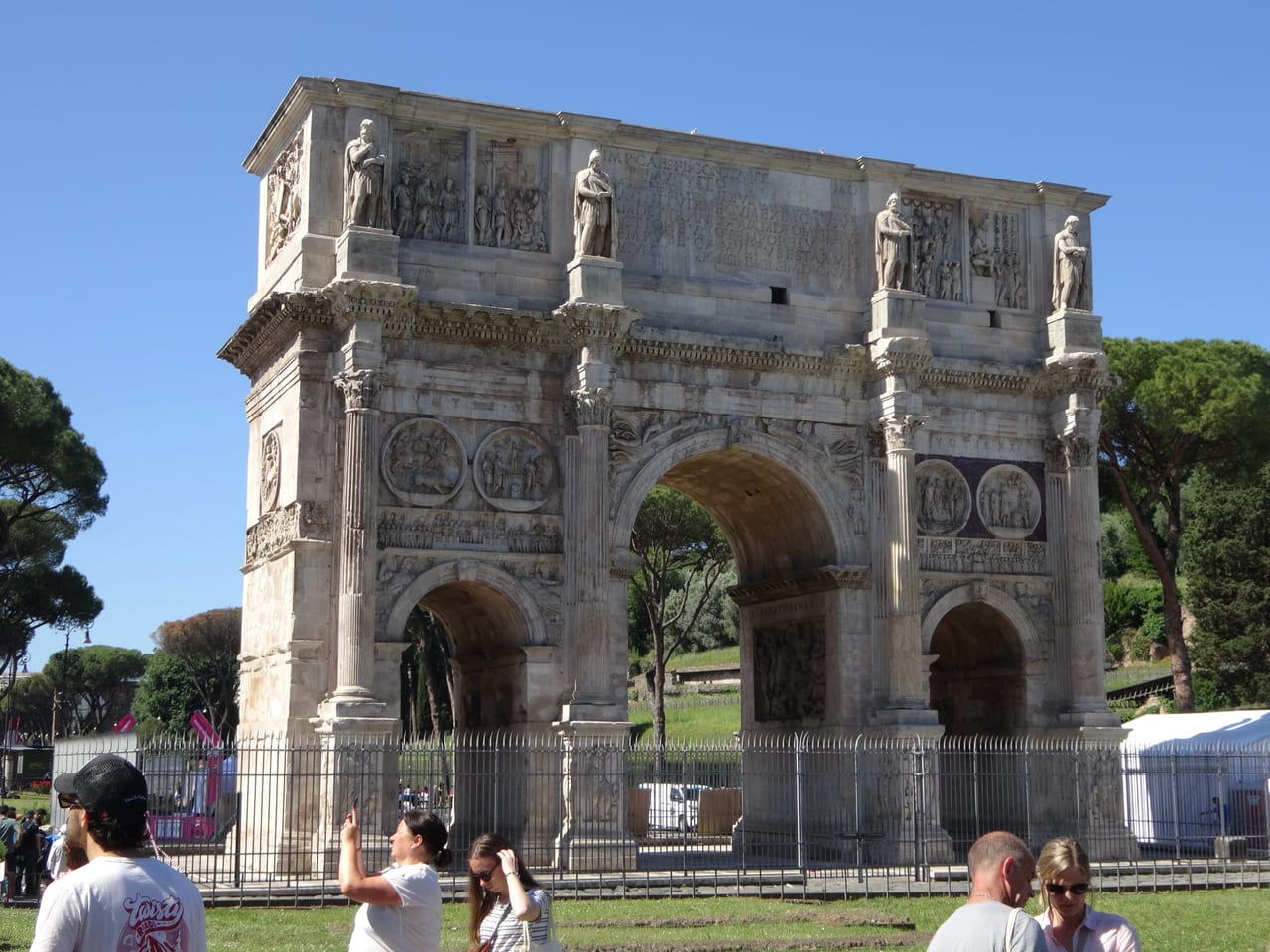
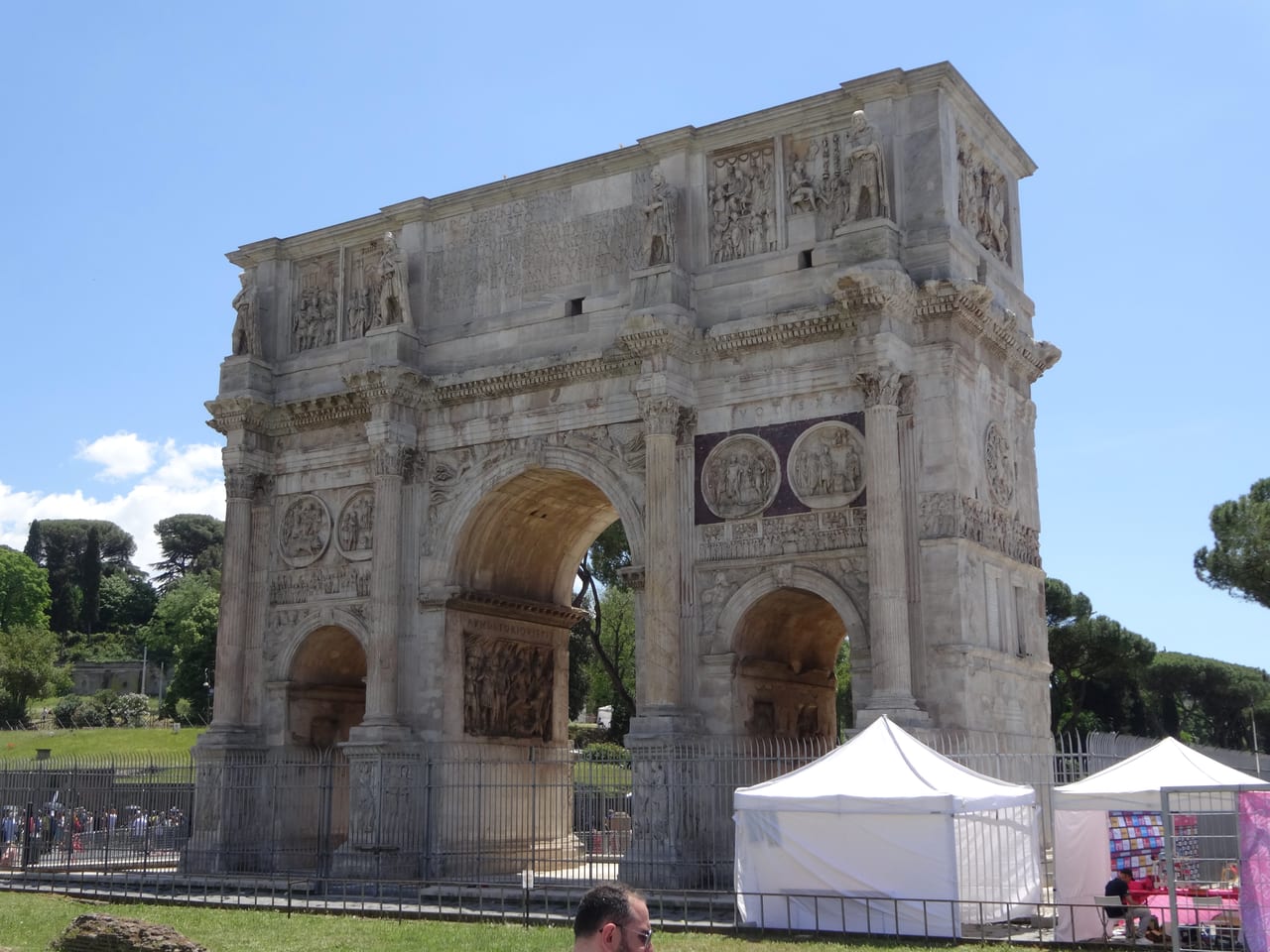
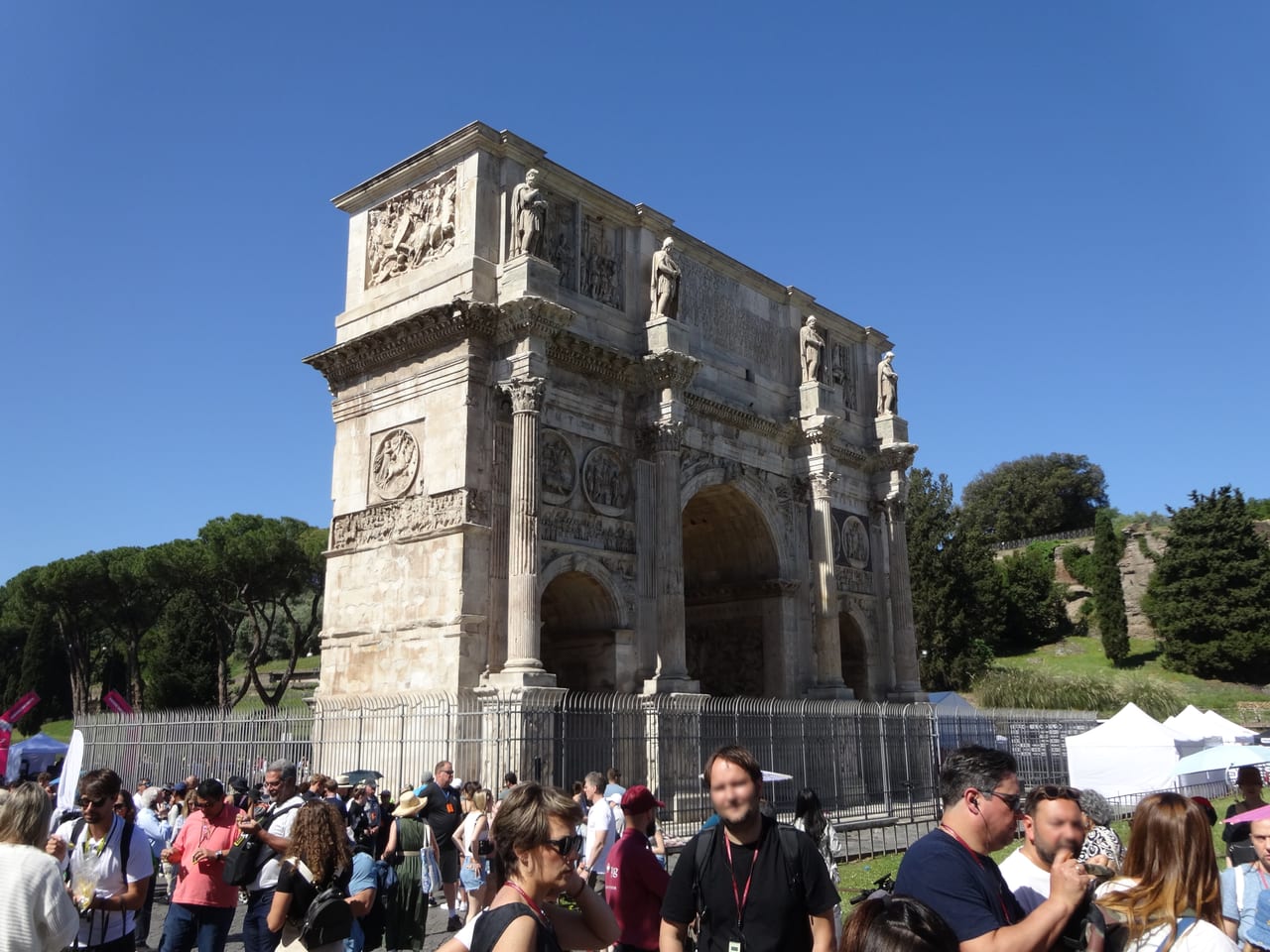
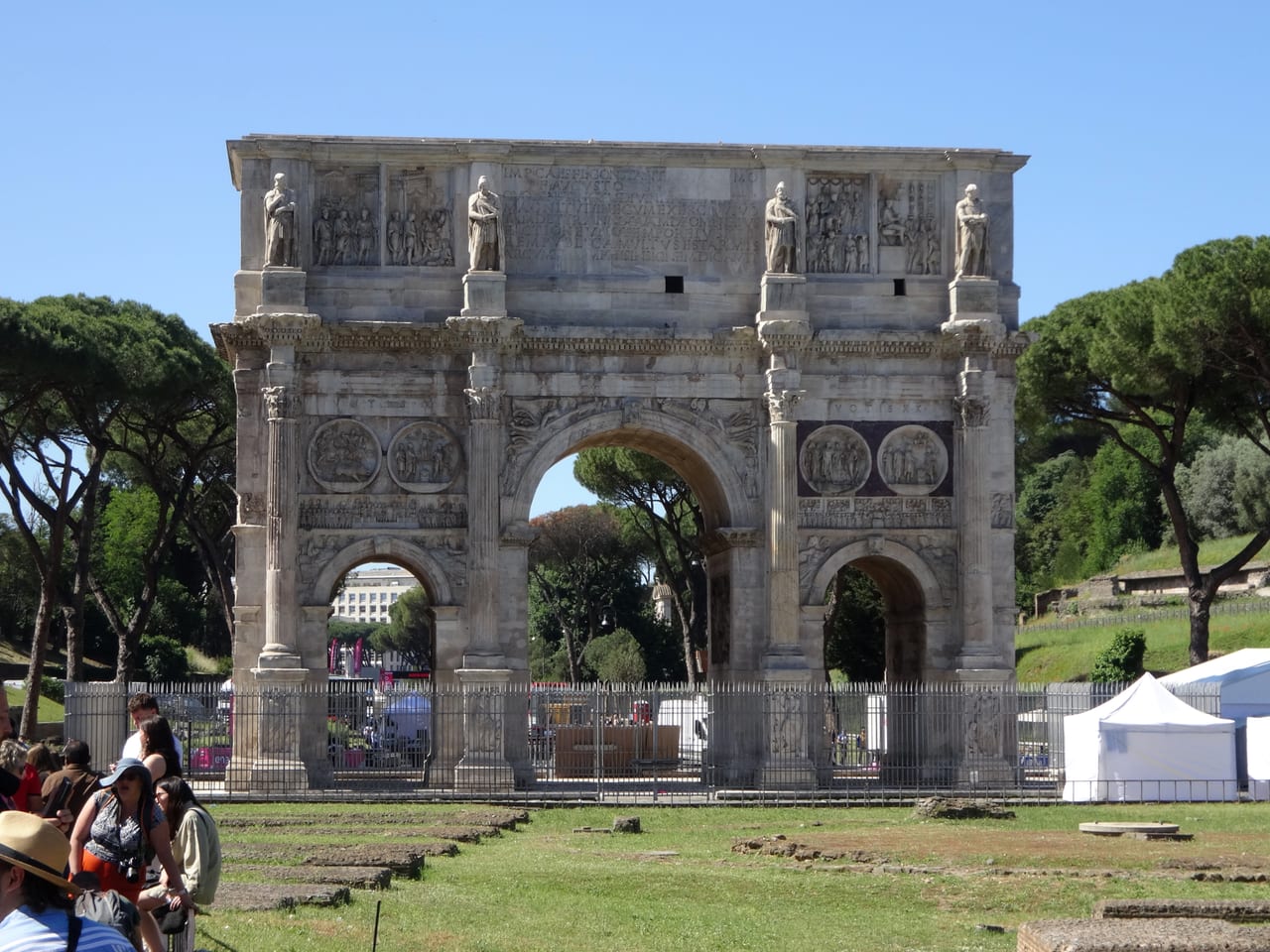
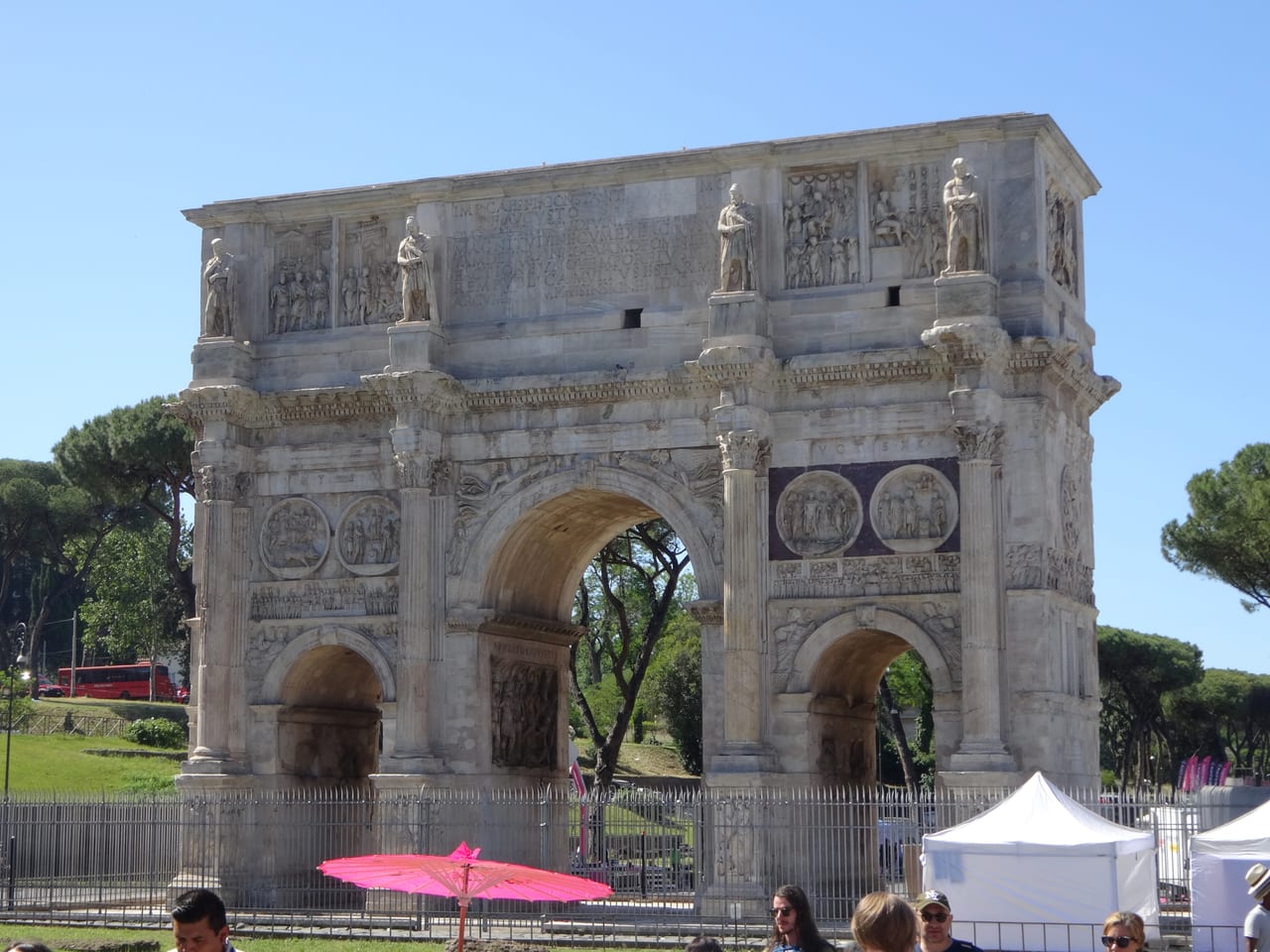
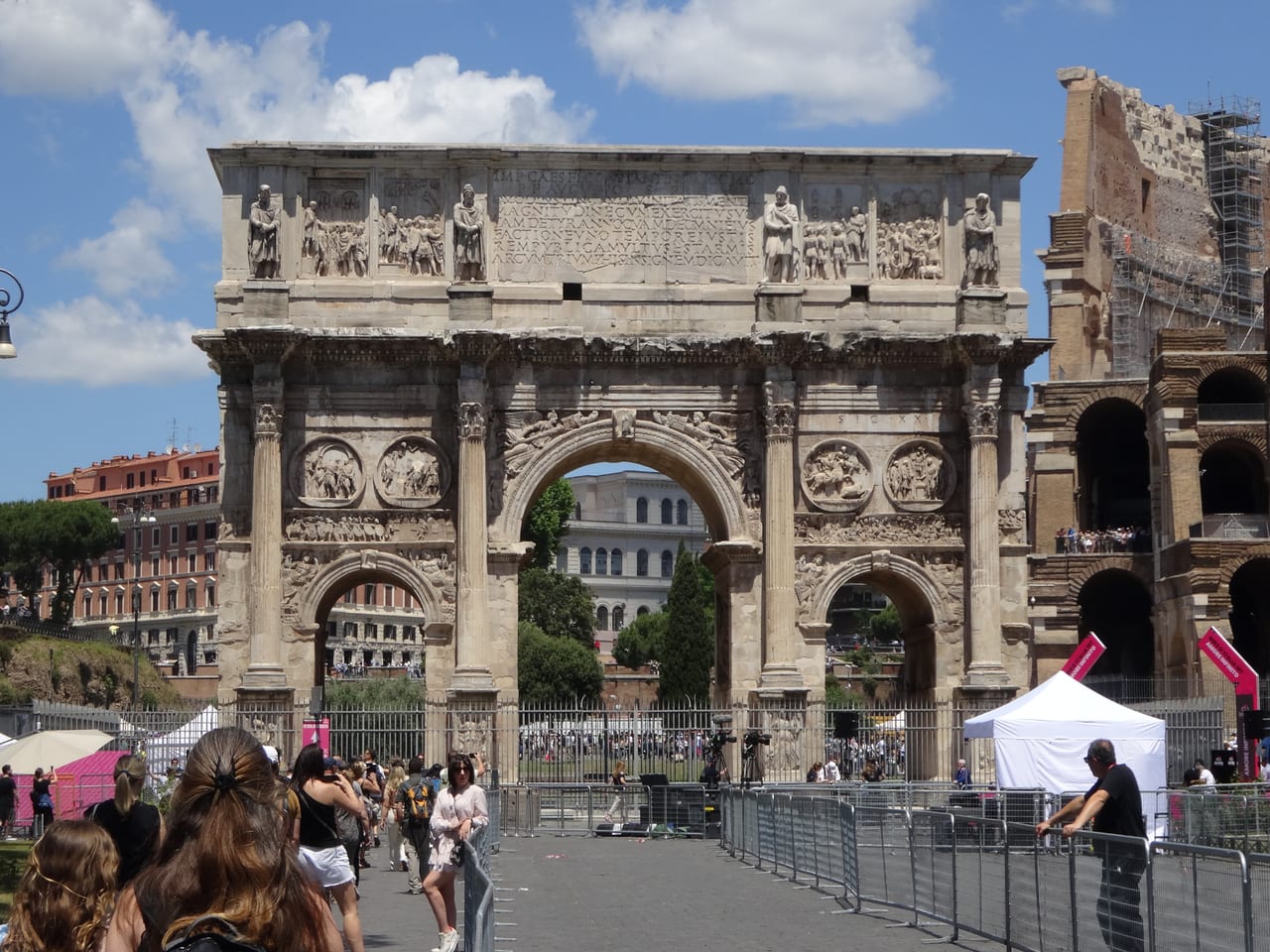
DirectionsIts sculptural programme combines Constantine’s monument with reliefs taken from earlier imperial memorials, their original portraits recut to present a new ruler within Rome’s visual history.
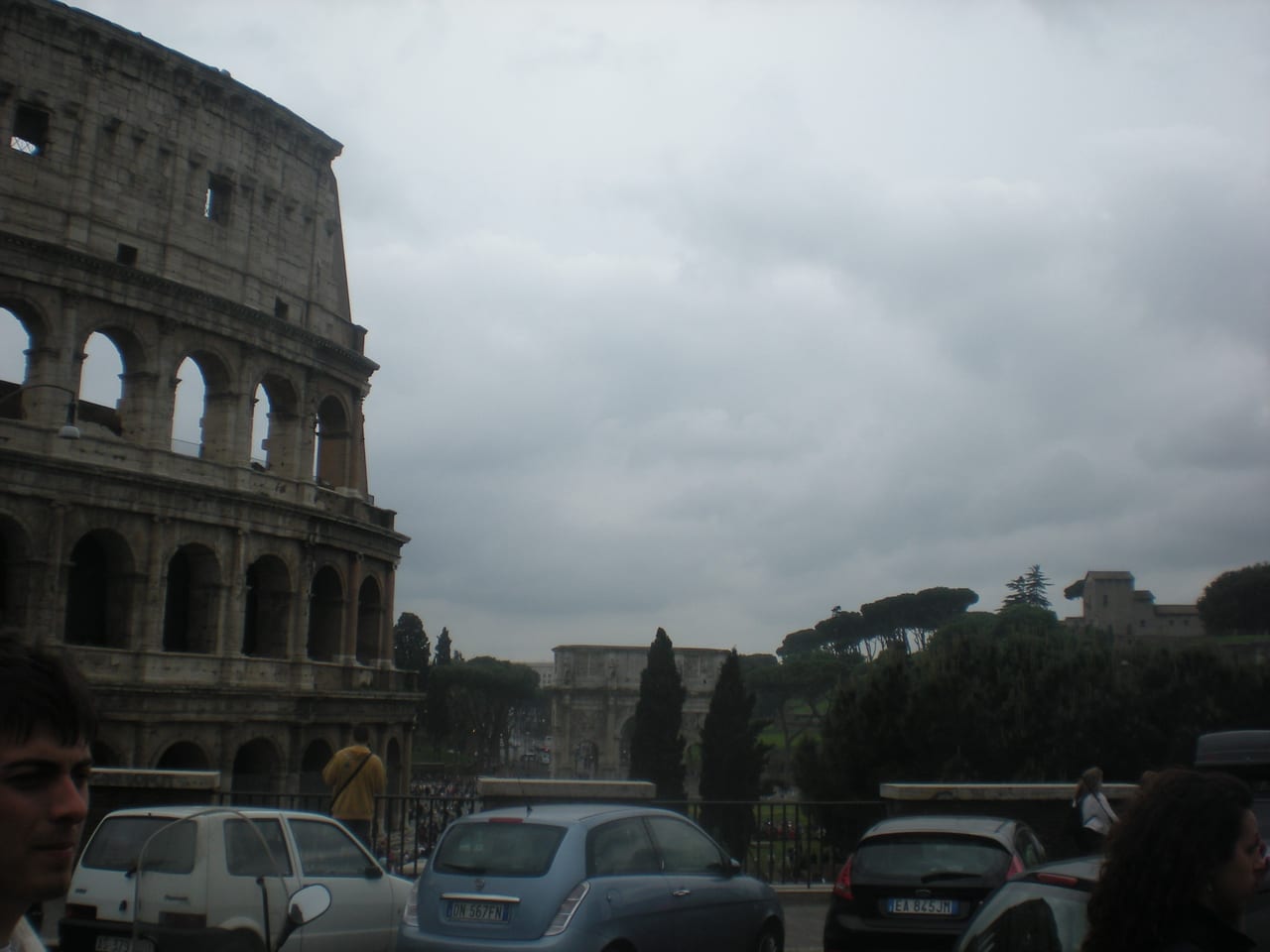
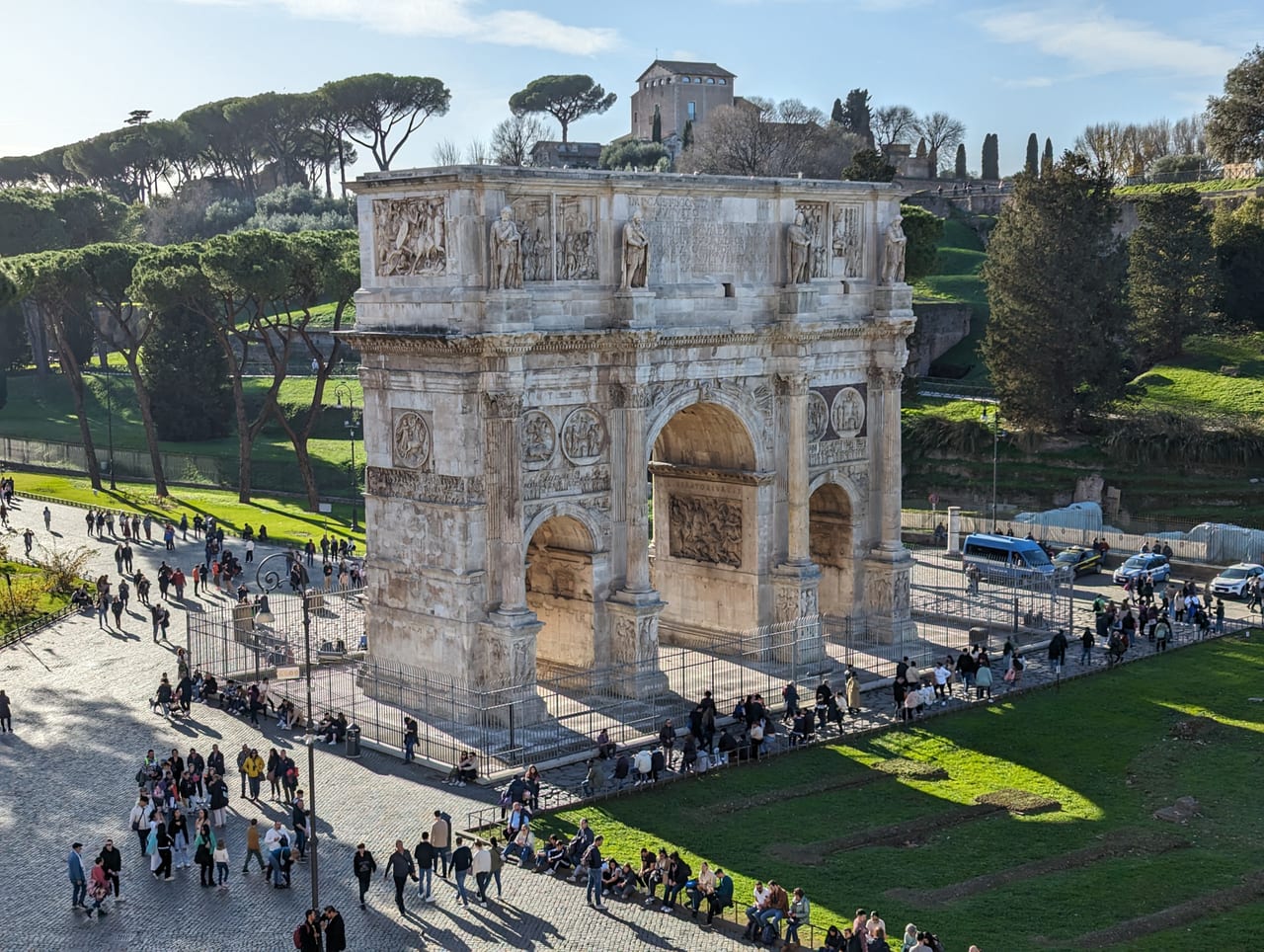
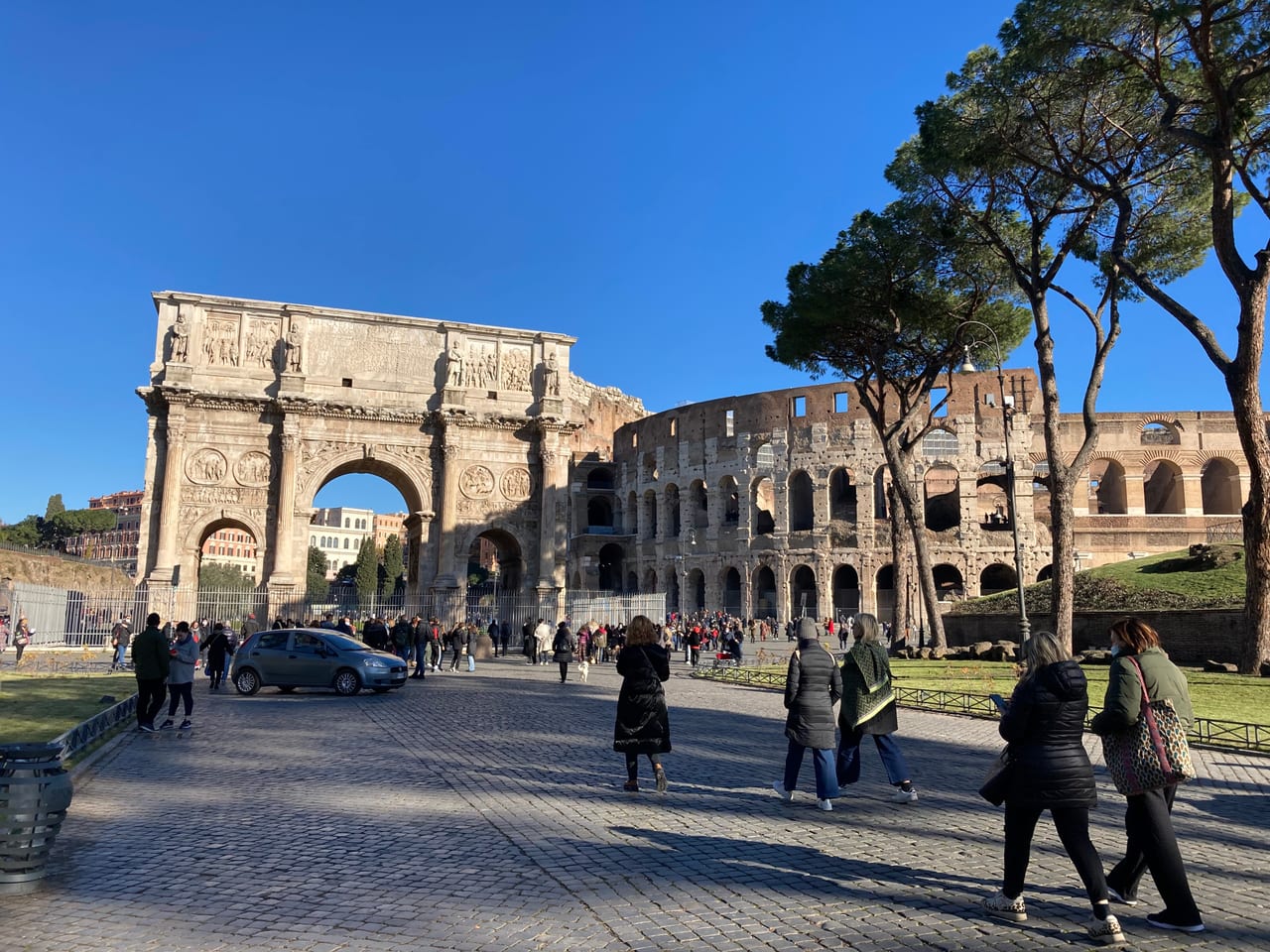
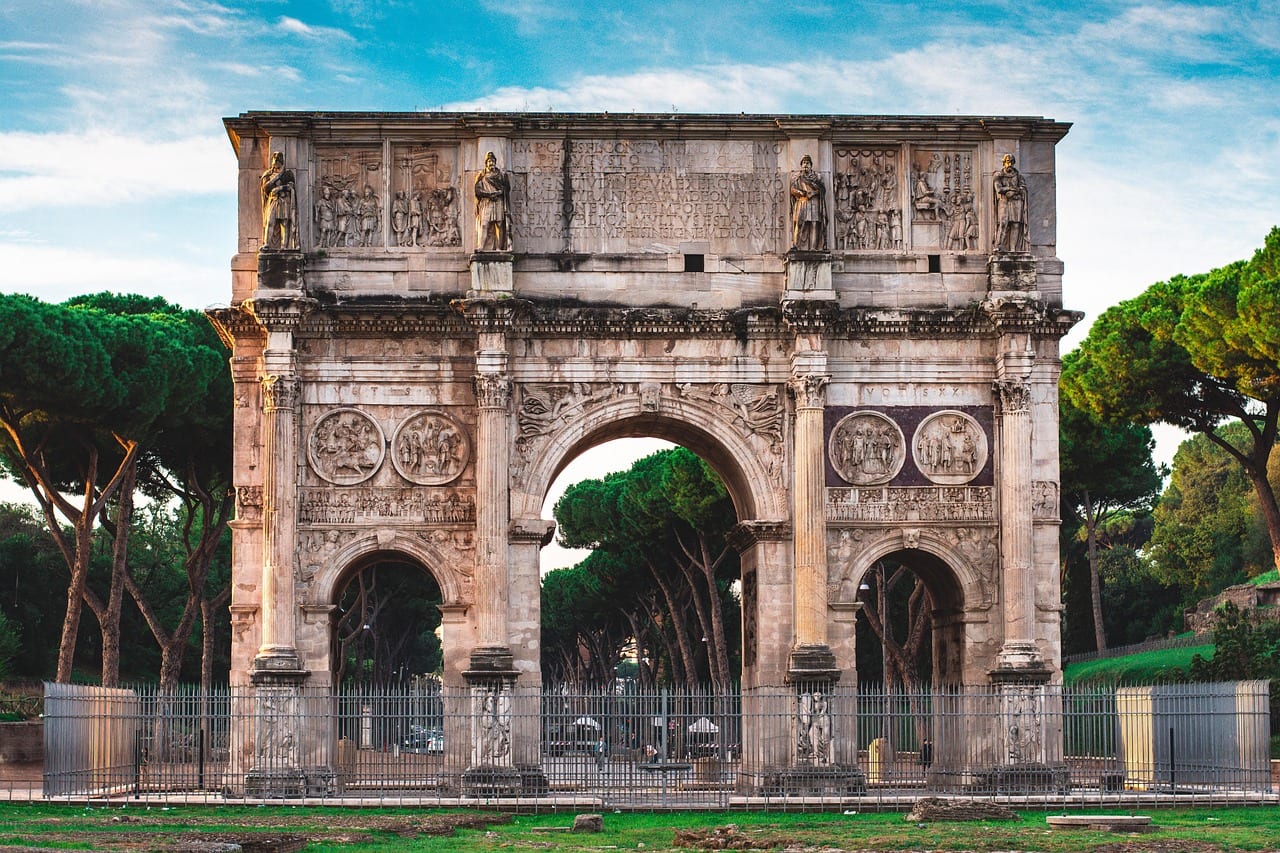
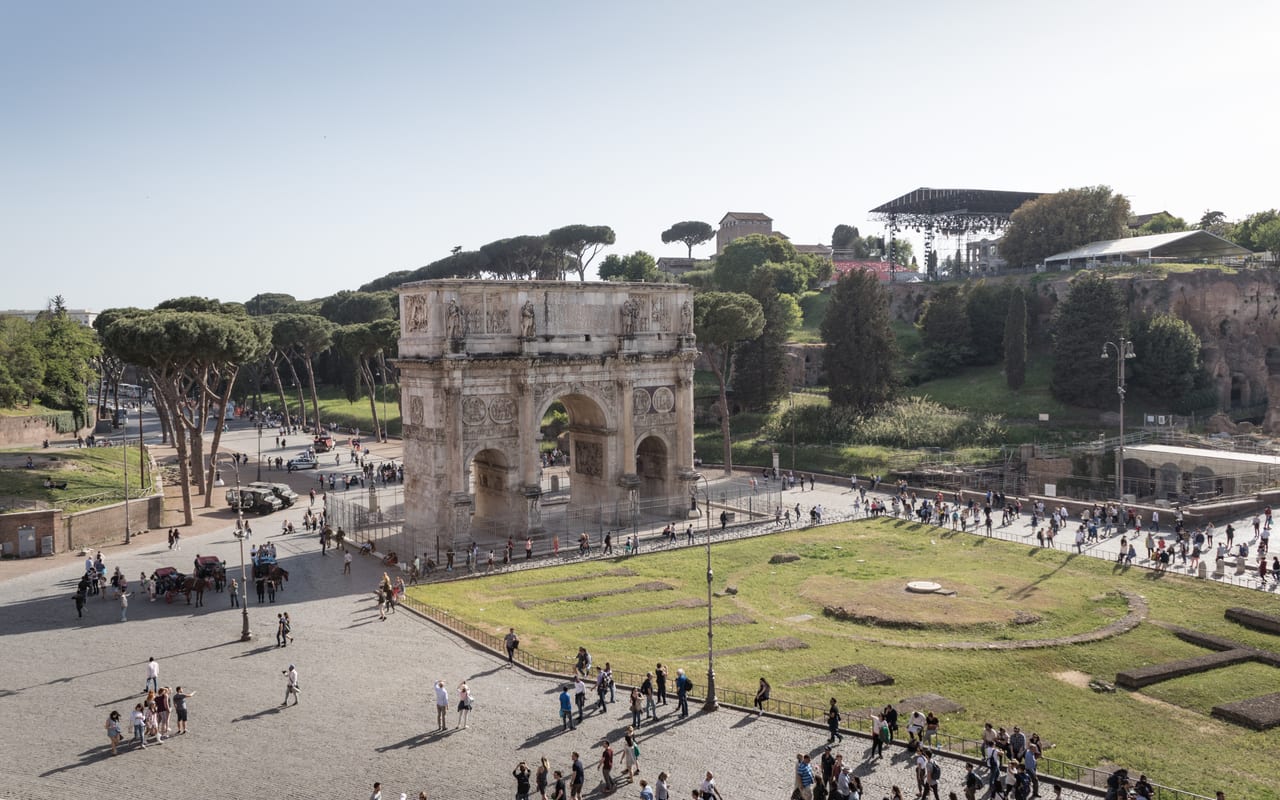
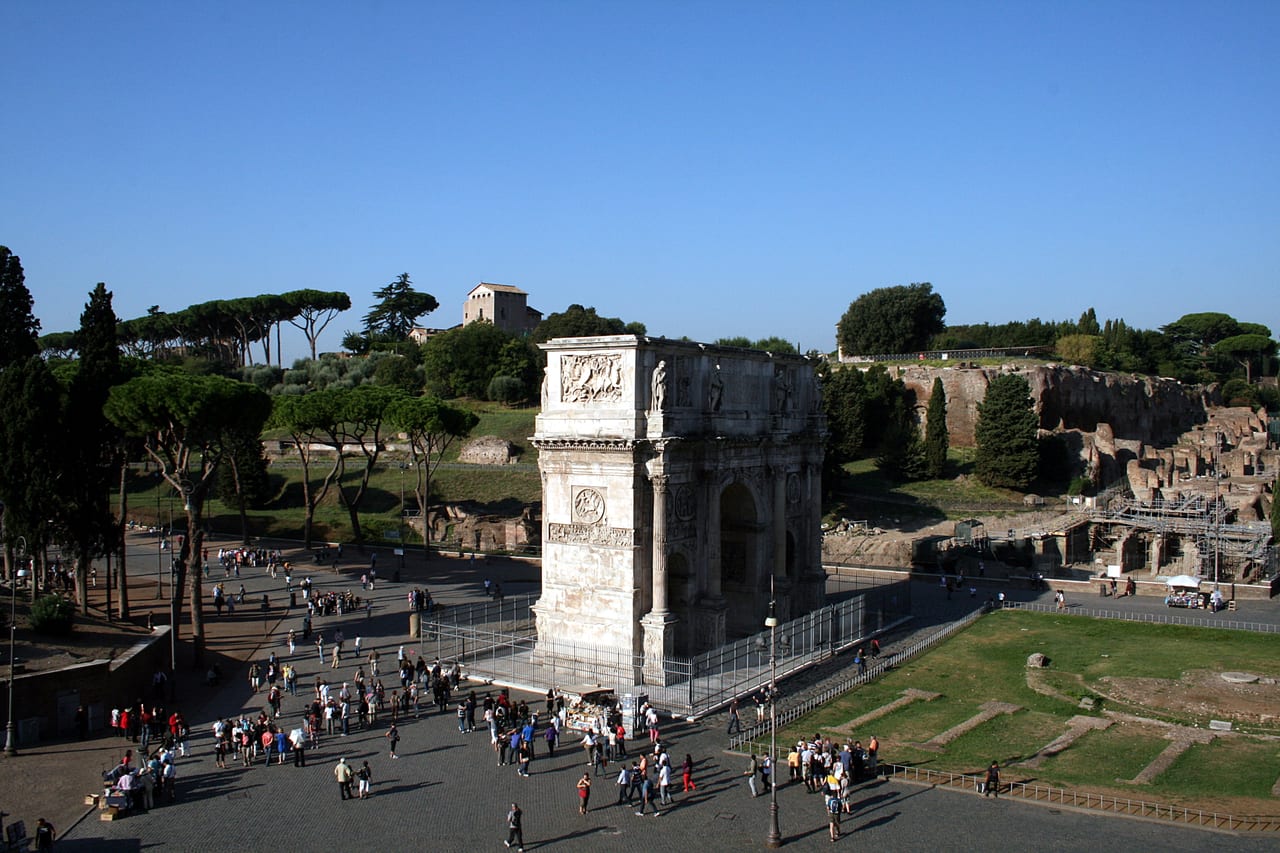
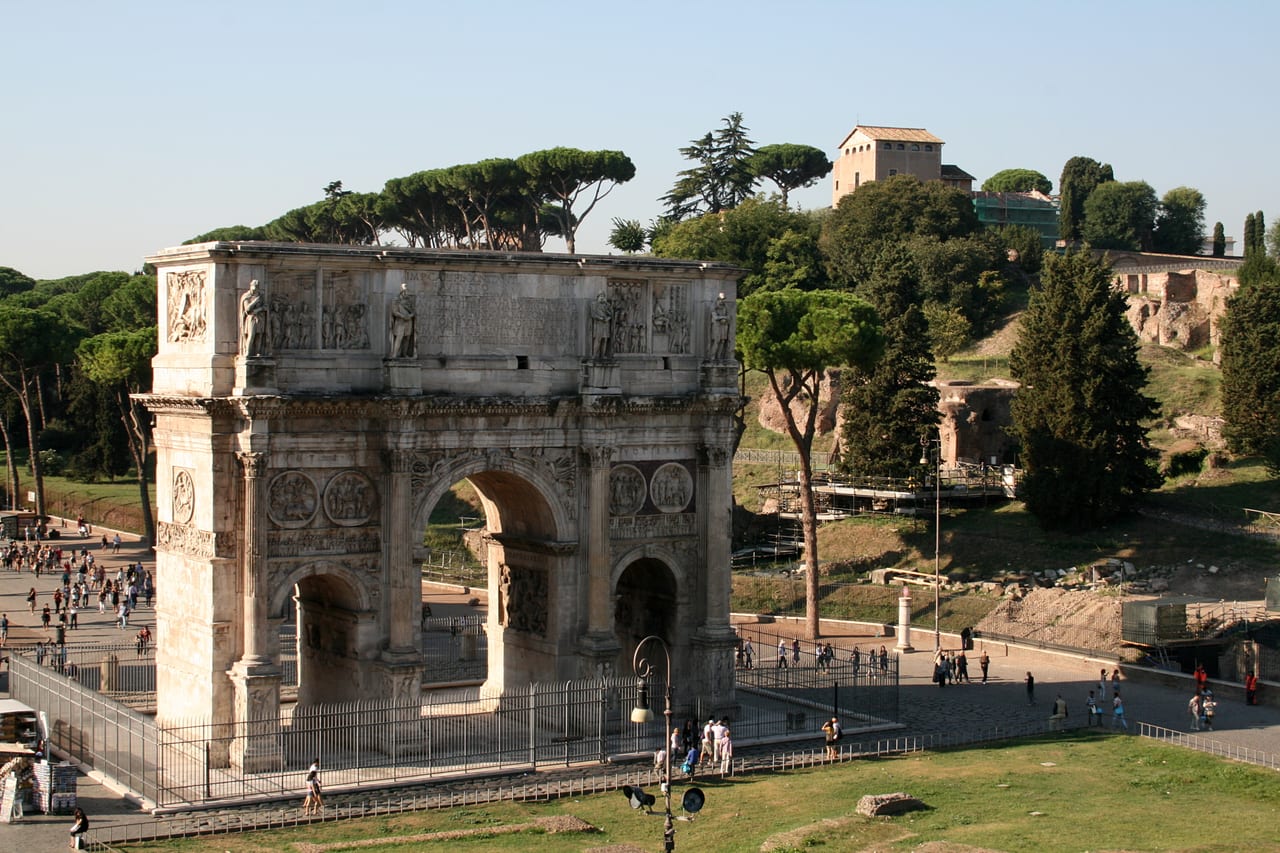
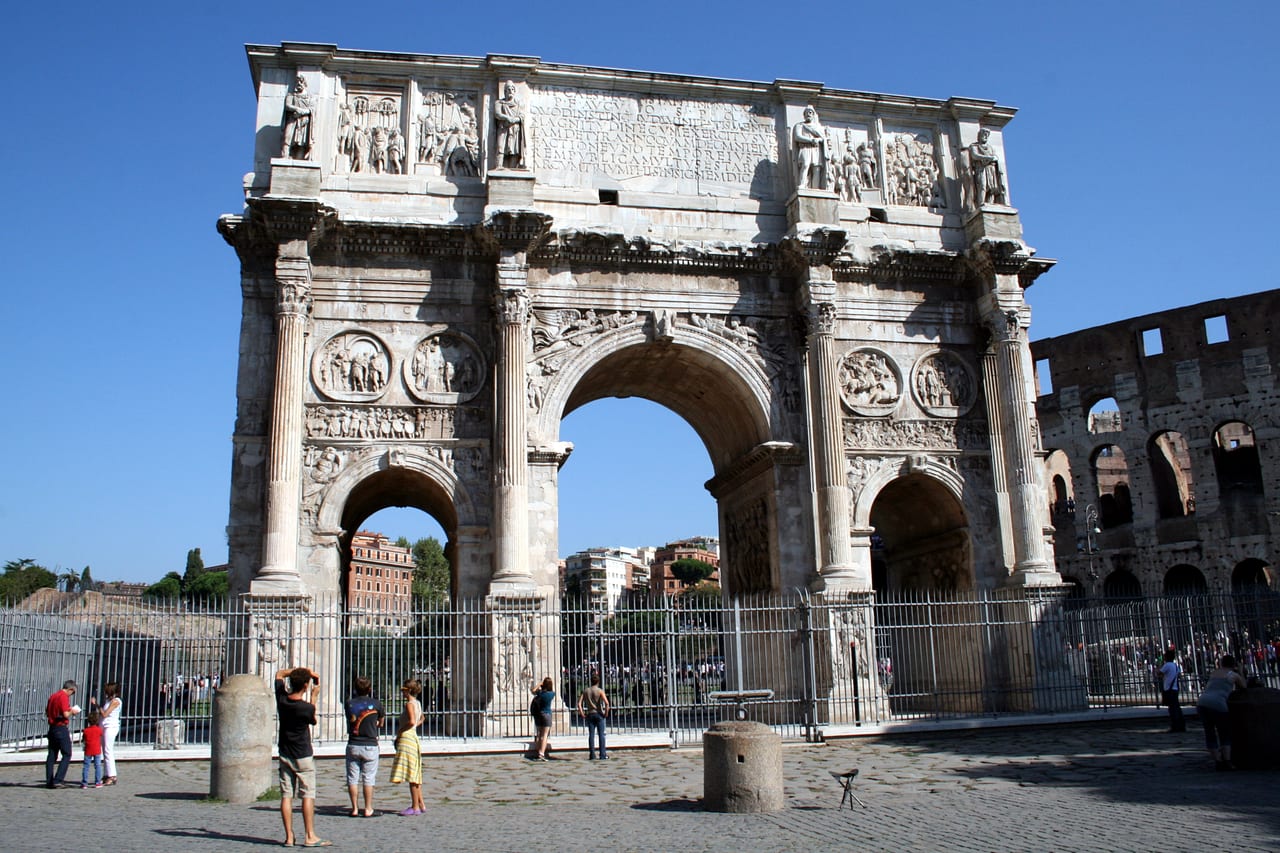
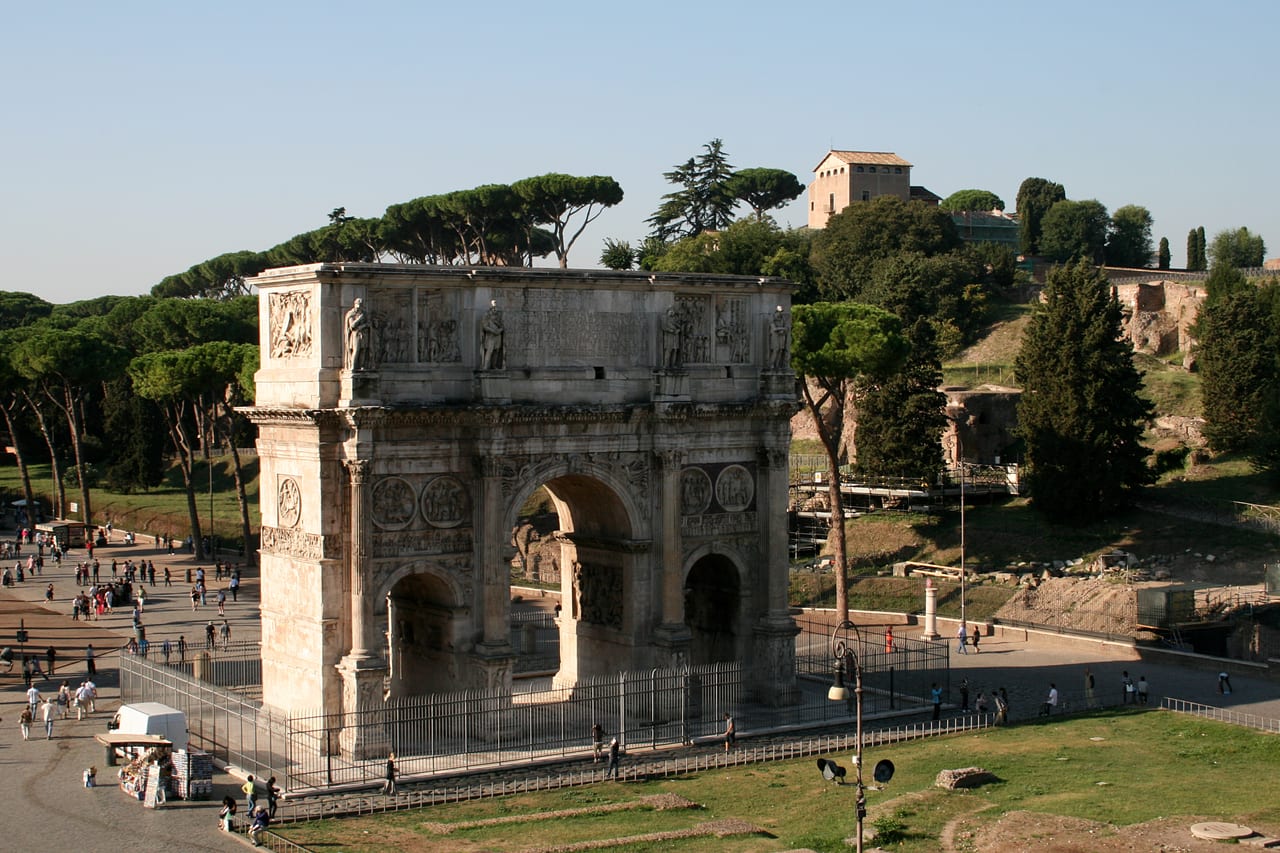
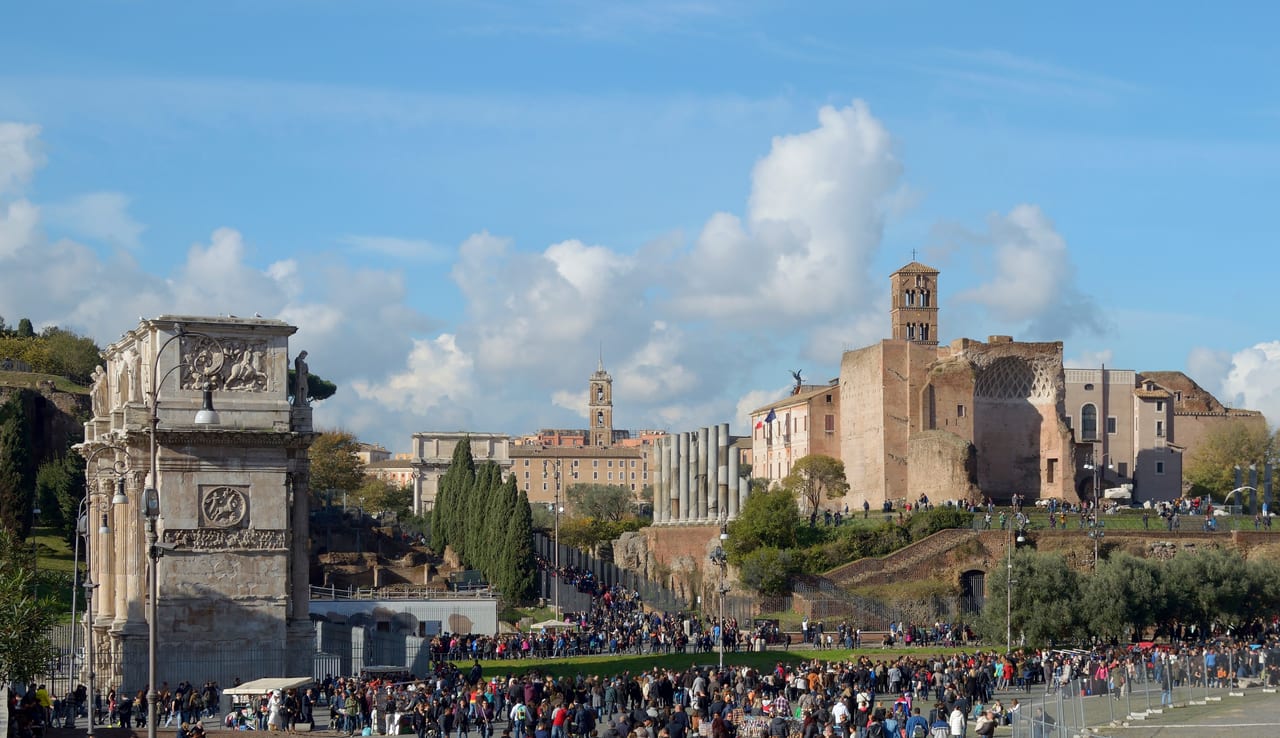
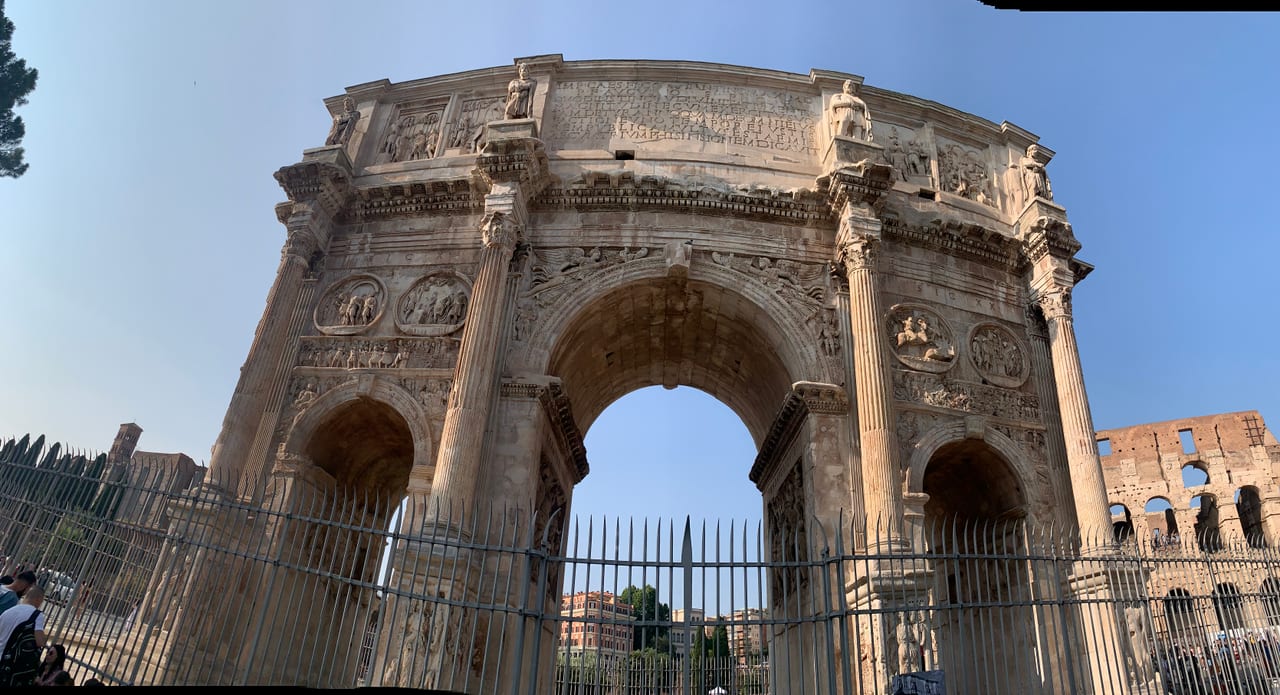
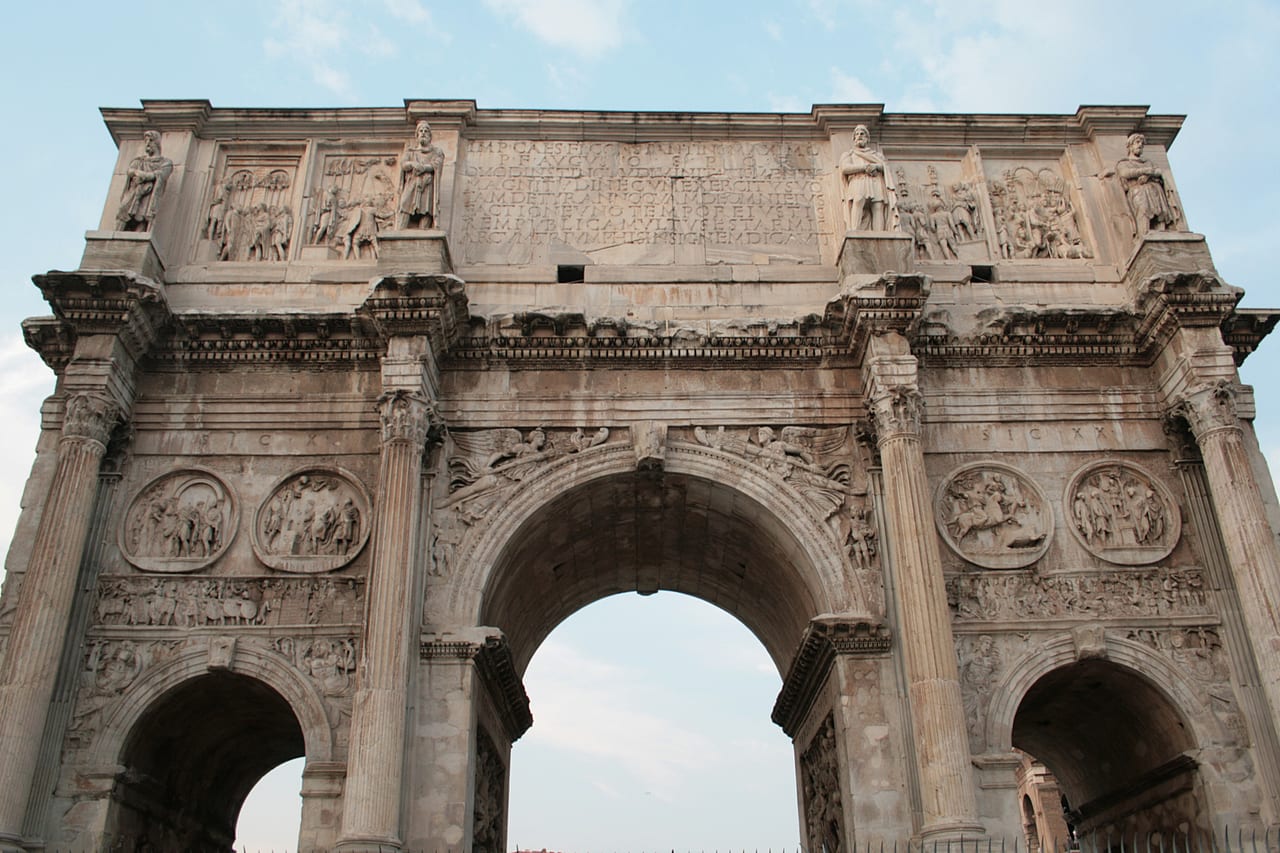
Photograph 1 of 51 of Arch of Constantine
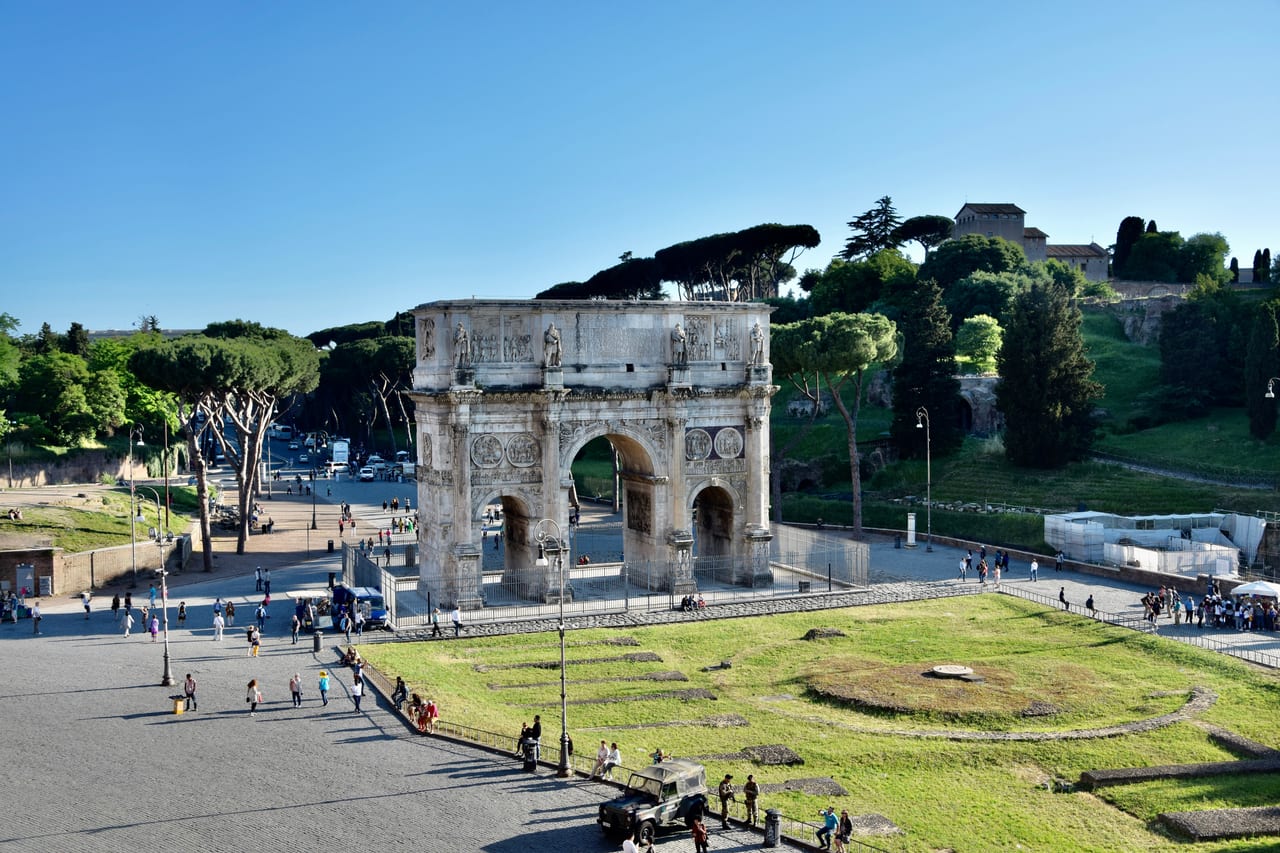
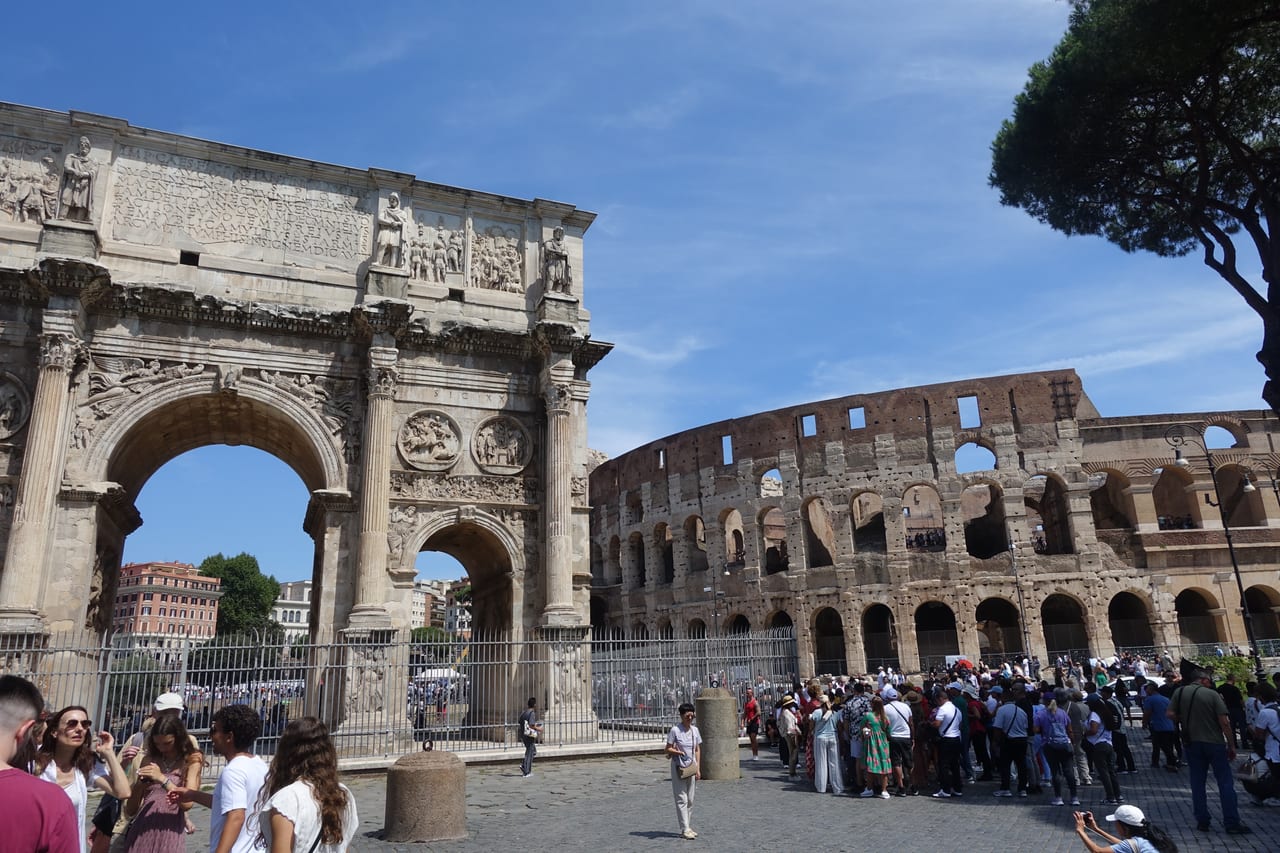
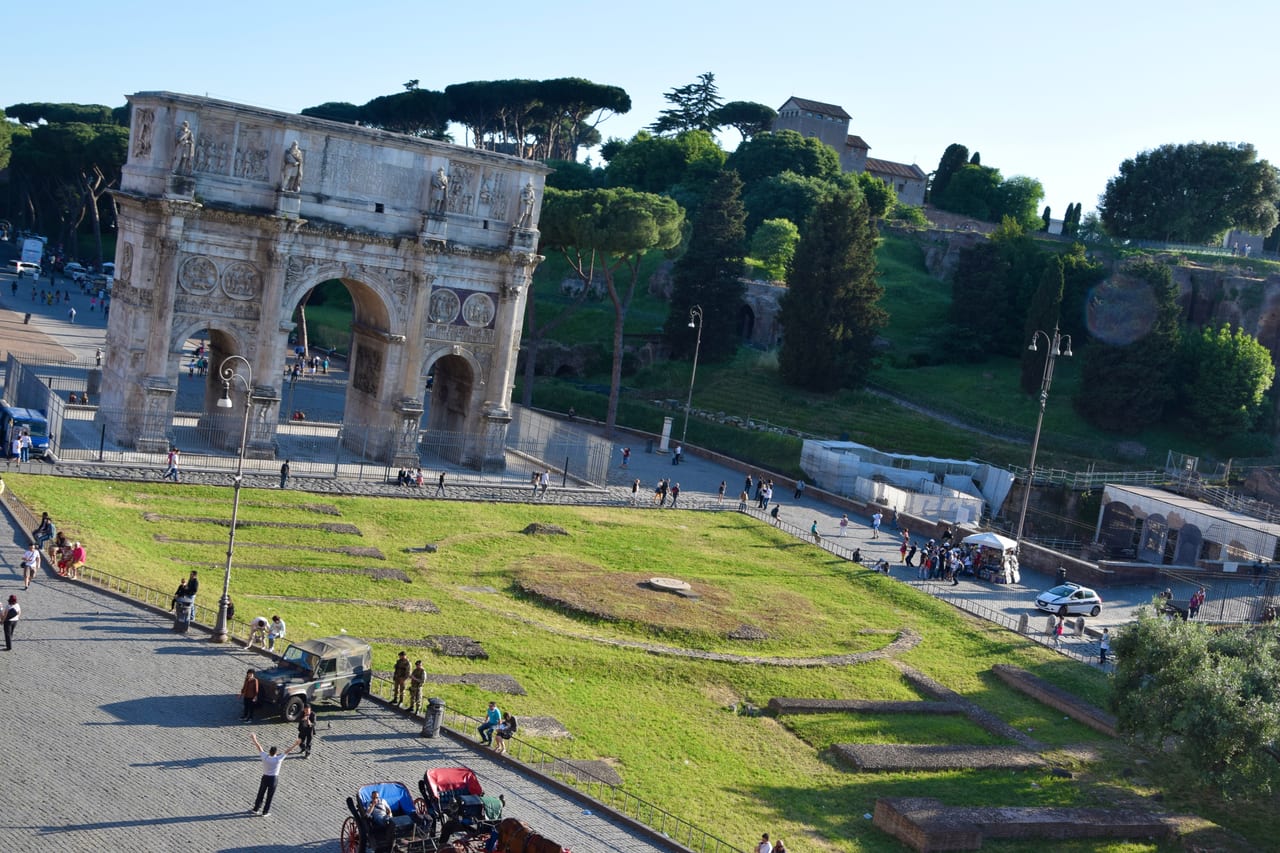
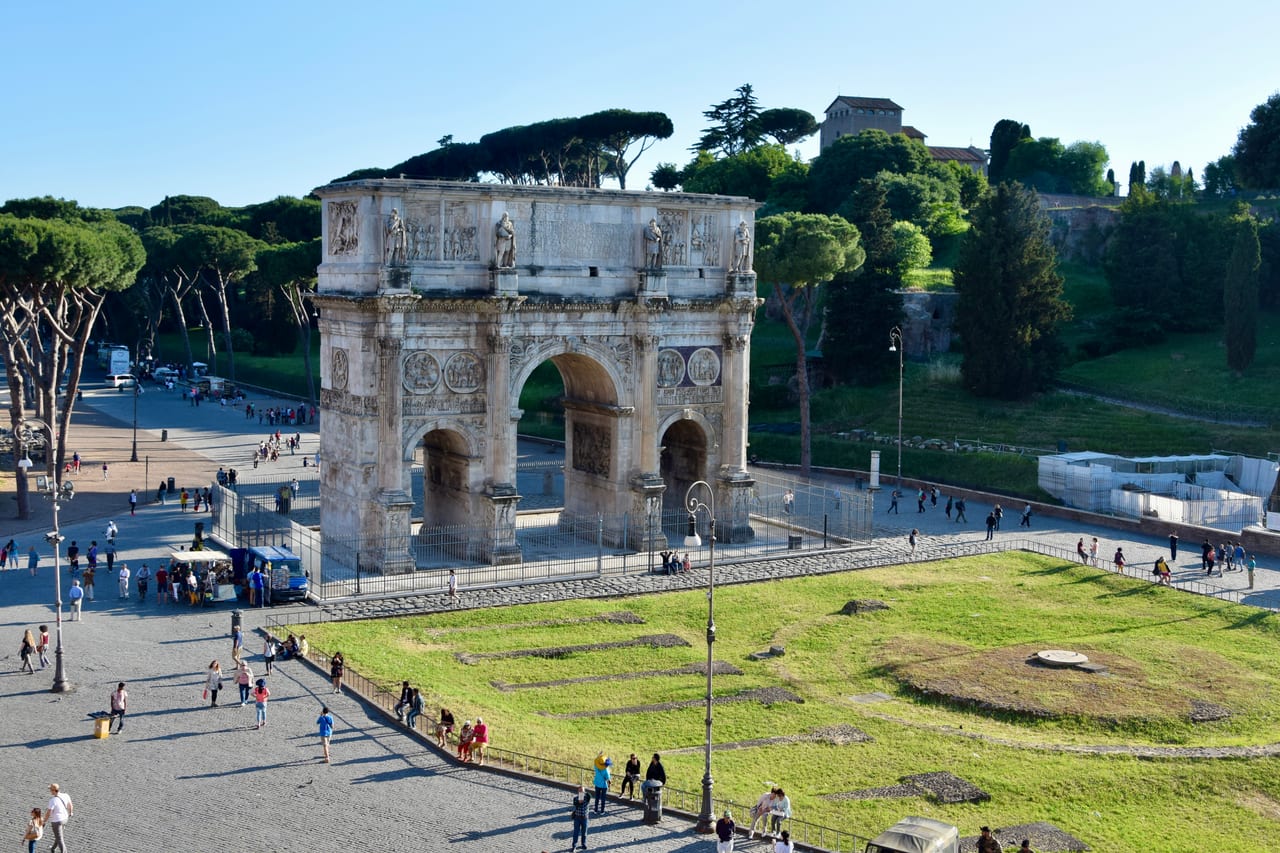
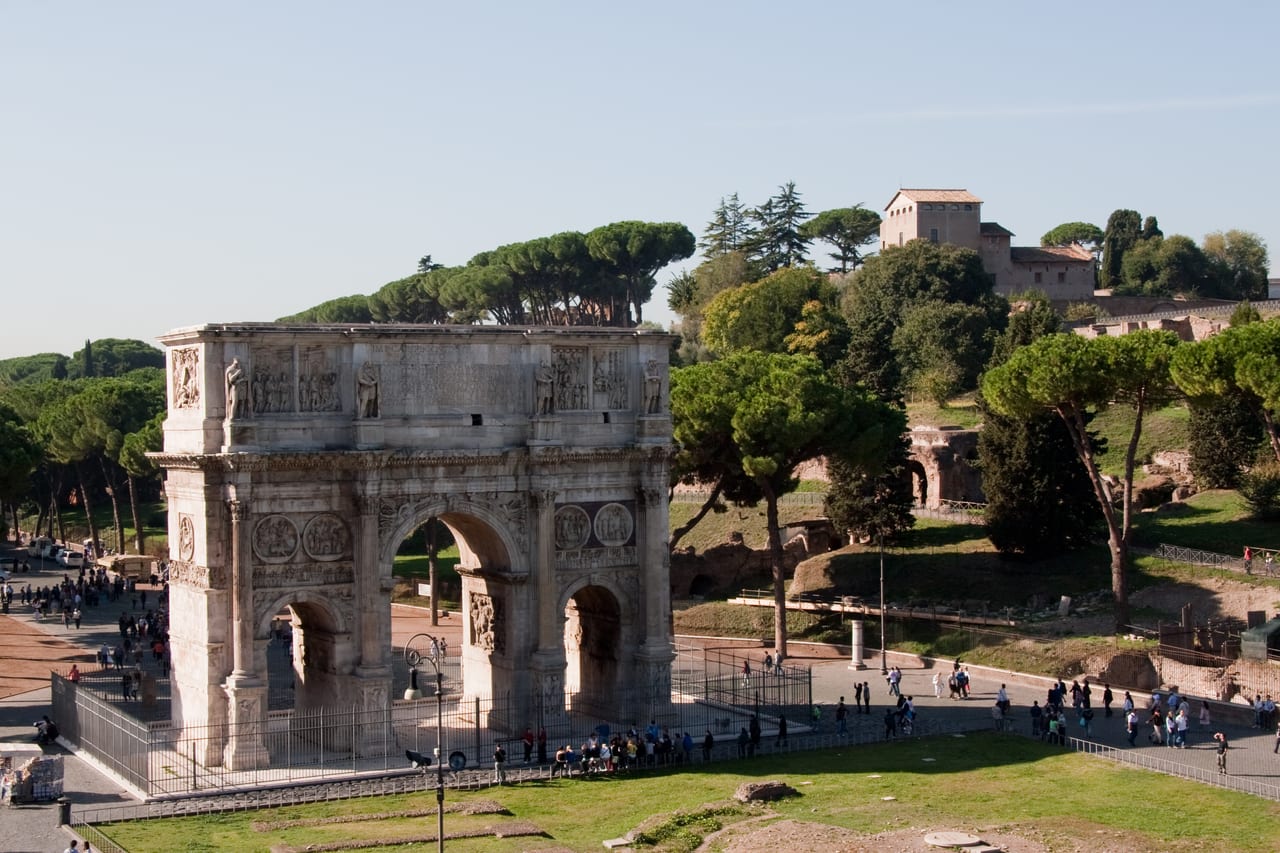
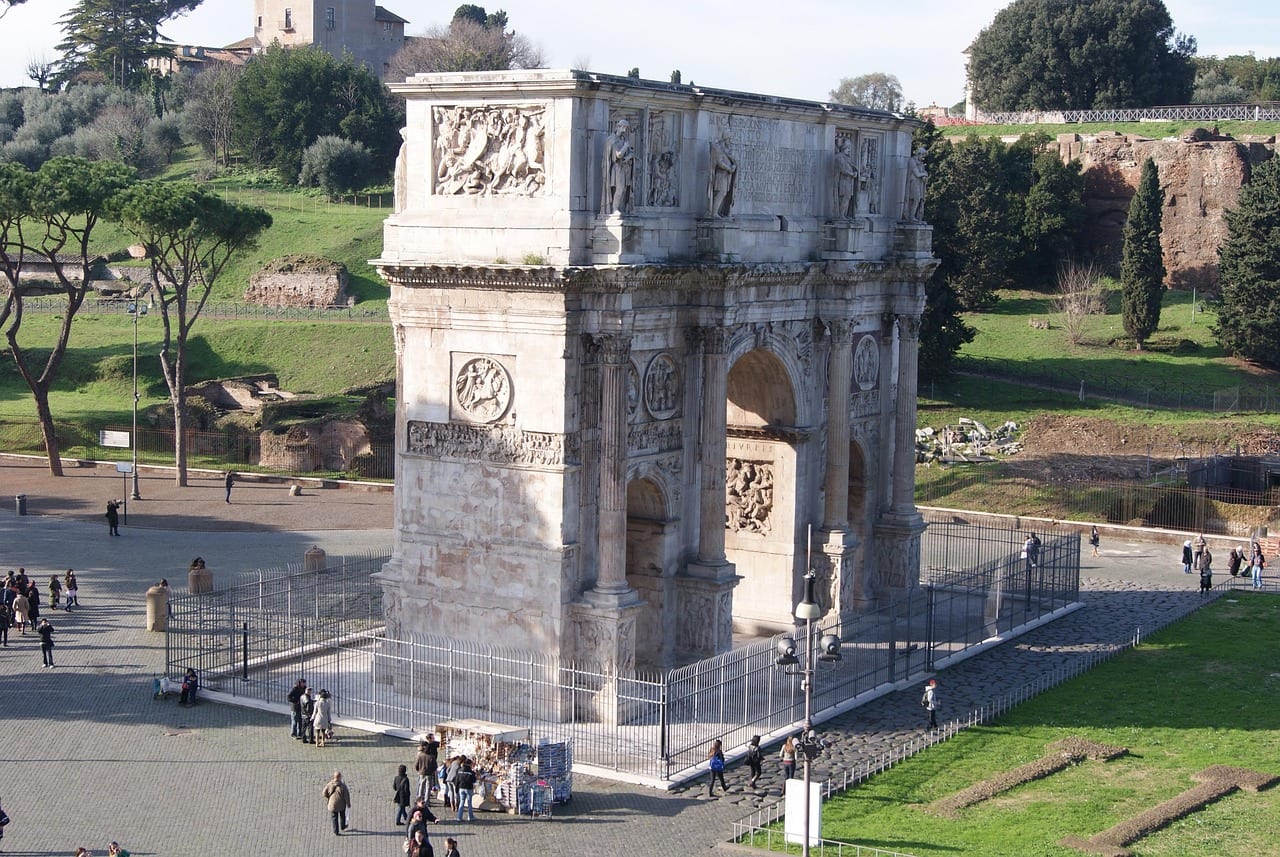
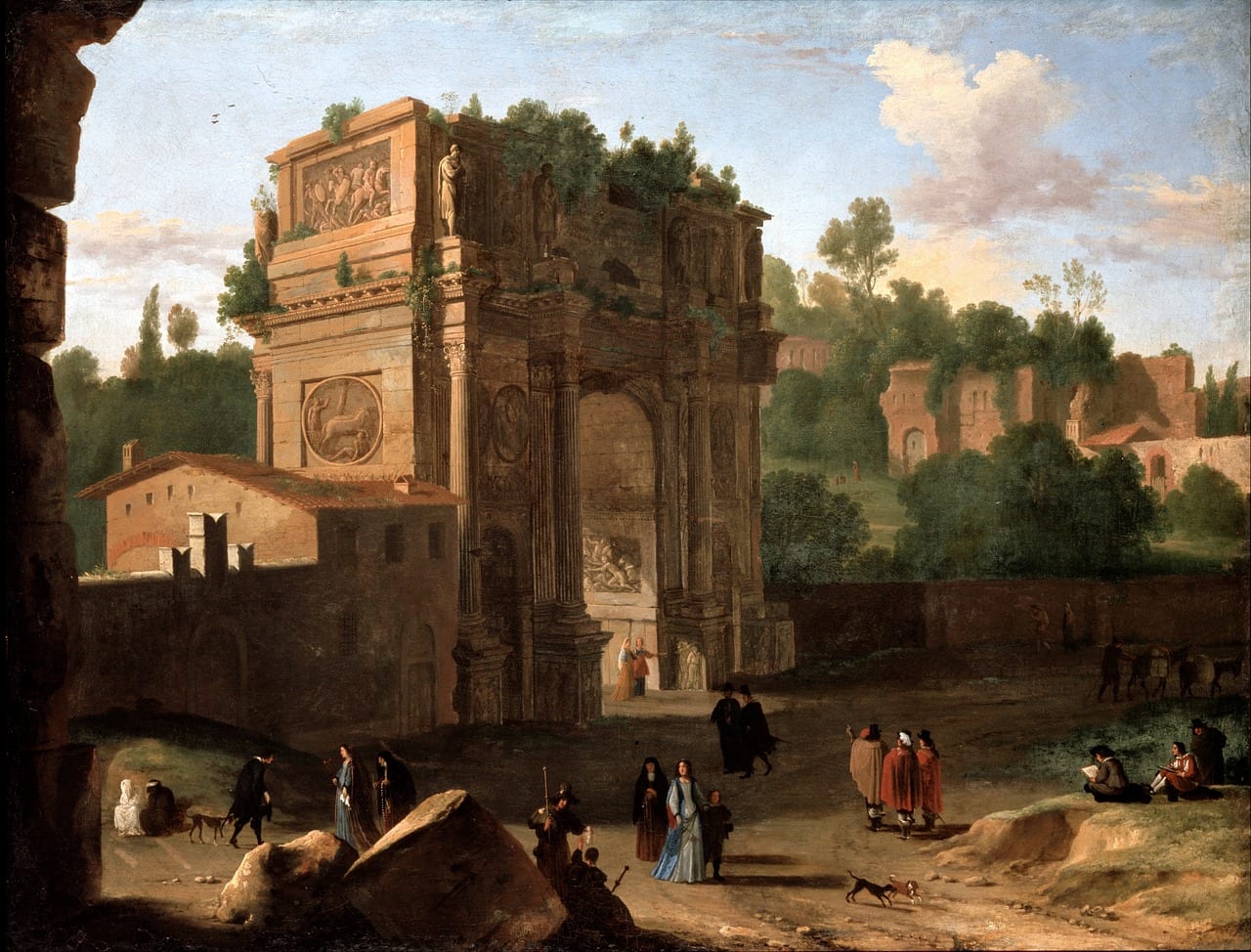
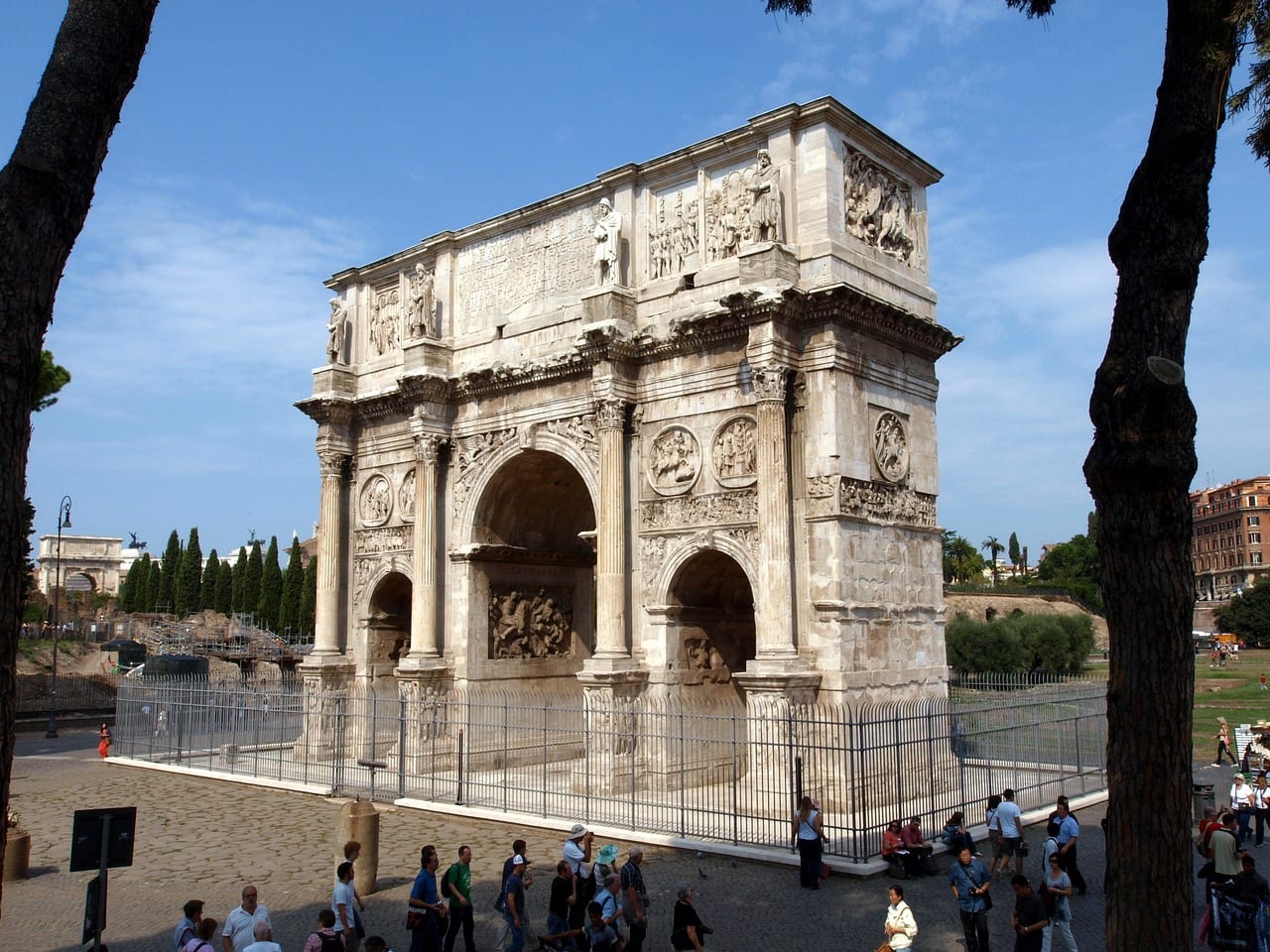
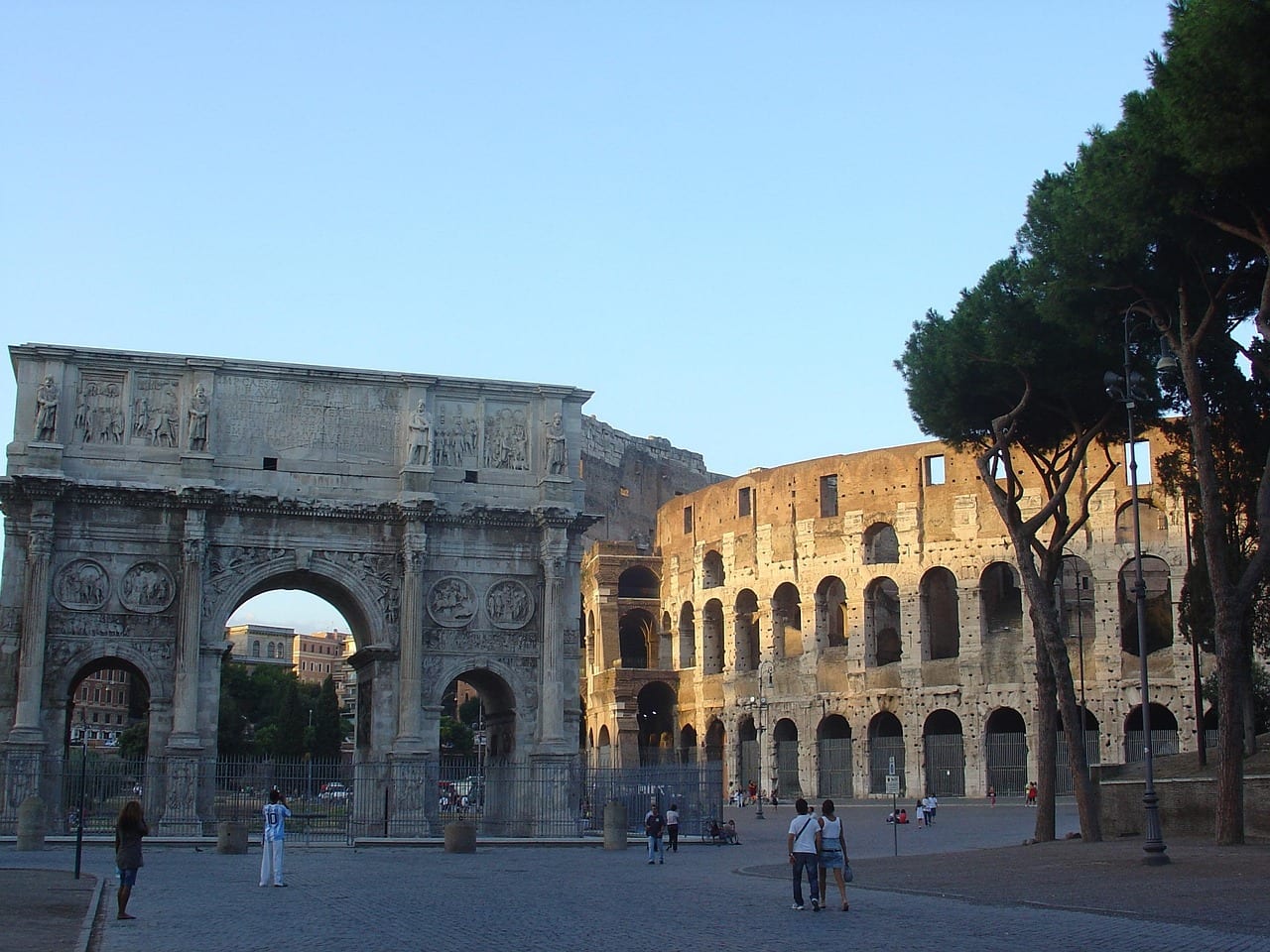
It was officially opened on 25 July 315, although Constantine had left Rome within two months of entering it in October 312 and did not return until 326. The monument spans the ancient Via triumphalis, where triumphal processions turned towards the Forum and Capitoline Hill. Its brick-faced concrete core is clad in marble and rises 21 metres, with three bays and detached Corinthian columns. The placement between the Palatine and Caelian hills appears to have been carefully coordinated with the Circus Maximus, Meta Sudans and Colossus, rather than simply inheriting an earlier arch’s site. Its origins remain debated: some scholars associate parts of it with Hadrian, Maxentius or even Domitian, while recent interpretations emphasise a senatorial commission shaped for Constantine’s political image. Incorporated into a medieval family stronghold, it was restored in the 18th century and excavated before the 2000 Jubilee. It marked the 1960 Olympic marathon finish and was struck by lightning on 3 September 2024.
At a glance
- Heritage
- Italian national heritage
Ways to explore Arch of Constantine
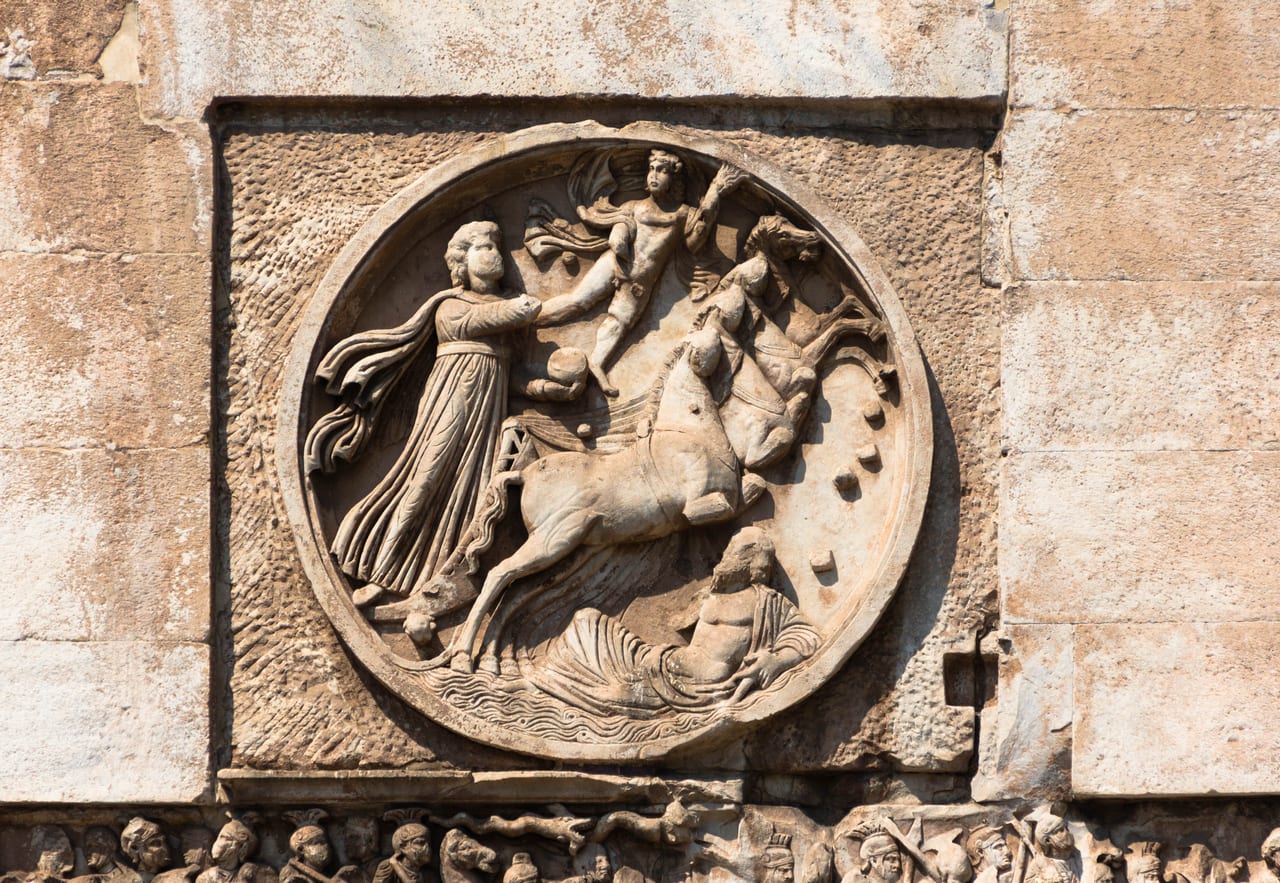
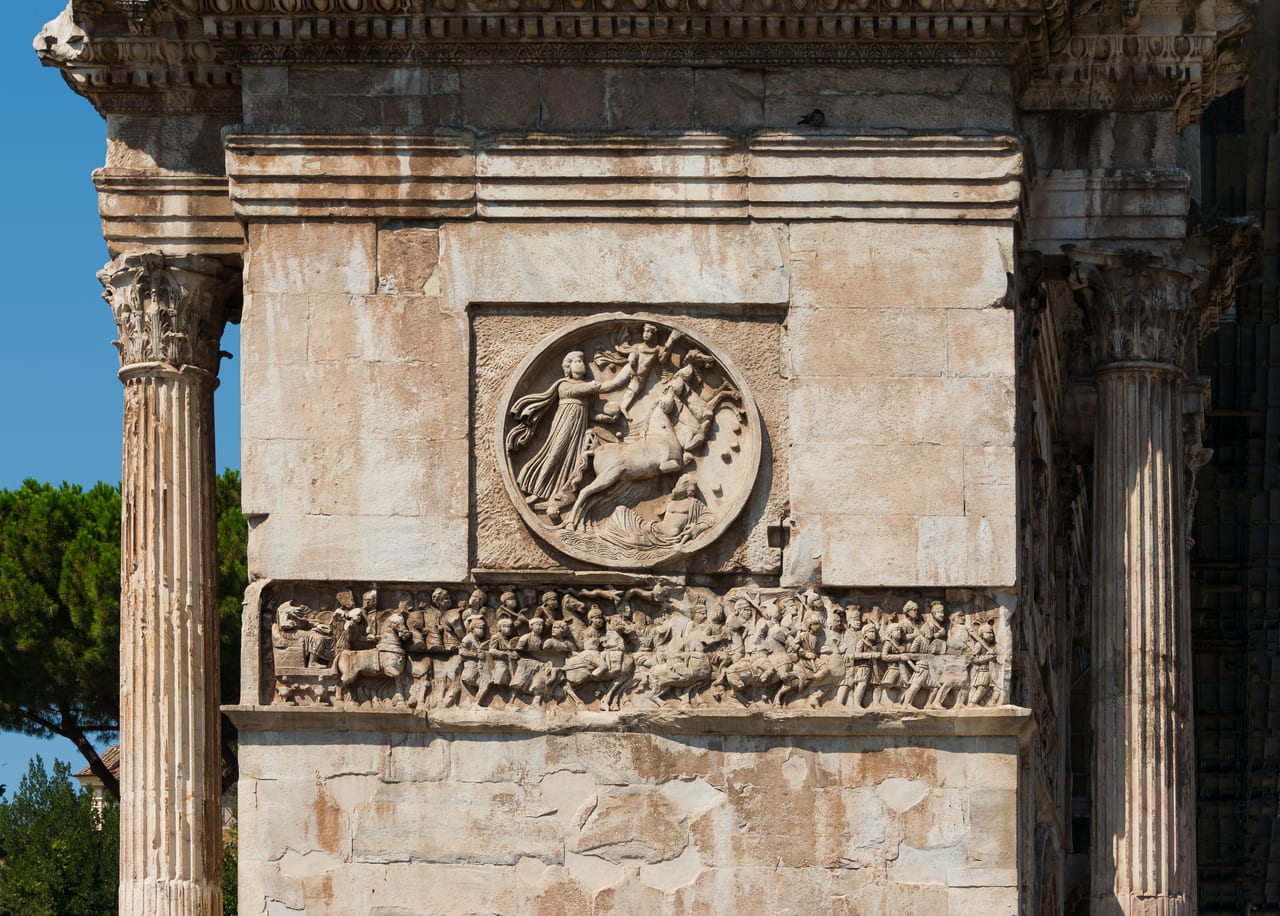
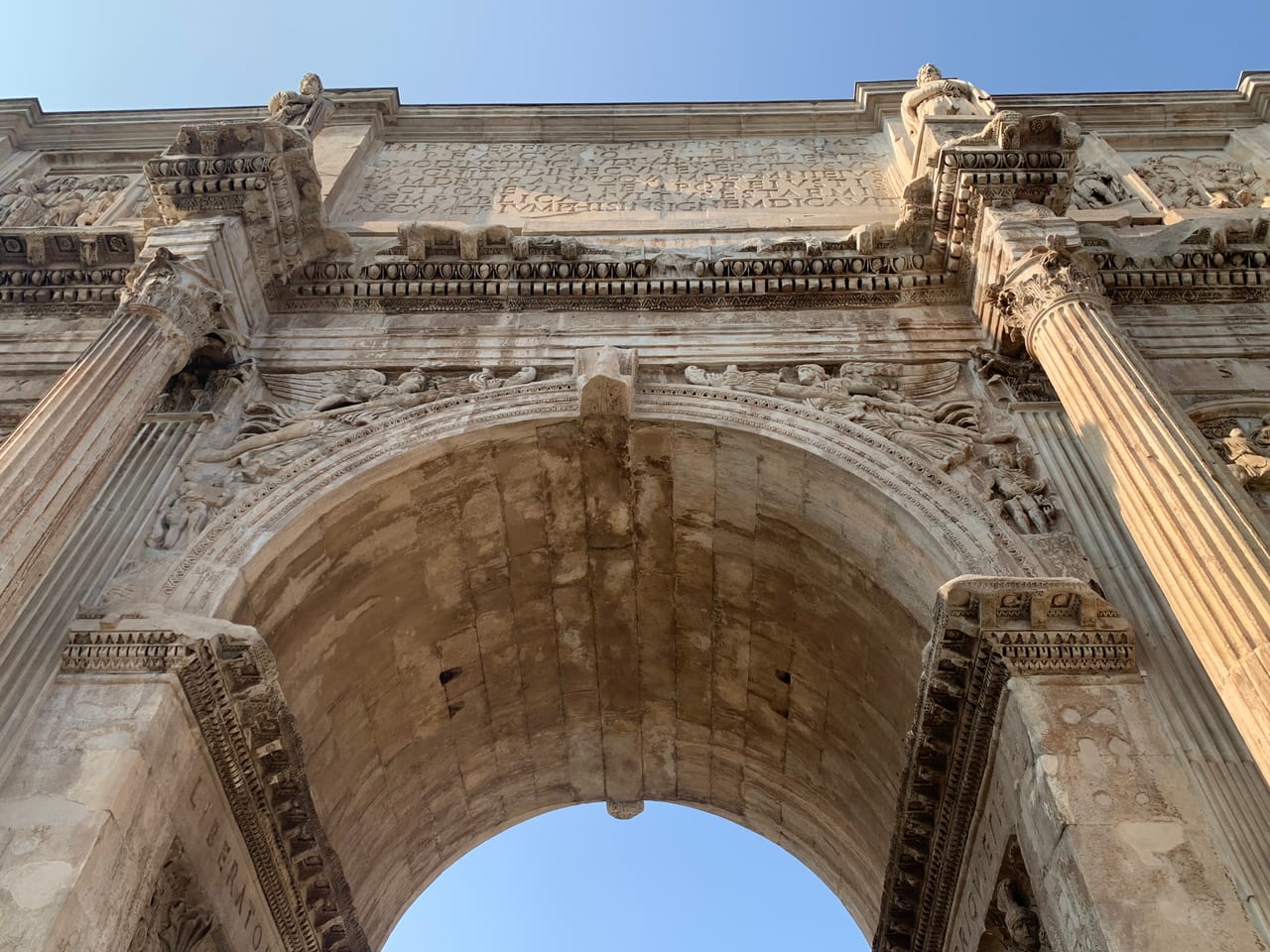
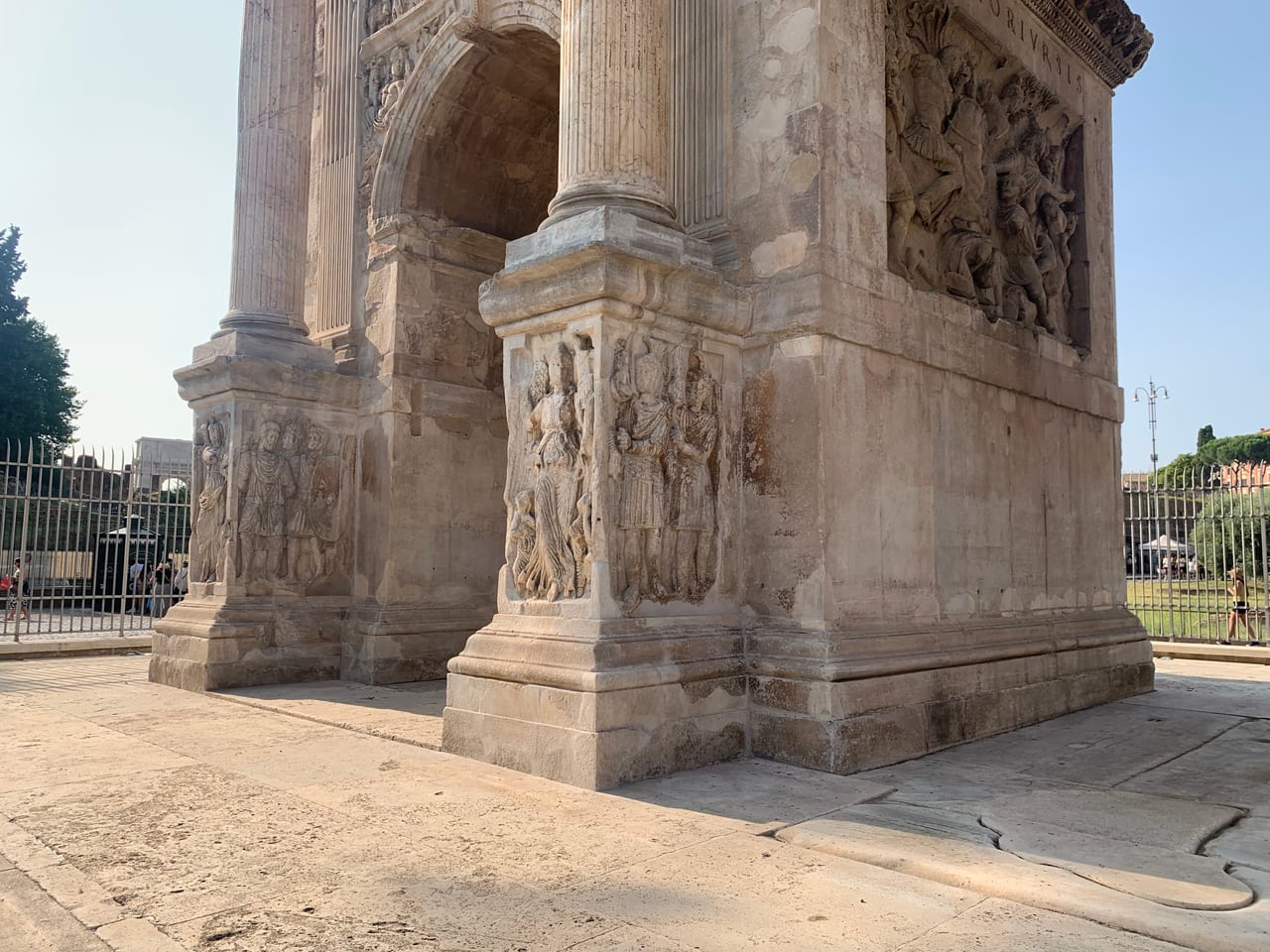
Read the attic inscription, then examine the Dacian figures above the columns and the eight panels depicting imperial audiences, sacrifices, prisoners and military ceremony. The roundels reward close comparison: hunting scenes alternate with sacrifices, while the small side medallions show the Sun and Moon in chariots. Look for Victory figures, river gods and the captured barbarians on the column bases. View the arch from along the former triumphal approach to judge its relationship with the surrounding monuments.
Places to stay near Arch of Constantine

Live availability and prices from Stay22's partners, refreshed periodically and subject to change. Booking through these links may earn us a commission at no extra cost to you. See our privacy policy.
Cafés near Arch of Constantine
Cafés near Arch of Constantine loads as you scroll.
Attractions nearby
Attractions near Arch of Constantine loads as you scroll.
Cities nearby
Cities nearby loads as you scroll.
More in Rome
See more of Rome.
Find great cafés, places to stay and other interesting places to visit in Rome.