Street & promenade · Naples
Spaccanapoli
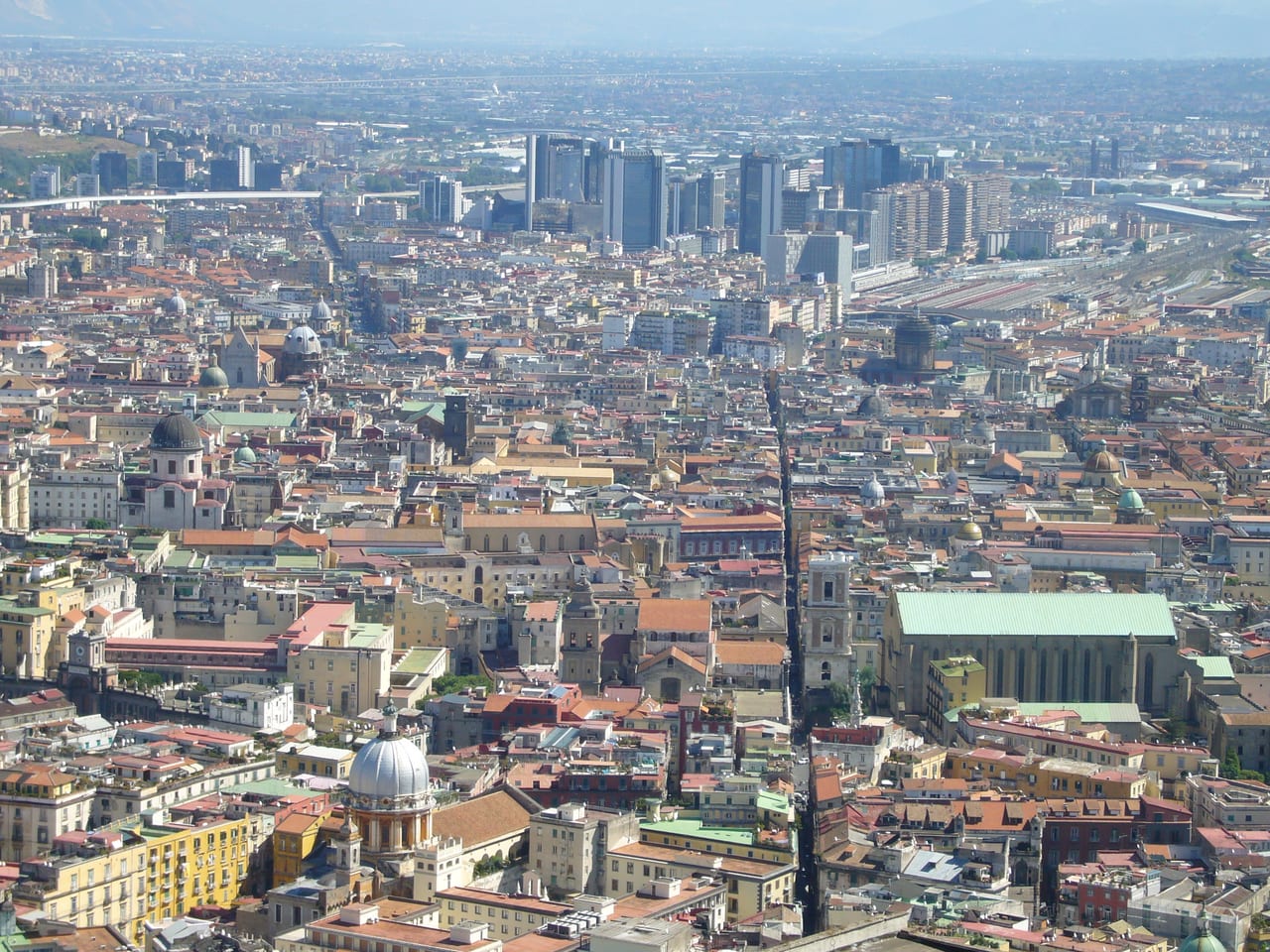
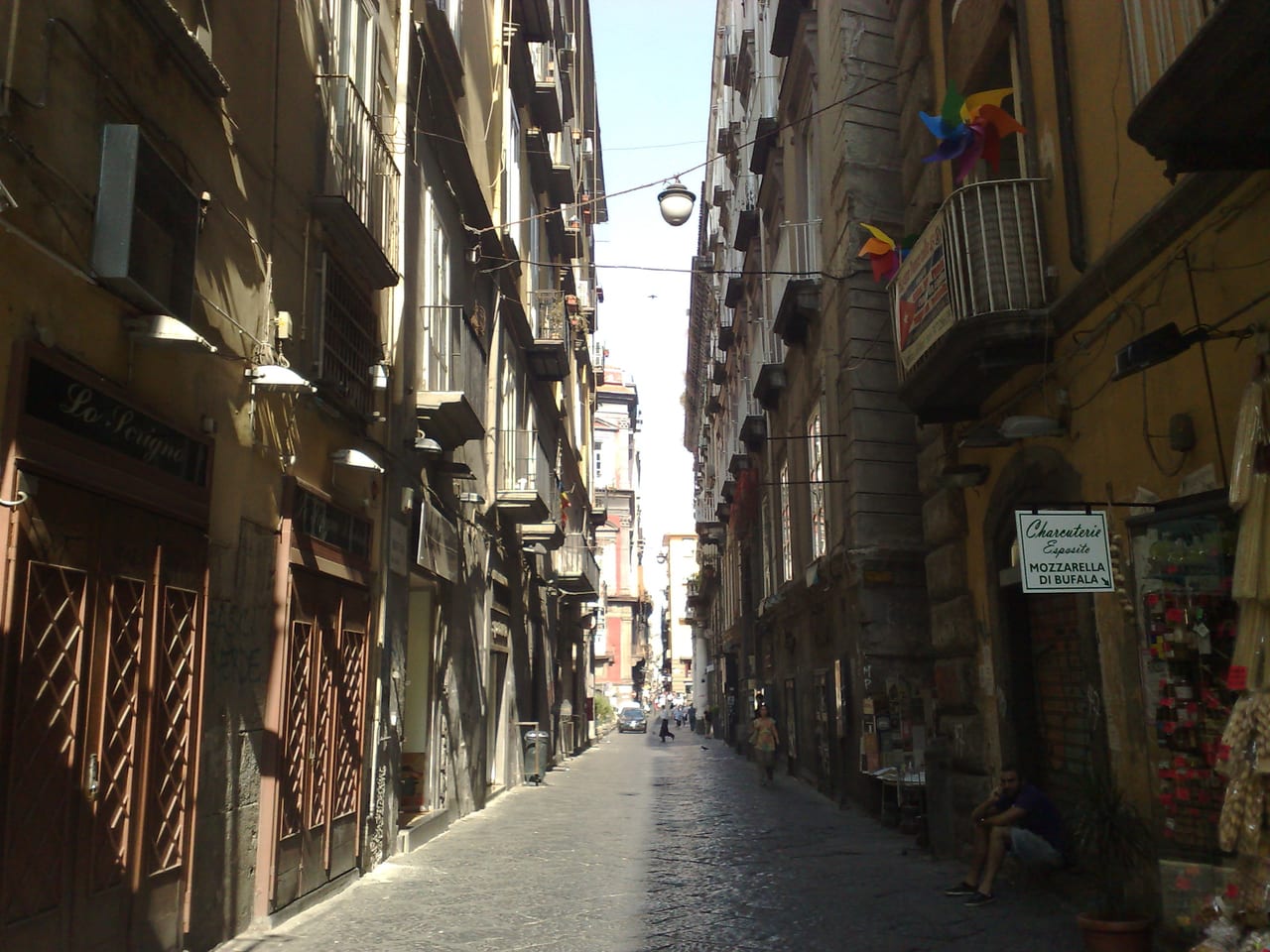
DirectionsIts perfectly straight course gives Spaccanapoli its name, cutting across the ancient city with such clarity that the historic fabric reads as a single, continuous axis.
Photograph 1 of 4 of Spaccanapoli
Spaccanapoli comprises the official streets Via Pasquale Scura, Via Benedetto Croce and Via San Biagio dei Librai. Its earliest course ran from Piazza San Domenico Maggiore to Via Duomo; during the Roman period it extended towards today’s Piazza del Gesù Nuovo, where Roman baths survive beneath the cloister of Santa Chiara. Its religious and aristocratic character grew between the Middle Ages and the nineteenth century, when convents and residences of powerful families lined the route. The Renaissance brought extensive rebuilding: Giovanni Francesco Mormando and Giovanni Francesco di Palma designed Palazzo Marigliano and Palazzo Pinelli among other works. In the sixteenth century, Viceroy Don Pedro de Toledo aligned the route with an artery through the Spanish Quarters, improving movement between the hillside of San Martino and the centre. Further alterations followed in the seventeenth and eighteenth centuries. Nineteenth-century restorations returned several palaces to their earlier forms, while Santa Chiara recovered its Gothic appearance only after the Second World War, when its eighteenth-century stucco was removed.
Ways to explore Spaccanapoli
Along the way, pause at the Obelisco dell’Immacolata, the Obelisco di San Domenico and the Statue of the God Nile. Examine the sequence of churches and palaces around Piazza San Domenico Maggiore, then follow Via San Biagio dei Librai and look for Via San Gregorio Armeno, the northbound connecting street.
Places to stay near Spaccanapoli

Live availability and prices from Stay22's partners, refreshed periodically and subject to change. Booking through these links may earn us a commission at no extra cost to you. See our privacy policy.
Cafés near Spaccanapoli
Cafés near Spaccanapoli loads as you scroll.
Attractions nearby
Attractions near Spaccanapoli loads as you scroll.
Cities nearby
Cities nearby loads as you scroll.
More in Naples
See more of Naples.
Find great cafés, places to stay and other interesting places to visit in Naples.