Church · Naples
Sant'Orsola a Chiaia, Naples
DirectionsIts 1853 De Feo organ retains a fully mechanical action, ten stops, and a carved, gilded case crowned by three pipe cusps behind shutters.
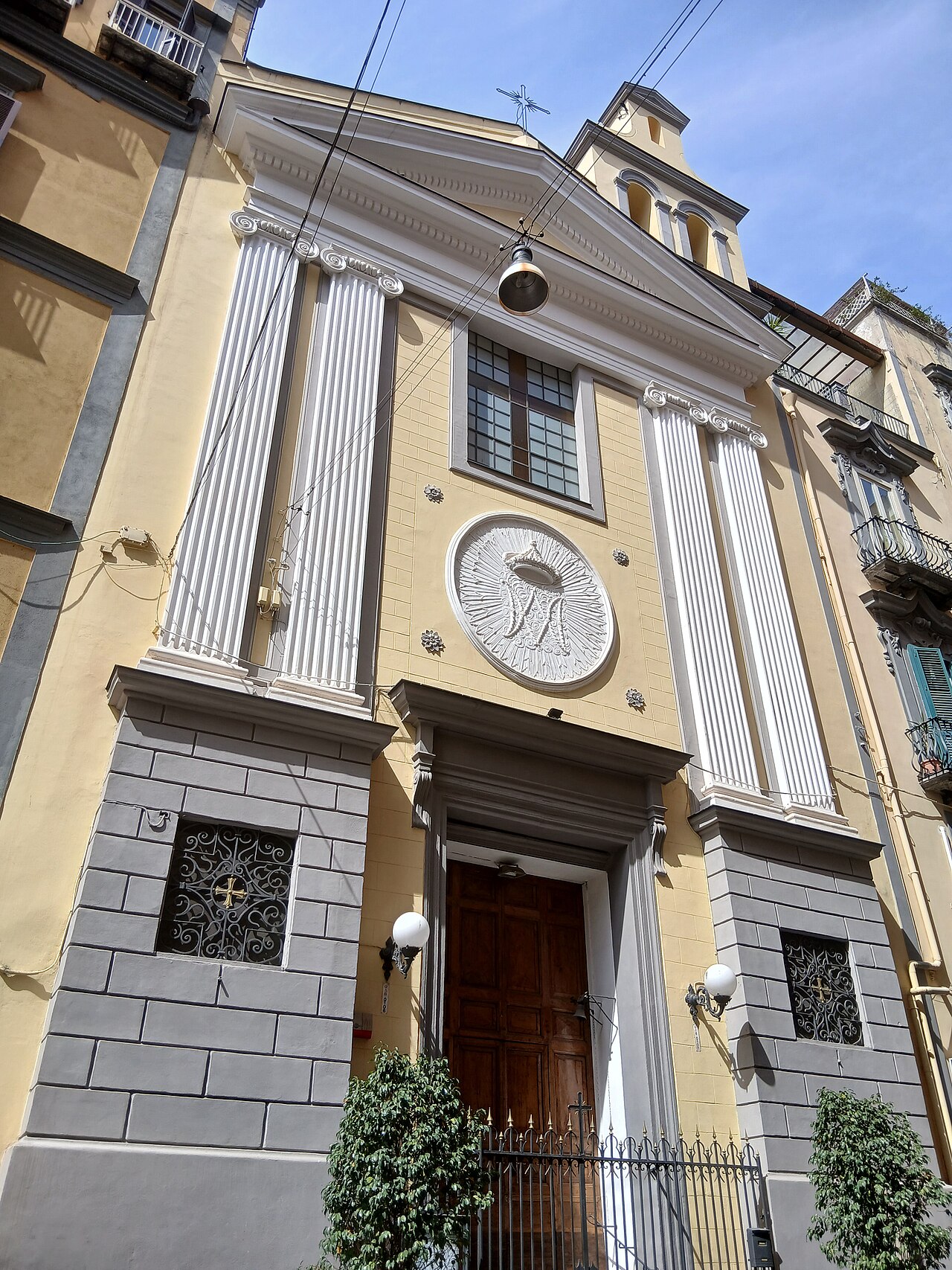
Sant'Orsola began as a private chapel built around the mid-16th century by the Spanish nobleman Annibale de Troyanis y Mortella and dedicated to Saint Ursula. In 1569 he gave it to the friars of the Order of Santa Maria della Mercede; in 1576 they demolished the chapel and replaced it with a larger church adjoining a new convent. The building was remodelled in 1850, and its original character was substantially diminished by 19th-century restoration. The friars remained in the convent until 1923. The former monastic cloister, which had contained the monks’ cemetery, was demolished in 1875 and replaced by Teatro Sannazaro. What survives from the later phase includes frescoes by G. Gravante on the nave arches and vault: the Stories of the Virgin, painted in 1851, and Redemption of the Captives, from 1852. The right transept contains two 17th-century paintings, Saint Jerome and The Magdalene in Ecstasy, originally kept in the crypt, alongside The Martyrdom of Saint Ursula. The church is recognised as Italian national heritage.
At a glance
- Style
- Neapolitan baroque art
- Heritage
- Italian national heritage
Ways to explore Sant'Orsola a Chiaia, Naples
Look upward first, tracing Gravante’s fresco cycle across the nave arches and vault before moving toward the right transept. There, examine the two 17th-century devotional panels, Saint Jerome and The Magdalene in Ecstasy, alongside The Martyrdom of Saint Ursula. Notice the contrast between the surviving interior decoration and the building’s much-altered fabric, then step outside to place the church beside Teatro Sannazaro, which occupies the site of the former cloister.
Places to stay near Sant'Orsola a Chiaia, Naples

Live availability and prices from Stay22's partners, refreshed periodically and subject to change. Booking through these links may earn us a commission at no extra cost to you. See our privacy policy.
Cafés near Sant'Orsola a Chiaia, Naples
Cafés near Sant'Orsola a Chiaia, Naples loads as you scroll.
Attractions nearby
Attractions near Sant'Orsola a Chiaia, Naples loads as you scroll.
Cities nearby
Cities nearby loads as you scroll.
More in Naples
See more of Naples.
Find great cafés, places to stay and other interesting places to visit in Naples.