Church · Naples
Santa Maria Regina Coeli
DirectionsIts richly layered interior brings together a 1590s Renaissance foundation, Baroque marble work, Luca Giordano paintings, and a remarkable sixteenth-century cloister fountain ringed by four obelisks.
Photograph 1 of 15 of Santa Maria Regina Coeli
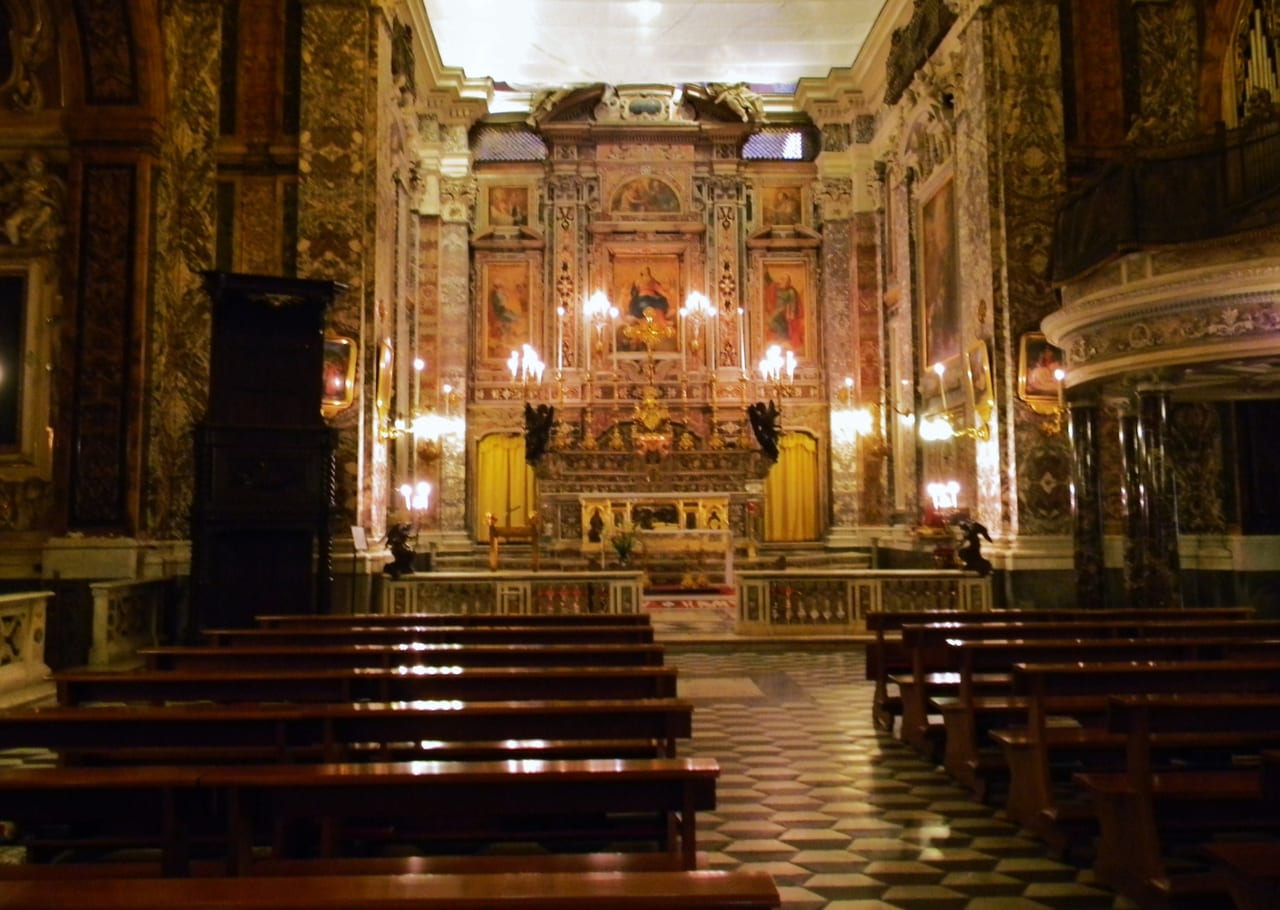
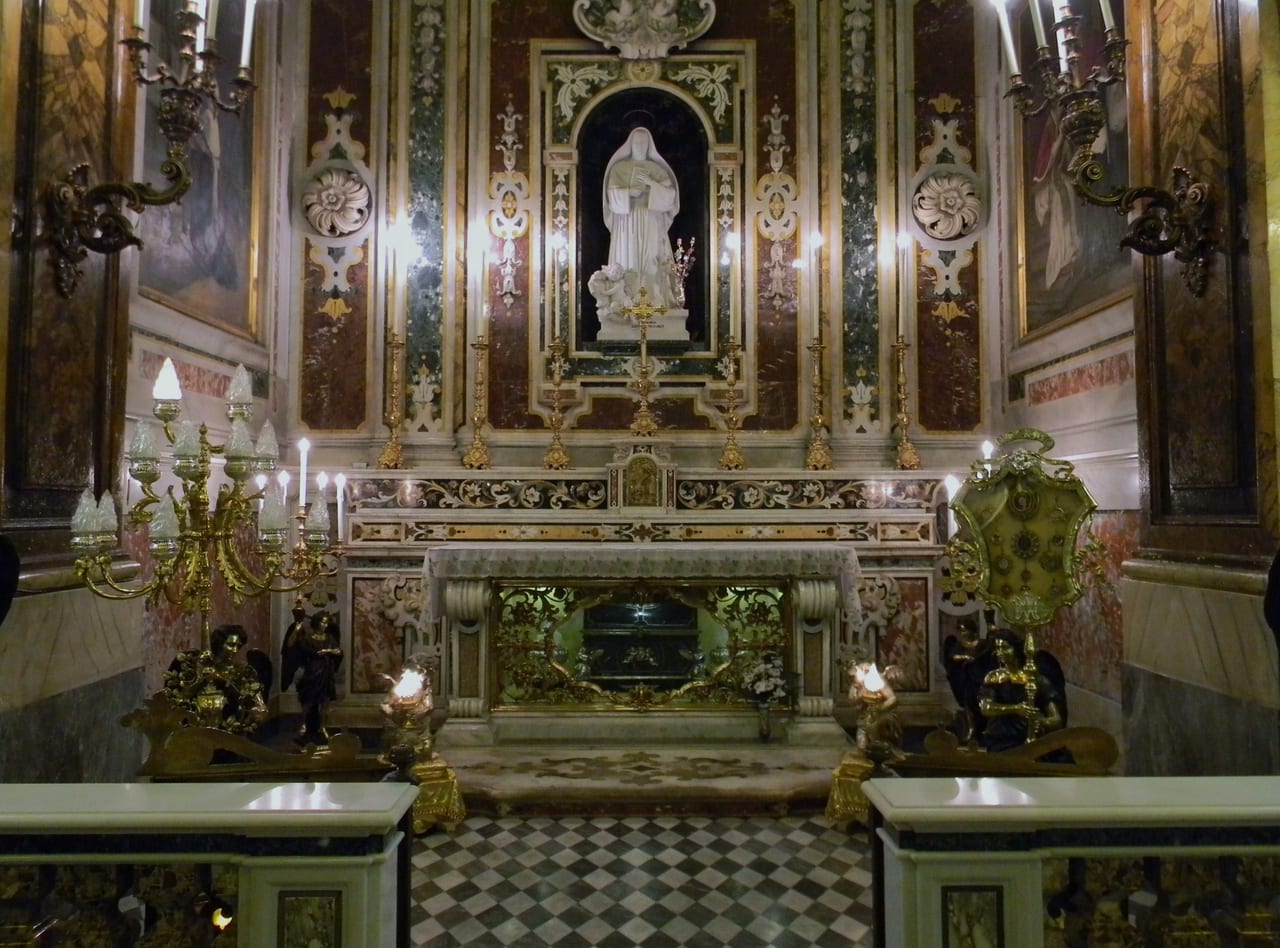
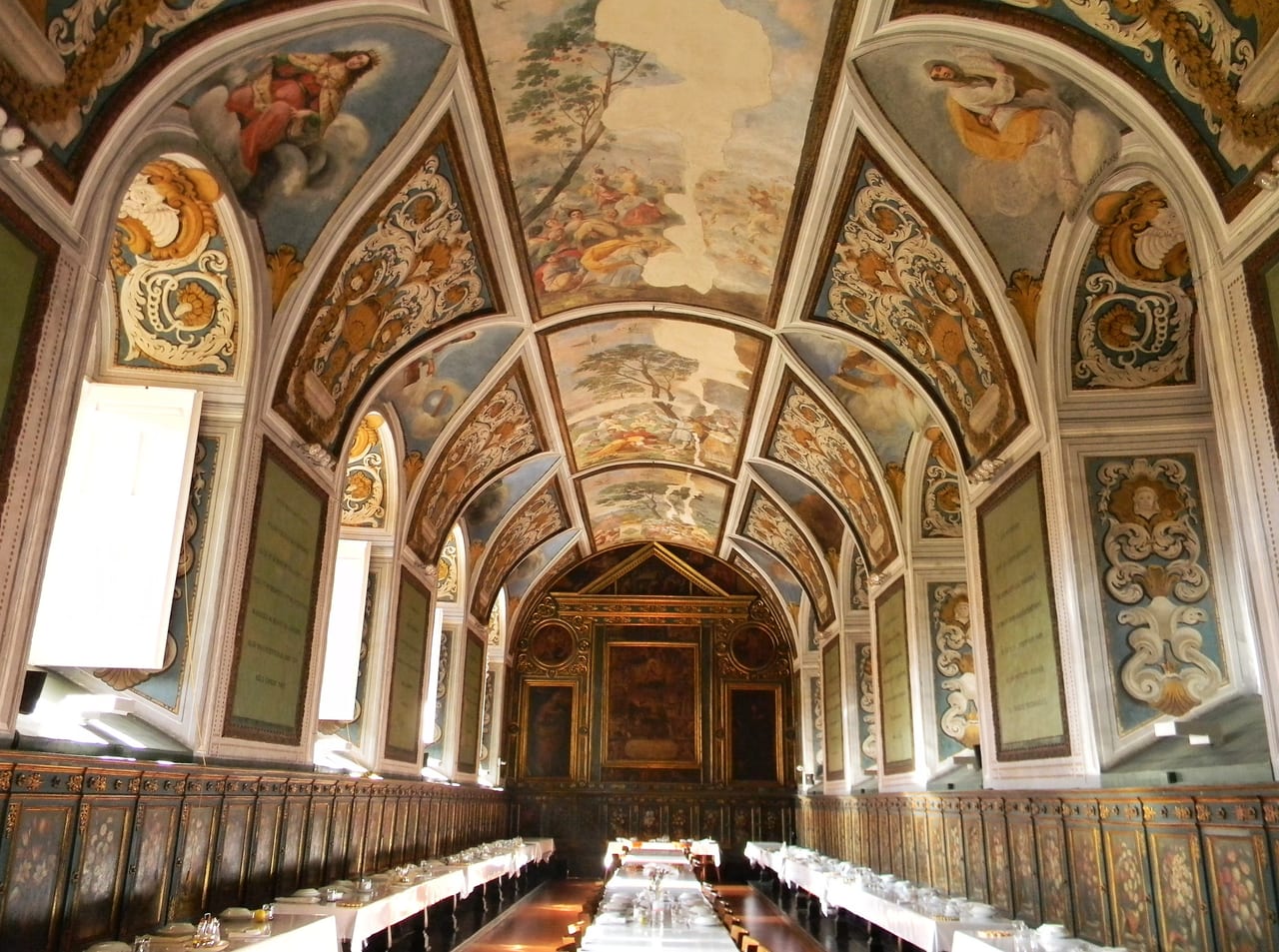
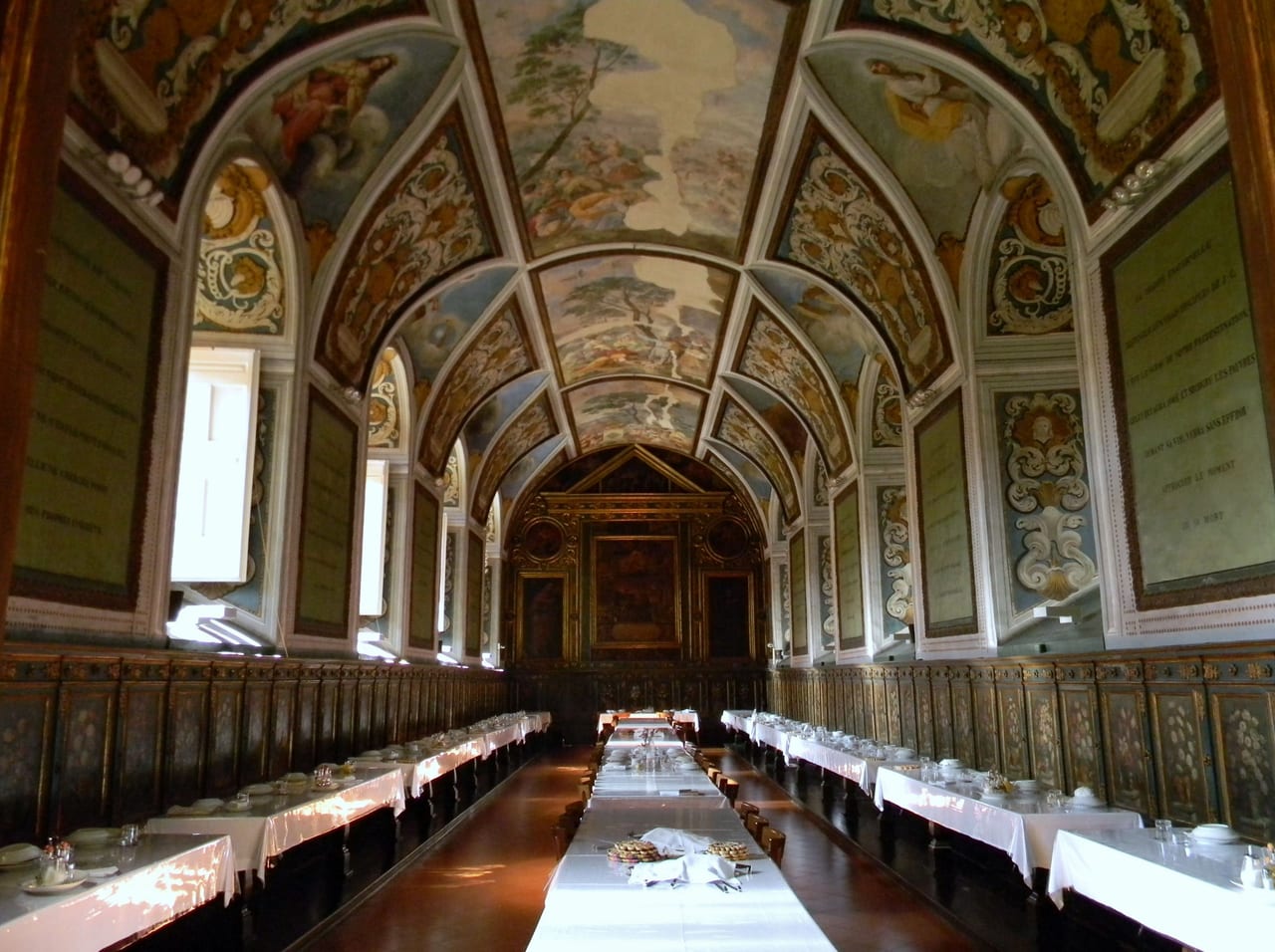
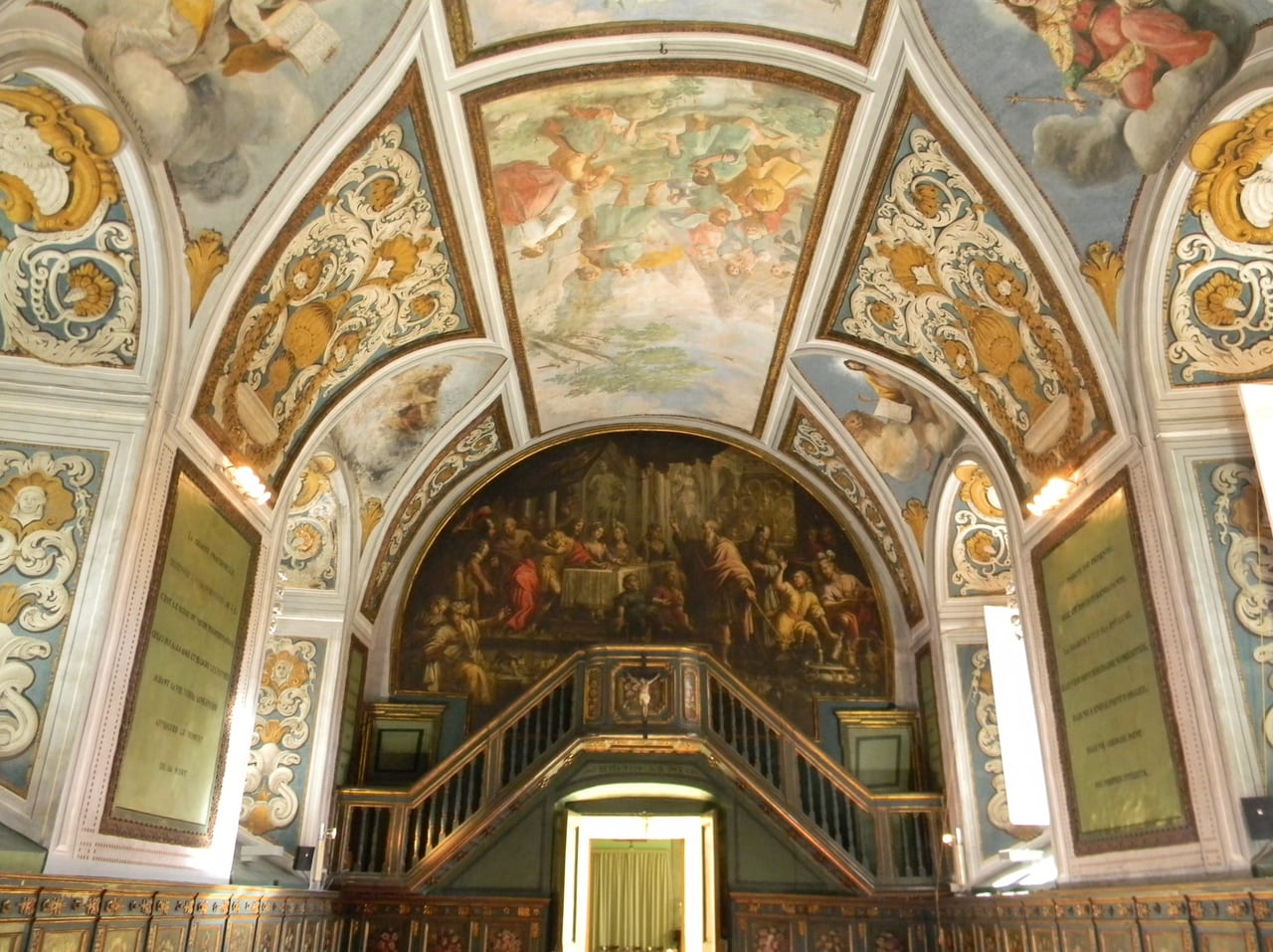
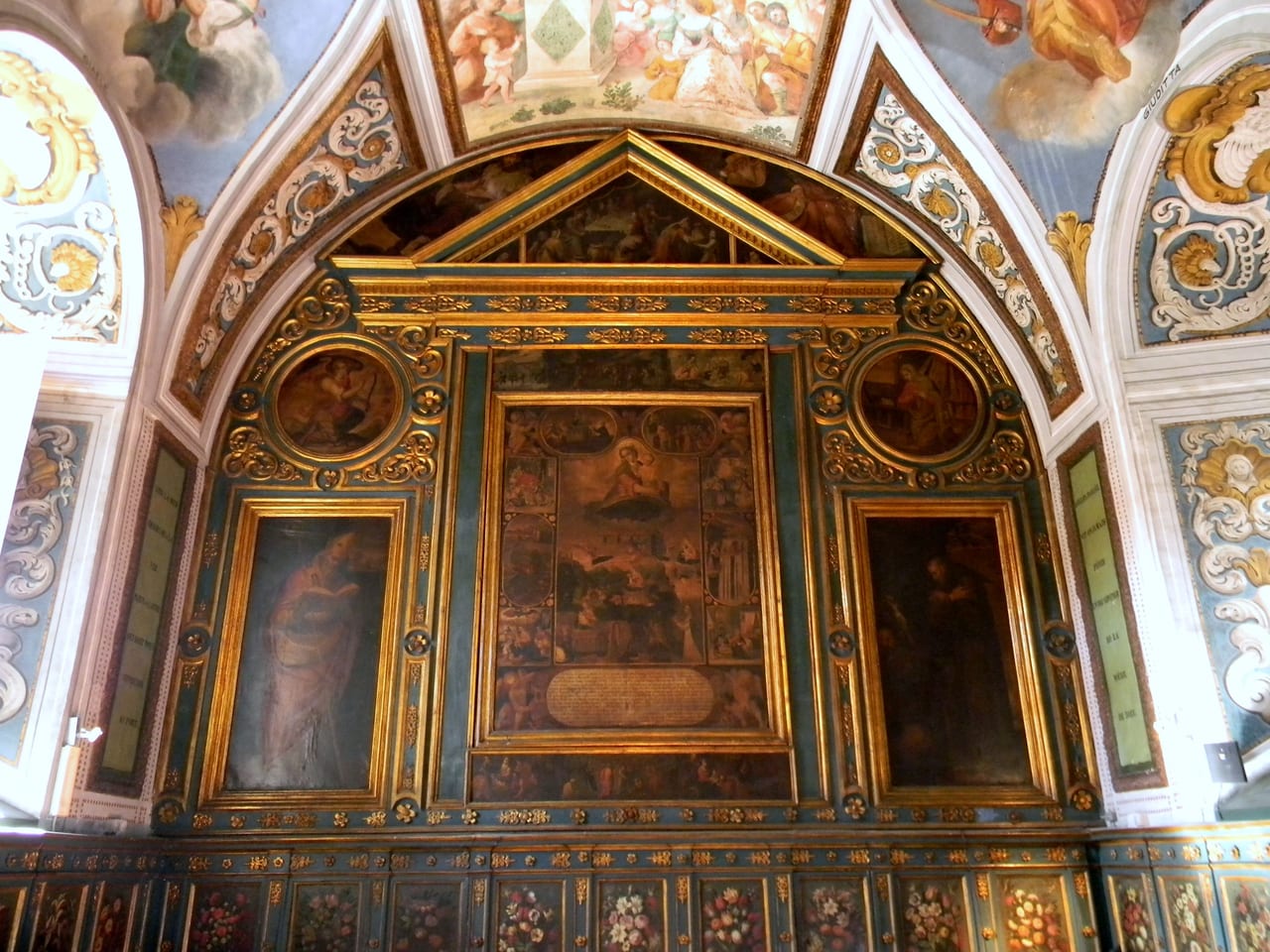
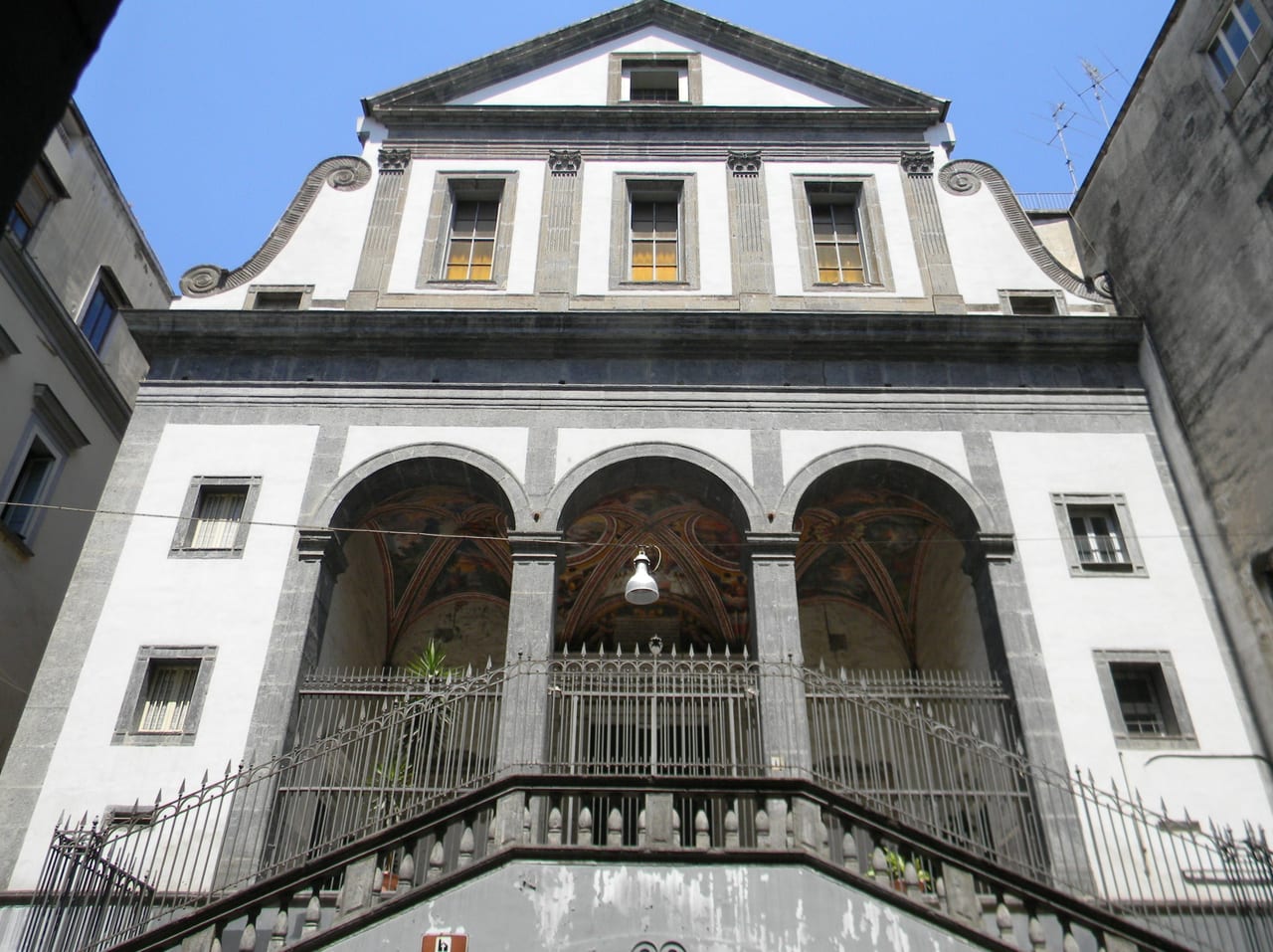
Santa Maria Regina Coeli began in 1590, when Lateran canonesses displaced by the 1561 earthquake moved into Palazzo Montalto near the monastery of San Gaudioso and converted it into a convent. The church was completed in 1594 under Luciano Quaranta; its design is attributed either to Giovanni Vincenzo Della Monica or Giovanni Francesco di Palma. It developed through successive interventions: Pietro De Marino created the intarsia and gilded wooden ceiling between 1634 and 1659, while Francesco Antonio Picchiatti worked on the great cloister in 1682 and designed later residential wings. A building acquired in 1720 was linked by a passage surmounted by the surviving crenellated, octagonal bell tower. Ignazio Di Nardo introduced the church’s stucco and marble dressing in 1778, followed by Antonio Macrì’s marble counter-facade in 1781. The single nave, lined with polychrome marble, leads to a presbytery dominated by the marble-inlaid high altar made by Giovanni Mozzetti and Francesco Valentino between 1652 and 1655. The complex combines Renaissance and Baroque work, including a sixteenth-century cloister fountain, a decorated seventeenth-century dome, and a refectory frescoed by Michele Ragolia. After the Lateran sisters moved to Gesù e Maria in 1808, the Sisters of Charity of Saint Joan Antida Thouret arrived in 1810 and continue to manage the complex.
At a glance
- Style
- Renaissance architecture
- Heritage
- Italian national heritage
Ways to explore Santa Maria Regina Coeli
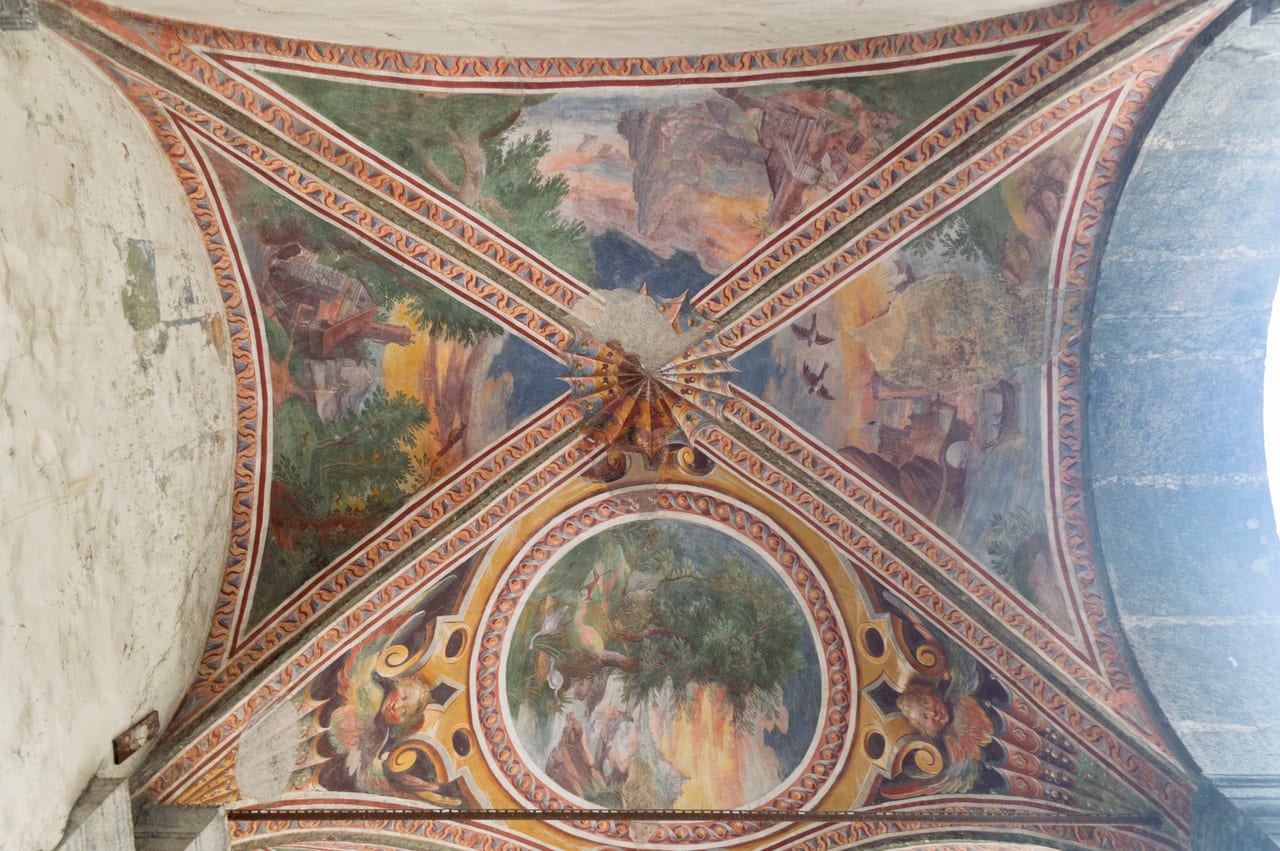
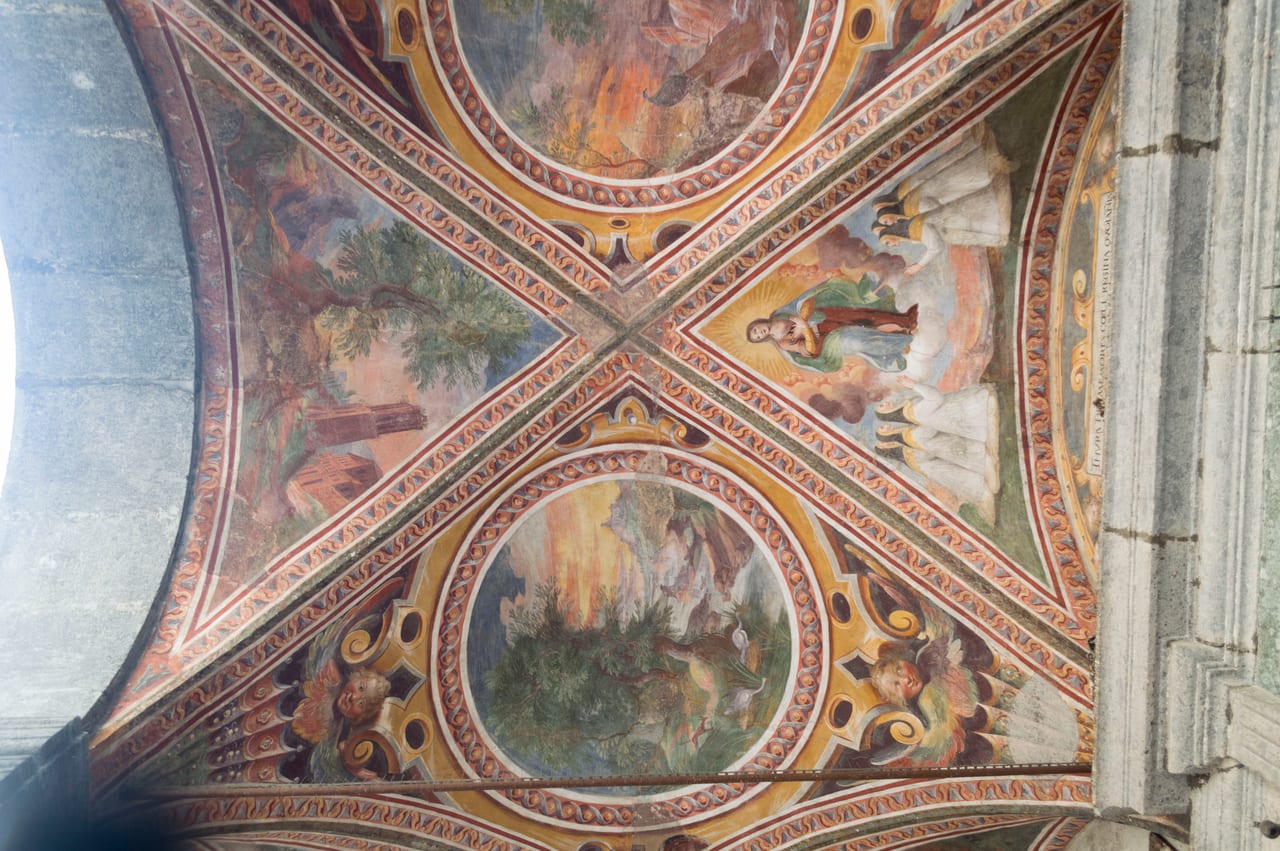
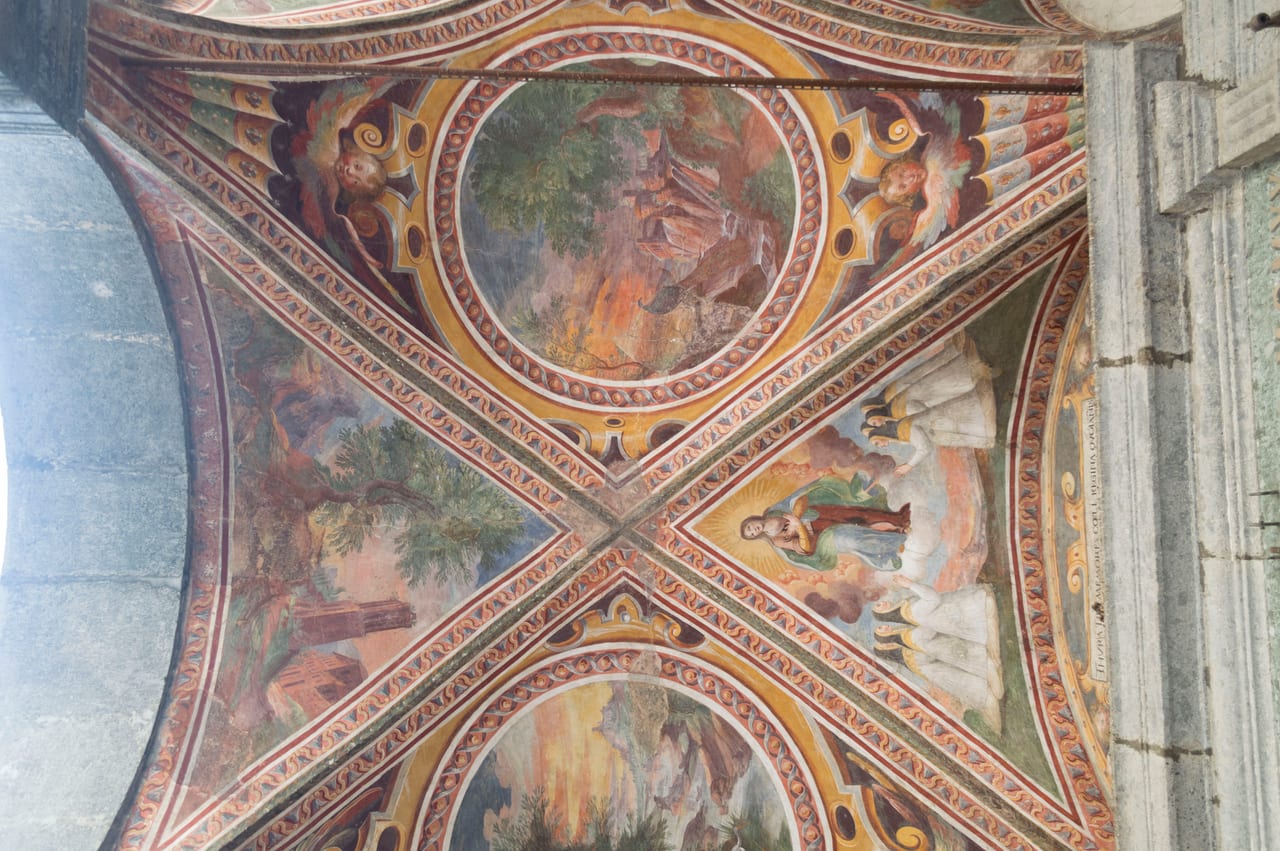
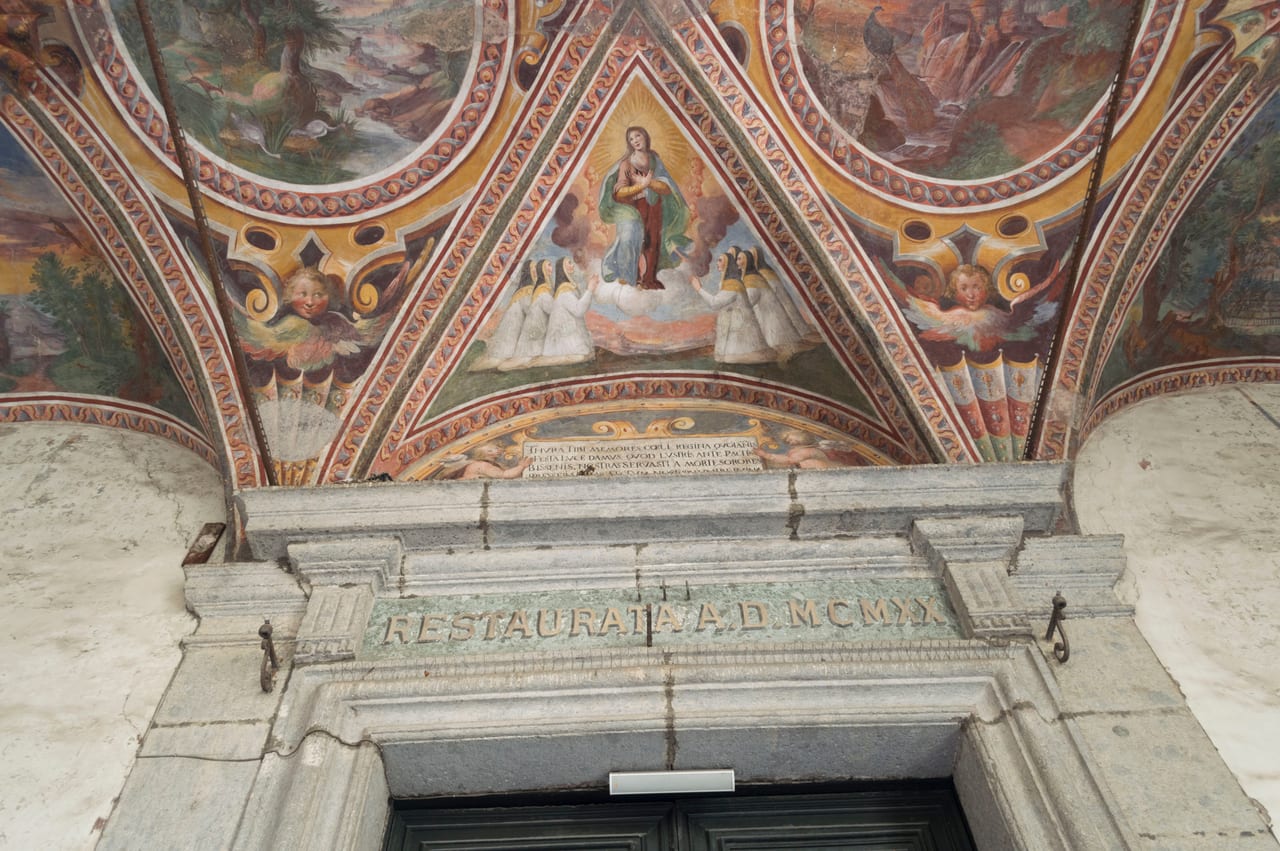
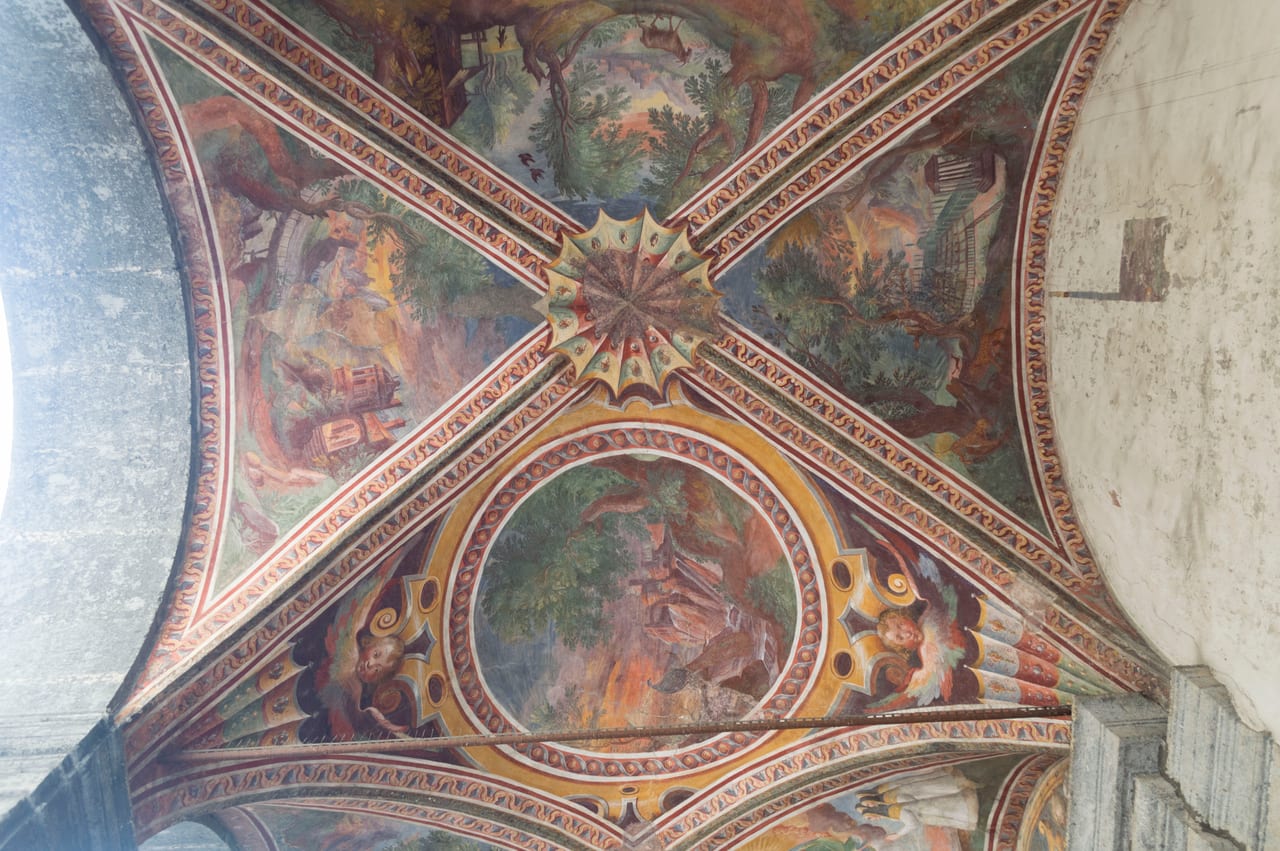
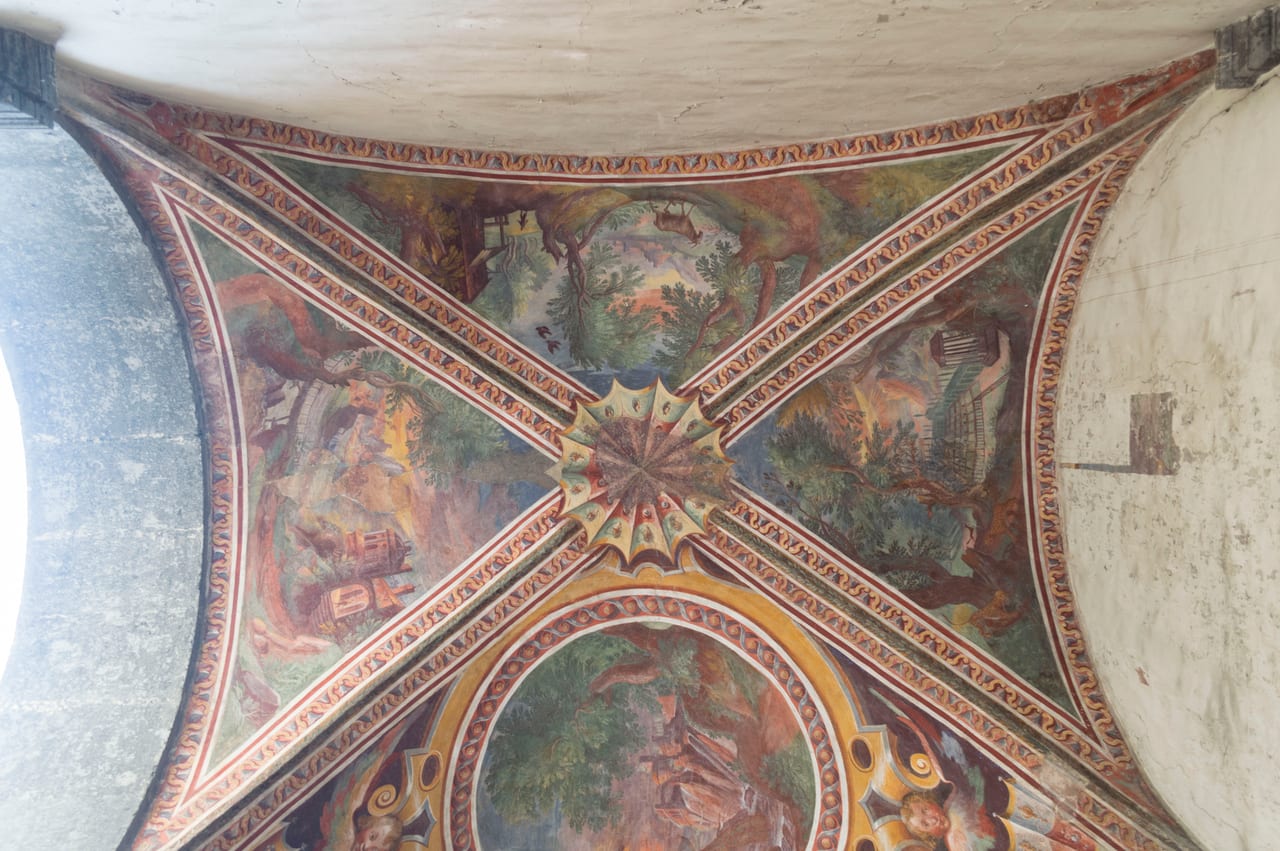
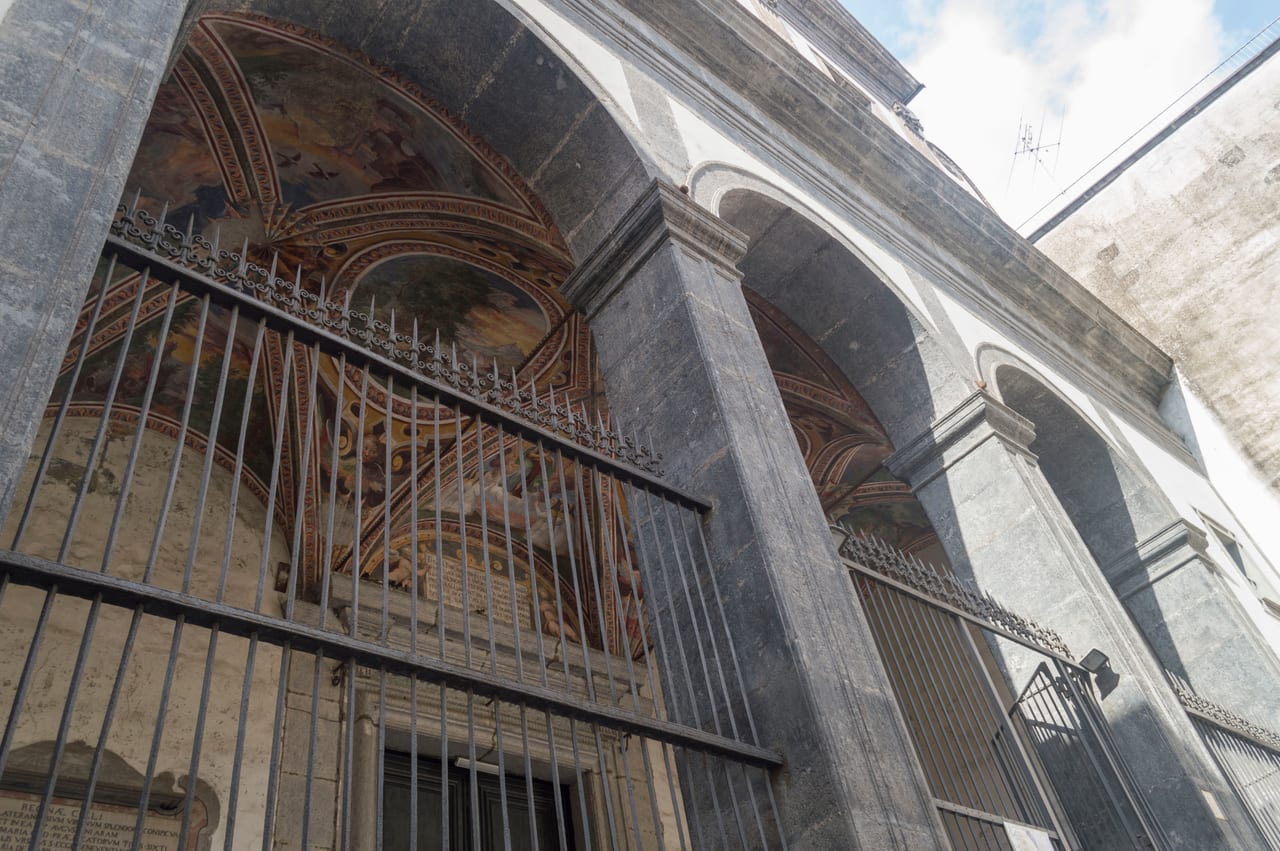
Enter through the double stairway and pause beneath the pronaos to examine Loise Croys’s frescoes and the surviving sixteenth-century facade. Inside, compare the polychrome marble surfaces with the carved ceiling, the chapels’ paintings, the organ loft, and the presbytery’s marble altar. The cloister is entered from vico San Gaudioso: look for its alternating marble obelisks and spheres around the well, the busts of Saint Vincent de Paul and Saint Joan Antida Thouret, and the traces of its former wooden pergola and rainwater system. Ask locally whether the monastic rooms and refectory are open.
Places to stay near Santa Maria Regina Coeli

Live availability and prices from Stay22's partners, refreshed periodically and subject to change. Booking through these links may earn us a commission at no extra cost to you. See our privacy policy.
Cafés near Santa Maria Regina Coeli
Cafés near Santa Maria Regina Coeli loads as you scroll.
Attractions nearby
Attractions near Santa Maria Regina Coeli loads as you scroll.
Cities nearby
Cities nearby loads as you scroll.
More in Naples
See more of Naples.
Find great cafés, places to stay and other interesting places to visit in Naples.