Church · Naples
Santa Maria in Portico, Naples
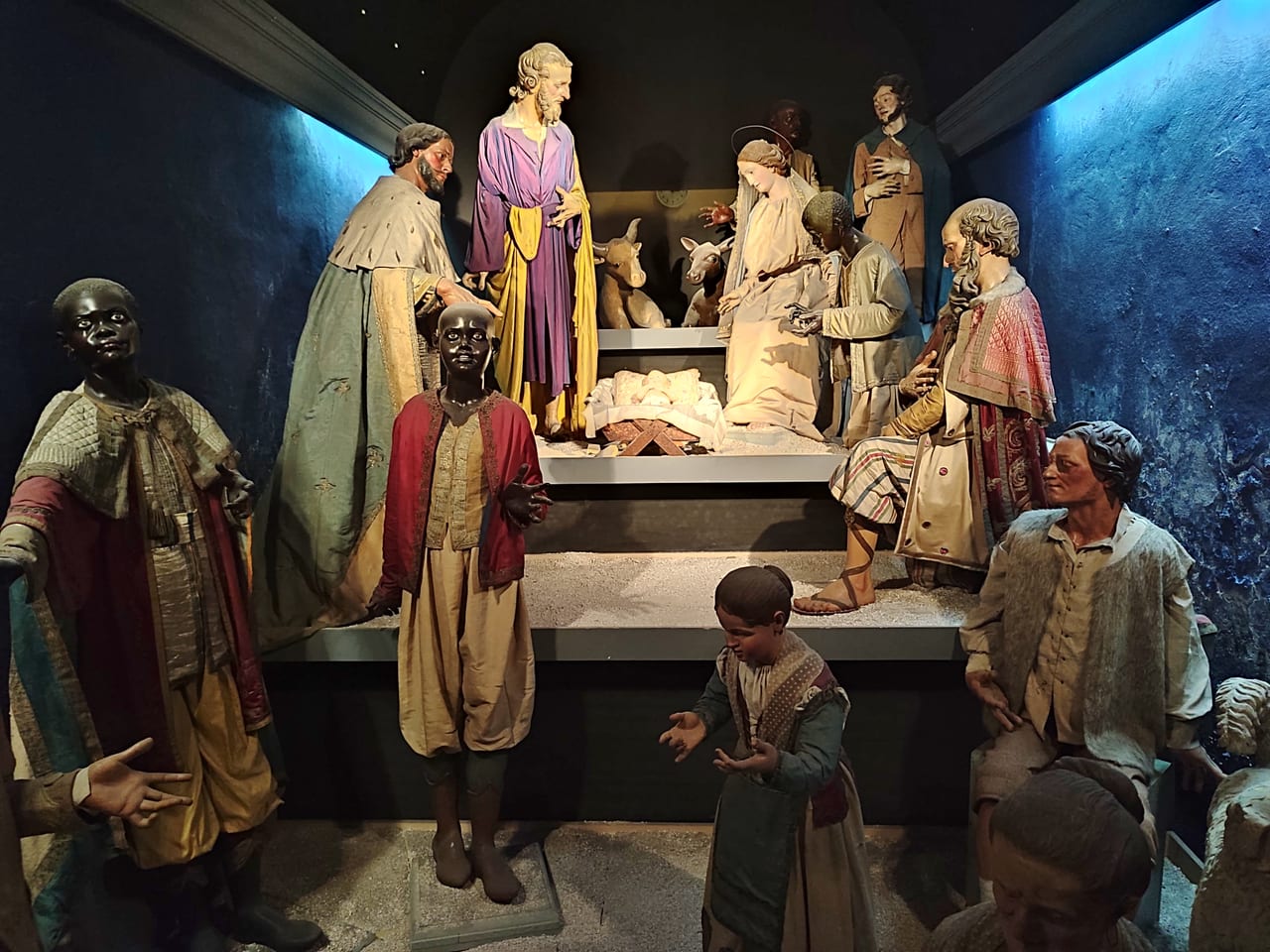
DirectionsIts celebrated 1647 nativity scene uses life-size figures and Pietro Ceraso’s innovative hollow wooden mannequins with specially modelled faces, linking Baroque art to Naples’s living figurine tradition.
Photograph 1 of 8 of Santa Maria in Portico, Naples
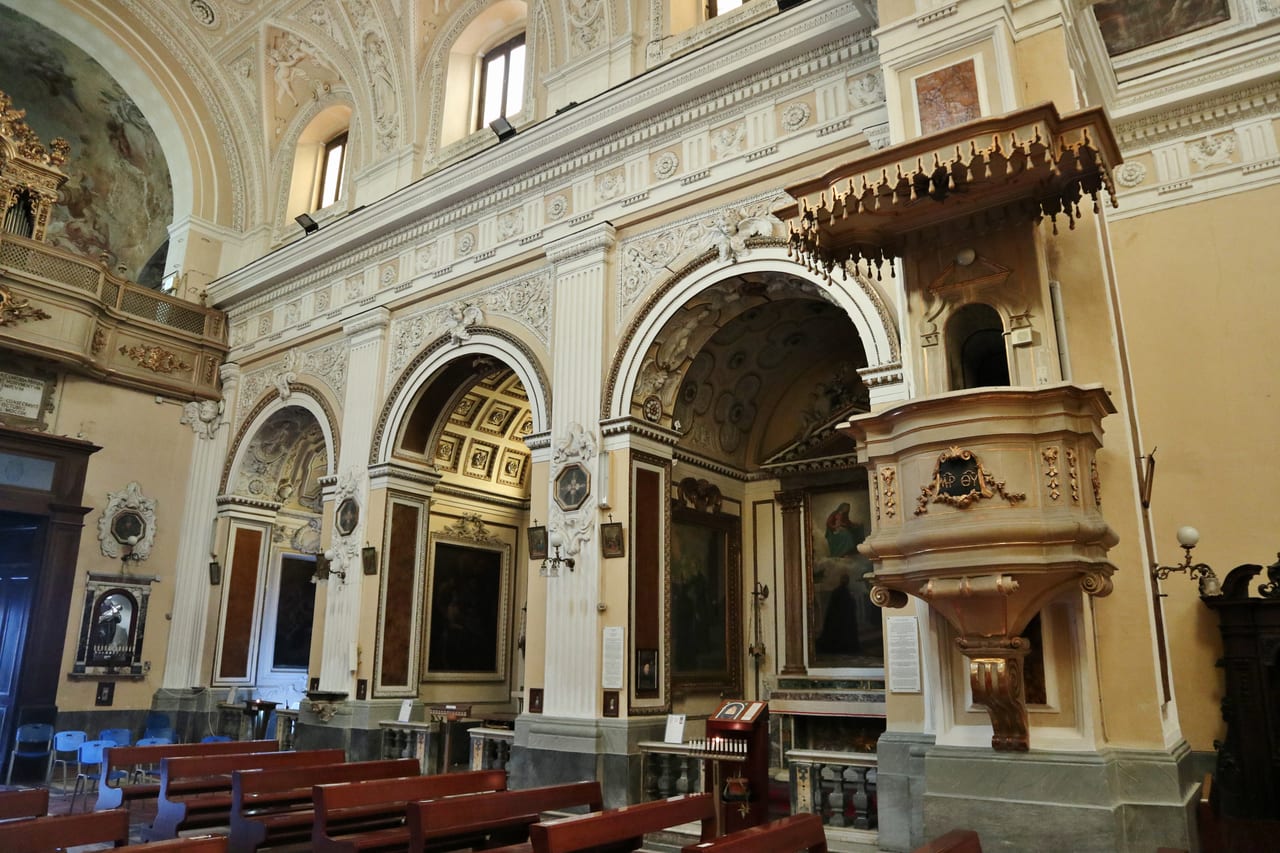
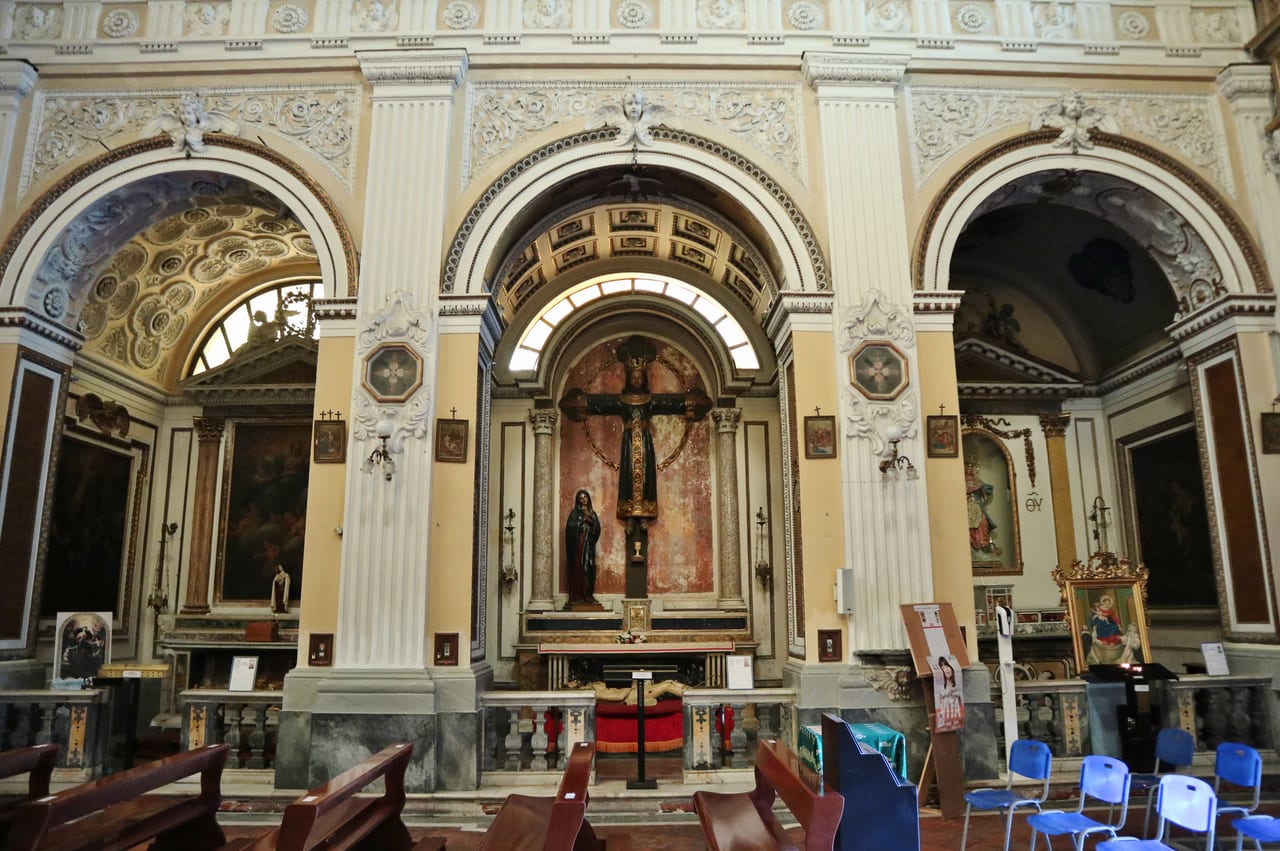
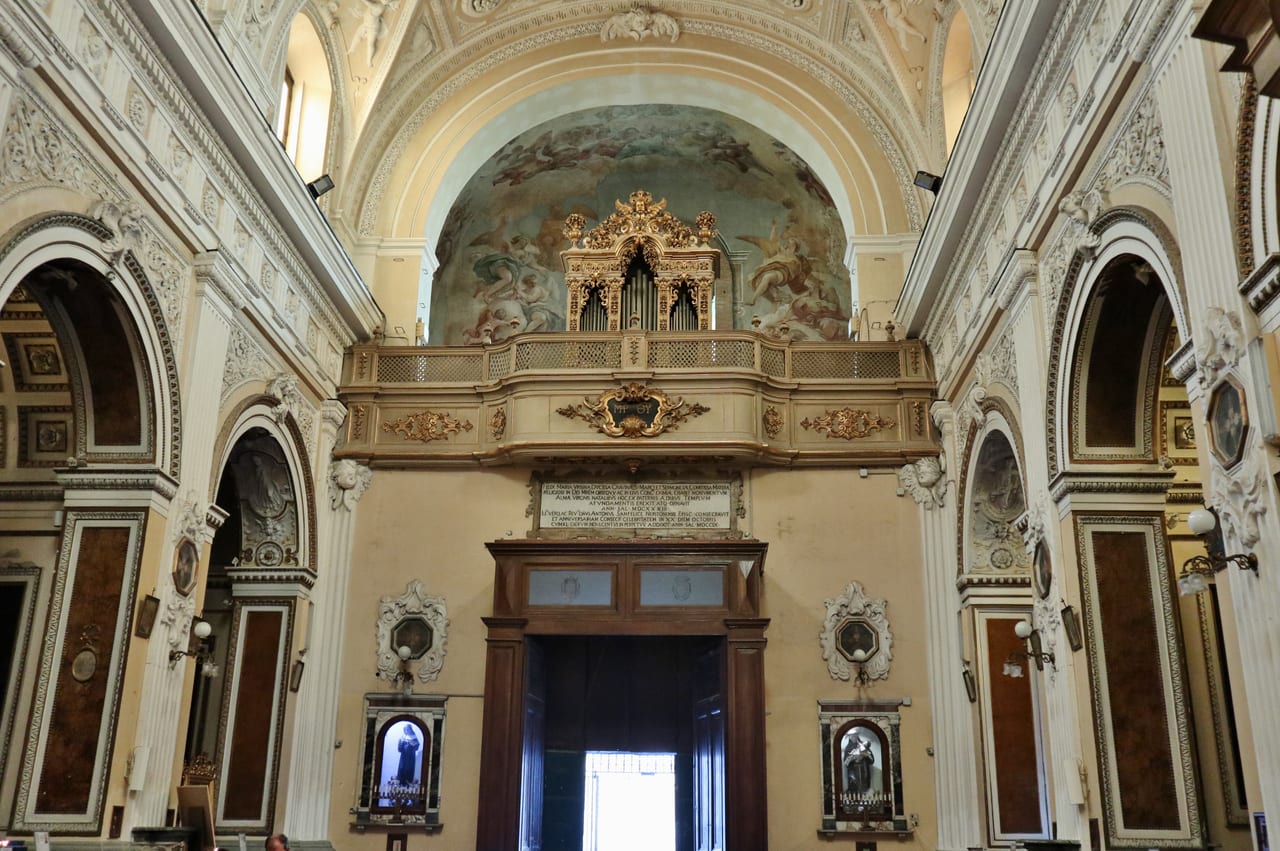
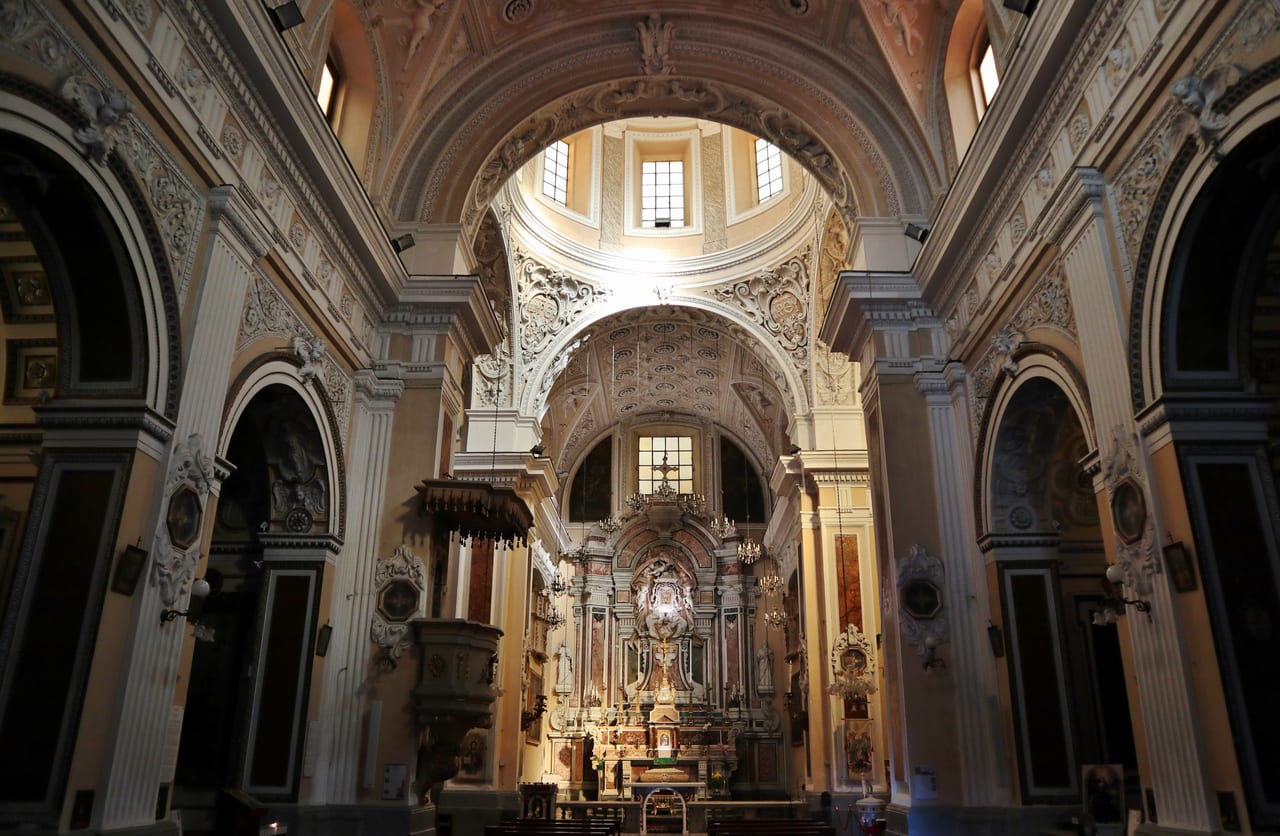
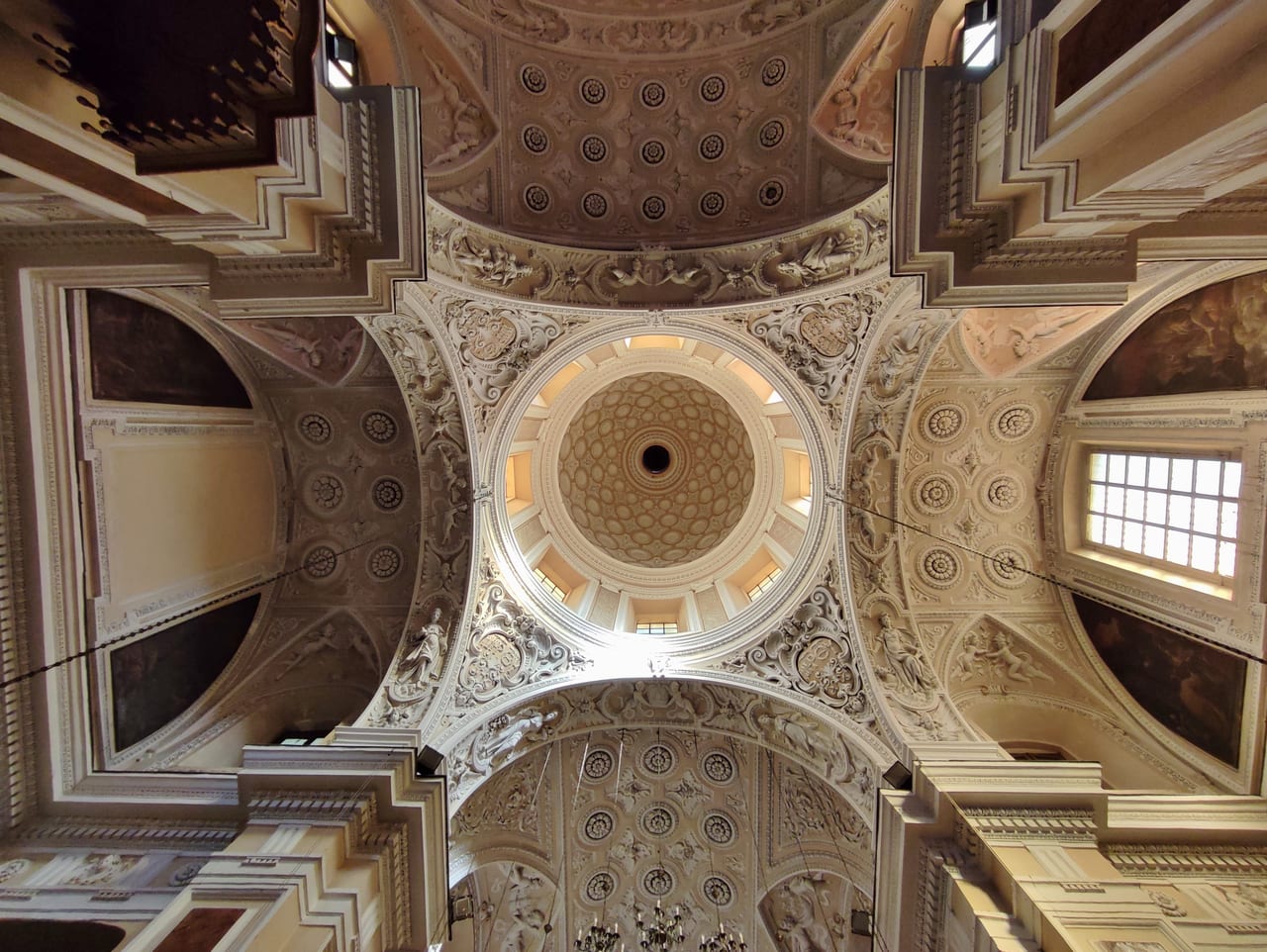
Construction began in 1632 from Nicola Longo’s design, financed by Felice Maria Orsini, duchess of Gravina, in memory of Rome’s Santa Maria in Campitelli. The convent complex once comprised three buildings with gardens, loggias and fountains; in 1683 it temporarily housed the viceroy, the marquis del Carpio. Religious suppressions in the early nineteenth century, followed by the definitive expulsion of the Lucca Fathers in 1866, reduced the community’s original estate to a small surviving section. The church has a Latin-cross plan, one nave, six side chapels, a shallow transept and barrel vaults. Its dome rises on an eight-windowed octagonal drum and is clad in yellow and blue scale-pattern tiles, ending in a blind lantern, copper sphere and cross. The square campanile dates to 1645 and bears an ursine weathervane, the Gravina heraldic emblem. Arcangelo Guglielmelli designed the 1682 façade, whose piperno, marble and exposed brick are unusually restrained within Neapolitan Baroque. Inside are 1634 stuccoes, Felice Maria Orsini’s 1647 tomb, Domenico Antonio Vaccaro’s 1732 altar composition, a copy of the thirteenth-century Marian image from Rome’s Santa Maria in Campitelli, paintings attributed to Benaschi and works by De Matteis, Azzolino and Vaccaro. The sacristy preserves Benaschi’s frescoes, Rococo stalls and a carved Baroque organ.
At a glance
- Built
- 1632
- Architect
- Nicola Longo
- Style
- baroque architecture
- Heritage
- Italian national heritage
Ways to explore Santa Maria in Portico, Naples
Begin at the façade, noting the two-tier composition, serliana motif and contrast between white marble, dark piperno and exposed brick. Inside, look upward for the flying putti, virtues and Marian symbols across the nave vault, then examine the dome’s pendentives. In the transept, compare the polychrome high altar with Vaccaro’s sculptural frame and the painted miracles in the lunettes. Continue through the six chapels for their contrasting stucco schemes and painting cycles, and seek out the Murano chandeliers, walnut sacristy cupboards, carved pulpit and restored nativity display in its side room.
Places to stay near Santa Maria in Portico, Naples

Live availability and prices from Stay22's partners, refreshed periodically and subject to change. Booking through these links may earn us a commission at no extra cost to you. See our privacy policy.
Cafés near Santa Maria in Portico, Naples
Cafés near Santa Maria in Portico, Naples loads as you scroll.
Attractions nearby
Attractions near Santa Maria in Portico, Naples loads as you scroll.
Cities nearby
Cities nearby loads as you scroll.
More in Naples
See more of Naples.
Find great cafés, places to stay and other interesting places to visit in Naples.