Church · Naples
Santa Maria della Speranza
DirectionsIts 17th-century high altar, created by Cosimo Fanzago and collaborators, holds Cesare Fracanzano’s Madonna della Speranza beneath an oval Father Eternal by the same painter.
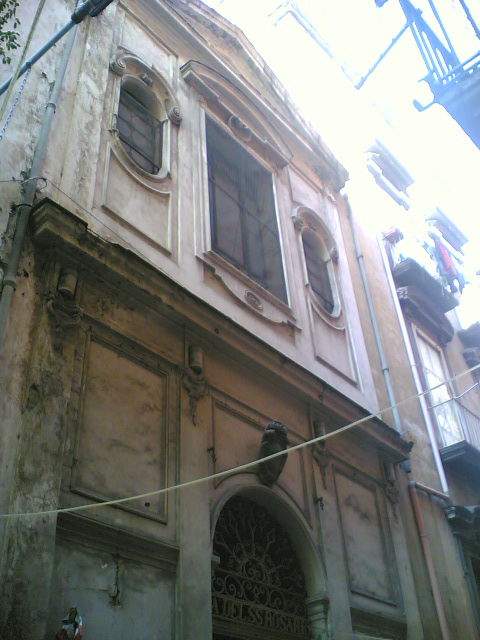
Founded in 1540, the church began when the Spanish surgeon Francisco Cuevas donated his home for conversion into a convent, alongside the Spanish nobleman Juan de Ciria Portocarrero. Donna Gerolama Colonna received it in 1559; in 1585, Fernando and Francisco Segura transferred the complex to the Spanish Carmelites, who made the small church and Cuevas’s palazzetto their base. A view by Baratta shows the original façade set slightly behind the surrounding building line. Spanish Augustinians undertook restoration from the 1630s. Between 1746 and 1759, the interior was radically reshaped, including the insertion of a distinctive mixtilinear cupolino. In 1774, the church passed to Italian Augustinians from San Giovanni a Carbonara, who rebuilt the convent and façade between 1774 and 1786. Suppressed in 1808, it was rededicated to Saint Rita in 1810; the altar was moved in 1972. The Baroque interior contains early-20th-century frescoes, funerary portraits, devotional paintings and sculpture, including works attributed to Matteo Bottiglieri and Giuseppe Simonelli.
At a glance
- Built
- 1540
- Style
- baroque architecture
- Heritage
- Italian national heritage
Ways to explore Santa Maria della Speranza
Visit on Tuesday, Wednesday, Thursday or Saturday between 9:00 and 13:00. The church is also known as Santa Rita alla Speranzella. Take time with the three chapels on each side of the nave: notable details include the funerary portraits of Francisco Sequieros y Sotomayor and Andrea Guerrero y Torres, the Madonna del Pilar and Saints, the wooden Madonna of the Rosary, and the plaster Saint Rita. In the sacristy, seek out the carved Hope on the 18th-century lavabo.
Places to stay near Santa Maria della Speranza

Live availability and prices from Stay22's partners, refreshed periodically and subject to change. Booking through these links may earn us a commission at no extra cost to you. See our privacy policy.
Cafés near Santa Maria della Speranza
Cafés near Santa Maria della Speranza loads as you scroll.
Attractions nearby
Attractions near Santa Maria della Speranza loads as you scroll.
Cities nearby
Cities nearby loads as you scroll.
More in Naples
See more of Naples.
Find great cafés, places to stay and other interesting places to visit in Naples.