Church · Naples
Santa Maria della Pazienza (Naples)
DirectionsFrom August to November 1917, San Pio da Pietrelcina attended the church and celebrated Mass there while stationed at the nearby Caserma Cesarea.
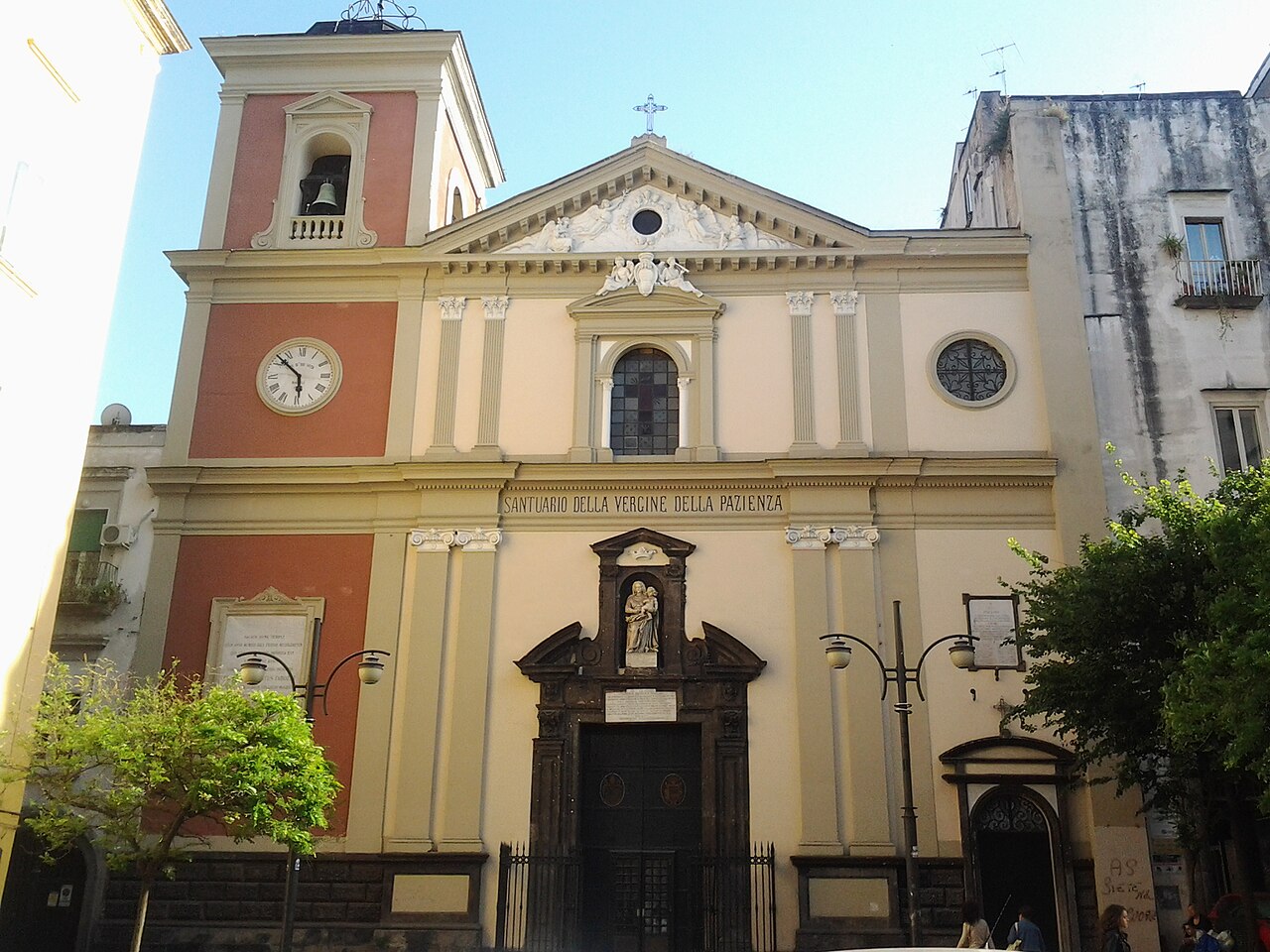
Founded in 1601, the sanctuary combines an ancient hospital with its basilical church. It is also known as Cesarea, after Annibale Cesareo, secretary of the royal chamber of Santa Chiara, who established it as his family chapel. Built in a distinctly Baroque manner, the complex was enriched between its foundation and completion in 1636. Major eighteenth-century alterations followed: Costantino Manni worked on the church in 1733, and Tommaso Eboli undertook further changes two years later. The church is recognised as Italian national heritage. Its interior is organised around a broad nave, with five chapels on each side and a presbytery, creating a setting for a substantial artistic collection. Among its later changes, the dismantling after the Second Vatican Council of the seventeenth-century high altar—made from polychrome marble and precious stones—altered one of the interior’s principal features. The surviving funerary monument to Cesareo, made by Michelangelo Naccherino in 1613, remains the chief sculptural work.
At a glance
- Style
- baroque architecture
- Heritage
- Italian national heritage
Ways to explore Santa Maria della Pazienza (Naples)
Look first to the coffered ceiling for Giuseppe Pozzovivo’s Rest on the Flight into Egypt, then turn to the counter-façade for Oronzo Malinconico’s monumental Massacre of the Innocents. In the side chapels, presbytery, spaces above the chapel arches, and between the nave windows, compare works by Giovan Battista Lama, Nicola Maria Rossi, Lorenzo De Caro, Hendrick van Somer, and others. Seek the wooden Saint Anne and the Virgin Child attributed to Giacomo Colombo, and Raphael and Tobias by Francesco Citarelli.
Places to stay near Santa Maria della Pazienza (Naples)

Live availability and prices from Stay22's partners, refreshed periodically and subject to change. Booking through these links may earn us a commission at no extra cost to you. See our privacy policy.
Cafés near Santa Maria della Pazienza (Naples)
Cafés near Santa Maria della Pazienza (Naples) loads as you scroll.
Attractions nearby
Attractions near Santa Maria della Pazienza (Naples) loads as you scroll.
Cities nearby
Cities nearby loads as you scroll.
More in Naples
See more of Naples.
Find great cafés, places to stay and other interesting places to visit in Naples.