Church · Naples
Santa Maria Assunta dei Pignatelli
DirectionsIts small forecourt contains an ancient Roman statue of the Nile God, an arresting survival beside this former Pignatelli family chapel.
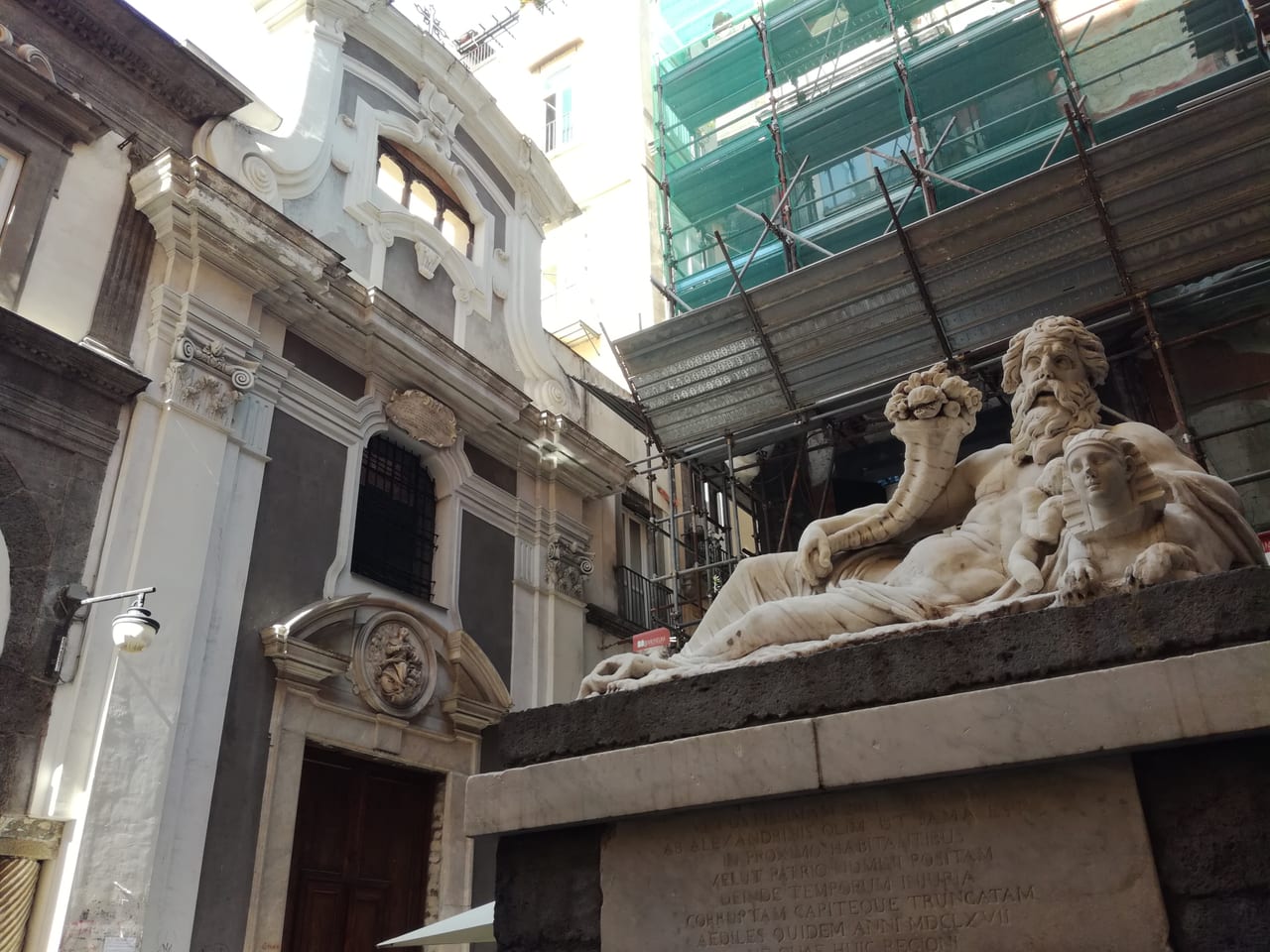
Santa Maria Assunta dei Pignatelli began in the 14th century as a private chapel attached to Palazzo Pignatelli di Toritto, built by the Pignatelli family from Toritto. The early church is attributed to Andrea Ciccione. The church’s form changed substantially through reconstructions and enlargement in 1477 and 1736, while the interior acquired a Baroque character. In the second half of the 18th century, Fedele Fischetti frescoed the interior and painted the Assumption for the main altar. The Renaissance tomb of Carlo Pignatelli, by Angelo Aniello Fiore, stands to the altar’s left. A painting by Bartolomè Ordonez formerly occupied the right side; it is now in the Capodimonte Museum. The chapel of Carlo Pignatelli was designed by Malvito in 1506–1507, and the chapel of Caterina Pignatelli by Diego de Silóe in 1513–14. Both later received Baroque refurbishments. Deconsecrated and in need of restoration, the church remains a compact record of Naples’ private devotion, Renaissance sculpture and later theatrical decoration.
At a glance
- Built
- 1300
- Style
- baroque architecture
Ways to explore Santa Maria Assunta dei Pignatelli
Approach along Via Nilo and pause before entering to take in the church’s relationship with the small piazza and the neighbouring Santi Marco e Andrea a Nilo. If access is available, look first toward the main altar for Fischetti’s Assumption, then compare the tomb of Carlo Pignatelli with the two restored chapels. Compare the Renaissance elements with later Baroque refurbishments, and allow for limited access while restoration remains necessary.
Places to stay near Santa Maria Assunta dei Pignatelli

Live availability and prices from Stay22's partners, refreshed periodically and subject to change. Booking through these links may earn us a commission at no extra cost to you. See our privacy policy.
Cafés near Santa Maria Assunta dei Pignatelli
Cafés near Santa Maria Assunta dei Pignatelli loads as you scroll.
Attractions nearby
Attractions near Santa Maria Assunta dei Pignatelli loads as you scroll.
Cities nearby
Cities nearby loads as you scroll.
More in Naples
See more of Naples.
Find great cafés, places to stay and other interesting places to visit in Naples.