Museum · Naples
Palace of Capodimonte
DirectionsThe palace’s monumental staircase follows a distinctive C-shaped plan, a design associated with Giovanni Antonio Medrano’s Teatro di San Carlo.
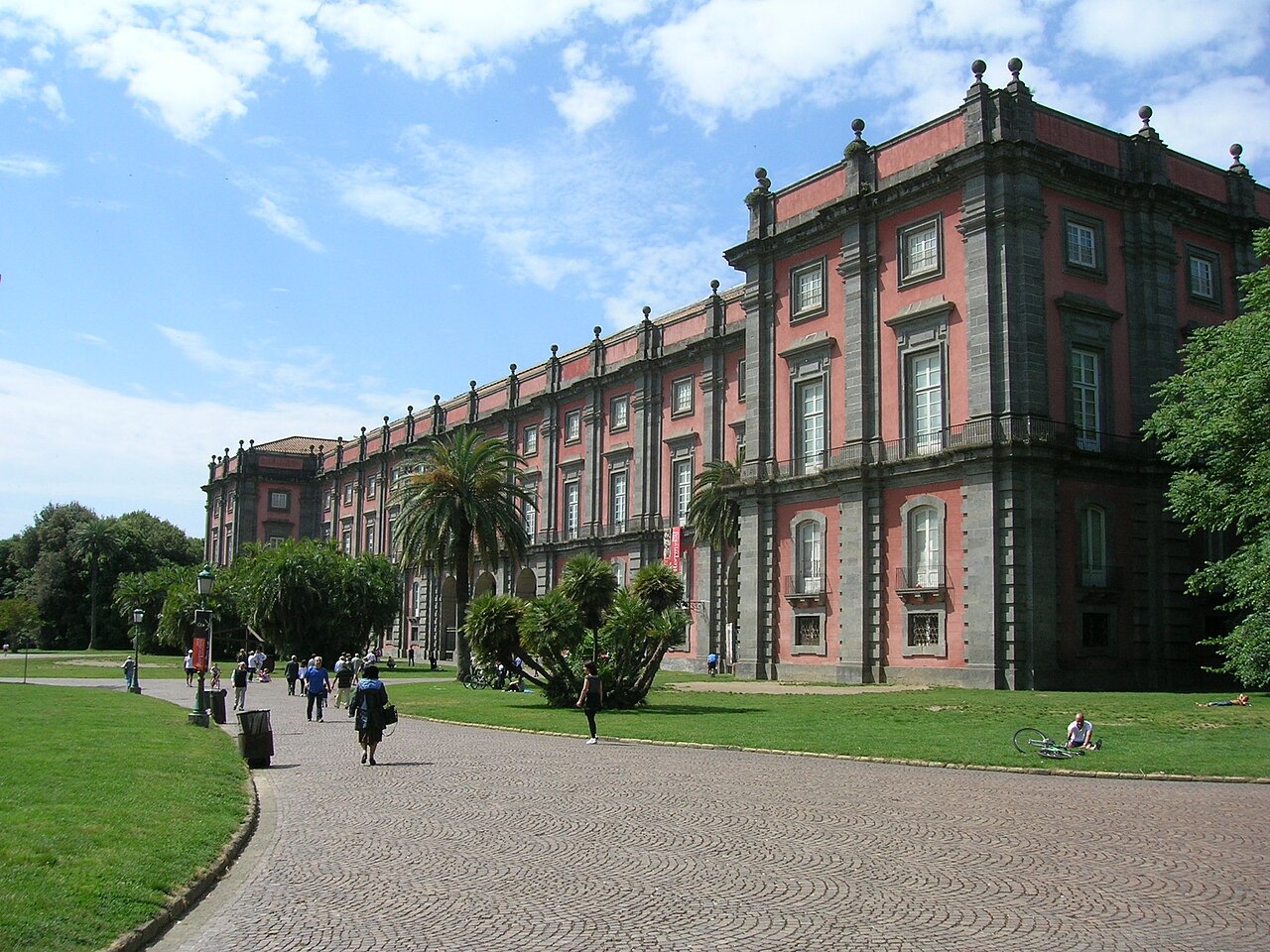
Charles VII of Naples and Sicily began Capodimonte in 1738, first imagining a hunting lodge before choosing a grand palace for his court and the Farnese Collection inherited from his mother, Elisabetta Farnese. Construction, complicated by transporting piperno from Pianura, continued for more than a century. The first section opened in 1758; Ferdinando Fuga later directed the works and grounds, while Antonio Niccolini oversaw additions for the Bourbon royal family. The palace was finally completed in 1840, followed by a gallery for contemporary art. The palace endured upheaval after the Parthenopaean Republic of 1799: Ferdinand fled with prized objects, French forces looted what remained, and during the occupation Joseph Bonaparte and Joachim Murat lived there. The collection was moved to the Naples National Archaeological Museum before returning in 1950, when Capodimonte became a museum. Savoy additions included weapons and new acquisitions. The royal apartments retain eighteenth-century furnishings, porcelain and maiolica; the adjacent Capodimonte porcelain factory began in 1743. The surrounding Bosco di Capodimonte remains a park and former royal hunting preserve.
At a glance
- Built
- 1742
- Architect
- Antonio Canevari
- Style
- baroque architecture
- Height
- 30 m
Ways to explore Palace of Capodimonte
Begin with the National Gallery on the first and second floors, allowing time for its Neapolitan painting and Farnese holdings. Then inspect the royal apartments, especially the antique furniture, porcelain and maiolica. Examine Maria Amalia of Saxony’s boudoir, the Roman marble floor from Capri, and the palace’s decorative details. Visit the Bosco di Capodimonte, whose paths and event spaces provide a different scale from the galleries; concerts are held there.
Places to stay near Palace of Capodimonte

Live availability and prices from Stay22's partners, refreshed periodically and subject to change. Booking through these links may earn us a commission at no extra cost to you. See our privacy policy.
Cafés near Palace of Capodimonte
Cafés near Palace of Capodimonte loads as you scroll.
Attractions nearby
Attractions near Palace of Capodimonte loads as you scroll.
Cities nearby
Cities nearby loads as you scroll.
More in Naples
See more of Naples.
Find great cafés, places to stay and other interesting places to visit in Naples.