Church · Naples
Gesù Vecchio, Naples
DirectionsBehind the high altar, a double ramp lined with stucco angels rises to the great apse ensemble and its venerated wooden Immaculate Conception.
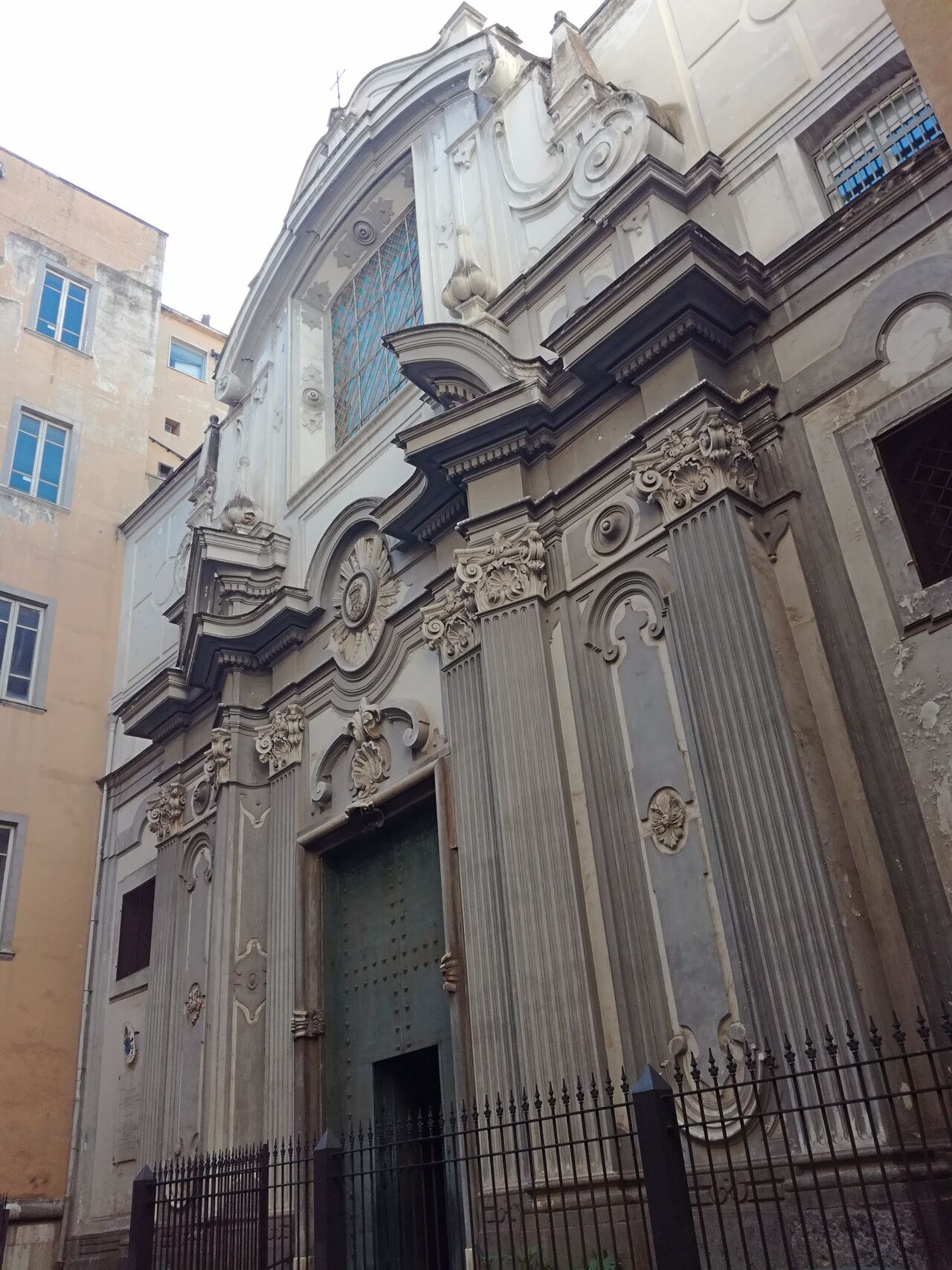
Founded in 1554, the complex grew alongside the Jesuit college of the Salvatore. Giovanni Tristano directed the early work, followed by Giovanni De Rosis and Giuseppe Valeriano; the refectory opened in 1578. Cosimo Fanzago later shaped the two transept chapels and their connecting works, while Giovan Domenico Vinaccia designed the late-Baroque façade in 1688. A further transformation came in the mid-eighteenth century under Giuseppe Astarita. The Jesuits were expelled between 1767 and 1777, and the complex became a royal boarding lycée before housing the University of Naples. It was incorporated into the university complex around the turn of the twentieth century and damaged by the 1980 earthquake. The Latin-cross interior has one nave and four chapels on each side, with works by Marco Pino, Andrea Malinconico, Battistello Caracciolo, Francesco Solimena and others. It became a minor basilica in 1958 and forms part of the UNESCO World Heritage Site.
At a glance
- Built
- 1608
- Architect
- Pietro Provedi
- Style
- baroque architecture
- Heritage
- part of UNESCO World Heritage Site
Ways to explore Gesù Vecchio, Naples
Start with the slightly convex Baroque façade and its large rectangular window, then read the interior as a sequence of chapels rather than a single vista. Compare the marble work in the San Francesco Borgia chapel with the Fanzago transept spaces. In the old sacristy, look for the Adoration of the Magi and cases of historic wooden statues; the new sacristy contains Francesco De Mura’s painting and a nativity ensemble with figures from the seventeenth to nineteenth centuries.
Places to stay near Gesù Vecchio, Naples

Live availability and prices from Stay22's partners, refreshed periodically and subject to change. Booking through these links may earn us a commission at no extra cost to you. See our privacy policy.
Cafés near Gesù Vecchio, Naples
Cafés near Gesù Vecchio, Naples loads as you scroll.
Attractions nearby
Attractions near Gesù Vecchio, Naples loads as you scroll.
Cities nearby
Cities nearby loads as you scroll.
More in Naples
See more of Naples.
Find great cafés, places to stay and other interesting places to visit in Naples.