Museum · Naples
Cappella Sansevero
DirectionsGiuseppe Sanmartino’s 1753 Veiled Christ is famed for marble that appears to let a translucent shroud fall across the body beneath it.
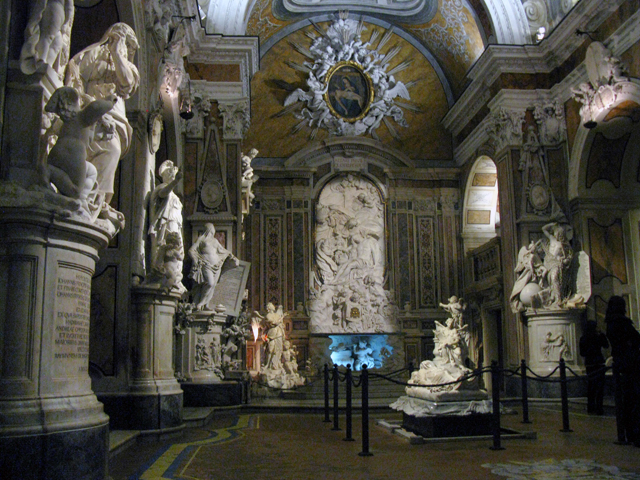
Alessandro di Sangro converted it into a family burial chapel in 1613; Raimondo di Sangro, Prince of Sansevero, later gave the building its definitive form and incorporated Masonic symbols. A passage linked it to the Sansevero palace until 1888. Originally dedicated to Santa Maria della Pietà, it acquired the name Pietatella after a prisoner reportedly saw an image of the Virgin there, an episode recorded by Cesare d’Engenio Caracciolo in 1623. Its nearly thirty artworks include monuments and allegorical sculptures by Antonio Corradini, Francesco Queirolo and Francesco Celebrano. Francesco Maria Russo painted the ceiling’s Glory of Paradise in 1749. The original black-and-white labyrinth floor, associated with good and evil and Masonic initiation, was largely replaced in 1901. In the basement, Giuseppe Pesce’s Madonna con Bambino, painted around 1750 with Raimondo’s wax-based technique, was presented to Charles Bourbon, king of Naples.
At a glance
- Built
- 1593
- Style
- baroque architecture
- Heritage
- Italian national heritage
Ways to explore Cappella Sansevero
Stand centrally to take in the chapel’s vertical composition, then move around the interior to compare the sculptors’ treatment of veils, nets and drapery. Give particular attention to the Veiled Truth, Release from Deception and Veiled Christ, and look for the smaller allegorical works, angels and family monuments arranged between them. The ceiling’s Glory of Paradise rewards a separate upward view, while the little choir and side altars add details easily missed from the centre.
Places to stay near Cappella Sansevero

Live availability and prices from Stay22's partners, refreshed periodically and subject to change. Booking through these links may earn us a commission at no extra cost to you. See our privacy policy.
Cafés near Cappella Sansevero
Cafés near Cappella Sansevero loads as you scroll.
Attractions nearby
Attractions near Cappella Sansevero loads as you scroll.
Cities nearby
Cities nearby loads as you scroll.
More in Naples
See more of Naples.
Find great cafés, places to stay and other interesting places to visit in Naples.