Street & promenade · Paris
Place de la Bastille
DirectionsBeneath its traffic and paving, the Bastille’s former footprint survives in bronze studs and two foundation remnants visible inside the Métro station.
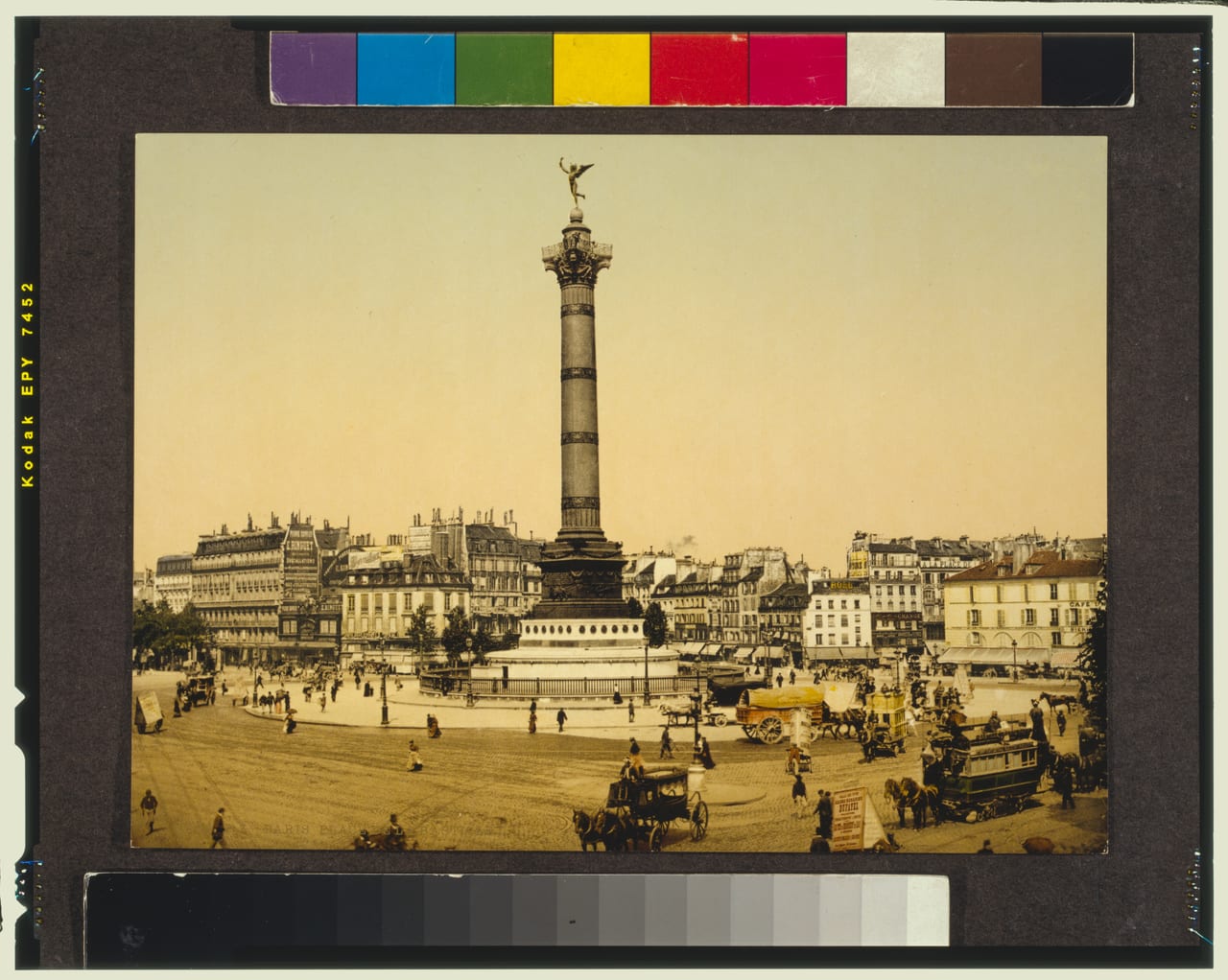
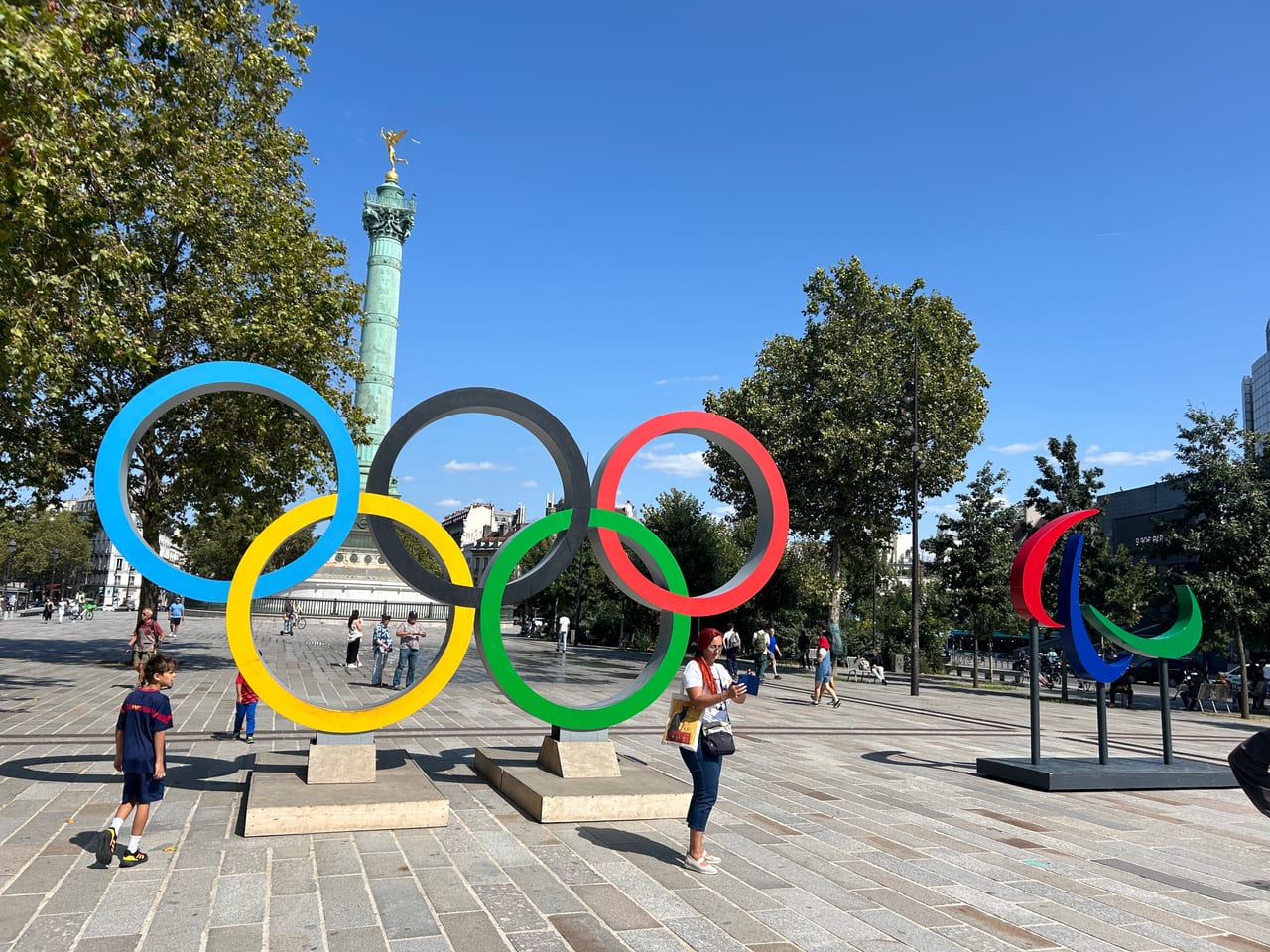
Photograph 1 of 6 of Place de la Bastille
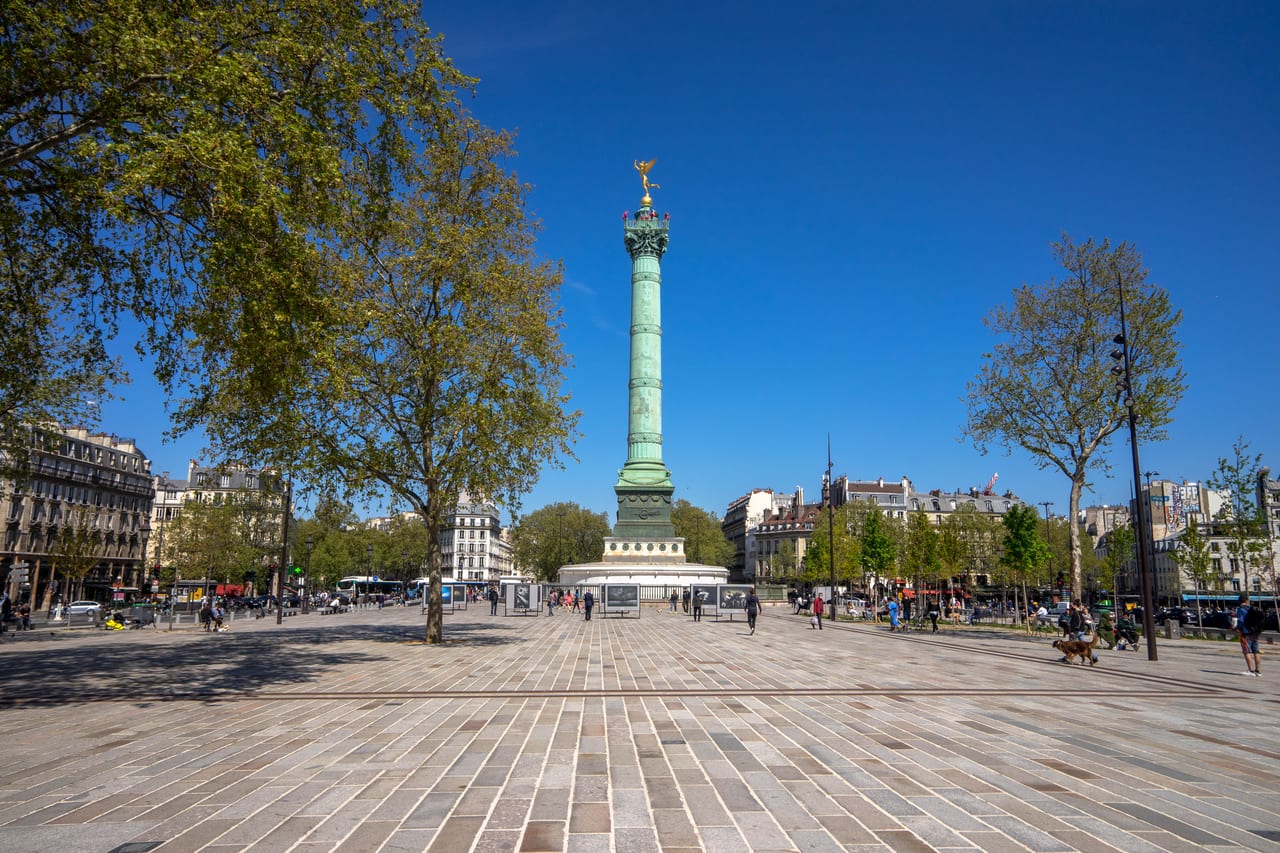
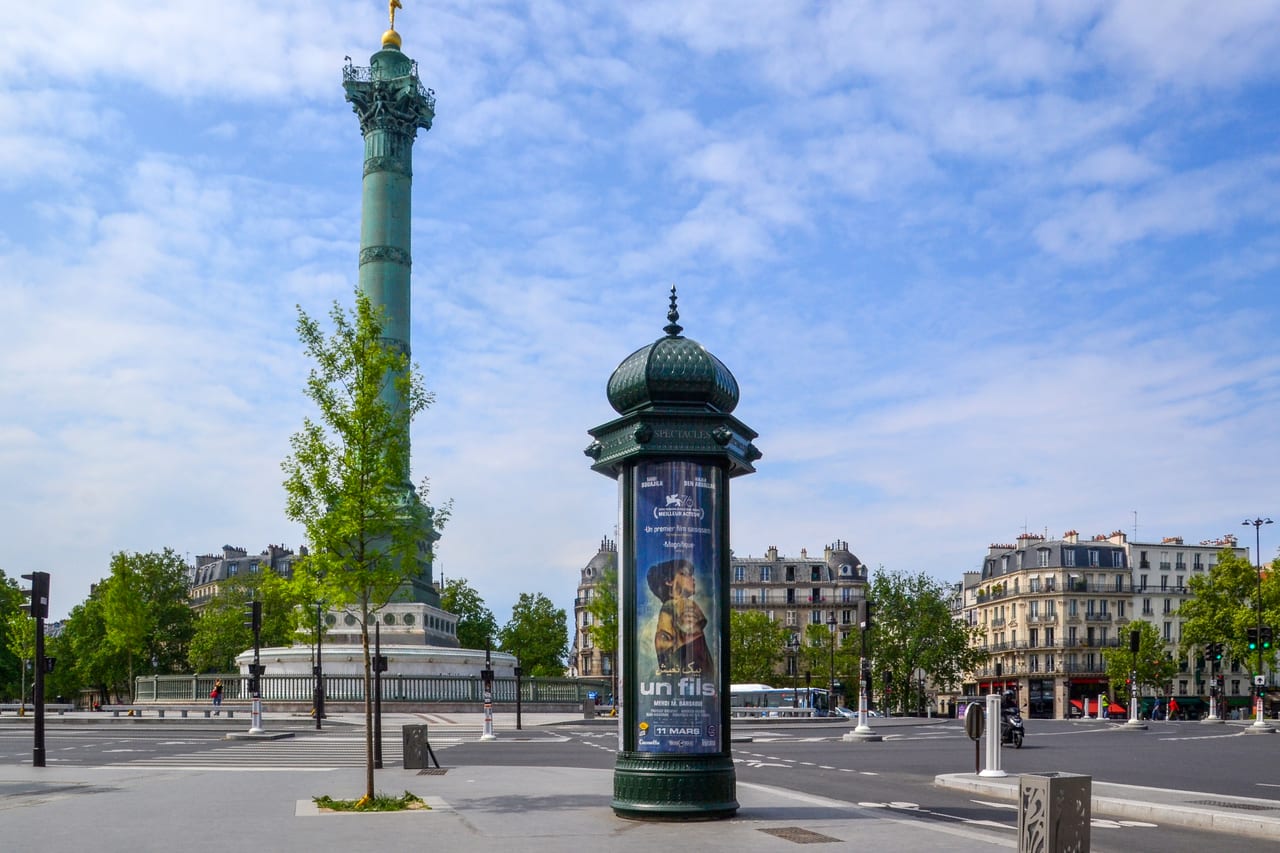
The site began as a fortified gate defending the rue Saint-Antoine. Hugues Aubriot laid the first stone of a much larger fortress in 1370 on Charles V’s orders; Charles VI added four towers, massive walls and a moat around 1383, while Henri II’s strengthened enceinte was completed in 1559. Used as a prison under Louis XI, it became a state prison under Richelieu. Its assault on 14 July 1789 by residents of the faubourg Saint-Antoine is generally regarded as the Revolution’s first act, and demolition continued until 14 July 1790. Plans for a replacement place evolved from a proposed Louis XVI scheme to the unfinished Place de la Liberté, a 1793 fountain and the extraordinary 1808 project for a 24-metre bronze elephant. Jean-Antoine Alavoine began it in 1833; only Pierre-Charles Bridan’s plaster model was completed, later remembered in Victor Hugo’s Les Misérables. The surviving centrepiece is the July Column, built between 1833 and 1840 for the victims of the Three Glorious Days of 1830, with Auguste Dumont’s Génie de la Liberté above a Corinthian shaft. The former station, open from 1859 to 1969, gave way to the Opéra Bastille in 1984. A 2019–2021 redesign added pedestrian space and cycle routes, amid strong controversy.
At a glance
- Built
- 1792
Ways to explore Place de la Bastille
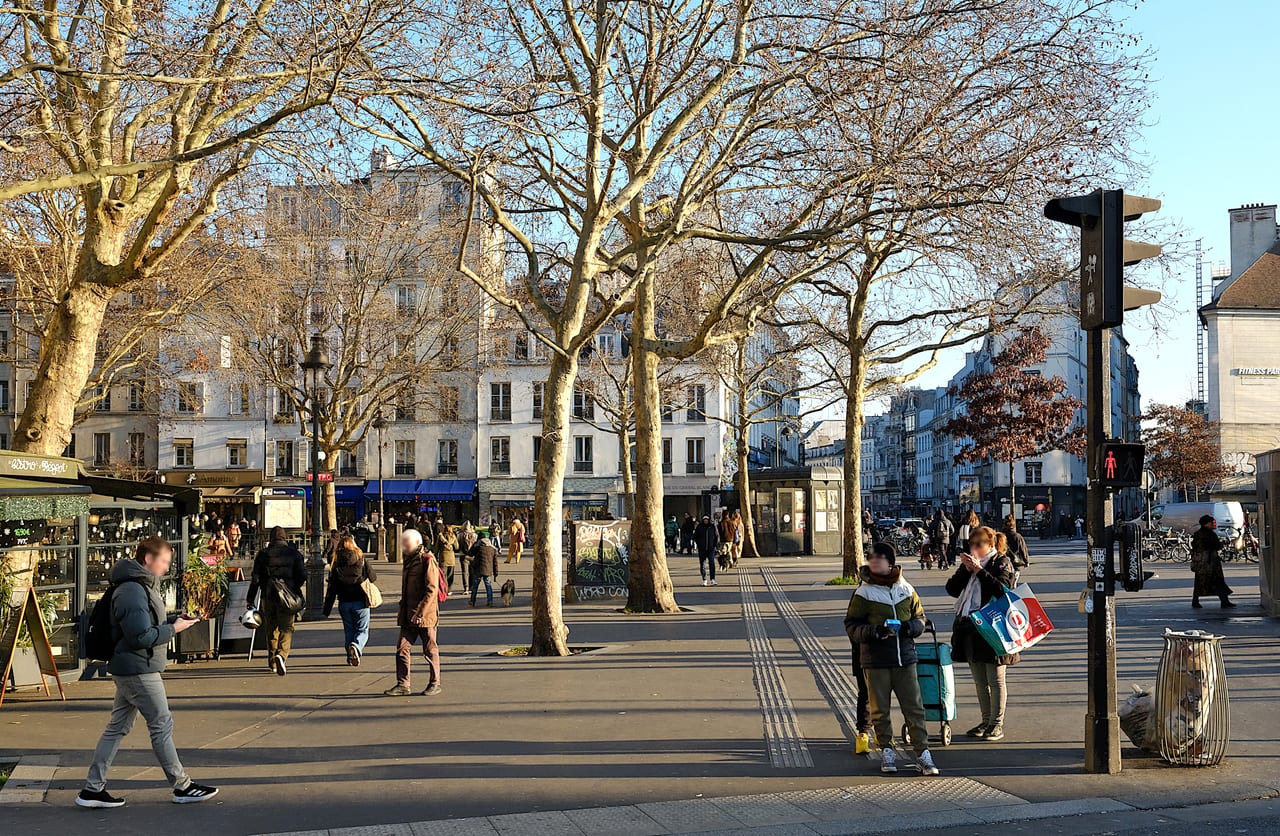
Begin at the July Column, then circle the open traffic layout to read the surrounding streets as routes towards the Arsenal, the rue Saint-Antoine and the Faubourg-Saint-Antoine. Use the new staircase to reach the Arsenal basin and follow the canal-side walk. The Opéra Bastille is immediately behind the eastern edge. The Métro, served by lines 1, 5 and 8, makes a convenient arrival point; cafés, restaurants, cinemas and nightclubs animate the area particularly on Friday and Saturday evenings.
Places to stay near Place de la Bastille
Live availability and prices from Stay22's partners, refreshed periodically and subject to change. Booking through these links may earn us a commission at no extra cost to you. See our privacy policy.
Cafés near Place de la Bastille
Cafés near Place de la Bastille loads as you scroll.
Attractions nearby
Attractions near Place de la Bastille loads as you scroll.
Cities nearby
Cities nearby loads as you scroll.
More in Paris
See more of Paris.
Find great cafés, places to stay and other interesting places to visit in Paris.