Fountain · Paris
Medici Fountain
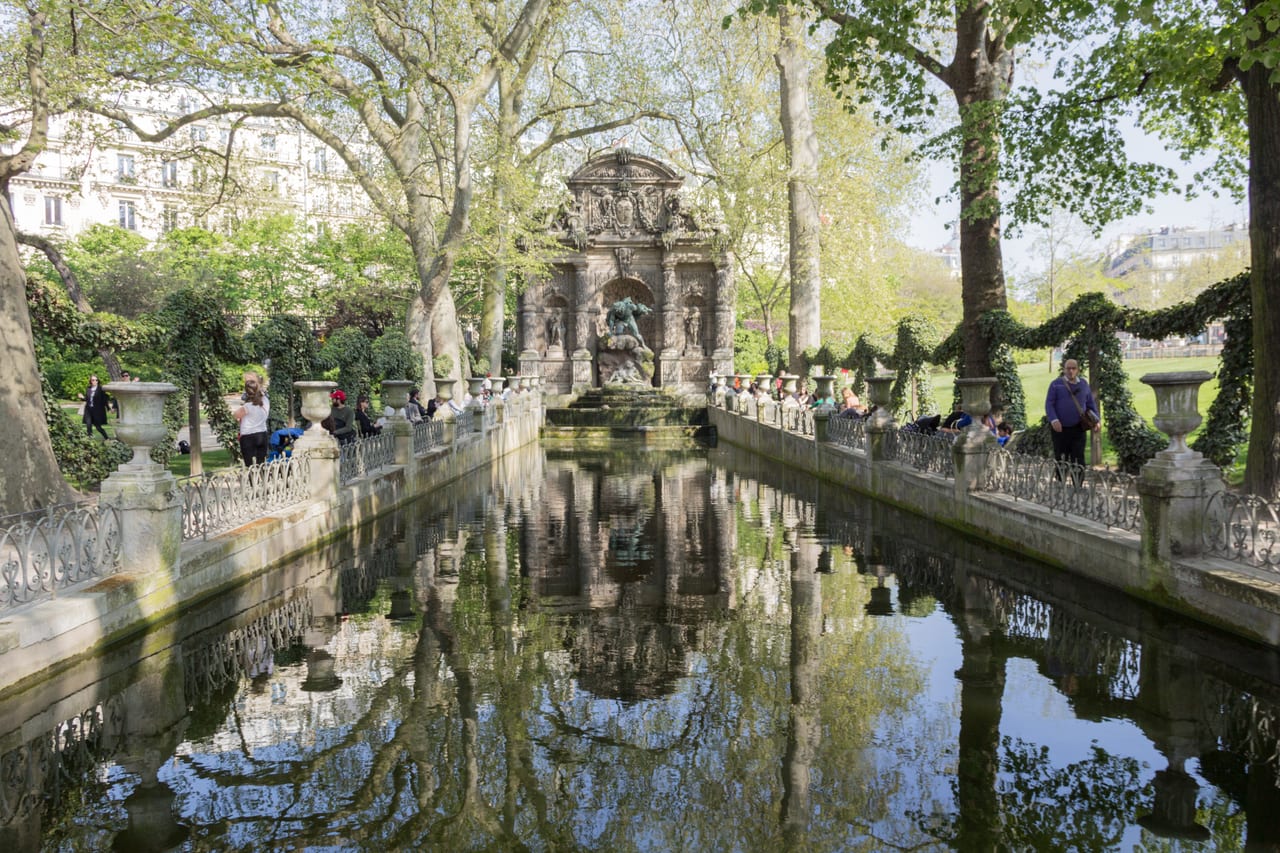
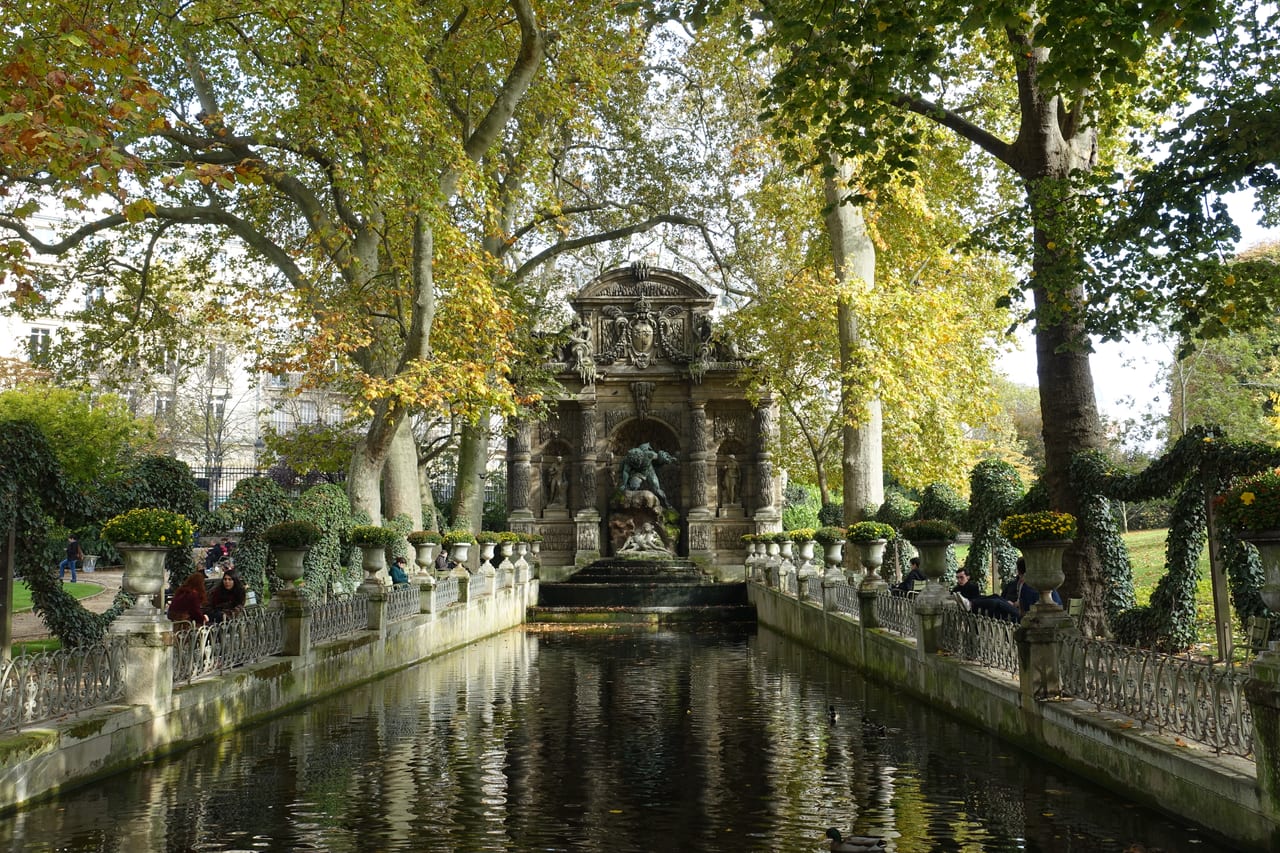
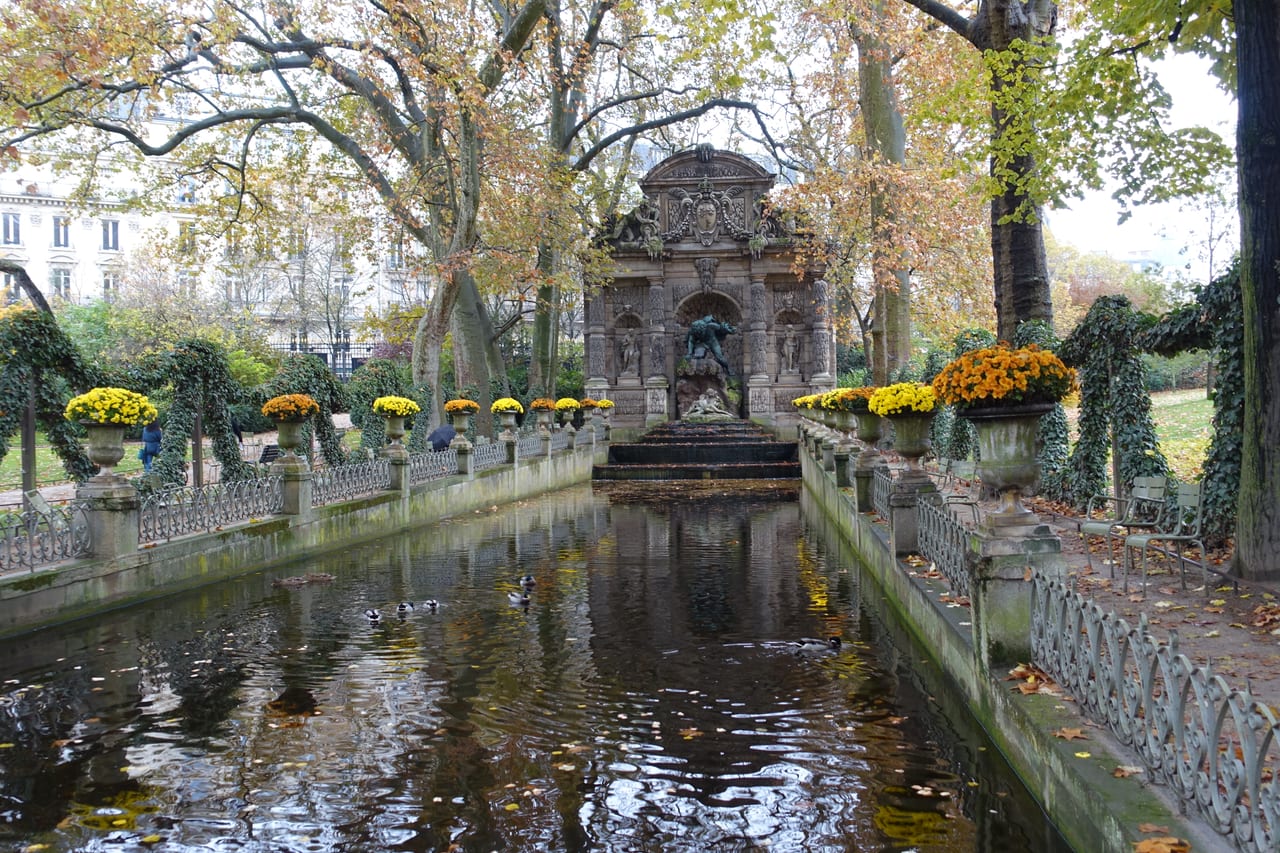
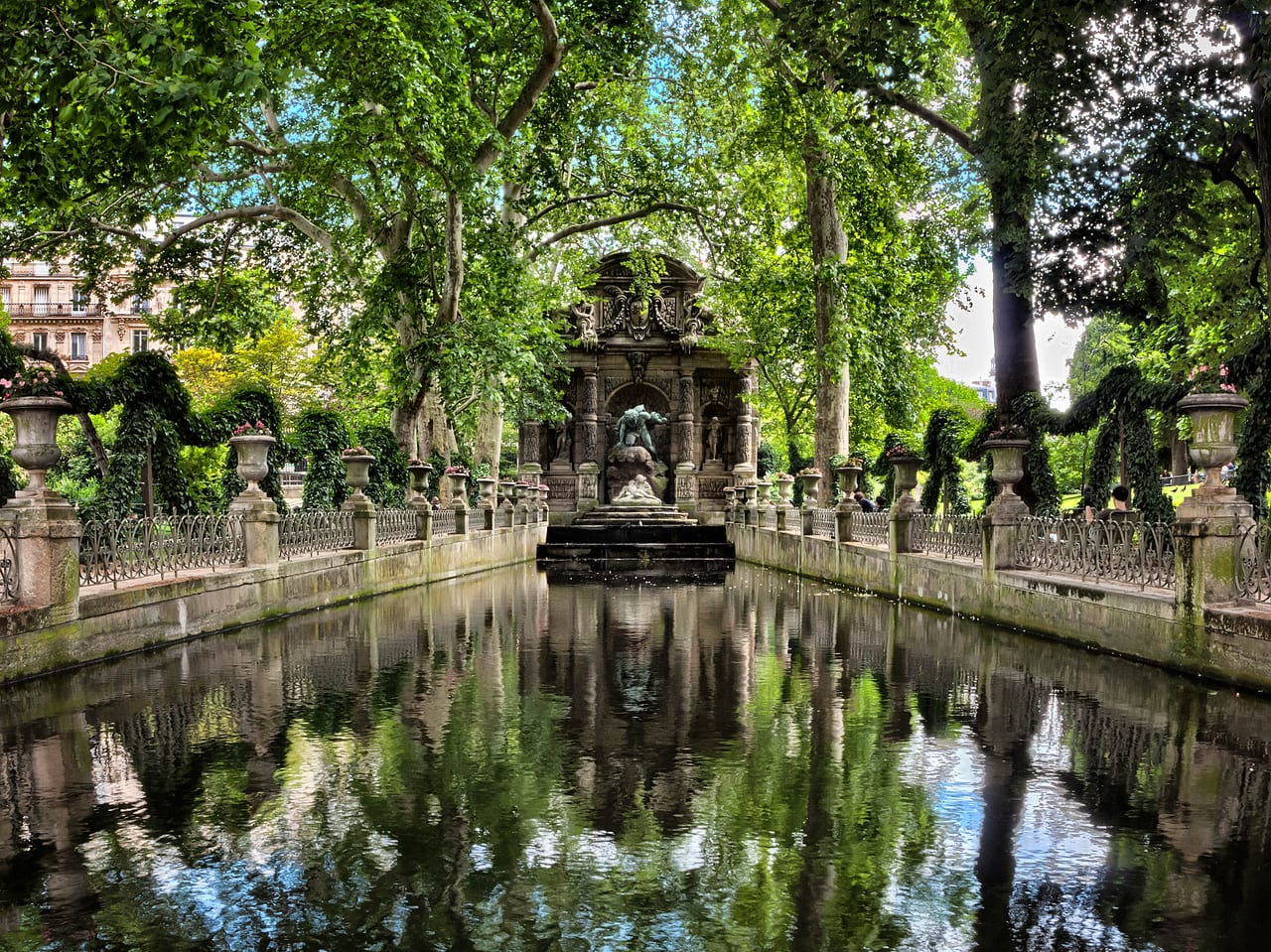
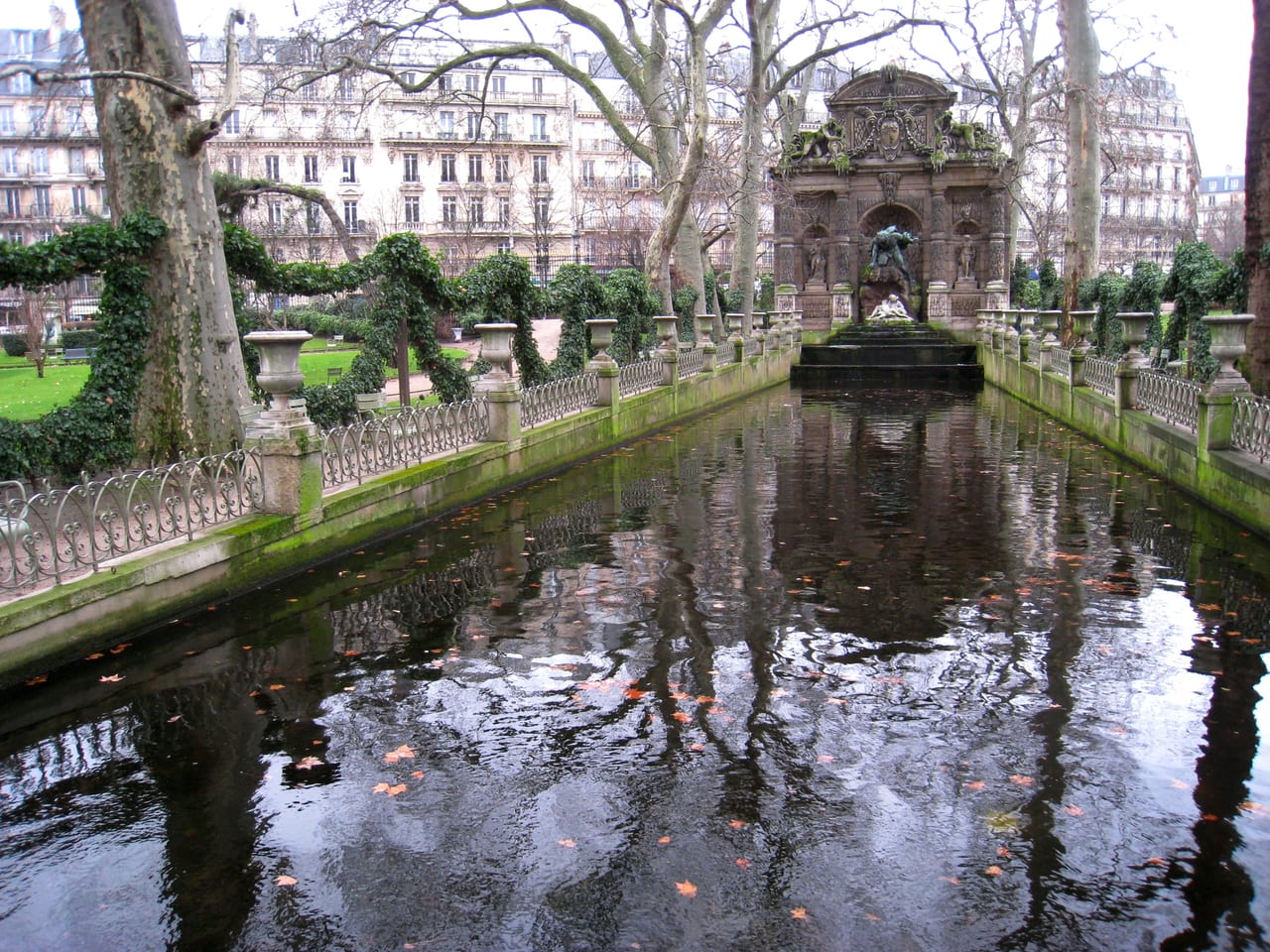
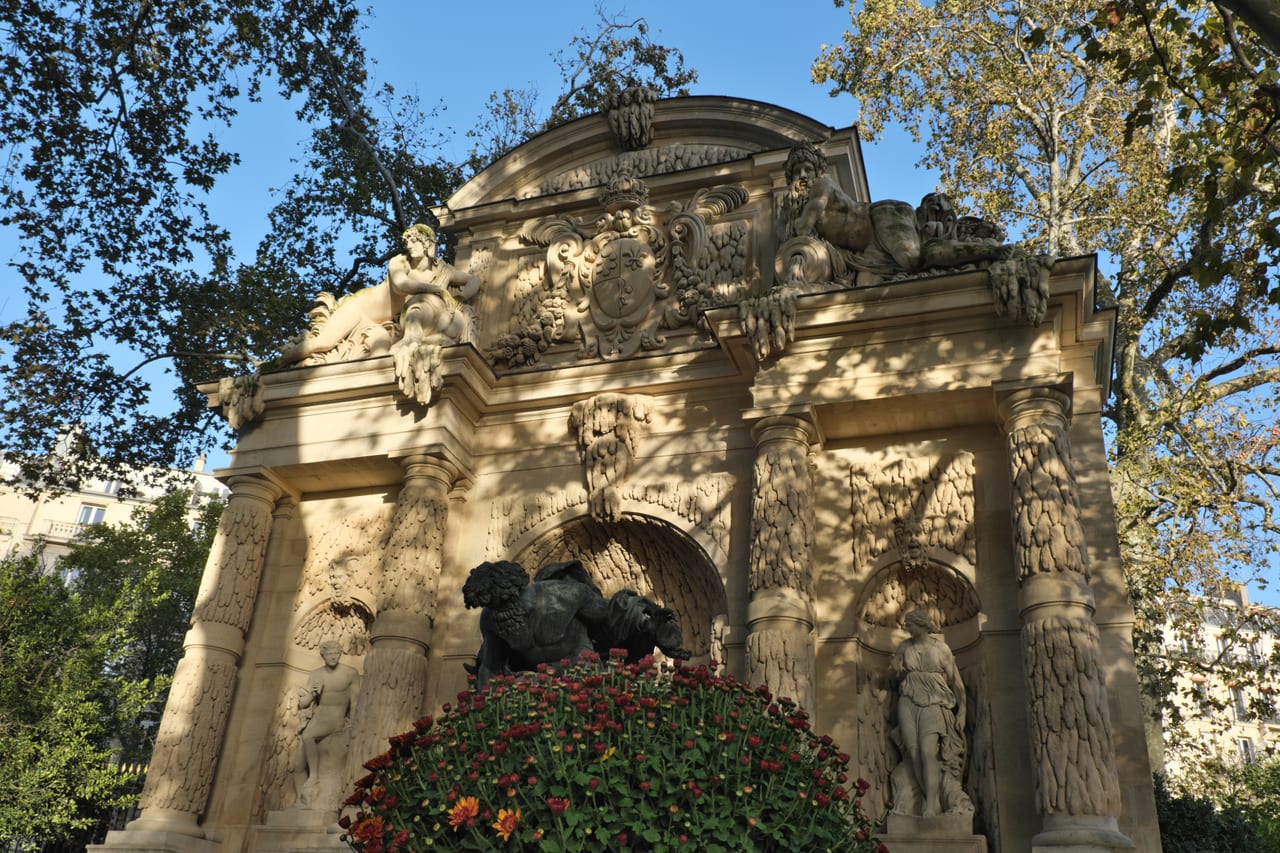
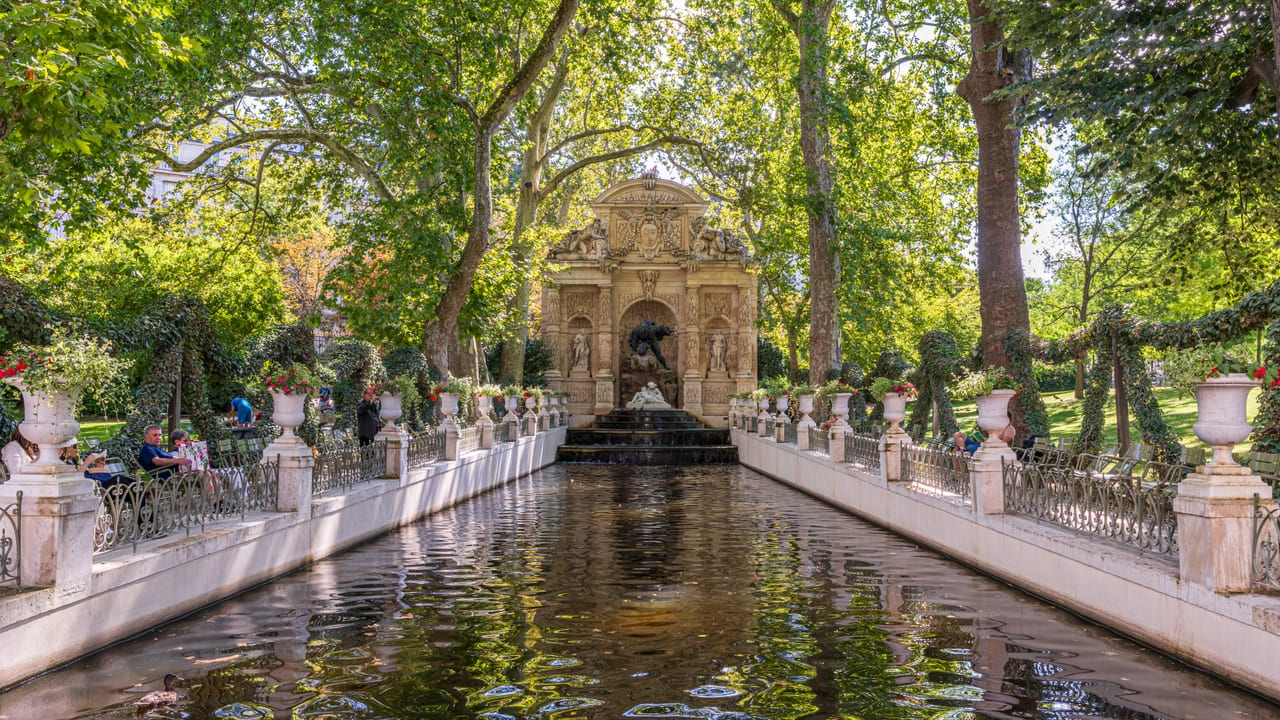
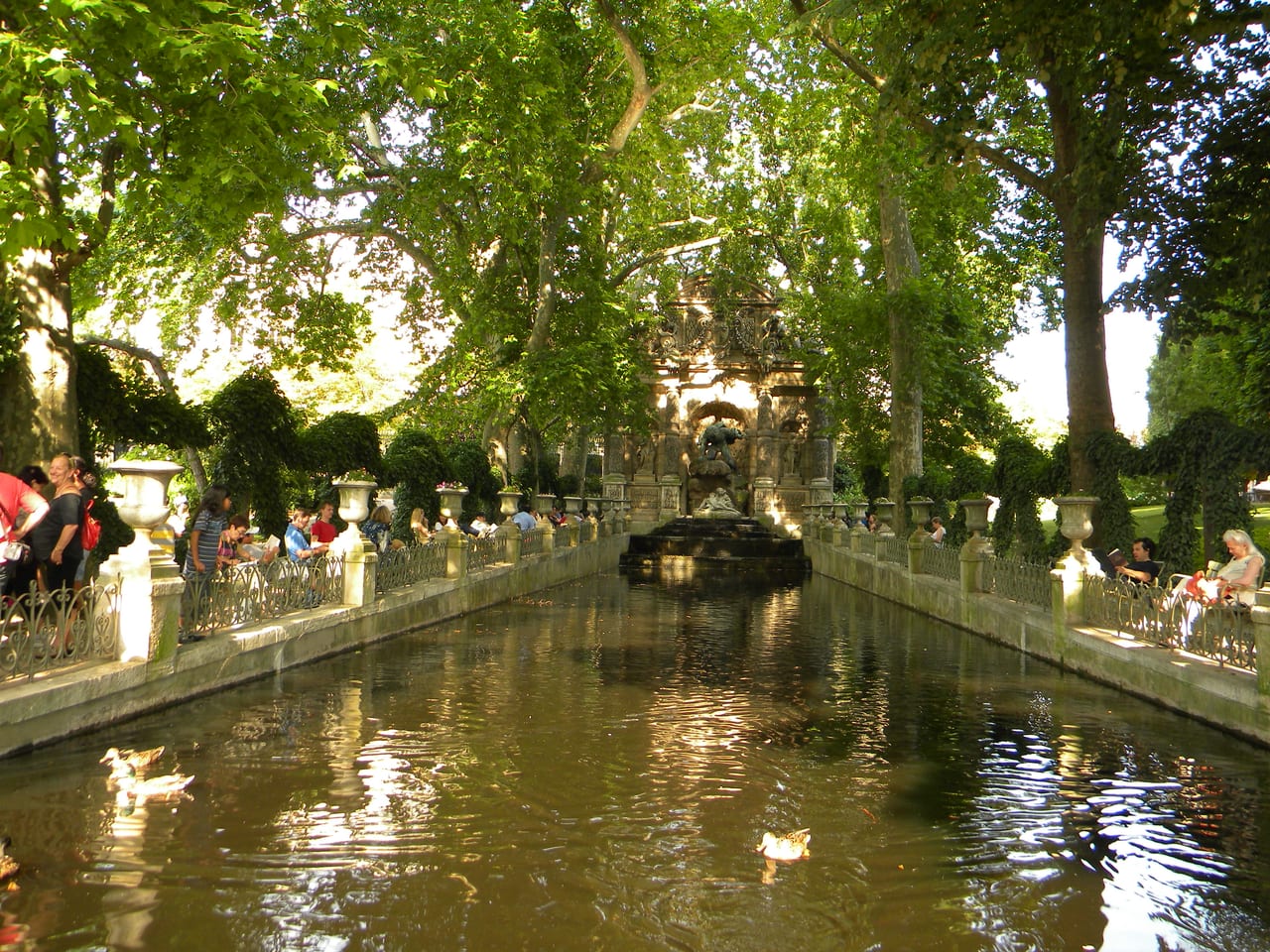
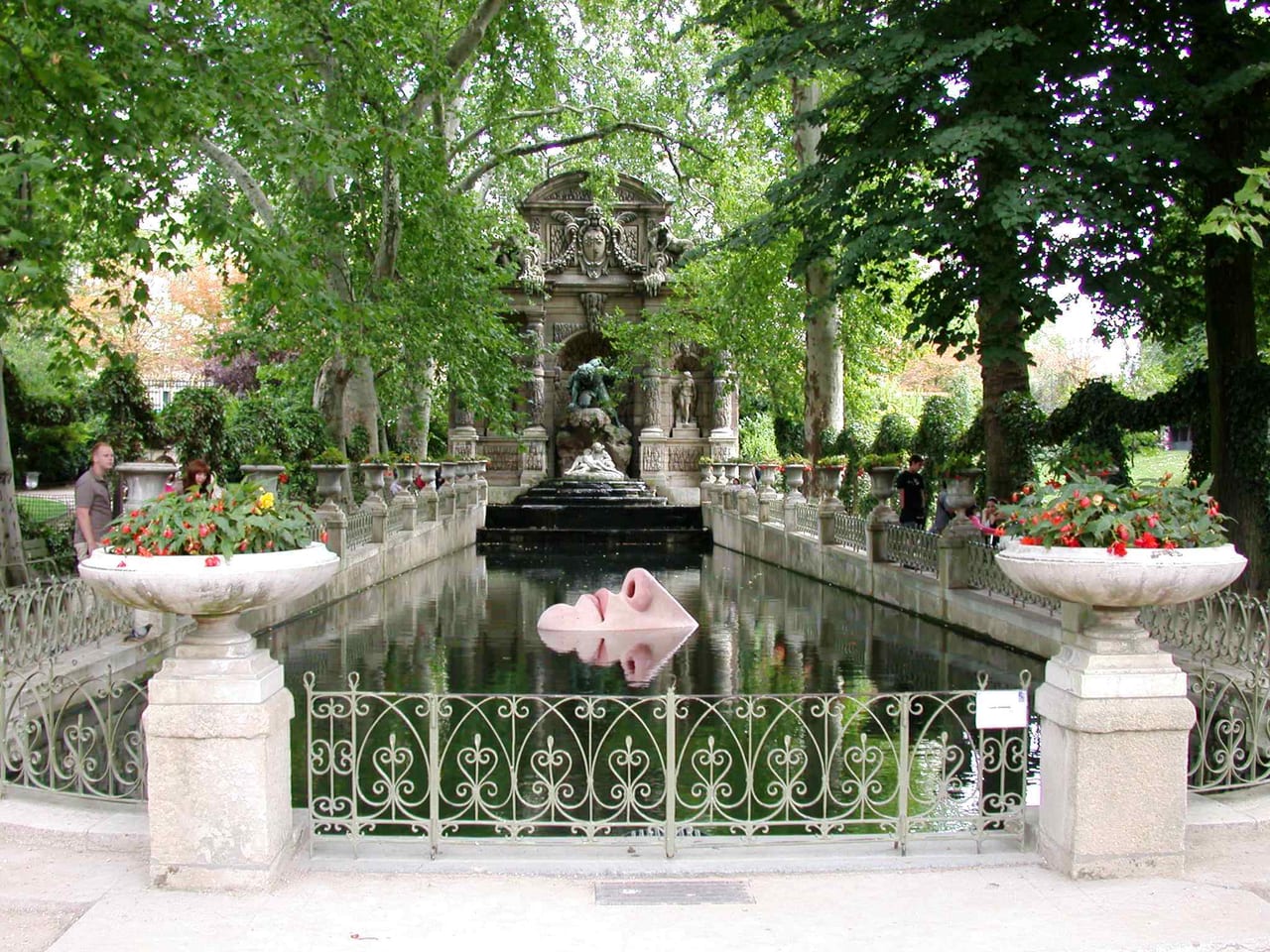
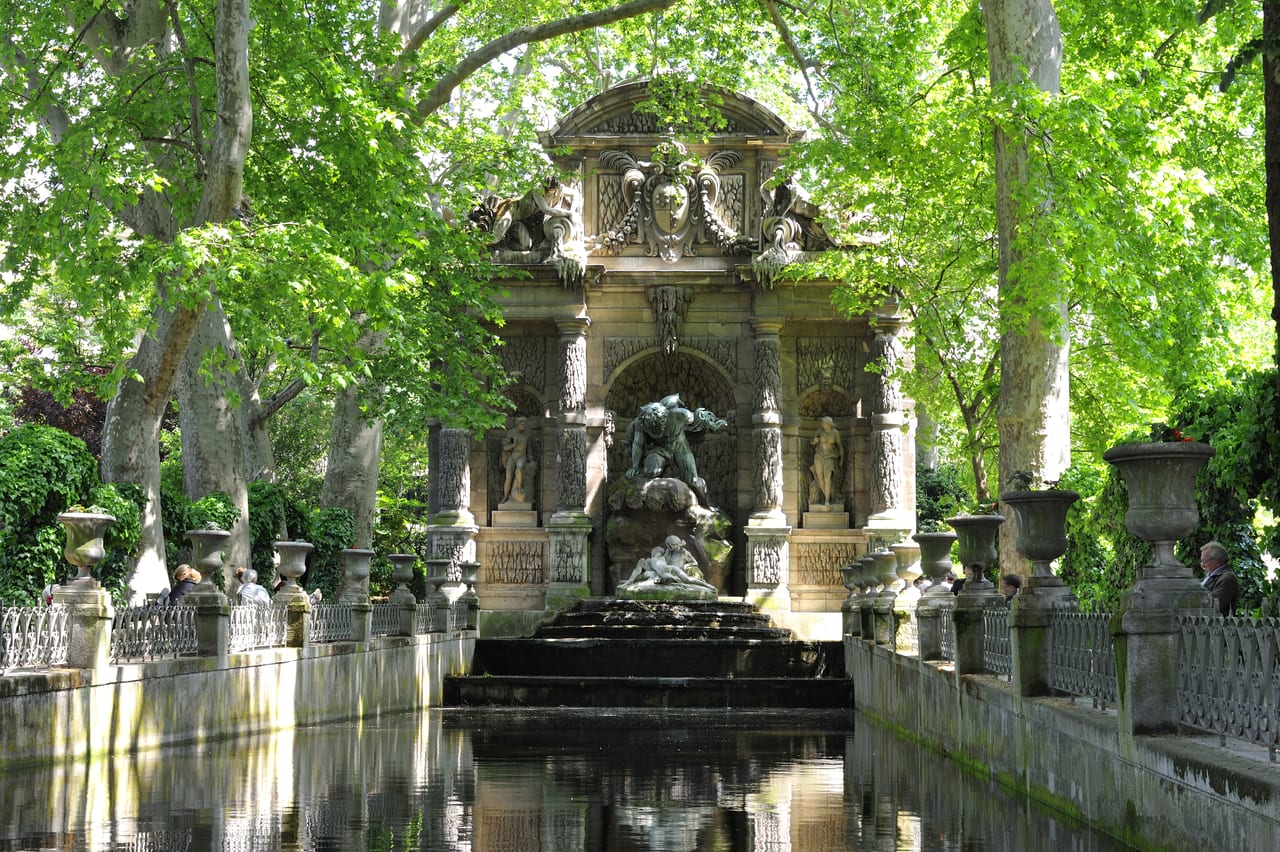
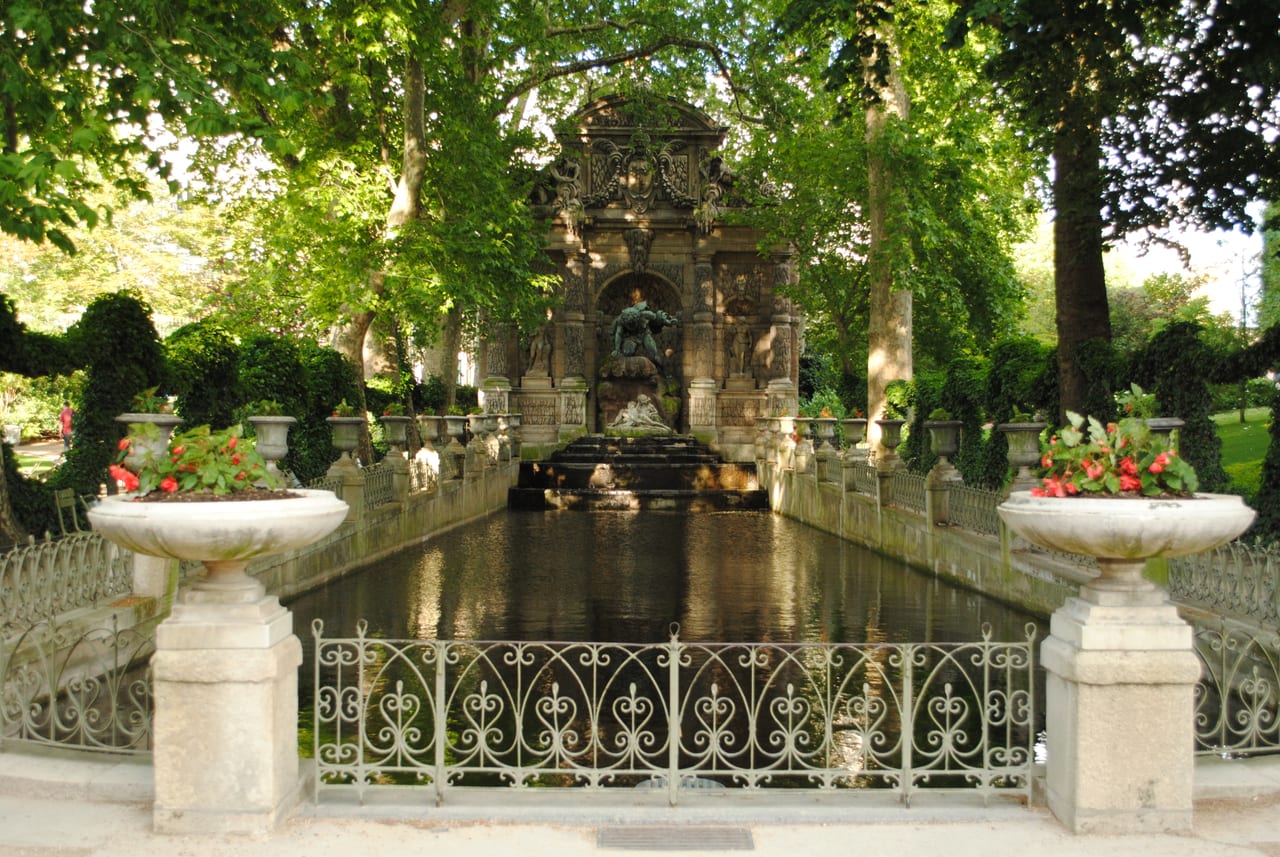
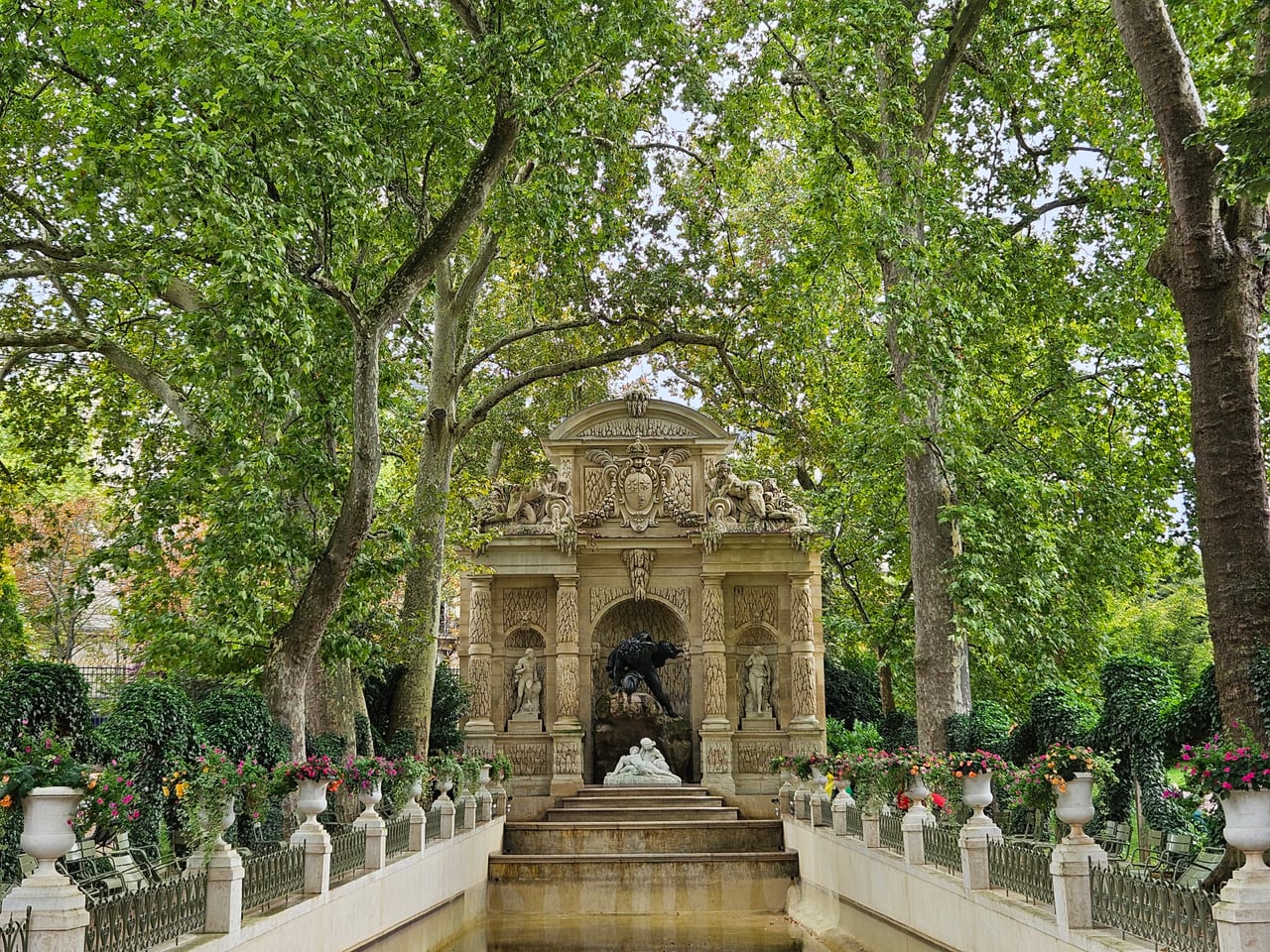
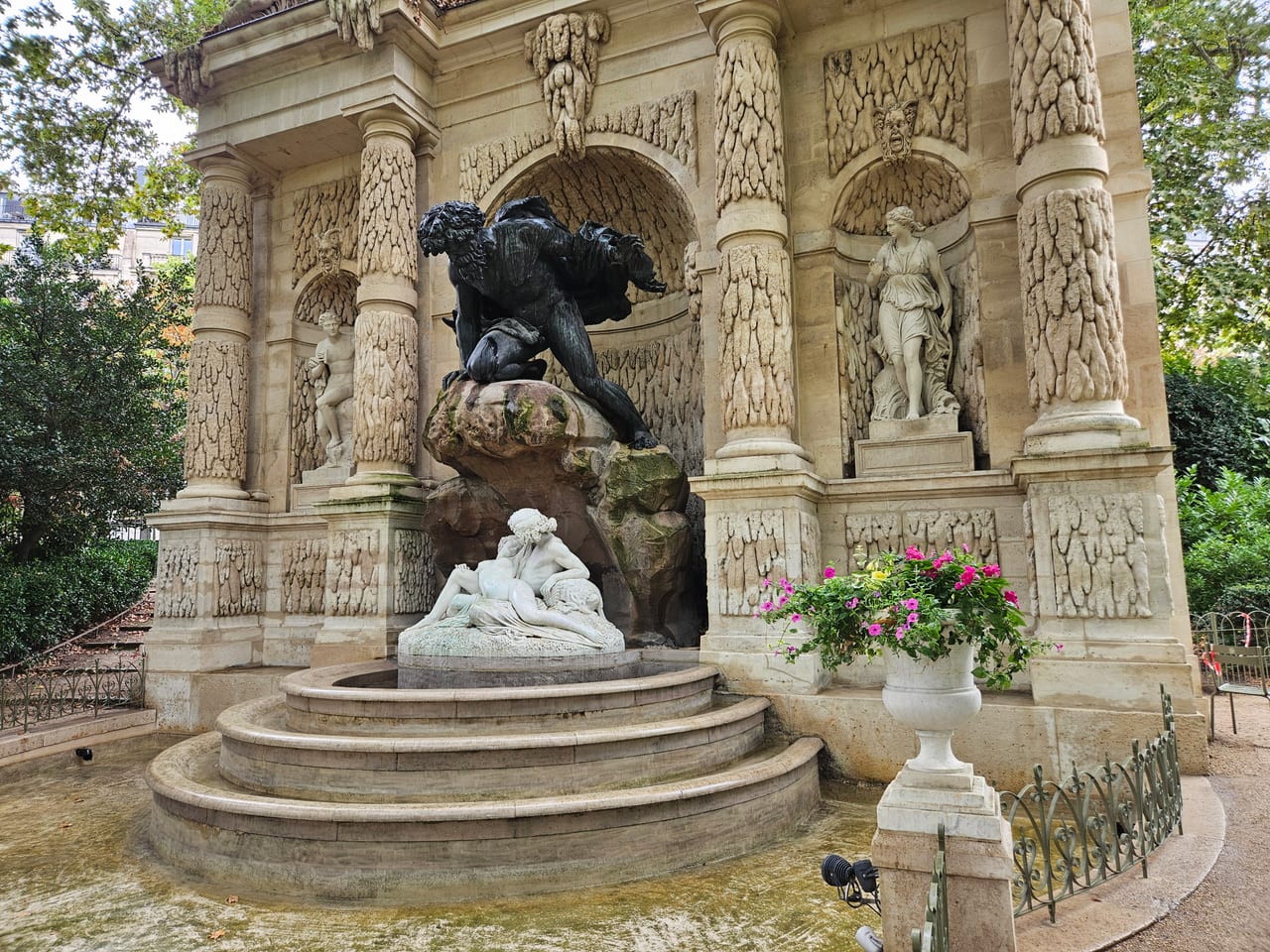
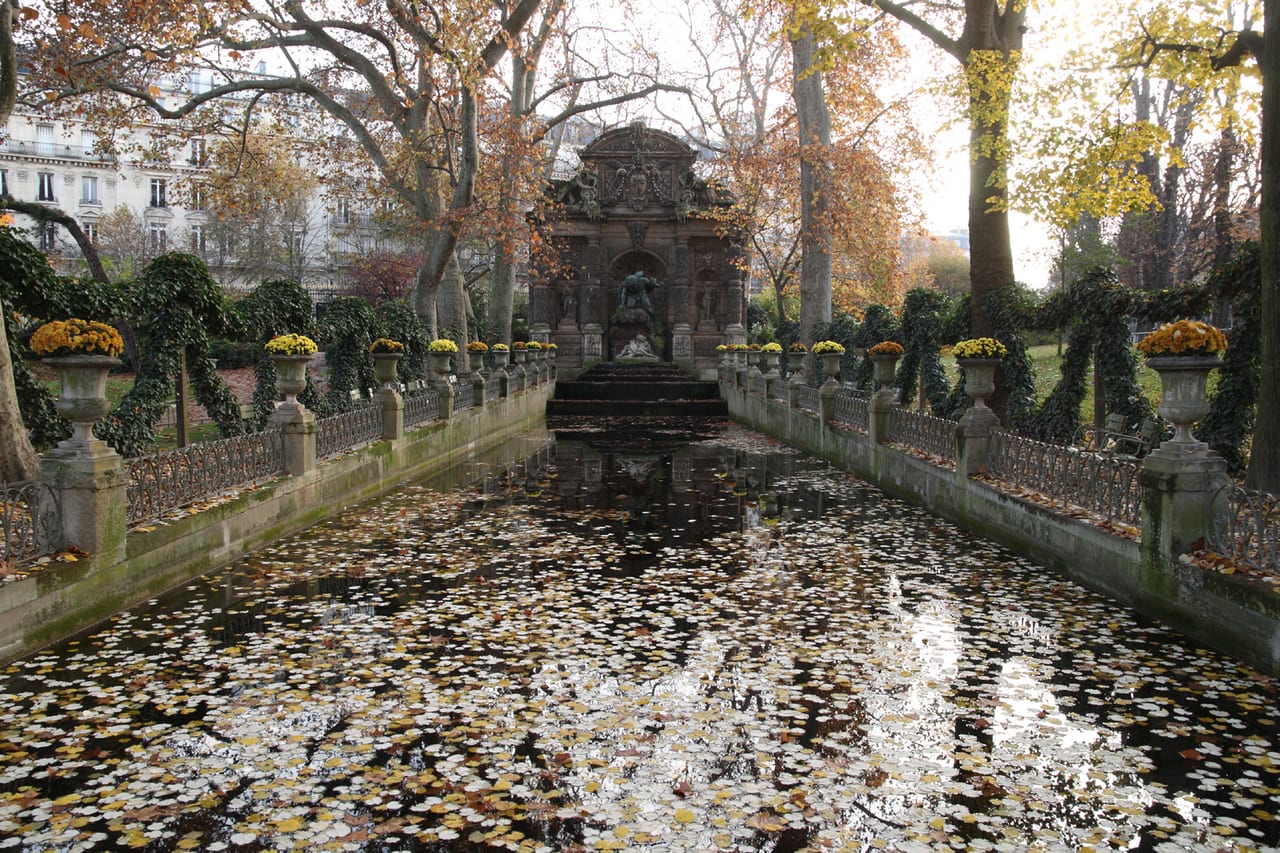
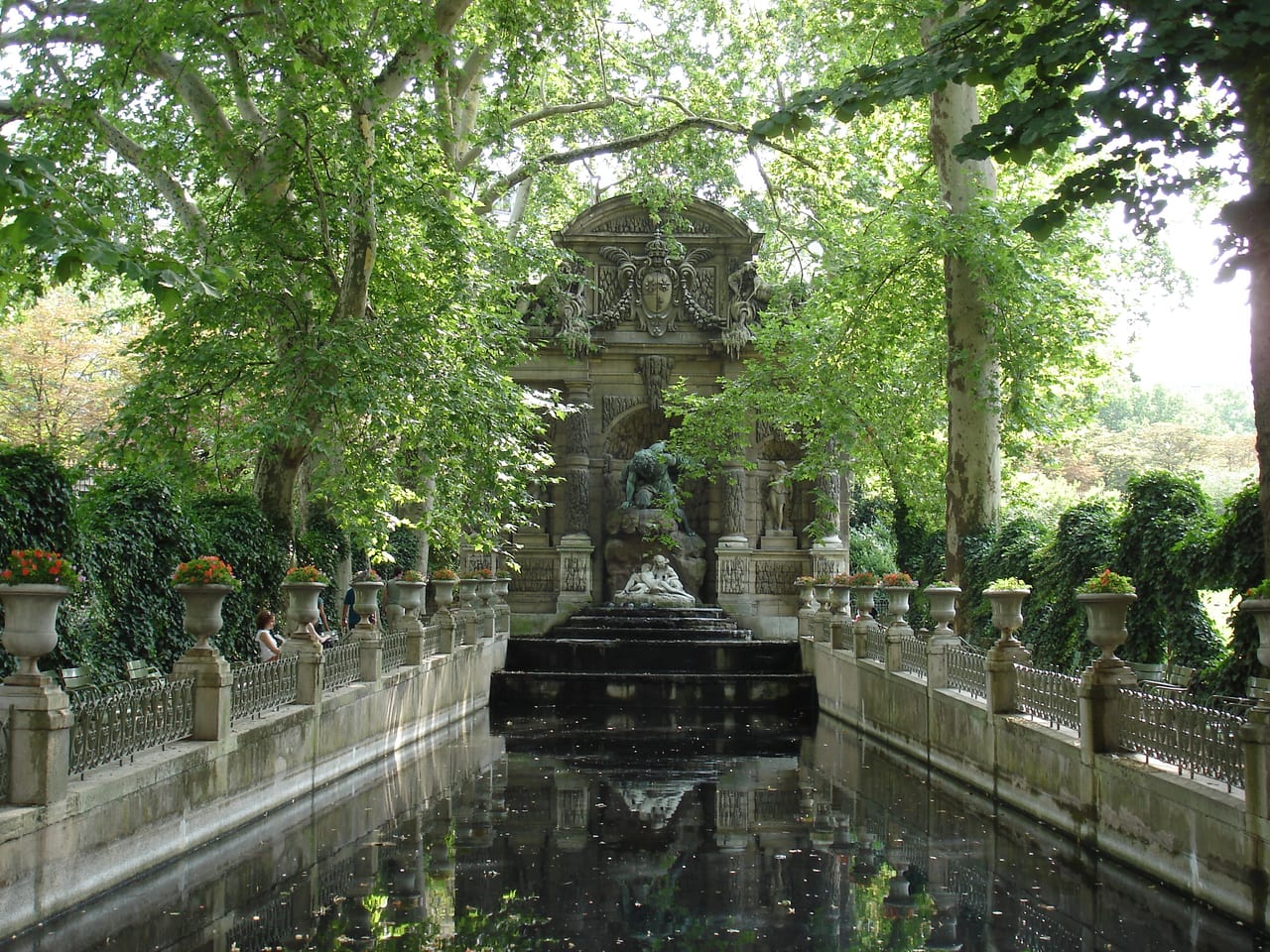
DirectionsIts central drama pairs the bronze Cyclops Polyphème with the luminous lovers Galatée and Acis, while the basin’s geometry creates the illusion of an inclined sheet of water.
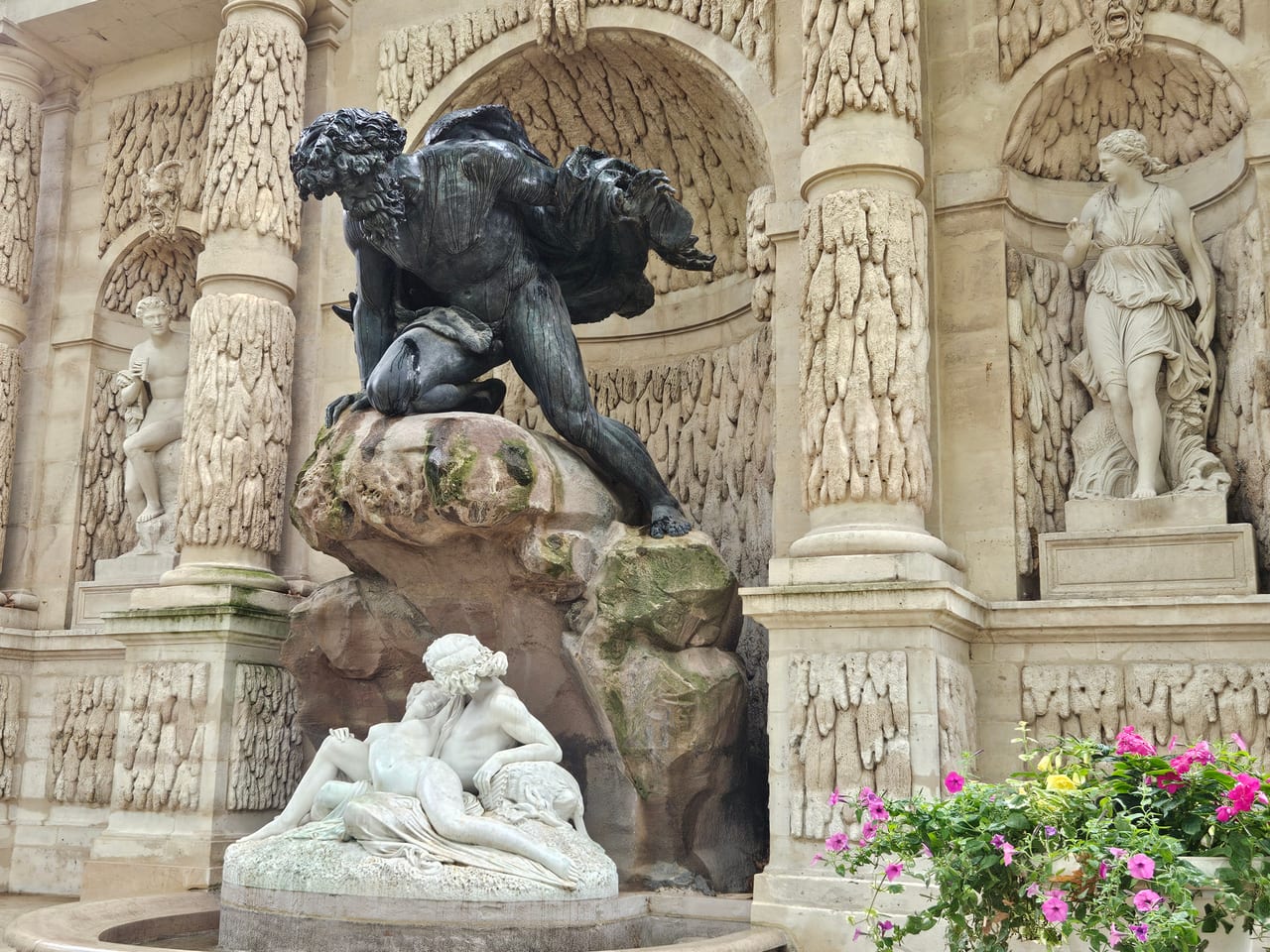
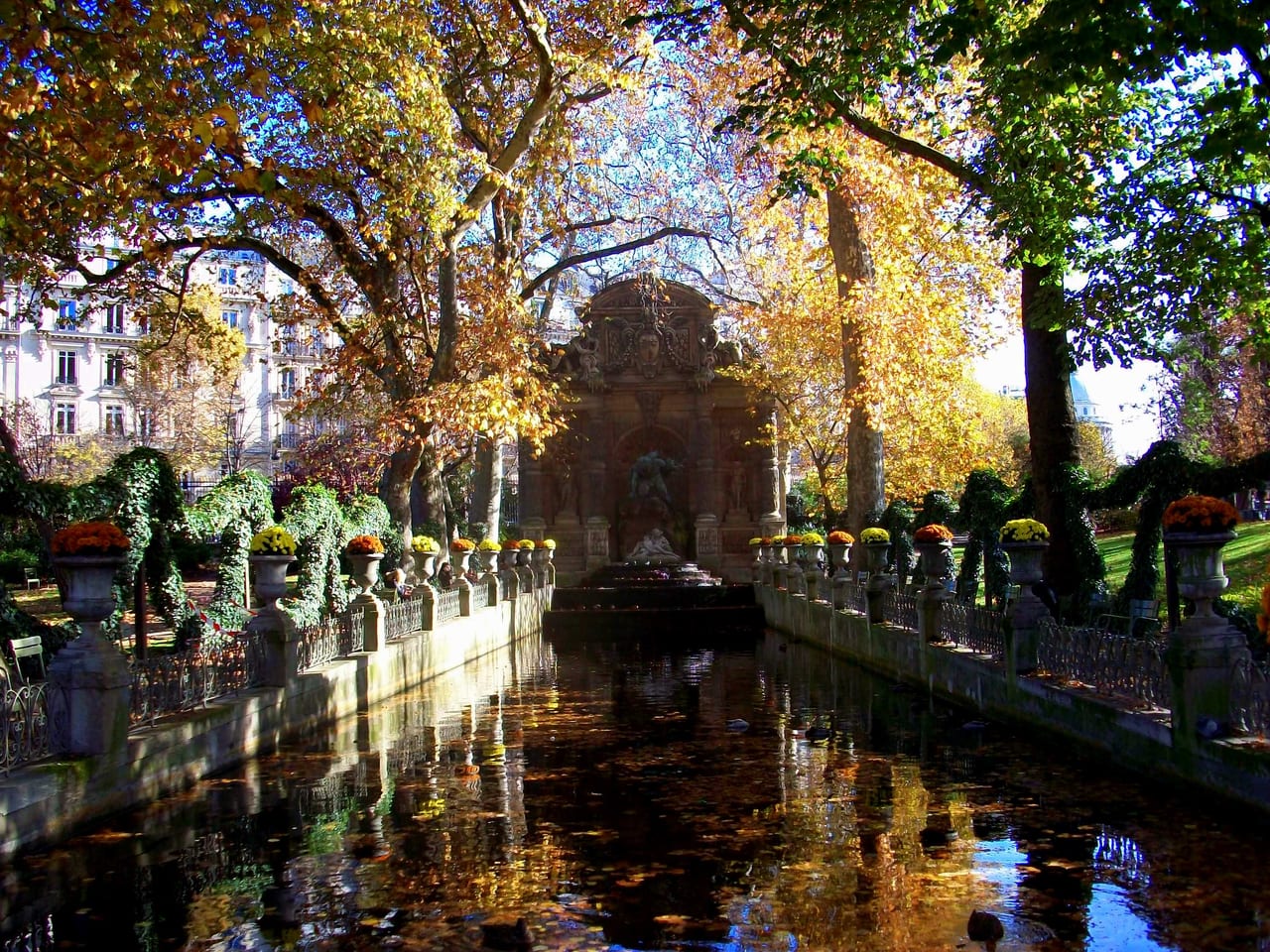
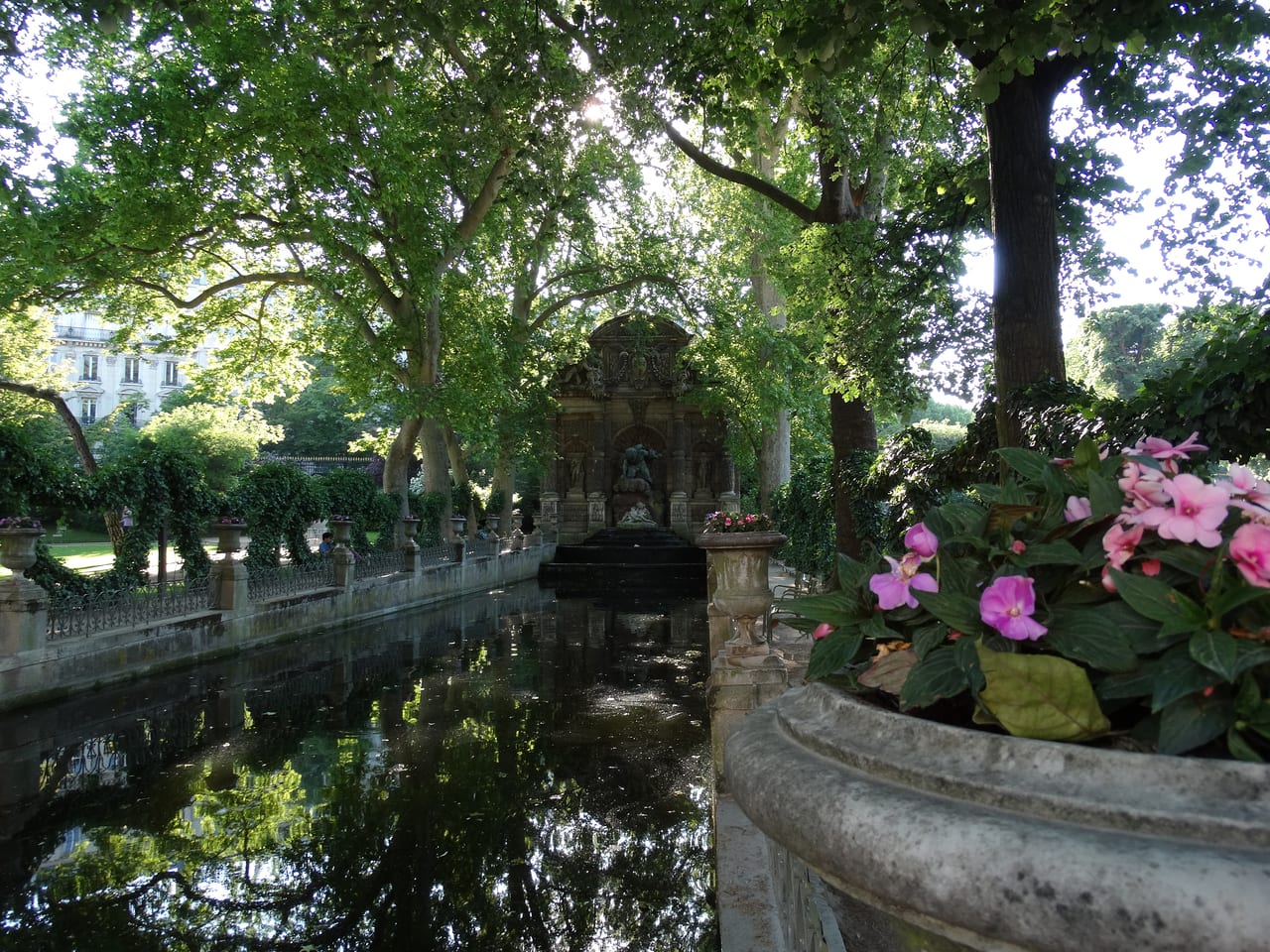
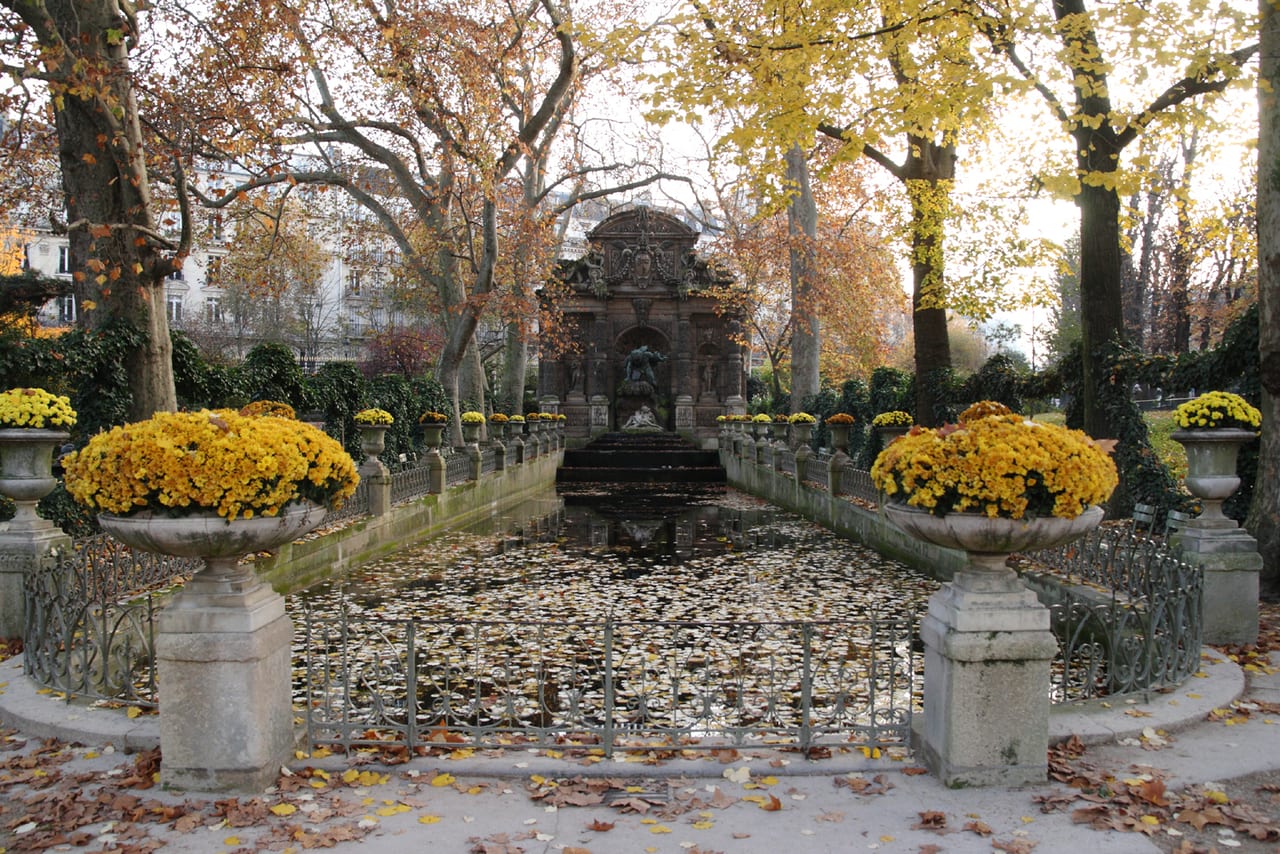
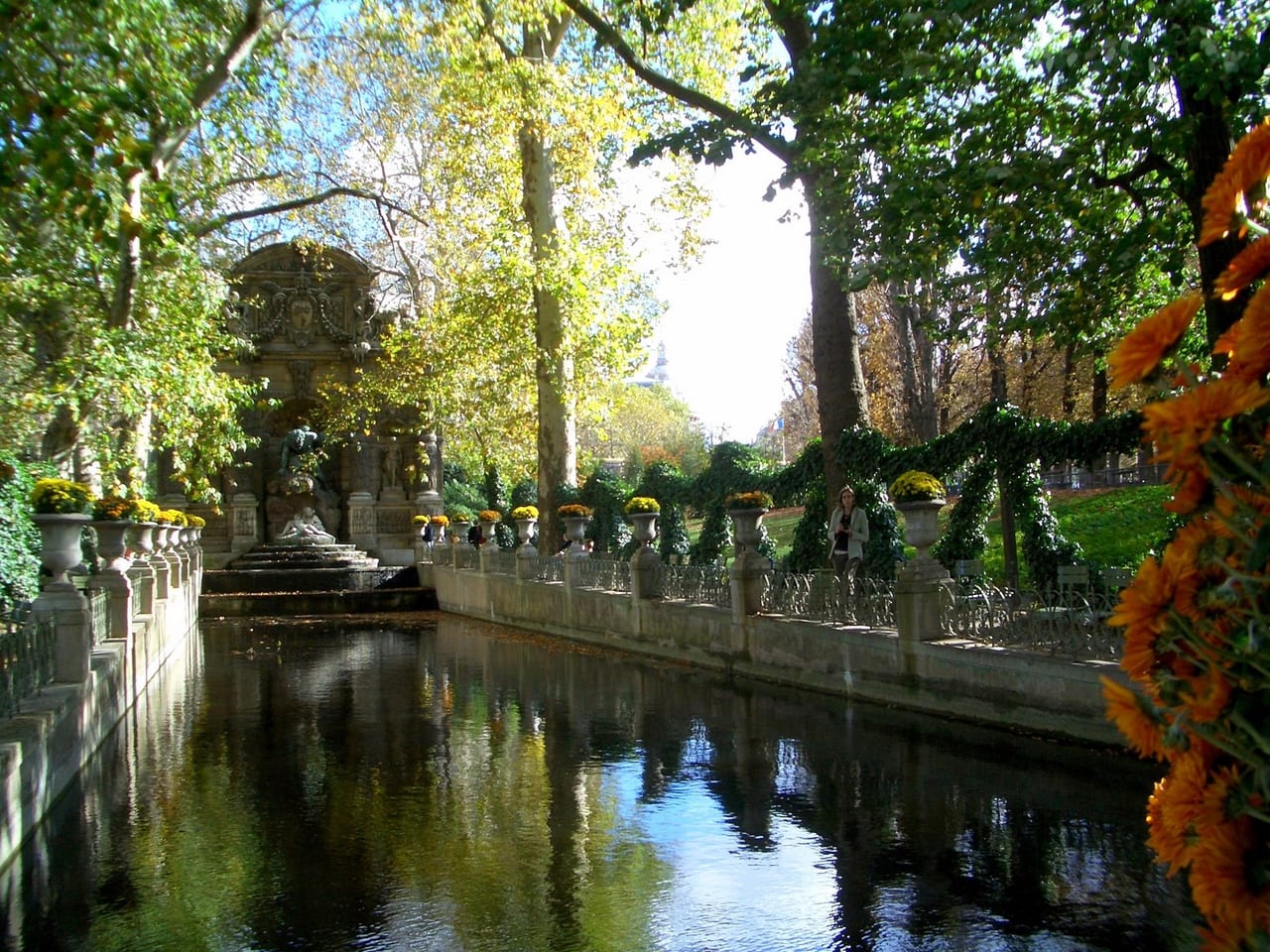
Photograph 1 of 33 of Medici Fountain
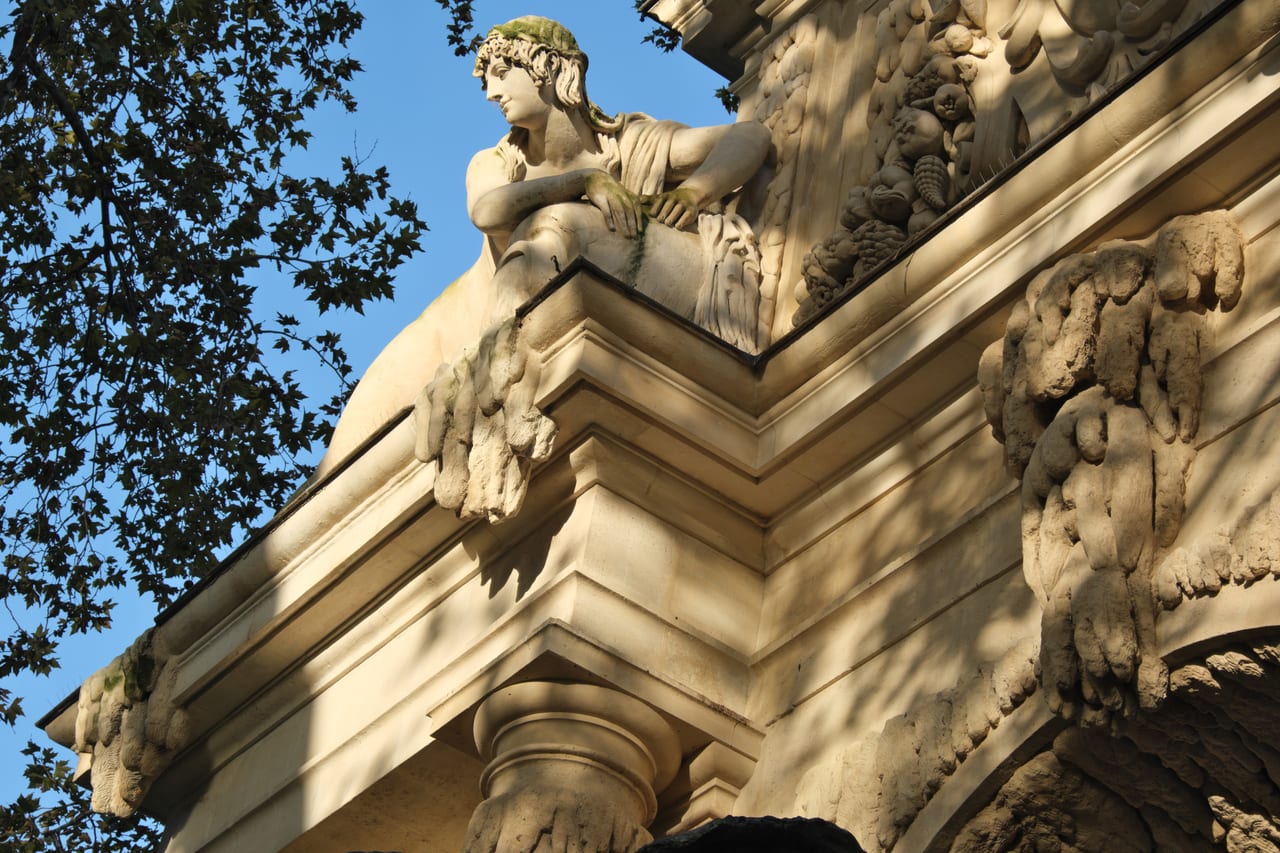
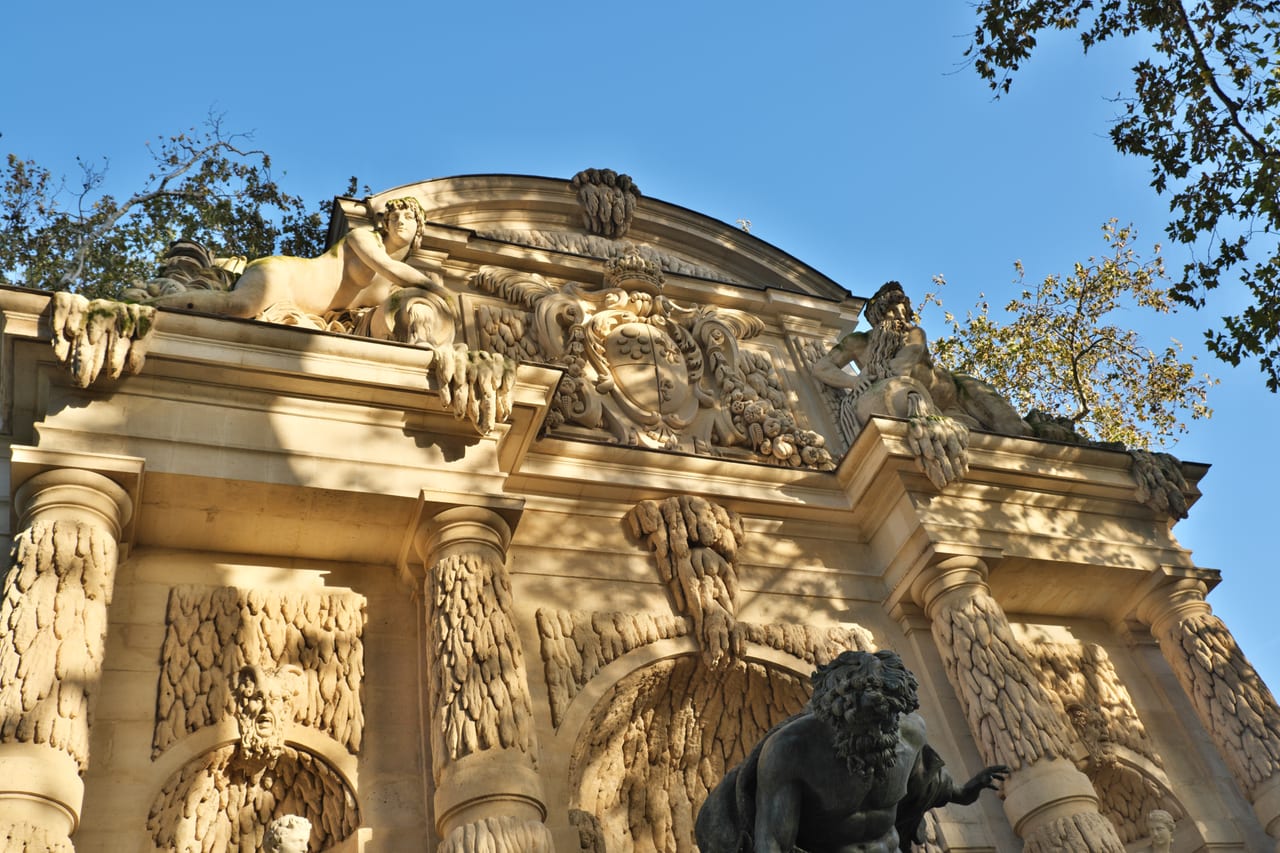
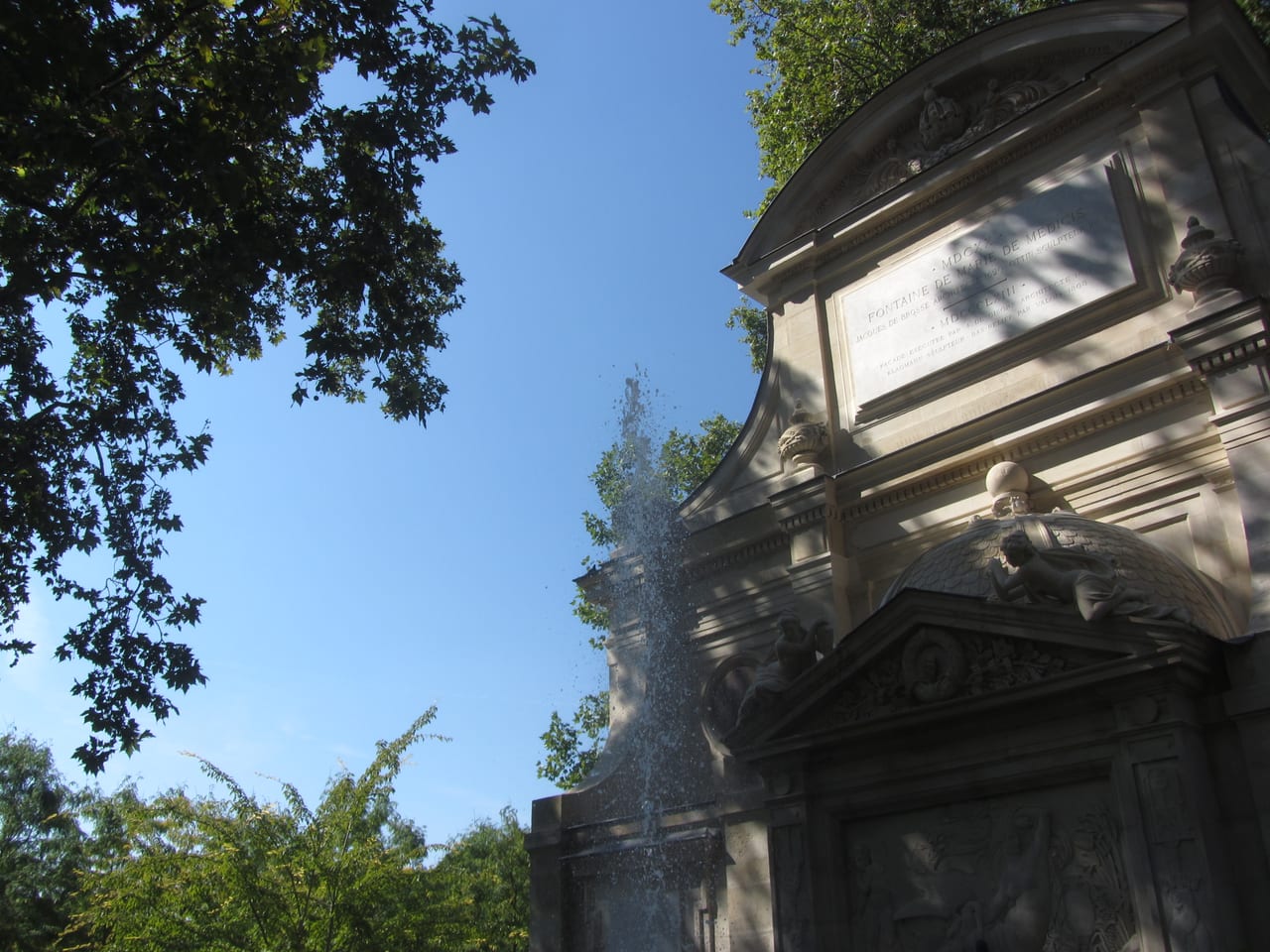
Commissioned around 1630 by Marie de Médicis, widow of Henri IV, the fountain began as a grotto designed by the Florentine engineer Tommaso Francini, who had already built the Médicis aqueduct. Its 14-metre-high, 12-metre-wide façade was intended to conceal the buildings of the nearby rue d’Enfer. Four Tuscan columns divide three niches; a pediment once carried the arms of France and the Médicis, three finials, and Pierre II Biard’s reclining allegories of the Rhône and Seine. Originally positioned east of the Luxembourg Garden, it had no water jets. After the Senate moved into the Luxembourg Palace in 1799, Jean-François Chalgrin oversaw restoration. The grotto acquired a cascade and became a fountain, while a marble Venus occupied its central niche. Haussmann’s opening of the rue de Médicis prompted its dismantling and relocation in 1862, stone by stone, about thirty metres nearer the palace. Alphonse de Gisors enlarged the basin and restored the French arms. He also incorporated the former Leda Fountain at the rear.
At a glance
- Heritage
- classified historical monument
Ways to explore Medici Fountain
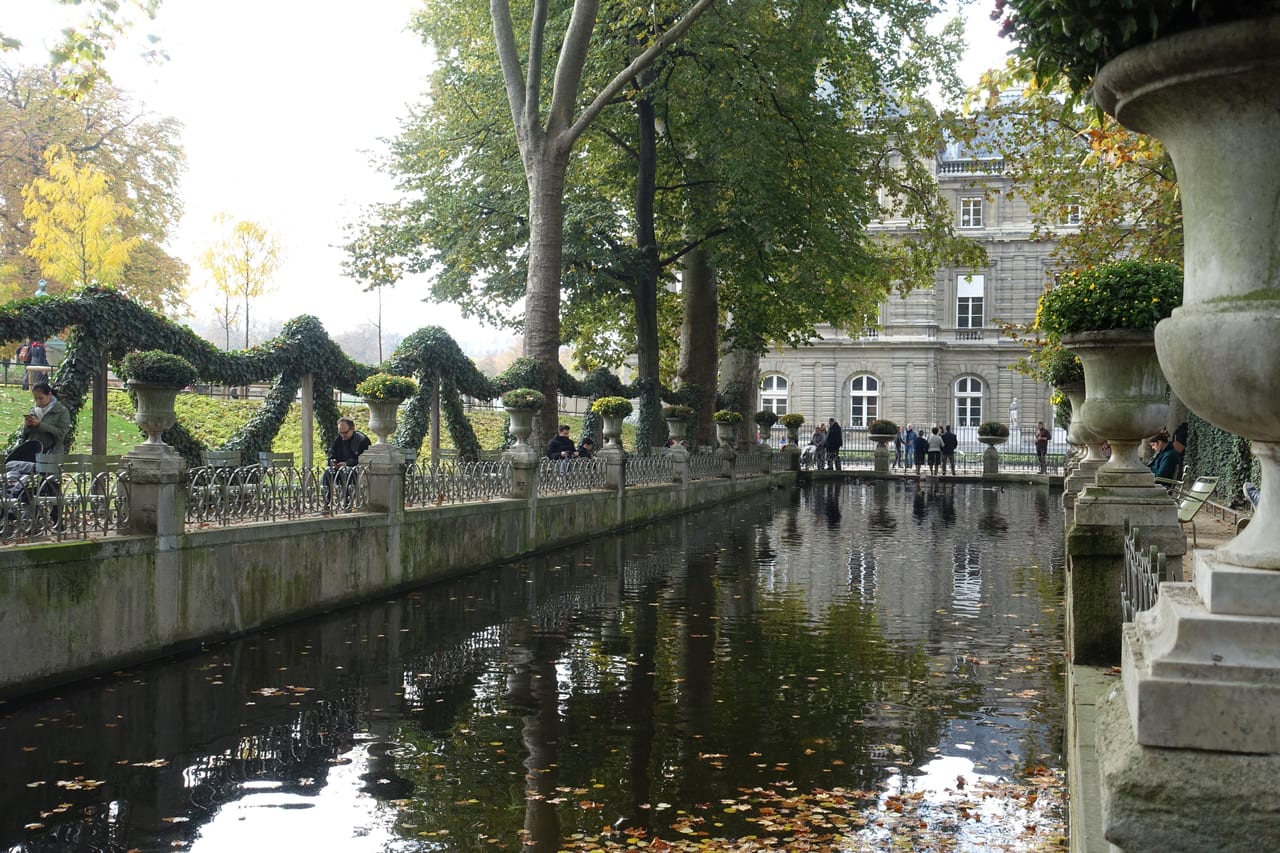
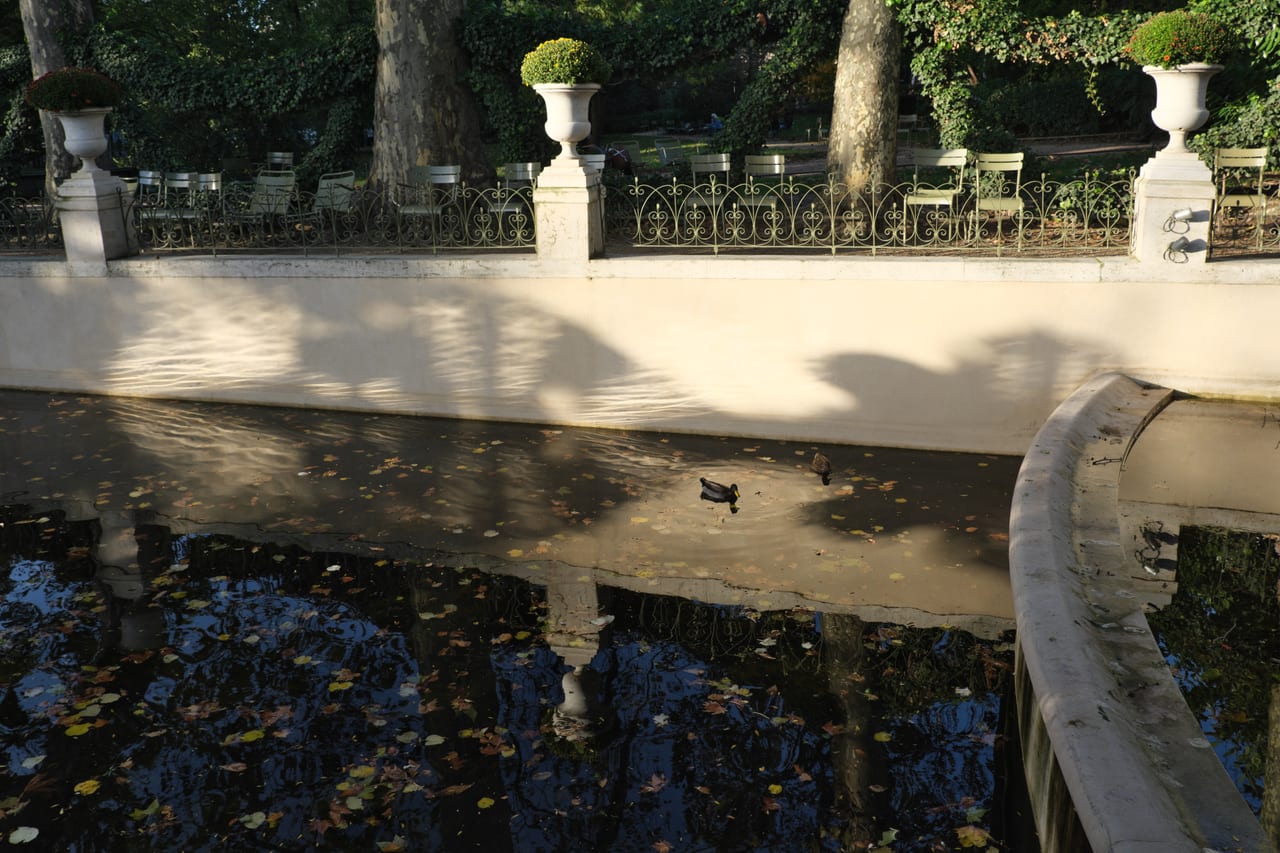
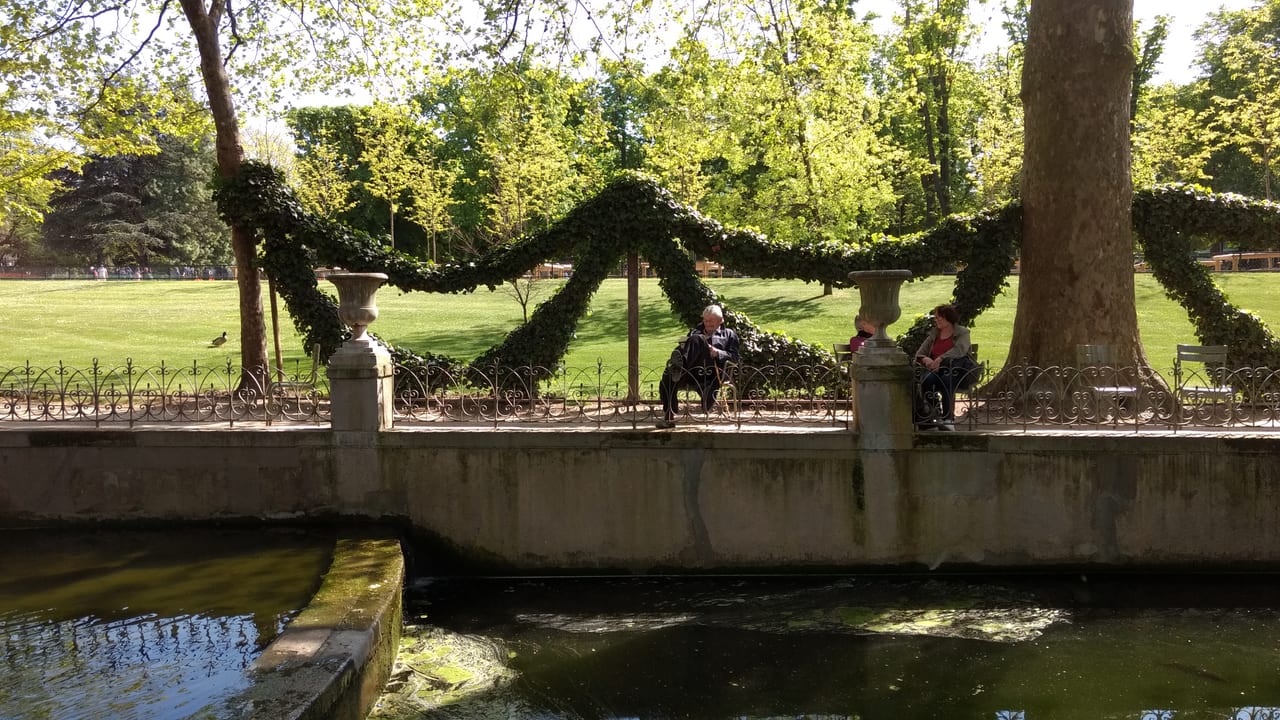
Read the façade as a theatrical architectural screen: look for the Tuscan columns, the three recessed niches, the surviving reclining river figures, and the empty positions where the three fire pots once stood. Walk the full length of the basin to appreciate its scale and the lines of plane trees along the railing. At the rear, examine the Leda Fountain’s 1807 bas-relief by Achille Valois and the two reclining naiads by Jean-Baptiste-Jules Klagmann.
Places to stay near Medici Fountain
Live availability and prices from Stay22's partners, refreshed periodically and subject to change. Booking through these links may earn us a commission at no extra cost to you. See our privacy policy.
Cafés near Medici Fountain
Cafés near Medici Fountain loads as you scroll.
Attractions nearby
Attractions near Medici Fountain loads as you scroll.
Cities nearby
Cities nearby loads as you scroll.
More in Paris
See more of Paris.
Find great cafés, places to stay and other interesting places to visit in Paris.