Museum · Split
Split City Museum
DirectionsThe museum’s beginnings reach back to Dmine Papalić and Marko Marulić, who gathered stone fragments from ruined Salona in the early 16th century and set them in Papalić Palace’s courtyard.
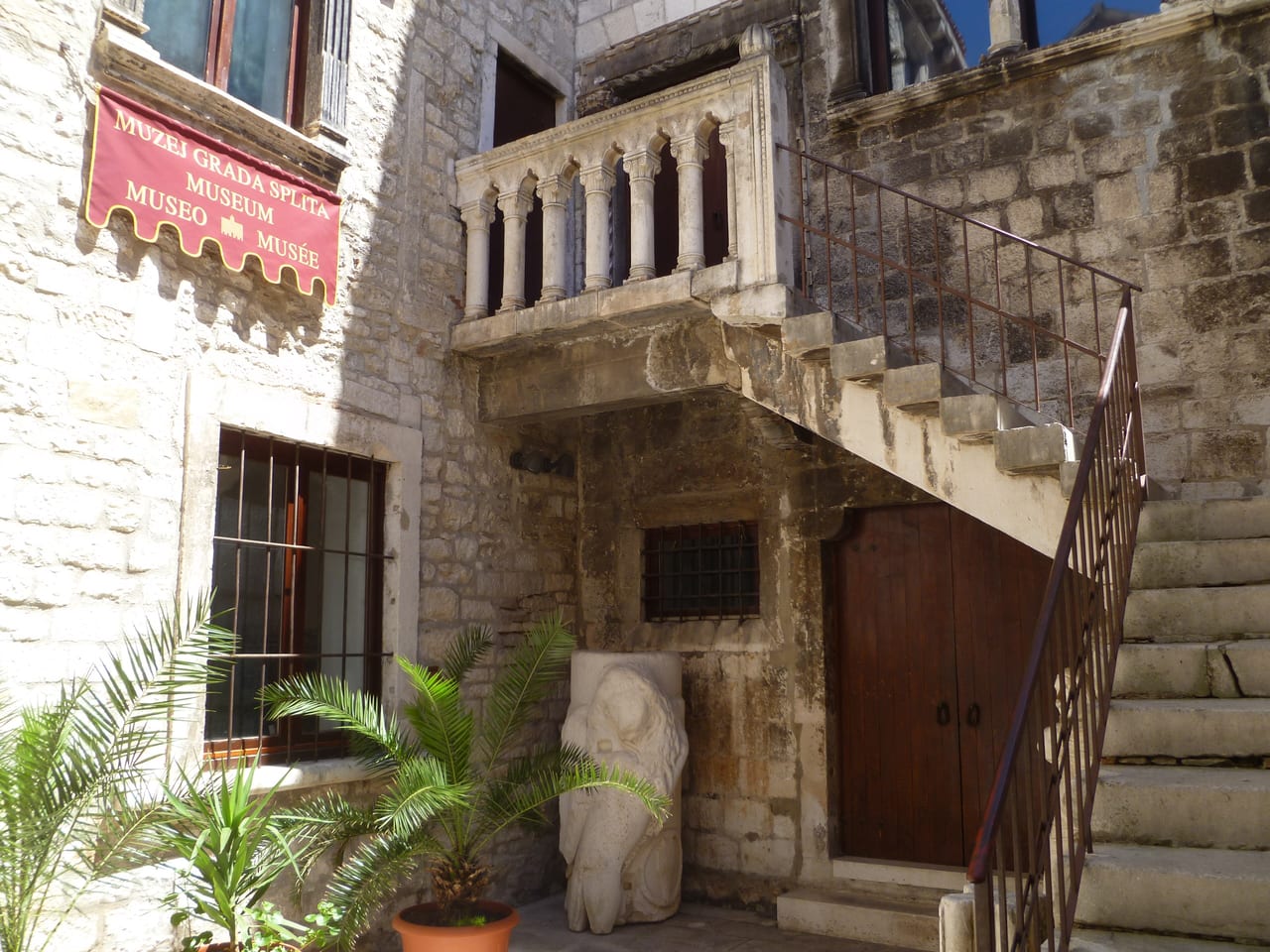
The museum grew out of Split’s municipal library, founded in 1911. Its 1915 statute provided for a city museum as a separate department under the library’s administration; two rooms in Bernardi Palace were prepared for it in 1925. The museum became independent in 1945, opened to the public in six rooms in 1946, and took its present name in 1948. After a 1950 exhibition marking the 500th anniversary of Marko Marulić’s birth, part of Papalić Palace was permanently assigned to the museum. Built in the Gothic and Renaissance periods and attributed to the school of Juraj Dalmatinac, the palace is a monument of the highest category. A partial permanent display opened there in 1952. Following a major restoration and expansion programme begun in 1983, the museum reopened on 22 October 1992 with its first complete permanent account of the city’s history. Its exhibits trace Split’s political, economic, social, artistic and urban development, while its collections, archive and library support the study and preservation of the city’s heritage.
At a glance
- Built
- 1946
Ways to explore Split City Museum
Take time to notice the palace’s details, then explore the holdings through their different forms: prints, paintings, sculpture, furniture, ceramics, glass, weapons, toys and medals. The museum also has collections of musical materials, photographs, slides, recordings and video, alongside printed works. Comparing these varied objects can make for a more rewarding visit than focusing on a single medium.
Places to stay near Split City Museum

Live availability and prices from Stay22's partners, refreshed periodically and subject to change. Booking through these links may earn us a commission at no extra cost to you. See our privacy policy.
Cafés near Split City Museum
Cafés near Split City Museum loads as you scroll.
Attractions nearby
Attractions near Split City Museum loads as you scroll.
Cities nearby
Cities nearby loads as you scroll.
More in Split
See more of Split.
Find great cafés, places to stay and other interesting places to visit in Split.