Square · Split
Peristil
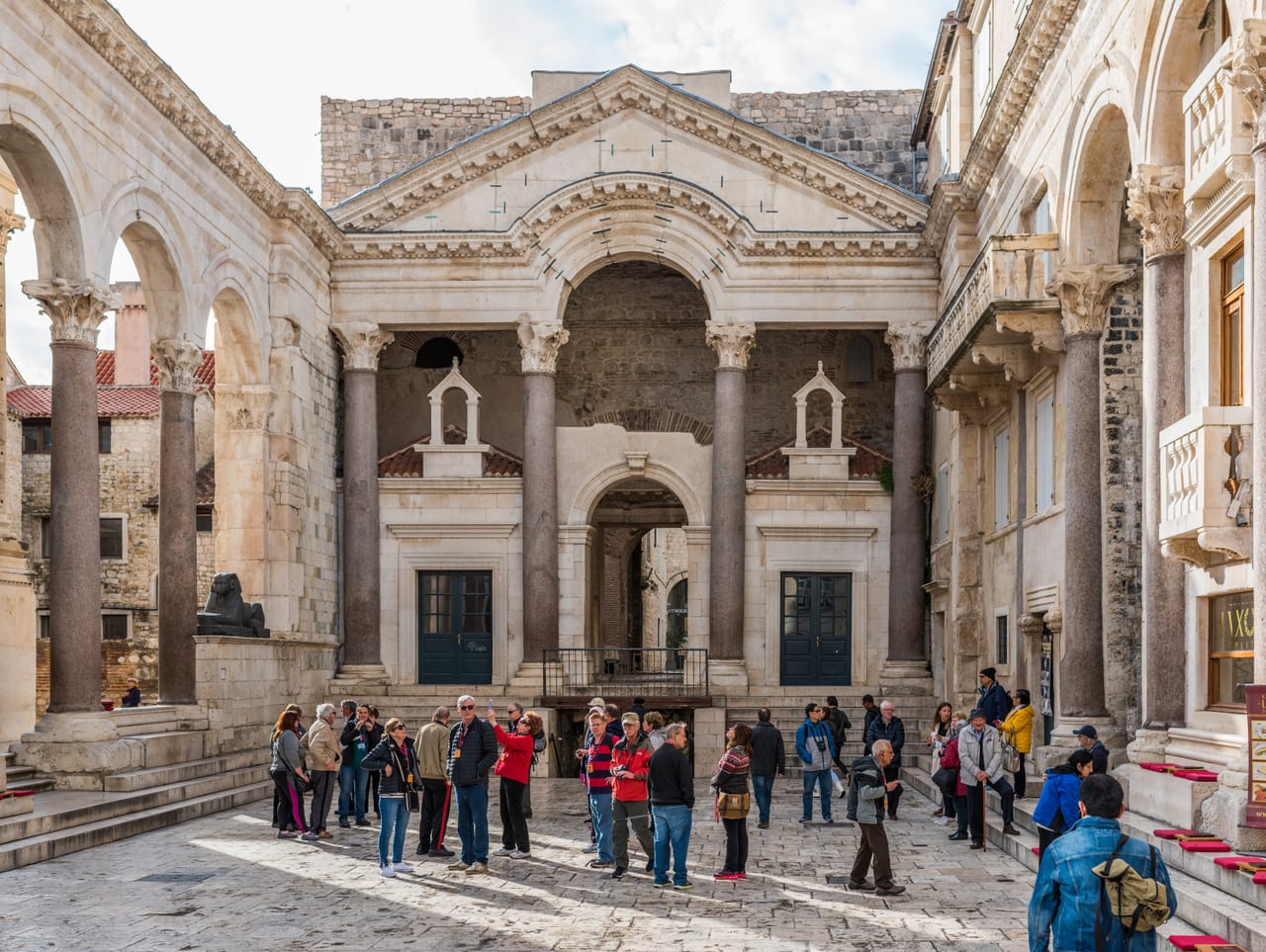
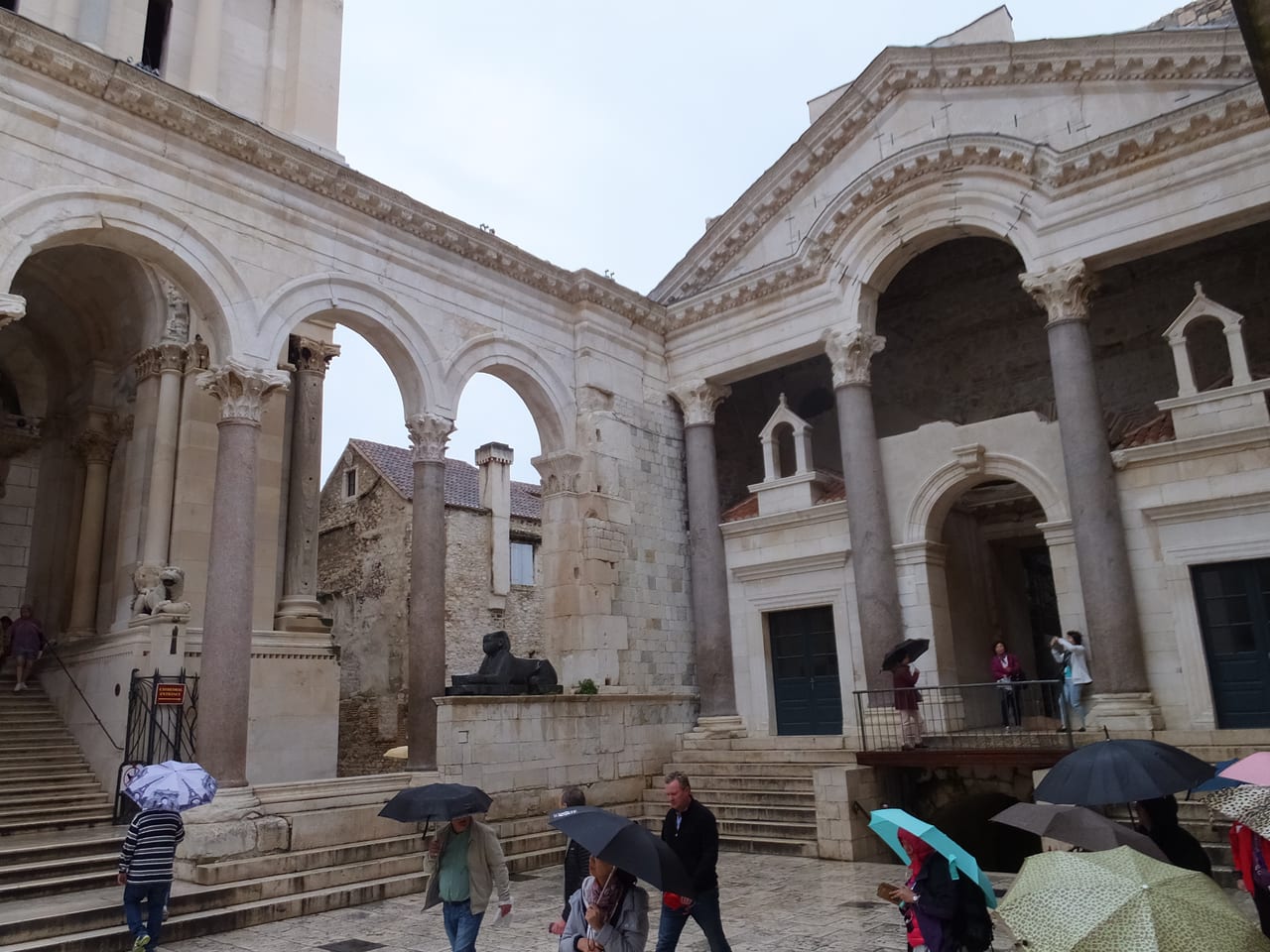
DirectionsOne of the two sphinxes that once adorned the square’s façade still stands there in almost perfect condition, an arresting survivor of its ancient design.
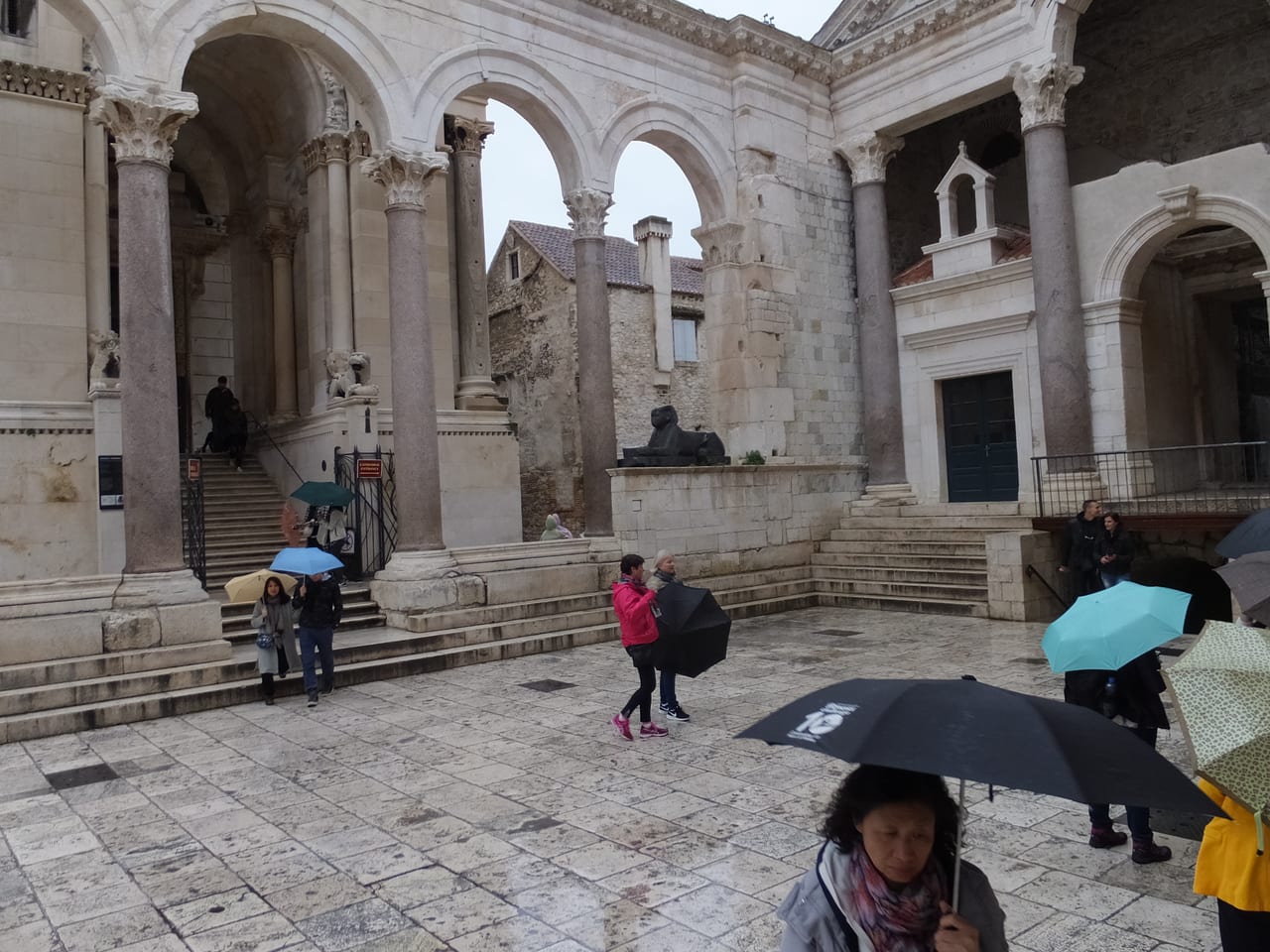
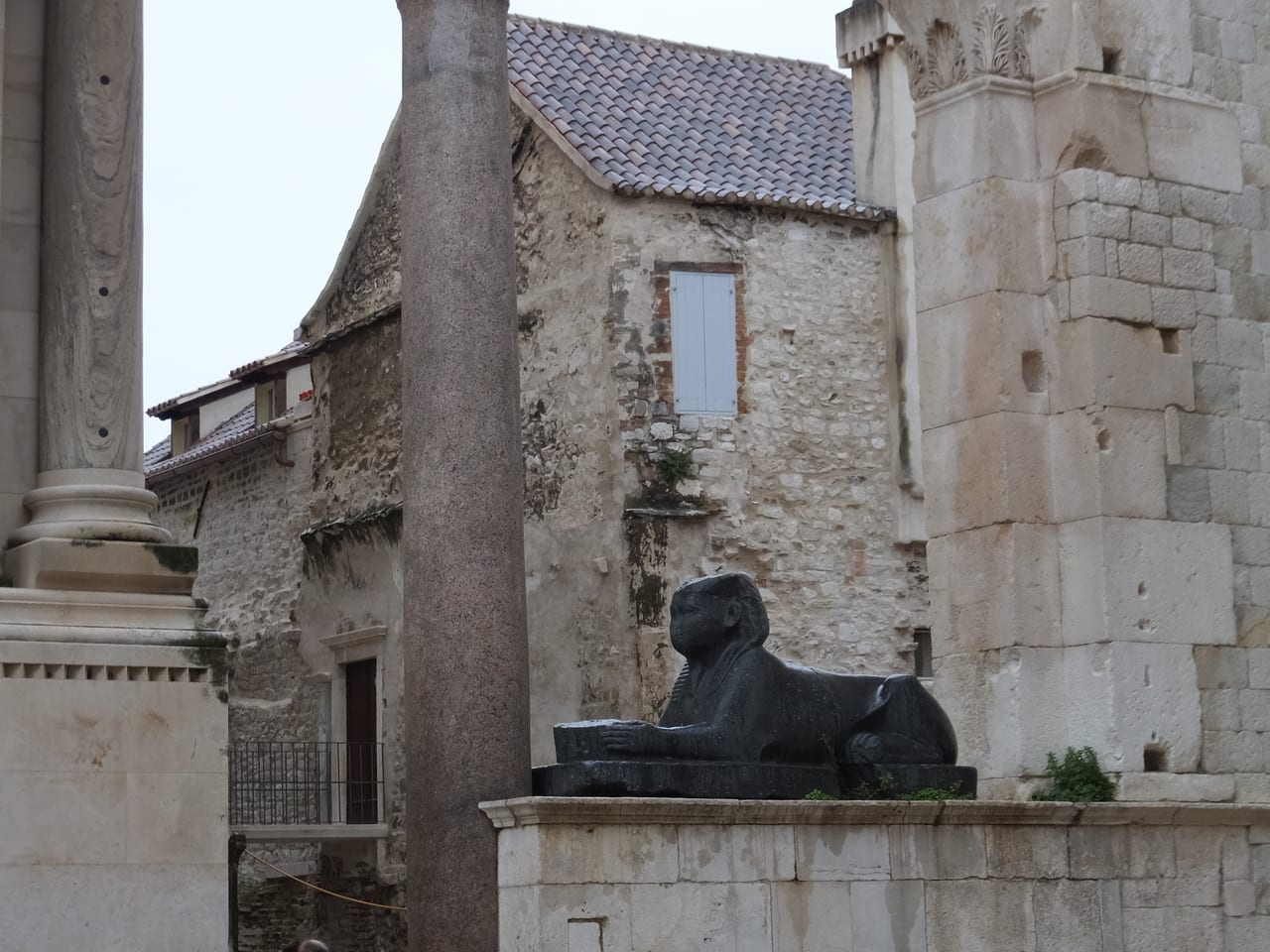
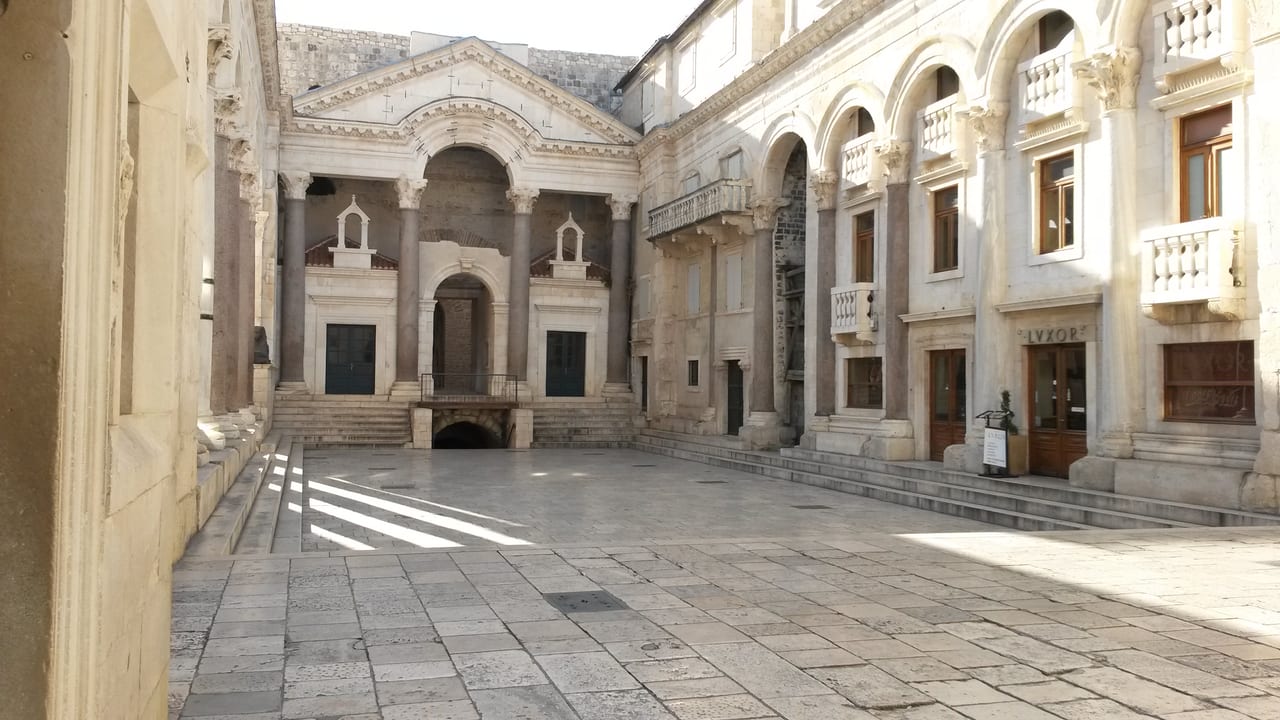
Photograph 1 of 7 of Peristil
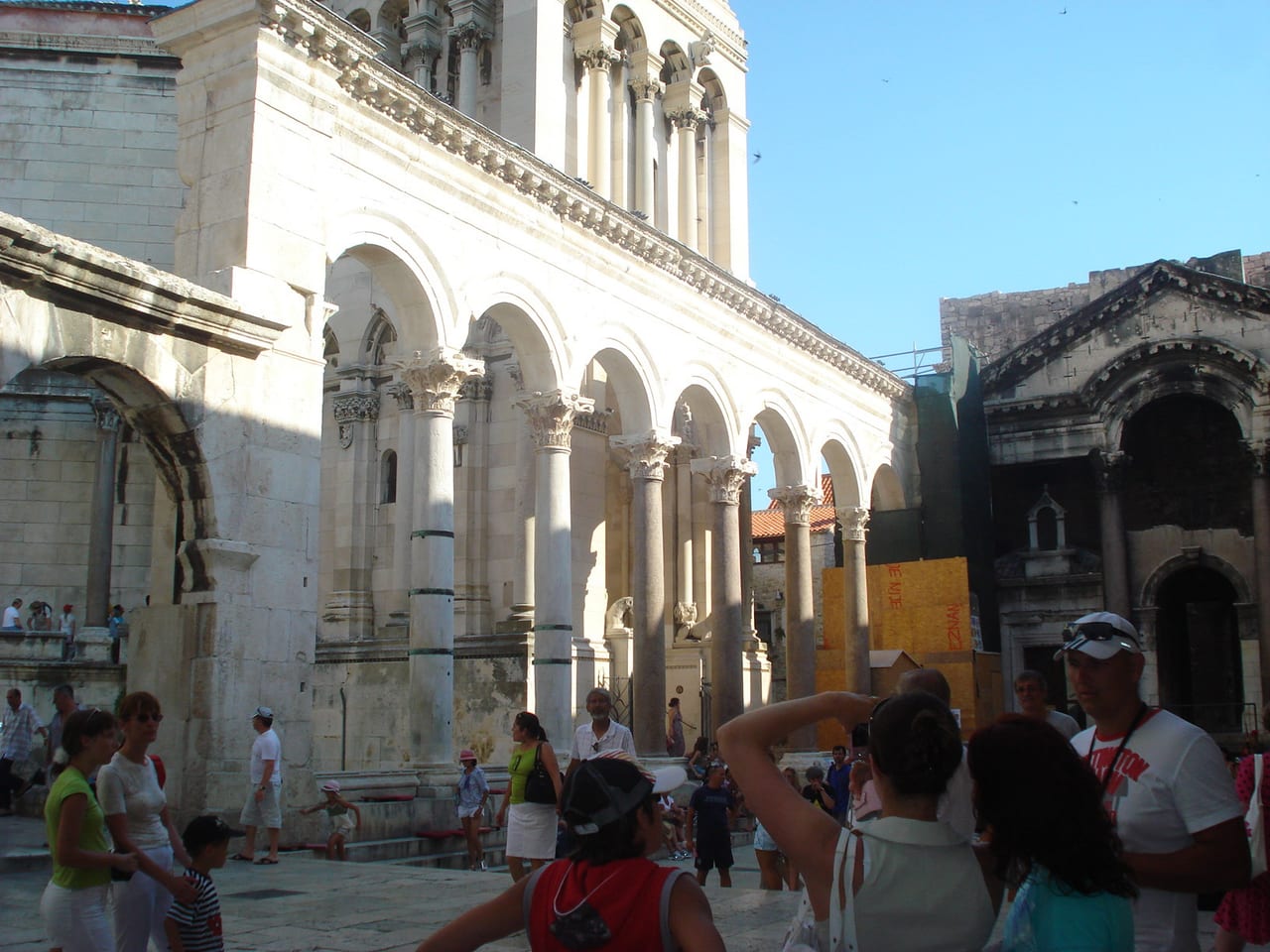
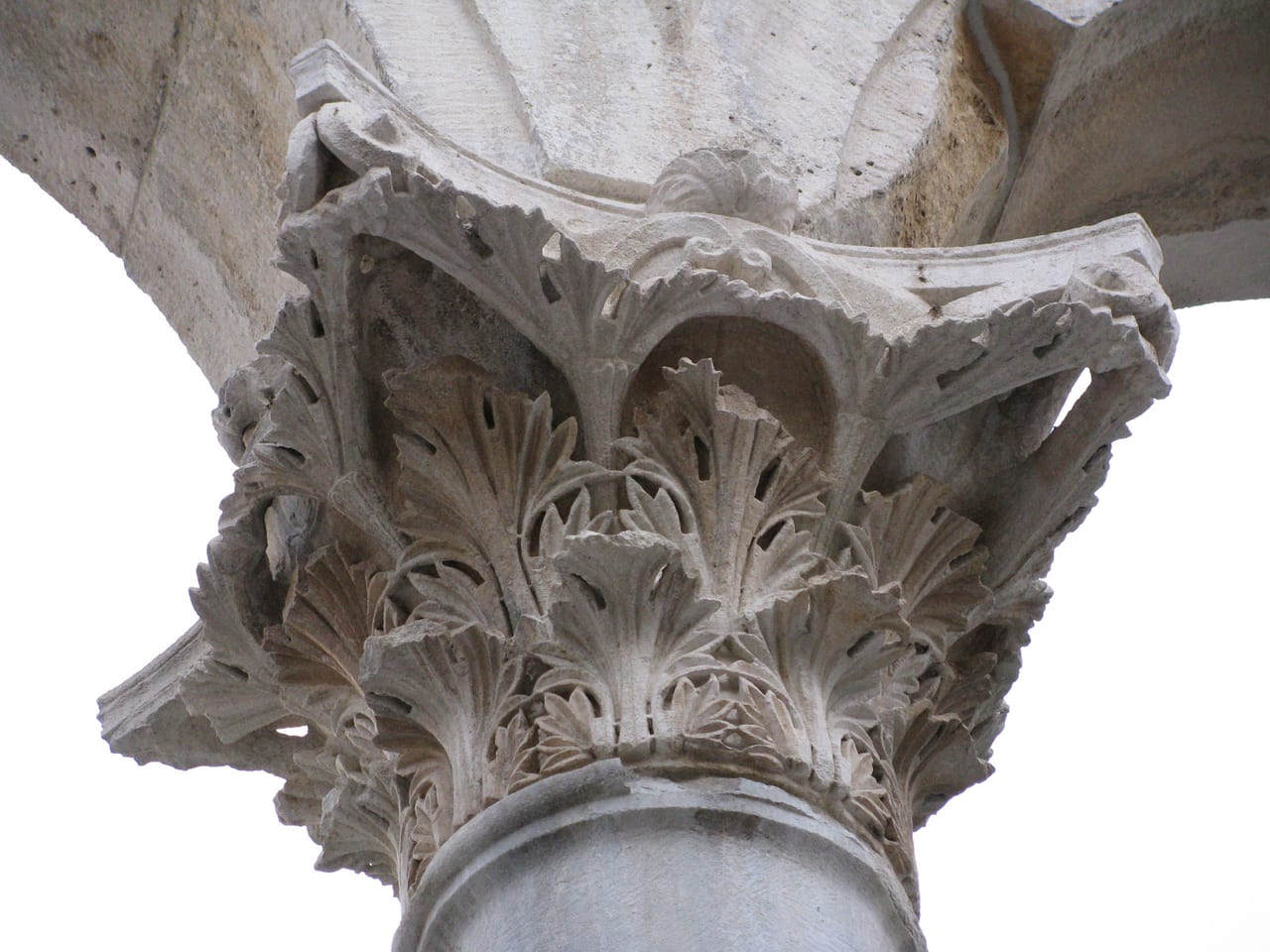
Created in the early 4th century as the ceremonial centre of Diocletian’s palace, the Peristil stood between the emperor’s mausoleum to the east and Jupiter’s temple to the west. Two rows of Corinthian columns, joined by arches, framed its sides; several southern columns were brought from Egypt and made of imperial porphyry. On the south, the richly decorated Protiron led to the emperor’s private quarters and separated them from the palace’s northern service area. The façade connected the upper level with the Vestibule and the lower one with the palace cellars. After the palace became a medieval city from the 7th century, the space took on a new life as the cathedral forecourt. Split’s town hall stood here until the 15th century. A passage through the palace substructures to the shore opened in 1860, closed in 1928 and reopened in the early 1960s, when the paving was lowered to its presumed original level. The square also saw wartime violence: an attack on local fascist leader Giovanni Savo in 1943 and damage to neighbouring buildings in an Allied bombing in 1944. In 2020, a museum of sacred art opened at its western edge.
Ways to explore Peristil
Pause at the southern end to take in the Protiron’s relationship to the Vestibule, then look for the surviving ancient details around the edges. In summer, the daily change of the Roman guard at noon brings costumed figures portraying Diocletian and Priska into the scene. For a performance, listen for the space’s natural acoustics during the Split Summer festival; the Vestibule also hosts performances by local klapa groups.
Places to stay near Peristil

Live availability and prices from Stay22's partners, refreshed periodically and subject to change. Booking through these links may earn us a commission at no extra cost to you. See our privacy policy.
Cafés near Peristil
Cafés near Peristil loads as you scroll.
Attractions nearby
Attractions near Peristil loads as you scroll.
Cities nearby
Cities nearby loads as you scroll.
More in Split
See more of Split.
Find great cafés, places to stay and other interesting places to visit in Split.