Castle & palace · Split
Iron Gate (Diocletian's Palace)
DirectionsThe Iron Gate is the only one of Diocletian’s Palace’s four gates to have remained in use continuously from its construction to the present.
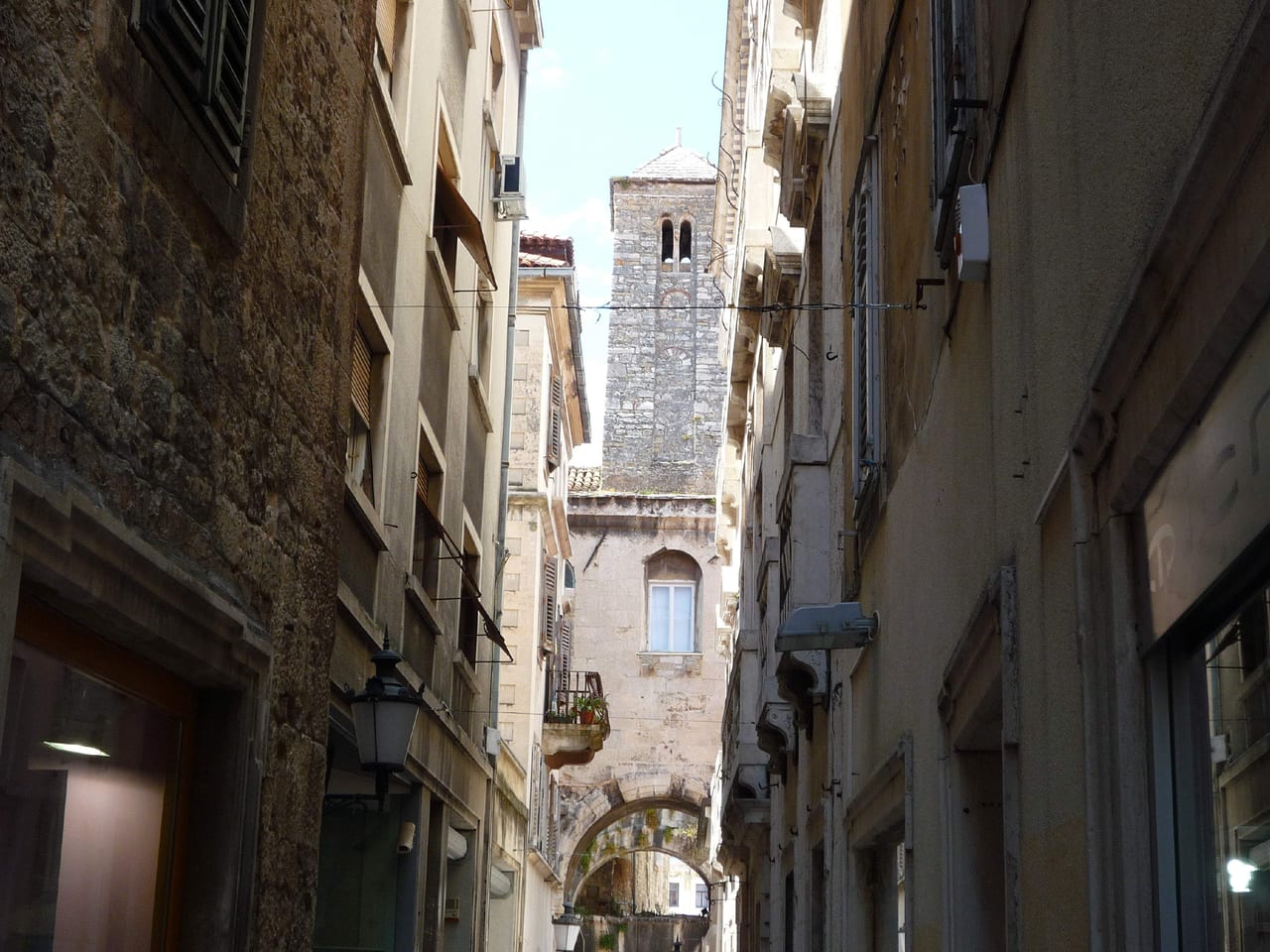
Set at the centre of the palace’s western wall, the gate was known in Roman times as the Porta Occidentalis or Porta Principalis Sinistra. It opened onto the east–west Via Decumanus, whose other end met the Silver Gate, and served as an entrance to the palace’s sulphur baths. It was also the route by which punished legionaries were led out for whipping or stoning. The gate’s richly moulded architrave contrasts with its simply profiled arch and a row of plain arcades. During the Christianisation of the palace, the statue of the goddess Victory was removed from the architrave and a cross carved in its place in the fifth century. A church above the inner entrance began as St Theodore’s and was later called Our Lady of the Bell Tower; its pre-Romanesque bell tower, built in the 11th century, is the oldest surviving on the Adriatic coast. As the city spread west, the gate became known as the Free Gate. Its interior later held a courtroom, then small houses and shops that remained until the 20th century.
Ways to explore Iron Gate (Diocletian's Palace)
Look closely at the gate’s surroundings: a Romanesque clock tower and bell partly conceal it on the left, while the Cipriani Benedetti palace on the right is distinguished by two unusual six-arched windows. If you can view the patrol corridor above the entrance, notice its original stone roof. This is the one place in the palace where the top of the main perimeter wall can be seen.
Places to stay near Iron Gate (Diocletian's Palace)

Live availability and prices from Stay22's partners, refreshed periodically and subject to change. Booking through these links may earn us a commission at no extra cost to you. See our privacy policy.
Cafés near Iron Gate (Diocletian's Palace)
Cafés near Iron Gate (Diocletian's Palace) loads as you scroll.
Attractions nearby
Attractions near Iron Gate (Diocletian's Palace) loads as you scroll.
Cities nearby
Cities nearby loads as you scroll.
More in Split
See more of Split.
Find great cafés, places to stay and other interesting places to visit in Split.