Castle & palace · Split
Grand Papalić Palace
DirectionsBuilt for the Papalić family by Juraj Dalmatinac in the mid-15th century, the palace became a model for Split’s later palaces.
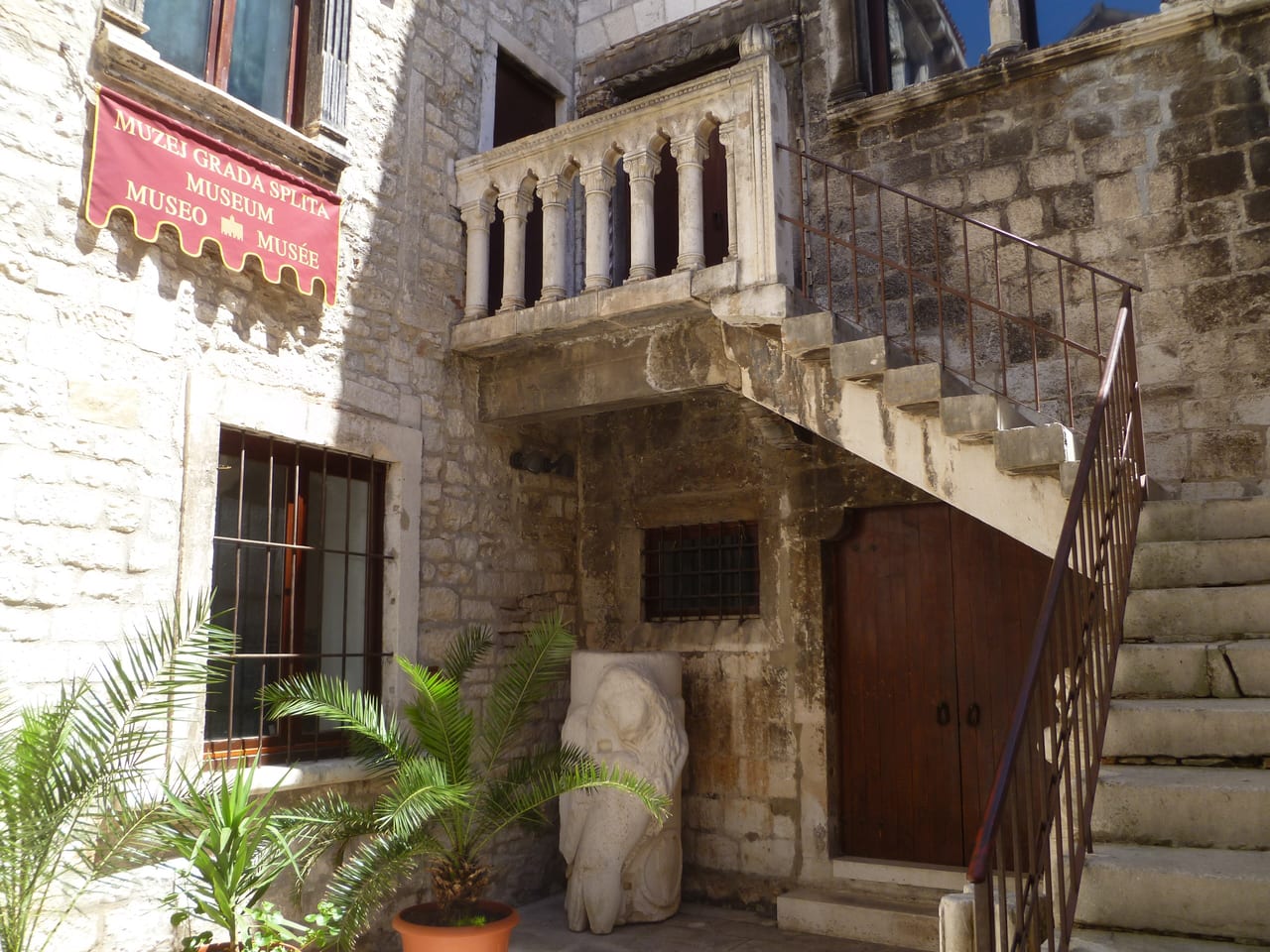
The Papalić family probably came to Split from Poljica in the 14th century and held civic roles: the first written mention of a family member, in 1357, records service on the city’s Great Council. The family’s male line ended in 1739. In the late 15th century, the palace became a meeting place for Split’s humanists, including Marko Marulić. The complex grew and changed over several centuries. Its oldest sections are Romanesque, dating to the 13th century; the northernmost wall incorporates an ancient wall, while Roman masonry survives on several floors of a neighbouring western building. A third storey was added in the 19th century. Following restoration in 1950, the palace became home to the Split City Museum in 1952.
At a glance
- Heritage
- Register of Cultural Goods of Croatia
Ways to explore Grand Papalić Palace
Spend time in the courtyard, where the monumental portal, loggia and exterior staircase form a striking ensemble. From there, look up at the façade’s quadrifora, then, if access permits, seek out the painted wooden ceiling in the large first-floor hall. Notice how these details reward looking both across the courtyard and upward toward the upper storeys.
Places to stay near Grand Papalić Palace

Live availability and prices from Stay22's partners, refreshed periodically and subject to change. Booking through these links may earn us a commission at no extra cost to you. See our privacy policy.
Cafés near Grand Papalić Palace
Cafés near Grand Papalić Palace loads as you scroll.
Attractions nearby
Attractions near Grand Papalić Palace loads as you scroll.
Cities nearby
Cities nearby loads as you scroll.
More in Split
See more of Split.
Find great cafés, places to stay and other interesting places to visit in Split.