Castle & palace · Split
Golden Gate
DirectionsIn Roman times, the gateway opened onto the northbound road to Salona, capital of the Roman province of Dalmatia, placing the palace on a major regional route.
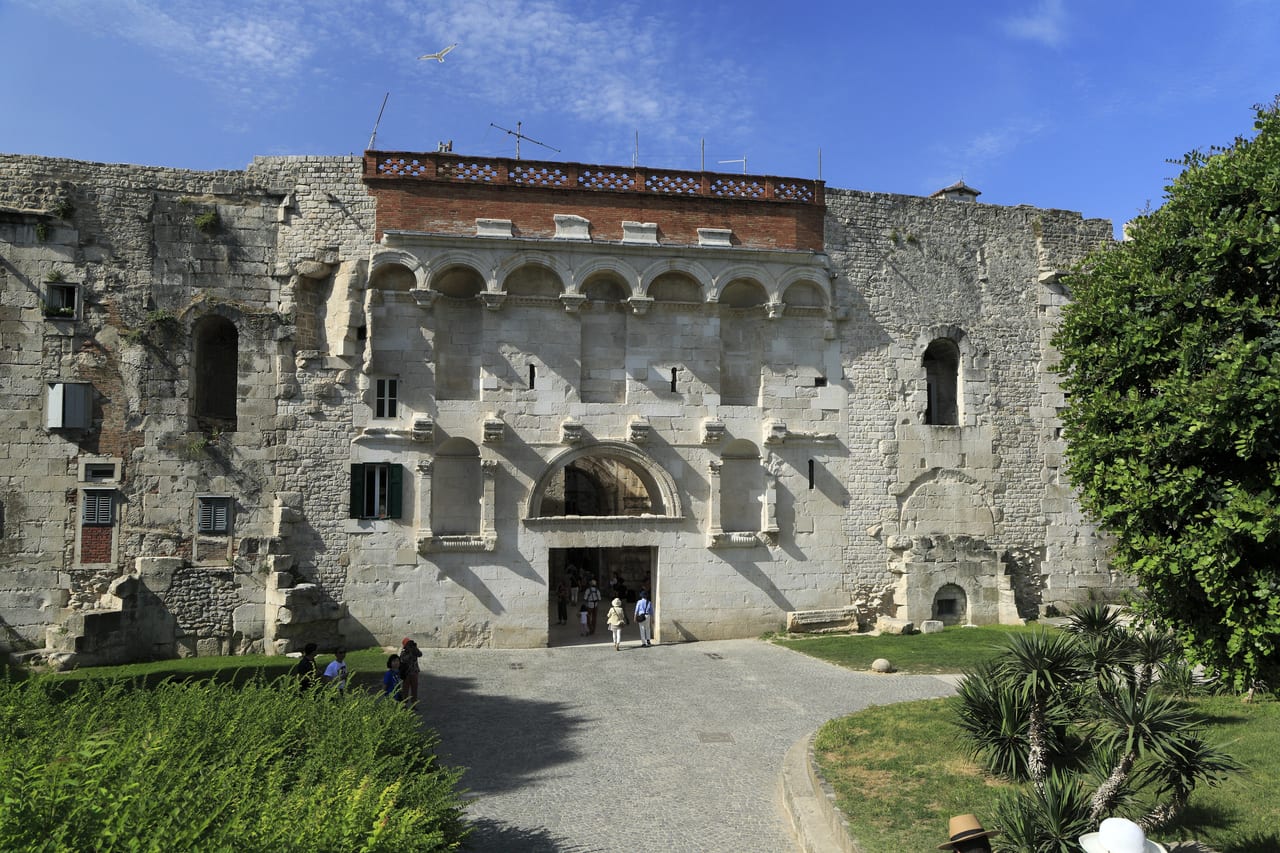
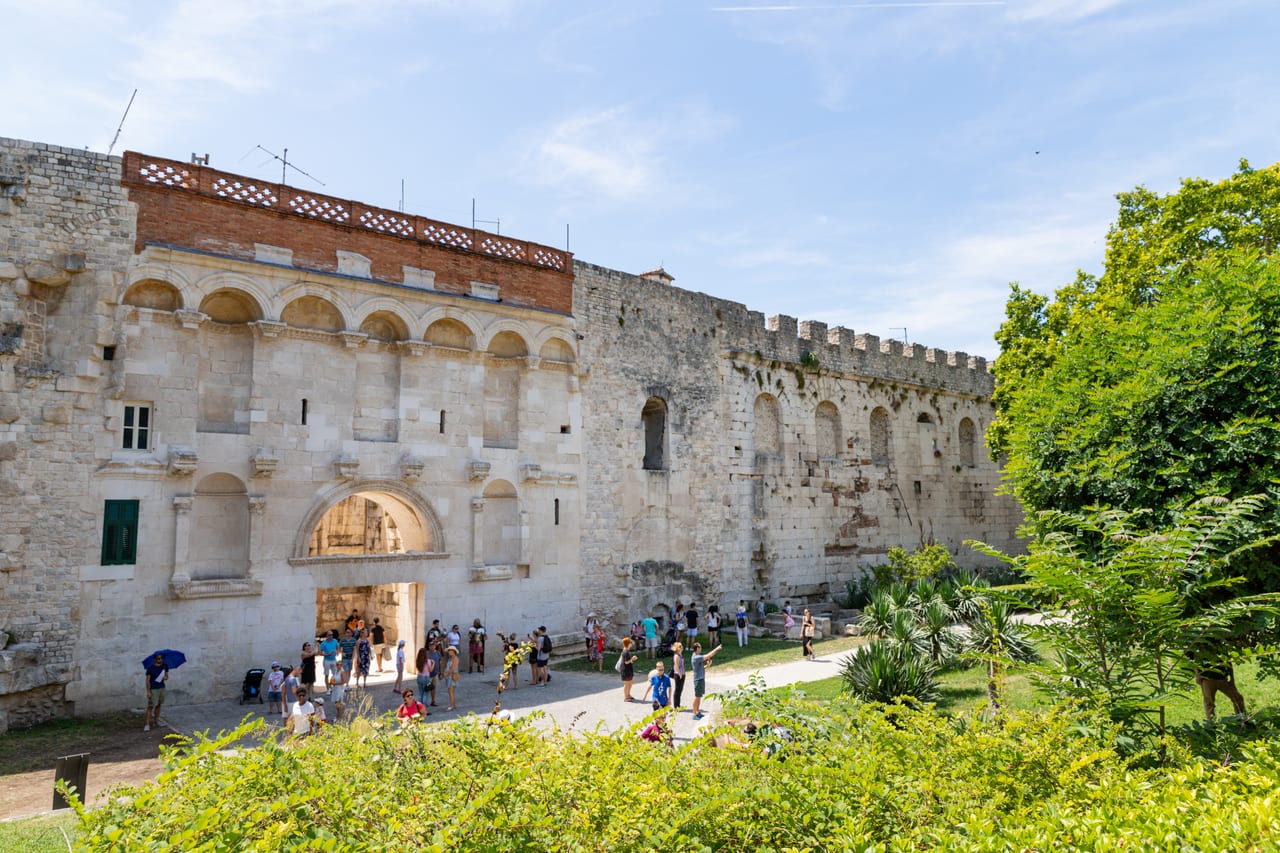
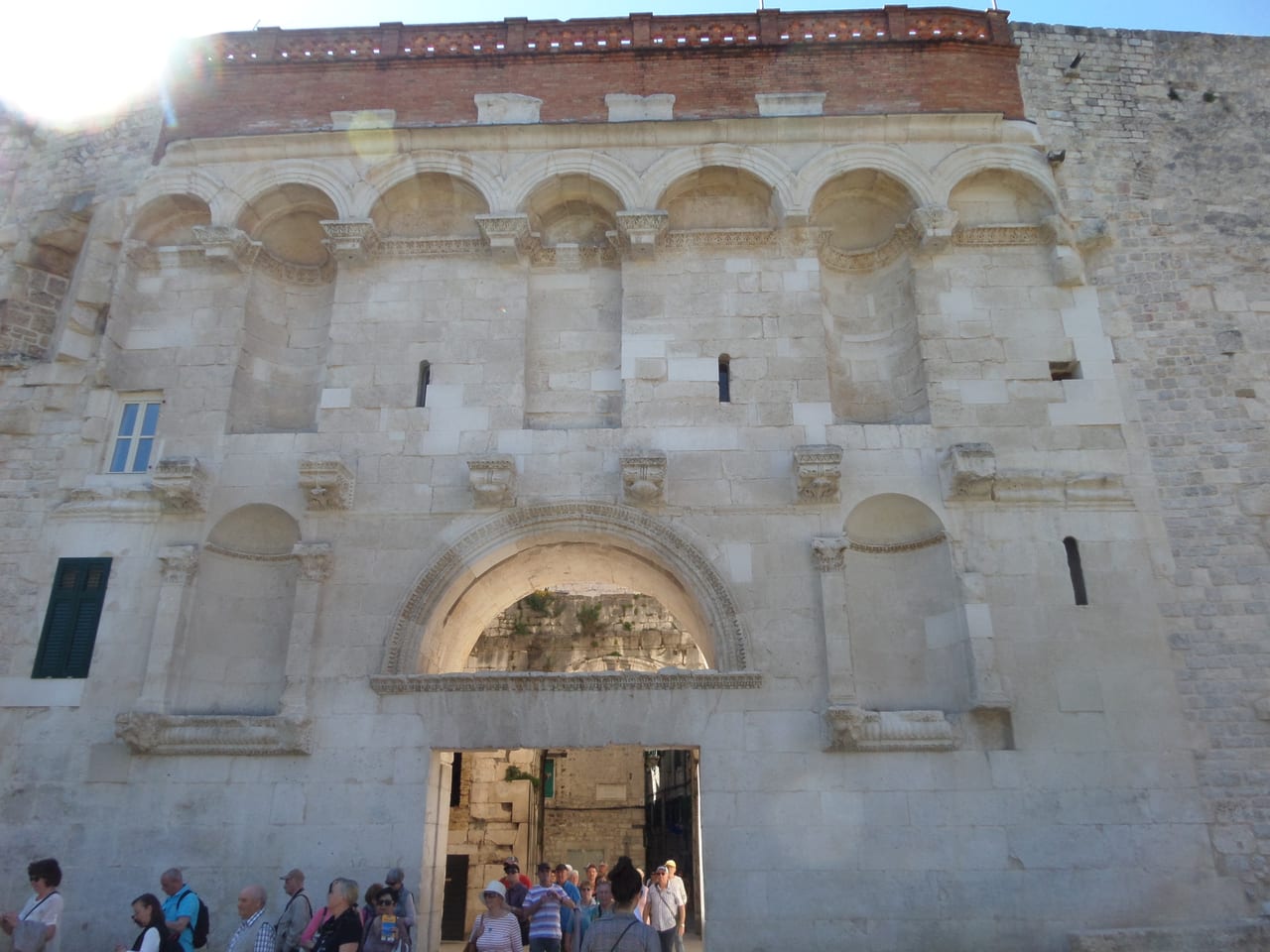
Photograph 1 of 3 of Golden Gate
Dating to the foundation of Diocletian’s Palace in 293, the Golden Gate was its principal northern entrance. In Roman times it was called Porta septemtrionalis; Diocletian may have entered the palace through it after abdicating on 1 May 305. In the Middle Ages it was known as the Roman Gate and was later walled up as the city’s northern entrance shifted elsewhere. A small church of St Martin was established above the outer passage in the 6th century and later became part of a Dominican nunnery. The gate acquired its present name during the Renaissance, first recorded in 1553. Around 1630, the Venetian provveditore Alvise Zorzi ordered the demolition of the gate’s two defensive octagonal towers and other towers along the palace walls; stone from the demolished structures was taken to Venice for the church of Santa Maria della Salute. The Golden Gate reopened in 1857 after adjoining houses were removed and accumulated earth cleared. About two metres of the wall and gate remain below ground level. Its latest restoration took place in the early 21st century.
At a glance
- Built
- 293
Ways to explore Golden Gate
Study the façade from the entrance upward: the stone lintel is formed from nine blocks, with a relieving arch above it. Look for the sculptural niches on either side of the opening and the central niche above the arch, then trace the seven blind arcades and the five pedestals higher on the wall. These details make the gate’s layered stonework easier to read than a quick glance from street level.
Places to stay near Golden Gate

Live availability and prices from Stay22's partners, refreshed periodically and subject to change. Booking through these links may earn us a commission at no extra cost to you. See our privacy policy.
Cafés near Golden Gate
Cafés near Golden Gate loads as you scroll.
Attractions nearby
Attractions near Golden Gate loads as you scroll.
Cities nearby
Cities nearby loads as you scroll.
More in Split
See more of Split.
Find great cafés, places to stay and other interesting places to visit in Split.